 跳到内容

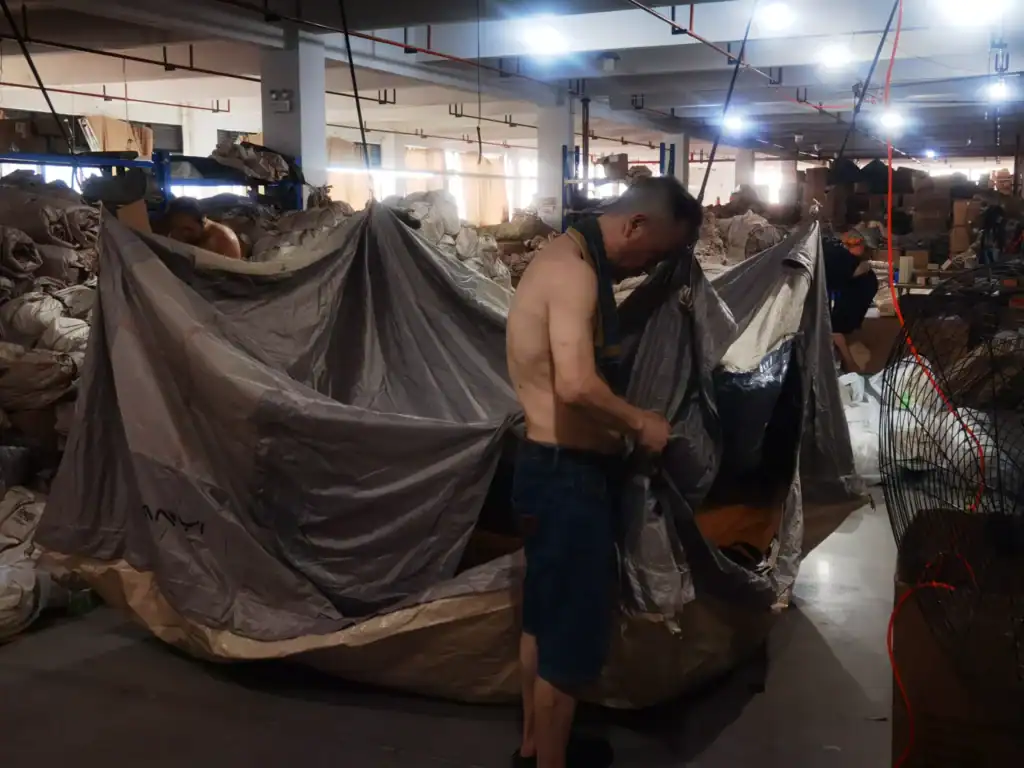
A buyer I worked with lost a $50,000 order on inflatable tent seam welding because the pre-production sample looked perfect but the mass production run showed a 3mm weld width variation across the air beams. The tents held air in the factory test bay, but after two weeks of field use in a retail demo program, three beam sections developed slow leaks at the weld edge. That kind of failure doesn’t show up in a quick inflation check — it shows up on a category manager’s return report six months later.
Here’s what that buyer missed: RF weld quality can drift during a long production run because welding electrode temperature changes as the machine runs. Checking only finished tents lets that drift slide. A stronger protocol catches it at the source — inspecting first and last pieces from each welding machine per shift gives you real visibility into process stability before units stack up on the packing line.
Why Seam Welding Is the Structural Core of an Inflatable Tent
A weak RF weld is the single most common failure point in inflatable tents.
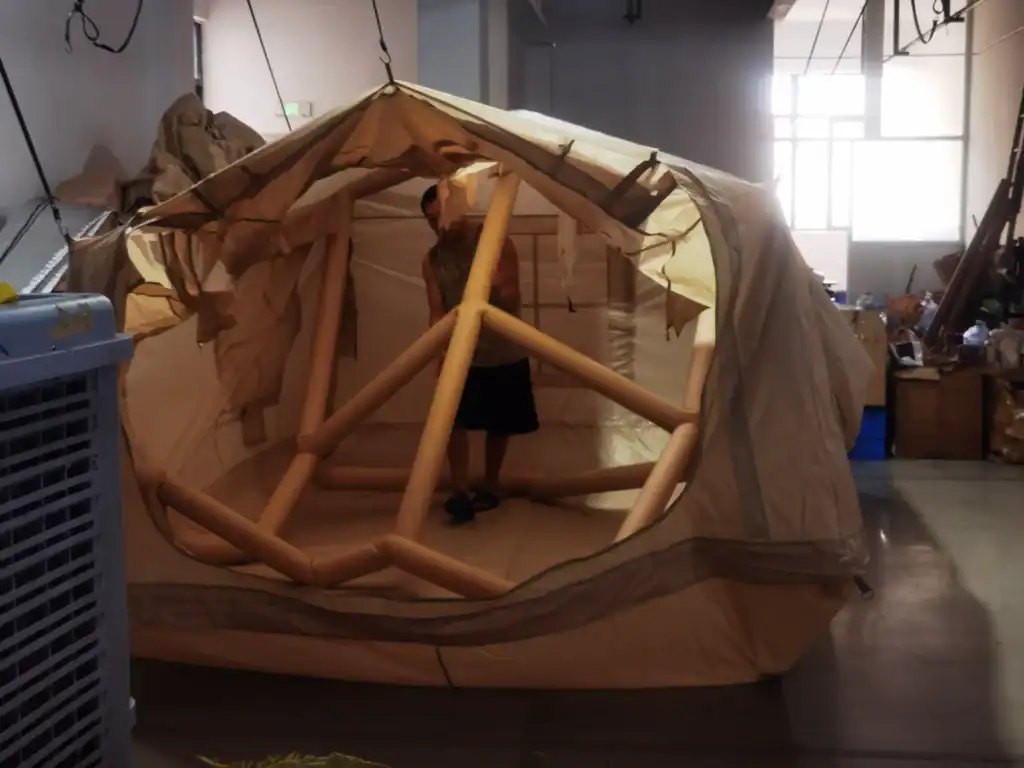
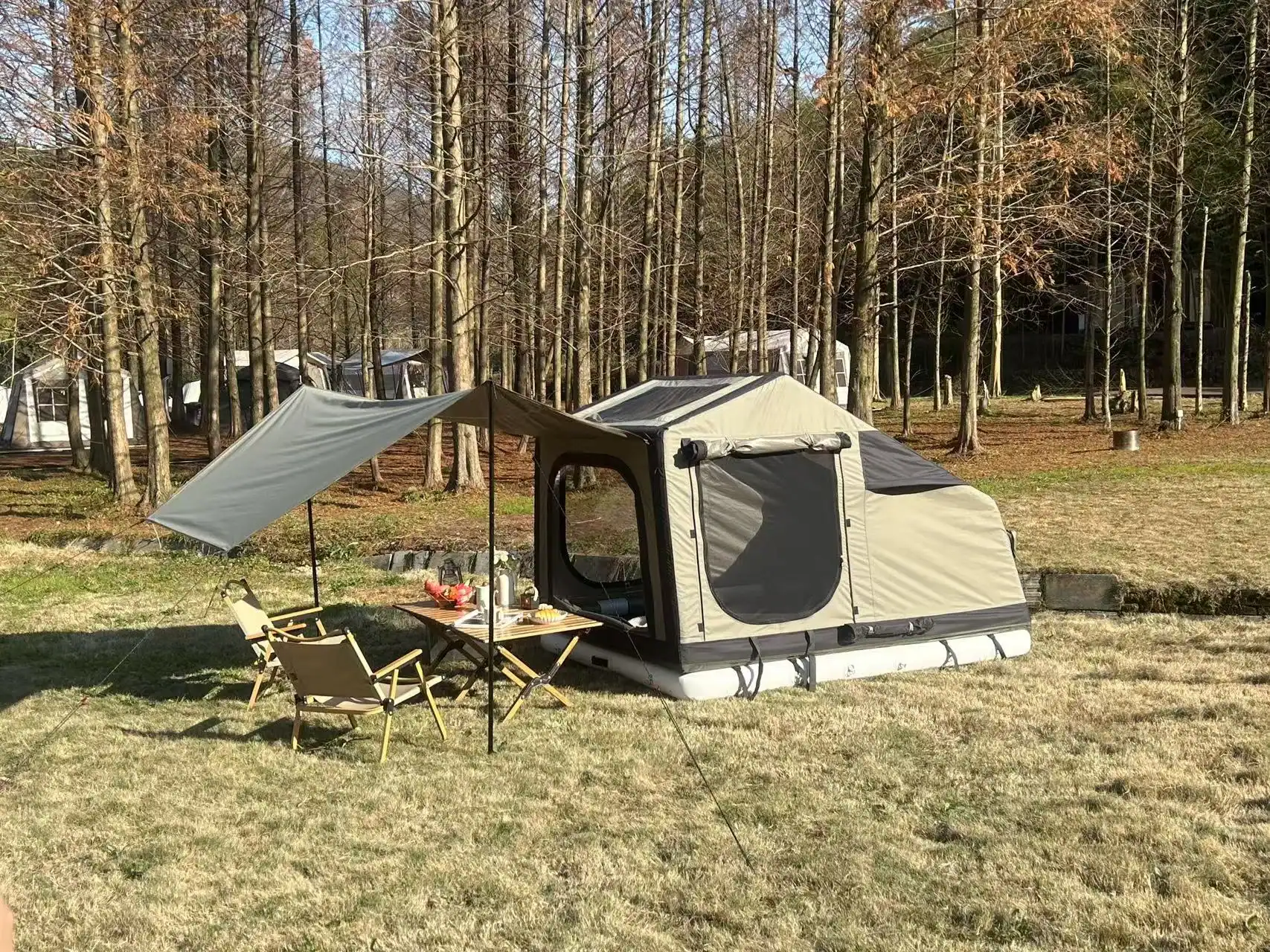
ある inflatable tent doesn’t use poles. It uses pressurized air beams made from TPU or PVC-coated fabric. Those beams hold 8 to 15 PSI when inflated — enough to support a multi-person shelter in wind. The only thing keeping that air inside is a welded seam running the full length of each beam.
How welded seams hold pressurized air
Radio frequency (RF) welding uses electromagnetic energy to vibrate the molecules in thermoplastic-coated fabric, fusing two layers into a single solid bond at the molecular level. Unlike stitching, which leaves needle holes that leak air, a correctly tuned RF weld creates an airtight seal with strength equal to or greater than the base fabric. The weld area becomes the structural backbone of the beam — it’s what prevents the beam from ballooning or bursting at pressure.
The risk of air beam failure if welds are weak
When RF weld quality drifts — and it does drift during long production runs because electrode temperature changes as the machine runs — the result is a seam that looks fused but isn’t fully bonded at the molecular level. Under cycling pressure, that weak seam delaminates. The beam bulges, then ruptures. In field conditions this means a tent collapses mid-trip. For a retail buyer, it means warranty returns and damaged brand reputation before the product has been on shelf one season.
Visual Test Criteria for RF Weld Quality
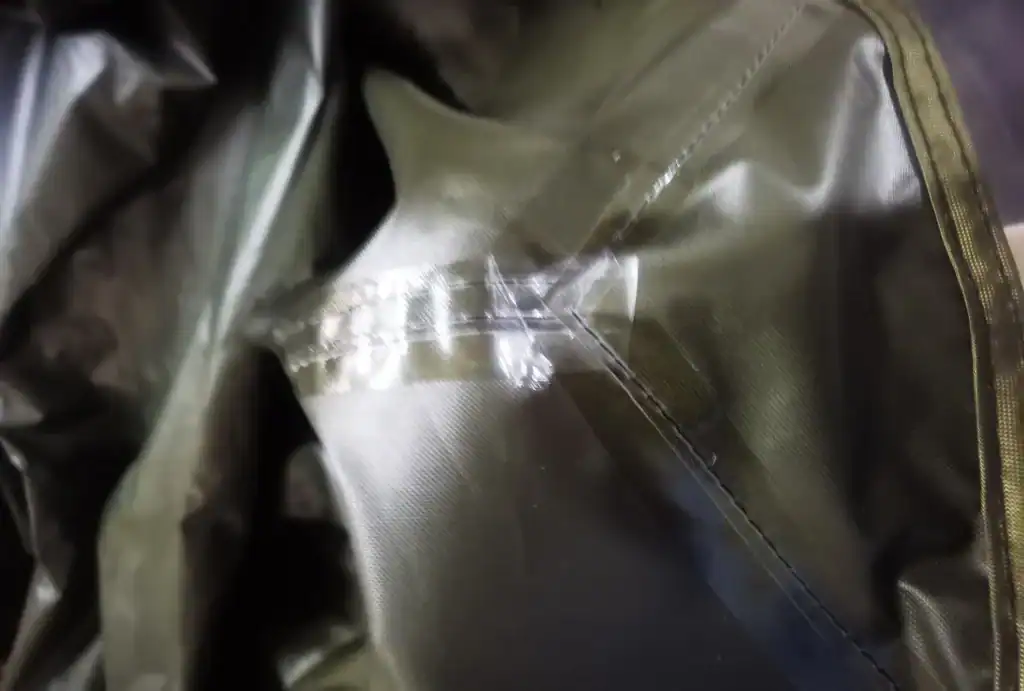
A good RF weld looks translucent and uniform.
The first thing to check on any inflatable tent seam is the weld width. Most production specs call for a consistent seam width of 12-15 mm along the entire air beam. Grab a ruler and measure at three points per seam — start, middle, end. If the width varies by more than 2 mm, the electrode alignment drifted during the run. That inconsistency creates weak spots where pressure concentrates.
Bubbles, Whitening, and Burnt Areas
Hold the welded seam up to a bright light or window. A proper RF weld looks slightly translucent — you can see light passing through the fused material evenly. Tiny bubbles trapped inside mean air pockets formed during welding. Those pockets will expand under pressure and burst. White stress marks around the weld edge indicate the PVC or TPU started to burn, which makes that section brittle.
Burnt areas show as yellow-brown discoloration along the seam edge. That happens when the welding electrode stays too long on one spot or runs too hot. The material loses its flexibility there and cracks after a few inflation cycles. If you see any of these signs on more than 5% of seams in a sample lot, reject the batch.
Floor and Wall Seam Fusion
Floor-to-wall seams carry different stress than beam-to-beam connections because they handle lateral load from campers moving inside. Check that both layers are fully fused across the entire overlap zone — no skips, no gaps at corners. Run your fingernail along the seam edge; if it catches on an unfused flap, that section will peel open under foot traffic.
At Kelyland Outdoors’ partner factories in Ningbo and Shaoxing — both ISO 9001:2015 certified — inline inspectors check every welded beam section before assembly into finished tents. They mark each seam with a green dot after passing visual inspection so downstream workers know it cleared QC.
Physical Tests You Can Do On Site
A clean peel at the weld edge means the air beam will fail under pressure.
A visual inspection tells you if a weld looks right, but it won’t tell you if the bond holds under load. That’s where physical tests come in. These three on-site checks take about ten minutes per tent and catch failures that a glance never will.
Hand Peel Test at Weld Edges
Take a sample from the scrap trim left after welding — every RF welding station produces offcuts. Grip the two layers and pull them apart in opposite directions. A good RF weld will tear the fabric before the seam separates. If the weld peels apart cleanly with no fabric tearing, that joint is under-bonded and will open under inflation pressure. The internal production standard used by Kelyland Outdoors’ partner factories requires fabric tear before separation on every first-piece check per shift.
Pressurized Seam Test with Soapy Water
Partially inflate the air beam to about 70% of rated pressure — enough to stress the seams but not risk a blowout during testing. Mix a solution of dish soap and water, then brush it along every welded seam, especially at T-junctions and corners where three weld lines meet. Watch for bubble streams. A steady stream of bubbles means a pinhole leak through an incomplete fusion zone. Mark each leak location with tape; if you find more than three on a single beam section, reject that unit for rework.
Twist Test on Fabric-to-Beam Connections
This test targets the transition point where the welded TPU or PVC beam attaches to the tent body fabric — a common failure zone that visual checks miss. Hold the beam section in one hand and the tent body panel in the other, then twist them in opposite directions by roughly 45 degrees. Listen for cracking sounds and watch for any separation at the weld line. A properly fused connection will flex without delamination. If you hear a crack or see whitening along the weld edge, that joint is brittle from overheating and will fail after repeated inflation cycles.
Common RF Weld Defects and Their Causes
RF weld quality drifts during production runs.
A procurement manager at a mid-size outdoor brand once asked me: ‘Why do my インフレータブルテント hold air in the sample but fail after fifty cycles in the field?’ The answer almost always traces back to one of three RF weld defects. Understanding these failure modes — and knowing how to catch them before the container ships — is the difference between a product that sells and a warranty claim that eats your margin.
Overheating: Melt-Through and Brittle Seams
When the welding electrode runs too hot or dwells too long, the PVC or TPU material degrades at the molecular level. The weld looks translucent at first glance, but close inspection reveals tiny bubbles, white stress marks near the edge, or a rough surface texture. That weld will crack under pressure — not immediately, but after repeated inflation cycles. A good RF weld should look uniformly translucent with no discoloration. If you see any whitening or scorching, flag it.
Underheating: Weak Adhesion That Peels Apart
The opposite problem is just as dangerous. If the temperature is too low or the pressure insufficient, the two layers of material bond only superficially. The seam may pass a quick visual check because there are no burn marks or bubbles. But perform a hand peel test at the weld edge — if you can separate the layers cleanly without tearing the base fabric, that beam will fail under inflation pressure. The rule of thumb: fabric should tear before the weld separates.
Misaligned Electrodes: Inconsistent Weld Width
RF welding relies on precise alignment between the upper electrode and lower anvil. When alignment drifts — often due to machine vibration over a long production run — weld width becomes uneven along the seam. Narrow sections become weak points; wide sections create stress concentrations where cracking initiates. Measure weld width at three points along each beam section using a calibrated gauge. For typical inflatable tent materials, acceptable variation should stay within ±1 mm of the specified width.
How to Add Weld Checks to Your QC Checklist
RF weld quality drifts as electrodes heat up — catch it early.
Most QC checklists treat weld inspection as a final-stage gate. That misses the real failure pattern. RF weld quality degrades gradually during a long production run because the welding electrode temperature changes as the machine runs. A cold start produces different fusion than a machine that has been running for four hours straight. Checking only finished tents means you catch the symptom, not the drift.
Inline checks on first and last pieces per shift
The strongest protocol is to pull the first piece from each welding machine at shift start and the last piece before shift end. Compare them side by side. If the last piece shows narrower weld width, visible bubbles, or whitening at the seam edge, the electrode needs cleaning or calibration before the next run starts. This catches overheating before it contaminates hundreds of beams.
Mid-production inspection on welded beam sections
Once beam sections are welded but before they are assembled into tent panels, run a mid-production spot check. Select three to five beams from different machines and apply a hand peel test at both ends of each weld seam. If fabric tears before the weld separates, adhesion is solid. If any weld peels apart cleanly without tearing fabric, flag that machine immediately and recheck its settings.
Final pre-shipment check on inflated standing units
Before approving shipment, inflate a random sample of finished tents to full operating pressure and hold them for 30 minutes. Walk every seam with soapy water — bubbles indicate micro-leaks that visual inspection alone misses. This is where Kelyland Outdoors’ partner factories apply their ISO 9001:2015 protocols: documented pass/fail records for each tested unit, with photos of any flagged seams.
How Kelyland Outdoors Monitors Welding Quality at Partner Factories
RF weld quality can drift mid-run as electrode temperatures shift.
The Camping Tent & Tarp factory in Ningbo, Zhejiang — one of Kelyland Outdoors’ 17 core strategic partners — produces inflatable tents alongside its 800,000-unit annual output. That volume means welding machines run for hours. Electrode temperature rises as the machine cycles, and if the operator doesn’t compensate, the weld zone gets hotter. The result: first pieces off the line may be perfect, but pieces from hour six can show brittleness or melt-through.
Per-Shift Sampling Protocol
Kelyland’s process control catches this drift by pulling the first and last welded beam section from each machine per shift. Both samples go through a documented check: weld width measured with a caliper at three points along the seam, and a peel adhesion test on a 20mm strip cut from the weld zone. If the last piece shows even a 0.5mm deviation in width from the first piece, the machine is recalibrated before production resumes.
Visual and Physical Acceptance Criteria
-
- Weld appearance: A good RF weld looks translucent and uniform across the full seam length. Tiny bubbles, white stress marks at the edges, or a rough surface indicate overheating that will crack under inflation pressure.
- Peel test standard: The QC team performs a hand peel on each sample. If the base fabric tears before the weld separates, the seam passes. If the weld peels apart cleanly — leaving two smooth surfaces — that beam section is rejected and traced back to its machine for rework.
Documentation in Inspection Reports
Every inspected beam section generates an entry in Kelyland’s inspection report covering weld width (recorded in mm), peel adhesion result (pass/fail with notes), and any visual defects observed. These reports are available to clients upon request for any order. The data also feeds back to factory management: if a specific machine shows drift patterns across multiple shifts, it triggers maintenance before it becomes a recurring issue.
結論
The difference between a tent that holds pressure for a season and one that fails on the first windy night comes down to the RF weld. A translucent, uniform bond that tears fabric before it separates is the only acceptable standard. The visual and physical tests outlined here give you a repeatable method to catch weak seams before they leave the factory floor.
-
- Check first and last piece per welding machine each shift.
- Reject welds with bubbles, whitening, or rough edges.
- Pass only seams where fabric tears before the weld separates.
The final ten percent of quality control is knowing which factories run process checks as standard practice. Kelyland Outdoors integrates weld width measurements and peel adhesion tests into every inspection report from its partner tent factories in Ningbo and Shaoxing. Review their inflatable tent specifications and QC documentation to see how those checks align with your own quality tolerance requirements.
よくある質問
How to get a quote for RF Weld Quality: How to Inspect Inflatable Tent Seams?
正確な答えは、製品仕様、数量、および注文設定によって異なります。最も安全なアプローチは、最終要件シートが確定した後にのみ商取引条件を確認することです。.
最初にサンプルを依頼できますか?
正確な回答は、製品仕様、数量、注文設定によって異なります。最も安全な方法は、最終的な要件シートが確定した後にのみ、商取引条件を確認することです。.

 English
 Español
 Deutsch
 Français
 Português do Brasil
 Русский
 العربية
 한국어
 日本語