 跳到内容
跳到内容 
The TPU air beam puncture repair request arrives weeks after the tent ships, not during factory testing. A clean pre-production sample approval on a $50K order feels right at the time, but the mass production run behaves differently. Factory sample-log data puts valve stem seating at 43% of field failures, floor-to-beam welded seams at 31%. Sidewall punctures — what most buyers worry about — account for just 18%.
Here’s what trips up most sourcing teams. The repair kit in the carry bag is itself a spec you approve, and generic suppliers ship PVC patches with PVC glue that chemically fail on TPU film. TPU is a polyurethane; PVC adhesive doesn’t cross-link with it. Blunt fix: specify a heat-bonded TPU-to-TPU patch with a 50mm overlap around the puncture. That configuration hits 45 N/cm peel strength after a 24-hour cure at 23°C and 50% relative humidity.
When you buy at FOB価格は from a factory in China, the repair kit spec is yours to define. Tears under 100mm patch cleanly and hold 3-5 PSI for 12 hours. A tear longer than that, or a valve flange that has pulled through the film, gets a replacement beam. Patching those just moves the warranty claim to next season.
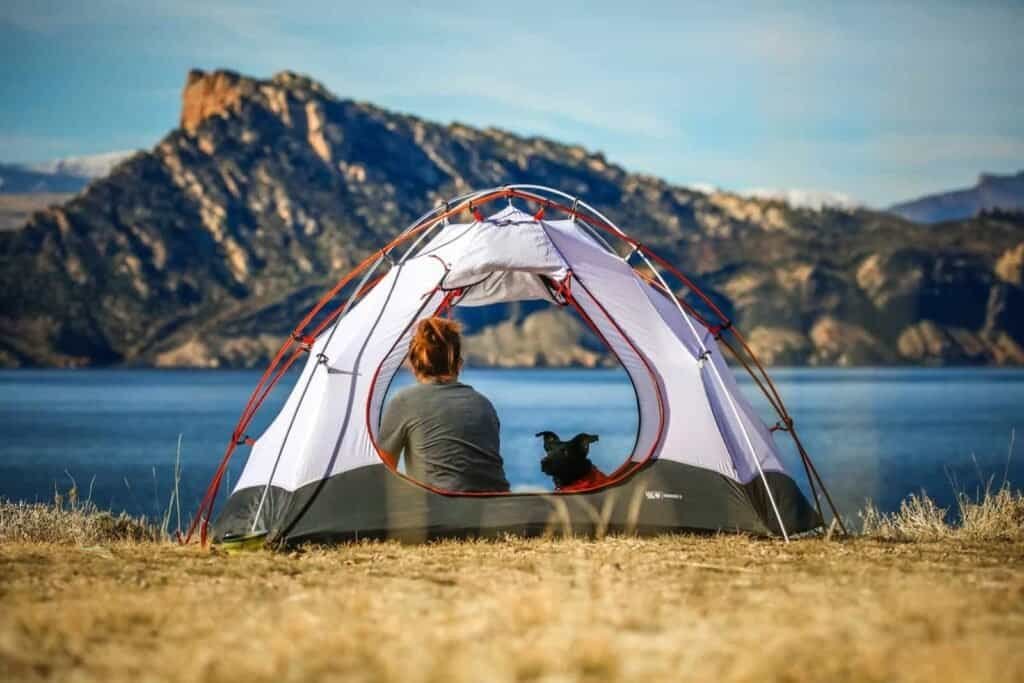
Why TPU Air Beams Fail in Real Campsites
Valve stems and floor welds, not sidewall fabric, cause most TPU beam field failures.
A tent frame fails long before the fabric shell does. The sample-log data from the partner tent factory in Ningbo — the line running 800,000 units a year — breaks the failure pattern down clearly: valve stem seating accounts for 43% of TPU beam failures, floor-to-beam welded seams follow at 31%, sidewall punctures from sharp rocks or dog claws make up 18%, and delamination at old patch sites closes the list at 8%.
Common Damage Sources Found in the Field
Field damage rarely arrives as a clean knife cut. Sidewall punctures come from pointed rocks and dog claws dragging across the sleeve, but the structural failures appear at the floor-to-beam weld where repeated folding stresses concentrate. A camp chair leg or a knee dropped onto an inflated beam creates an impact fracture that looks like a puncture but starts as an internal film split.
-
- Rock punctures: A small sharp edge against an inflated beam produces a 1-3mm hole that often leaks slowly overnight rather than bursting immediately.
- Dog claw drag: Claw drag abrades the TPU surface in a line; unless the repair area is cleaned back to virgin film, a patch over the damaged zone lifts within weeks.
- Folding stress: The floor-to-beam connection bends hardest during setup and pack-down, creating micro-tears at the weld toe that grow longer each inflation cycle.
The 8% delamination figure at old patch sites matters more than it looks. Most inflatable tent repair kits shipped from generic suppliers include PVC patches and PVC glue. TPU is a polyurethane; PVC adhesive does not cross-link with it. Over a season of UV and flexing, the patch lifts and the beam fails at the repair point — a warranty claim your supplier will try to blame on the end user.
Film thickness also changes the failure profile. Production TPU beams run from 0.6mm to 1.2mm thick. The thinner film folds into a smaller pack and flexes more easily in cold temperatures, but it punctures faster under a concentrated load. The thicker film survives campsite abuse yet transfers more stress to the weld and valve flange during folding. A brand manager who locks a 0.6mm spec without testing the folded corner radius is buying a high warranty return rate.
Cold Weather Performance Differences Between TPU and PVC
TPU beams in production hold a working range of -30°C to +70°C. PVC stiffens below -10°C. That changes winter behavior dramatically: a PVC tube flexed repeatedly at -15°C develops microcracks that don’t show as a sudden burst — they show as slow pressure loss on the second or third cold night. That is the real test of a ‘4-season’ tent claim.
Accelerated cycle testing separates the two materials even before cold weather enters the picture. Cheap PVC tubes typically fail before 200 inflation cycles, while premium TPU beams exceed 800 cycles. For a buyer sourcing inflatable tents from China, this distinction belongs in the sample approval process. Set the production pressure test target at 3-5 PSI held for 12 hours, and reject any repair kit that ships PVC patches with a TPU beam.
The lowest FOB価格は often means the repair kit was cost-cut too. A TPU-to-TPU patch with at least 50mm of overhang around the puncture, heat-bonded at the factory, survives the campsite. A PVC patch slapped onto a TPU beam fails before the customer finishes the season. Know which one is inside your carton before the first container leaves the port.

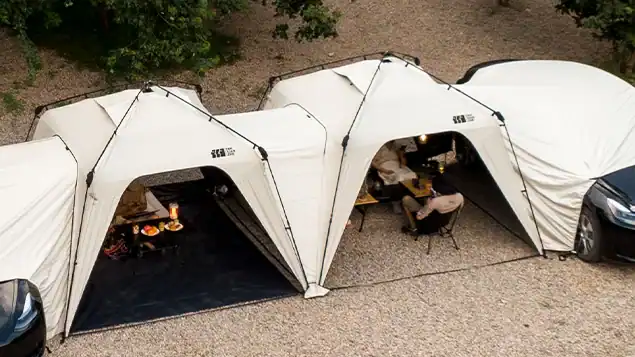
How to Patch a TPU Air Beam: Step-by-Step Field Fix
Patch only if the tear is under 100mm — beyond that, replace the beam.
A TPU air beam puncture repair starts with an honest damage assessment. Factory sample-log data from inflatable tent production lines shows 43% of field failures occur at the valve stem seating, 31% at the floor-to-beam welded seam, 18% as sidewall punctures, and 8% as delamination at old patch sites. If the tear is longer than 100mm or the valve flange has pulled through the film, stop — patching those areas will not survive a second season.
Required Patch Material Properties
The patch must be TPU film, not PVC. Generic tent repair kits often include PVC patches and PVC glue; TPU is a polyurethane, so PVC adhesive does not cross-link with it. The patch you need is a flexible TPU film with a minimum 50mm overlap beyond the puncture on every side. For beams made with 0.6mm to 1.2mm film thickness, use a patch that matches the beam’s film grade or one layer thicker.
-
- 材料: TPU-to-TPU only. PVC adhesive and vulcanizing fluids fail below 45 N/cm peel strength when cured on TPU.
- Overlap: Minimum 50mm overhang around the hole regardless of puncture size. Smaller overlap passes initial inflation but delaminates under bending stress.
- Bonding: Either a heat press at controlled temperature or a two-part polyurethane adhesive. Rubber cement has no place in a TPU repair kit.
Step Sequence with Temperature Control Rules
First, locate the leak before deflating. Pump the beam to 3-5 PSI and mix a few drops of dish soap with water in a spray bottle. Spray the beam and watch for bubbles. When you find the leak, mark the exact hole location with a washable marker. A deflated beam looks identical everywhere; without a mark, you will be searching flat film by eye and likely missing the hole.
Clean the area around the mark with isopropyl alcohol or a solvent that leaves no residue. Scuff the surface lightly with fine sandpaper if the beam has a glossy topcoat. Let the solvent dry completely. Then apply the TPU patch and bond it. If using a heat press, the target bond needs to reach the same peel strength as a factory welder. After 24-hour cure at 23°C and 50% relative humidity, a heat-bonded TPU patch should hit 45 N/cm peel strength. Field patches at lower temperatures take longer, and humidity above 70% can cause the adhesive to blush and lose grip.
Pressure Test and Final Checks
After the patch cures, re-inflate the beam to 3-5 PSI and hold it for 12 hours. That is the same production pressure test target used in the partner factories in Zhejiang before any TPU air beam ships. If the pressure drops overnight, the patch has not sealed. Check the edges of the patch with the soapy water method. Most second-season failures come from edge lift, not a pinhole in the middle. Work in temperatures above 15°C — the beam’s working range is -30°C to +70°C, but adhesive cure is a chemical reaction, not a mechanical clamp.
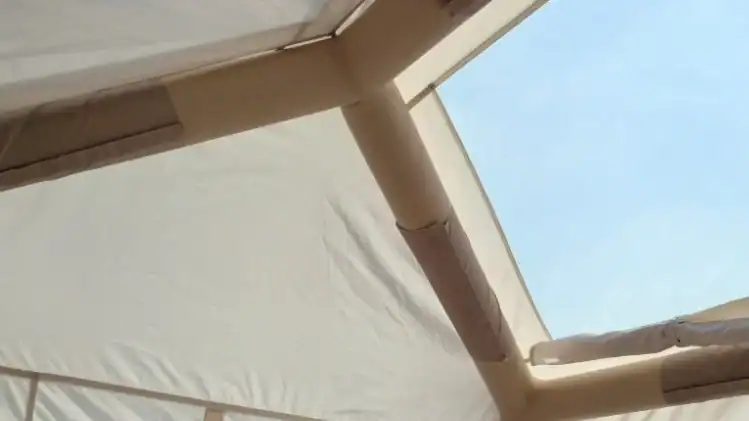
結論
A TPU air beam repair only matters if it holds pressure across seasons. Factory sample-log data points to two real weak spots: valve stem seating and floor-to-beam welds account for most failures, while generic PVC patches peel because the adhesive never cross-links with TPU. Match the patch material, respect the 50mm overlap, and you keep a tent in the field instead of watching it come back under warranty.
-
- 67% of field failures occur at valve stem seating or floor-to-beam welded seams, not the sidewall fabric.
- Use a TPU film patch with 50mm overlap and heat-bond it; PVC patches peel below 45 N/cm peel strength.
- Replace the beam if the tear exceeds 100mm or the valve flange has pulled through the film.
- Specify a 3-5 PSI pressure hold for 12 hours in your factory QC before accepting production.
Before you commit to the next 30-45 day MOQ, verify how your supplier handles field failures. Ask for a TPU air beam sample with pressure-test data and a matched repair-patch kit—the factory should be able to heat-weld custom valve stems and print your brand on the patch pack.
よくある質問
TPUエアビームのパンクは修理できますか?
Yes, TPU air beams can be repaired with a TPU film patch and heat bonding. Patch only if the tear is under 100mm and the valve flange is intact. For larger damage, replace the beam.
What causes most TPU air beam failures?
Most failures occur at the valve stem or floor-to-beam weld, not the sidewall fabric. Field data attributes 67% of failures to those two weak points. Inspect these areas first.
When should a TPU air beam be replaced?
Replace the beam if the tear is longer than 100mm or the valve flange has pulled through the film. Patching those areas will not survive a second season. Order spare beams with your production run.
Why do PVC repair patches fail on TPU beams?
Generic PVC patches peel off TPU because they don’t match the material’s elasticity or reach the needed peel strength. TPU needs a TPU film patch bonded with heat for a durable seal. Use only TPU-compatible repair kits.
How durable is a TPU air beam repair?
A properly heat-bonded TPU patch can hold pressure across seasons when the tear is under 100mm. Repairs at valve stems or floor welds are less reliable and may not last a second season. Test repaired beams before shipping.

 English
  Español
  Deutsch
  Français
  Português do Brasil
  Русский
  العربية
  한국어
한국어  日本語
日本語