 콘텐츠로 건너뛰기

reach svhc folding wagon is the first checkpoint buyers should lock before they approve a supplier, budget, or production slot. Most compliance guides tell you to get a REACH declaration from your factory and call it done. That advice works fine until a 접이식 왜건 gets flagged at EU customs because the zipper pull on the carry bag contains 0.15% DEHP — and suddenly your entire container is held for testing. The REACH SVHC folding wagon question isn’t about one blanket certificate. It’s about how the regulation treats every single component as its own article, which changes how you approach supplier documentation from day one.
The 0.1% SVHC threshold applies per article, not per product. A folding wagon with a powder-coated steel frame, Oxford fabric body, PVC-coated baseboard, nylon wheels, and plastic zipper pulls is not one article — it’s five separate articles assembled together. If any one of those components exceeds the threshold for a substance on the candidate list, that component fails compliance even if the rest of the wagon is clean. Experienced importers ask for a REACH statement of compliance broken down by component rather than accepting a single factory letter that covers everything in vague terms.
Here is a three-point checklist you can use with your supplier tomorrow. First, does your REACH declaration list each distinct material category — fabric, coating, plastic parts, metal frame — with its own SVHC screening result? Second, can you provide a GC-MS test report for the plastic wheels and any PVC components where phthalates typically show up? Third, is the 0.1% threshold calculated on each individual article’s weight rather than averaged across the whole wagon? If any answer is no, you have a gap in your paperwork that customs will find before your buyer does.
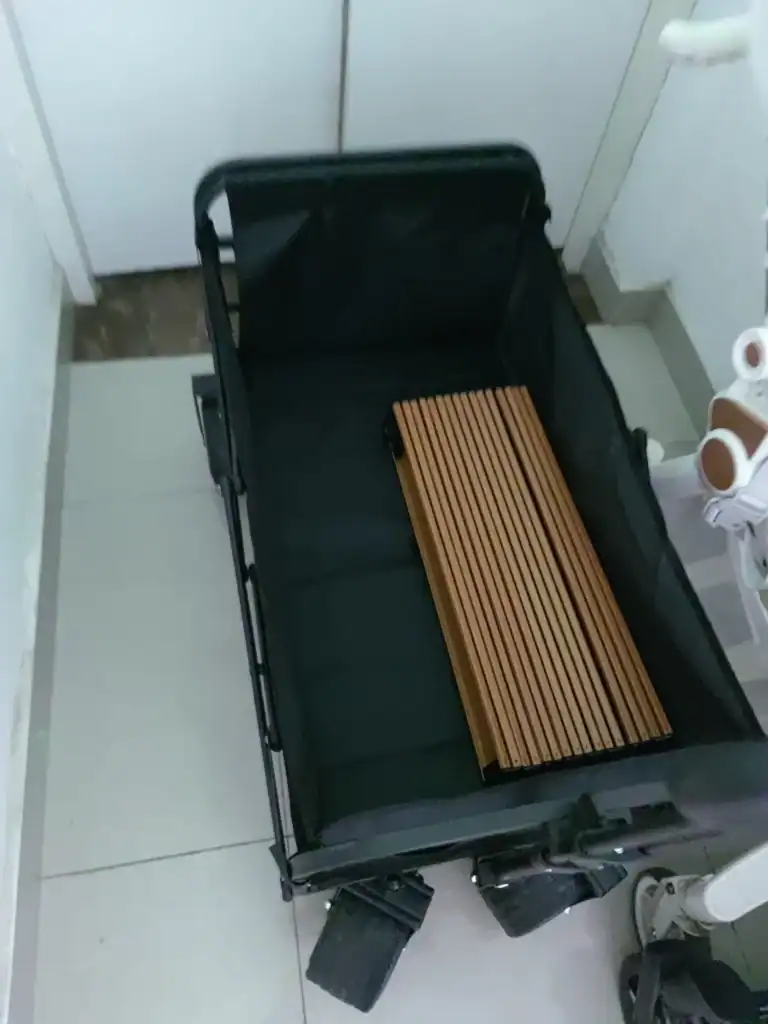
REACH Candidate List and SVHC Limits
A single zipper pull at 0.15% DEHP can fail an entire folding wagon shipment.
The REACH regulation doesn’t look at your folding wagon as one product. It breaks it down into individual ‘articles’ — each component with a specific shape, surface, or function. That distinction matters because the 0.1% SVHC threshold applies per article, not per finished good.
0.1% weight threshold per article
Under REACH Article 7(2), if any article in your supply chain contains a Substance of Very High Concern above 0.1% weight by weight (w/w), you must notify ECHA. The key word is ‘any.’ A folding wagon has roughly 15-20 distinct articles: the Oxford fabric body, PVC coating on that fabric, nylon wheels, PP baseboard, steel frame tubes, powder coating on the frame, rivets, axle pins, handle grips, and even the small zipper pull on the storage bag.
Each of those is evaluated independently. So a wagon where the steel frame is clean but the PVC-coated handle grip contains 0.15% DEHP fails REACH compliance for that grip article — and by extension for the entire product if you cannot separate it before sale.
How importers get caught off guard

Which Wagon Parts Need SVHC Screening?
A single zipper pull with 0.15% DEHP can fail your entire wagon shipment.
Oxford Fabric: The Largest Surface Area to Screen
The fabric body of a folding wagon is usually 600D to 900D double-layer Oxford cloth. This polyester-based textile itself rarely carries SVHCs, but the finishes and coatings applied to it are the real risk. Water-repellent treatments often use perfluorinated compounds (PFCs), several of which are on the candidate list. If the fabric is dyed with certain disperse dyes, those can break down into carcinogenic aromatic amines under REACH. The trigger for a supply chain manager is simple: any textile that will have direct and prolonged skin contact — and wagon fabric qualifies because children sit inside them — needs a GC-MS scan on the finished cloth.
PVC Coatings and Laminations: Where Phthalates Hide
Many folding wagons use a PVC coating on the base or side walls to improve water resistance and durability. PVC without plasticizers is rigid, so manufacturers add phthalates like DEHP, DBP, or BBP to make it flexible. All three are on the SVHC candidate list at the 0.1% threshold per article. The trap here is that the coating weight varies across different panels of the same wagon — a thicker floor coating may pass while a thinner side-wall lamination fails because the plasticizer concentration ends up higher relative to the polymer mass. Ask your supplier for test results broken out by panel location, not a single blended sample.
Nylon Wheels and Plastic Components: Small Parts, Big Risk
Wagon wheels are typically molded from nylon (PA6 or PA66), polypropylene (PP), or rubber compounds like TPE or EVA as listed in Kelyland Outdoors’ product specs. Nylon itself is not an SVHC concern, but mold-release agents, flame retardants, and colorants added during injection molding can contain substances like antimony trioxide or short-chain chlorinated paraffins — both on the candidate list. The wheel hub often has a metal bushing or bearing cage that may be plated with hexavalent chromium if cheap passivation was used. A single wheel assembly can contain four distinct articles (tire, hub, bearing shield, axle pin), each evaluated separately against the 0.1% threshold.
Testing Methods and Certificates
GC-MS screening catches phthalates and azodyes at parts-per-million levels — the standard for REACH SVHC compliance.
The lab method that matters most for folding wagon materials is GC-MS — gas chromatography coupled with mass spectrometry. It separates chemical compounds in a sample and identifies them by molecular weight. For REACH SVHC compliance, GC-MS is the go-to technique for detecting two common contaminant families: phthalates (plasticizers) and azodyes (colorants that can break down into carcinogenic aromatic amines).
How GC-MS Works on Wagon Components
A small piece of the material — roughly 1 gram of Oxford fabric, PVC coating, or nylon wheel plastic — is dissolved in solvent, then injected into the GC column. The column separates compounds by boiling point and chemical affinity. As each compound exits the column, the mass spectrometer fragments it and matches the fragmentation pattern against a reference library. The result is a chromatogram showing which SVHCs are present and at what concentration.
Phthalate Screening Specifics
Phthalates like DEHP, DBP, and BBP are commonly added to PVC coatings on wagon fabric to improve flexibility. They also show up in soft plastic wheel treads and handle grips. The GC-MS method for phthalates follows EN 14372 or EPA 3540C extraction procedures. Detection limits typically reach 50 ppm (0.005%), well below the REACH 0.1% threshold per article.
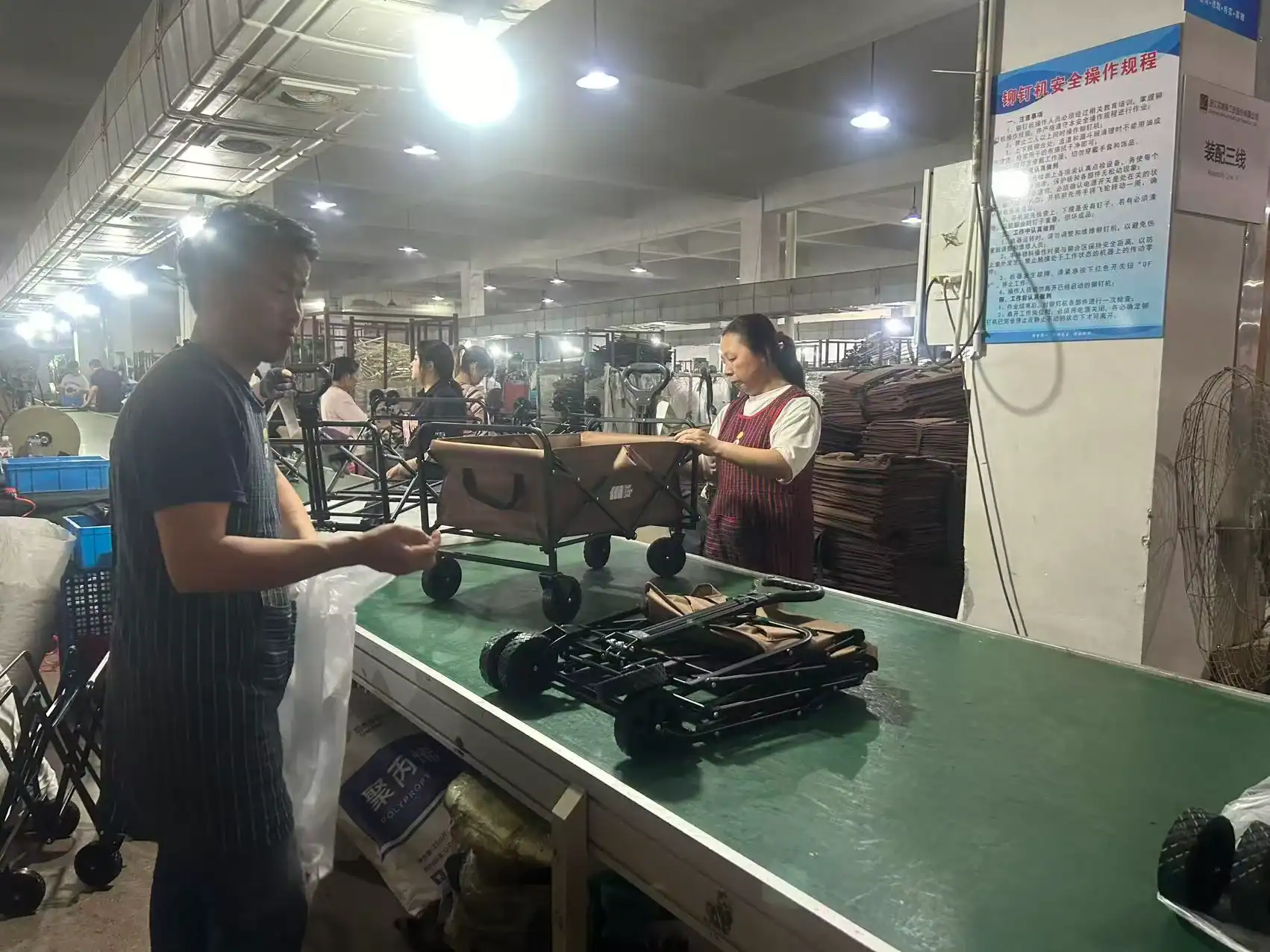
Supplier Declaration vs Full Testing
A blanket REACH letter from a factory is not the same as a certified test report.
When a supplier sends you a signed REACH declaration, it means they are stating on paper that their folding wagon materials fall under the 0.1% SVHC threshold. That statement carries legal weight in the EU — but it is not backed by lab data. For a supply chain manager deciding whether to accept that document or demand full GC-MS testing, the decision comes down to three factors: component risk, order volume, and your downstream liability.
When a Supplier Declaration Is Enough
A supplier declaration works when you have an established relationship with a factory that has a proven compliance record. If the same factory has shipped 20 container loads of folding wagons into Germany over three years without a single customs hold, and they provide a REACH statement of compliance broken down by component — not just one blanket line — you can reasonably accept it. The key phrase there is “broken down by component.” A credible declaration lists each article in the wagon: Oxford fabric, PVC wheel treads, nylon zipper pull, powder-coated steel frame, PP baseboard — and states SVHC status per material.
Factories that hold ISO 9001:2015 certification, like Kelyland Outdoors’ folding wagon partner in Jinhua (annual output 1 million units), typically maintain material traceability logs that support these declarations. If your supplier can show you their incoming material test records from upstream mills, the declaration becomes verifiable without commissioning new lab work.
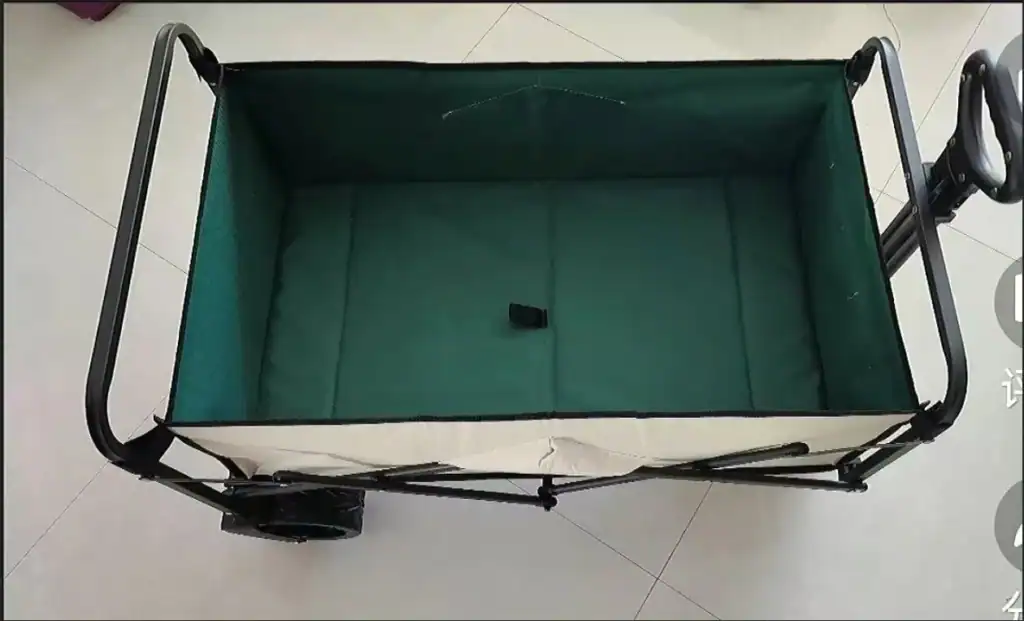
When You Need Full Testing
Full GC-MS screening becomes non-negotiable in three scenarios. First: new supplier with no EU shipment history. Second: high-volume orders where a single customs detention could cost you $15,000 in storage fees and missed shelf dates. Third: wagons using recycled plastics or post-consumer materials — these carry unpredictable SVHC profiles because the feedstock varies batch to batch.
“The trick with REACH for folding wagons is that each article is evaluated separately,” notes Hanke Chen, founder of Kelyland Outdoors. “A wagon with multiple materials can fail if just the zipper pull has 0.15% DEHP.” Full testing catches these edge cases. A GC-MS test on fabric coating costs roughly $200-$400 per sample; testing all plastic components adds another $300-$600. Against a 2,000-unit order at $25 FOB per wagon, that’s less than 2% of total landed cost — cheap insurance against an EU market ban.
The Middle Ground: Targeted Component Testing
결론
A folding wagon that clears REACH at the blanket level but fails on a single zipper pull or wheel hub still gets stopped at customs. The 0.1% threshold applies per article, not per product. That distinction is where most compliance gaps live.
-
- REACH evaluates each component as a separate article.
- Oxford fabric, PVC coatings, and nylon wheels all need individual screening.
- GC-MS testing catches phthalates and azodyes that blanket declarations miss.
- A component-level REACH statement costs less than a rejected shipment.
If you are sourcing folding wagons for the EU market, the next step is to review your current supplier’s REACH declaration against each material in the build — fabric, coating, wheel compound, and hardware plating. Ask specifically for GC-MS test results on the plastic components and PVC-coated fabrics. A supplier who can provide component-level documentation is one who understands the regulation beyond a signature line. Review current compliance documentation against your wagon spec sheet to identify gaps before they become border holds.
자주 묻는 질문
What is the REACH SVHC limit for folding wagons?
REACH SVHC 제한량은 해당 제품 1개당 0.1%를 초과할 수 없으며, 이는 후보 목록에 등재된 모든 물질을 대상으로 합니다. DEHP 함량이 0.15%인 지퍼 puller 하나가 통째로 쌓아두었던 전체 화물 적하 검사를 불합격시킬 수 있습니다. 따라서 모든 구성 부품을 각각 0.1% 기준을 초과하지 않도록 철저히 검증하십시오.
Which wagon parts need SVHC screening?
옥스포드 원단, PVC 코팅, 나일론 바퀴가 SVHC 스크리닝이 필요한 주요 부재입니다. 지퍼, 버클, 휴대용 백 소재와 같은 소부품도 주의 깊게 확인해야 합니다. 원단, 코팅, 바퀴 및 모든 소형 하드웨어를 스크리닝하십시오.
What testing method is used for SVHC screening?
GC-MS(气相色谱-质�9谱)筛查是检测parts-per-million(ppm)水平下的邻苯二甲酸盐和偶氮染料的标准方法。这涵盖了折叠手推车纺织品和塑料中大多数相关的SVHC(高度关注物质)。向供应商要求GC-MS测试报告。.
When should I accept a supplier REACH declaration?
공급업체의 REACH 선언서는 준수 이력이 입증된 표준 제품과 저위험 제품에 대해서만 허용하세요. 맞춤형 또는 대량 주문의 경우, 통관 지연을 피하기 위해 제3자 검사를 받는 것이 더 안전합니다. 신규 설계나 대규모 shipments에는 완전한 검사를 활용하세요.

 English
 Español
 Deutsch
 Français
 Português do Brasil
 Русский
 العربية
 한국어
 日本語