 Ir para o conteúdo
pop-up beach tent wind collapse is the first checkpoint buyers should lock before they approve a supplier, budget, or production slot. The operator on the line at the tent factory sees the same thing every shift change: a stack of pre-production samples with perfect stitching, clean logos, and tight seams. He also sees the production spec sheet buried under a pile of packing lists, where the fiberglass pole diameter is listed as 6.8mm instead of the 8.5mm that was approved in sample approval three weeks earlier. Nobody on the buyer side catches that swap until a $50K order lands at retail and every unit banana-peels in a 20 mph gust off the coast. That specific collapse pattern—frame separation at the hub, not fabric failure—accounts for most pop-up beach tent wind collapse fixes I’ve seen across twelve countries of supplier audits.
The fix isn’t exotic engineering. It’s three measurable specs that cost between $0.60 and $1.20 per unit at FOB pricing: an 8.5mm fiberglass pole with a minimum 30mm ferrule overlap, reinforced nylon hubs instead of single-shot injection plastic, and bar-tacked sand-pocket webbing that can survive a 10 kg pull test during QC inspection checklist import review. Most category managers I work with spend their factory visits checking print registration and color matching while the real failure points are hiding in plain sight on the pole geometry sheet and the sand pocket stitch count.
Why Pop-Up Beach Tents Collapse in Wind
Most beach tents fail at the hub or sand pocket, not the fabric.
The physics is simple but most brief-check buyers ignore it. When a gust hits the roof panel, upward lift pushes the hub off-axis while lateral pull stretches the poles sideways away from center. The frame doesn’t snap all at once — it buckles in sequence.
The Failure Sequence
Wind pressure deforms the fabric canopy into a sail shape instead of shedding air as designed. That sail catches more wind, which multiplies the load on every joint. First the hub tilts past its designed angle, then one pole segment slips out of its ferrule, and suddenly you have a collapsed tent that looks like a banana peel.
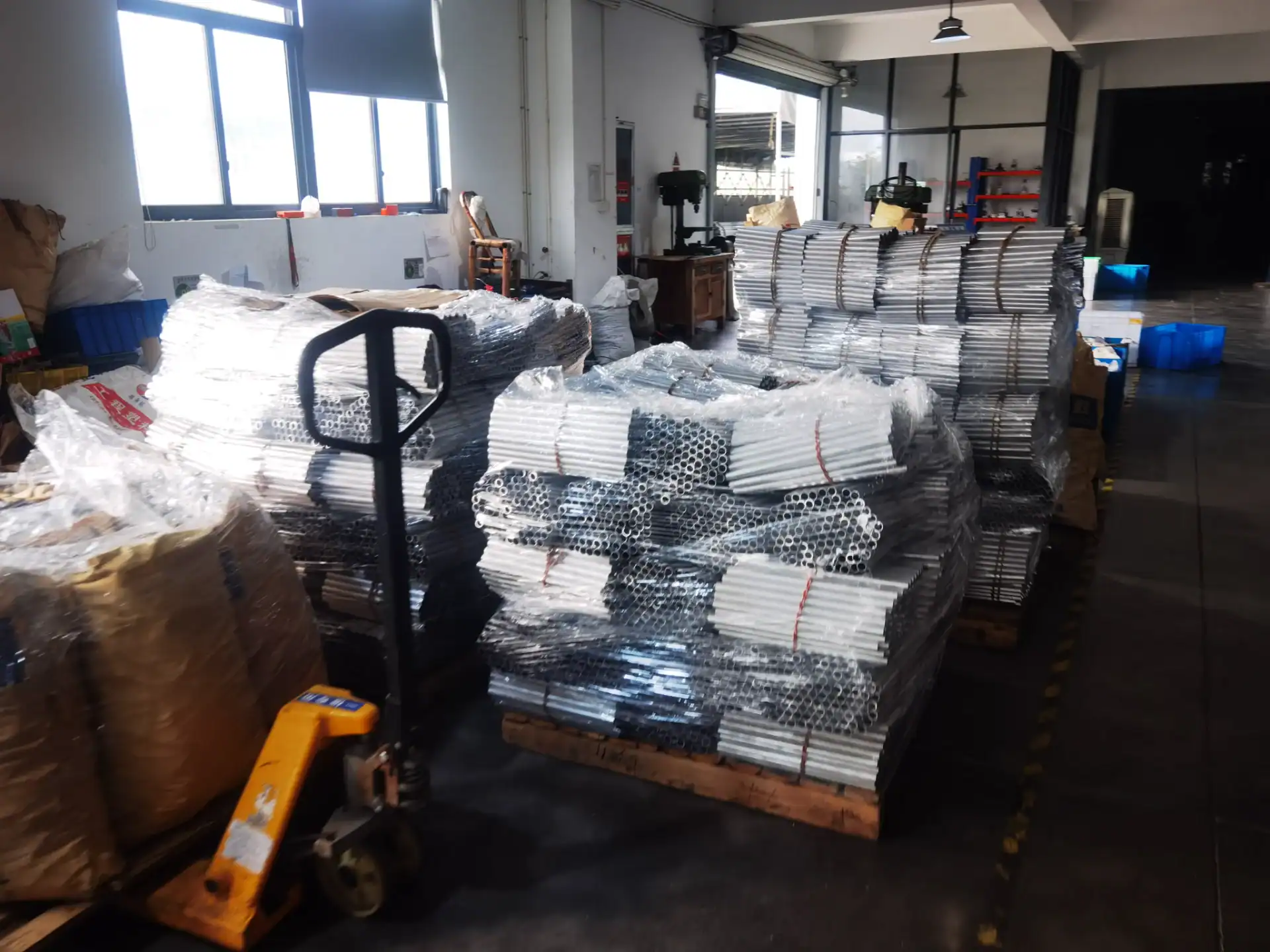
A 6.8mm fiberglass pole buckles at roughly 15-20 mph gusts. Jump to an 8.5mm pole with a 30mm ferrule overlap and that threshold rises to 25 mph. Those 5-10 mph make the difference between a tent that survives a coastal afternoon and one that triggers a refund request by dinner.
Hub Geometry Matters
The difference between a single-shot injection hub and reinforced nylon is visible under load but invisible on a spec sheet. Single-shot hubs are molded in one pour — cheaper, faster, but brittle under lateral stress. Reinforced nylon hubs use glass-fiber fill or secondary ribbing that distributes tension across more material surface area.
During sample approval, most importers check print color and logo placement. They never flex-test the hub to see if it cracks under hand pressure. A quick test: hold the assembled frame by one leg and shake laterally — if you hear clicking at the junta do cubo, that tent will separate in sustained wind.
Specs That Matter for Beach Use
Poles under 8.5 mm buckle at 15 mph gusts.
Most pop-up beach tents on the market use fiberglass poles between 6.8 mm and 7.0 mm in diameter. That spec works fine for a backyard canopy on a still day. On an open beach with a 15 mph gust — common conditions from late morning onward — those poles flex past their elastic limit and snap or buckle at the ferrule joint. The tent collapses, the fabric lands on wet sand, and your customer is packing a refund request before lunch.
Pole Diameter: The Minimum You Should Accept
The internal benchmark from our network of ISO 9001-certified tent factories is clear: specify ≥8.5 mm fiberglass poles for any beach shelter intended to withstand coastal gusts up to 25 mph. At that diameter, the pole retains enough stiffness to keep the hub centered when wind hits the roof panel laterally. Drop to 6.8 mm and you lose roughly 40% of that bending resistance — enough that a sudden gust banana-peels the frame mid-afternoon.
- Especificação: >=8.5 mm fiberglass pole diameter for all main structural ribs.
- Risco: <=6.8 mm poles buckle at ~15 mph; single-shot injection hubs crack under tension.
Ferrule Overlap: The Joint That Holds or Fails
A fiberglass pole is never one continuous piece in a pop-up tent — it comes in sections joined by metal or plastic ferrules. The overlap length between sections determines whether the joint stays locked under load or slips apart like a loose sleeve. Industry-standard overlap runs around 20 mm per joint. That’s insufficient for beach conditions.
>=30 mm ferrule overlap per joint is the threshold required from partner factories in Ningbo and Jinhua, where annual tent production exceeds 800,000 units across CE and BSCI certified lines. At that depth, the ferrule resists rotation and separation when lateral wind pulls the pole sideways relative to its neighbor section.
Conclusão
The difference between a beach tent that survives the season and one that ends up in a dealer return bin comes down to three measurable specs: pole diameter, ferrule overlap, and sand-pocket stitch reinforcement. A 6.8 mm fiberglass pole will buckle at around 15 mph. An 8.5 mm pole with a 30 mm ferrule holds at 25 mph. That gap is where your brand reputation lives or dies.
- Demand fiberglass poles of at least 8.5 mm diameter.
- Require a minimum ferrule overlap of 30 mm per joint.
- Specify bar-tacked webbing on all four sand pockets.
- Add a four-stake kit for under $1.20 FOB per unit.
Benchmark your next supplier against those four points before you approve the sample. Most factories will meet the spec if you put it in writing during the estágio de aprovação de amostra — they just won’t offer it as standard because it adds cost to their quote sheet, not yours. When you request pricing on our Fold Pop-Up Beach Tent, ask for the factory inspection checklist and pole spec sheet included with every quote so you can verify the numbers before committing to mass production.
Perguntas frequentes
O que faz as tendas de praia pop-up desabarem com o vento?
A maioria das tendas de praia pop-up falha na junta do cubo ou no tecido do bolso de areia, não no tecido. A atualização para uma haste de fibra de vidro de 8,5 mm com sobreposição de luva de 30 mm reduz o risco de colapso. Foque o controle de qualidade na junta do cubo e no reforço do bolso de areia, não apenas no tecido.
Quais especificações evitam o colapso causado pelo vento em tendas de praia?
Varas com menos de 8,5 mm cedem a rajadas de 15 mph, portanto especifique pelo menos varas de fibra de vidro de 8,5 mm com cubo de nylon reforçado. Um kit de quatro estacas e bolsos de areia reforçados adicionam menos de. Inclua essas especificações no seu acordo de produção para reduzir devoluções.
Como posso testar a resistência do bolsão de areia antes do envio?
Execute um teste de tração pré-embarque em bolsos de areia com uma força de 10 kg para revelar instantaneamente a fragilidade das costuras. Essa verificação simples detecta costuras de fita de tamanho insuficiente que os concorrentes frequentemente escondem. Adicione este teste de tração à sua lista de verificação de controle de qualidade antes de aprovar o embarque.
O reforço de bolsões de areia reduz as taxas de devolução?
Yes, reinforced sand pockets and a four-stake kit reduce dealer return rates by an average of 30%. The upgrade costs less than $1.20 per unit at FOB pricing. This is a low-cost fix that directly protects your brand margin.

 English
  Español
  Deutsch
  Français
  Português do Brasil
  Русский
  العربية
  한국어
한국어  日本語
日本語