 Ir para o conteúdo

folding wagon freight rates is the first checkpoint buyers should lock before they approve a supplier, budget, or production slot. A folding wagon freight rate quote that comes in at $3,200 for a 40HQ container from Ningbo to Los Angeles looks clean on paper. But add in the destination-side charges — delivery order fees, terminal handling, and the customs clearance brokerage — and that same container can land at $3,850 before a single unit hits your warehouse. The gap between a quoted base ocean rate and actual landed cost is where most outdoor brand managers lose their margin on the first order.
I have reviewed freight proposals from forwarders across China-US and China-EU lanes where suppliers quoted FOB pricing with confidence but left the destination leg completely unquoted. The result? A buyer who approved a $50K purchase order based on a sample approval that looked perfect, only to discover that CBM rounding on an LCL shipment added another $220 because the forwarder rounded up to three decimal places instead of two. The folding wagon itself has a relatively high volume-to-weight ratio — a standard multi-fold model packs at roughly 0.12 to 0.15 CBM per unit depending on the frame design — which makes it especially vulnerable to volumetric rounding tricks.
The fix is not complicated, but it requires changing how you ask for numbers. Instead of accepting a split quote with ocean freight on one line and vague destination charges buried in fine print, request a single door-to-destination line item in USD per 40HQ or per CBM. Then run every quote through a simple freight audit checklist before you commit to production lead time or quality tolerance specs. If you cannot quickly answer yes to all three questions below, you are overpaying on folding wagon freight rates right now.

How Ocean Freight Quotes Are Structured for Folding Wagons
A folding wagon quote missing destination charges can cost you $700 per 40HQ.
Most buyers compare FOB prices from suppliers, then add a freight quote from a forwarder, and call it the total. That math misses half the cost. The FOB price covers the goods loaded onto the vessel at the port of origin. The freight quote covers moving the container from that port to your destination port. Landed cost includes everything after that — terminal handling, customs clearance, delivery order fees, inland trucking, and any surcharges that pop up along the way.
FOB price vs freight quote vs landed cost
FOB (Free On Board) is what you pay the supplier: the product, export packing, and loading charges at the Chinese port. For a folding wagon order from one of Kelyland’s partner factories in Jinhua, Zhejiang — where annual production capacity reaches 1 million units — this typically runs $18–$35 per unit depending on model and customization level.
The freight quote from your forwarder covers ocean transport only. For a 40HQ container from Ningbo to Los Angeles or Rotterdam, base rates in early 2026 run roughly $2,800–$4,500 depending on lane and carrier contract. That number does not include what happens when the container arrives.
Landed cost is FOB plus freight plus all destination-side charges plus customs duties. A folding wagon with an FOB value of $25 per unit and ocean freight of $3,000 per 40HQ (about $1.50 per unit at 2,000 units per container) can land at $35–$38 per unit once terminal handling ($250–$400), customs brokerage ($100–$200), delivery order fees ($50–$150), and inland drayage are added.
Who charges what on China-US and China-EU lanes
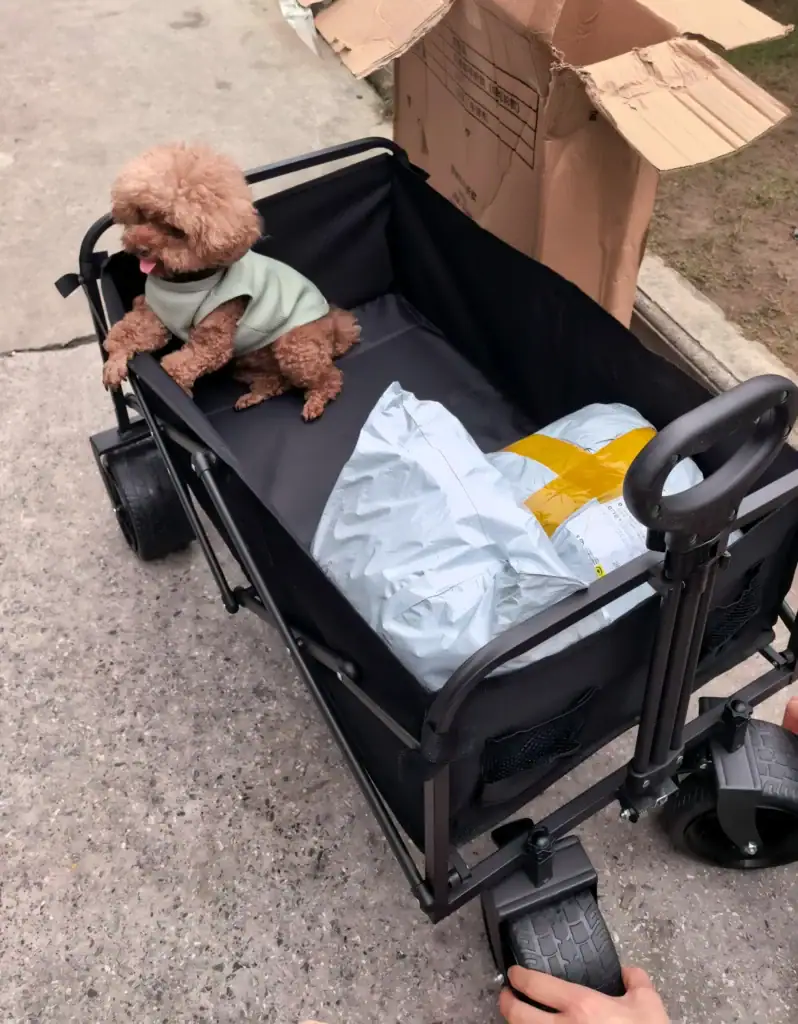
8 Hidden Fees That Blow Up Shipping Budgets
Destination-side fees add $350–700 per 40HQ that never appear in the base ocean rate.
A folding wagon quote from a China supplier typically lands in your inbox as a clean FOB price plus a base ocean freight line. Looks clean. But the real cost hides in eight line items that most forwarders don’t volunteer until the invoice arrives. Here is exactly what they are and how to audit them.
1. CBM Rounding and Minimum Volume Clauses
Folding wagons are bulky relative to their weight. An LCL shipment of 200 wagons might measure 12.4 CBM, but the forwarder rounds to 13 CBM — or worse, applies a minimum billable volume of 15 CBM regardless of actual space used. At current ocean freight cost folding wagon per CBM rates averaging $65–95 on the China-to-US lane, that rounding alone adds $130–250 per shipment.
2. Peak Season Surcharge (PSS)
Carriers add PSS during August–October and again before Chinese New Year. The surcharge runs $500–$1,200 per container depending on the lane and carrier. Most suppliers quote standard-season rates, so if your production finishes in September, expect an unwelcome surprise.
3. Port Congestion and Equipment Fees
When a vessel waits at anchorage for berth space — common at Los Angeles/Long Beach or Rotterdam — carriers pass the delay cost back as congestion surcharges ($200–$600 per container). Equipment imbalance fees apply if your container needs repositioning from an inland depot to the loading port.
4. Container Security and AMS/ENS Filing
-
- AMS filing: $25–$35 per bill of lading for US-bound cargo under the 24-hour rule.
- ENS filing: €20–€40 per B/L for EU-bound shipments under ICS2.
- Container security fee: $15–$25 per container for seal inspection and scanning compliance.
These small charges often get buried inside ‘documentation fees’ that are marked up by 300%. Always request them itemized.
5. Delivery Order and Terminal Handling Charges
Delivery order (D/O) fees run $50–$100 at destination ports, while terminal handling charges (THC) add $150–$350 per container on both ends collectively. Many China-based suppliers quote only origin THC in their FOB price — destination THC appears later on the forwarder’s final invoice.
6. Customs Clearance Brokerage Fees
Customs brokerage for folding wagons ranges $125–$250 per entry depending on whether your product requires CPSC testing documentation for children’s product compliance (wagons sold with canopies often trigger this). If your supplier does not provide complete packing lists with HTS codes pre-classified, brokers charge extra for reclassification work.
7. Storage and Demurrage at Destination
Standard free time at terminals is 3–5 days after vessel arrival. Beyond that, demurrage climbs rapidly: $100–$300 per day for a dry container at most US ports, doubling after day five. A single week-long customs hold can erase your margin on an entire folding wagon order.
8. Currency Adjustment Factor and Fuel Surcharges
CAF adjusts when RMB strengthens against USD — currently hovering around +3% to +5% on contracts quoted in yuan equivalents. Bunker adjustment factor (BAF) fluctuates with fuel prices; carriers revise it monthly, adding $200–$600 above base freight when crude spikes.

How to Get a Comparative Freight Quote
Ask three forwarders the same question.
Most freight quotes for folding wagons look similar on the surface — same port pair, same container size — but the bottom line can differ by $800 or more. The reason is rarely the ocean rate itself. It’s what each forwarder includes or excludes in their line items.
Lock the incoterm and port pair first
Send every forwarder the exact same scenario: FOB Ningbo to Los Angeles, um contêiner de 40HQ, com os carrinhos dobráveis empacotados em 28 CBM por contêiner (o preenchimento realista para uma carga mista em paletes). Se um fornecedor cotar FOB e outro, CIF, você está comparando maçãs com peças de motor. Padronize o incoterm e o terminal de destino antes de analisar qualquer número.
Demanda USD por 40HQ e por CBM
Uma cotação para contêiner completo deve apresentar uma taxa fixa por 40HQ, além de quaisquer encargos acessórios. Mas, se você for enviar menos que um contêiner inteiro — situação comum para pedidos iniciais de carrinhos dobráveis abaixo de 300 unidades — solicite a taxa por CBM também. Alguns transitários arredondam o volume em CBM para duas casas decimais; outros, para três. Em uma remessa que mede 14,62 CBM, esse terceiro algarismo pode gerar um volume fictício adicional de US$ 60 a US$ 90.
Use a freight quote audit checklist

When to Use DDP vs FOB for Folding Wagons
DDP caps your risk at the factory gate.
Most sourcing guides treat incoterm selection as a checkbox item. Pick DDP for simplicity, FOB for control, done. That advice works fine until you’re staring at a $4,200 unexpected destination charge on a folding wagon container that was supposed to land at a fixed price.
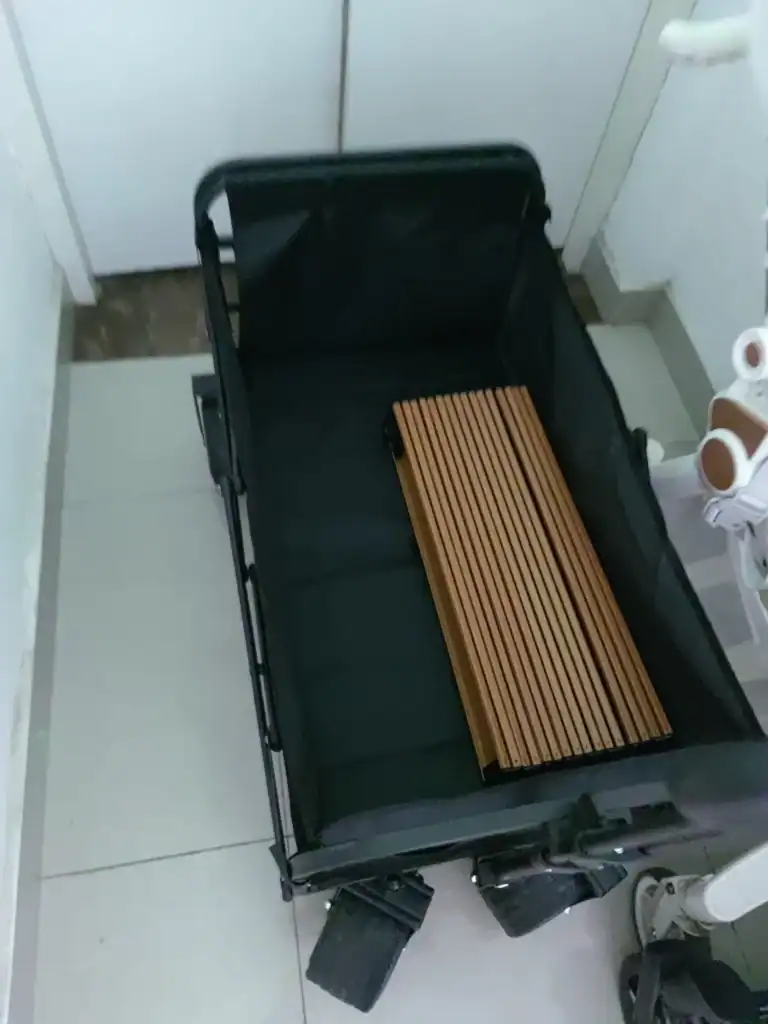
When DDP Makes Sense for Folding Wagon Imports
If your annual container volume is under 10 TEUs and you don’t have a freight contract with a major carrier, DDP is usually the smarter play. The supplier books the space, pays the ocean freight, clears customs at destination, and delivers to your door. You get one invoice and zero surprises.
This matters most for first-time importers or brand managers launching a folding wagon line without an established logistics desk. A single unexpected demurrage charge — say the vessel arrives late and the container sits at Long Beach for five extra days — can wipe out your margin on that first order.
Kelyland Outdoors handles export documentation and customs guidance as part of its standard service process. That includes coordinating with global shipping partners, managing export paperwork, and providing real-time tracking through step nine of their ten-step workflow. For DDP shipments, they extend that support through destination clearance.
When FOB Gives You More Leverage
Larger importers with dedicated logistics teams should run FOB from Ningbo or Shanghai. Why? Because you control the carrier selection, negotiate your own ocean rates, and consolidate multiple supplier orders into shared containers.
Conclusão
The difference between a competitive FOB price and a profitable landed cost for folding wagons is almost always in the freight quote details. Eight common fees—from CBM rounding on LCL shipments to destination terminal handling—can quietly add $500 or more per container if you don’t audit the line items.
-
- Ask for a door-to-destination line item, not FOB plus freight.
- Audit CBM rounding on LCL folding wagon shipments.
- Request full destination charges in USD per 40HQ.
- Compare DDP vs FOB based on your annual volume.
Before you finalize your next folding wagon order, run the freight quote audit checklist with your supplier and forwarder side by side. A supplier that handles export documentation and customs guidance—like Kelyland Outdoors does as part of its standard process—removes one layer of hidden cost risk from the equation. Review your current supplier’s freight quote structure against the eight fees outlined here to see where your budget is actually going.
Perguntas frequentes
Encargos no destino, como taxas de entrega, movimentação terminal e desembaraço aduaneiro, podem adicionar US$ 350–700 por contêiner 40HQ — valores que nunca constam na tarifa básica marítima. Sobretaxas de alta temporada e cláusulas de arredondamento de CBM, sim. Sempre solicite um detalhamento completo em USD por contêiner 40HQ antes de realizar o embarque.
How do I compare freight quotes for folding wagons?
Solicite o mesmo par de incoterm e porto a todos os transitários e peça uma análise detalhada em USD por contêiner 40HQ e por CBM. Utilize uma lista de verificação simples para identificar encargos no destino ausentes. Compare três orçamentos lado a lado utilizando o mesmo par de porto.
When should I use DDP vs FOB for folding wagons?
O DDP simplifica o controle de custos para compradores menores ao agrupar todas as taxas de envio e alfandegárias em um único preço. Grandes importadores com poder de negociação frequentemente preferem o FOB para garantir preços mais baixos. Escolha o DDP se deseja custos fixos; escolha o FOB se tiver alavancagem de volume.
Qual é o MOQ típico para carrinhos dobráveis personalizados?
Standard models typically range from 300–1,000 pieces, but some items can start as low as 50–100 pieces depending on customization level. MOQ is flexible for bulk orders after finalizing specs. Confirm MOQ only after your product spec and customization scope are fixed.

 English
 Español
 Deutsch
 Français
 Português do Brasil
 Русский
 العربية
 한국어
 日本語