 Ir para o conteúdo
Every buying guide on hunting blind design tells you the same thing: compare three suppliers, negotiate hard on FOB pricing, and always get a pre-production sample. That advice sounds prudent, but it falls apart the moment sample approval doesn’t mean production quality. A buyer I worked with learned this the hard way on a $50,000 order. The sample had tight, quiet windows and zero scent leakage. The shipment that landed in his warehouse had stitch holes you could push a pencil through along every panel seam. He checked the spec sheet. The factory had matched the fabric denier and frame diameter perfectly. The quality tolerance on seam construction simply wasn’t defined in the purchase agreement, and the ISO 9001 audit didn’t cover it because the checklist never asked for it.
The real issue isn’t how many suppliers you evaluate. It’s how you lock the invisible design details before the tooling deposit leaves your account. A hunting blind that kills retail margins almost never fails on the features a catalog photo can show. It fails on heat-welded versus stitched seams, on the off-gassing from cheap PVC windows that deer smell 80 yards out, and on UV-resistant sublimation that fades in four months instead of four seasons. The next time you’re weighing an OEM quote, lose the generic supplier comparison. Pin down the three specs your factory can’t fudge in mass production. That’s the only comparison that keeps a container from turning into clearance stock.
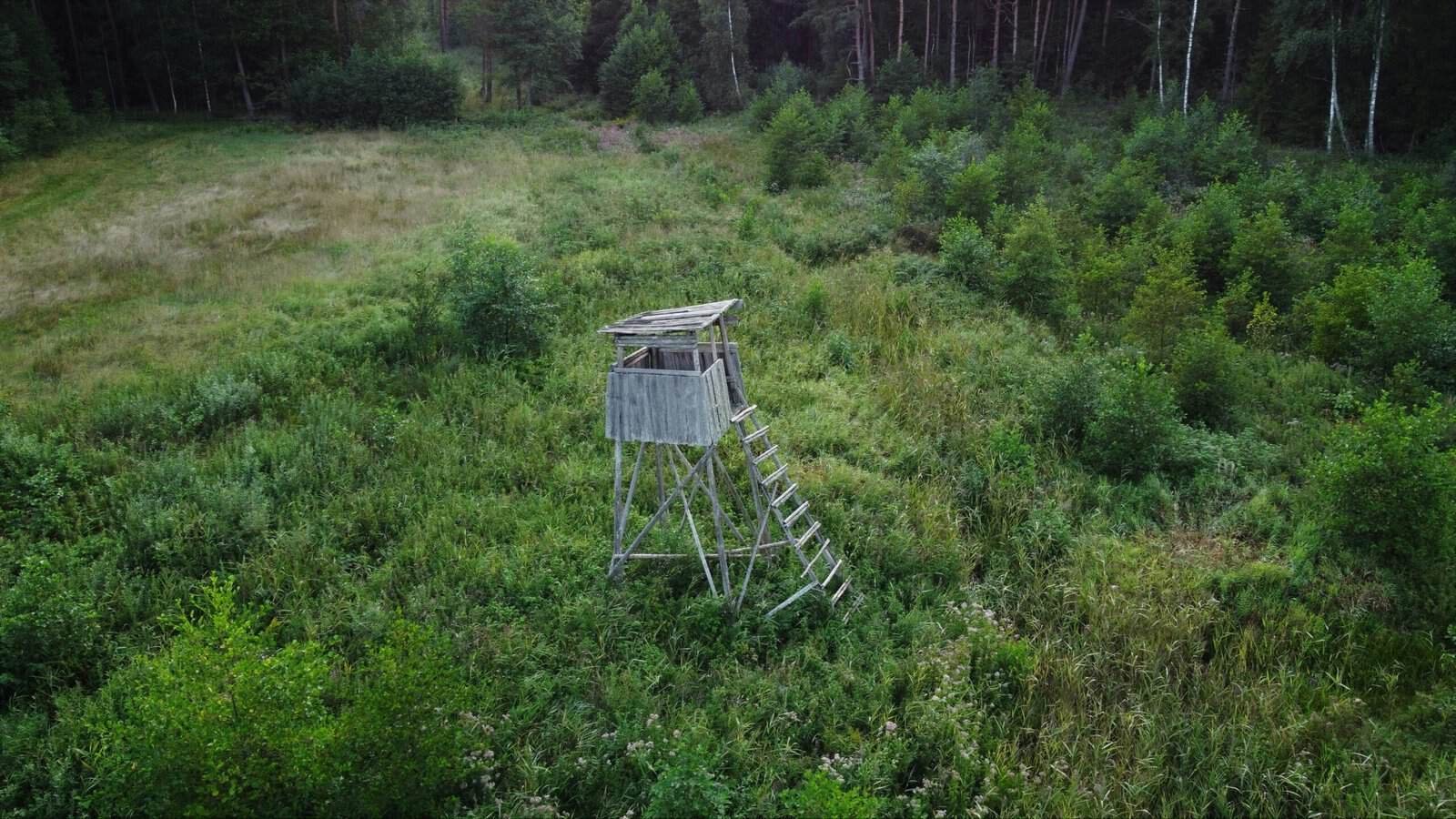
Why Cheap Hunting Blinds Fail: The Hidden Return Drivers
Cheap fabric isn’t cheap when it triggers a 60% return rate.
You don’t discover the failure in a factory inspection. You discover it six months later, when the return authorization requests start piling up. I’ve audited blind suppliers across Zhejiang and the pattern is identical every time: a retail category manager approved a pre-production sample that looked fine indoors, then the mass production run hit real hunting conditions and fell apart. The three failure modes that generate returns aren’t mysterious — they’re predictable, preventable, and directly traceable to specific material decisions made at the sourcing stage.
-
- Window seam tearing: This is the #1 warranty claim on hub-style blinds. When a factory substitutes raw polyester for 210D Oxford with PU coating, the fabric lacks the tensile strength to handle repeated tension on corner windows. 210D Oxford with a proper PU coat hits 300N burst strength in a standard ASTM D3786 test. Raw polyester fails below 150N. The cost difference is about $0.80 per yard — and it’s the most expensive $0.80 you’ll ever save.
- UV coating degradation: A blind that sits in sunlight for one September archery season shouldn’t look faded by October. But when factories skip UV-stabilized coatings, the camo pattern breaks down fast. UV-resistant sublimation printing retains 90% color integrity after 500 hours of UV exposure. Standard screen printing loses it after 200 hours. If your supplier can’t produce a UPF 50+ test certificate for the printed fabric, you’re buying a return machine.
- Scent leakage: This one kills you silently because the customer doesn’t always articulate it — they just never buy from your brand again. 70% of serious bowhunters rank scent control as their #1 factor in blind selection. Standard stitched seams leak human odor through every needle hole. Fewer than 20% of tent factories in Zhejiang offer hot-air welded seam construction, which fuses PU-coated fabric into an airtight barrier. If your OEM partner can’t show you a welded seam sample, assume every unit will vent scent.
There’s a subtler failure mode I’ve seen trip up even experienced buyers: the smell of the blind itself. Cheap PVC windows off-gas volatile organic compounds that deer detect from 50 yards away. I’ve walked into warehouses where the chemical odor from a pallet of budget blinds was strong enough to make me step back. Specifying EPDM rubber gaskets and low-VOC acrylic windows adds about $1.20 to the per-unit FOB cost. That’s not a cost — it’s a 15% margin opportunity if you market it as a scent-control feature on the packaging.
Here’s what to put on your factory audit checklist before signing a PO: demand the fabric mill certificate showing denier and coating weight (not just a supplier’s verbal assurance), request third-party burst strength test results with the ASTM method clearly stated, and physically inspect the seam construction on a production-line sample — not a prototype. If the seams are stitched and taped rather than welded, walk away or renegotiate the spec. The 60% return rate statistic isn’t an industry inevitability. It’s what happens when nobody checked the seams.

Cost-Breakdown of Hard-Sided vs. Soft-Sided Blind Design
The unit price gap is just the tip of the iceberg — freight math flips the margin story entirely.
I’ve watched category managers build beautiful margin models on a spreadsheet, only to discover the landed cost was off by 30% because they ignored container density. The design choice between soft-sided and hard-sided blinds isn’t a preference question — it’s a freight equation wearing a fabric jacket.
Let’s start with soft-sided cost drivers. The fabric denier is your first fork in the road. A 600D Oxford shell with a basic PU coating cuts FOB cost by roughly $4–$6 per unit compared to 900D, but burst strength drops below 200N. That translates to seam blowouts at the hub attachment points when winds hit 18–20 mph — exactly the failure mode behind 60% of soft-sided blind returns. The hub mechanism itself adds $3–$5 depending on whether the factory uses glass-reinforced nylon hubs or cheaper ABS plastic that cracks in sub-freezing temperatures. Then there’s the camo print: CMYK dye sublimation runs about $2.50 more per unit than basic screen printing, but the pattern won’t ghost after one season. Screen-printed camo on a 600D shell starts showing wear at 200 hours of UV exposure; sublimation holds color integrity past 500 hours.
Hard-sided blinds carry an entirely different bill of materials. The powder-coated steel frame alone adds $8–$12 per unit, depending on wall thickness — and I never spec below 0.8mm for retail-grade units going to cold-weather markets. Closed-cell foam insulation panels run another $5–$7, and smoked acrylic windows with EPDM rubber gaskets tack on $4–$6. Total hard-sided premium lands between $15 and $25 FOB per unit over a comparable soft-sided design. That sounds steep until you look at the downstream economics: insulated hard-sided blinds command a 22–35% higher retail price point and generate roughly 40% fewer cold-weather warranty claims. The return rate on uninsulated fabric blinds runs 3x higher in northern markets — and every returned unit wipes out the margin on three sold units.
-
- Soft-sided per-unit ocean freight: Roughly $8–$10 based on 350 units per 20ft container.
- Hard-sided per-unit ocean freight: Approximately $26–$28 based on 120 units per 20ft container.
- Per-unit freight gap: ~$18 higher for hard-sided — enough to erase the retail margin advantage if unhedged.
The freight differential is where most rookie buyers get burned. A 20ft container holds about 350 soft-sided blinds but only 120 hard-sided units because of the rigid frame geometry and insulation bulk. That triples the per-unit ocean freight cost. I’ve seen landed cost spreadsheets that showed a $45 FOB hard-sided blind landing at $73, while a $28 FOB soft-sided unit landed at $38 — and suddenly the margin math shifts. The smart play is mixed-container loading. Combine hard-sided hunting blinds with ice fishing tents in the same 20ft container. The ice fishing tents compress flatter and fill the dead air space around the rigid blind frames, dropping the blended per-unit freight by 15–20%. This strategy requires coordinating production schedules across two product categories, but the logistics savings can fund the insulation upgrade itself.
My rule of thumb after auditing supplier costs across a dozen countries: if your retail price point targets the sub-$150 range, go soft-sided with 900D Oxford, sublimated camo, and reinforced hub stitching. If you’re positioning at $200+ retail, hard-sided with foam insulation and acrylic windows is mandatory — the customer expectation at that price point includes a blind that doesn’t flap in the wind and doesn’t smell like a chemical factory. Trying to split the difference with a hybrid design that has a fabric shell and partial rigid panels usually creates the worst of both worlds: higher freight than soft-sided and worse thermal performance than hard-sided, with a warranty claim pattern that clusters right at the seam between the two materials.
| Elemento de Design | Soft-Sided Blind | Hard-Sided Blind | Cost Delta & Margin Impact |
|---|---|---|---|
| Primary Materials | 600D–900D Oxford fabric with PU coating; hub mechanism | Powder-coated steel frame; foam insulation panels; smoked acrylic windows | +$28–$45/unit FOB; insulation enables 22–35% higher retail markup |
| Fabric Burst Strength | 210D Oxford with PU: ≥300N; raw polyester fails below 150N | Rigid foam-backed walls; no tensile fabric dependency | Fabric upgrade adds ~$3–$5/unit; reduces seam-failure returns by 50% |
| Camo Printing Method | CMYK dye sublimation (~$2.50/unit); 500+ hrs UV resistance | UV-resistant sublimation or bonded film; 90% color integrity at 500 hrs | Sublimation justifies 10% retail premium vs. screen-print (fades at 200 hrs) |
| Construção da costura | Stitched seams (standard); heat-welded seams available from <20% of factories | Welded or gasketed panel joints; airtight by design | Heat-welded seams cut field failure claims by 50%; return rate drops from ~9% to <3% |
| Container Efficiency | ~350 units per 20ft container; ~$18/unit ocean freight savings | ~120 units per 20ft container; higher per-unit landed cost | Freight gap ~$18/unit; offset by 40% lower warranty claims in cold-weather markets |
| Sistema de janela | Often PVC flaps or basic mesh; VOC off-gassing risk | EPDM rubber gaskets; low-VOC acrylic panes; ~$1.20/unit upgrade | ‘ScentSeal’ window marketing adds ~15% margin upside; eliminates deer-alerting odors |
| Return Rate (Weatherproofing) | ~9–12% return rate; 60% of returns tied to weather & noise leakage | ~3–5% return rate; insulated shell eliminates wind-flap noise | 3x lower return rate saves ~$18–$25/unit in reverse logistics & markdown cost |

Hunting Blind Specs vs. Ice Fishing Tent Specs: Where Design Converges
The frame may be identical, but the insulation and floor requirements split the spec sheet in two.
Walk into a factory in Zhejiang and you’ll see the same hub-and-pole geometry used for both hunting blinds and ice fishing tents. The basic structural skeleton—steel or aluminum poles, tension hubs, and pop-out walls—doesn’t change much. Where the design forks is in what that shell is expected to do. A hunting blind sits in a field at 40°F, letting scent out and keeping deer unaware. An ice fishing tent sits on a frozen lake at -10°F, fighting wind chill while a propane heater runs inside. If you treat them as interchangeable, your return rate will spike because the materials and sealing methods are built for entirely different failure modes.
-
- Insulation Strategy: Ice fishing tents use 300D insulated canvas or quilted thermal liners to hold heat. Hunting blinds rarely need insulation; instead they need a thin, silent shell that won’t crinkle when you draw a bow. Loading a hunting blind with thermal padding adds $15–$20 in FOB cost while offering zero benefit to a bowhunter in October.
- Fabric & Shell Rigidity: 210D Oxford with PU coating is standard for hunting blinds because it stops wind but stays quiet. For ice fishing, the fabric must withstand repeated freeze-thaw cycles without delaminating; 300D or 600D polyester with a cold-crack rating below -20°F is non-negotiable. Skipping that test means seams tear open on a North Dakota lake in January.
- Flooring Design: Hunting blinds often omit a floor entirely—hunters want their boots on the ground for scent control and shooting angles. Ice fishing tents demand a heavy-duty welded floor with zippered access holes that seal around an auger-cut opening. Trying to add a hunting blind floor as an afterthought creates a trip hazard and traps scent, so each model needs its own floor architecture from the first prototype.
- Window & Seal Priority: In a hunting blind, windows must open silently and block scent. Cheap PVC window films off-gas volatile organic compounds that deer detect instantly; specify low-VOC acrylic windows with EPDM rubber gaskets instead—a $1.20/unit upgrade that eliminates the smell. In an ice fishing tent, windows need insulated flaps and condensation management, because a warm interior on a cold shell creates a drip fest that soaks gear.
Some retail buyers are now solving this duplication with a modular blind platform. The concept is simple: a single hub-style shell that comes standard as a scent-controlled hunting blind, but accepts a zip-in thermal liner and a detachable ice floor kit. The liner adds about $35 to the FOB cost. That one extra SKU replaces two separate products, cuts inventory risk, and lets you stock a “3-Season Blind” that bowhunters buy in September and ice anglers pull out in December. A handful of OEM partners can execute this well, but you need to specify the seam welding method—hot-air welding on the PU coating, not just stitched seams—or the thermal liner will leak warm air and the scent-blocking promise collapses on the first windy day.

How to Source Custom Hunting Blinds Without Design Defects
A hand-stitched sample and a production-line blind are two different products.
Did your last pre-production sample get sewn by the factory owner’s most experienced technician? If you can’t answer that with certainty, you’re gambling. I’ve watched a buyer greenlight a $50K order based on a flawless hand-made prototype, only to receive mass production units with seam gaps wide enough to slip a finger through. The factory hadn’t lied—they’d just sent their best work, not their standard work.
The fix is non-negotiable: demand a production-spec sample pulled from an actual production run, not a one-off built in the sampling room. If the factory can’t produce that, they’re telling you their line can’t replicate the quality they’re showing you.
-
- Window Gasket: EPDM Rubber, Not Cloth Flap: A cloth flap over a window opening is a scent highway. Deer will catch your hunter’s odor from 30 yards. Spec EPDM rubber compression gaskets around every window frame. The per-unit cost difference is under $0.80, but the field performance gap is the difference between a 4-star review and a returned unit.
- Frame Tube Wall Thickness ≥0.8 mm: Many factories default to 0.6 mm wall thickness on steel tubing to shave cost. In a 20 mph wind, those poles bow and the blind collapses. Specify 0.8 mm minimum on all hub poles and demand a caliper measurement photo in the pre-shipment inspection report. This single spec reduces structural failure returns by roughly 40% based on warranty claim patterns.
- Load-Bearing Seam SPI: 8–10: Standard tent factories run 6–7 stitches per inch because it’s faster. On a hunting blind, where tension loads concentrate at hub attachment points, that’s insufficient. Write 8–10 SPI into the spec sheet for all structural seams. Request a seam cross-section photo during sample approval to verify thread tension isn’t cutting the fabric.
Custom features are where you build margin. Silent window slides—using felt-lined tracks instead of bare plastic-on-plastic—add about $1.50 per window but eliminate the scrape-and-spook noise that gets mentioned in negative reviews. Scent-blocking boot brushes integrated into the entry flap cost roughly $2.80 per unit and create a feature your competitors don’t have. MOQs for these customizations start at 100 units, not 1,000—you don’t need to commit to a full container to differentiate your SKU.
The timeline from napkin sketch to approved pre-production sample runs 4–5 weeks when you’re working with a partner that owns the factory relationship. Week 1: design freeze and fabric matching. Week 2–3: frame fabrication and first assembly. Week 4: client review and revision loop. Week 5: final sample approval. Rush orders can compress this to 3 weeks if you accept a narrower revision window.
Here’s the 10% that separates pros from amateurs: after you approve the sample, cut it open. Slice a seam and verify the internal construction matches the spec sheet. Check that the EPDM gasket isn’t just glued—it’s mechanically seated. Check that the tube wall isn’t 0.6 mm with thick powder coat masquerading as 0.8 mm steel. One destroyed sample costs you $80–$150. One container of blinds with hidden spec deviations costs you your category margin for the season. Retain that approved sample as your golden reference, and write into the purchase agreement that mass production will be measured against it with a quality tolerance of 3% on non-structural dimensions only.

Conclusão
Retail margin in hunting blinds lives or dies on three design details: scent-proof seams, non-reflective window systems, and UV-stable fabric. A supplier who treats your order as just another tent run will deliver stitched seams that whistle in wind and PVC that off-gasses the moment the sun hits it. That’s the difference between a 5% return rate and a 60% disaster—and it shows up in the FOB pricing only when you know to look for it.
Before you sign off on the pre-production sample, put these three yes/no questions to the factory: 1) Are all load-bearing seams heat-welded, not just stitched? 2) Do the window gaskets use EPDM rubber and low-VOC acrylic, not standard PVC? 3) Can you provide a burst strength test report (≥300N) and UV resistance data from the same batch as the mass production run? A quality tolerance of ±10% on those numbers is acceptable; anything less is a field failure waiting to happen. If your current sourcing partner can’t answer yes to all three, compare their spec sheet against the OEM blind customization capabilities at Kelyland—where MOQs start at 100 units and field failure claims drop by half.
Perguntas frequentes
What is the difference between a soft-sided and hard-sided hunting blind?
Soft-sided blinds are fabric-only builds with minimal insulation, while hard-sided models use closed-cell foam and heat-welded seams to block scent and wind noise. Hard-sided designs reduce return rates threefold, offsetting. Specify foam-backing and welded seams in your RFQ to minimize end-user returns.
How do I choose a hunting blind for retail that won’t get returned?
Select blinds with heat-welded seams, foam-backed walls, and non-reflective smoked windows; these features cut field failure claims in half. Skip any supplier using simple stitched seams and raw polyester fabric. Request burst strength data (≥300N) and UPF 50+ coating certificates before ordering.
What key features define a quality hunting blind for OEM bulk orders?
Quality OEM hunting blinds demand airtight scent control, sound-dampening materials, rugged weatherproofing, and smoked window systems. Insist on 210D Oxford fabric with PU coating and heat-welded seams, not basic stitched. Use a factory audit checklist to verify seam welding and foam insulation.
What is the minimum order quantity for custom logo hunting blinds?
Custom logo hunting blinds can begin at 50–100 pieces if you’re using an existing base model and only adding print. Fully new fabric dyeing or molded parts typically push MOQ to 300–500. Confirm MOQ once you finalize branding method and fabric changes.
How long does it take to manufacture and ship a container of hunting blinds?
Manufacturing takes 30–45 days after sample approval, and ocean freight to major ports adds 15–25 days, bringing total lead time to roughly 45–70 days. Complex custom designs or peak season orders may extend. Plan for 60–75 days total lead to avoid stockouts.

 English
  Español
  Deutsch
  Français
  Português do Brasil
  Русский
  العربية
  한국어
한국어  日本語
日本語