 Ir para o conteúdo
O pedido de $50.000 não foi para um navio; morreu na aprovação da amostra, e os defeitos da tenda inflável por trás disso não estavam em lugar nenhum na lista de embalagem. O amostra de pré-produção passou em todas as verificações rápidas, mas a produção em massa veio com vazamentos lentos nas vigas de ar e abas de válvula que travavam após alguns usos.
Essa lacuna geralmente é um problema de tolerância de qualidade, não um problema de lealdade do fornecedor. A aprovação de amostra é apenas uma promessa sobre aquela única tenda, então quando o pedido passa para uma produção de 300 unidades, a fábrica precisa dos mesmos parâmetros de teste escritos na especificação — tempo de retenção de pressão, limites de taxa de vazamento, peso do revestimento e contagens de ciclos de válvula. O preço FOB raramente recompensa uma fábrica por adicionar essas verificações, por isso elas são ignoradas a menos que o comprador as torne condições contratuais.
A boa notícia: estes defeitos de tenda inflável podem ser detectados antes de o contêiner sair do pátio. Uma inspeção pré-embarque que inclui um teste de retenção de pressão de 12 horas e um teste de válvula de 30 ciclos adiciona dois ou três dias ao cronograma, e custa muito menos do que uma reclamação de devolução ou uma demonstração falha do revendedor. Monte essa lista de verificação primeiro, e a fábrica saberá exatamente o que será medido.

Vazamentos nas Costuras das Vigas de Ar
Um teste de retenção de pressão de 12 horas identifica vazamentos lentos nas costuras que a inspeção visual padrão deixaria passar.
Vazamentos nas costuras das vigas de ar são o defeito oculto mais comum em tendas infláveis. Eles passam na inspeção visual e até mesmo em um teste de inflação de 5 minutos, mas aparecem depois que a tenda fica inflada durante a noite em um acampamento. Nesse momento, o contêiner já foi enviado e você está gerenciando um processo de reclamação que dura 60 dias ou mais.
Como testar as vigas à pressão total
Não se contente com uma inspeção visual das costuras. Especifique um teste de retenção de pressão em cada amostra e em uma porção estatisticamente válida das caixas de produção. Infle cada viga até a pressão de trabalho nominal, registre a pressão inicial e mantenha-a por 12 horas. Qualquer queda além da tolerância acordada sinaliza um vazamento que você precisa rastrear antes do embarque.
Após a retenção de 12 horas, pulverize as costuras e as linhas de solda com uma solução de água e sabão. Vazamentos por microfuros aparecem como bolhas constantes em pontos específicos. Marque cada vazamento, exija fotos e faça a fábrica testar novamente após o reparo.
O que causa vazamentos por microfuros na soldagem por alta frequência
A soldagem por alta frequência sela as vigas de ar de PVC/TPU gerando calor dentro do material sob pressão. Os vazamentos por microfuros têm três causas raiz: contaminação na superfície da solda, espessura inconsistente do material ou detritos retidos entre as camadas.
-
- Contaminação: Poeira, resíduos de agente desmoldante ou óleos do manuseio impedem que as camadas de PVC/TPU se fundam completamente. O resultado é uma pequena abertura que se alarga sob ciclos repetidos de inflação.
- Espessura inconsistente: O filme de PVC que varia além da especificação de 0,4 mm a 0,6 mm cria zonas fracas na solda. O aquecimento dielétrico não penetra uniformemente, deixando seções não fundidas ao longo da costura.
- Detritos retidos: Aparas de linha, partículas de tecido ou umidade podem vaporizar durante a soldagem, formando microvazios que aparecem como microfuros sob pressão.
Kelyland Outdoors coordena a produção de tendas infláveis por meio de sua rede de 17 fábricas estratégicas centrais e mais de 200 parceiros de fabricação, incluindo uma fábrica de colchões de ar certificada ISO 9001:2015 em Xiangyang, Hubei, que produz 2,5 milhões de unidades anualmente. Inspeções padrão em cada etapa da produção fazem parte do processo — mas o controle de qualidade visual não detecta um vazamento lento nas costuras. Especifique a retenção de 12 horas e um AQL de 2,5 para defeitos críticos com um inspetor terceirizado. Isso adiciona 2 a 4 dias e evita um processo de reclamação de 60 dias depois que o contêiner chega ao destino.
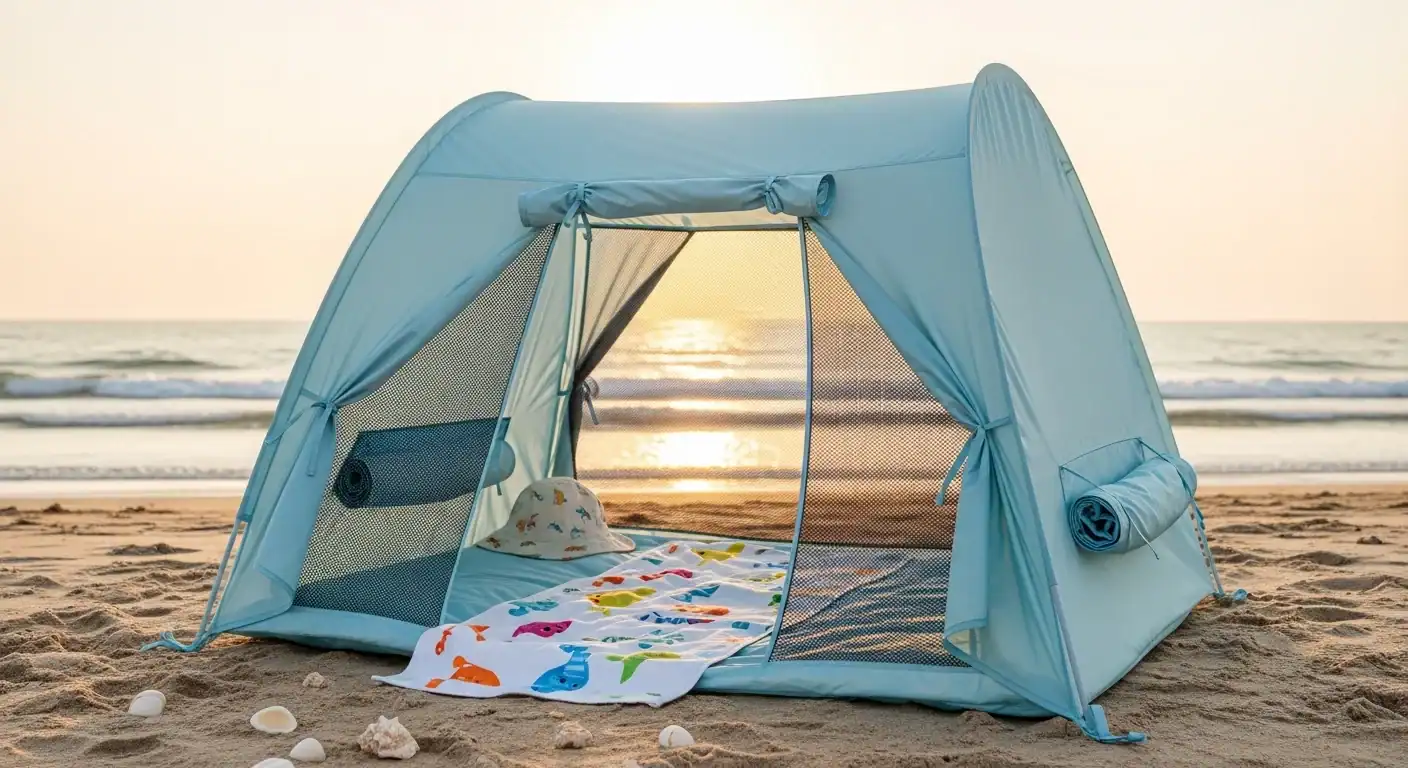
Falhas no Núcleo da Válvula
Uma válvula que passa numa inspeção visual pode ainda assim falhar no 30.º ciclo de insuflagem.
A válvula é o componente mais pequeno de uma tenda insuflável, mas suporta toda a pressão de trabalho da viga de ar. Quando falha, a tenda esvazia a meio da noite e o comprador acaba por tratar de uma reclamação. A maioria dos gestores da cadeia de abastecimento inspeciona o tecido e as costuras; poucos submetem a válvula a um teste de ciclos real antes do carregamento do contentor.
Porque é que Válvulas Baratas Partem Após Poucas Utilizações
Nas tendas insufláveis chinesas, o defeito de válvula mais comum é uma palheta unidirecional que fica presa por resíduos de PVC resultantes da soldadura de alta frequência. A palheta sela corretamente na primeira insuflagem, mas o resíduo endurece, a palheta deixa de assentar rente e a viga perde pressão lentamente. Os insertos de válvula de baixo custo agravam o problema porque o disco de vedação não tem a rigidez necessária para manter a sua forma ao longo do tempo.
Como Testar a Retenção de Ar da Válvula
Não confie numa inspeção visual. Insufle a viga até à pressão de trabalho total e deixe a tenda repousar durante 12 horas. Uma fuga lenta na válvula manifestar-se-á como uma queda de pressão mensurável. Depois, realize 30 ciclos completos de insuflagem e esvaziamento na mesma válvula. Esse teste deteta o modo de falha por resíduos de PVC que uma verificação visual AQL padrão não deteta.
-
- Teste de retenção de ar da válvula: Insufle até à pressão de trabalho total, registe a pressão inicial e volte a verificar após 12 horas. Qualquer queda indica uma fuga na válvula ou na costura.
- Teste de 30 ciclos: Insufle e esvazie completamente a mesma válvula 30 vezes. A palheta deve reassentar corretamente de cada vez, sem colar e sem fugas audíveis.
- Verificação com solução de sabão: Aplique uma mistura de água e sabão à volta da base da válvula enquanto esta está pressurizada. As bolhas revelam ar a escapar pela palheta ou pelo colar da válvula soldado.
A Kelyland Outdoors trabalha com fábricas parceiras certificadas ISO 9001:2015 e pode disponibilizar relatórios de inspeção mediante pedido. O relatório só ajuda se o teste da válvula estiver incluído na lista de verificação de inspeção pré-embarque. Adicione-o à sua lista de verificação de controlo de qualidade personalizada para tendas de glamping antes de a fábrica iniciar a produção, não depois de o contentor chegar.
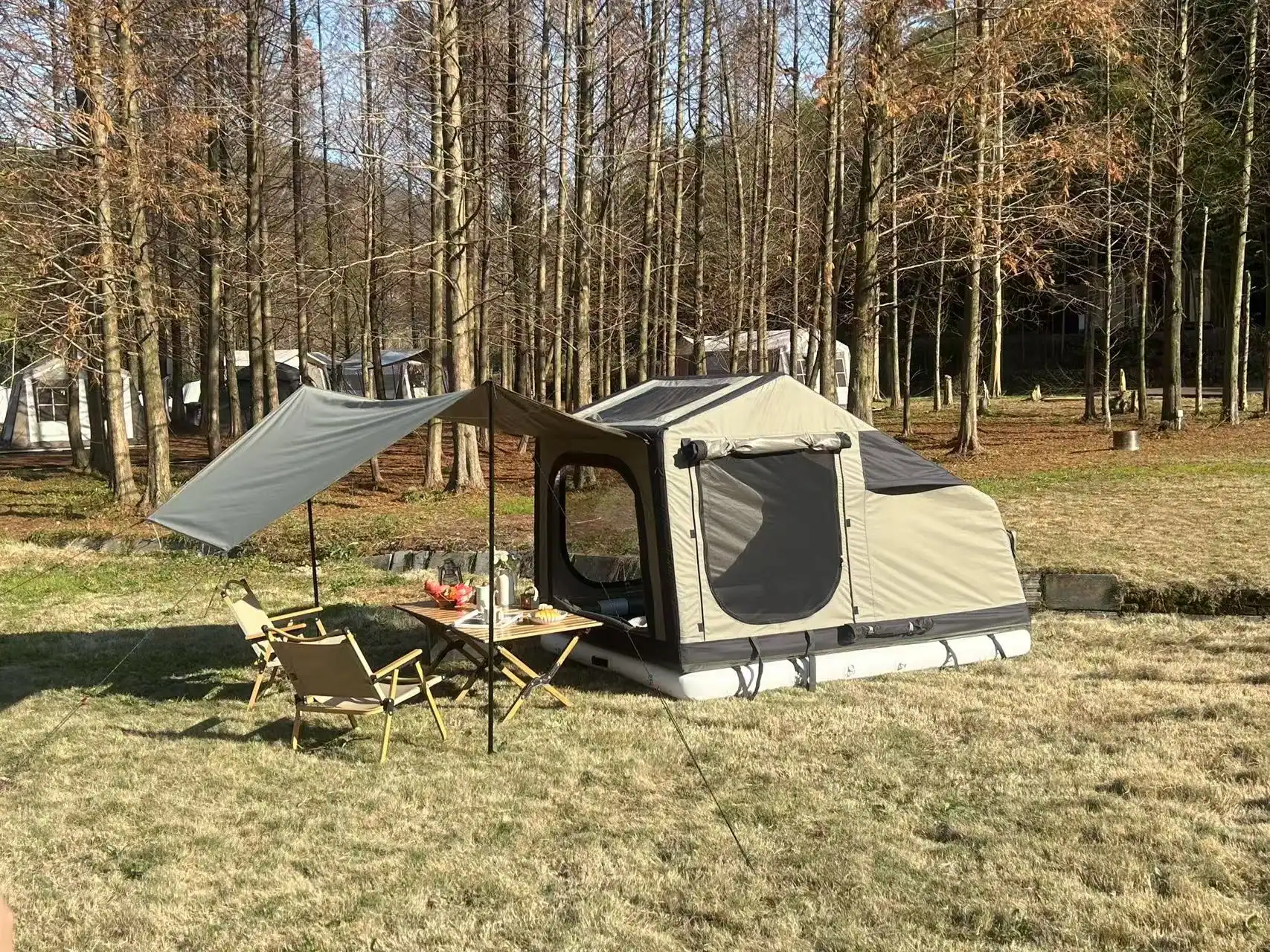
Delaminação do Revestimento do Tecido
A delaminação do revestimento não é um problema cosmético.
Delaminação do revestimento Começa como um defeito visual. Termina como uma falha de impermeabilização. Quando o filme se separa da base de poliéster, a água passa diretamente pela trama — e em uma tenda inflável, as vigas pressurizadas flexionam a cada montagem, então as linhas de vinco onde o tecido dobra são os primeiros lugares onde o revestimento racha.
Sinais Visuais na Inspeção
O descascamento ao longo da fita de costura é o estágio avançado. Detecte-o mais cedo. Segure o painel sob luz rasante e procure por uma textura superficial enrugada ou pequenas bolhas que aparecem assim que a tenda atinge pressão total. Essas bolhas são ar preso entre o filme e o tecido base, o que significa que a adesão já começou a se soltar.
-
- Descascamento: O filme se levanta ao longo das costuras ou linhas de vinco; a camada de revestimento branco torna-se claramente visível nas bordas.
- Bubbling: Small air pockets that expand under inflation pressure — a direct sign that adhesive bond strength is gone.
- Wrinkling: Fixed creases in the flysheet that never relax when stretched, indicating the coating has lost elasticity.
How Coating Weight Affects Waterproofing
Coating weight controls the hydrostatic head — the water pressure the fabric resists before leaking. A light coating keeps cost and packed weight down, but it flex-cracks at the beam seams after repeated inflation. Set an explicit quality tolerance for coating weight and adhesion in the spec sheet. The air beam fabric needs a heavier coating than the flysheet because it bends under pressure on every use. Leave this out of the quality agreement, and the factory supplies the cheapest layer that passes a static lab test.
Coating chemistry matters as much as weight. Kelyland’s partner factories apply PU, silicone, PVC, black, and silver coatings across their tent lines — black coating for UV block, PU for cost efficiency, silicone for cold-weather flexibility. Those partner factories hold ISO 9001:2015 and inspect at every production stage, but the buyer still has to fix the coating spec into the quality agreement. Skip that step, and delaminated flysheets on a glamping tent order turn into a 60-day claim process.
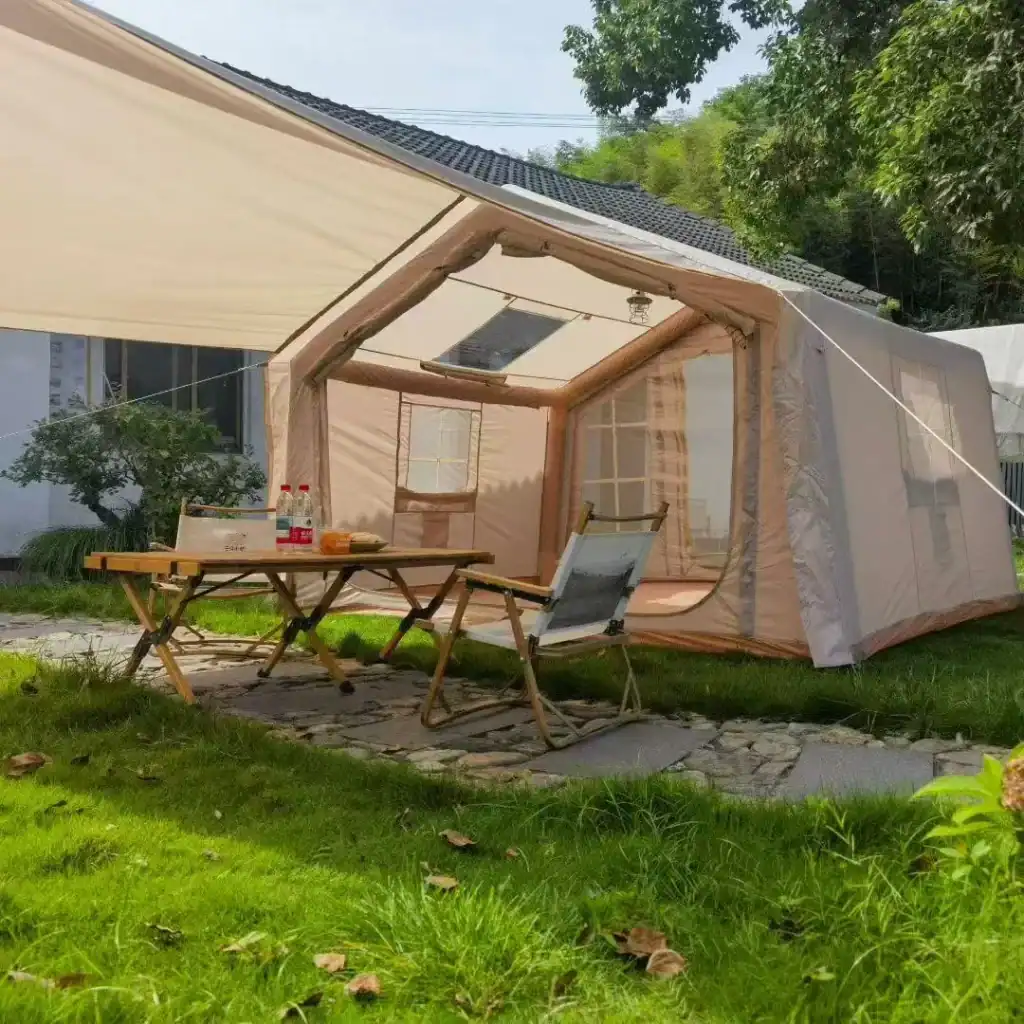
Costura Fraca em Pontos de Tensão
Anchor loops carry the full beam load.
Weak stitching is the only defect on this list that usually passes a flat-pack inspection. The anchor loops holding your air beams in tension look fine on a table. Inflate the tent to working pressure, and those same stitches take the full load of the frame. A bar tack that holds at bench level can pull straight through the webbing during a field setup.
Anchor loop reinforcement
The loops connecting the air beams to the floor and guylines need layered reinforcement. Inspect the production unit, not just the pre-production sample, for bar tacks on both sides of the loop. Kelyland’s tent partner in Ningbo—an ISO 9001:2015 certified factory—subjects anchor areas to mid-production QC checks for stitch coverage and webbing pull resistance, following the company’s 10-step inspection process.
-
-
- Check: Verify bar tacks are placed at both ends of the anchor webbing, and confirm the stitch pattern matches the reinforcement drawing in your tech pack.
- Risco: Two loose stitches at an anchor loop translate into a wall tear after a night of wind. The field replacement cost quickly exceeds the line item you saved by skipping the pull test.
-
Thread tension and needle holes
A needle hole is a tiny puncture in the beam sleeve’s coating. On a canvas tarp, it’s harmless. On an inflatable tent with a TPU- or PVC-coated Oxford sleeve, that same hole is a potential micro-leak path. Over-tensioned thread makes it worse: it cuts into the coating, and after repeated fold cycles, the edge frays.
-
- Especificação: Require seam allowance and stitch density to match your approved sample. Confirm thread tension during the in-line inspection, not at final packing.
- Evidence: Ask the inspector to inflate the beam, run soapy water along the stitch line, and photograph any bubble formation before shipment approval.
This defect rarely surfaces at sample approval. Add a seam-pull check to your AQL sampling for inflatable tents, and request photos from the supplier’s in-line QC report for every production lot. Pressure-retention testing plus a stitch-line inspection closes the gap that visual-only checks leave open.
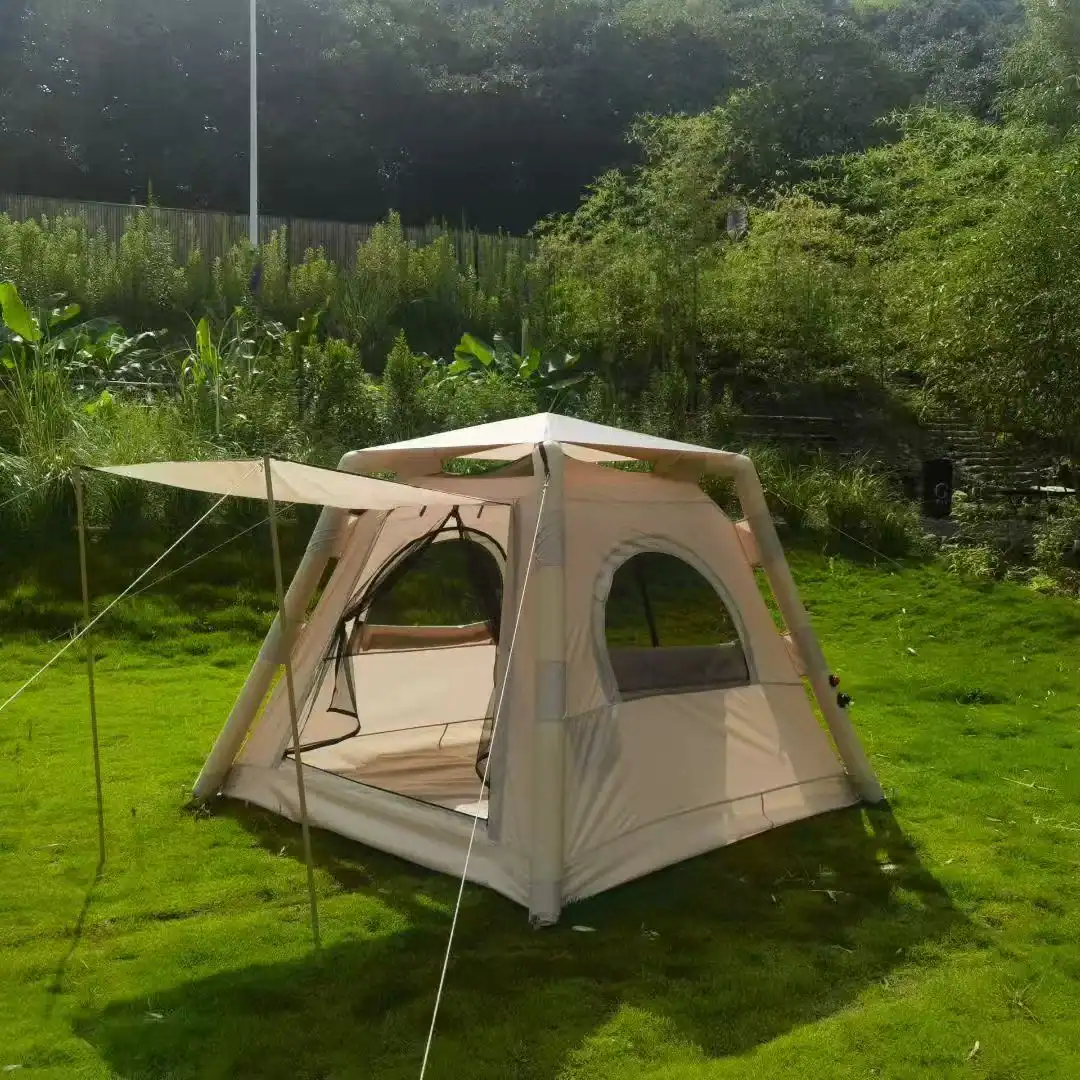
Impressão Desalinhada ou de Baixa Qualidade
A Pantone chip on paper isn’t the same as printed ink on coated tent fabric.
Printing defects on inflatable tents rarely stop the tent from inflating, which is why they slip past a standard AQL visual check. But a logo that looks correct in the factory’s bright showroom can look dull, oversaturated, or plainly wrong when the buyer opens the carton in their own warehouse. The gap sits between what the spec sheet promised and what the ink actually did on a coated fabric surface.
Color Mismatch from Pantone References
Color mismatch usually starts with a digital proof. A Pantone reference viewed on a phone screen is not the same as ink printed onto PU-coated or PVC-laminated polyester. Coatings alter how ink absorbs and reflects light, so the same silk-screen ink can shift hue depending on whether it sits on black-coated, silver-coated, or plain fabric. Approve a physical print sample on the actual tent fabric, and specify that the factory must match it under standard daylight conditions, not an indoor LED display.
-
- Proof type: Require a printed swatch on the exact coated fabric used for production, not a digital rendering or paper proof.
- Color check: Hold the swatch against the Pantone reference under D65 daylight simulation. Accept minor variation only if the brand sign-off covers it.
Kelyland’s production process includes a formal sample approval stage before mass production, and partner factories use Pantone-matched fabric dyeing plus silk-screen, digital, and thermal transfer printing. That setup catches color drift early, but only if the buyer actually signs off on the physical sample and keeps a reference copy for the final inspection.
Ink Adhesion and Washing Resistance
A logo can match color perfectly and still fail after the tent is folded, packed, inflated, and wiped down. Ink formulated for standard woven polyester tends to crack or peel when applied to a coated substrate that flexes under air pressure. Screen-printed areas on inflatable tent beams take repeated bending stress; if the ink can’t flex with the fabric, it delaminates within a few uses. This is a material-compatibility problem, not a workmanship issue, and it won’t show up in a one-hour inspection.
Set an ink adhesion check in your inflatable tent quality inspection checklist. A simple tape-pull test on an inconspicuous printed area reveals weak bonding in seconds. For washing resistance, follow the care-label instructions and rub the print after laundering. If ink lifts, flakes, or fades, reject the batch before shipment. The cost of reprinting after containers arrive is far higher than catching it at the factory.
Acessórios Ausentes ou Incompletos
Accessory shortages rarely show up in a standard AQL visual inspection because the inspector checks the tent, not the carton contents. That’s how a 15-person inflatable glamping tent ships with half the required pegs. The main unit passes every check, then fails on the first windy night at a customer site.
Peg Count, Repair Kits, and Carry Bags
The spec sheet for an inflatable tent lists a peg count that matches the guy-line points and anchor loops for the wind rating. When the carton comes up short, the buyer finds out weeks later through a customer complaint, not during inspection. Make the packing list part of the inspection criteria — verify that every anchor loop has a corresponding peg before the carton closes.
A puncture repair kit is not a bonus. On an inflatable tent, a single beam puncture turns the product into a tarp. Confirm each carton contains the patch material, adhesive, and valve wrench. A carry bag that’s a few centimeters too short will split at the seam on the first repack.
Instruction Manual Compliance
Instruction manuals are a compliance issue, not a reading aid. EU regulations require product instructions in the language of the destination country. Many Chinese suppliers ship English-only manuals that don’t match the actual valve layout — a customer who can’t figure out which valve inflates which beam returns the tent. Confirm the manual’s language and that the diagrams show the real valve configuration before shipment.
At the Ningbo tent factory in Kelyland’s core network — CE, BSCI, and ISO 9001 certified — the packaging design phase.
Dimensões e Pesos de Embalagem Incorretos
The carton is part of the product.
Packing dimensions and gross weight sit at the bottom of most QC checklists. That’s a mistake. For inflatable tents, the packed size directly determines freight class, container loadability, and the number of units you can fit per 40HQ. Get it wrong by a few centimeters and your landed cost per unit shifts — sometimes enough to wipe out your margin.
Why packed size matters for freight quotes
Ocean freight is billed on chargeable weight — the larger of actual weight or volumetric weight. For an inflatable tent that compresses into a heavy-duty PVC/TPU stuff sack, the volume-to-weight ratio sits awkwardly. A supplier who under-reports packed length by 5 cm can make a pallet configuration fail at the warehouse, forcing unexpected LCL consolidation costs or a second truck for a load that should have fit on one skid.
Supply chain managers often discover this only when the freight invoice arrives. That’s the worst time. The container has already sailed, the forwarder has already applied the dimension-based adjustment, and the supplier is already pointing at the approved sample photo. The factory’s inspection report said everything matched — but it didn’t list the carton dimensions on the report.
How to confirm box dimensions before shipment
Ask for three things before the bulk order goes into production: a carton spec sheet with length, width, height, and gross weight per master carton; a photo of the carton on a calibrated scale with the weight reading visible; and a packed carton measurement done at the final compression, not at first packing. Inflatable tents relax after vacuum packing — a carton that starts at 68 cm can stretch to 71 cm once the beams settle.
Kelyland Outdoors includes packing specifications in the inspeção pré-embarque step of its 10-step production control process. The factory network’s ISO 9001-certified suppliers document carton dimensions at the final pack stage, and the inspection team compares those numbers against the packing list and the freight booking confirmation. If you are sourcing through a third-party inspection company, put carton measurements on the same AQL 2.5 sampling plan as the tent’s critical defects — and request photo evidence of the tape measure across the carton’s length and width.
A final note: specify that the packed dimensions must be measured after the vacuum-sealed tent has been inside the carton for at least 24 hours. A tent packed the morning of inspection will not yet show the full relaxation of the fabric and the shift of internal packaging. The carton that fits the freight quote on Tuesday may exceed it by Thursday. That’s the difference between a load that ships clean and one that triggers a dimension surcharge at destination.
| Parameter | Common Defect | Por que é importante | Método de verificação |
|---|---|---|---|
| Dimensões da Caixa (C×L×A) | Boxes measure 2-5 cm larger than the approved packing spec | Container loading plan becomes inaccurate and freight quotes based on CBM must be revised | Measure every 5th carton with a calibrated tape; compare against the signed spec sheet and packing list |
| Gross Weight per Carton | Weight differs by more than 3% from the declared shipping weight | Unexpected carrier surcharges, customs discrepancies, and potential safety violations | Weigh cartons on a certified floor scale; spot-check at least 10% of cartons before palletizing |
| Weight of Accessory Content | Pegs, repair kits, and stakes are not included in the declared unit weight | Dimensional-weight billing surprises and inaccurate landed cost calculations | Confirm the full accessory list with the supplier and add it to the approved unit weight |
| Carton Count per Master Pack | Count varies from the packing list (shortage or overage) | Customs declaration mismatch, warehouse receiving delays, and claim disputes | Perform a full carton count during pre-shipment inspection and document with photos |
| Palletized Height After Wrapping | Stretch wrapping compresses or shifts boxes, altering final pallet dimensions | Pallet cannot fit through the container door or fails carrier height limits | Measure pallet height, width, and depth after wrapping; compare to the container opening |
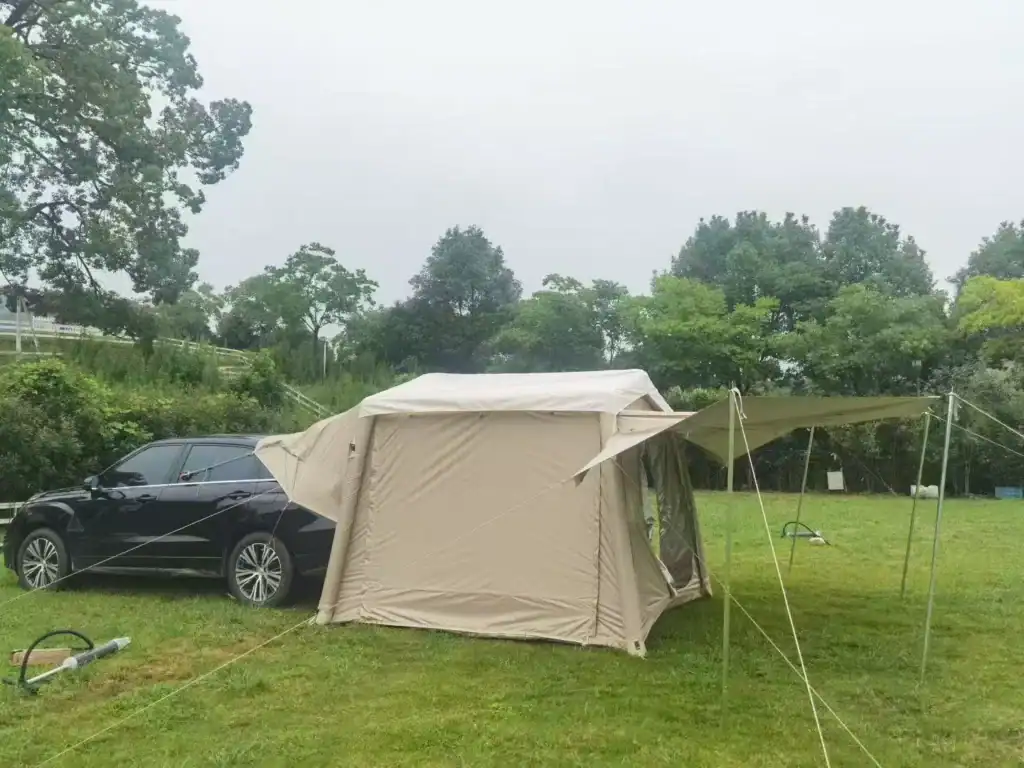
Como Montar Sua Própria Lista de Verificação de Controle de Qualidade para Tendas Infláveis
A QC checklist only works if the factory sees it before mass production starts.
Kelyland Outdoors runs client projects through a fixed 10-step process: sample approval sits at step 3, pre-shipment inspection at step 8. Deliver your inflatable tent quality inspection checklist before step 3. The factory can adjust welding temperature, valve seating, and seam tape application before the line runs. Send it after step 8 and you are paying for a container of defects you already own.
A standard AQL 2.5 visual inspection checks appearance, workmanship, and basic measurements. It does not catch slow leaks. Many inflatable tent failures appear only after the tent has been inflated for 12 hours. Your checklist must therefore specify functional tests, not just visual criteria.
Sharing Inspection Criteria with Kelyland
Kelyland’s partner factories adhere to ISO 9001:2015, with inspections at every production stage and reports available on request. Factory reports carry bias, though. Ask for timestamped photos next to each check result. If a report says “valve OK” without a photo of the air retention reading, treat it as unverified.
-
- 12-hour pressure retention: Inflate each sample to full working pressure and hold overnight. Photograph the gauge at start and finish.
- 30-cycle valve test: The most common valve failure in Chinese inflatable tents is a one-way flap stuck by PVC residue from high-frequency welding. Run 30 inflation and deflation cycles on every sample.
- Full-pressure carton test: Specify pressure retention on every carton for critical orders, not just the randomly selected AQL sample.
Third-Party Inspection Options
For large orders, book a third-party pre-shipment inspection with AQL 2.5 on critical defects. That adds 2-4 days to the schedule and costs a fraction of what a 60-day claim process burns after the container lands. Give the third-party inspector your checklist, not the factory’s version. If the two documents conflict, you want to learn that before export, not after arrival.
Conclusão
Every defect on this list hides until the tent is actually inflated and pitched. Skip the pressure-retention check and you will not see the failure until 12 hours later, when the beam has sagged and a customer is demanding a refund. The cost of doing nothing is a container of unsellable product, a 60-day claim process, and a retail partner who moves to another brand.
-
- Require a 12-hour pressure-retention test on every carton; a standard AQL visual check will not catch slow seam leaks.
- Specify a 30-cycle inflation and deflation test to expose valve flaps stuck by PVC residue from welding.
- A third-party pre-shipment inspection at AQL 2.5 adds 2-4 days but prevents a 60-day claim process.
- Verify packed dimensions, peg counts, and repair kits before shipment; omissions trigger freight surcharges and returns.
Before you approve the next production run, put these tests into a written QC checklist and hand it to your supplier with the purchase order. Specify the 12-hour pressure-retention test, the 30-cycle valve test, and third-party inspection at AQL 2.5 — and treat hesitation as a red flag. Review Kelyland Outdoors’ inflatable gear range to see how a documented inspection protocol should work.
Perguntas frequentes
Como devem ser testadas as costuras das tendas infláveis?
Execute um teste de retenção de ar a pressão total por pelo menos 12 horas para detectar vazamentos lentos nas emendas das vigas. Faça isso na inspeção pré-embarque em vez de depender da aprovação de amostras ou de inspeções visuais. Em seguida, confirme se o plano de amostragem AQL cobre esse teste de pressão.
Por que as válvulas de tendas infláveis falham?
Falhas de válvula geralmente vêm de núcleos de válvula de baixa qualidade que racham ou perdem a retenção até o 30º ciclo de inflação. Teste a retenção de ar por meio de ciclos repetidos de inflação, não apenas uma inspeção visual, antes do envio. Adicione o teste de ciclagem de válvula à sua lista de verificação de controle de qualidade.
O que causa a delaminação do revestimento do tecido?
A delaminação do revestimento resulta de baixo peso de revestimento ou má aderência, e manifesta-se como descascamento, bolhas ou enrugamento. Verifique o peso do revestimento conforme a especificação e inspecione a condição da superfície em peças aleatórias, pois isso afeta diretamente a impermeabilização. Rejeite painéis delaminados antes do carregamento do contêiner.
O que um checklist de controle de qualidade para tendas infláveis deve cobrir?
Uma lista de verificação adequada cobre vedações de vigas de ar, retenção de válvulas, adesão do revestimento, costura em pontos de tensão, correspondência de impressão, acessórios e dimensões embaladas. Compartilhe estes critérios com a Kelyland antes da produção e confirme o plano de amostragem. Obtenha a lista de verificação acordada por escrito antes da produção em massa.
Por que verificar o tamanho embalado antes do envio?
O tamanho embalado determina as cotações de frete, e alguns centímetros podem alterar o carregamento do contêiner e o custo do transporte. Confirme as dimensões e os pesos das caixas durante a inspeção pré-embarque para evitar surpresas no custo final. Meça cada caixa antes de aprovar o embarque.

 English
  Español
  Deutsch
  Français
  Português do Brasil
  Русский
  العربية
  한국어
한국어  日本語
日本語