 跳到内容
跳到内容 
Why does a pre-production sample look flawless, then the mass production run arrives with a different quality tolerance entirely? That gap is exactly what an inflatable tent Russia case study should expose — not the glossy importer narrative, but the hard mechanics of how a утверждения образца actually holds up across 500 units bound for -35°C winters.
A European outdoor brand sourced 500 custom heated inflatable tents for Russian retailers through Kelyland Outdoors, with an integrated heater duct and an air pressure alarm. The initial worry was that Chinese-made air beams would turn brittle at -40°C. Kelyland’s supplier addressed it with a TPU plasticizer blend that keeps flexibility down to -50°C, verified by independent lab tests. That data sheet changed the FOB pricing conversation entirely — the brand saved 12% per unit versus its previous Russian supplier, and the lead time dropped from 60 to 42 days because Kelyland split production across two ISO 9001 factories and synchronized rail shipments.
The Challenge: A Brand’s Expansion into Russian Winter Gear
The brief: 500 heated inflatable tents engineered for -35°C Russian winters—with a February delivery date.
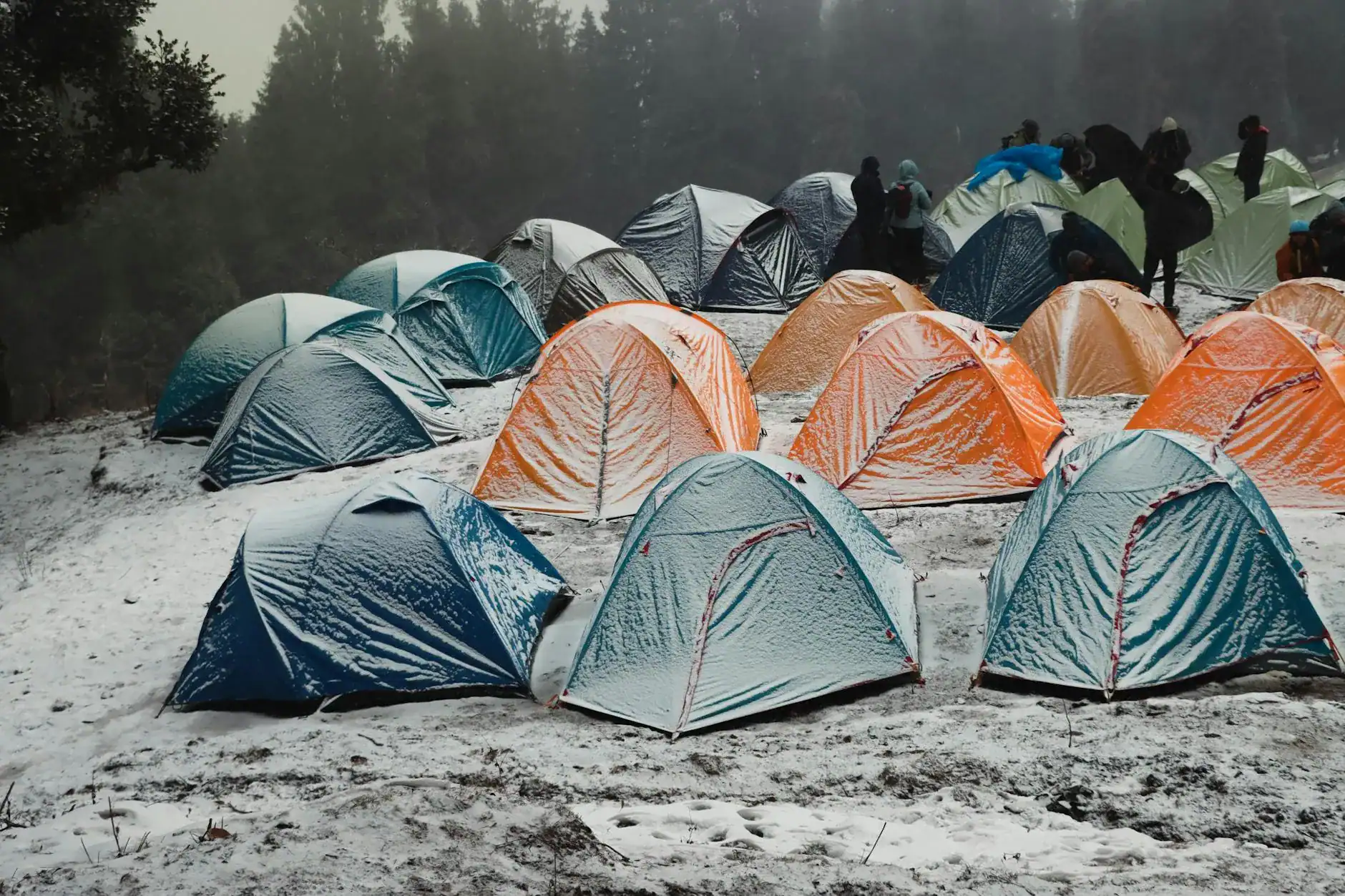
A European outdoor brand was preparing to enter the Russian winter gear market with 500 units of custom inflatable winter tents. Their existing supplier quoted acceptable pricing for standard models, but the brand needed more than a basic shelter: the tents had to survive -35°C field conditions, carry a custom color, and support an integrated heater duct and air pressure alarm. The old supplier couldn’t deliver that package at a workable margin.
The core concern was cold-weather brittleness. At -35°C, most standard PVC air beams stiffen and become vulnerable to cracking at the folds. The brand initially worried that Chinese-made air beams would become brittle at -40°C. Kelyland’s team responded with a TPU/PVC laminate solution using a special plasticizer blend that keeps the air beams flexible down to -50°C, verified by independent laboratory tests. That single material choice removed the biggest technical risk from the project.
The Custom Spec List
-
- Temperature rating: Continuous use at -35°C, with short-term exposure down to -40°C.
- Snow load: Roof panels validated under a 50 cm snow load simulation to handle heavy Russian winters.
- Custom color: Fabric dyed to match the brand’s winter collection, not a stock shade.
- Heater duct: A sealed integrated port that allows external heating without fabric damage or fire risk.
- Pressure alarm: An air pressure warning system that alerts users before beam pressure drops to a critical level.
These requirements pushed the project beyond a stock-item order. Kelyland’s OEM/ODM process covers fabric dyeing, custom-molded parts, and personalized packaging, so the custom color and heater duct were handled through established workflows rather than ad-hoc fixes. The brand’s procurement team also gained confidence from the factory network: the tent production was placed in a partner facility in Ningbo that holds CE, BSCI, and ISO 9001 certifications, ensuring the cold-weather build would meet the documentation standards Russian retailers expect.
By the end of the scoping phase, the brand had a clear specification, a material solution for -35°C, and a supplier that understood the difference between selling tents and engineering for a specific climate. The challenge was never about finding a factory that could assemble a tent; it was about finding one that could prove the design wouldn’t fail in the cold.
Kelyland’s Sourcing Process
A -50°C TPU blend and two ISO-certified factories delivered 500 winter tents in 42 days.
This inflatable tent Russia case study started with a concern: the brand doubted that Chinese-made air beams could survive -40°C without turning brittle. That doubt set the bar for every material decision and test that followed.
Collaborative Design and Fabric Selection
Kelyland Outdoors opened the project with a demand review, not a price quote. The team mapped the brand’s identity, target market, and product specifications before evaluating a single fabric. The brand’s custom requirements were locked early: a specific color, an integrated heater duct, and an air pressure alarm.
Fabric selection came down to TPU versus PVC laminate. PVC costs less but stiffens in deep cold. TPU holds flexibility where seams and welds face repeated stress. For this order, the supplier used a TPU laminate with a special plasticizer blend that retains flexibility down to -50°C, and independent lab tests confirmed the performance.
-
- TPU laminate: Retains flexibility to -50°C, making it the right call for Russian winter retail.
- PVC laminate: Lower cost, but stiffness at extreme low temperatures creates cracking risk at folds.
Prototype Testing Before Mass Production
The prototype went through a 72-hour cold chamber test at -35°C. It then faced a 50cm snow load simulation while fully inflated. The brand signed off on the sample only after both tests came back clean.
That sample approval created the production baseline. The mass production run was then split across two ISO 9001:2015 certified factories from Kelyland’s network of 17 core strategic factories, and synchronized rail shipments cut total lead time from 60 to 42 days. Consolidated raw material purchasing also trimmed 12% off the per-unit cost compared with the brand’s previous Russian supplier.
Quality Control That Prevented Failures
All 500 tents passed the pre-shipment pressure decay test — no sampling, no exceptions.
Production for this order ran across two ISO 9001:2015 factories — one of them the Xiangyang, Hubei air mattress partner that turns out 2.5 million units a year. Splitting the run cut lead time, but it doubled the coordination risk. Both factories followed the same daily inspection standard for the TPU air beams.
Daily In-Line Inspection: Air Beam Welding and Valve Sealing
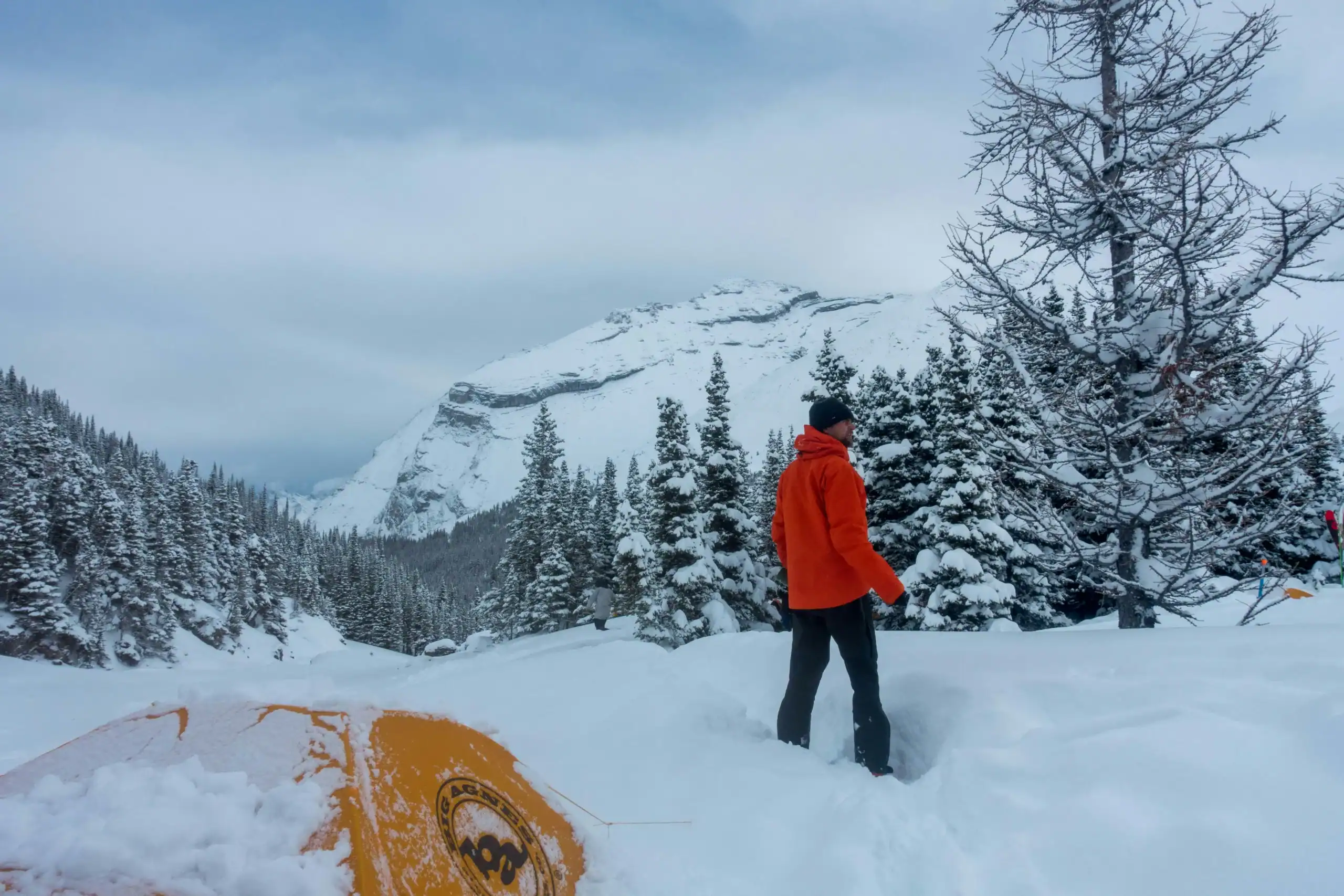
The beams are RF-welded, not glued. That distinction decides whether a tent survives the Russian winter. Adhesive joints grow brittle below freezing; RF welding fuses TPU at the molecular level. Inspectors check weld continuity, seam width, and valve seating on every beam as it leaves the line. A void in the fusion line gets re-welded before the beam is allowed into the tent body.
-
- Valve sealing: Each valve gets thread sealant, a torque check, and a short pressure hold during production — not just at final inspection. The custom air pressure alarm adds a sensor port in the valve housing, which introduces another molded leak point if tolerances drift.
- Material validation: The TPU uses a special plasticizer blend that stays flexible down to -50°C, validated by independent lab tests — the brand’s initial concern was brittleness at -40°C. The in-line weld inspection ensures that material performance isn’t undermined by a weak seam.
Pre-Shipment Pressure Decay Test: 100% of Units
The final gate is a pressure decay test on every finished tent. Each unit inflates to working pressure and sits for a fixed hold period while the pressure drop is measured. A unit that fails gets pulled, the leak is traced to the weld or valve, and the tent runs the full cycle again. This test catches slow leakers — the ones invisible to visual inspection that only show up after hours under pressure.
Most suppliers apply AQL sampling here, checking 5-10% of a batch. On a 500-unit order, hundreds of tents go uninspected. If one slow leaker sits in that majority, it ships, fails at the retailer in freezing conditions, and the brand owns the return. The 100% pressure decay test removes that gamble — and it’s why the full batch arrived in Russia without a single pressure-related claim.

Results and ROI
500 units delivered in full before peak winter retail.
The full 500-unit run cleared pre-shipment inspection and arrived 100% on time, ahead of Russia’s peak winter 2026 retail window. Shelves were stocked before the first heavy snowfall.
Delivery performance
To hit the February deadline, production was split across two ISO 9001 factories and synchronized onto rail shipments. That moved total lead time from 60 days down to 42 days. Rail shipping from China into Russia kept the units moving without port-transfer delays.
The same consolidated raw-material purchasing that made the timeline work also cut per-unit cost by 12% compared with the brand’s previous Russian supplier. One buying structure, two production lines, one invoice.
Margin and quality outcomes
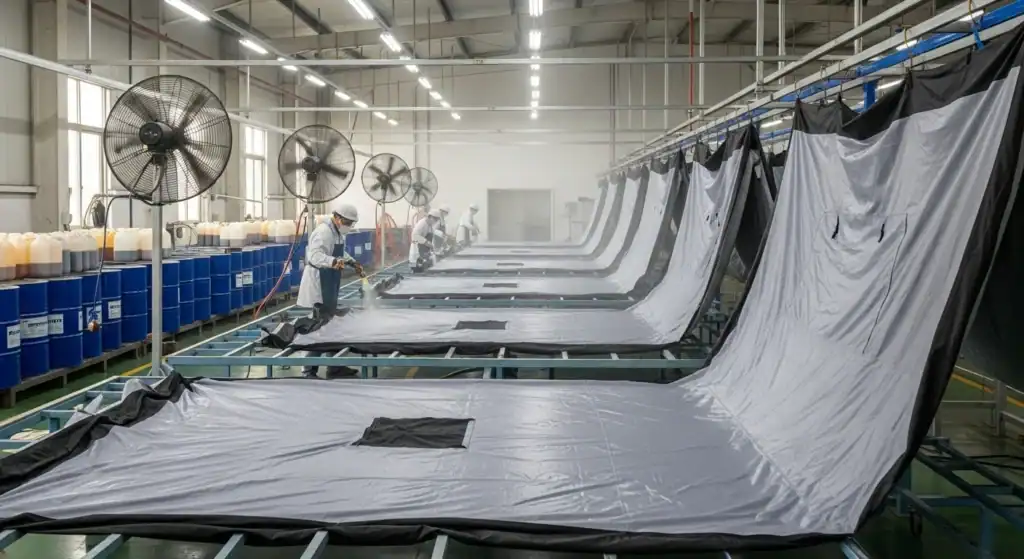
Retailers ran the tents through a full winter season. After 12 months, the brand reported zero defects across the entire run. The TPU-воздушными балками, compounded with the plasticizer blend for -50°C flexibility, held pressure through the season. That quality record mattered more than the initial price.
-
- Retail margin: Sustained at 40% across the first season, in line with the brand’s targets for inflatable tents in Russian winter retail.
- Уровень брака: Zero reported defects in 12 months across all 500 units, with no returns tied to air beam or valve performance.
- Срок изготовления: Cut from 60 to 42 days by splitting production across two ISO 9001 factories and synchronizing rail shipments.
The brand’s category director put it simply: “Kelyland made us look like we’d been selling in Russia for years.”.
Заключение
An inflatable tent order for a -35°C market rises or falls on details that never show up on a spec sheet: the plasticizer blend in the TPU, the weld integrity of each air beam, and the pressure decay curve before loading. The 500-unit Russia program worked because the supplier treated cold-weather validation and unit-level inspection as non-negotiable gates, not optional extras. That discipline compressed the lead time from 60 to 42 days and still landed a February delivery with zero returns in the first 12 months and a 40% retail margin.
-
- Can you share the independent lab report proving your TPU air beam compound holds flexibility at -50°C?
- Will you run a 72-hour -35°C cold chamber test and a 50cm snow load simulation before массовом производстве?
- Do you pressure-decay test 100% of units before shipment, or only a random sample?
- Can you split production across two ISO-certified factories and ship by rail to hold the February delivery window?
Run these three questions past your shortlisted suppliers before you send an RFQ. If a candidate hesitates on any one of them, that answer tells you more than any quote. For a working example of how Kelyland Outdoors structures cold-weather tent programs — from TPU compound selection to rail logistics — review the product range to compare air beam options and QC documentation.
Часто задаваемые вопросы
Can inflatable tents handle -35°C winters?
Yes, if built with a -50°C TPU blend and validated in a 72-hour cold chamber. The Russia order also passed a 50cm snow load simulation before production. Ask for cold chamber test reports before ordering.
What is the MOQ for custom inflatable tents?
For this Russia project, the order was 500 units produced in 42 days. Standard MOQs can start at 50-100 pieces for some items, but custom inflatable tents usually require a larger quantity for tooling. Confirm MOQ after freezing your winter tent spec.
How do you prevent air beam failures in winter tents?
Daily in-line inspection of beam welding and valve sealing is the first guard. The supplier then ran a pre-shipment pressure decay test on all 500 tents, not a sample, to catch leaks before delivery. Ask for 100% pressure test records before shipment.
Can inflatable tents include heater ducts and pressure alarms?
Yes, those were core customizations in this Russia order. The brand specified an integrated heater duct, custom color, and air pressure alarm through Kelyland’s OEM/ODM process. Accept the prototype before mass production.
What margin can a private-label tent brand expect?
This brand sustained a 40% retail margin with zero defects in the first 12 months. That result depends on your pricing, freight costs, and the supplier’s unit-level QC. Treat 40% as a benchmark, not a guarantee.

 English
  Español
  Deutsch
  Français
  Português do Brasil
  Русский
  العربية
  한국어
한국어  日本語
日本語