 跳到内容

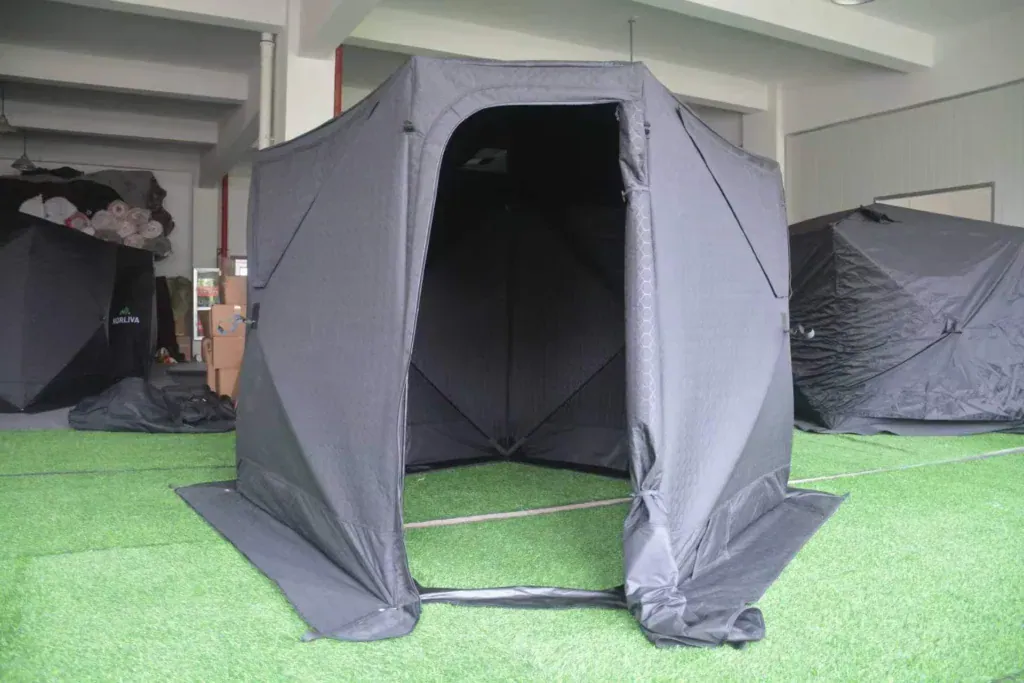
EU Technical File for Inflatable Tents: Avoid Customs Delays is the first checkpoint buyers should lock before they approve a supplier, budget, or production slot. Two inflatable tents side by side — same size, same valve system, same PVC fabric weight. One clears EU customs in three days. The other sits in a Rotterdam warehouse for six weeks while the importer scrambles to find a notified body that will issue a belated EN 14960 test report. The difference is not the product itself. It is the technical file behind it.
If you are sourcing private-label надувные палатки from China for European online channels, the EU technical file inflatable tent requirement is where most first-time importers hit a wall. They pay for fabric swatches and assume the job is done. But notified bodies look at the whole assembly — welded seams, valve retention, air beam stability under load — not just the material certificate. A buyer I worked with lost a $50K order because the pre-production sample passed flame retardancy but the mass production run used a different adhesive lot that failed прочность шва testing by a wide margin.
The benchmarks you need to reference in your next supplier call are straightforward: EN 14960 for inflatable play and structure safety, plus EN 13573 for general кемпинговая палатка performance. A complete file should include a risk assessment covering collapse and suffocation hazards, drawings with material callouts, batch-traceable component lists, and a Declaration of Conformity signed by your EU Responsible Person. Most factories can supply component certificates if they work with ISO 9001-certified mills — but they will rarely coordinate full assembly testing unless you specify it in writing during sample approval.
Step 1: Identify applicable EU directives and standards
Most rejections happen because the wrong standard was chosen.
Every article tells you to “identify the right EU directives.” That advice is useless without context. An inflatable tent sits at the intersection of two regulatory frameworks: the General Product Safety Directive (GPSD) and specific harmonized standards for structural safety. Pick the wrong one, and your technical file gets rejected before the notified body even opens it.
General Product Safety Directive (GPSD) — the baseline
The GPSD (2001/95/EC) is the umbrella directive covering any consumer product placed on the EU market without a sector-specific regulation. It requires that your inflatable tent be safe under normal and reasonably foreseeable use. This means documenting materials, construction, labeling, and any known hazards. The GPSD alone won’t satisfy a customs inspector — they want to see a harmonized standard referenced in your Declaration of Conformity.
EN 13573:2012 for camping tents
EN 13573:2012 is the European standard specifically for кемпинговые палатки. It covers flame retardancy, stability under wind load, seam strength, and labeling requirements. If your inflatable tent is marketed as a camping shelter — not an amusement structure — this is your primary standard. The test protocol includes a wind-load simulation at 28 m/s and a flame-spread test on fabric samples. Most Chinese factories producing camping tents can supply test reports against this standard if they work with EU-notified bodies.
EN 14960:2019 for inflatable amusement equipment — when it applies
EN 14960:2019 targets inflatable play equipment like bouncy castles and obstacle courses. If your tent is designed primarily as a play structure with enclosed bouncing areas or climbing elements, this standard applies instead of EN 13573. The difference matters because EN 14960 requires impact attenuation testing on floor surfaces and stricter anchorage requirements. A кемпинговая палатка with an integrated jumping mat could fall under both standards — consult your notified body early to avoid duplicate testing.
Step 2: Conduct a risk assessment
Notified bodies test the whole tent, not just the fabric.
A risk assessment for надувные палатки must go beyond theoretical hazards. Customs officials and notified bodies will check whether you have documented each тип отказа, with a specific mitigation measure. The file must show you understand how the product behaves under real-world conditions, not just at the factory bench.
Hazards That Matter Most for Inflatable Tents
-
- Collapse: Air beam sudden deflation due to seam failure or valve leakage. Mitigation: Use welded seams (not stitched) and specify a minimum burst pressure of 2.5 bar for the fabric. The assembly must pass a 24-hour retention test at 80% rated pressure.
- Suffocation: Child entrapment inside deflated fabric or unventilated air pockets. Mitigation: Incorporate permanent ventilation openings with a minimum area of 100 cm² per opening. Add warning labels in multiple languages as required by EN 14960.
- Sharp edges: Burrs on injection-molded valves or rough zipper pulls. Mitigation: Specify a minimum radius of 0.5 mm on all rigid parts. Request a 100% visual inspection at the factory — Kelyland Outdoors includes this step in its pre-shipment inspection protocol.
- Chemical exposure: Flame retardant additives leaching onto skin. Mitigation: Only use REACH-compliant phosphorus-based or halogen-free flame retardants. Request the material safety data sheet (MSDS) and a third-party migration test report for every fabric batch.
The Mitigation Measures That Pass an Audit
Most first-time importers assume a fabric test certificate is enough. It is not. Notified bodies require a complete assembly test that covers the надувная балка stability, welded seam strength, and valve system under pressure. The technical file must include a ‘Critical Component List’ with batch traceability for every structural part.
Kelyland Outdoors manages this through its multi-stage контроль качества process: each inflatable tent is inspected at material sourcing, during production, and again at pre-shipment. The partner factories are ISO 9001:2015 certified, and the camping tent & tarp factory in Ningbo produces 800,000 units annually with CE and BSCI approvals. A documented risk assessment should reference these production controls.
Step 3: Compile design and manufacturing documentation
Missing batch traceability?
The technical file must contain every drawing, спецификация материала,, and assembly instruction that defines how the tent is built. Customs officers and notified bodies use these documents to verify that the production unit matches the tested sample. A single mismatch — like a different valve supplier or a changed лента для швов — can trigger a hold.
Drawings: What to include
Submit a full set of 2D technical drawings with dimensions, tolerances, and callouts for every critical component. For надувные палатки, the drawing must show the air beam layout, internal baffle structure, valve positions, and seam types. Indicate the fabric orientation and the weld pattern. Notified bodies will check that the structural design matches the load calculations in your risk assessment.
Material specifications: Traceability is everything
Include a bill of materials that lists each raw material by its supplier, grade, and batch number. For the fabric, specify the denier, weave type, coating (e.g., PU or PVC), and flame‑retardant additive used. A factory like Kelyland Outdoors, which works with ISO 9001:2015 certified partners, can provide mill certificates and lot numbers for every roll of fabric and every air tube. This traceability is what the EU expects.
-
- Fabric spec sheet: Required data: weight (gsm), tensile strength (warp/weft), tear strength, UV resistance, flame spread index, coating type and thickness.
- Air beam materials: Specify the PVC or TPU grade, wall thickness, valve type, and weld strength. Include the test report for burst pressure and air retention (e.g., 72‑hour pressure drop test).
- Critical Component List: A separate register that maps each item (valve, лента для швов, zipper, guy line) to its batch number and supplier. This is the #1 document that rejected files lack.
Assembly instructions: The link between design and production
Provide a step‑by‑step assembly sequence that covers welding parameters, seam sealing, valve installation, and quality checks. Include the temperature and pressure settings for the high‑frequency welding machines. If the tent uses drop‑stitch beams, document the thread count and the inflation pressure specified in the design. The assembly instructions must be version‑controlled and dated to match the production run.
One thing that catches many first‑time importers: the assembly instructions must also describe how the tent is folded, packed, and labeled. The EU requires that storage and setup instructions are part of the technical file, especially for inflatable products where incorrect inflation can cause collapse.
Step 4: Obtain test reports from a notified body
Test the full assembly, not just the fabric swatch.
This is where most first-time importers get burned. They send a fabric swatch for a flame test, get a pass, and assume the tent is good to go. The notified body testing an надувная палатка under EN 14960 or EN 13573 will reject that approach. They require a complete assembly test: the inflated structure with all seams, valves, and anchor points operating as they would in the field.
What the notified body actually tests
-
- Flame retardancy: The entire assembled tent must meet EN 13573 Section 5.2 or EN 14960 Section 6.3 burn-rate requirements. A standalone fabric test misses how stitching, zippers, and coated panels interact during combustion.
- Прочность швов: Welded and stitched seams are tested to minimum tensile loads (typically 200 N per 50 mm width). Air beam welds face additional burst-pressure cycles. A single weak шов в месте клапана соединение может привести к обрушению всей конструкции.
- 2. Устойчивость к ультрафиолету: После 500 часов ускоренного УФ-воздействия по стандарту ISO 4892-2 ткань должна сохранить не менее 80% от исходной прочности на разрыв. Если ваш поставщик использует стандартный ПВХ без УФ-стабилизаторов, этот тест будет провален к 300-му часу.
Step 5: Write the Declaration of Conformity (DoC)
Декларация соответствия (DoC), подписанная без трассировки партий, юридически ничтожна при аудите на рынке ЕС.
The Declaration of Conformity (DoC) is the single document that formally states your надувная палатка meets all applicable EU requirements. Customs authorities and market surveillance bodies ask for this first. If it’s missing or incorrect, your shipment stops.
What goes on the DoC
-
- Product ID: Unique model number, batch code, and commercial name. Generic descriptions like “Inflatable Tent” get rejected. Use the exact identifier from your technical file.
- Directive references: List every applicable directive: GPSR (2001/95/EC), EN 14960:2019 for inflatable amusement equipment, and EN 13573:2012 if classified as a camping tent. Include the full title and year.
- Manufacturer or EU Rep: Full legal name and registered address of the manufacturer or your EU Responsible Person. No PO boxes. No trading names.
- Signatory details: Name, job title, and signature of the authorized representative. This must be someone with legal authority to bind the company — not a sales agent or logistics clerk.
Batch traceability — the part most importers skip
Every production batch needs its own line on the DoC or an attached traceability sheet linking to the Critical Component List mentioned earlier. If a notified body asks which batch of fabric went into which tent and you can’t answer, that’s a non-conformance finding.
Common mistakes that cause rejection
A missing assembly-level test is the single fastest path to file rejection by an EU notified body.
The most common rejection reason seen when reviewing technical files for inflatable tents is straightforward: the importer submitted component tests only — fabric swatch flame retardancy, a separate PVC tensile strength sheet — but no test report covering the fully assembled tent with inflated air beams under load. Notified bodies interpreting EN 14960:2019 require evidence that the complete structure, including welded seams, valve system, and beam-to-beam connectors, holds pressure and resists collapse. A stack of material certificates does not satisfy that requirement.
Here is what actually gets flagged during review. First, the надувная балка stability test is missing or was performed on a single beam in isolation rather than on the full tent frame inflated simultaneously. Second, the seam strength report covers flat fabric seams but not the heat-welded or RF-welded joints that connect beams to the canopy — those joints face different stress vectors in a real setup. Third, the valve system was never tested for cyclic air loss over a simulated 24-hour use period.
Inconsistent labeling between sample and production units
Labeling mismatches are another fast-track to rejection. The technical file lists one model number and material composition on the Declaration of Conformity (DoC), but the physical unit submitted for testing carries a different model code or omits the required markings entirely. For inflatable tents sold under CE marking, every unit must display the manufacturer’s name or registered trademark, the product type or batch number, and the year of manufacture — all legible and permanent.
We have seen files rejected because the DoC referenced ‘Model AT-2000’ while the tent tag read ‘AT-2000-V2’, or because care labels listed polyester content when the actual fabric was an Oxford blend with a PU coating. These discrepancies force re-testing or resubmission cycles that add weeks to the timeline. The fix is simple: before shipping samples to a notified body, cross-check every label against the technical documentation line by line.
Как избежать обеих ошибок при подготовке следующей документации
Заключение
A Полный технический файл по проекту для надувной палатки — это единственный документ, который отделяет гладкий выход на рынок от задержки на таможне или уведомления об отзыве. Это не просто формальная бумага — это юридическое подтверждение того, что ваш продукт соответствует требованиям GPSR и соответствующих гармонизированных стандартов.
-
- EN 14960 требует полного тестирования собранного изделия, а не только испытаний тканевого материала.
- В технический файл должен быть включен перечень критических компонентов с обеспечением прослеживаемости по партиям.
- Оценка рисков должна охватывать опасность обрушения, удушения и наличия острых кромок.
- В декларацию соответствия необходимо включить указанного ответственного лица в ЕС в качестве подписанта.
Теперь возьмите этот контрольный список и сопоставьте его с документацией вашего текущего поставщика. Прямо спросите, могут ли они предоставить протокол испытаний EN 14960 для собранной палатки, а не только для образца ткани, и могут ли они обеспечить прослеживаемость каждого воздушного баллона клапана до его номера производственной партии. Если они затрудняются ответить хотя бы на один из этих вопросов, вы обнаружили пробел, который заблокирует ваш груз на таможне. Изучите технические характеристики надувных палаток Kelyland Outdoors,’ чтобы узнать, как предварительно сертифицированные материалы и координация с аккредитованной организацией упрощают весь этот процесс.
Часто задаваемые вопросы
Как получить расчёт стоимости: руководство по созданию технического файла для надувных палаток в соответствии с требованиями ЕС
Точный ответ зависит от спецификации продукта, объема партии и условий оформления заказа. The safest approach is to confirm the commercial terms only after the final requirement sheet is locked. Final terms should be confirmed against the exact product specification and order conditions.
Могу ли я сначала запросить образцы?
Точный ответ зависит от спецификации продукта, количества и условий заказа. Самый безопасный подход — подтверждать коммерческие условия только после фиксации финального листа требований. Наличие образцов следует подтверждать с учетом текущего склада и плана отгрузки.

 English
 Español
 Deutsch
 Français
 Português do Brasil
 Русский
 العربية
 한국어
 日本語