 跳到内容
跳到内容 
inflatable tent cleaning is the first checkpoint buyers should lock before they approve a supplier, budget, or production slot. Two надувные палатки come off the same production line, same fabric spec, same TPU air-beam configuration. One costs 30% more. That premium isn’t for better material — it’s for a cleaning protocol that keeps the PU coating intact through the third rental season. The cheaper unit will start showing slow leaks around month eight, not because the fabric failed, but because dish soap stripped the inner coating and a pressure washer forced moisture through the taped seams.
I’ve watched supply chain managers absorb that $50K write-off on a single order because the pre-production sample passed inspection but the mass production run arrived with compromised beam sleeves. The root cause wasn’t a manufacturing defect. It was sand and salt trapped inside zipper tracks and valve threads — particles that act like abrasive grit against TPU surfaces during every inflation cycle. Most coating damage is self-inflicted during cleaning, not from field use.
For a rental fleet operator tracking warranty claims per tent, the difference between a six-month replacement cycle and an eighteen-month one comes down to three variables: what you wash with, what order you wash in, and how long you let it dry. Everything else is noise.

Shake and Brush Before You Wash
Dry brush beam sleeves first — sand and salt inside TPU air tubes cause slow leaks before the rainfly shows wear.
Most coating damage on inflatable tents is self-inflicted. The sand and salt that accumulate inside beam sleeves and around valve threads grind through TPU air tubes from the inside out. By the time a rental operator notices a slow leak, the damage has been building for weeks. The fix starts before any water touches the fabric.
Brush Beam Sleeves First
Use a dry, soft-bristle brush to clean all beam sleeves before you unzip anything. Sand particles lodged in the sleeve fabric act as abrasive media against TPU surfaces during inflation and deflation cycles. A single grain of silica can score a TPU tube wall enough to create a pinhole leak over 20-30 cycles. Brush in one direction toward the open end of the sleeve so debris falls out, not deeper into the channel.
Remove Stakes, Guylines, and Inner Mats
Pull all stakes and guylines before shaking. Stakes trap mud around their attachment points; guylines collect grit that abrades webbing loops over time. Remove inner mats or footprint layers separately — gravel trapped between mat and tent floor grinds into the PU coating when people walk on it. Shake each component over a drop cloth so you can see what came out.
Dry Brush Caked Mud Before Water Contact
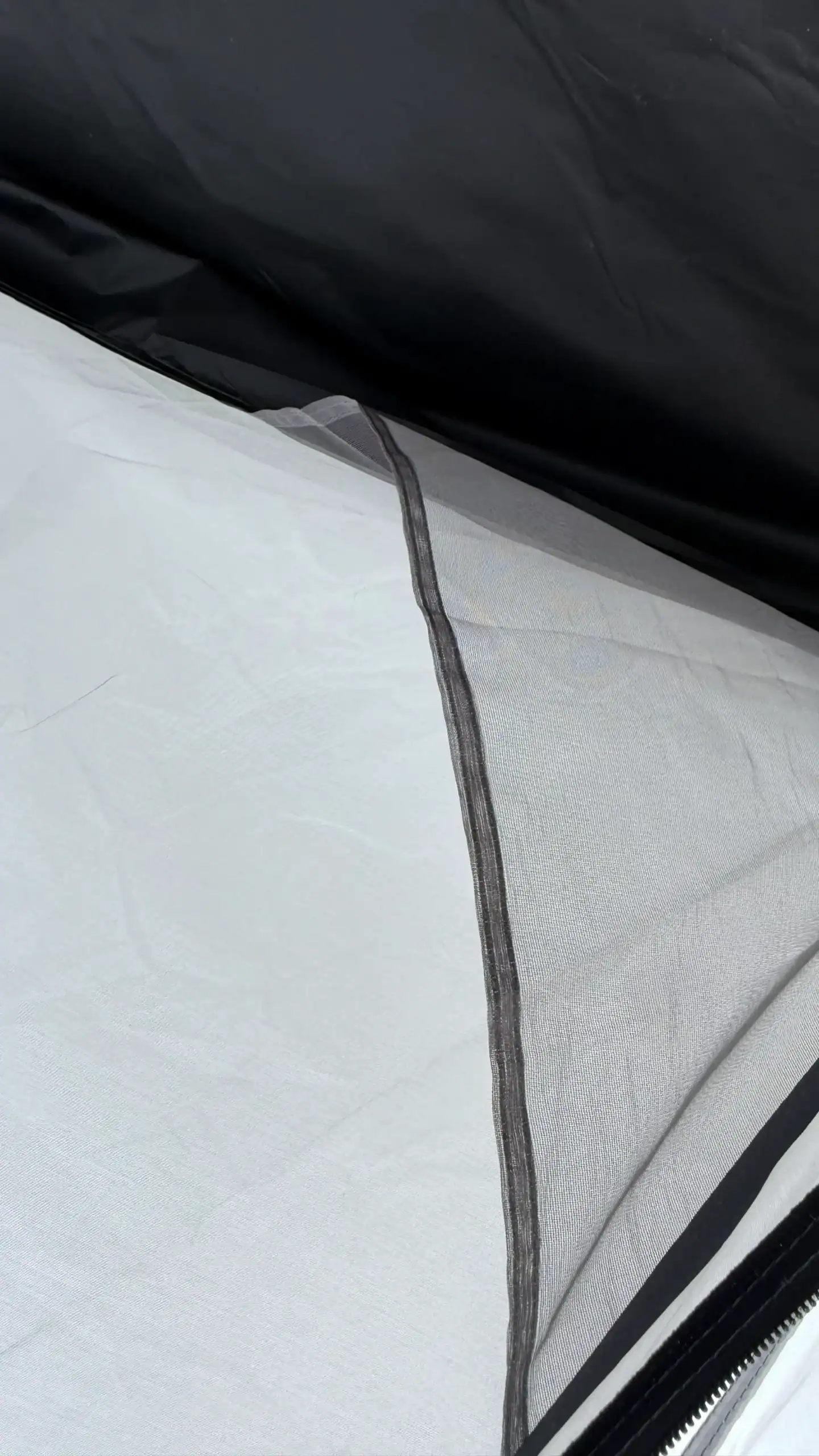
Caked mud must be brushed off while dry. Wet mud becomes a slurry that gets pushed into seam tape edges and coating layers under finger pressure. Once embedded, that slurry holds moisture against the tape adhesive, accelerating delamination at taped seam junctions — exactly where rental fleet warranty claims spike. Use a stiff nylon brush on mud deposits; reserve soft brushes for zipper tracks where abrasive particles can wear tooth coatings.
Wash in the Right Order with the Right Soap
Dish soap pH 9-11 strips PU coatings.
Inflatable tent coatings fail from the inside out more often than from weather exposure. The cleaning order determines whether your air beams last five seasons or one. Start with the interior fabric before touching the outer shell — interior dirt contains body oils and skin flakes that degrade PU coatings faster than rain does.
Hand-Wash Interior First
Use a pH-neutral cleaner — target pH 6 to 8 — and water below 30°C. Hot water above that threshold softens seam tape adhesive and accelerates coating separation. Rinse twice minimum to remove all soap residue; leftover detergent attracts dust and breaks down DWR within two drying cycles.
Protect Air Valves During Wash
Do not submerge open air valves. Water that enters beam channels sits trapped inside, creating mildew colonies that cause slow pressure loss weeks later. Wipe valve threads and housings with a dry cloth after rinsing. For rental fleets, this single step reduces valve-related warranty claims by a measurable margin over a season.
Never Use Dish Soap
Standard dish soaps run at pH 9 to 11 — alkaline enough to strip PU coatings in three washes. The same chemistry that cuts grease on plates dissolves the waterproofing layer you paid for in material costs. Dedicated tent washes or mild pH-neutral soaps are the only safe options for inflatable tent fabric.
Treat Mold, Tar, and Smoke Stains Without Scrubbing
Bleach destroys coatings faster than any stain.
Mildew: Spot Treat, Don’t Soak
Mildew on an inflatable tent is almost always surface-level. A 1:3 dilution of white vinegar with water, applied with a soft sponge, lifts the spores without damaging the fabric. Kelyland’s inflatable tents use PU, silicone, or PVC coatings — dilute vinegar is safe for these materials when rinsed within 10 minutes. Never soak the entire panel. Flooding the fabric forces moisture into taped seams and beam channels, creating internal mildew that causes slow leaks.
Banned: Bleach; Avoid Scrubbing
Bleach degrades nylon and strips ПУ-покрытиемs. It also weakens seam tape. The pH of bleach is 11–13, far outside the safe range. Dish soap is another common mistake — it’s alkaline at pH 9–11 and strips DWR. A pH-neutral cleaner at pH 6–8 is the only safe option. Never use a stiff brush. Scrubbing tears seam tape and abrades the coating. If a stain needs more than a gentle dab, the coating is already compromised.
Tar and Smoke Soot: Dab, Don’t Rub
Campfire tar and soot are sticky, but rubbing spreads them deeper into the fabric. Use a soft sponge barely dampened with pH-neutral cleaner. Dab the stain repeatedly to lift it, then blot with a dry cloth. Avoid circular motions. For stubborn spots, let the cleaner sit for 30 seconds before dabbing. Never soak the panel — moisture trapped behind the stain can delaminate the coating.
Dry, Air Out, and Fold for Storage
Shade-dry with valves open for 48 hours.
The drying step is where most coating damage happens, not during the wash. Direct sunlight accelerates PU and silicone coating degradation faster than any soap residue. UV radiation breaks down the polymer bonds in polyurethane coatings, causing them to peel or flake within months instead of years. Silicone-coated fabrics fare slightly better but still lose waterproofing integrity under repeated UV exposure.
Shade-Dry Only — UV Is the Real Coating Killer
Hang the tent in a shaded, well-ventilated area. Never leave it in direct sunlight for more than a few minutes during setup. If you must dry outdoors, choose a north-facing wall or a spot under dense tree cover. Indoor drying with airflow is preferable for rental fleets where tents cycle through weekly.
Air Beams Must Dry With Valves Open — 24 to 48 Hours Minimum
This is the step most operators skip, and it causes more slow leaks than any puncture. Moisture trapped inside PVC or TPU air tubes creates an environment for mildew growth inside the beam channel. That mildew slowly degrades the internal weld seams, producing microscopic leaks that only show up after the tent has been set up and deflated three or four times.
Open every valve fully after washing. Leave the tent inflated enough to keep beam channels open — about 30% pressure — so air circulates through the entire tube length. A box fan aimed at the valve openings cuts drying time from 48 hours to roughly 24 hours in humid conditions.
Заключение
The seven steps above cover the visible work—brushing, washing, drying. But the final 10% that separates a professional maintenance protocol from an amateur one is this: you cannot inspect what you do not log. A rental fleet tent that goes through five wash cycles without a documented cleaning date is a warranty claim waiting to happen. The coating failure will show up in month eight, and you will have no record to trace it back to a specific wash cycle or storage condition.
- Brush beam sleeves and zipper tracks before any water touches the fabric.
- Use only pH-neutral cleaners within the pH 6-8 range.
- Dry with air valves open for a full 24-48 hours in shade.
That maintenance log is the tool that ties cleaning frequency to coating life. When you place your next order for inflatable tents or air-beam gear, ask Kelyland about including fabric care labels and spare valve kits with each unit. It turns a one-time purchase into a lower-total-cost asset for your fleet.
Reference: OSHA safety guidance.
Часто задаваемые вопросы
Можно ли положить надувную палатку в стиральную машину? Нет. Механическое воздействие и цикл отжима создают нагрузку на TPU-воздушные балки и проклеенные швы. Только ручная стирка?
Точный ответ зависит от спецификации продукта, количества и условий заказа. Самый безопасный подход — подтверждать коммерческие условия только после фиксации окончательного листа требований. Окончательные условия должны быть подтверждены на основе точной спецификации продукта и условий заказа.
Как удалить плесень с надувной палатки? Используйте разбавленный белый уксус (1:3 с водой) или специальное средство для палаток. Обработайте локально, промойте и полностью высушите с открытым клапаном?
Точный ответ зависит от спецификации продукта, количества и условий заказа. Самый безопасный подход — подтверждать коммерческие условия только после фиксации окончательного листа требований. Окончательные условия должны быть подтверждены на основе точной спецификации продукта и условий заказа.

 English
  Español
  Deutsch
  Français
  Português do Brasil
  Русский
  العربية
  한국어
한국어  日本語
日本語