 تخطي إلى المحتوى

Subject: trekking pole lock slipping fix. Body: The $50K order didn’t fail in the factory. It failed on the first loaded ascent, when the العينة قبل الإنتاج‘s quality tolerance didn’t carry into the mass run. That pattern shows up more often than most sourcing teams admit.
The pole looks right on paper. FOB pricing is competitive, sample approval passes, and the color matches. Then the production batch arrives with a slightly smoother shaft finish, the clamp loses grip under load, and your customer service inbox fills with “how to fix trekking pole lock that slips” questions. The problem isn’t a worn lever. It’s the tube surface.
The fix at the trailhead is quick: tighten the cam lock screw to 4–6 N·m, degrease the shaft, or add a thin rubber strip on the clamp pad. The fix at the factory is better. Specify 7075 aluminum with a hard-anodized texture around Ra 0.8–1.2 µm, run a 100 kg per-pair lock test, and the slipping never reaches the customer in the first place.
Why Do Trekking Pole Locks Slip?
Most slipping locks are a tube surface problem, not a clamp problem.
Every pole lock works on one principle: the clamp’s friction must exceed the axial load pushing down through the shaft. When you lean into a pole on a steep ascent, that load spikes well beyond your static body weight. If the clamp pad cannot generate enough grip on the tube surface, the section slides. No amount of lever tightening fixes a surface that cannot create friction.
The Surface Finish IS the Friction Surface
A polished 6061 aluminum tube reduces the friction coefficient by 30–40% compared to a textured 7075 hard-anodized surface. That is the difference between a lock that holds under loaded hiking and one that collapses at the worst moment. Budget poles use bright, polished finishes because they look clean on a shelf. They slip on the trail. Hard-anodizing builds a micro-rough layer at Ra 0.8–1.2 µm — that roughness is literally the friction surface the clamp pad grips.
This is why sanding a slipping shaft is the worst field fix. The moment you polish away the anodized texture to ‘smooth out’ a sticky lock, you permanently remove the grip the clamp depends on. The tube keeps getting smoother with every subsequent use, and the slipping returns worse than before. Replace the section instead.
6061 vs 7075: Material Hardness Drives Grip Retention
6061 aluminum yields at roughly 275 MPa. 7075 yields at 500 MPa. The softer alloy doesn’t just bend sooner under load — it also burnishes smoother during use. Every twist, every shift of the cam, wears the surface flatter. 7075 holds its texture longer, which is why it is the standard for poles expected to survive repeated hard use in rocky terrain.
Three failure signs separate a clamp problem from a tube problem. Recognizing them tells you whether a field fix will hold or you are wasting time on a permanent fault.
-
- Slow collapse: Pole sinks gradually under a loaded uphill step as friction barely loses to body weight.
- Sudden slip: Lock releases with a sharp drop after the lever is closed, indicating the cam lost its engagement point.
- Spongy lever: Cam feels soft and does not snap into its locked position — the mechanism or its mounting points are yielding.
Once you identify the failure mode, the response changes. A stripped lever is a mechanical fault. A polished surface is a manufacturing choice — one baked into the spec sheet before the pole is ever assembled. Kelyland’s trekking pole factory in Ningbo, ISO 9001 certified, produces 3 million units annually and runs 100 kg axial load tests on 5% of production. Premium lines use 7075 hard-anodized shafts as standard. That is the difference between a pole that slips at the trailhead and one that stays locked through a full season.
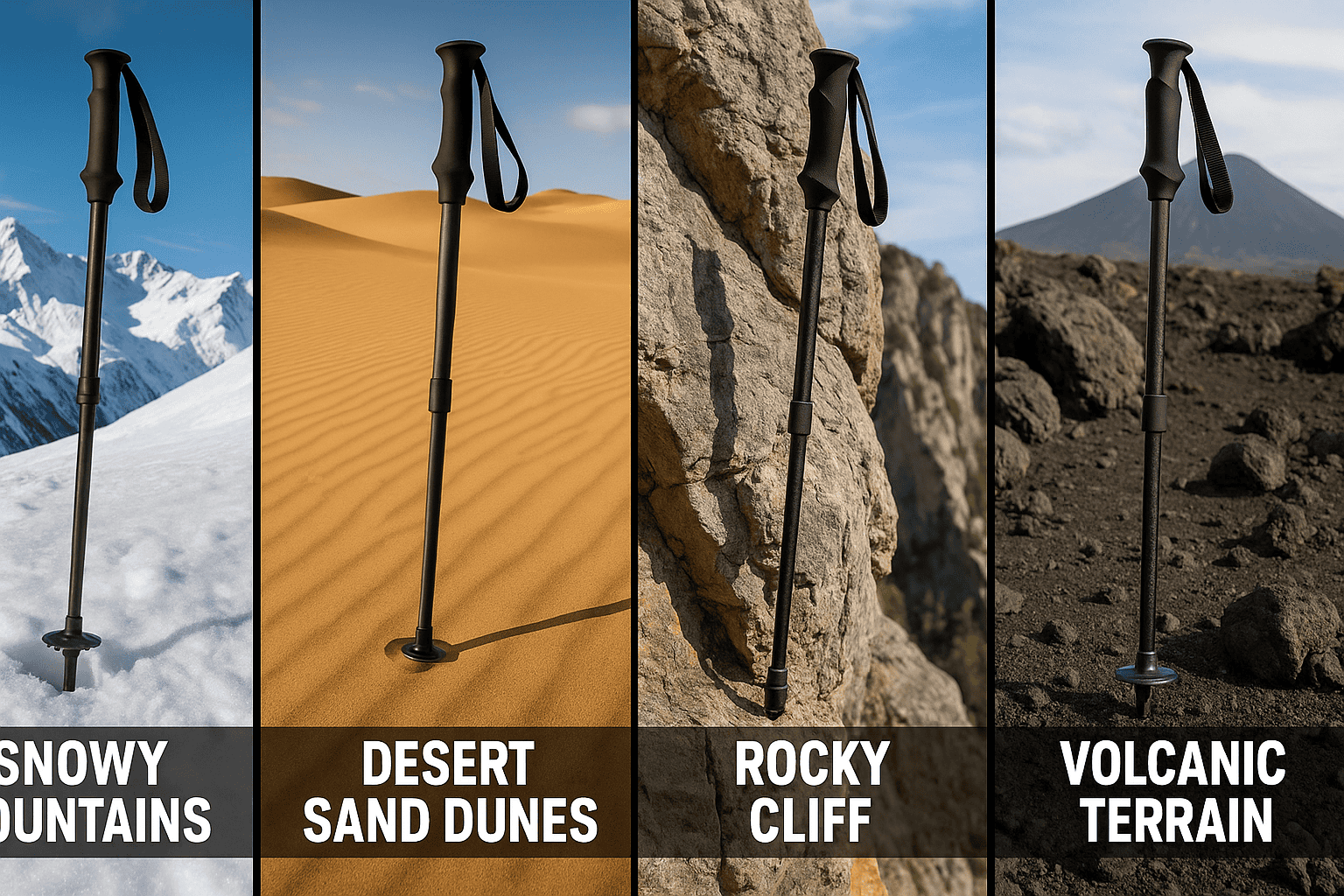
5 Field Fixes for a Slipping Lock
Most slipping locks aren’t worn clamps — they’re smooth tube surfaces.
Before replacing anything, understand what actually holds the lock: friction between the clamp pad and the tube surface. The anodized layer is that friction surface. Dirt, sunscreen, or a polished shaft cuts the coefficient of friction by 30–40%, which is more than enough to let a loaded pole sink on the next uphill step. Work through these five fixes in order — most slipping problems stop at fix one or two.
1. Tighten the Cam Lock Screw to 4–6 N·m
Flip locks use an M4 or M5 adjuster screw. If the lever closes with a spongy feel, the screw has backed off. Tighten it to 4–6 N·m with a small hex key or a torque-limited driver. Past 6 N·m, you strip the M4 threads and turn a fixable problem into a replacement part. That’s the line between a 30-second trail fix and a $20 clamp section.
2. Clean the Tube — Do NOT Sand
Wipe the shaft with isopropyl alcohol and a clean cloth. Sweat and sunscreen leave a film that lets the clamp slide. Sanding or polishing the tube is the one move to avoid. The anodized layer is the grip — a hard-anodized finish at Ra 0.8–1.2 µm holds the clamp. Remove it, and no tightening torque keeps the joint locked. If the surface is already worn smooth, replace the tube section rather than roughening it by hand.
-
- التكلفة: Cleaning is free; a new tube section runs $5–$20.
- Warning: Never use oil-based lubricants near the clamp — they reduce friction and make slipping worse.
3–4. Add Grip or Adjust Thread Engagement
For a cam lock that still slips on a clean tube, cut a 0.5–1 mm rubber strip from a bicycle inner tube and place it between the clamp pad and shaft. It raises friction immediately, but test it under full body weight before relying on it. For twist locks, unscrew the collar and increase thread engagement by 1–2 mm. If the collar bottoms out with less than 1 mm of thread bite, the internal threads are worn — no adjustment will save it.
5. Replace Deformed Sections
A bent aluminum shaft or dented carbon fiber tube cannot be repaired. Clamp force on a deformed tube is unpredictable and can fail mid-stride. Replacement parts cost $5–$20 per section; a matched shaft pair runs $40–$80. Always replace shafts in pairs to keep pole length even. The ISO 9001-certified trekking pole factory in Ningbo that Kelyland works with performs 100 kg axial load tests for 30 seconds on 5% of production — that pass level separates a dependable joint from a warranty return.
When to Replace the Pole Instead of Repairing
You can’t unbend 7075.
A visible bow or kink in an aluminum tube means the shaft passed its yield point. Straightening it with pliers creates micro-cracks at the bend. Those cracks spread the next time the pole takes a hard load—usually mid-stride on a boulder field. That’s not a repair, that’s deferred failure.
Load Limits by Alloy Grade
-
-
- 7075 aluminum: Yield strength around 500 MPa. Bends at roughly 250-300 kg axial load. Spec this for heavy hikers, steep terrain, or poles that carry shelter weight.
- 6061 aluminum: Yield strength around 275 MPa. Deforms at 180-200 kg. Acceptable for light walking poles, wrong choice for loaded backpacking or taller users.
-
Carbon fiber fails differently. A 3K carbon shaft cracks under side impact, not axial compression. A crack near the clamp—or a crunch when you load the pole—means replace immediately. Delamination gives zero warning before a catastrophic snap. No tape, epoxy, or field hack restores structural integrity.
Stripped cam threads or a broken lever sit on the repair side of the line. The clamp assembly costs $5-20 per section, and swapping it takes about ten minutes. But inspect the tube first: if the clamp failed because the shaft deformed, a fresh clamp on a bent tube just moves the problem down the trail.
Wall Thickness Is the Budget Tell
-
- 0.8-1.0 mm wall: Standard for 7075 aluminum poles. Holds shape under repeated load cycles and survives lock testing without deformation.
- 0.6 mm wall: Common in budget poles. Deforms under normal hiking weight, which is why cheap poles come back as warranty claims. Verify wall thickness in the ورقة مواصفات, not the brochure.
The cost math favors replacement once deformation appears. A single shaft section runs $5-20; a matched new shaft pair is $40-80. When the tube is bent, the clamp is stripped, and the pole is more than three seasons old, replace the whole pair. Mixing a fresh shaft with a fatigued one creates uneven flex and unpredictable load transfer.
Factory Hardening: What to Spec for Private Label Poles
Most lock failures are tube-finish failures.
Private label brands keep approving poles with polished 6061 shafts and standard flip locks, then wonder why warranty returns spike after wet-season hikes. The lock is not the weak link. The anodized surface is. A polished tube cuts the coefficient of friction by 30–40% compared with a hard-anodized texture, and that delta is the difference between a pole holding at full body weight and one that slowly collapses on a loaded uphill step.
Start with 7075 Aluminum, Not 6061
Tube grade drives lock stability more than most buyers expect. 7075 aluminum has a yield strength around 500 MPa, while 6061 sits near 275 MPa. Under repeated axial load and side stress, 6061 tubes deform faster, and a deformed tube creates an uneven clamping surface. That means the cam lock has to work harder to hold, and eventually it slips. For poles rated for heavy hikers or rocky terrain, 7075 is the only defensible spec.
Specify Hard-Anodized Surface Roughness, Not Bright Finish
The anodized layer is the actual friction surface for the clamp. Bright anodizing or mechanical polishing makes the shaft look premium but removes the micro-roughness that keeps the cam lock engaged. In production, a hard-anodized finish with surface roughness between Ra 0.8 and 1.2 µm delivers repeatable clamp friction without adding weight. Put that number in your technical drawing. If your supplier cannot commit to it, the lock will keep slipping regardless of how many times you tighten the screw.
Acceptance Tests and Documentation to Write Into the Contract
-
- Lock hold test: Require each cam lock to hold 100 kg axial load per pair for 30 seconds without slip. Sampling every 5% of production is the minimum baseline for a private label line.
- Cam lock torque range: The adjuster screw on M4/M5 threads should be set to 4–6 N·m in the factory. Beyond 6 N·m the threads strip; below 4 N·m the clamp slips under load.
- Certificate of compliance: Demand a COC that includes the torque test report and surface roughness value for each batch. This is the document that separates a controlled production run from a random assembly job.
Kelyland’s trekking pole factory in Ningbo runs this exact protocol under ISO 9001, with annual output of 3 million units and 100 kg axial load checks on 5% of production. For a private label brand, that test document is the cheapest insurance against a slipping-lock reputation.

الخاتمة
A lock that slips once will slip again, probably on the next loaded step. Cleaning plus a $2 shim buys a single hike, not a season. Skip the spec review and plan on $40–$80 replacement shaft pairs within the first year, plus the return freight on every unit your customers send back.
الأسئلة الشائعة
Why do my trekking poles keep sliding down?
Most slipping locks are caused by smooth anodized tube surfaces, not worn clamps. Polished 6061 shafts lose more friction under load, so the clamp can’t hold your weight. Clean the shaft and check torque before replacing parts.
Can I tighten a twist lock trekking pole?
Yes, but a twist lock is a threaded mechanism, not a simple screw adjuster. If thread engagement is under 1–2 mm, the whole tube section needs replacement. Measure thread engagement before ordering repair parts.
Are carbon fiber trekking poles more fragile?
Carbon shafts are stiffer and lighter, but they can be more brittle under side impact. For lock slip, the tube surface finish matters more than the material. Choose 7075 aluminum if impact durability is the priority.
How do I fix a stripped cam lock on my trekking pole?
Replace the cam or lock assembly if the threads are stripped. Tighten adjuster screws to 4–6 N·m and avoid over-torquing M4/M5 threads. Use a torque-limited hex driver for future adjustments.
What is the best way to clean trekking pole locks?
Clean the outer tube with isopropyl alcohol to remove sweat, sunscreen, and dirt. Don’t sand the tube, because sanding removes the anodized texture permanently. Wipe the shaft dry before each use for consistent grip.

 English
 Español
 Deutsch
 Français
 Português do Brasil
 Русский
 العربية
 한국어
 日本語