 تخطي إلى المحتوى
تحويل: اختبار متانة عجلة العربة القابلة للطي — أوقِف الشحنة. كانت الملاحظة الأساسية في الرسالة حادة: النموذج الأولي قبل الإنتاج تدحرج بسلاسة على أرضية المصنع، لكن عجلات الإنتاج الضخم أظهرت بالفعل شقوقًا دقيقة حول صرة العجلة. طلبية بحجم $50K متوقفة عند الرصيف لأن أحدًا لم يثبّت مواصفات العجلة أثناء الموافقة على العينة.
هذا التباين هو السبب في استمرار ظهور معدل فشل عجلات العربات القابلة للطي في بيانات الضمان. العينة هي أفضل محاولات المورد، وليس متوسط إنتاجه. عندما تضيق الهوامش الربحية، يكون تجميع العجلة هو أول بند يُخفَّض سعره — وهو ما يعني عادةً إطارات PVC بدون أي حزمة مثبتات للأشعة فوق البنفسجية. بعد ستة أشهر في التخزين بالمستودع أو عرض تجزئة تحت الشمس، يصبح المداس هشًا. وفي أول رحلة للعميل إلى الشاطئ، يتشقق.
معظم المشترين لا يطرحون أبدًا السؤال المهم حقًا: هل ستطابق عجلات الإنتاج العينة التي وافقت عليها؟ أقل من 10% من المشترين الجدد يطلبون خطة فحص جودة خاصة بالعجلات قبل تقديم طلب، وهذه النقطة العمياء تفسر سبب هيمنة انهيار العجلات على المرتجعات في هذه الفئة. يمكنك سد هذه الفجوة بأدوات تكلف بضع مئات من الدولارات — مقياس صلابة شور A لقياس صلابة المداس، ومؤشر قرصي لاستقامة المحور، واختبار مقاومة تدحرج محمّلة على منحدر أرضية المصنع. اطلب من المورد هذه الأرقام الثلاثة قبل أن تلتزم. إذا تردد، فأنت تعرف بالفعل ما الذي تسعير FOB تشتريه، وهو ليس العربة التي وافقت عليها.
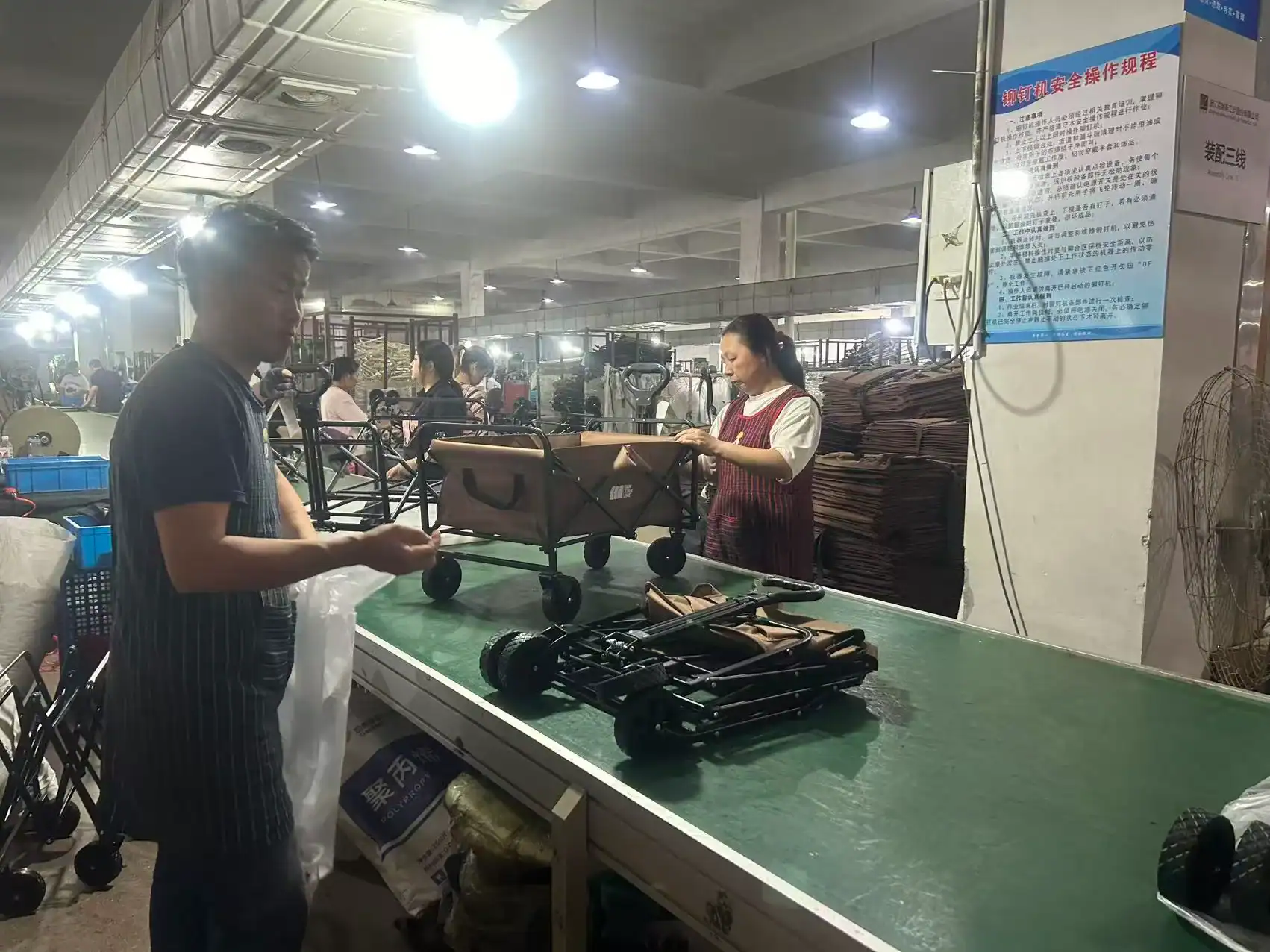
لماذا يُعد فشل العجلات هو محرك المرتجعات #1 في العربات القابلة للطي
أرخص قطعة في العربة تولّد أغلى مطالبة ضمان — فحص جودة العجلة هو تأمين على هامش الربح.
معظم مرتجعات العربات القابلة للطي ناتجة عن انهيار العجلات خلال أول ثلاثة أشهر من الاستخدام. والإحصاء الأكثر دلالة هو أن أقل من 10% من المشترين الجدد يطلبون من الموردين خطة فحص جودة خاصة بالعجلات قبل توقيع أمر الشراء. إنهم يفحصون قماش الأوكسفورد 600D-900D والإطار الفولاذي الكربوني المطلي بالمسحوق، ثم يثقون بأكثر مكوّن في العربة تعرضًا للإجهاد، وهو العجلة الدوارة، لأقل سعر معروض.
أين يقوم الموردون ذوو الميزانية المنخفضة بتخفيضات خفية
- بلاستيك المحور المعاد تدويره: يمكن لمركبات البولي بروبيلين/النايلون المملوءة أن تحاكي الراتنج البكر في اللون لكنها تصبح هشة عند دورات التحميل. مقعد المحمل المرتخي يُبقي المحور مستقيمًا حتى أول مطب، ثم يهتز ويُدمر نفسه.
- إطارات PVC بدون مثبتات للأشعة فوق البنفسجية: ستة أشهر في المخزون لدى بائع التجزئة أو مستودع مضيء تجعل المداس هشًا. يأخذها العميل إلى المنزل، ويدحرجها فوق الحصى، فيتشقق المطاط عند أول استخدام. وفّر المصنع بضعة سنتات لكل عجلة. وأنت تدفع تكلفة الشحن المرتجع.
- دبابيس الفرامل المصنوعة من الزنك بدلًا من الفولاذ: دبابيس الزنك المصبوبة بالقالب أرخص في التشكيل لكنها تتآكل بسرعة عبر دورات القفل والتحرير المتكررة. تبدو الفرامل سلسة أثناء مراجعة العينة وتبدأ بالصرير بحلول الأسبوع السادس في الاستخدام الميداني.
الحسابات المالية قاسية. العجلة واحدة من أرخص المكونات في قائمة المواد بأكملها، وغالبًا ما تكلف أقل بكثير من القماش أو أنبوب الإطار. مطالبة الضمان تجرّ معها ملصق إرجاع وارد، واستردادًا أو استبدالًا، وشحنًا صادرًا، وساعات عمل للموظفين. وهذا المجموع قد يتجاوز هامش الربح الإجمالي للعربة بأكملها.
التوقيت يجعل الأمر أسوأ. تنهار العجلات بشكل متجمع خلال أول 90 يومًا، أي في الوقت الذي يكون فيه موسمك نشطًا وتذاكر الدعم في ذروتها. أنت لا تسترد أموال عربة فحسب؛ بل تتحمل تكلفة تجربة عميل ستنتهي بمراجعة بنجمة واحدة ومنع دائم لعمليات الشراء المتكررة.
ما الذي يجب أن تلتقطه خطة مراقبة الجودة
مصانع شبكة موردي كيليلاند الحاصلة على شهادة ISO 9001:2015 توثق كل مرحلة إنتاج، وتتحقق خطوة الفحص قبل الشحن من الجودة النهائية قبل مغادرة الحاوية. لكن الفحص البصري لن يكشف عن مداس PVC هش أو مقعد محمل رديء. يجب أن تتضمن المواصفات اختبارات دحرجة تحت الحمل وقراءات مقياس الصلابة. اطلب هذه الأرقام قبل الموافقة على العينة، وليس بعد وصول أول مرتجع.
الفحص البصري: 4 علامات حمراء في صرة العجلة والمحور
اختبار الظفر لمدة 30 ثانية على المحور يلتقط العيوب التي تسبب معظم أعطال العجلات خلال ثلاثة أشهر.
انهيار العجلة هو السبب الأول لإعادة العربات القابلة للطي إلى البيع بالتجزئة خلال ثلاثة أشهر. أقل من 10% من المشترين الجدد يطلبون من الموردين خطة مراقبة جودة خاصة بالعجلات، ولهذا يستمر نمط العيب نفسه في التكرار. يكشف المحور والمحور الدوّار معظم ذلك — دون الحاجة إلى أدوات.
ثلاثة عيوب في المحور تستحق الاهتمام
مرّر ظفرك على خط الفصل في محور العجلة. وجود حافة بارزة يعني أن قالب الحقن متآكل أو أن ضغط التثبيت مضبوط على مستوى منخفض جدًا. الزوائد البلاستيكية (Flash) تبدو شكلية على العينة، لكنها تتشقق عند وصلة الأذرع تحت الحمل الجانبي — في اللحظة التي يدفع فيها العميل العربة فوق حافة الرصيف.
الوزن يكشف حقيقة مادة التصنيع. محور العجلة المقولب من مادة PP البكر يبدو كثيفًا. الأذرع التي بها علامات انكماش أو مقطع عرضي مجوف تعني أن المصنع قلّص كمية الراتنج لتوفير سنتات لكل وحدة. تلك الأذرع تتعرض للإجهاد عند القاعدة وتفشل على الأرض غير المستوية مع عربة محمّلة.
أدر العجلة على المحور. الطحن أو النقر أو الاهتزاز الجانبي عند سطح المحور يشير إلى ثقب مُشغّل بحجم زائد أو محمل مطروق بشكل غير متعامد. هذا الاهتزاز يتحول إلى تقييم ‘عجلة مهتزة’ خلال الأسبوع الأول من الاستخدام.
الراتنج البكر مقابل المعاد تدويره: قراءة المحور
البلاستيك الداكن يخفي المحتوى المعاد تدويره جيدًا، ولهذا تستخدمه العربات الاقتصادية في المحاور. ابحث عن مسحة رمادية طباشيرية أو نقاط تلوث صغيرة أو اختلاف في اللون بين المحاور في نفس الدفعة. مادة PP البكر والنايلون تُقولب بلون موحد ولمعان شمعي خفيف. خطوط الاحتراق بالقرب من علامة البوابة تشير إلى استخدام مادة مطحونة معاد تدويرها.
مصنع العربات القابلة للطي في شبكة Kelyland ينتج مليون وحدة سنويًا في Jinhua وفق معيار ISO 9001، وينفذ قولبة حقن مخصصة لـ المحاور وأجزاء العجلات الدوارة. استخدم ذلك كمعيار مرجعي. اطلب من أي مورد درجة الراتنج وسجل صيانة القالب — الإجابة الغامضة تخبرك بكل ما تحتاج معرفته.
- الزوائد البلاستيكية في القالب: الظفر يعلق بحافة على خط الفصل — أداة متآكلة أو ضغط تثبيت منخفض.
- الأذرع الرفيعة: علامات انكماش أو أقسام مجوفة — تم تقليل الراتنج لخفض سعر الوحدة.
- جلوس المحمل: اهتزاز أو طحن عند تدوير المحور — ثقب أكبر من الحجم المطلوب أو محمل غير مضغوط بشكل متعامد.
- الراتنج المعاد تدويره: مظهر طباشيري، أو بقع، أو انحراف لوني في الدفعة — افترض وجود بعض المحتوى المعاد طحنه.
اختبار مقاومة التدحرج: محاكاة 500 متر من الاستخدام المحمّل
العربة المحمّلة التي تسحب بصعوبة تولّد شكاوى حتى لو لم ينكسر شيء.
معظم عمليات فحص العربات تتم على أرضية مستودع نظيفة. عربة فارغة، دفعتان سريعتان، انتهى الأمر. ذلك لا يخبرك شيئًا عن سلوك العربة مع 50 كجم من المعدات في ساحة حصى. خط إنتاج العربات القابلة للطي في مصنع جينهوا — وهو منشأة حاصلة على شهادة ISO 9001:2015 وتنتج 1,000,000 عربة سنويًا — يعامل مقاومة التدحرج كاختبار بنيوي، وليس كفحص إحساس.
جهاز الميلان في أرضية الورشة
Build a fixed test section with three alternating surfaces: packed sand, loose gravel, and cast asphalt — the ground your customers actually pull wagons across. Run 500 meters of loaded use in a controlled loop and measure the force required to keep the wagon moving at a steady walking pace. A pull gauge records the trace.
- Load: 50 kg secured in a balanced position. This sits inside the 50-200 kg rated capacity range for standard folding wagons.
- Pass/fail metric: Max rolling force at 50 kg load across the full track, logged with the pull gauge. Consistent readings on all three surfaces matter more than a single peak value.
- What fails: Force climbing late in the run points to bearing heat-up or hub binding. A spike on gravel usually means the tire is too stiff.
Reading the force trace
High rolling resistance hides two separate defects: bearing drag and tire stiffness. TPE wheels roll quieter on asphalt but sacrifice roughly 30% of tread life at the same hardness; PVC stiffens after extended sun exposure. The force trace exposes the tire-axle interaction that no visual inspection can catch.
صلابة المداس وتحديد المادة (PVC مقابل PU مقابل EVA مقابل TPE)
Buy a Shore A durometer.
The foam-filled EVA wheel that feels fine in a showroom is the same wheel that cracks after a summer of beach duty. Material ID is the cheapest durability test you can run — a $40 durometer beats a $4,000 warranty claim. Here are the minimums we enforce on wagon tire compounds across our partner factories, plus the one material that fails predictably under UV exposure.
Shore A Minimums for Wagon Tread Materials
- PVC (with UV stabilizer): Minimum 70 Shore A. Below that, the tire flexes too much on hot pavement and accelerates hub bearing wear. Without a UV stabilizer package, PVC becomes brittle within six months of outdoor display — the exact failure pattern seen in budget wagons returned after a single season.
- PU (polyurethane): Minimum 80 Shore A. PU delivers the best tread life for load-bearing wagons, but it runs harder and transmits more vibration. A 90A PU tire will outlast a 70A PVC tire on gravel by a wide margin — the trade-off is noise.
- TPE: Minimum 70 Shore A. TPE runs quieter than PU and feels smoother on boardwalks, but at the same hardness it gives up roughly 30% of tread life compared to PU. If your retail customers are complaining about noise, TPE helps. If they are complaining about wobble and flat spots after three months, you bought the wrong material.
- EVA (expanded foam): Acceptable only for beach carts and light-duty 50 kg wagons. Even at 55-65 Shore A, EVA lacks the abrasion resistance for gravel or curbs. It also degrades faster under UV — which is why the next point matters.
The EVA Blind Spot
EVA foam tires fail in a specific way: they oxidize and harden on the surface first, then crack where the wheel meets the axle. You won’t see it in the sample approval stage because the wheel is fresh. But leave a wagon on a retail loading dock in Arizona for eight weeks, and the tread will chip on the first curb. That is why every EVA-spec wagon gets a written UV-exposure warning in the تسلسلًا هرميًا, and why our stronger partners default to PVC with a stabilizer or TPE for anything above 50 kg rated capacity.
Ask your supplier for the Shore A reading on the actual production batch, not the datasheet. ISO 9001-certified factories — like the ones in our network producing 1 million wagons annually — track material batch data and will share it. A supplier that cannot produce a durometer reading from the last run is telling you the compound spec is not controlled.
| المواد | صلابة شور A | Performance Profile | وضع الفشل الشائع | Buyer Action |
|---|---|---|---|---|
| كلوريد البوليفينيل المتعدد الفينيل (PVC) | 70–90 (min. pass: 75) | Low cost; good initial grip; stiff tread | UV degradation — becomes brittle and cracks after ~6 months in retail stock without stabilizer package | Require written UV stabilizer spec; reject if supplier cannot document it |
| PU (Polyurethane) | 80–95 (min. pass: 85) | Longest tread life; high tear/abrasion resistance; quiet rolling | Premium cost; some grades soften in extreme heat | Specify for heavy-duty wagons (>150kg) and premium retailer programs |
| EVA (Ethylene-Vinyl Acetate) | 55–75 (min. pass: 60) | Lightweight; shock-absorbing; low noise on smooth surfaces | Poor UV and abrasion resistance — flattens/cracks in direct sun; fast wear on gravel | Restrict to indoor light-duty use; never allow in sun-exposed retail display |
| TPE (اللدائن الحرارية البلاستيكية) | 60–85 (min. pass: 70) | Runs quieter than PU; excellent cold-weather flexibility; good grip | Approx. 30% shorter tread life than PU at equal hardness | Choose when noise complaints are the target metric; plan shorter warranty replacement cycle |
فحص موثوقية آلية الفرامل (دورة الفتح بالقوة والإقفال)
A brake that clicks clean on the sample bench can slip by the third beach trip.
The foot brake is the most stomped component on a folding wagon. Users step on it with the wagon fully loaded — on grass, gravel, or sand. Sand grinds into the pivot. Springs lose tension. Pins wear. A brake that passes a showroom demo can fail before the first season ends.
The 100-Cycle Engage-and-Release Test
بالنسبة ل wagon brake mechanism reliability test method, factory QC runs a minimum of 100 full pedal cycles on sampled units. Each cycle engages the brake, rocks the loaded wagon to confirm the wheel holds, then releases. Watch pedal force, spring return speed, and pin seating depth across the run.
- Engage: The pedal seats the brake pin with one firm push. A grinding sound or a second push means a burr in the locking hole or pin misalignment.
- Hold: With the brake engaged, the wheel must not rotate when the wagon rocks forward and back under load. Creep means the pin isn’t seating deep enough.
- Release: The lever snaps back completely when released. A slow or partial return points to a weak spring that will fail early in the field.
- Zinc Alloy: Cheaper to cast, but soft. Tip deformation can appear before the end of a 100-cycle run, shortening the effective hold in real field use.
- Stainless Steel: Harder and corrosion-resistant. Maintains its seating profile across the full test and survives humid or coastal storage that accelerates zinc surface corrosion.
Brake Pin Material: Zinc vs. Stainless Steel
The pin material determines how long that 100-cycle reliability holds. Zinc alloy costs less and dominates budget production. Stainless steel costs more but keeps its profile under repeated impact. A zinc pin can deform at the tip as it slams into the locking hole. The deformed tip seats shallower, so the brake loses holding force.
Supplier capability matters. The folding wagon factory network in Jinhua, Zhejiang, holds ISO 9001 certification and runs line inspections of mechanisms before final assembly. A sourcing partner that shares the brake-cycle data sheet gives a retailer a direct warranty claim reduction pathway for wheel and brake returns.
استقامة المحور وسلامة لحام الحامل
A bent axle shows up as wobble complaints within the first 100 meters of use.
A bent axle rarely shows up on a sales call or in a product photo. It shows up when the customer loads 50 kg of gear and pushes the wagon across a parking lot. The wagon pulls left, the wheels wobble, and the return lands on your desk, not the factory floor.
That is why the wagon axle straightness check with dial indicator belongs in every pre-shipment inspection, not just on paper. You need a dial indicator mounted to a fixed base, the wheel hub rotated slowly, and a reading taken at the hub face. A runout reading above the factory tolerance means the axle was bent during welding, powder coating, or handling. The wagon will never roll straight, no matter how good the tires are.
Weld Throat on Swivel Bracket Tabs: The 2 mm Minimum
Swivel bracket tabs carry the entire corner load of a loaded wagon. If the weld throat is undersized, the tab shears off mid-push. A minimal acceptable weld throat dimension is 2 mm. Anything less risks cold weld, porosity, or simply not enough material to handle repeated twisting forces on uneven ground.
- How to verify: Use a weld gauge at the bracket tab junction. Measure the actual throat, not the visual leg length. Leg length can look fine while the effective throat is under 2 mm.
- Failure mode: A tab that passes static load but fails under dynamic twisting. The weld cracks at the toe, the bracket tilts, and the wheel folds inward under load.
The manufacturing partner Kelyland Outdoors uses for folding wagons operates under ISO 9001:2015 and runs staged inspections during production. But a certificate does not replace a weld gauge on the sample unit. Ask your supplier for the axle runout reading and weld throat measurements on the pre-shipment inspection report. If they hesitate, treat that as the warning sign it is.
تحميل العربة: اختبار توزيع الوزن على عجلات الزوايا
Evenly loaded tests hide corner-wheel failures.
A uniformly loaded wagon test tells you almost nothing about real failure patterns. Gear never sits dead center. A cooler, a bundle of firewood, or a kid stepping onto the frame shifts the weight hard to one corner, and that single caster ends up carrying far more than its quarter share of the rated load. That overloaded corner is where cracking starts.
The 120% Corner-Load Protocol
The test that exposes weak wheels: load the wagon to rated capacity plus 20%, then shift the load so one corner receives at least half of the total weight. Run it over a curb edge or packed gravel for 30 cycles, rotate the heavy corner, and repeat. It takes under an hour per wagon.
ISO 9001:2015-certified plants in the Jinhua, Zhejiang folding wagon network, which produce about 1,000,000 units a year, can run this protocol as part of the pre-shipment inspection. It filters out the corner-wheel failures that otherwise surface in month two or three of consumer use.
- Load configuration: 120% of rated capacity, half the load pinned over one corner. Rotate through all four corners after every 30 cycles.
- Course surface: Curb edge or packed gravel. Smooth concrete hides the stress that cracks hubs.
- Hub inspection: Look for stress marks or micro-cracks at the spoke roots — the precursor to full wheel collapse.
- Axle measurement: Dial indicator before and after. A measurable deflection means bent axle steel or failed bearing seating.
Fewer than 10% of buyers ordering private-label wagons ever request a wheel-specific QC plan. So most importers find out about weight-distribution failures after the container lands, after the return tickets start, and after the rate eats through the margin. A corner-load test costs forty minutes on the factory floor. Skipping it costs real money in warranty claims.
Ask the supplier to run this protocol and send the per-corner load data sheet alongside the pre-shipment inspection report. If the factory cannot run a simple weight-shift test, the wheel assembly on the sample will not hold up any better in the field.
قالب التقرير: ورقة بيانات فحص الجودة للعجلات من 5 نقاط لتدقيق المصانع
Wheel tests belong on the audit sheet.
Most folding wagon audit reports cover fabric, frame, and folding mechanism. Wheel data rarely shows up. A buyer who asks for a wheel-specific QC plan is already ahead of the majority — most importers never ask, then discover the folding wagon caster wheel failure rate only after the first container lands. Use this 5-point data sheet as a template for supplier audits and pre-shipment inspections.
The 5-Point Wheel QC Data Sheet
- Hub & Axle: Inspect hub plastic around the spoke roots for mold flash, sink marks, or recycled-content streaking. Mount each wheel on a dial indicator and record axle runout. If the wheel wobbles on a straight axle, the hub bore isn’t round.
- Tread Material & Hardness: Use a Shore A durometer on the tire. PVC can pass hardness yet fail aging: PVC without a UV stabilizer package turns brittle after six months in retail stock. TPE runs quieter than PU but delivers less tread life at the same hardness. Note whichever trade-off your program accepts.
- Rolling Resistance: Perform a loaded pull test at 50 kg. Record the max rolling force, then compare front vs rear wheels. A wheel that drags or skips under load points to bearing seating or hub bore problems.
- Brake Cycle Reliability: Run 100 lock/unlock cycles per brake. Check the pin after cycling: zinc pins wear visibly where they seat against the wheel; stainless steel holds the lock geometry longer. Reject any wagon with a brake that slips during the test.
- Weld & Overload: Measure swivel bracket weld throat; minimum 2 mm. Then load the wagon to rated capacity plus 20% and observe the wheel brackets. Plastic deformation at the bracket or a bent axle predicts field collapse.
Kelyland’s folding wagon partner factory in Jinhua, Zhejiang, produces one million wagons annually under ISO 9001:2015. Wheel inspection reports from that line cover these five points, and the records are shared with buyers on request. If a supplier can’t produce equivalent data, the audit isn’t finished.
الخاتمة
The folding wagon caster wheel failure rate is not a shipping or logistics problem — it’s a design and QC spec problem. Skip the wheel audit and the first batch of warranty claims arrives within 90 days of retail placement. A wheel collapse on a loaded wagon erases the unit margin and teaches shoppers that the entire brand is unreliable.
- Require a rolling resistance test on a loaded wagon at 50 kg before approving production batches.
- Request Shore A durometer readings — PVC without UV stabilizers turns brittle after months in retail stock.
- Run 100 brake lock/unlock cycles; zinc pins wear faster than stainless steel in extended testing.
- Inspect hubs for mold flash and recycled material; virgin PP or Nylon hubs support longer service life.
When you evaluate your next folding wagon order, put the wheel durability test at the top of the factory audit checklist. Ask for the 500-meter loaded rolling resistance data, the Shore A durometer report, and the 100-cycle brake test record before you sign off on mass production. Compare those numbers across PVC, PU, and TPE wheel options to align the product with your warranty terms. Review current folding wagon specifications on the Kelyland product page to see how a factory-backed QC process is structured.
الأسئلة الشائعة
ما هو اختبار متانة عجلة العربة القابلة للطي؟
إنها عملية مراقبة جودة في المصنع تحاكي الاستخدام المحمّل وتفحص مكونات العجلات قبل الشحن. المقياس الأساسي للنجاح/الفشل هو أقصى قوة دحرجة عند حمل 50 كجم عبر أ.
لماذا تتعطل عجلات العربات القابلة للطي في أغلب الأحيان؟
تفشل العجلات في أغلب الأحيان بسبب التشققات في المحاور وانحناء الأعمدة، وهي السبب الرئيسي لإرجاع العربات القابلة للطي. العجلات الدوارة الرخيصة ذات المحاور البلاستيكية المعاد تدويرها وضعف تثبيت المحامل تفشل خلال فترة قصيرة. افحص مؤشرات الخطر في المحاور والأعمدة قبل الموافقة على الإنتاج الضخم.
كيف أختبر محاور عجلات العربة القابلة للطي؟
قم بإجراء فحص بصري لمدة 30 ثانية للكشف عن وميض القالب، والأذرع الرفيعة، وضعف جلوس المحمل في المحور والعمود.
كم عدد الدورات التي يجب أن تتحملها فرامل العربات؟
يجب أن تتحمل فرامل العربة القابلة للطي 100 دورة قفل/فتح دون تشقق أو فقدان القفل. إذا فشلت الفرامل مبكرًا، فالسبب المحتمل هو دبوس فرامل من الزنك بدلاً من الفولاذ المقاوم للصدأ. اشترط استخدام دبابيس فرامل من الفولاذ المقاوم للصدأ لضمان عمر ضمان طويل.
ما هي أفضل مادة للعجلات في العربات القابلة للطي؟
للاستخدام الخارجي مع الأحمال، تُعد مداسات البولي يوريثان (PU) الخيار الأكثر متانة مقارنةً بـ PVC أو EVA أو TPE. يمكن أن تتعطل عجلات EVA بسرعة تحت أشعة الشمس المباشرة، لذا قم بالتقييم وفقًا لصلابة شور A لكل حالة. حدد قيم صلابة دنيا بناءً على مادة العجلة والمسار.

 English
  Español
  Deutsch
  Français
  Português do Brasil
  Русский
  العربية
  한국어
한국어  日本語
日本語