 تخطي إلى المحتوى
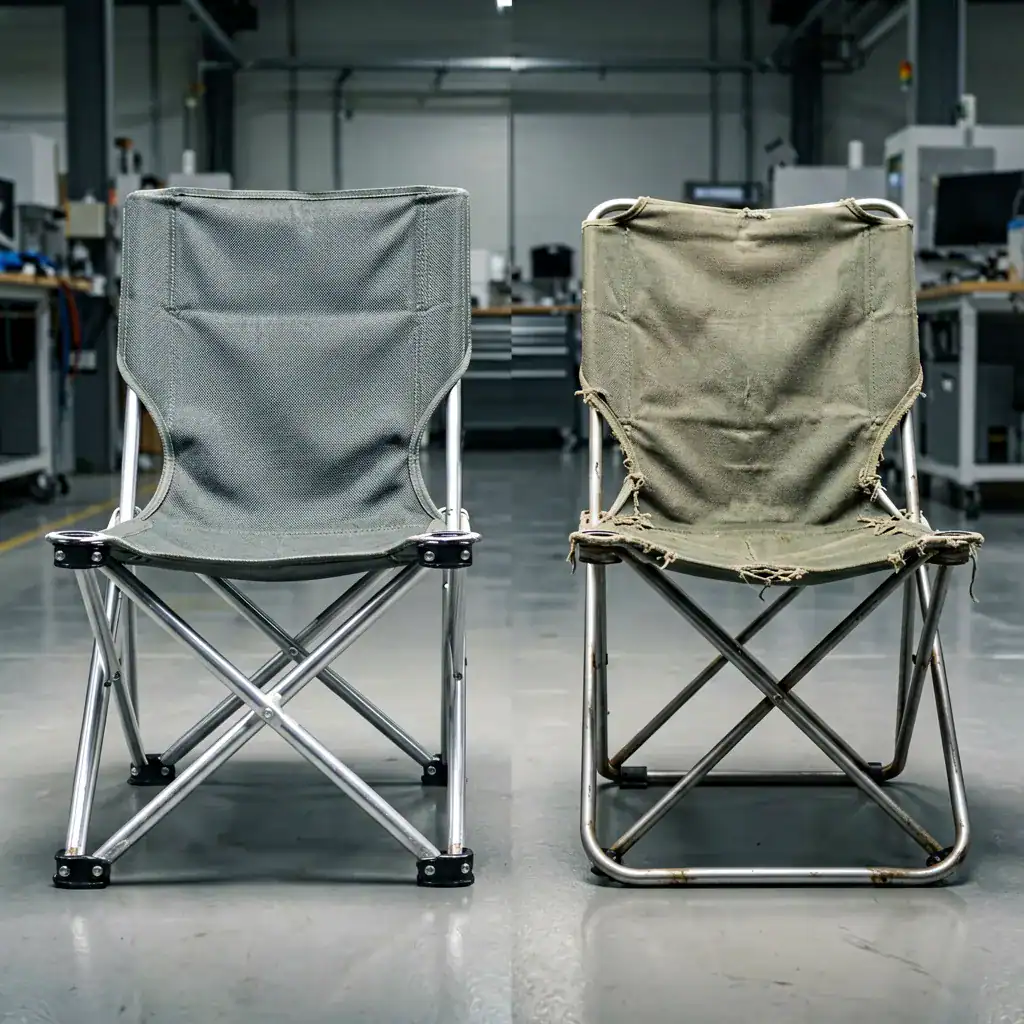
Most sourcing camping gear mistakes stay invisible at the quote stage. Two camping chairs look identical in a catalog photo. One costs 30% more. The premium buys written fabric grades, a documented frame load test, and a quality tolerance that keeps defects under 1%. That’s the difference between reorders and mid-season markdowns.
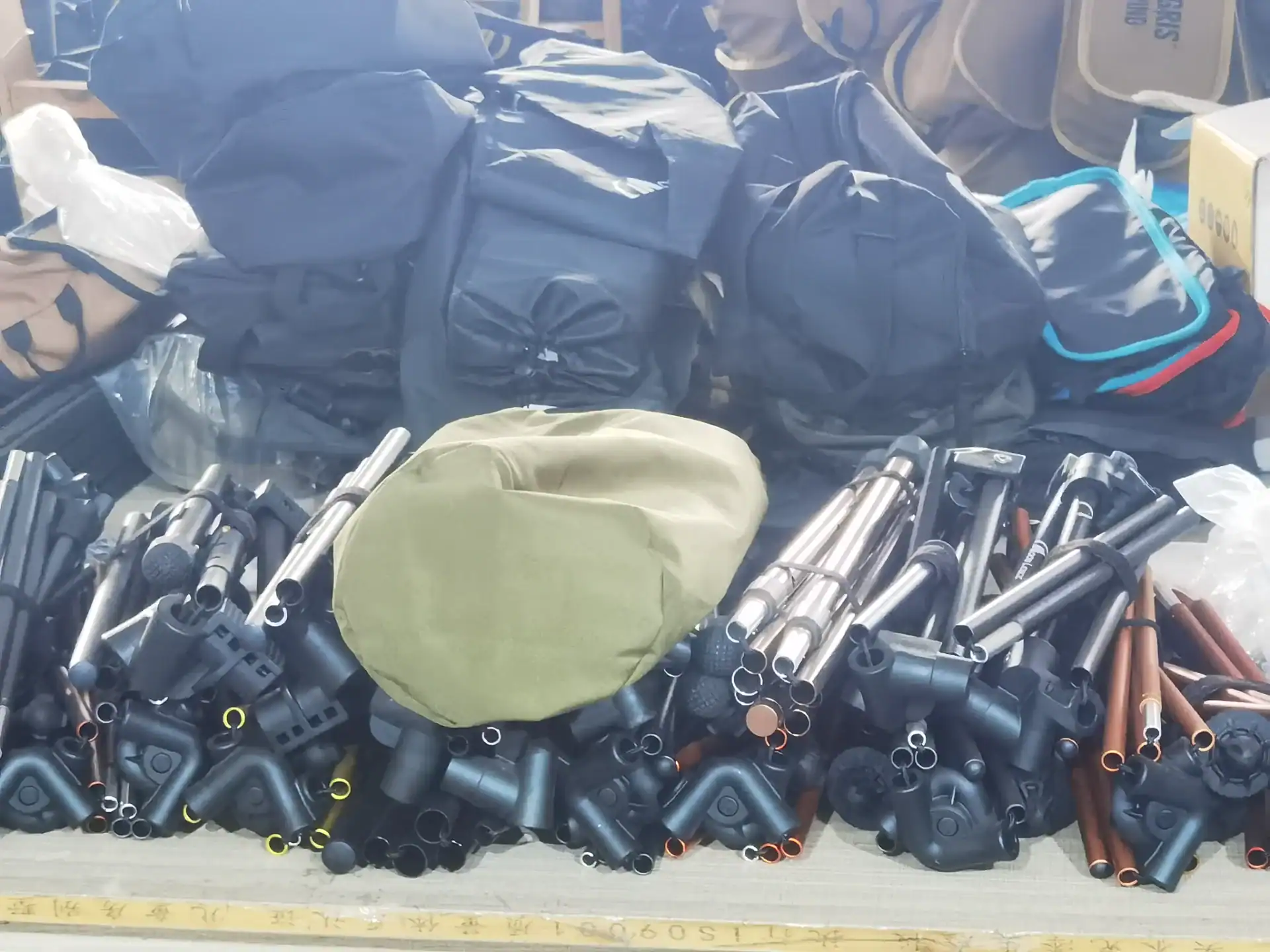
One buyer burned $50,000 because the pre-production sample matched perfectly while the mass production run drifted. Thinner tubing. Weaker hinge. Fabric that failed in the field. The sample approval process worked exactly as designed. Nobody committed the material grade, the dimensional tolerance, or the drop-test standard to writing. The factory met a spec that never existed.drop-test standard
The same gap shows up in tents, air mattresses, sleeping bags, and folding wagons shipped out of Chinese factories. Start a camping gear import QC checklist with written material specs, inspection allowances, freight terms, and a clear line on outdoor gear supplier mold charges. A quote missing those is a margin risk, not a bargain. Suppliers who dodge the commitments aren’t saving you money. They’re deferring the cost into your landed price. The margin is won or lost before production starts, not after the container lands.Chinese factories
Mistake #1: Why Cheap Camping Gear Quotes Hurt
A cheap quote is usually a spec downgrade wearing a disguise.
“Why is your quote higher than the other factory?” “Because their price isn’t for the same product.”
That exchange plays out daily in China’s camping gear supply chain. The lowest quoted price rarely comes from a factory that found efficiencies. It comes from lower-grade resin, thinner metal, weaker fabric, and a skipped drop test. Both quotes describe the same camping chair on paper. In the field, they fail differently.
Unit price on FOB terms tells you almost nothing about landed cost. The cheap quote wins the spreadsheet battle and loses the season. Returns, warranty claims, and re-inspection costs eat the margin you thought you saved. Private-label camping gear cost pitfalls hide in exactly that gap.
What a Real Quote Comparison Must Include
- “Aluminum frame” tells you nothing useful. 6061 and 7075 aluminum have very different yield strengths when the tent is under a snow load or high wind. Same goes for “stainless steel” — demand the exact grade, 304 or 430, in the contract. Otherwise you get whatever mill offcuts they had lying around.
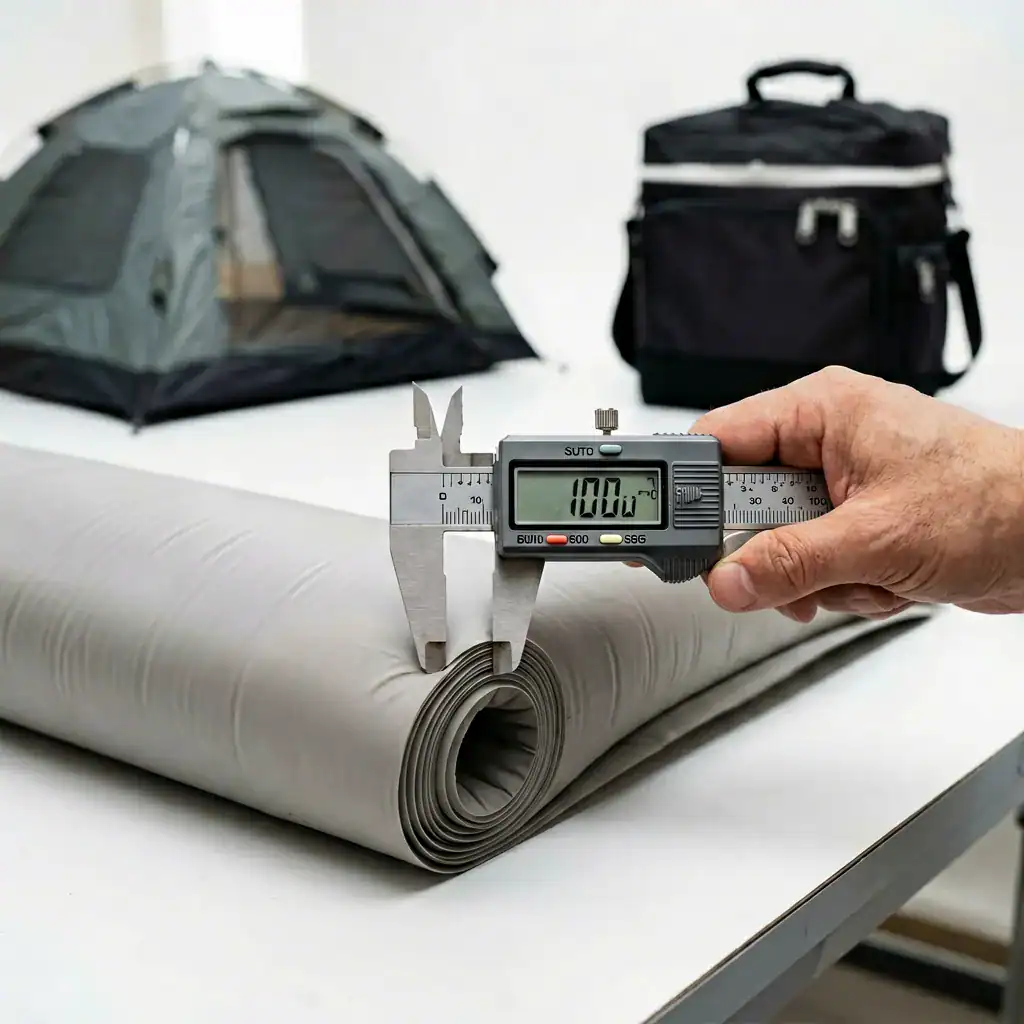
- A supplier quotes an air mattress at 0.4mm PVC thickness to win on price. At that spec, it punctures on the first rocky campsite. You need 0.6mm minimum for ground use. Write the exact thickness into the PO and verify with calipers during QC.
- Powder coating thickness is what determines rust resistance, not the color or gloss level. Cheap frames get a thinner coat that saves pennies per unit and starts flaking after three coastal trips. The buyer pays for that in returns.
- Export cartons with 3-ply board will crush in the bottom layers of a 40-foot container stacked to capacity. If the quote doesn’t specify carton board grade (5-ply minimum for heavy loads), plan on receiving flattened boxes at your warehouse.Export cartons
- If there’s no QC line item in your sourcing budget, every defect passes through undetected until your dock workers open the containers. A pre-shipment inspection costs a fraction of what a full container return eats in freight and restocking fees.
The Two Red Flags Most Buyers Miss
Watch for freight-term drift between quote and invoice. A supplier who shifts from FOB pricing to EXW pushes export packing, customs clearance, and port handling onto your side — charges that weren’t in your initial cost projection. That landed-cost surprise only shows up after you’ve committed to the order volume.
Request a physical sample before any price talk. Sample approval is the only honest test of quality tolerance. A supplier who hesitates to send one is telling you what mass production would look like — without it, you are buying a photograph.
Kelyland’s network of 17 core factories and 200-plus manufacturing partners — most ISO 9001:2015 certified — runs inspections at every production stage, with reports available on request. That structure never produces the lowest quote. It produces the price you actually pay.
Mistake #2: Verify Any Factory Before Deposit
A catalog is a sales document.
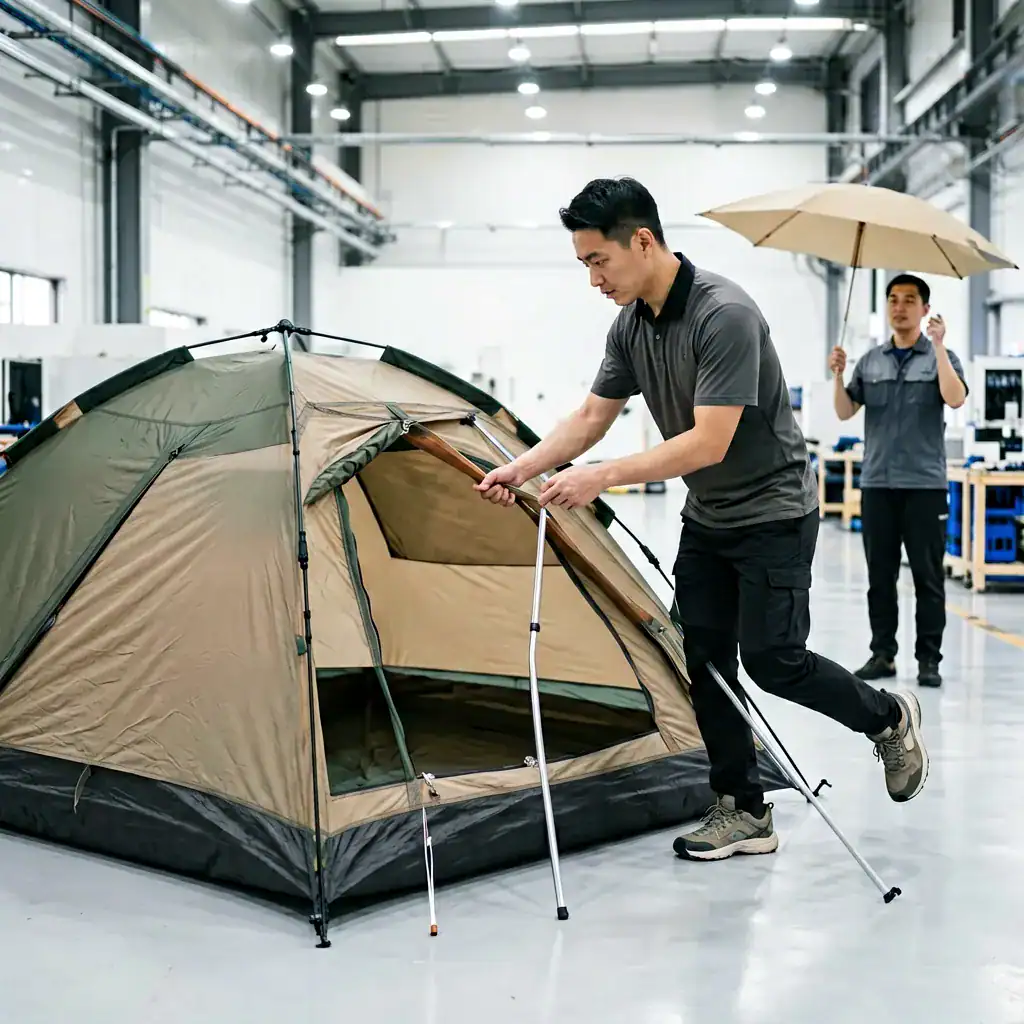
A polished catalog and a quick reply are table stakes in this market. They prove nothing about whether a supplier can hold your spec, hit your lead time, or keep quality tolerance across a full production run. Anyone can respond fast; a salesperson does not need to understand your fabric coating, load rating, or inspection tolerance to send a quote.
The risk is not the deposit. It is the failed season that follows when the factory cannot produce what the catalog promised.
Seven checks before the deposit
- Legal identity: confirm the business license name matches the contract and bank account. A mismatch signals a classic front company setup.
- Factory versus trader: ask whether they own the production line or broker orders. Traders quote anything because they control nothing.
- You need more than general camping gear experience. Ask for reference orders in the exact product category. A supplier who sells folding tables well won’t necessarily handle tent seam welding correctly.
- Check whether their production capacity matches your order volume and peak season timing. A factory running at 85% utilization will quietly route your order to a subcontractor without telling you.
- Most suppliers who claim full vertical integration actually outsource molding, welding, or finishing to unnamed workshops. Get written subprocess control documentation before you wire any deposit.
- ISO 9001:2015 certification is the baseline, not the finish line. Ask for the actual audit report from the most recent renewal cycle.
- Any factory that blocks third-party audits has something they don’t want you to see. Confirm they allow on-site inspections before a single dollar leaves your account.third-party audit
Turn every answer into a weighted supplier scorecard. Factories that hesitate on audit access or subcontracting disclosure get dropped to the bottom immediately. The verification costs nothing. The failure to verify costs everything.
Most buyers never see the factory floor before sending a deposit. Kelyland’s network of 17 core factories and 200+ partners are ISO 9001:2015 certified, but certification alone doesn’t catch a bad stitch or a wrong zipper. The QC process runs inspections at every production stage, and reports are available on request. Before wiring that 30% deposit, ask for the last three inspection reports from the factory that will run your order. If they hesitate, you’ve already learned something.
Mistake #3: Vague Specs Kill Camping Margins
“High-grade” on a spec sheet is the most expensive phrase in import history.
“Same as sample” is the most expensive phrase in private label camping gear. One supplier reads it as “match the visual appearance.” Another reads it as “match the material spec.” A third reads it as “get close enough to pass a quick glance.” The lowest quote will always interpret vagueness as permission to cut costs—thinner fabric, lighter frame tubing, skipped drop tests. That gap between what you approved and what arrives is where profit margins disappear.
What a locked spec sheet must cover
- Material grade:Write “600D Oxford with PU coating, minimum 200gsm” instead of “tough fabric.” Denier count, coating type, and thread density determine whether that tent survives a rainy weekend or gets returned after one trip.
- Dimensions & tolerance:List every critical measurement and the acceptable deviation in millimeters. A tent pole that is 5mm short changes how the whole structure pitches, and nobody discovers this until setup at dusk.
- Surface finish & decoration:Name the exact method—silk-screen, thermal transfer, laser marking—and include the Pantone reference for each color. “Printed logo” means different things to different workshops.
- Packaging:Specify carton construction type, individual poly bag thickness, label placement coordinates, and instruction manual language. Vague packaging specs are the direct cause of damage claims that eat into margins months after shipment clears customs.
- Load capacity, waterproof head pressure, zipper cycles, and salt spray for frames. That’s the testing list. Don’t guess which ones apply — state them in the spec sheet. And get the inspection allowance written into the quote before you sign anything.
Approve a physical sample after the spec sheet is locked. Seal that sample and keep it on site. It becomes your acceptance benchmark against mass production. Without a sealed reference, QC teams end up arguing over interpretations instead of measuring against a fixed object.
That’s exactly why Kelyland’s 10-step process locks specs during design and sample approval — step two builds the concept, step three produces a prototype for client review, and step four doesn’t move to production until both sides sign off. Fabric dyeing, printing methods, and custom packaging are all defined before any deposit changes hands. The factory cannot reinterpret quality later.
Mistake #4: Mold Charges and Tooling Costs
A mold you don’t own is a tool you rent forever.
“Understood.”
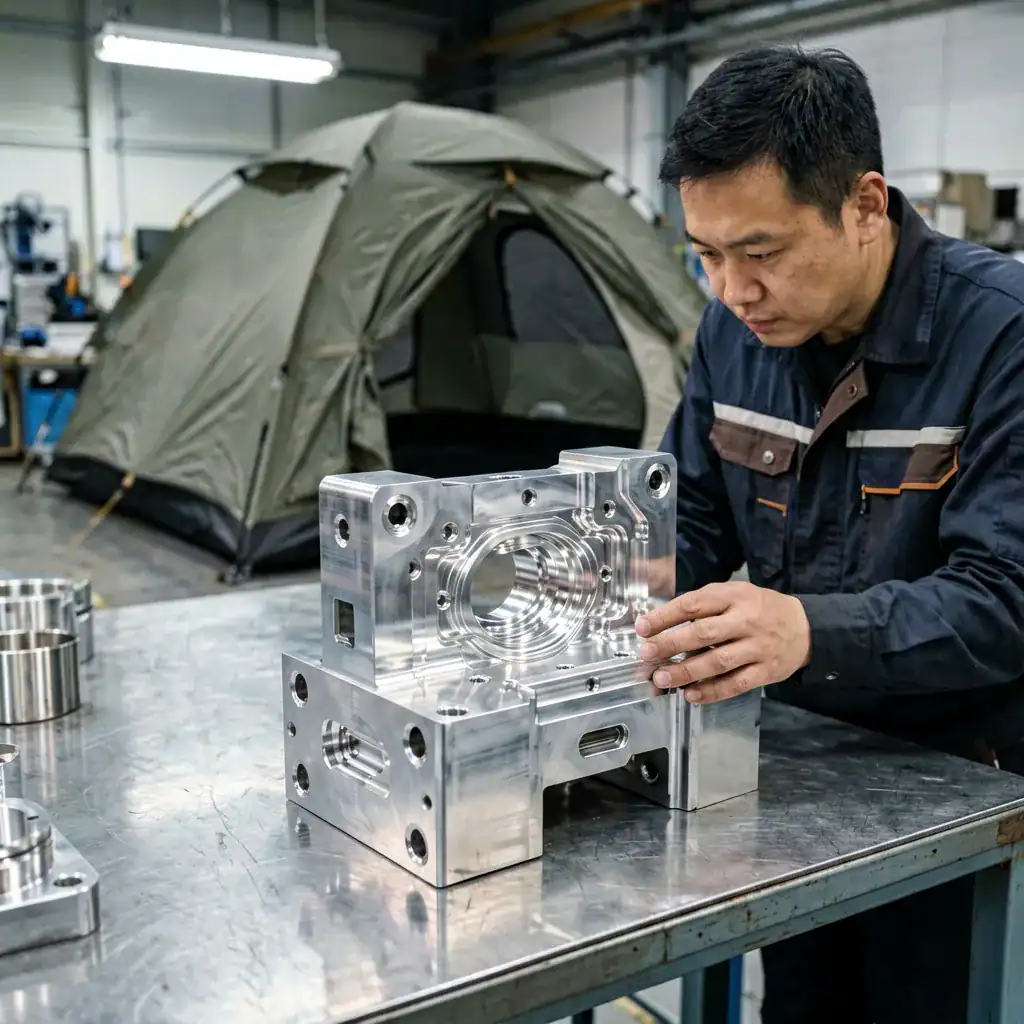
Ask two questions before approving anything: how much does the tooling cost, and who owns it after production ends? A supplier that bundles tooling into the unit price controls the mold. Switch suppliers later and you pay full price again for new tooling. A supplier that separates the tooling quote and writes ownership into the contract leaves you free to reorder elsewhere.
Run the math across your full committed volume, not just the first order. A $3,000 mold spread over a 300-piece MOQ adds $10 per unit to your landed cost. Spread it over 3,000 pieces and that drops to $1 per unit. If the supplier only quotes a blended unit price, you won’t see that difference until your first margin report lands on your desk — and by then it’s too late to negotiate differently.
Flexible MOQ vs. Tooling Payback
Flexible minimums change the risk equation. MOQs start at 50-100 pieces on select items, with standard custom orders running 300-1,000 pieces. A smaller first batch lets you validate sell-through before committing to full tooling payback. Order 80 pieces, test the market, then reorder with actual demand data behind you.flexible minimums
That protects cash flow, but only if the tooling quote and ownership terms are written into the contract from day one. A verbal “we’ll share the mold cost across future orders” vanishes when the next quote lands.
What to Demand in Writing
- The tooling quote must be a separate line item for each mold, including material spec — P20 or H13 steel — and estimated shot life in cycles.
- The ownership clause defines who holds the mold and what happens if you switch factories. If you paid for it, you own it.
- The amortization schedule shows how mold fees spread across committed volume and whether a deposit refunds tooling once production hits a quantity threshold.
- Maintenance terms specify who repairs the mold during production runs. That cost usually ends up on the buyer’s side if it’s not negotiated upfront.
A $50,000 order turns into $55,000 before freight when you miss these details. Worse — when the deal ends, the mold stays with the factory.
| الميزة | المواصفات | الميزة |
|---|---|---|
| Typical Mold Parts | Buckles, air pump valves, pole locks, plastic table corners | Identifies which components carry tooling costs |
| Tooling Investment | Thousands of dollars per injection mold | Prevents surprise line-item charges |
| Quotation Practice | Request a separate tooling quote from unit price | Enables transparent cost comparison |
| Mold Ownership | Confirm ownership terms before deposit | Protects future reorder rights |
| مرونة موك | Kelyland MOQs: 50-100 pcs select items; 300-1,000 pcs standard | Spreads mold cost without overstocking |
| شروط الدفع | 30% deposit, 70% before shipment for new clients/orders over US$3,000 | Aligns cash flow with production milestones |
Mistake #5: Skip QC Inspections at Your Peril
A quote with no inspection allowance is deferred defect cost, not savings.
The cheapest quote skips inspection entirely. No third-party check. No one watching your tents during production. The defects are still there — you just find them at your dock, mid-selling-season.
Three Gates, Not a Single Check
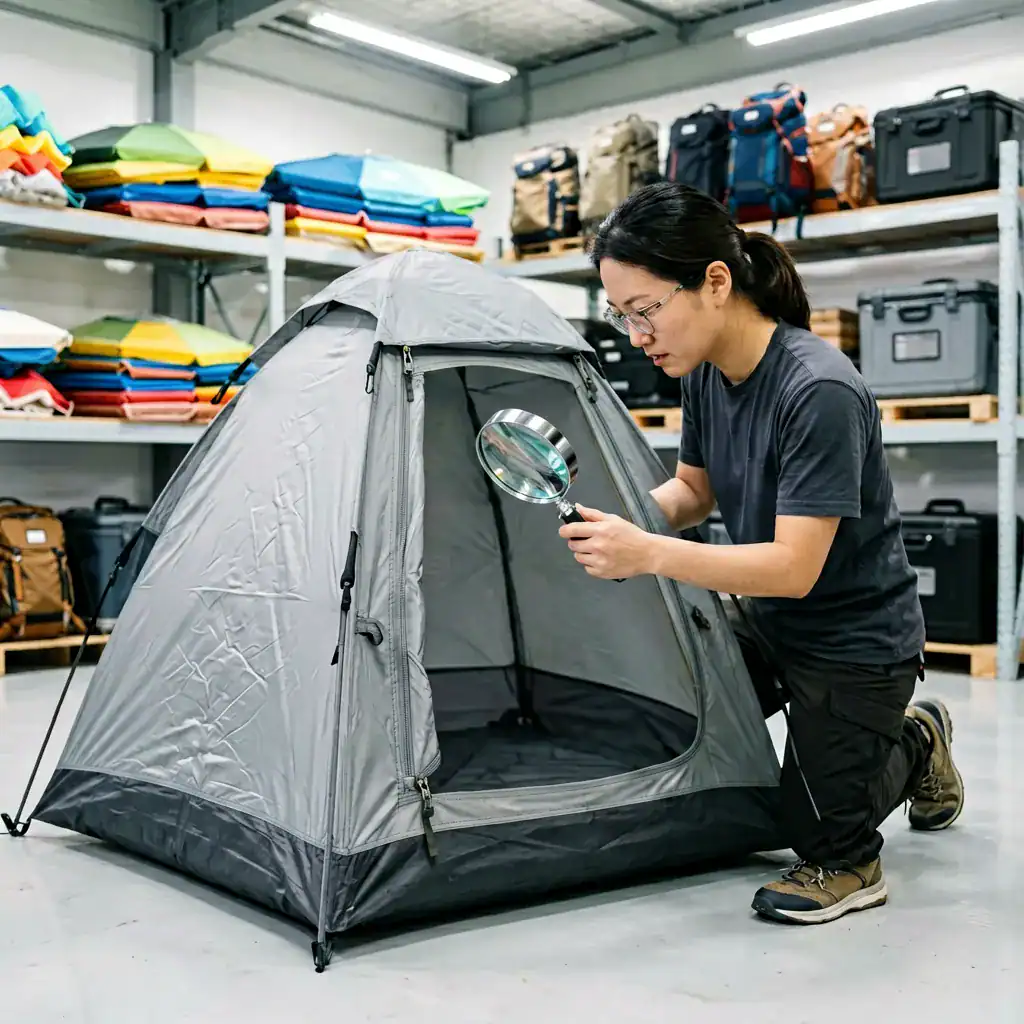
Inspection means three separate gates: pre-production, during-production, pre-shipment. Pre-production checks raw materials before any cutting. During-production catches stitching and mechanism problems while fixes cost almost nothing. Pre-shipment pulls a final random sample and compares finished goods to the approved reference.pre-production, during-production, and pre-shipment
What the Checklist Must Cover
- Stitching: Check seam alignment, thread tension, and bar-tack reinforcement at load points. A tent seam that fails does it in a storm, not on a factory floor.
- Mechanisms: Cycle every zipper, hinge, pole lock, and valve. Failures come from misalignment, thin metal stampings, or debris caught in the track.
- Material compliance: Weigh the delivered fabric. Test coating adhesion. Measure frame gauge against the approved sample. Spec drift almost always happens after sample sign-off.
- Carton strength, label placement, barcode scan rate, and shipping marks all need sign-off before production. Weak cartons lead to damage claims that the factory will blame on the carrier every time.
Dropping third-party inspection from a quote looks like a quick savings line. One rejected container wipes out that number entirely — return freight, rework labor, missed shelf dates, and retail chargebacks all hit your P&L. A buyer who pushes a supplier to skip inspection is effectively negotiating against their own landed cost.
Kelyland’s quality control runs through ISO 9001:2015 partner factories with stage-gate inspections during production and reports available on request. The checks cover stitching integrity, mechanical function, and spec compliance throughout the run. A pre-shipment inspection must pass before any container leaves the yard. That is the difference between catching a defect at the source and catching it at your distribution center after customs clearance.فحص ما قبل الشحن

Mistake #6: Hidden Logistics and Customs Fees
EXW shifts every customs risk to the buyer.
Most buyers compare freight quotes by total dollar figure alone. The real variable is where the factory’s responsibility ends. Under EXW terms, the supplier stops at the factory gate. Trucking to port, export customs clearance, port handling fees, and ocean freight all sit on your side of the ledger — along with every delay those steps can generate.
The cost of a documentation error rarely appears in the initial quote. It surfaces later — a missing customs form triggers demurrage charges, the next available sailing is seven days out, and your seasonal landing window slips by two weeks. FOB shifts that exposure back to origin. The factory books vessel space and clears export customs under their own liability; cargo cannot leave until their paperwork passes government review.
What to lock down in writing
- Export documentation — commercial invoice, packing list, and customs declaration — must be duty-assigned to a named party with legal standing in the destination country. Never leave this to an unregistered sales representative on the supplier’s side.
- Get the Incoterm in writing. Every time. EXW and FOB look similar on a quote but land completely different costs on your P&L — one leaves you paying port fees and vessel booking, the other shifts that to the supplier. Make sure both parties know who books the ship and who covers terminal handling.
- Break transit into three line items: factory-to-port trucking, ocean sailing days, and estimated arrival at your door. A single “shipping takes 45 days” number is useless when you need to plan seasonal inventory. You need each leg itemized so you can track where delays actually happen.
- Import duties, customs inspections, final-mile delivery — those don’t happen by themselves. If your contract doesn’t name who handles each step, assume it’s you. Budget for a customs broker upfront. That $400 fee beats an $8,000 demurrage charge every time.
What changes with a full-chain supplier
Kelyland builds logistics into production scheduling rather than bolting it on afterward. Step 8 runs pre-shipment inspection against your approved sample specs; step 9 coordinates global shipping with full export documentation and customs clearance support from our team. With over 1 million units exported annually across 17 product categories, that paperwork workflow isn’t theoretical — it’s been tested against real customs holds and tight delivery windows.
Standard lead time sits at 30-45 days from sample approval to finished goods ready for loading. Add a confirmed transit window on top of that — say 25 days ocean freight to Los Angeles — and you get a delivery date you can schedule retail promotions around instead of guessing when a container might show up while fielding emails about “unexpected port delays.”

Mistake #7: Weak Contracts Invite Sourcing Disputes
A purchase order without claim rules is a gamble — draft the settlement terms before you draft the deposit.
Three hundred folding wagons arrive with bent frames from improper container loading. The first question is always reimbursement responsibility — which gets answered by the signed contract terms, not verbal promises or WeChat screenshots of “we’ll take care of it.” When claim rules exist only as a sales manager’s assurance, the margin gets eaten twice: once by replacement freight costs and once by missed shelf dates that destroy buyer trust for the next season.
What the contract must lock down
- Payment milestones:New clients and orders over US$3,000 run a 30% deposit, 70% due before shipment. Write that milestone into the contract. Without it, a supplier can hold your order hostage — no defined payment date means they decide when you pay.
- Delivery dates:State the exact window — standard production runs 30-45 days — and what happens when they miss it. “Shipping soon” carries zero legal weight when your seasonal shelf dates are already set.
- Replacement policy:Agree on a defect-rate threshold. If production crosses that line, who covers replacement units and freight? If the contract is silent, you do.
- Defect response time:Put a claim-response window in days. No written timeline means after-sales issues drag past your sell-through window. You end up holding dead stock while the supplier drags their feet.
- Liability wording:Spell out who pays for failed inspections, late deliveries, and consequential damages. Vague liability language turns every claim into a negotiation — one you lose on margin.
The 30/70 payment split does the enforcing
Kelyland’s standard terms for new clients and orders over US$3,000 are 30% deposit and 70% due before shipment. That final 70% acts as enforcement: the supplier gets paid only after pre-shipment inspection passes. Those terms sit on top of 17 core strategic factories, most ISO 9001:2015 certified, so the contract is backed by auditable quality systems — not a trading desk with no skin in the game.
Repeat clients get flexible terms, but the rule stays the same — everything gets written, agreed, and signed before a single unit goes into production. Skip that step and the math turns brutal: one disputed container of 1,000 tents without a replacement clause wipes out your entire season’s margin.
الخاتمة
Margin protection happens at the negotiation table, not after customs clearance. The worst camping gear sourcing mistakes china buyers see trace back to four specific gaps: picking suppliers on price alone, running without written spec sheets, skipping factory audits, and confusing FOB with EXW until the freight bill lands. Walk into your next supplier meeting with three hard benchmarks — a 1% defect cap, 95% on-time delivery, and a 30-45 day production window. Get all three in writing before you sign.
- The cheapest quote almost always hides spec drift — lower-grade resin substitutions, thinner gauge metal than spec’d, weaker fabric denier than what you approved. Demand written material grades and acceptable quality tolerances before you compare line items.
- On custom orders with private label camping gear cost pitfalls in mind, confirm mold ownership and tooling charges as separate line items before committing to production. Mixing them into unit pricing creates ambiguity that comes back as reorder leverage against you.
- Set your QC checkpoint at factories holding ISO 9001:2015 certification. Add pre-shipment inspection reports as a mandatory deliverable — it’s the only way to catch defects before they’re in a sealed container on the water.
- Use this as your planning benchmark: 30-45 day production lead time and minimum order quantities starting at 50-100 pieces per SKU. If a supplier can’t hit those windows consistently, build buffer or find another line.
Run your shortlisted suppliers against those benchmarks before wiring a deposit. Pick a product category where process quality shows fast — air mattresses expose weld seam integrity, pump certification gaps, and fabric grade swaps the moment you unbox one. Pull up Kelyland’s air mattress spec sheets. Compare the MOQ column, the inspection report format, and the material callouts against what other factories send you.
الأسئلة الشائعة
ما هي الأخطاء الأكثر شيوعًا التي يرتكبها المستوردون الجدد عند التوريد؟
معظم إخفاقات استيراد معدات التخييم تعود إلى اختيار الموردين بناءً على السعر فقط، وغياب المواصفات المكتوبة، وتخطي فحص المصنع، وشروط الشحن الغامضة. غالبًا ما يخفي السعر الأرخص موادًا منخفضة الجودة ورسوم فحص إضافية، لذا. ضع كل المواصفات وشروط الشحن كتابيًا قبل دفع الوديعة.
How many samples should I order before approving a camping gear production run?
Order at least two production-identical samples: one for dimensional and material verification, one for field or lab testing. Paid samples are typically refundable after bulk order confirmation, so use sample approval as the final. Keep one approved sample as your QC benchmark.
What payment terms do Chinese camping gear suppliers typically offer?
Standard terms are a 30% deposit and 70% before shipment for new clients or orders above US$3,000. Repeat clients may negotiate more flexible terms, but never wire the full balance before a pre-shipment inspection. Tie final payment to the pre-shipment inspection report.
What certifications should a camping gear factory hold?
Camping gear factories should hold ISO 9001:2015 plus product-specific CE, BSCI, or CCC depending on the target market. Ask for verifiable certificate numbers and match the certificate to the exact product you are ordering. Verify certificate numbers before sending a deposit.
What should a private-label camping gear contract include?
Include detailed specifications, material grades, QC inspection points, packaging, lead time, payment terms, MOQ, and liability for defects. Also reference the approved sample and define how failures found during pre-shipment inspection are corrected. Make the approved sample the contractual quality standard.

 English
  Español
  Deutsch
  Français
  Português do Brasil
  Русский
  العربية
  한국어
한국어  日本語
日本語