 Zum Inhalt springen

en 13573 en 14960 inflatable is the first checkpoint buyers should lock before they approve a supplier, budget, or production slot. When a supplier tells you their inflatable tent is CE certified, the first question should be: certified to which standard? EN 13573 and EN 14960 are not interchangeable, but I still see RFQs where they get treated that way. The wrong choice can stall customs clearance or trigger a recall notice from a European retailer six months into the season.
The difference comes down to how the structure is classified. EN 13573 covers camping tents designed for sleeping and shelter — think family dome tents or glamping bell tents with inflatable beams. EN 14960 applies to inflatable amusement equipment meant for play and bouncing, which includes large event domes and party shelters. A glamping tent with inflatable frame members sits right in the gray zone between them. Some European buyers now request both standards for those hybrid products, especially when floor area exceeds 50 square meters.
The practical cost of getting this wrong is time. Re-testing under the correct standard adds four to six weeks to your lead time and eats into your margin if FOB pricing was already locked in. A pre-assessment with a notified body before sample approval stage can flag which standard applies — and whether your material choice, particularly PVC-TPU hybrid fabrics, will pass the stricter air retention requirements of EN 14960.
EN 13573:2012 – Camping tents
EN 13573 is the standard for camping shelters; EN 14960 governs inflatable play equipment.
A supply chain manager at a European outdoor retailer once rejected a full container of glamping tents because the CE certificate referenced EN 14960 instead of EN 13573. The supplier had tested to the wrong standard. That container sat at Rotterdam port for six weeks while re-testing was arranged. The cost: €12,000 in storage and demurrage, plus a three-month delay to the retail season.
Anwendungsbereich: Für Schlaf- und Schutzzelte
EN 13573:2012 gilt für Zelte, die für den menschlichen Aufenthalt während Campingaktivitäten konzipiert sind. Der Standard deckt jede Zeltstruktur ab, in der Menschen schlafen oder Schutz suchen — Familieldomtzelte, Tunnzelte, Festzeltzelte und Glamping-Strukturen mit aufblasbaren Balkenrahmen. Er deckt nicht Zeltbags, Trailer-Zelte oder Spielgeräte ab.
Wesentliche Prüfungen: Windbeständigkeit, Wasserdurchlässigkeit, Nahtfestigkeit
Der Standard schreibt drei mechanische Kerntests vor. Die Windbeständigkeit wird geprüft, indem das Zelt an einer Prüfvorrichtung verankert und lateralen Kräften ausgesetzt wird, die Böen bis zu 28 m/s (Beaufort-Skala Kraft 10) simulieren. Die Wasserdurchlässigkeit wird durch Abspritzen des Gewebes mit 10 l/min pro Quadratmeter über fünf Minuten gemessen — es dürfen sich keine Tröpfchen auf der Innenseite bilden. Die Nahtfestigkeit erfordert eine Mindestzugkraft von 200 N pro 50 mm Breite für Hauptnähte. Diese Schwellenwerte sind für die CE-Kennzeichnung nach diesem Standard nicht verhandelbar.
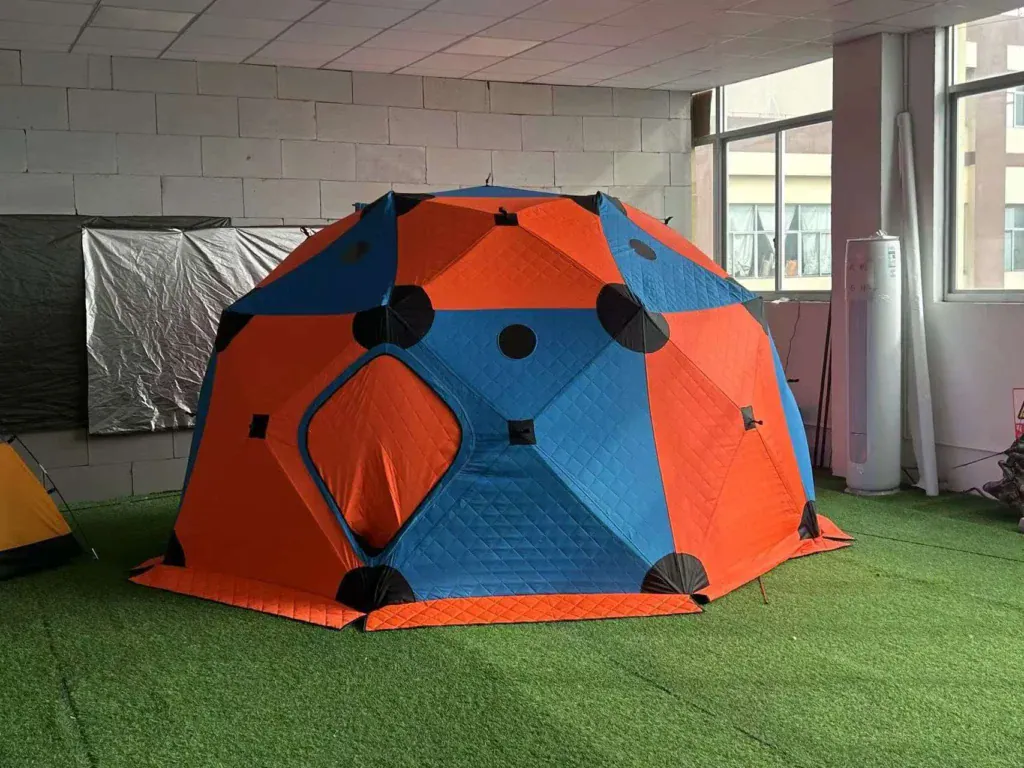
Typische Einsatzbereiche: Familienzelte, Glamping-Zelte
Familienzelte von Kelyland Outdoors’ Partnerfabriken in Ningbo und Shaoxing werden vor dem Versand an EU-Käufer routinemäßig nach EN 13573 getestet. Die Glamping-Zeltfabrik in Shaoxing — gegründet 2019 mit einer Jahreskapazität von 300.000 Einheiten — produziert Festzeltzelte und Jurten-artige Unterschlüpfe, die dieselben Wind- und Wasser-Tests bestehen müssen, bevor sie die CE-Zertifizierung erhalten. Bei aufblasbaren Balkenmodellen muss das Rahmenmaterial (PVC- oder TPU-beschichtetes Gewebe) zudem die Luftretention über einen im Anhang des Standards definierten Mindestzeitraum nachweisen.
EN 14960:2019 – Inflatable amusement equipment
EN 14960:2019 wurde für Springburgen geschrieben, nicht für Campingzelte — aber Händler fordern sie nun für große aufblasbare Schutzstrukturen.
Wenn Ihr Lieferant Ihnen ein EN 14960-Zertifikat für ein Glamping-Zelt anbietet, fragen Sie nach dem Warum. Dieser Standard wurde für aufblasbare Vergnügungsgeräte entworfen — die Art von Geräten, auf die Kinder auf Messen und Festivals hüpfen. Sein Anwendungsbereich deckt Spielstrukturen ab, bei denen Stoßdämpfung und Kindersicherheit den Prüfrahmen dominieren. Das bedeutet nicht, dass er für Zelte irrelevant ist.
Was EN 14960 tatsächlich prüft
The core tests are static load (the structure must hold 4x the manufacturer’s recommended user weight without collapse), air retention (pressure drop must stay under 15% over a set period), and impact attenuation (the surface must cushion a fall from defined heights). These make sense for a bouncy castle. For a glamping tent with inflatable beams, the air retention requirement is the one that matters — and it is stricter than what EN 13573 demands.
-
- Static load test: EN 14960 requires the inflated structure to support 4x the rated user weight without rupture or collapse. For a party dome rated at 20 people, that means holding roughly 2,400 kg distributed across the floor area.
- Air retention test: Pressure loss must not exceed 15% after a defined period (typically 30 minutes). PVC/TPU hybrid fabrics struggle here if seam welding is inconsistent — this is where many Chinese-made inflatables fail notified body testing.
- Impact attenuation: “Head injury criterion” (HIC) values must stay below a threshold. This applies to bouncing surfaces, not tent floors, so it rarely affects camping shelters unless they double as play spaces.
Where EN 14960 gets misapplied
“CE marking requirements inflatable camping tent” searches often return EN 14960 because testing labs offer it as a catch-all for any inflatable structure. The problem: EN 14960 does not test wind resistance, water penetration, or seam strength — three things that matter when your client sleeps inside that tent overnight. A bell tent with inflatable beams that passes EN 14960 could still fail catastrophically in a gust because the standard never checks lateral wind loads.
“Notified body testing inflatable structure EU” — what to expect
“Notified body testing inflatable structure EU” searches typically lead buyers to TÜV Rheinland, SGS, or Bureau Veritas. These labs will test per EN 14960 if you specify it, but they will also flag gaps if your product clearly functions as shelter rather than amusement equipment. Some notified bodies now offer combined assessments covering both standards in one session — this saves weeks of back-and-forth when your product sits in the gray zone.
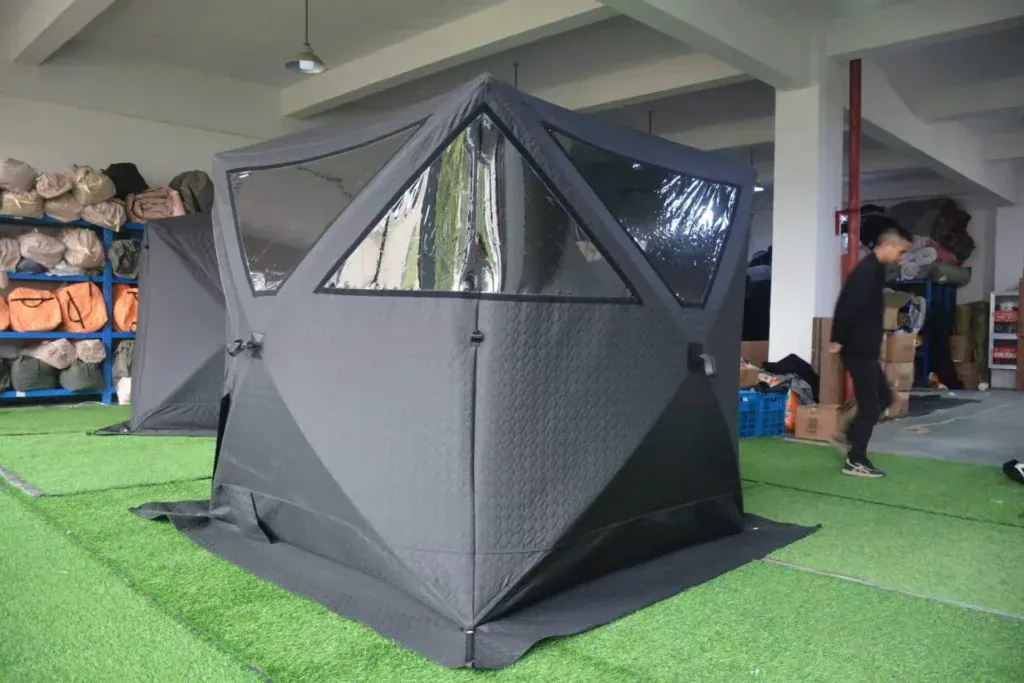
Side-by-side comparison table
EN 13573 tests for shelter safety; EN 14960 tests for structural air integrity.
Most supply chain managers assume one CE standard covers all inflatable tents. That assumption costs time and money. EN 13573:2012 applies to camping tents used for sleeping and shelter — think family dome tents or glamping bell tents with inflatable beams. EN 14960:2019 covers inflatable amusement equipment — bouncy castles, event domes, and large party shelters where occupants are active rather than resting.
Test parameters that separate the two standards
-
- Wind resistance: EN 13573 requires a static wind load test simulating forces up to Force 8 on the Beaufort scale (approximately 62–74 km/h). EN 14960 does not mandate wind testing as a primary pass criterion.
- Nahtfestigkeit: EN 13573 specifies a minimum seam tensile strength of 150 N per 50 mm width for main structural seams. EN 14960 focuses on welded joint integrity under continuous inflation pressure rather than fabric seam pull.
- Air retention: EN 14960 enforces a strict air retention test: after reaching working pressure, the structure must hold above 80% of that pressure for at least one hour without pump intervention. EN 13573 has no equivalent air-retention requirement — it assumes constant inflation from an attached blower.
- Static load (occupant simulation): EN 14960 applies a distributed static load of up to three times the maximum user weight per anchoring point. EN 13573 tests only the floor structure for a uniform load of approximately 1.5 kN/m², reflecting sleeping occupants rather than jumping or bouncing.
Pass criteria and notified body involvement
Gray areas: glamping tents and large shelters
A 6-meter glamping bell tent with inflatable beams can legally fall under either standard — the notified body decides based on intended.
This is where the certification process gets messy. A glamping tent with inflatable beams sits at the intersection of two standards. EN 13573 treats it as shelter for sleeping. EN 14960 treats it as an inflatable structure subject to amusement-equipment loads. The notified body makes the final call based on the declared use, and different bodies in different EU member states sometimes reach opposite conclusions.When both standards may applyThe gray zone opens when a product exceeds roughly 20 square meters of floor area or uses inflatable columns as primary structural supports rather than traditional poles. A shipment was held at Rotterdam because the buyer’s legal team decided the product was an ‘inflatable structure’ under local building codes — even though the same model had cleared customs six months earlier under EN 13573. Some European retailers now require both standards for large inflatable shelters, citing liability concerns.The air retention test is the main friction point. EN 14960 demands a stricter pressure-hold threshold than EN 13573, which becomes a real challenge for PVC-TPU hybrid fabrics where seam welding consistency varies across production batches. One supplier audited by a third party lost six weeks re-engineering their heat-seal parameters because their initial samples bled pressure below the EN 14960 threshold.How to get a single assessment covering bothThe smart play is a pre-compliance gap analysis before you commit to mass production tooling. Send your design drawings and material specs to a notified body that handles both standards — TÜV Rheinland and SGS both offer combined assessments. They will identify which tests overlap (wind resistance, seam strength) and which ones are unique to each standard.A single assessment covering both standards typically adds about three weeks to the timeline but saves four to six weeks versus running separate tests after discovering a gap mid-production. Kelyland Outdoors coordinates this step through its partner factories in Shaoxing and Ningbo, where CE-certified glamping tent lines already carry ISO 9001:2015 protocols that align with both EN frameworks.
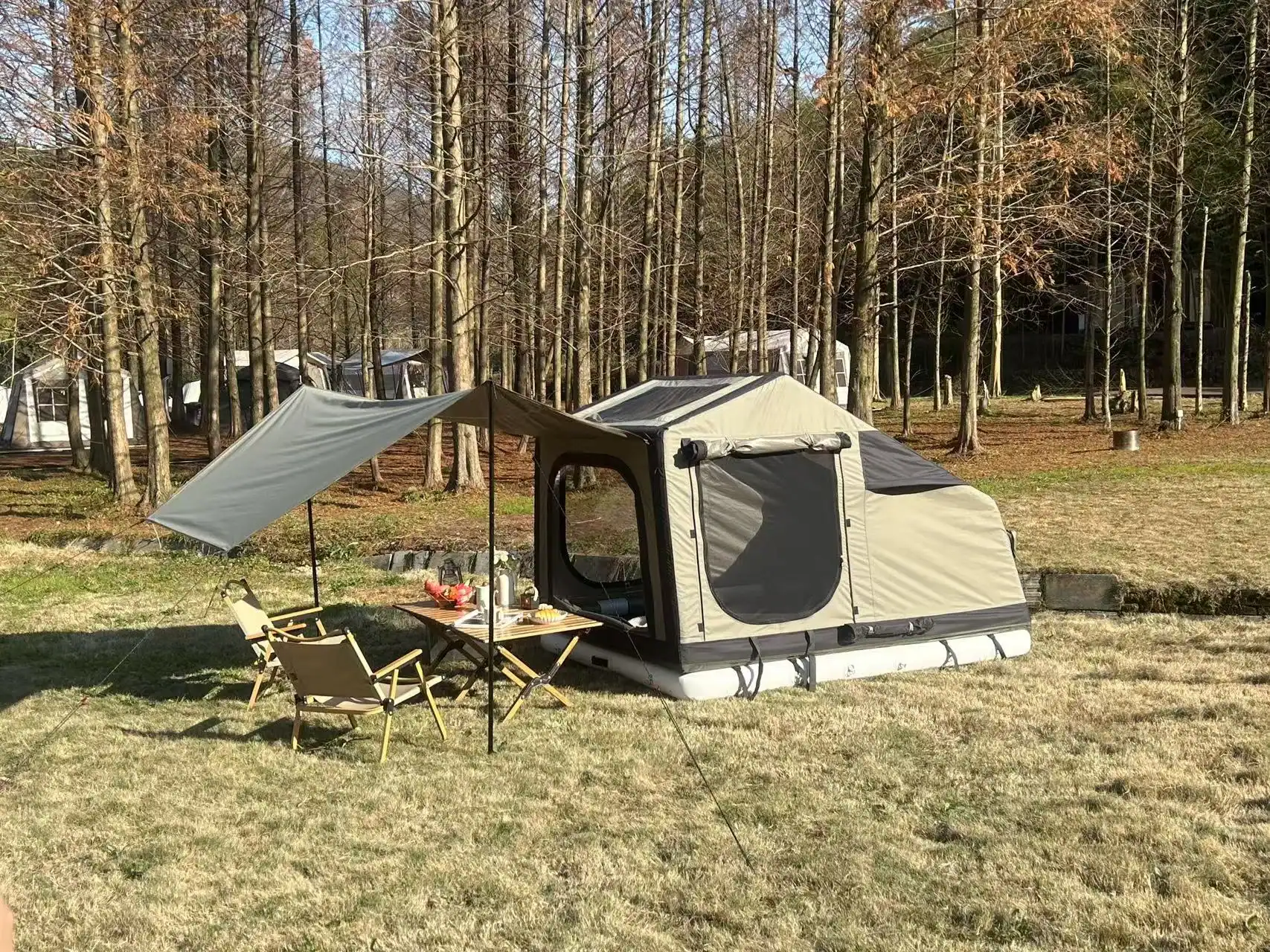
Practical advice for buyers
A certificate without a test report is just a piece of paper.
Most suppliers will send you a PDF of their CE certificate when you ask about compliance. That certificate tells you the product was tested against a standard — but it doesn’t tell you the results. A certificate is a summary. A full test report is the evidence. For EN 13573 and EN 14960, the difference matters because each standard has multiple sub-tests, and passing one does not guarantee passing all.Questions to ask before accepting any certificate
- Which standard was tested?: Ask for the exact standard number and year — EN 13573:2012 or EN 14960:2019. Some suppliers list “CE certified” without specifying which standard applies to your product type.
- Was it tested by a notified body?: EN 14960 requires testing by an EU-notified body (e.g., TÜV, SGS, Bureau Veritas). EN 13573 can be self-declared or third-party. If your retailer demands notified body involvement, confirm the lab’s status.
- Which specific tests were passed?: “CE certified for inflatable tents” is vague. Ask whether wind resistance, air retention, seam strength, and static load were all tested individually. For glamping tents with inflatable beams, request the air retention test data specifically.
- What were the actual pass/fail values?: A full report includes measured pressure drop over time (EN 14960 requires less than 25% loss over 30 minutes), seam tensile strength in Newtons, and wind speed thresholds. Without these numbers, you cannot verify if the design margin meets your market requirements.
Certificate vs. full test report: what to requestA CE certificate typically shows the product name, model number, standard reference, and issue date. A full test report runs 10-30 pages and includes photographs of the setup, raw data tables, pass/fail criteria for each clause, and the laboratory’s scope of accreditation. When evaluating a supplier for inflatable tent certification under EN 13573 or EN 14960, always request both documents.The factory network that Kelyland Outdoors works with holds ISO 9001:2015 certification across its core partner facilities — including those producing camping tents in Ningbo (800,000 units annually) and glamping tents in Shaoxing (300,000 units annually). When we evaluate an inflatable tent project for European market entry, we coordinate directly with these factories to obtain pre-compliance test data from their internal quality labs before sending samples to an EU-notified body.One practical benchmark: if a supplier cannot produce a full test report within two weeks of your request — or if they offer only a photocopy of someone else’s certificate — that is a red flag. The cost of re-testing after production can delay your launch by six weeks or more. Pre-assessment with a notified body before mass production saves that timeline.How Kelyland Outdoors handles standard selection
A pre-assessment with a notified body can save 4-6 weeks of re-testing for hybrid structures.
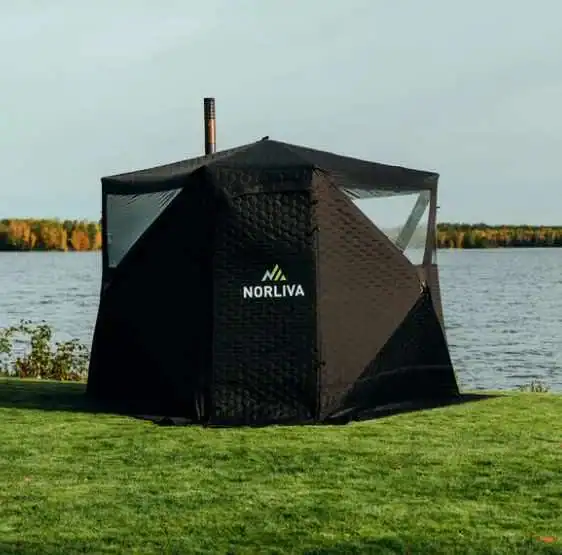
Glamping tents with inflatable beams—think bell tents, yurts, or large safari-style shelters—sit in a regulatory gray zone. EN 13573 treats them as camping tents. EN 14960 treats them as amusement equipment. Neither standard was written for this hybrid category, and picking the wrong one means your CE mark may not hold up when a retailer asks for the test report.When both standards applyA tent sold for sleeping and shelter falls under EN 13573. But if the structure exceeds a certain size or is marketed for events where people stand, walk, or bounce inside it, some European retailers now require EN 14960 compliance as well. The air retention test in EN 14960 is stricter—it measures pressure decay over time at a higher starting pressure than EN 13573 requires. PVC-TPU hybrid materials often fail this test because the weld zones leak under sustained load.How to get a single assessment covering bothThe most efficient route is a combined assessment with one notified body that handles both standards. Kelyland Outdoors coordinates this directly with its partner factories—the glamping tent factory in Shaoxing (ISO 9001 certified) runs pre-compliance checks on air retention and seam strength before sending samples to the EU testing lab. This catches weld failures early, when the fix costs days instead of weeks.ConclusionThe gap between EN 13573 and EN 14960 isn’t just a paperwork distinction. It determines which tests your inflatable tent must pass — wind resistance at 28 m/s for camping, or a static load of 500 kg per square meter for amusement structures. Pick the wrong standard, and your batch gets held at customs or rejected by the retailer.
- EN 13573 applies to tents used for sleeping and shelter.
- EN 14960 covers inflatable structures for play or events.
- Glamping tents with inflatable beams often fall in a gray zone.
- A pre-assessment with a notified body can save four to six weeks.
For supply chain managers, this is where the last ten percent of due diligence separates a smooth launch from a costly re-test cycle. Review your current product spec sheet against the test parameters outlined above — particularly the air retention requirements for PVC-TPU hybrids if you’re sourcing large shelters. If the supplier cannot produce a test report from an EU-notified body that matches your intended market classification, push back before sample approval locks in production tooling.Frequently Asked Questions
Which CE standard applies to inflatable tents?
EN 13573 is the correct standard for inflatable camping tents used for sleeping and shelter. EN 14960 applies to inflatable amusement equipment like bounce houses, not tents. Always verify which standard your supplier tests to before ordering.
What does EN 13573 test for?
EN 13573 tests wind resistance, water penetration, and seam strength for camping shelters. It ensures the tent is safe for sleeping and weather exposure. Request a full test report, not just a certificate.
Kann EN 14960 für Glamping-Zelte verwendet werden?
EN 14960 ist für Spielgeräte ausgelegt, jedoch verlangen einige Händler sie manchmal für große Event-Kuppeln. Für als Unterstände genutzte Glamping-Zelte ist EN 13573 die passende Norm. Klären Sie vor der Auswahl der Norm die beabsichtigte Verwendung mit Ihrem Kunden.
Wie überprüfe ich die CE-Zertifizierung meines Lieferanten?
Fordern Sie die genaue Normennummer (EN 13573 oder EN 14960) sowie einen vollständigen Prüfbericht einer Benannten Stelle an. Ein generisches CE-Zertifikat ohne Normenreferenz deckt möglicherweise nicht den geforderten Geltungsbereich ab. Bestehen Sie darauf, die Prüfparameter zu sehen, die Ihrem Zeltentwurf entsprechen.

 English
 Español
 Deutsch
 Français
 Português do Brasil
 Русский
 العربية
 한국어
 日本語