 Zum Inhalt springen

I just wrapped a QC review on a $50K inflatable tent order where the pre-production sample passed with flying colors — fabric weight, weld strength, valve placement all matched spec. The mass production run? Different story. The beam lamination was outsourced to a shop the factory never disclosed, and the weld adhesion dropped by nearly 20%. That gap between sample approval and production reality is exactly where the factory vs sourcing agent decision starts to matter. A direct factory quote might be 3–8% lower on paper, but if they don’t control every sub-process — especially for inflatable Produkte where beam lamination is often subcontracted — you absorb that risk alone.
A one-stop supplier with technical staff who know which factories actually weld their own beams versus those that hand it off can flag that dependency before you sign anything. For a retail category manager building out a tent line, that difference in visibility is worth more than the margin spread on der FOB-Preis. The real question isn’t just who has the lower unit cost — it’s whether your supplier can trace every quality variable from material sourcing through final pack-out.
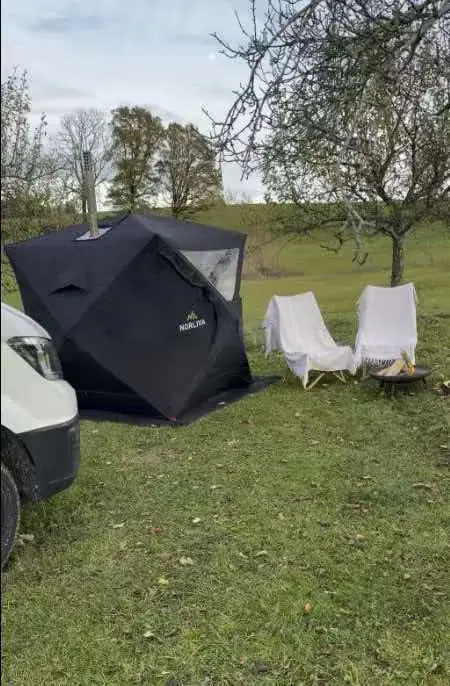
The Two Sourcing Routes for Inflatable Tents
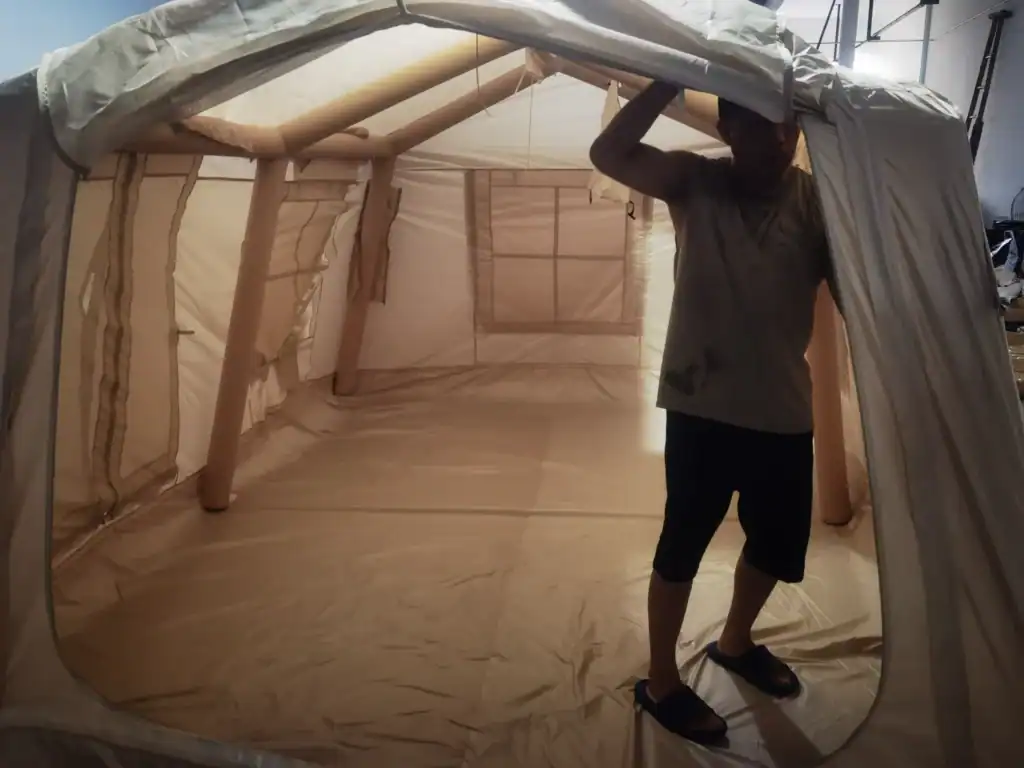
Many aufblasbares Zelt factories only sew the fabric and outsource the beam lamination.
A buyer who visited a factory in Ningbo last year saw a clean sewing line, signed a contract for 2,000 inflatable tents, and shipped. Three months later, half the units leaked at the beam seams during a retail floor demo. The factory had subcontracted the TPU welding to a workshop 200 km away without telling the buyer. That is the reality of direct factory sourcing for inflatable tents.
What direct factory sourcing really means in China
When you contact an aufblasbares Zelt factory directly, you are speaking to a production line owner whose expertise is often limited to one or two manufacturing steps. Many facilities in Zhejiang and Jiangsu specialize in cutting and sewing polyester or Oxford-Gewebe. The critical step – bonding the TPU or PVC air beams into the fabric channels – is frequently sent to a separate lamination shop that specializes in high-frequency welding.
This split creates a quality handoff problem. The sewing factory inspects stitch density and seam alignment. The lamination shop tests air retention. Neither party owns the full product. If a beam delaminates after 200 inflation cycles, each vendor blames the other’s process. The buyer ends up mediating between two Chinese companies with no contractual leverage over either.
Direct pricing looks attractive – typically 3-8% lower than going through an intermediary because there is no agent margin. But that spread disappears fast when you factor in your own travel costs for factory audits, translation fees for technical discussions, and the time spent chasing QC reports across multiple sub-suppliers.
What a sourcing agent or one-stop supplier does differently
A sourcing agent with technical staff can identify these dependencies before you commit. When Kelyland Outdoors evaluates an inflatable tent project, their operations team visits both the primary sewing facility and any contracted lamination workshop during the initial audit phase. They verify that both sites hold ISO 9001:2015 certification and that their welding parameters match the material specification – not just what is written on the sales sheet.
The agent also handles what most buyers overlook: coordinating Musterfreigabe across multiple factories so that color matching between tent body and carry bag stays consistent, ensuring FOB pricing includes all inland freight from sub-suppliers, and setting quality tolerance thresholds that apply to every vendor involved.
For brands launching a full camping line – tents plus furniture plus air mattresses – a direct relationship with one tent factory creates fragmented vendor management. A one-stop supplier coordinates multiple factories under single branding guidelines, which matters when your logo appears on five different product categories shipping together.
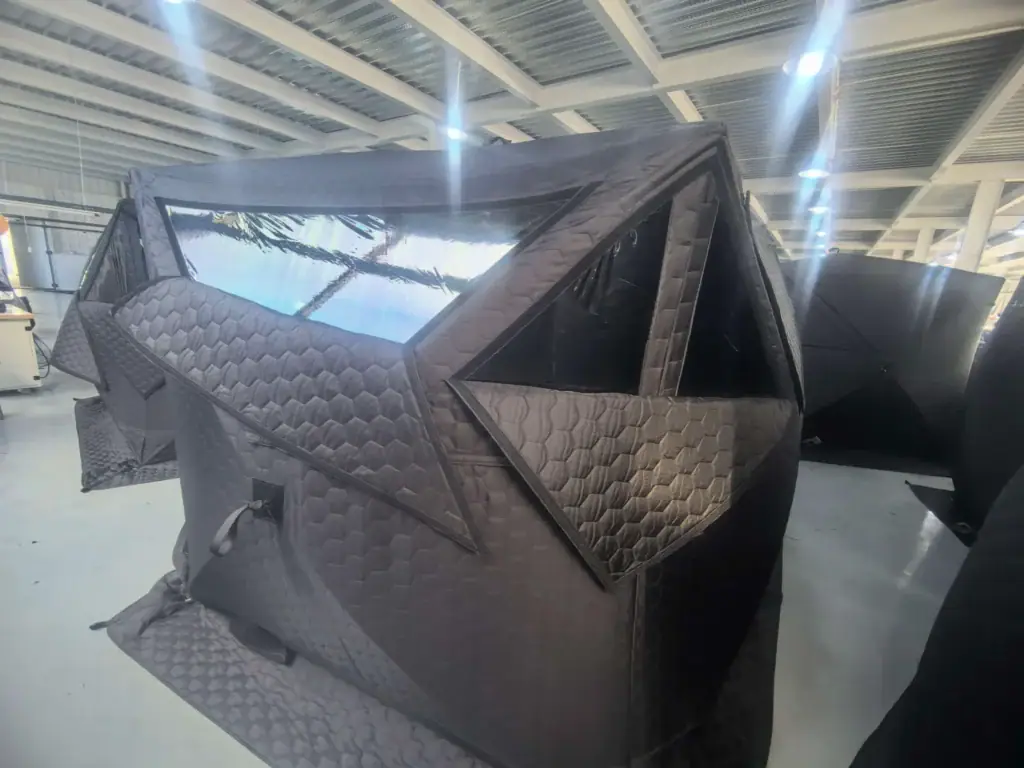
Cost Comparison: Factory Price vs Agent Fee
The 3–8% factory discount can vanish when you factor in shipping, defects, and your own time.
A direct factory quote for an inflatable tent will typically land 3–8% below what a sourcing agent charges. That gap looks clean on paper. No middleman markup, no commission layer. The factory owner tells you the price is FOB Ningbo, and you think you’ve saved the margin.
But that 3–8% rarely survives the full procurement cycle. The Fabrikangebot bezieht sich auf eine Produktart – Zelte nur. Es enthält keinen gebündelten Versand über mehrere Lieferanten hinaus. Es deckt nicht die Kosten für Ihr Team bei der Verwaltung der Exportdokumentation und Prüfung der Containerladung, oder die Nachverfolgung eines fehlenden Mustergenehmigungsschreibens.
Was den Rabatt tatsächlich schmälert: Frachtkosten bei einem Teilladungscontainer, weil Sie nur ein SKU bestellt haben; Nachbesserungskosten, wenn die Balkenlaminierung in der Produktion fehlschlägt und die Fabrik den Materiallieferanten die Schuld gibt; sowie entgangene Umsätze, wenn ein Qualitätsproblemauftritt wie eine Nahtabdichtung, die nur bei 2 psi statt 3 psi hält, zu Rückgaben sechs Monate später führt.
Agent service fees, QC, logistics, and consolidation
A sourcing agent or one-stop supplier charges a fee that covers what most buyers underestimate: technical verification of subcontracted processes like TPU beam welding; pre-shipment inspections at multiple factories; consolidation of tents with sleeping mats, chairs, and coolers into a single container; and Zollabfertigung support.
Many factories that advertise inflatable tents only handle sewing and outsource beam lamination,” as our internal research notes. An agent with technical staff catches that dependency before production starts — not after the first batch leaks.
When the agent model becomes cheaper overall
The math flips when your order involves three or more product categories. A single container carrying tents (from one factory), air mattresses (from another in Hubei), Campingstühle (from Jinhua), and folding wagons (also Jinhua) would require four separate vendor relationships if bought direct.
Kelyland Outdoors coordinates exactly this scenario through its network of 17 core strategic factories. The buyer pays one invoice, receives one consolidated shipment with consistent branding across all items, and has one point of contact for any defect claim. The per-unit cost lands lower than managing four independent Lieferketten yourself — especially when your own time is valued at $75–150 per hour.
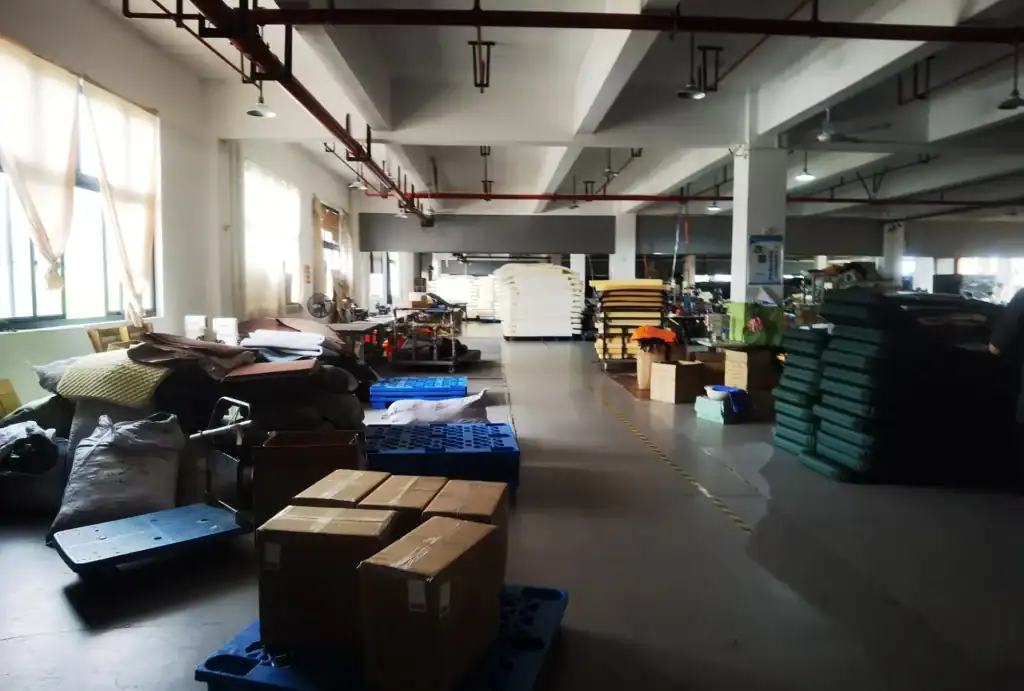
Product Range and Customization Flexibility
17 core factories, 200+ partners, and 14. MOQs ab 50–100 Stück für einige Artikel und verfügt über eine Standard-Produktionsvorlaufzeit von 30–45 Tagen.).“ as 50 pieces — this is the real range for a one-stop supplier.
Kelyland Outdoors manages 17 strategic factories and over 200 manufacturing partners across China. That network covers Campingzelte, air mattresses, sleeping bags, camping furniture (chairs, tables, cots), folding wagons, backpacks, camp kitchen gear, outdoor storage and coolers, trekking poles, camping lights, hammocks, and outdoor umbrellas. Each factory specializes in its category — the tent partner in Ningbo produces 800,000 units annually with ISO 9001 certification; the air mattress factory in Xiangyang runs at 2.5 million units per year with CE and ETL certs.
Customization depth per product line
For tents alone the options include fabric dyeing to Pantone matches, black or silver coating for UV control, frame choices from fiberglass to carbon fiber to PVC/TPU air tubes, and multiple printing methods on tags manuals and carry bags. Air mattresses get flocked surfaces puncture-resistant PVC or TPU at 0.4–0.6mm thickness and three internal beam structures: coil I-beam or drop-stitch. Schlafsack fill ranges from goose down to hollow fiber synthetic with nylon ripstop or taffeta shells.
Camping furniture customization goes further. Frame powder coating or anodizing for chairs and tables. Wood options in beech or walnut for tabletops. Fabric printing on Oxford nylon mesh textilene or canvas surfaces. Load capacities span 80–150 kg for chairs up to 250 kg for heavy-duty cots. Folding wagons get custom injection-molded plastic parts plus powder-coated carbon steel or aluminum frames with wheel types from PVC to PU EVA or TPE.
Why multi-category sourcing matters
A brand launching a full camping line needs consistent branding across tents furniture cookware and storage bins. Managing separate factories for each category creates fragmented vendor oversight — different lead times different quality standards different shipping terms. A one-stop structure keeps color matching Verpackungsdesign and logo application uniform across all SKUs because one team coordinates the entire production chain.
The MOQ flexibility here matters too. Some items start at 50–100 pieces while standard models run 300–1,000 units depending on complexity. Standard production lead time sits at 30–45 days across categories so a mixed order of tents chairs and coolers ships together rather than arriving in staggered batches that delay retail launch windows.
Quality Control and Production Oversight
Factory QC reports can be edited.
When you buy direct from a factory, their Qualitätskontrolle team reports to the same management that needs to ship on time. That conflict of interest is real. A factory QC inspector who flags 15% of a batch for rework creates tension with the production manager who has a container deadline. Inspection sheets have been rewritten after the buyer left the premises.
How agent-managed QC breaks the conflict
A sourcing agent or one-stop supplier like Kelyland Outdoors places its own inspectors on the floor. Those inspectors answer to the buying team, not the factory owner. The difference is structural: when an inspector works for the agent, rejecting a bad batch costs the factory money but does not cost the inspector their job. That simple change in accountability shifts defect detection rates significantly.
Kelyland Outdoors runs inspections at every production stage across its network of 17 core strategic factories, most ISO 9001:2015 certified. Reports are available on request. The process covers raw material verification, in-line stitching checks, and a final pre-shipment inspection before any container leaves.
Handling defects when they happen
Even with good inspections, defects occur. The question is who manages the rework and who pays for it. With a direct factory relationship, you negotiate rework terms after the problem surfaces — often when your shipping window is collapsing. With an agent managing multiple factories, rework gets distributed across production lines that have available capacity.
For example, if an inflatable tent beam lamination fails on one line, an agent can shift remaining production to another qualified factory within their network without restarting lead times from zero. A buyer managing that directly would need to find and qualify a new sub-supplier first.
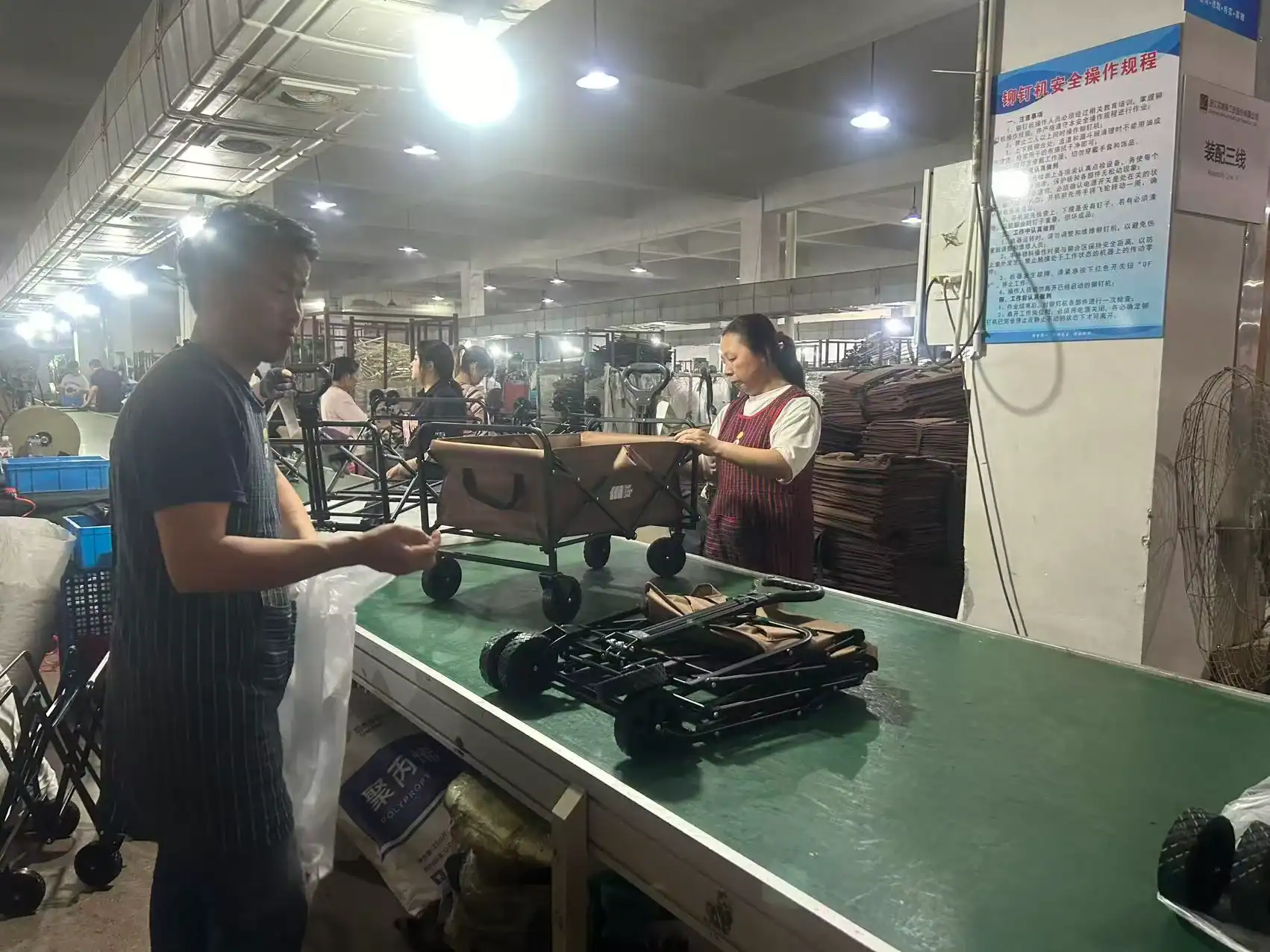
Communication and After-Sales Response
Post-sale support is where the agent model justifies its margin — or doesn’t.
A buyer in Europe spots a stitching defect on an aufblasbares Zelt after the container lands. The clock starts ticking. Who do they call? If the relationship is direct with a factory, the answer is often a production manager whose English stops at “check email.” That manager then routes the complaint through internal channels, and three days later, the buyer gets a photo of the same defect with no resolution plan.
The Kelyland Response Structure
Kelyland Outdoors assigns Fanny Zhang to after-sales service — four years in customer-facing roles, fluent in English, and empowered to make decisions. When a defect report comes in, Fanny logs it into the order management system within two hours and escalates directly to the factory QC lead. The buyer gets an initial assessment within 24 hours, not a forwarded email chain.
Accountability Across Time Zones
Zhejiang factories operate on China Standard Time (UTC+8). A buyer in New York works UTC-5. That 13-hour gap kills momentum when problems arise. Kelyland’s team overlaps with both hemispheres: Hanke Chen manages key accounts personally, Anne Jing tracks order follow-up daily, and Fanny handles after-hours escalations via WhatsApp. The response window compresses from days to hours.
Why Long-Term Relationships Change Everything
A one-off factory relationship has no incentive to fix post-shipment issues beyond what the contract requires. A sourcing agent with repeat business across multiple categories does. Kelyland’s partnerships span 3–5 years with clients like Ace Hardware and Lucid — that continuity means rework gets prioritized because future orders depend on it. Internal data shows that repeated clients see issue resolution times roughly half those of first-time buyers.
Lead Times and Order Flexibility
MOQ flexibility is the hidden variable that determines whether a product line launches on schedule or sits in limbo.
A retail category manager launching a camping line faces a hard reality: direct factory MOQs for aufblasbare Zelte typically start at 500–1,000 pieces per SKU. That works if you’re ordering one tent model in one color. It breaks down fast when you need three tent sizes, two colorways, and matching air mattresses — because each variant triggers its own MOQ threshold.
MOQ differences when buying direct vs through an agent
Direct factories protect their production efficiency by setting MOQs high enough to cover setup time, material cutting waste, and line changeovers. A Zeltfabrik- making 800,000 units annually won’t stop its main line for a 100-piece test order. Sourcing agents or one-stop suppliers like Kelyland Outdoors operate differently — they aggregate demand across multiple clients and factories. This allows some items to start at 50–100 pieces while standard models range from 300–1,000 pieces, depending on the product category.
Consolidating small batch orders from multiple factories
The real advantage of an agent model emerges when your order spans categories: tents from Ningbo, air mattresses from Xiangyang (annual output: 2.5 million units), sleeping bags from Zhenjiang (1.5 million units), and Campingstühle from Jinhua (1.5 million units). Each factory ships independently if you buy direct — four separate containers, four freight bills, four customs clearances. A one-stop supplier consolidates those into a single shipment, often recovering the intermediary fee through logistics savings alone.
Managing factory capacity and order scheduling
Factory capacity is seasonal in outdoor gear. Peak demand runs January through April for summer-season orders. During that window, direct buyers without established relationships get pushed to the back of the queue behind repeat clients. A sourcing agent with long-term contracts across 17 core strategic factories can negotiate priority slots and adjust schedules when one factory hits capacity — shifting your chair production to another partner while keeping the tent timeline intact.
Schlussfolgerung
The choice between a direct factory and a one-stop sourcing agent for aufblasbare Zelte comes down to what you are willing to manage yourself. A factory relationship can save you 3–8% on the unit price, but that saving disappears fast if a Vorserienmuster is approved without catching a subcontracted beam lamination issue. The real cost of skipping a structured QC process is not the invoice — it is the reorder delay and the lost shelf space.
-
- Direct factory pricing runs 3–8% lower but carries hidden QC and vendor management risks.
- Agents consolidate multi-category orders, reducing Versandkosten and defect exposure.
- Inflatable tent quality depends on beam lamination, which many factories outsource.
- One-stop suppliers maintain brand consistency across tents, furniture, and accessories.
If your next season includes inflatable tents alongside sleeping mats or folding wagons, managing three separate factory relationships will pull your category team in too many directions. Review how a one-stop camping gear sourcing service handles sample approval across multiple product lines before you commit to separate vendor contracts. A single point of accountability on QC and lead time often delivers better margins than chasing individual factory quotes.
Häufig gestellte Fragen
So erhalten Sie ein Angebot für Direktfabrik vs. Einkaufsagentur für aufblasbare Zelte
Die genaue Antwort hängt von der Produktspezifikation, quantity, and order setup. The safest approach is to confirm the commercial terms only after the final requirement sheet is locked. Final terms should be confirmed against the exact product specification and order conditions.
Kann ich zuerst Muster anfordern?
Die genaue Antwort hängt von der Produktspezifikation, der Menge und der Auftragskonfiguration ab. Der sicherste Ansatz ist, die kommerziellen Konditionen erst zu bestätigen, nachdem das endgültige Anforderungsblatt festgelegt wurde. Die Musterverfügbarkeit sollte anhand des aktuellen Lagerbestands und des Versandplans bestätigt werden.

 English
 Español
 Deutsch
 Français
 Português do Brasil
 Русский
 العربية
 한국어
 日本語