 Zum Inhalt springen
Die Auswahl der richtigen SUV- und LKW-Zelte ist der entscheidende Schritt, der ein sicheres Camping-Setup von einem mit ernsthaftem Risiko des Eindringens von Abgasen unterscheidet. Ein schlecht gestalteter Ärmel oder eine falsche Passform kann die Belüftung beeinträchtigen, über Nacht eine gefährliche Umgebung schaffen und möglicherweise teure Schäden am Lack und der Oberfläche Ihres Fahrzeugs verursachen.
Dieser Leitfaden liefert die technischen Details, die für eine ordnungsgemäße Bewertung dieser Zelte erforderlich sind. Wir werden analysieren, wie der Befestigungsärmel gegen das Fahrzeug abdichtet, die Größe für gängige LKW-Ladeflächen bestätigen und die Methoden zur Verhinderung von Kohlenmonoxidansammlungen erläutern. Wir werden auch die Kompromisse zwischen bodenlosen und eingenähten Bodenkonstruktionen vergleichen und untersuchen, wie verschiedene Gurtkonfigurationen Ihren Lack vor Abrieb schützen.
Befestigung: Wie dichtet die Manschette gegen das Auto ab?
Eine zuverlässige Abdichtung hängt von einem Doppelmanschetten-Design ab, das eine Kompressionspassung erzeugt, indem es Stoffspannung und verstellbare Gurte nutzt, um sich den einzigartigen Karosseriekonturen des Fahrzeugs anzupassen.
Doppelmanschetten-Architektur
Bis 2026 wird der Branchen- Standard für die Abdichtung eines Heckklappenzeltes ein Doppelmanschetten-System umfassen. Dieses Design verwendet zwei unterschiedliche Stoffabschnitte, die zusammenarbeiten, um die hintere Öffnung des Fahrzeugs zu umhüllen und eine durchgehende, witterungsbeständige Verbindung zu schaffen. Eine obere Manschette verankert sich an der Dachlinie oder der oberen Heckklappe des Fahrzeugs und bildet die obere Abdichtung. Eine entsprechende untere Manschette umschließt die Stoßstange fest und sichert die Unterkante, wodurch Zugluft oder Wassereintritt von unten verhindert wird.
| Komponente | Primäre Funktion | Fertigungsfokus (2026) |
|---|---|---|
| Obere Manschette | Verankerungen an der Dachlinie oder Luke, die die obere Abdichtung bilden und vertikale Last tragen. | Verstärkter 210D-Oxford-Stoff, um Spannungen zu bewältigen und verschiedene Dachprofile zu ermöglichen. |
| Untere Manschette | Wickelt sich um die Stoßstange, um Wind, Regen und Schädlinge auf Bodenhöhe abzuhalten. | Elastischer Saum mit einstellbaren Spannern für eine enge Passform an verschiedenen Stoßstangenformen. |
| Innere Gurte | Verteilen die Spannung gleichmäßig über die Manschette und ziehen den Stoff straff am Fahrzeug. | Robuste, nicht scheuernde Gurte und Schnallen zur Vereinfachung des Aufbaus und zum Schutz vor Lackschäden. |
Kompressionspassungsmechanismus
Die eigentliche Abdichtung wird durch eine Kompressionspassung erreicht. Die elastische Spannung des Manschettenstoffs, gesteuert durch einstellbare innere Gurte, drückt fest gegen die Fahrzeugkarosserie. Dieser konstante Druck minimiert die Lücken, durch die sonst Wind oder Regen eindringen könnten. Das System ist so konstruiert, dass diese Spannung gleichmäßig auf mehrere Befestigungspunkte verteilt wird, sodass sich der Stoff präzise an verschiedene Fahrzeugformen anpasst und eine vielseitige, wetterfeste Verbindung gewährleistet.
Verstärkte Abdichtung und Befestigungselemente
Die Haltbarkeit der Abdichtung beruht auf hochwertigen Materialien und Befestigungselementen. Manschettenränder sind mit Gurten oder doppelten Nähten verstärkt, um Dehnung zu widerstehen und auch nach wiederholtem Gebrauch eine enge Passform am Fahrzeugrahmen zu gewährleisten. Moderne Designs integrieren verbesserte Befestigungsmechanismen, wie farbcodierte Clips und Nockenspanner, die den Aufbau vereinfachen und die strukturelle Stabilität der gesamten Verbindung erhöhen. Wir stellen sicher, dass alle hochbelasteten Punkte mit Steppstichen für maximale Widerstandsfähigkeit gegen Windlast versehen sind.
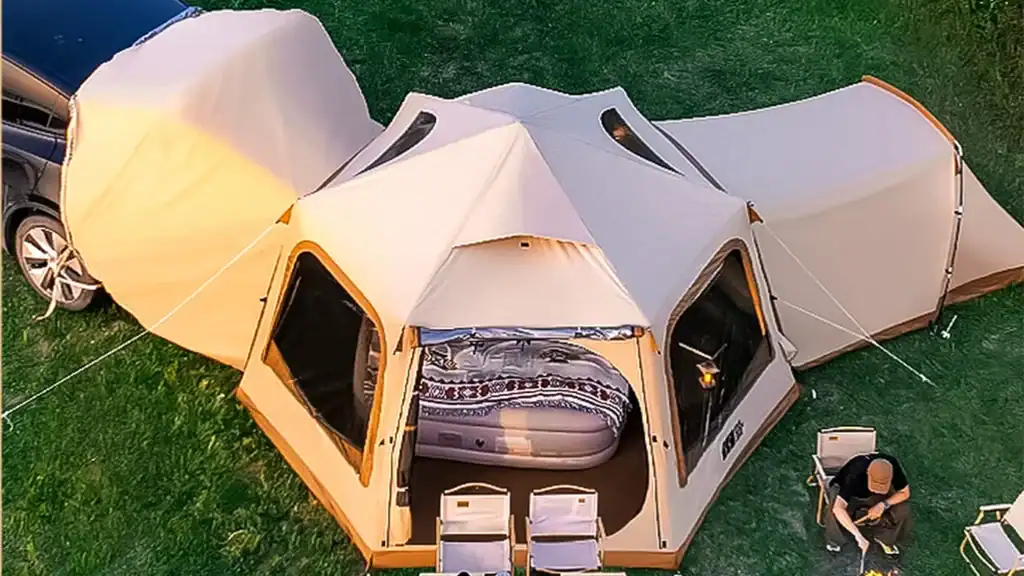
Größe: Passt es auf eine 5,5′ oder 6,5′ Ladefläche?
Die Größenbestimmung für Truck-Bett-Zelte basiert auf drei Kernlängen, aber eine wirklich wetterfeste und sichere Passform erfordert die Berücksichtigung modellspezifischer Unterschiede in der Höhe der Ladeflächenwände und den Kabinenwinkeln.
Der Truck-Zelt-Markt ist auf standardisierte Fahrzeugabmessungen aufgebaut. Für Geschäftskunden ist das Verständnis dieser universellen Größen der erste Schritt zur Beschaffung eines Produkts mit breiter Marktakzeptanz. Bei Kelyland Outdoors konstruieren wir unsere Vehicle Series Zelte so, dass sie mit den gängigsten Ladeflächenlängen großer Automobilhersteller kompatibel sind.
Standard-Truck-Bett-Abmessungen
Die Industrie entwickelt Produkte, die auf drei primäre Ladeflächenkategorien von Pickups abgestimmt sind. Diese Größen decken alles von Crew-Cab-Lifestyle-Trucks bis hin zu schweren Nutzfahrzeugen ab und stellen sicher, dass eine fokussierte Produktlinie den Großteil des Marktes abdecken kann.
| Ladeflächentyp | Typische Länge | Übliche Fahrzeugklasse |
|---|---|---|
| Kurze Ladefläche | 5 bis 5,5 Fuß | Moderne Crew-Cab-Trucks |
| Standard-Ladefläche | 6 bis 6,5 Fuß | Extended Cab / Standard-Trucks |
| Lange Ladefläche | ~8 Fuß | Schwere / Nutzfahrzeuge |
Sicherstellung einer genauen Passform
Eine korrekte Passform ist für die Leistung unerlässlich. Ein falsch dimensioniertes Zelt erzeugt Spannungspunkte an Nähten, Reißverschlüssen und Gestängestrukturen, was die langfristige Haltbarkeit und Wetterbeständigkeit direkt beeinträchtigt. Es verhindert auch, dass das Zelt richtig am Lkw abdichtet, was zu schlechter Leistung bei Regen und Wind führt. Die richtige Größenwahl stellt sicher, dass Der Rahmen und die Gurte des Zeltes passen perfekt mit den Verankerungspunkten der Ladefläche zusammen, für eine sichere und stabile Installation.
Kompatibilität mit bestimmten LKW-Modellen
Über die generische Ladebodenlänge hinaus berücksichtigen erfahrene Hersteller Unterschiede zwischen LKW-Marken und Baujahren. Als OEM- und ODM-Partner entwickeln wir Zelte mit anpassbaren Funktionen oder erstellen modellspezifische Passungen. Unser Produktentwicklungsprozess kann verschiedene Größenvarianten einbeziehen, um die gängigsten LKW im Zielmarkt eines Kunden zu bedienen. Dieser maßgeschneiderte Ansatz berücksichtigt Details wie die Höhe der Ladeflächenkante, Kabinenwinkel und Heckklappenformen, um ein Produkt zu schaffen, das sich nahtlos in das Fahrzeug des Endnutzers einfügt.
Langlebige, maßgeschneiderte Zelte zur Steigerung Ihres Geschäfts

Sicherheit: Wie verhindert man das Eindringen von Abgasen?
Die Verhinderung des Eindringens von Abgasen erfordert einen mehrstufigen Ansatz mit Lösungen, die von permanenten Quellenerfassungssystemen in festen Anlagen bis hin zu mobilen Filtereinheiten für den Feldeinsatz reichen, die zunehmend durch Automatisierung und OSHA-Konformität bestimmt werden.
Während ein an ein Fahrzeug angeschlossenes Zelt Bequemlichkeit bietet, sollte der Motor niemals laufen, während das Zelt angeschlossen ist, aufgrund der Gefahr einer Kohlenmonoxidvergiftung. Für industrielle oder Wartungsumgebungen, in denen es notwendig ist, den Motor laufen zu lassen, sind spezifische Technologien erforderlich, um die Abgassicherheit zu gewährleisten. Diese Lösungen adressieren Arbeitssicherheit und gesetzliche Auflagen, indem sie Emissionen an der Quelle erfassen.
Quellenerfassungssysteme
Feste Installationen sind der Standard für die Handhabung von Abgasen in stationären Betriebsumgebungen wie Fahrzeugservicehallen oder Feuerwachen. Diese Systeme sind darauf ausgelegt, schädliche Partikel und Karzinogene direkt am Auspuffrohr des Fahrzeugs zu erfassen und zu verhindern, dass sie den Arbeitsraum kontaminieren. Diese direkte Erfassungsmethode ist eine zuverlässige Möglichkeit, strenge Arbeitsschutz- und Gesundheitsvorschriften zu erfüllen.
- Nutzt fest installierte Überkopfkonstruktionen mit Komponenten wie Schlauchtrommeln und Auslegerarmen.
- Konzentriert sich auf das Erfassen von schädlichen Partikeln und Karzinogenen direkt an der Quelle.
- Entwickelt, um Arbeitsschutz- und Sicherheitsstandards zu erfüllen, indem die Ausbreitung von Dämpfen verhindert wird.
Fahrzeugmontierte und tragbare Lösungen
Für Anwendungen, die Flexibilität erfordern oder an unterschiedlichen Standorten stattfinden, bietet der Markt mobile Lösungen. Fahrzeugmontierte Systeme bieten automatisierte, bordeigene Filtration für Bediener im Feld. Eigenständige tragbare Absaugvorrichtungen geben Teams die Möglichkeit, die Dampfbelastung an temporären Arbeitsplätzen oder über mehrere Standorte hinweg ohne permanente Infrastruktur zu kontrollieren.
- Beinhaltet fahrzeugmontierte Systeme, die automatisierte bordeigene Filtration bieten.
- Tragbare Absaugvorrichtungen bieten Mobilität für den Einsatz in verschiedenen Arbeitsbereichen.
- Mobile Filtration unterstützt anpassbare Betriebsanforderungen in dynamischen Umgebungen.
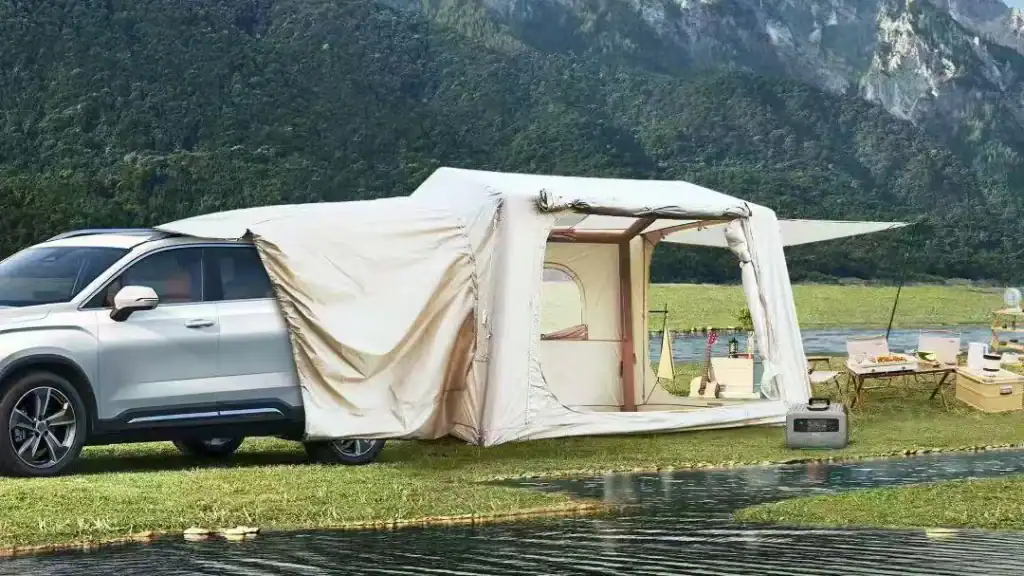
Ein Auto ist an einem Seeufer geparkt, mit einem geräumigen Campingzelt-Aufbau, Gartenmöbeln und Campingausrüstung für ein komfortables Outdoor-Erlebnis.
Automatisierung und regulatorischer Fokus
Die aktuelle Marktentwicklung betont automatisierte Systeme, die den Bedarf an manuellem Betrieb reduzieren und eine konsistente, zuverlässige Leistung gewährleisten. Das Produktdesign konzentriert sich zunehmend auf die Einhaltung von OSHA-Standards, um Arbeiter in Hochrisikobranchen zu schützen. Dieser Fokus ist besonders stark in Sektoren wie Notdiensten und Schwermaschinenbetrieb, wo Dampfbelastung eine erhebliche Berufsgefahr darstellt.
- Automatisierung ist ein wichtiger Trend, der darauf abzielt, manuelle Eingriffe zu minimieren.
- Die Lösungen sind so konzipiert, dass sie OSHA-konform sind und vor beruflichen Gesundheitsrisiken schützen.
- Ein starker Fokus liegt auf Sicherheit in Branchen wie Notdiensten und Schwermaschinenbetrieb.
Komfort: Bodenloses Design vs. eingenähte Böden?
Die Wahl zwischen einem bodenlosen und einem eingenähten Bodendesign ist ein direkter Kompromiss zwischen schnellem, ausrüstungsbereitem Aufbau und einem vollständig abgedichteten, allwettertauglichen Innenraum.
Bodenloses Design für schnellen Aufbau und Komfort
Bodenlose Modelle richten sich an Benutzer, die eine Schnelle und einfache Einrichtung. Durch den Wegfall des Bodens kann das Zelt direkt über der Ausrüstung aufgestellt werden, die bereits in der Ladefläche des Pickups gelagert ist, was erheblich Zeit und Mühe spart. Dieses Design reduziert zudem das Gesamtgewicht und das Packmaß des Schutzraums, was den Transport und die Lagerung für Camper erleichtert, die häufig den Campingplatz wechseln oder einen minimalistischen Ansatz bevorzugen.
- Ermöglicht es Ihnen, das Zelt aufzustellen, ohne die Ausrüstung aus der Ladefläche des Pickups zu entladen.
- Reduziert das Gesamtgewicht und das Packmaß des Zeltes für einfacheren Transport und Lagerung.
- Optimiert sowohl den Auf- als auch den Abbauprozess, ideal für Kurztrips.
Eingenähter Boden für Allwetterschutz und Sauberkeit
Ein eingenähter oder “Wannenboden” schafft einen vollständig geschlossenen Schutzraum, der von den Elementen und der Ladefläche des Pickups abgedichtet ist. Dieses integrierte Design bietet hervorragenden Schutz vor Regen, Bodenfeuchtigkeit und Insekten. Es hält Camper und ihre Ausrüstung sauberer, indem es eine physische Barriere gegen Schmutz und Ablagerungen bildet, und macht eine separate Bodenplane überflüssig.
- Bietet hervorragenden Schutz vor Regen, Bodenfeuchtigkeit und Insekten.
- Macht eine separate Bodenplane überflüssig und vereinfacht so Ihre Ausrüstungsliste.
- Hält Camper und Ausrüstung sauberer durch eine abgedichtete Barriere zur Ladefläche des Pickups.
| Merkmal | Bodenloses Design | Eingenähter Boden |
|---|---|---|
| Einstellung Geschwindigkeit | Am schnellsten; kein Entladen der Ausrüstung aus der Ladefläche erforderlich. | Langsamer; erfordert eine leere und saubere Ladefläche für den Aufbau. |
| Wetterschutz | Eingeschränkt; offen für Bodenfeuchtigkeit, Zugluft und kriechende Insekten. | Überlegen; vollständig abgedichteter “Wannenboden” blockiert Wasser und Schädlinge. |
| Sauberkeit im Innenraum | Niedriger; direkter Kontakt mit der Ladefläche. | Höher; schafft eine saubere, abgedichtete Barriere zwischen Ihnen und dem Fahrzeug. |
Schutz: Werden die Gurte den Lack verkratzen?
Standard-Nylonbänder verursachen unweigerlich Mikrokratzer auf der Klarlackschicht eines Fahrzeugs; die Verwendung von Schutzbandabdeckungen und geeigneten Führungstechniken ist unerlässlich, um den Lack zu erhalten.
Der Schutz des Fahrzeuglacks ist ein Hauptanliegen bei der Montage von Zubehör, und SUV-Zelte bilden da keine Ausnahme. Die wiederholte Spannung und Bewegung der Befestigungsgurte, besonders bei windigen Bedingungen, kann zu kosmetischen Schäden führen, wenn man nicht die richtigen Vorsichtsmaßnahmen trifft. Dies ist kein hypothetisches Problem; es ist ein häufiges Problem, für das Hersteller jetzt aktiv Lösungen entwickeln.
Das Risiko von Gurtreibung und Schnallenkontakt
Standard-Zeltgurte, die direkt gegen den Fahrzeuglack gelegt werden, können bereits nach einem einzigen Campingausflug sichtbare Schäden verursachen. Die ständige, subtile Bewegung durch den Wind wirkt wie eine Polierpaste und trägt den Klarlack ab. Hartplastik- oder Metallschnallen stellen ein noch größeres Risiko dar, da sie beim Aufbau oder durch Windbewegungen leicht den Lack absplittern oder verkratzen können.
- Ständiges Reiben des Gurtmaterials trägt den Klarlack ab und erzeugt stumpfe Stellen.
- Schnallen und Einsteller können den Lack direkt absplittern oder verkratzen, wenn sie in Kontakt kommen.
- Schmutz und Ablagerungen, die unter den Gurten eingeschlossen sind, wirken wie Schleifpapier und verursachen abrasive Schäden.
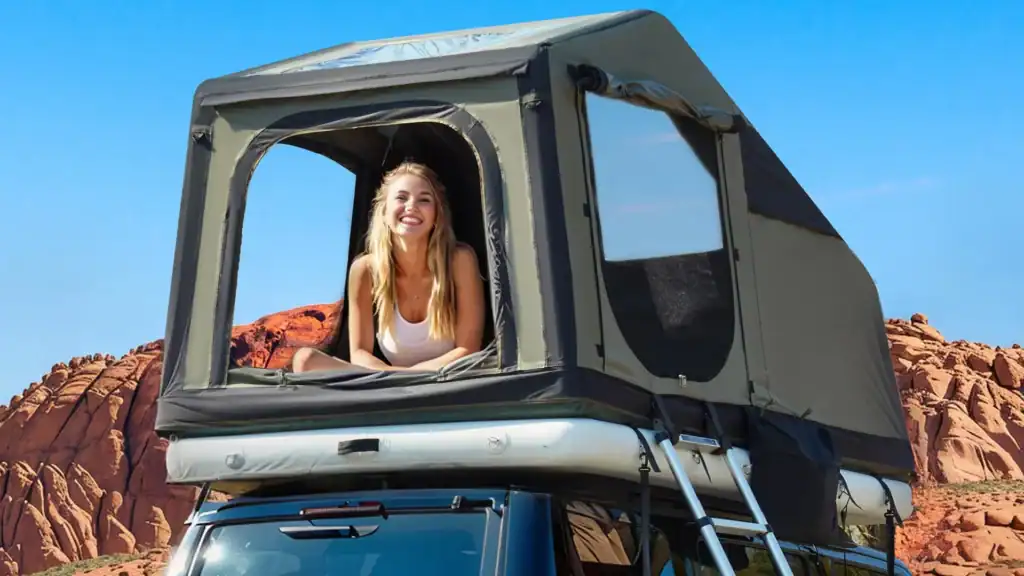
Genießen Sie die freie Natur in einem Dachzelt mit atemberaubender Aussicht.
Die Rolle von Schutzabdeckungen für Gurte
Um dies zu lösen, enthalten seriöse Hersteller jetzt Schutzabdeckungen als Standardbestandteil des Kits. Dabei handelt es sich typischerweise um weiche, gepolsterte Hüllen, oft aus Fleece oder Neopren, die über die Gurte gleiten. Sie schaffen einen wichtigen Puffer zwischen dem potenziell scheuernden Gurtmaterial und der empfindlichen Lackierung des Fahrzeugs. Diese einfache Ergänzung ist einer der deutlichsten Indikatoren für ein qualitativ hochwertiges, durchdachtes Produkt.
- Diese Abdeckungen wirken als weiche Barriere, um direkte Reibungsschäden durch das Gurtgewebe zu verhindern.
- Sie dämpfen auch den Aufprall von Schnallen gegen die Karosserie während des Aufbaus und der Nutzung.
- Stellen Sie bei der Beschaffung eines Zeltes sicher, dass diese Schutzelemente im Standardpaket enthalten sind.
Best Practices für die Gurtbefestigung
Auch mit Schutzabdeckungen macht die Befestigungstechnik einen Unterschied. Die sorgfältige Platzierung von Gurten und Beschlägen ist der letzte Schritt für eine schadensfreie Montage. Überprüfen Sie immer die Kontaktpunkte, bevor Sie die Gurte vollständig festziehen.
- Führen Sie Gurte nach Möglichkeit entlang von Spalten oder Gummidichtungen, um direkten Kontakt mit lackierten Oberflächen zu vermeiden.
- Positionieren Sie Schnallen und Hartplastikteile so, dass sie auf Glas, Verkleidungen aufliegen oder vollständig von der Karosserie ferngehalten werden.
- Stellen Sie sicher, dass Gurte flach aufliegen und nicht verdreht sind, um den Druck gleichmäßig zu verteilen und Verrutschen zu reduzieren.
Schlussfolgerung
Die Wahl des richtigen SUV- oder Truck-Zelts hängt von den Details ab. Eine sichere Hülle sorgt für eine insektenfreie und wetterbeständige Abdichtung, während das richtige Bodendesign Komfort und Bequemlichkeit in Einklang bringt. Das Verständnis dieser Kernfunktionen hilft Ihnen, ein Modell zu finden, das wirklich mit Ihrem Fahrzeug integriert ist, für eine sicherere und angenehmere Reise.
Kelyland Outdoors ist spezialisiert auf die Herstellung von Fahrzeugzelten mit maßgeschneiderten Funktionen, von schwerem Oxford-Stoff bis hin zu speziellen Hüllendesigns. Kontaktieren Sie unser Team, um Beschaffungsmöglichkeiten zu erkunden oder eine Zeltlinie zu entwickeln, die den spezifischen Anforderungen Ihres Marktes entspricht.
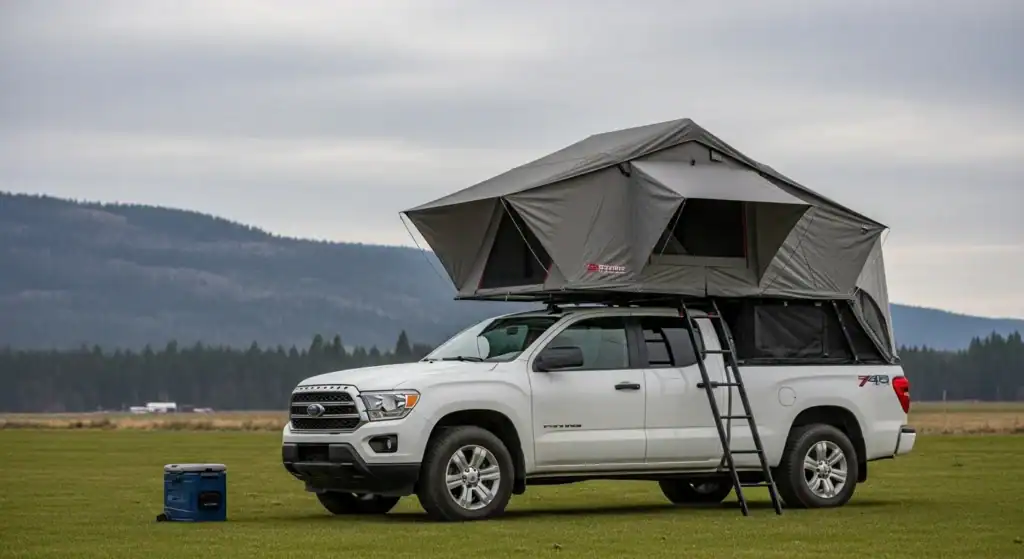
Häufig gestellte Fragen
Wird das Offenlassen der Heckklappe für das Zelt meine Autobatterie entladen?
Das Offenlassen der Heckklappe kann die Batterie entladen, wenn die Innenbeleuchtung eingeschaltet bleibt. Die meisten modernen Fahrzeuge verfügen über eine Batteriesparfunktion, die die Beleuchtung nach 10-20 Minuten automatisch ausschaltet. Um jedoch völlig sicherzugehen, ist es empfehlenswert, die Innenleuchte manuell auf “Aus” zu stellen oder den Knopf zu finden, der den Kofferraumsensor deaktiviert.
Ist es möglich, wegzufahren, ohne das Zelt vollständig abzubauen?
Ja, die überwiegende Mehrheit der modernen SUV-Zelte ist für den eigenständigen Betrieb ausgelegt. Sie können die Fahrzeughülle leicht abnehmen, die Hauptdurchgangstür des Zeltes zuziehen, um es zu einer eigenständigen Einheit zu machen, und dann mit Ihrem Fahrzeug wegfahren. Diese Funktion ist ideal für Tagesausflüge vom Campingplatz, ohne alles zusammenpacken zu müssen.
Benötige ich einen Dachträger, um ein SUV-Heckklappenzelt zu installieren?
Für die Installation ist kein Dachträger erforderlich. Das Befestigungssystem des Zeltes verwendet eine Reihe verstellbarer Gurte, die über das Fahrzeugdach verlaufen und an Punkten wie den Radkästen oder dem Rahmen befestigt werden. Die Hauptverbindung basiert auf der Spannung dieser Gurte und der Kompressionspassung der Hülle um die Dachlinie und Heckklappe des Fahrzeugs, was Stabilität ohne Träger gewährleistet.
Sind Pickup-Ladeflächenzelte bei einem Sturm vollständig wasserdicht?
Hochwertige Pickup-Ladeflächenzelte sind so konstruiert, dass sie sehr wasserabweisend sind und bei den meisten Sturmverhältnissen gut funktionieren. Sie bestehen aus beschichteten Polyesterstoffen und haben versiegelte Nähte. Allerdings kann kein Stoff Zelt als 100% wasserdicht garantiert werden bei extremem, peitschendem Regen. Die richtige Aufstellung ist entscheidend; das straffe Spannen der Regenplane und die korrekte Anpassung des Zeltes an die Ladefläche maximieren die Wetterschutzeigenschaften.
Verschließt die Fahrzeughülle effektiv gegen Insekten und Mücken?
Ja, eine korrekt installierte Fahrzeughülle ist sehr effektiv, um Insekten fernzuhalten. Moderne Systeme verwenden eine Doppelhüllenarchitektur mit elastischen und verstellbaren Gurten, um eine feste Kompressionspassung an der Fahrzeugkarosserie zu erzeugen. Dieses Design ist speziell darauf ausgelegt, Lücken zu minimieren und eine umfassende Barriere zu bilden, die verhindert, dass Insekten über die Fahrzeugverbindung in das Zelt gelangen.
Kann ich ein SUV-Zelt an einer Limousine oder einem kleineren Auto verwenden?
Es wird nicht empfohlen. SUV-Zelte sind speziell für die große Heckpartie eines SUV, Minivans oder Crossover-Fahrzeugs konzipiert. Die Fahrzeughülle ist von den Abmessungen her zu groß, um um die viel kleinere Kofferraumöffnung einer Limousine eine sichere, wetterfeste Abdichtung zu schaffen. Diese Nichtübereinstimmung würde zu großen Lücken, schlechter Stabilität und mangelndem Schutz vor Regen und Insekten führen.

 English
  Español
  Deutsch
  Français
  Português do Brasil
  Русский
  العربية
  한국어
한국어  日本語
日本語