 Zum Inhalt springen
Sourcing camping tents from China is the single decision that determines if your customers stay dry in a downpour or instead flood your support channels with return requests. A small oversight in fabric waterproofing or pole integrity during production can lead to a large-scale product recall, damaging your brand’s credibility and turning potential profits into costly inventory write-offs.
This guide provides a technical framework for navigating the production process. We’ll cover the key engineering choices, from selecting between instant and Stangenzelt mechanisms to defining specific wind and rain testing parameters. We also examine the logistical requirements, including how to verify your packaging passes ISTA 6 drop tests and how to determine minimums for custom prints.
Selection: Should You Source Instant or Pole Tents?
The market is split between instant tents, which command a 20% price premium for sub-two-minute setups, and traditional pole tents, which offer proven durability and value for cost-sensitive segments.
Instant Tents for Speed and Convenience
Instant tents, including air and pop-up models, are gaining significant market share by appealing to consumers who prioritize efficiency. These designs reduce setup time from the typical 5-10 minutes for a pole tent to just 1-2 minutes. This convenience factor allows brands to command a price premium of around 20%. This category is ideal for product lines targeting families, festival-goers, or any time-constrained consumer willing to pay more for a faster, less complicated camping experience.
| Attribute | Instant Tents (Pop-up/Air) | Traditional Pole Tents |
|---|---|---|
| Durchschnittliche Einrichtungszeit | 1–2 minutes | 5–10 minutes |
| Preis Punkt | ~20% price premium | Cost-competitive baseline |
| Target Consumer | Casual, time-constrained, beginners | Budget-conscious, experienced, group campers |
| Key Value Proposition | Convenience and speed | Value, durability, and field repairability |
Pole Tents for Value and Durability
Traditional pole tents remain a market staple, primarily because they deliver reliable performance at a competitive cost. Their durability and wind resistance are comparable to instant models, appealing directly to budget-conscious buyers and experienced campers who trust the proven design. The simple construction often makes pole tents easier to repair in the field, a critical factor for group expeditions or multi-day treks where equipment failure is not an option. They represent the standard for long-term value and dependability.
Sourcing Based on Target Market
Your choice between instant and pole tents should be driven by your brand’s target audience. Instant tents cater to the growing demand for convenience and are a strong fit for family camping or beginner-oriented product lines. Pole tents, on the other hand, continue to see strong demand from cost-sensitive segments and seasoned outdoor enthusiasts who prioritize affordability and a traditional, hands-on camping experience. Aligning your product selection with a specific consumer profile is the most direct path to market success.
Customization: Can You Order Custom Pantone Colors?
Custom Pantone color matching is no longer a premium add-on but a baseline capability in modern tent manufacturing, essential for precise brand identity across all product components.
Pantone Matching as a Standard Service
At Kelyland Outdoors, we treat Pantone color matching as a core capability, not an upsell. We provide full support for the Pantone Matching System (PMS) to ensure your brand’s colors are replicated with precision. This customization extends across the entire tent—from the rainfly and inner body to smaller details like seam tape and zippers. We manage these custom color requests for both large-scale production runs and initial sample orders, creating a consistent visual identity for your product line.
Production Timelines and Order Minimums
Dyeing fabric to a specific Pantone color requires a dedicated production timeline, typically ranging from 20 to 50 working days. This accounts for lab dips, color approval, and the fabric production itself. While our standard Minimum Order Quantity (MOQ) for a fully custom colorway starts around 500 units, we maintain flexibility. For clients using our ready-stock fabrics or needing simpler modifications, we offer startup-friendly MOQs as low as 50-100 units to support new product launches and market testing.
Color Application and Printing Technology
To achieve durable and vibrant colors that withstand outdoor conditions, we utilize modern application and printing technologies. These methods ensure your custom-colored gear maintains its appearance without premature fading from sun exposure. The two primary technologies we employ are:
- UV-Resistant Inks: These specialized inks are integrated into the fabric coating process to protect against solar degradation, which is critical for equipment spending extended time outdoors.
- Dye Sublimation: This process infuses ink directly into the fabric’s fibers, producing vivid, full-coverage graphics and patterns that won’t crack or peel. It is highly effective on polyester and nylon, making it ideal for technical tent materials.
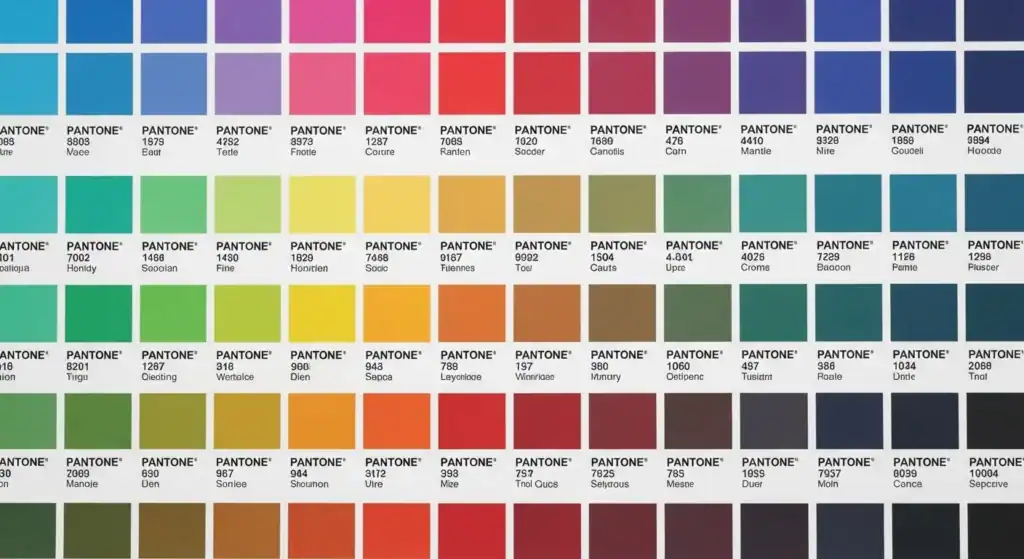
Pantone color chart showcasing a wide spectrum of color options, ideal for design and branding purposes.
Boost Your Business with Custom-Branded Tents

Standards: How Do We Test for Wind and Rain?
A tent’s field reliability is determined by two separate, standardized lab procedures: Hydrostatic Head (HH) testing for fabric water resistance and guylineless wind assessments for structural frame integrity.
Product claims mean nothing without empirical data to back them up. We validate every tent design through a strict protocol of standardized tests that simulate real-world weather conditions. This process ensures that performance ratings for waterproofing and wind stability are not just marketing terms, but measurable benchmarks that directly inform a product’s capabilities.
Hydrostatic Head (HH) Testing for Water Resistance
We evaluate a tent’s water resistance using the industry-standard Hydrostatic Head (HH) test. This test quantifies the exact water pressure a fabric can withstand before a single drop penetrates. Using both Suter Testers and water-column devices, we subject fabric batches to pressure measured in millimeters (mm), covering a spectrum from 800mm for light-duty shelters to over 10,000mm for expedition-grade groundsheets. The resulting HH rating is a direct indicator of a tent’s seasonal classification and its ability to handle specific geographic rainfall patterns.
| Hydrostatic Head (HH) Rating | Weather Condition Resistance | Typical Application |
|---|---|---|
| Up to 1,500mm | Light showers, dry conditions | Casual summer use, beach shelters |
| 1,500mm – 3,000mm | Moderate to heavy rain | Standard 3-season family & backpacking tents |
| 3,000mm – 5,000mm | Heavy, sustained, wind-driven rain | All-season trekking, demanding conditions |
| 5.000mm+ | Torrential downpours, boggy ground | Heavy-duty groundsheets & expedition shelters |
Wind Endurance and Structural Assessments
To confirm structural integrity, we conduct wind endurance assessments on fully assembled tents inside simulation chambers. Critically, these tests are performed without guylines attached. This approach isolates the frame and core design, allowing us to verify its inherent strength rather than relying on the support of stake-out points. Prototypes are exposed to sustained wind and rain for periods of 10 to 30 minutes, a process that quickly reveals potential weak points in poles, hubs, and fabric attachment points. We use this data to reinforce the design, ensuring the tent remains stable in adverse weather.
Calibration for Regional and Seasonal Use
Durability requirements are not universal; they differ based on climate and intended use. We calibrate performance ratings for specific markets and applications. The testing benchmarks for a casual summer tent sold in a dry climate are fundamentally different from those for an all-season expedition tent destined for alpine environments. By adjusting our standards, we ensure that the product’s durability aligns with the real-world needs and expectations of end-users in different regions, verifying compliance with local standards along the way.
MOQs: What is the Minimum for Custom Prints?
The custom print market is split between high-volume manufacturers requiring 300+ units and digital specialists offering single-piece orders, giving buyers flexibility for both market testing and scaling production.
MOQ Fragmentation in the Custom Print Market
The supply chain for custom printed tents is divided. Large, traditional manufacturers build their business models around production efficiency, which requires high minimum order quantities (MOQs) to be cost-effective. On the other end, digital printing and promotional suppliers have emerged to serve clients needing small batches or even single units. This market split gives buyers clear options depending on their scale. A large retail brand can work with a factory for a 500-unit run, while a startup can test a new design with a smaller, specialized printer.
- Traditional Factories: Standard production runs typically start at 300–500 pieces to cover the costs of fabric sourcing and machine setup.
- Digital Print Specialists: Cater to event marketing and small business needs, offering MOQs from 1 to 25 pieces.
- Hybrid Sourcing Partners: We offer a middle ground, providing startup support for orders as low as 50–100 pieces by using ready-stock fabrics.
Low-Threshold Orders for Market Testing
The availability of low-minimum or zero-minimum orders is a critical advantage for product development. It allows e-commerce sellers, startups, and marketing agencies to validate a new design or concept in the real world without committing thousands of dollars to inventory. This approach de-risks the launch process. You can order 10 different designs, run market tests, and only scale up production on the proven winner. This flexibility was previously out of reach for smaller businesses that couldn’t meet the high MOQs of established factories.
Volume-Based Pricing for Bulk Orders
Across the industry, the unit price is always tied to order volume. While low-MOQ options provide excellent flexibility for testing, they come with a higher per-piece cost. Manufacturing economics reward scale. Ordering in bulk allows suppliers to purchase raw materials more cheaply, optimize cutting and sewing lines, and reduce per-unit labor costs. These savings are passed on as discounts. A tent that costs $150 for a single custom print might drop to $70 per unit on an order of 500, making bulk production the only viable path for profitable retail.
Logistics: Does Packaging Pass ISTA 6 Drop Tests?
ISTA 6 compliance is the non-negotiable benchmark for e-commerce logistics, simulating the entire shipping lifecycle to engineer out costly product damage before your inventory leaves the factory.
Passing the ISTA 6 series of tests is a firm requirement for any brand selling through major e-commerce channels. It’s not just about using a sturdy box; it’s a technical validation that your packaging can withstand the entire journey from the factory floor to the customer’s doorstep. This protocol is designed specifically to replicate the stresses of modern fulfillment networks, where packages are handled by machines, dropped on sorting belts, and stacked high in delivery vehicles.
What ISTA 6 Testing Simulates
The International Safe Transit Association (ISTA) developed the 6-Series protocols to evaluate package performance for specific distribution channels. The test simulates real-world shipping conditions by subjecting a packaged product to a sequence of drop shocks, vibration, and compression events. This identifies design vulnerabilities before you commit to a full production run. The goal is to find the breaking point in a controlled lab environment, not in the hands of your end customer.
| Test Component | Simulation Purpose | Common Failure Point |
|---|---|---|
| Drop Shock Test | Simulates impacts from manual handling, conveyor transfers, and sorting chutes. | Corner crushing, edge damage, internal component breakage. |
| Random Vibration Test | Mimics ground and air transit vibrations over thousands of miles. | Scuffing from internal movement, loosened parts, cumulative stress fractures. |
| Kompressionstest | Replicates stacking pressure in warehouses and transport vehicles. | Box deformation, collapsed walls, product compression damage. |
Common Packaging Failure Points
Achieving a consistent pass rate on ISTA 6 tests is the primary hurdle. The most frequent points of failure are the package’s corners and edges, which absorb the most energy during impacts. A package that survives one drop might fail after a combination of vibration and compression that weakens its structure. The engineering challenge is balancing the cost of more durable materials against a structural design that effectively distributes impact forces away from the product itself.
Packaging Design for Compliance
As major e-commerce platforms now mandate ISTA 6 compliance, packaging engineering has become a core part of product development. At Kelyland Outdoors, we focus on material selection and structural reinforcement to meet these standards. This involves more than just a thicker cardboard box; it means designing internal supports and selecting specific materials that protect vulnerable components from shock and vibration. This proactive approach ensures our products meet the strict packaging requirements of online retailers and arrive at their destination intact.
Schlussfolgerung
Sourcing high-performance Campingzelte depends on making informed choices about materials, quality testing, and logistics. These technical details directly influence your product’s durability, market appeal, and overall brand reputation. A clear understanding of these variables is the foundation for building a successful product line.
Whether you’re launching a new brand or expanding an existing collection, our team is ready to help you navigate these specifications. Contact us to discuss your project requirements or request a detailed manufacturing proposal.
Häufig gestellte Fragen
What is the standard Minimum Order Quantity (MOQ) for custom camping tents?
The standard Minimum Order Quantity (MOQ) for fully custom Campingzelte typically ranges from 300 to 500 units per model. This quantity allows for efficient production runs and material sourcing. For minor customizations on existing models, the MOQ may be lower, but it ultimately depends on the complexity of the design and materials required.
Can I print my brand logo directly on the rain fly?
Yes, printing your brand logo directly on the rain fly is a standard customization option. We primarily use screen printing for simple, durable logos or heat transfer methods for more complex, multi-color designs. To ensure the highest quality, we require your logo to be provided in a vector file format, such as .AI, .EPS, or .SVG.
How can I verify the waterproof quality of the tents before shipment?
Waterproof quality is verified using a standardized Hydrostatic Head (HH) test, which measures the fabric’s water resistance in millimeters (e.g., 3000mm). Before shipment, you can request a copy of the batch’s quality control report, which includes HH test results. We also accommodate third-party inspection services at the factory or can send pre-shipment samples for your own evaluation.
What is the difference between sourcing from a trading company vs a factory?
Sourcing directly from a factory often provides better pricing and deeper technical communication but typically requires higher MOQs and more hands-on management from you. A trading company acts as an intermediary, offering more flexibility with lower MOQs, a wider product selection, and consolidated logistics. While their unit price may be slightly higher due to their service margin, they simplify the procurement process, especially for buyers managing multiple product lines.
Do you manufacture canvas tents as well as synthetic ones?
Our primary manufacturing focus is on modern synthetic tents made from lightweight, high-performance materials like polyester and nylon, valued for their durability and waterproof coatings. However, we maintain strong partnerships with specialized facilities that produce traditional, heavy-duty canvas tents. We can facilitate production and sourcing for both material types to meet your specific needs.
What are the packaging requirements for shipping tents via Amazon FBA?
For Amazon FBA, each tent must be securely packed in its own carry bag and then placed inside a durable, transparent poly bag with a suffocation warning label. A scannable FNSKU barcode label must be applied to the exterior of the poly bag, covering any other existing barcodes. The final packaged unit must be robust enough to pass a drop test and withstand the rigors of warehouse handling and shipping.

 English
  Español
  Deutsch
  Français
  Português do Brasil
  Русский
  العربية
  한국어
한국어  日本語
日本語