 Zum Inhalt springen
B: Halt der Versand – Haltbarkeitsprüfung der Klappwagenräder. Der kritischste Befund: Die Vorschau-Muster rollten einwandfrei über den Werksboden, bei der Serienproduktion zeigten sich jedoch bereits Haarrisse um die Nabe herum. Ein Auftrag zu $50K blieb am Kai liegen, weil die Radspezifikation nicht eingefroren wurde. Musterfreigabe.
Genau diese Diskrepanz führt dazu, dass der Ausfall von Klappwagen-Gussrollen regelmäßig in den Garantiedaten auftaucht. Das Muster ist der beste Versuch des Lieferanten, nicht sein Durchschnitt. Wenn die Margen knapp werden, ist das Rad-Assembly der erste Posten, der verbilligt wird – was meist auf PVC-Reifen ohne UV-Stabilisatoren hinausläuft. Nach sechs Monaten Lagerung oder einer sonnigen Retail-Präsentation wird die Lauffläche spröde. Beim ersten Campingausflug am Strand reißt sie.
Die meisten Käufer stellen nie die eigentliche Frage: Entsprechen die Serienräder dem Muster, das Sie freigegeben haben? Weniger als 10% der Neukäufer bitten jemals vor Bestellungsplacement um einen radspezifischen QC-Plan. Diese blinde Fleck erklärt, warum Rad-Einstürze diese Kategorie dominieren. Sie können diese Lücke mit Werkzeugen schließen, die ein paar hundert Dollar kosten – ein Shore-A-Härteprüfer für die Profilhardness, ein Zeigermessgerät für die Wellengleichlaufbarkeit und ein Rollenwiderstandstest unter Last auf einer Rampe in der Halle. Fordern Sie diese drei Werte vom Lieferanten ein, bevor Sie sich entscheiden. Wenn er zögert, wissen Sie bereits, was Sie kaufen – und das ist nicht der Wagen, den Sie genehmigt haben. der FOB-Preis ist, was Sie kaufen, und das ist nicht der Wagen, den Sie genehmigt haben.
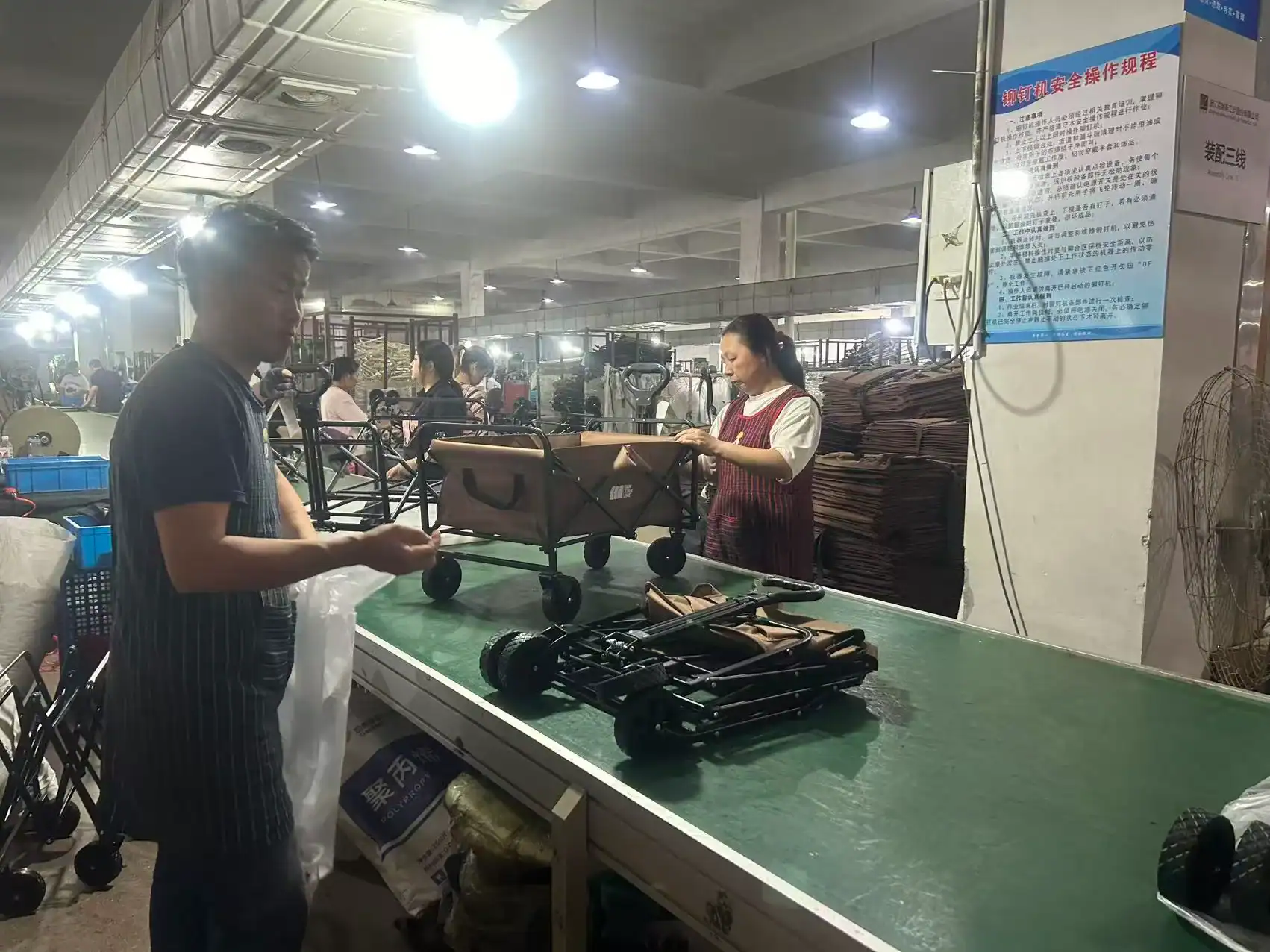
Warum Rad-Ausfälle die #1-Rücksendegründe für Klappwagen antreiben
Der günstigste Teil am Wagen verursacht den teuersten Garantiefall – Rad-QC ist Margensicherung.
Die meisten Klappwagen-Rücksendungen gehen auf Rad-Einstürze innerhalb der ersten drei Besitzmonate zurück. Der wichtigere Wert ist, dass weniger als 10% der Neukäufer Lieferanten vor Unterzeichnung des Kaufauftrags nach einem radspezifischen QC-Plan fragen. Sie prüfen den 600D-900D Oxford-Stoff und den pulverbeschichteten Carbonstahlrahmen, überlassen aber die am stärksten belastete Komponente am Wagen, die Gussrolle, dem jeweils günstigsten Angebot.
Wo budgetorientierte Lieferanten versteckte Abstriche machen
- Recycling-Hub-Kunststoff: Gefüllte PP-/Nylon-Verbindungen können bei der Farbe virginem Granulat nachempfinden, werden unter Lastzyklen jedoch spröde. Ein loser Lagerbohrungssitz hält die Achse erst gerade bis zur ersten Berandung, danach wackelt sie und zerstört sich selbst.
- PVC-Reifen ohne UV-Stabilisatoren: Sechs Monate im Einzelhandelslager oder einem hellen Lager machen die Lauffläche spröde. Der Kunde bringt ihn nach Hause, rollt über Kies, und das Gummi reißt bei der ersten Nutzung ein. Die Fabrik sparte einige Cent pro Rad. Sie zahlen die Rückfracht.
- Zink-Bremsstifte statt Stahl: Zink-Druckgussstifte sind günstiger in der Herstellung, aber verschleißen schnell durch wiederholte Block- und Entriegelungszyklen. Die Bremse fühlt sich während der Musterprüfung glatt an, beginnt jedoch in der sechsten Woche auf dem Feld zu knarzen.
Die finanzielle Rechnung ist brutal. Das Rad ist eine der billigsten Komponenten in der gesamten Stückliste, oft weit weniger kosten als der Stoff oder das Gestänprofil. Eine Garantie-Anforderung zieht einen eingehenden Rücksendeetikett, eine Rückerstattung oder Ersatz, ausgehende Fracht und Personalstunden nach sich. Diese Gesamtsumme kann die Bruttomarge des gesamten Wagens übersteigen.
Die zeitliche Komponente verschlimmert die Lage. Rad-Zusammenbrüche häufen sich in den ersten 90 Tagen, genau dann, wenn Ihre Saison aktiv ist und Support-Tickets ihren Höhepunkt erreichen. Sie erstatten nicht nur einen Wagen; Sie subventionieren eine Kundeninteraktion, die in einer Ein-Sterne-Bewertung und einer dauerhaften Sperrung erneuter Käufe enden wird.
Was der QC-Plan erkennen sollte
ISO 9001:2015 zertifizierte Fabriken in Kelylands Liefernetzwerk dokumentieren jede Produktionsstufe, und ihr Vorrückgabekontrollschritt bestätigt die Endqualität vor Verlassen des Containers. Eine Sichtprüfung deckt jedoch keine spröde PVC-Laufachse oder eine schlampige Lagerbohrung auf. Die Spezifikation muss belastete Rolltests und Härtemessungen (Durometer) enthalten. Fordern Sie diese Zahlen vor Ihrer Freigabe des Musters an, nicht nach der ersten Rücksendung.
Sichtprüfung: 4 Warnsignale an Nabe und Welle
Ein 30-Sekunden-Fingernageltest am Nabenkörper fängt die Defekte auf, die die meisten Drei-Monats-Rad-Ausfälle verursachen.
Rad-Zusammenbruch ist der Hauptgrund, warum Faltwagen innerhalb von drei Monaten ins Retail zurückkehren. Weniger als 10% neuer Käufer verlangen von Lieferanten einen rad-spezifischen QC-Plan, weshalb dieselbe Defektmuster immer wiederkehrt. Nabe und Achse offenbaren die meisten Probleme – ohne Werkzeuge.
Drei relevante Naben-Defekte
Führen Sie einen Fingernagel entlang der Trennlinie der Nabe. Ein erhöhter Grat bedeutet, dass die Spritzgussform abgenutzt ist oder der Spritzdruck zu niedrig eingestellt war. Blasen sehen auf einer Probe kosmetisches aus, reißen aber an der Speichenverbindung unter lateraler Belastung — sobald ein Kunde den Wagen über einen Bordstein schwingt.
Das Gewicht sagt die Wahrheit über den Materialgehalt. Eine aus neuem PP hergestellte Nabe fühlt sich dicht an. Speichen mit Einbrandstellen oder einem hohlen Querschnitt bedeuten, dass die Fabrik Harz gespart hat, um Cent pro Einheit zu sparen. Diese Speichen ermüden an der Wurzel und versagen bei unebenem Grund mit beladenem Wagen.
Drehen Sie das Rad auf der Achse. Schroben, Klicken oder seitliches Spiel an der Nabenfläche deutet auf eine zu weit gearbeitete Bohrung oder ein schief eingepasstes Lager hin. Dieses Wackeln führt innerhalb der ersten Besitzwoche zur ‘wackeligen Rad’-Bewertung.
Neusortiertes Harz vs. Rezyklat: Die Nabe lesen
Dunkler Kunststoff versteckt Rezyklatanteil gut, weshalb Budget-Wägen ihn in Naben verwenden. Achten Sie auf eine chalkige graue Färbung, kleine Verunreinigungsreste oder Farbabweichungen zwischen Naben desselben Loses. Neupolypropylen und Nylon spritzen in gleichmäßiger Farbe mit leicht wachsartigem Glanz. Brandflecken nahe dem Anguss deuten auf Regranulat hin.
Die Faltenwagen-Fabrik im Kelyland-Netzwerk produziert 1 Million Einheiten jährlich aus Jinhua unter ISO 9001 und betreibt kundenspezifisches Spritzgießen für Naben- und Rollenbauteile. Nutzen Sie dies als Benchmark. Fordern Sie von jedem Lieferanten die Harzsorte und die Instandhaltungsdokumentation der Form an — eine vage Antwort sagt Ihnen, was Sie wissen müssen.
- Formblase: Nagel fängt Grat an der Trennlinie ein — abgenutzte Werkzeuge oder zu geringer Schließdruck.
- Dünne Speichen: Einbrandstellen oder ausgehöhlte Abschnitte — Harz eingespart, um einen niedrigeren Stückpreis zu erreichen.
- Lagereinsatz: Wackeln oder Schroben beim Drehen auf der Achse — überdimensionierte Bohrung oder schief eingepresstes Lager.
- Rezyklat-Harz: Mattes Farbton, Sprenkelungen oder chargenbedingte Farbabweichungen — gehen Sie von einem Anteil an Recyclingmaterial aus.
Rollenwiderstandstest: Simulation von 500 Metern belasteter Nutzung
Ein beladener Wagen, der geschleppt wird, verursacht Reklamationen, selbst wenn nichts kaputtgeht.
Die meisten Probewagen werden auf einem sauberen Lagerboden getestet. Leerer Wagen, zwei kurze Schübe, fertig. Das verrät Ihnen nichts darüber, wie sich der Wagen mit 50 kg Ausrüstung auf einem Kiesplatz verhält. Die Fertigungsreihe für Klappwagen im Werk in Jinhua – eine ISO 9001:2015-zertifizierte Anlage mit einer Jahresproduktion von 1.000.000 Wagen – betrachtet den Rollwiderstand als strukturellen Test, nicht als subjektives Empfinden.
Die Schrägstelltest-Einrichtung auf der Produktionsstraße
Erstellen Sie einen festen Testabschnitt mit drei abwechselnden Belägen: verdichtetem Sand, lockeres Kies und gegossener Asphalt – der Boden, über den Ihre Kunden die Wagen tatsächlich ziehen. Führen Sie 500 Meter belasteten Einsatz in einer kontrollierten Schleife durch und messen Sie die Kraft, die erforderlich ist, um den Wagen mit einem gleichmäßigen Gehtempo in Bewegung zu halten. Ein Zugmessgerät zeichnet die Kurve auf.
- Belastung: 50 kg gesichert in ausgeglichener Position. Dies liegt im für Standard-Faltwagen üblichen Nennlastbereich von 50–200 kg.
- Freigabe-/Versagenskriterium: Maximale Rollkraft bei 50 kg Belastung über die gesamte Strecke, aufgezeichnet mit dem Zugmessgerät. Gleichbleibende Messwerte auf allen drei Oberflächen sind wichtiger als ein einzelner Spitzenwert.
- Was versagt: Eine gegen Ende der Testfahrt ansteigende Kraft deutet auf Überhitzung der Lager oder Blockieren der Nabe hin. Ein Spitzenwert auf Kies bedeutet normalerweise, dass der Reifen zu steif ist.
Auswertung der Kraftkurve
Ein hoher Rollwiderstand verbirgt zwei separate Mängel: Lagerzug und Reifensteifheit. TPE-Räder rollen auf Asphalt leiser, reduzieren jedoch bei gleicher Härte etwa 30% an Laubdeckel-Lebensdauer; PVC versteift sich nach längerer Sonneneinstrahlung. Die Kraftkurve macht die Reifen-Achsen-Wechselwirkung sichtbar, die keine visuelle Inspektion erfasst.
Profilhärte & Material-ID (PVC vs. PU vs. EVA vs. TPE)
Kaufen Sie einen Shore-A-Härteprüfer.
Der mit Schaumstoff gefüllte EVA-Rad, das sich in der Showroom gut anfühlt, ist dasselbe Rad, das nach einem Sommer am Strand reißt. Material-ID ist der günstigste Haltbarkeitstest, den Sie durchführen können — ein $40-Härteprüfer schlägt eine $4.000-Garantieclaim. Hier sind die Mindestwerte, die wir für Wagenreifencompound in unseren Partnerfabriken durchsetzen, plus das eine Material, das unter UV-Belastung vorhersagbar versagt.
Shore-A-Mindestwerte für Wagen tread Materialien
- PVC (mit UV-Stabilisator): Mindestens 70 Shore A. Darunter verbiegt sich der Reifen zu stark auf heißem Asphalt und beschleunigt den Verschleiß der Radlager. Ohne UV-Stabilisator-Paket wird PVC innerhalb von sechs Monaten Außenaufstellung spröde — das exakte Versagensmuster, das bei Budget-Wagen nach einer einzigen Saison zurückgegeben wird.
- PU (Polyurethan): Mindestens 80 Shore A. PU bietet die beste tread-Langlebigkeit für lasttragende Wagen, läuft aber härter und überträgt mehr Vibration. Ein 90A PU-Reifen hält auf Schotter einen weiten Vorsprung vor einem 70A PVC-Reifen — der Kompromiss ist der Lärm.
- TPE: Mindestens 70 Shore A. TPE läuft leiser als PU und fühlt sich auf Bohlenwegen glatter an, aber bei derselben Härte verliert er etwa 30% tread-Lebensdauer im Vergleich zu PU. Wenn Ihre Einzelhandelskunden über Lärm klagen, hilft TPE. Wenn sie über Wackeln und Plattstellen nach drei Monaten klagen, haben Sie das falsche Material gekauft.
- EVA (Schaumstoff): Nur akzeptabel für Strandschlitten und leicht belastbare 50-kg-Wagen. Selbst bei 55-65 Shore A fehlt EVA der Abriebwiderstand für Schotter oder Bordsteine. Es baut sich auch schneller unter UV ab — weshalb der nächste Punkt wichtig ist.
Der EVA-Blindfleck
EVA-Schaumstoffreifen versagen auf spezifische Weise: Sie oxidieren und härten zuerst an der Oberfläche, dann reißen sie dort, wo das Rad auf die Achse trifft. Im Sample-Approval-Stadium sieht man das nicht, weil das Rad frisch ist. Aber lassen Sie einen Wagen acht Wochen auf einer Ladenliege in Arizona stehen, und der tread läuft beim ersten Bordstein ab. Deshalb bekommt jeder EVA-spezifizierte Wagen eine schriftliche UV-Expositionswarnung in den Verpackungs-, und weshalb unsere stärkeren Partner bei über 50 kg Nennkapazität standardmäßig auf PVC mit Stabilisator oder TPE setzen.
Fragen Sie Ihren Lieferanten nach der Shore-A-Messung des tatsächlichen Produktionschargen, nicht dem Datenblatt. ISO-9001-zertifizierte Fabriken — wie die in unserem Netzwerk, die jährlich 1 Million Wagen produzieren — tracken Materialchargendaten und geben sie bereitwillig heraus. Ein Lieferant, der keine Härteprüfermessung vom letzten Lauf vorweisen kann, signalisiert damit, dass die Compound-Spezifikation nicht kontrolliert wird.
| Material | Shore-A-Härte | Leistungsprofil | Häufige Ausfallart | Käuferaktion |
|---|---|---|---|---|
| PVC (Polyvinylchlorid) | 70–90 (mind. Bestnote: 75) | Niedrige Kosten; gute Anfangshaftung; steifer Profilboden | UV-Beeinträchtigung — wird nach etwa 6 Monaten im Einzelhandel ohne Stabilisatorpaket spröde und reißt | Schriftliche UV-Stabilisatorspezifikation verlangen; ablehnen, wenn der Lieferant dies nicht dokumentieren kann |
| PU (Polyurethane) | 80–95 (mind. Bestnote: 85) | Längste Profil Lebensdauer; hohe Reiß- und Abriebfestigkeit; leiser Rollgeräuschpegel | Premiumkosten; einige Qualitäten erweichen bei extremer Hitze | Für schwere Lastwagen (>150 kg) und Premium-Einzelhandelsprogramme spezifizieren |
| EVA (Ethylene-Vinyl Acetate) | 55–75 (mind. Bestnote: 60) | Leicht; stoßdämpfend; geringe Geräuschentwicklung auf glatten Oberflächen | Schlechte UV- und Abriebfestigkeit — flacht in direkter Sonneneinstrahlung ab / reißt; schneller Verschleiß auf Kies | Nur für leichte Innenanwendungen zulassen; nie in sonnenexponierten Einzelhandelsschauen einsetzen |
| TPE (Thermoplastisches Elastomer) | 60–85 (mind. Bestnote: 70) | Länger ruhig als Polyurethan; hervorragende Kälteflexibilität; gute Haftung | Ca. 30% hat bei gleicher Härte eine kürzere Laufflächenlebensdauer als PU | Wählen Sie diese Option, wenn Lärmbelästigung die Zielkennzahl ist; planen Sie einen kürzeren Garantiewechselzyklus ein |
Zuverlässigkeitsprüfung der Bremsmechanik (Öffnen & Blockieren)
Eine Bremse, die am Prüfstand einwandfrei funktioniert, kann bereits auf der dritten Strandfahrt versagen.
Die Fußbremse ist die am stärksten beanspruchte Komponente eines Klappwagens. Nutzer treten darauf, wenn der Wagen voll beladen ist – auf Gras, Schotter oder Sand. Sand dringt in die Drehpunkte ein, Federn verlieren an Spannung, Stifte verschleißen. Eine Bremse, die einer Showroom-Demonstration standhält, kann schon vor Ende der ersten Saison versagen.
Der 100-Zyklen-Engage-and-Release-Test
Für eine Zuverlässigkeitstest der Wagenbremsmechanik Methode: Die werkseigene Qualitätskontrolle führt an stichprobenartig ausgewählten Einheiten mindestens 100 volle Trittcyklen durch. Jeder Zyklus betätigt die Bremse, wackelt den belasteten Wagen hin und her, um zu bestätigen, dass das Rad hält, und löst anschließend. Beachten Sie Pedalkraft, Federweggeschwindigkeit und Stift-Einsitztiefe während des gesamten Tests.
- Einrasten: Der Pedal sitzt den Bremsstift mit einem festen Druck ein. Ein Reibegeräusch oder ein zweiter Druck deutet auf eine Grate im Verriegelungsloch oder eine Fehlausrichtung des Stifts hin.
- Halten: Bei eingerasteter Bremse darf sich das Rad nicht drehen, wenn der Wagen unter Last hin und her wackelt. Durchrutschen bedeutet, dass der Stift nicht tief genug einsetzt.
- Lösen: Der Hebel schnappt beim Loslassen vollständig zurück. Eine langsame oder unvollständige Rückstellung weist auf eine schwache Feder hin, die auf Dauer versagen wird.
- Zinklegierung: Günstiger zu gießen, aber weich. Eine Verformung der Spitze kann vor Ablauf der 100-Zyklen-Testreihe auftreten und die effektive Haltezeit im realen Außeneinsatz verkürzen.
- Edelstahl: Härter und korrosionsbeständig. Behält sein Sitzprofil über den gesamten Test bei und übersteht feuchte oder küstennahe Lagerung, die Zink-Oberflächenkorrosion beschleunigt.
Bremsstift-Material: Zink vs. Edelstahl
Das Stiftmaterial entscheidet darüber, wie lange diese 100-Zyklen-Zuverlässigkeit anhält. Zinklegierung kostet weniger und dominiert die Budget-Produktion. Edelstahl kostet mehr, behält aber unter wiederholter Beanspruchung seine Form. Ein Zinkstift kann an der Spitze verformen, wenn er in das Verriegelungsloch einschlägt. Der verformte Spitzenansatz sitzt flacher, sodass die Bremse an Haltekraft verliert.
Die Fähigkeit des Lieferanten ist entscheidend. Das Netzwerk der Faltwagen-Fabriken in Jinhua, Zhejiang, ist nach ISO 9001 zertifiziert und führt Linienprüfungen der Mechanismen vor der Endmontage durch. Ein Beschaffungspartner, der das Datenblatt der Bremszyklen teilt, bietet einem Händler einen direkten Weg für Garantienschadensersatz bei Rücksendungen von Rädern und Bremsen.
Wellengleichlauf & Schweißnahtqualität der Halterung
Eine verbogene Achse zeigt sich innerhalb der ersten 100 Meter Einsatz als Wackelbeschwerden.
Eine verbogene Achse zeigt sich selten im Verkaufsgespräch oder auf Produktfotos. Sie zeigt sich, wenn der Kunde 50 kg Ausrüstung lädt und den Wagen über einen Parkplatz schiebt. Der Wagen zieht nach links, die Räder wackeln, und die Retoure landet auf Ihrem Schreibtisch, nicht auf der Fabrikfläche.
Deshalb gehört die Prüfung der Achsgeradheit beim Faltwagen mit Messuhr in jede Versandprüfung vor Ort, nicht nur auf Papier. Sie benötigen eine Messuhr, die auf einem festen Stativ montiert ist, das Radlager wird langsam gedreht, und ein Messwert wird am Lagergehäusescheibe aufgenommen. Ein Laufspielwert über der Werkstoleranz bedeutet, dass die Achse während des Schweißens, der Pulverbeschichtung oder des Transports verbogen wurde. Der Wagen wird niemals gerade rollen, egal wie gut die Reifen sind.
Schweißnahtkegellänge an Schwenkbügelansätzen: Das 2-mm-Minimum
Schwenkbügelansätze tragen die gesamte Ecklast eines beladenen Wagens. Wenn die Schweißnahtkegellänge zu klein ist, reißt der Ansatz während des Schubs ab. Eine minimal akzeptable Schweißnahtkegellänge beträgt 2 mm. Alles weniger birgt das Risiko einer Kaltschweißung, von Poren oder einfach nicht genug Material, um wiederholten Verdrehkräften auf unebenem Boden standzuhalten.
- So prüfen Sie: Verwenden Sie einen Schweißnahtmessschieber an der Verbindung vom Bügelansatz. Messen Sie die tatsächliche Kegelänge, nicht die visuelle Schenkellänge. Die Schenkellänge kann in Ordnung aussehen, während die effektive Kegelänge unter 2 mm liegt.
- Versagensart: Ein Ansatz, der statische Last besteht, aber unter dynamischer Verdrehung versagt. Die Schweißnaht reißt am Fuß auf, der Bügel neigt sich, und das Rad klappen unter Last nach innen.
Der Fertigungspartner Kelyland Outdoors, der für Faltwagen verwendet wird, arbeitet nach ISO 9001:2015 und führt gestaffelte Prüfungen während der Produktion durch. Aber ein Zertifikat ersetzt keinen Schweißnahtmessschieber am Mustergerät. Fordern Sie Ihren Lieferanten auf, die Achslaufspielwerte und Schweißnahtkegelmessungen im Versandprüfungsbericht anzugeben. Wenn sie zögern, betrachten Sie das als das Warnzeichen, das es ist.
Beladen des Wagens: Gewichtsverteilungstest für Eckräder
Gleichmäßig belastete Tests verbergen Eckrad-Versagensarten.
Ein gleichmäßig belasteter Wagen-Test sagt fast nichts über reale Ausfallmuster aus. Ausrüstung sitzt nie genau in der Mitte. Ein cooler, ein Bündel Holz oder ein Kind, das auf den Rahmen tritt, verschiebt das Gewicht stark zu einer Ecke, und dieser einzelne Rollenfuß übernimmt weit mehr als sein Viertel der Nennlast. An dieser überlasteten Ecke beginnt die Rissbildung.
Das 120% Ecklast-Protokoll
Der Test, der schwache Räder entlarvt: Beladen Sie den Wagen mit Nennkapazität plus 20%, verschieben Sie die Last so, dass eine Ecke mindestens die Hälfte des Gesamtgewichts trägt. Fahren Sie 30 Zyklen über einen Bordsteinkante oder festen Kies, rotieren Sie die schwere Ecke und wiederholen Sie den Vorgang. Pro Wagen dauert dies weniger als eine Stunde.
ISO 9001:2015-zertifizierte Werke im Jinhua, Zhejiang Faltwagen-Netzwerk, die jährlich etwa 1.000.000 Einheiten produzieren, können dieses Protokoll Teil der Versandvorbereitung prüfen. Es filtert die Eckrad-Ausfälle heraus, die sonst im zweiten oder dritten Monat der Kundennutzung auftreten.
- Lastkonfiguration: 120% der Nennkapazität, die Hälfte der Last auf eine Ecke konzentriert. Nach jeweils 30 Zyklen durch alle vier Ecken rotieren.
- Fahrbahn: Bordsteinkante oder fester Kies. Glatte Betonoberflächen verbergen die Spannungen, die Naben rissig machen.
- Radlagerprüfung: Suchen Sie nach Spannungsanzeichen oder Mikrorissen an den Speichenwurzeln — dem Vorläufer eines kompletten Radsturzes.
- Achsenmessung: Messturbinen vor und nach. Eine messbare Durchbiegung bedeutet verbogenen Achs-Stahl oder versagte Lager-Sitz.
Weniger als 10% der Käufer bestellen Private-Label-Wagen jemals einen rad-spezifischen QC-Plan. Die meisten Importeure erfahren von Gewichtsverteilungsfehlern erst nachdem der Container gelandet ist, nachdem die Rücksendungen gestartet sind und nachdem der Preis die Marge aufgefressen hat. Ein Ecklasttest kostet vierzig Minuten in der Fabrikhalle. Das Überspringen kostet echtes Geld bei Garantieansprüchen.
Lassen Sie den Lieferanten diesen Protokollablauf durchführen und senden Sie das Lastverteilungsdokument für jede Ecke zusammen mit dem Inspektionsbericht vor Versand. Wenn die Fabrik nicht einmal einen einfachen Gewichtsverlagerungstest durchführen kann, wird die Radmontage der Probe auch im Einsatz keiner besseren Belastung standhalten.
Berichtsvorlage: 5-Punkte-Wheel-QC-Datenblatt für Werksaudits
Radtests gehören in den Prüfbericht.
Die meisten Faltwagen Prüfberichte Deckenstoff, Rahmen und Klappmechanismus. Raddaten werden selten angegeben. Ein Käufer, der einen rahmenspezifischen QC-Plan anfordert, ist der Mehrheit bereits voraus – die meisten Importeure fragen nie danach und stellen erst nach der Ankunft des ersten Containers fest, dass die Ausfallrate der Klappwagen-Rollen hoch ist. Nutzen Sie dieses 5-Punkte-Datenblatt als Vorlage für Lieferantenaudits und Wareninspektionen vor Versand.
Das 5-Punkte-WQC-Datenblatt
- Nabe & Achse: Untersuchen Sie den Nabenkunststoff an den Speichenwurzeln auf Formgrate, Einbrandstellen oder Streifen durch Recyclingmaterial. Montieren Sie jedes Rad auf einen Messuhrenzeiger und dokumentieren Sie die Wellenlaufspiel. Wenn das Rad auf einer geraden Achse wackelt, ist das Nabenbohrung nicht rund.
- Lauf material & Härte: Verwenden Sie ein Shore A Härteprüfgerät am Reifen. PVC kann die Härte bestehen, gleichzeitig aber Altern versagen: PVC ohne UV-Stabilisatoren wird nach sechs Monaten im Einzelhandel slar brittle. TPE läuft leiser als PU, bietet jedoch bei gleicher Härte eine geringere Lauffläche. Notieren Sie sich, welchen Kompromiss Ihr Programm akzeptiert.
- Rollwiderstand: Führen Sie einen Zugtest mit 50 kg Last durch. Dokumentieren Sie die maximale Rollkraft und vergleichen Sie dann die Vorder- mit den Hinterrädern. Ein Rad, das unter Last zieht oder ruckelt, deutet auf Lager-Sitzprobleme oder Nabenbohrungsfehler hin.
- Bremszyklus Zuverlässigkeit: Führen Sie 100 Sperr-/Entriegelungszyklen pro Bremse durch. Überprüfen Sie den Stift nach dem Zyklus: Zinkstifte zeigen beim Sitz gegen das Rad sichtbaren Verschleiß; Edelstahl hält die Sperrgeometrie länger. Lehnen Sie jeden Wagen ab, dessen Bremse während des Tests schlüpft.
- Schweiß & Überlast: Schweißnahtkheel des Drehwinkel-Bügel messen; Mindestwert 2 mm. Dann den Wagen bis zur Nennlast plus 20% beladen und die Radträger beobachten. Plastische Verformung am Träger oder eine verbogene Achse predicts Feldversagen.
Kelylands Partnerfabrik für Klappwagen in Jinhua, Zhejiang, produziert jährlich eine Million Wagen nach ISO 9001:2015. Radprüfberichte aus dieser Linie decken diese fünf Punkte ab, und die Aufzeichnungen werden auf Anfrage mit Käufern geteilt. Wenn ein Lieferant keine äquivalenten Daten vorlegen kann, ist die Prüfung nicht abgeschlossen.
Schlussfolgerung
Die Ausfallrate von Klappwagen-Rädern ist kein Versand- oder Logistikproblem — es ist ein Konstruktions- und QC-Spezifikationsproblem. Lassen Sie die Radprüfung aus und die erste Charge von Garantieansprüchen kommt innerhalb von 90 Tagen nach dem Verkauf in den Handel. Ein Radsturz bei einem beladenen Wagen löscht die Gewinnmarge pro Einheit und lehrt Käufer, dass die gesamte Marke unzuverlässig ist.
- Fordern Sie einen Rollwiderstandstest an einem beladenen Wagen bei 50 kg, bevor Produktionschargen freigegeben werden.
- Fordern Sie Shore-A-Härteprüfungen an — PVC ohne UV-Stabilisatoren wird nach Monaten im Einzelhandelslager spröde.
- Führen Sie 100 Bremsen-Verriegelungs-/Entriegelungszyklen durch; Zinkstifte verschleißen im Langzeittest schneller als Edelstahl.
- Untersuchen Sie Naben auf Formgrat und Recyclingmaterial; reine PP- oder Nylon-Naben unterstützen eine längere Nutzungsdauer.
Wenn Sie Ihre nächste Bestellung für Klappwagen evaluieren, stellen Sie den Rad-Durabilitätstest an die Spitze der Fabrikprüfungs-Checkliste. Fordern Sie die 500-Meter-Rollwiderstandsdaten, den Shore-A-Härteprüfbericht und den 100-Zyklus-Bremsentest-Aufzeichnung an, bevor Sie die Massenproduktion freigeben. Vergleichen Sie diese Zahlen über PVC-, PU- und TPE-Radoptionen, um das Produkt an Ihre Garantiebedingungen anzupassen. Überprüfen Sie die aktuellen Klappwagenspezifikationen auf der Kelyland-Produktseite, um zu sehen, wie ein fabrikunterstützter QC-Prozess strukturiert ist.
Häufig gestellte Fragen
Was ist der Haltbarkeitstest für die Räder des Klappwagens?
Es ist ein werksseitiger Qualitätskontrollprozess, der die Belastung im Gebrauch simuliert und Radkomponenten vor dem Versand prüft. Die zentrale Bestehens-/Durchfallkennzahl ist die maximale Rollkraft bei 50 kg Last über eine Strecke.
Warum versagen die Räder von Klappwagen am häufigsten?
Räder versagen am häufigsten durch gerissene Naben und verbogene Achsen, was der Hauptgrund für Retouren bei Faltwagen ist. Billige Lenkrollen mit Naben aus recyceltem Kunststoff und schlechtem Lagersitz versagen bereits nach kurzer Zeit. Prüfen Sie Nabe und Achse auf Warnsignale, bevor Sie die Massenproduktion freigeben.
Wie teste ich die Radnaben eines Klappwagens?
Führen Sie eine 30-sekündige Sichtprüfung auf Formgrat, dünne Speichen und schlechten Lagersitz in Nabe und Achse durch. Sie können recycelten Kunststoff von Neuware-PP- oder Nylon-Naben unterscheiden. Sortieren Sie Naben mit Grat oder schwacher Speichenstruktur sofort aus.
Wie viele Zyklen sollten Wagenbremsen überstehen?
Die Bremsen eines Faltwagens sollten 100 Verriegelungs-/Entriegelungszyklen überstehen, ohne zu reißen oder die Verriegelung zu verlieren. Wenn Bremsen früh ausfallen, ist die wahrscheinliche Ursache ein Zink-Bremsstift anstelle von Edelstahl. Verlangen Sie Edelstahl-Bremsstifte für eine lange Garantielebensdauer.
Welches Radmaterial ist am besten für Faltwagen?
Für den Einsatz im Außenbereich unter Last sind PU-Laufflächen die haltbarere Wahl im Vergleich zu PVC, EVA oder TPE. EVA-Räder können bei direkter Sonneneinstrahlung schnell versagen, daher nach Shore-A-Härte bewerten.

 English
  Español
  Deutsch
  Français
  Português do Brasil
  Русский
  العربية
  한국어
한국어  日本語
日本語