 Zum Inhalt springen

inflatable relief tent fabric standards is the first checkpoint buyers should lock before they approve a supplier, budget, or production slot. You are standing in a warehouse in Port-au-Prince, and 200 inflatable relief tents have just arrived from the factory. The UNHCR tender spec called for a minimum 0.6mm PVC-coated polyester with a cold-crack threshold of -30°C. You check the material tag and see TPU laminate with a stated GSM of 340 — lighter by about 35%, which sounds like a win for air-drop logistics. But the fabric feels thin, and the sample approval sheet you signed three months ago showed a different coating weight. This is where understanding inflatable relief tent fabric standards stops being an academic exercise and becomes the difference between a shelter that lasts two rainy seasons and one that fails before the next monsoon.
The real divergence between PVC and TPU is not just raw material cost or weight per square meter. It is how each substrate behaves under specific field conditions that procurement documents often gloss over. PVC-coated polyester at 0.5mm typically delivers tensile strength around 800 N/5cm in the warp direction — sufficient for structural beams in a ridge tent design — but its hydrolysis resistance drops sharply above 60°C and 95% relative humidity, which is exactly what you get in tropical storage depots for six months out of the year. TPU laminates, on the other hand, offer better cold-crack performance down to -50°C and weigh roughly 30-40% less, making them attractive for rapid deployment scenarios where every kilogram on the cargo pallet matters.
But here is what gets missed in most vendor comparisons: TPU degrades faster when stored above 80% relative humidity unless it carries anti-hydrolysis additives — a detail rarely mentioned by sales reps pushing lightweight materials. And while PVC can be welded at lower temperatures with higher tolerance for heat variation, TPU requires welding temperature control within ±2°C across the entire seam length. If your backup factory lacks that precision, rejection rates climb fast, erasing any unit-cost advantage you thought you had on FOB pricing.
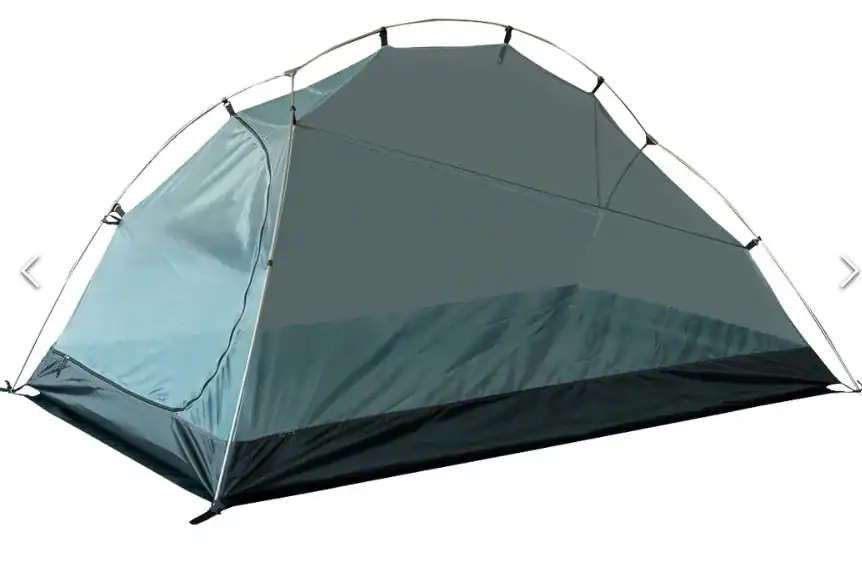
Why Fabric Choice Determines Tent Lifespan in Disaster Zones
A tent that fails in month 6 costs more than the fabric premium you skipped.
Disaster relief tents face a brutal combination of stressors that recreational gear never sees. They sit deployed for months under constant UV exposure, get folded and dragged across rubble, endure freezing nights, and then get packed wet into storage where humidity hits 90%. The fabric choice determines whether that tent lasts one season or five. Four failure modes kill inflatable relief tents before their designed lifespan. Understanding each one is the difference between a tender that delivers value and one that generates replacement orders.
UV Embrittlement
UV radiation breaks down polymer chains in coated fabrics. PVC-coated polyester typically shows measurable embrittlement after 6-8 months of continuous equatorial sun exposure. The coating loses flexibility, micro-cracks form at fold lines, and air leakage accelerates. TPU fares better in dry UV conditions but degrades faster when UV exposure combines with humidity — a detail many spec sheets omit. The standard mitigation is adding UV stabilizers to the coating formulation, but dosage varies widely between mills.
Cold Cracking
At -30°C, standard PVC formulations become brittle and crack under inflation pressure or impact. This kills tents deployed in high-altitude or winter disaster zones. TPU maintains flexibility down to -50°C because its molecular structure doesn’t glass-transition until much lower temperatures. If your tender specifies deployment above 3,000 meters elevation or in sub-zero winter conditions, cold crack performance must be verified with a third-party test report — not just a supplier’s internal data sheet.
Abrasion Puncture
Relief tents get dragged across concrete debris, sharp rocks, and broken asphalt during setup and takedown. Abrasion resistance correlates directly with coating thickness and base fabric denier. A 0.5mm PVC coating on 1000D polyester base fabric handles field abuse significantly better than a 0.3mm coating on 600D base — but adds weight. For air-drop operations where every gram counts, TPU laminates at equivalent puncture resistance weigh roughly 30% less than PVC alternatives.
Hydrolysis
PVC-Coated Polyester: The Industry Workhorse
PVC-coated polyester dominates relief tent specs for a reason: cost, durability, and field-proven reliability.
Thickness Range and What It Means in the Field
The standard thickness range for PVC-coated polyester used in inflatable relief tents runs from 0.45mm to 0.9mm. That 0.45mm end is common for single-wall shelter shells where weight matters more than abrasion resistance. The 0.9mm end goes into floor panels and high-wear zones around inflation ports. For a UNHCR-spec family tent, the partner factories we work with typically specify 0.55mm for walls and 0.7mm for the floor — a split that balances pack weight against tear-through risk on rocky ground.
Tensile Strength: Warp vs Fill Values
Tensile strength is reported in N/5cm (Newtons per 5 centimeters) for both warp (lengthwise) and fill (crosswise) directions. A typical 0.55mm PVC-coated polyester delivers around 2500 N/5cm in warp and 2200 N/5cm in fill. The gap exists because the polyester base fabric is stretched tighter during weaving in one direction. When a buyer sees a spec sheet with warp and fill values within 10% of each other, that signals balanced construction — less risk of seam splitting along one axis under wind load.
Hydrolysis Resistance: The Tropical Climate Trap
Hydrolysis — chemical breakdown from heat and moisture — is PVC’s weak point in tropical deployments. Standard testing at 60°C and 95% relative humidity for 21 days simulates one year of equatorial storage. Unstabilized PVC loses up to 40% of its tensile strength under those conditions. Quality mills counter this with anti-hydrolysis plasticizers and stabilizer packages, but not all do. If your tender specifies deployment in Southeast Asia or West Africa, request the hydrolysis test report alongside the standard tear sheet.
Flame Retardancy: NFPA 701 vs GB/T 44010-2026
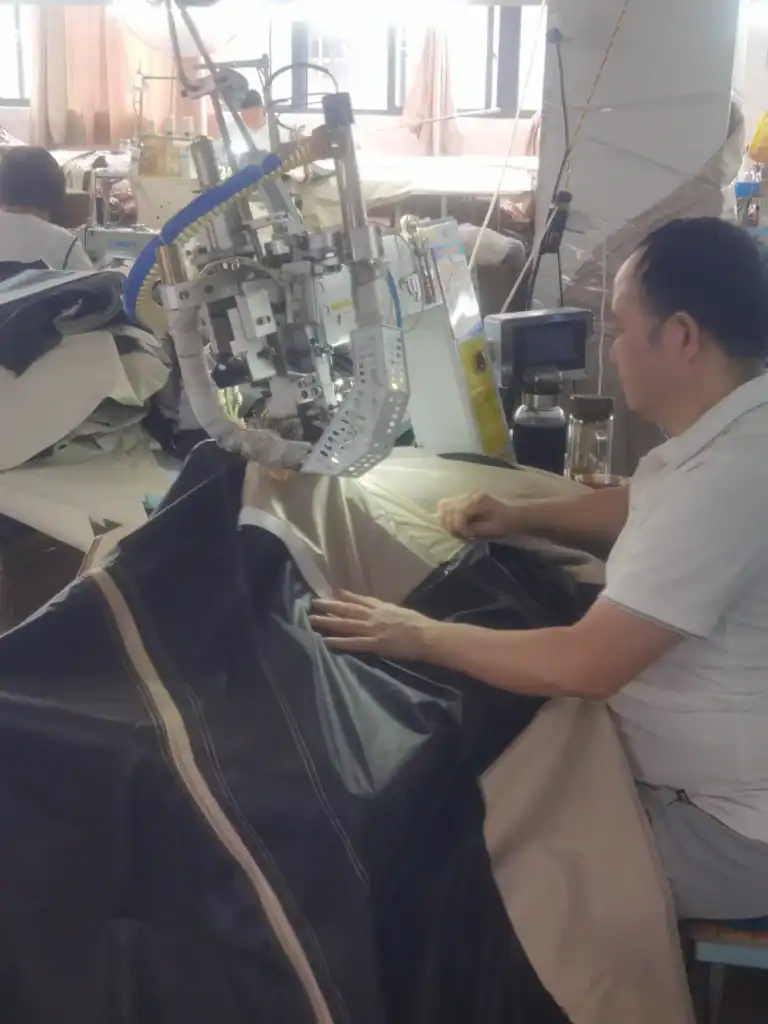
TPU Laminates: Lightweight Alternative for Air-Drop Operations
TPU laminates cut fabric weight by 30-40% vs PVC — critical when every kilogram limits shelter count per cargo sortie.
For relief operations where every kilogram of cargo weight dictates how many shelters fit on a single C-130 sortie, TPU (thermoplastic polyurethane) laminates offer a clear advantage. A standard PVC-coated polyester fabric at 0.55mm thickness weighs roughly 650 g/m². An equivalent-strength TPU laminate comes in at 390–450 g/m². That 30-40% reduction compounds fast when you’re packing 200 tents per pallet.
Cold-Crack Performance Thresholds
PVC stiffens and cracks below -30°C. That’s fine for temperate deployments but fails in high-altitude or arctic winter conditions. TPU maintains flexibility down to -50°C before embrittlement sets in. If your tender covers mountain rescue or Siberian winter stockpiles, TPU is the only option that doesn’t require heated deployment protocols.
Puncture Resistance Under ASTM D4833
Standard PVC at 0.55mm registers around 180 N puncture force under ASTM D4833. TPU at the same thickness hits 220–250 N — roughly 25% higher resistance to sharp debris penetration. The difference matters when tents get dropped onto rubble fields or packed with equipment that has exposed corners.
Field Repair Realities
PVC patches easily with solvent-based adhesives available in any hardware kit. TPU requires hot air welding at a controlled temperature of ±2°C — which most backup field teams lack the equipment to execute reliably. For rapid-deployment scenarios where repair speed trumps weight savings, PVC still wins on repairability.
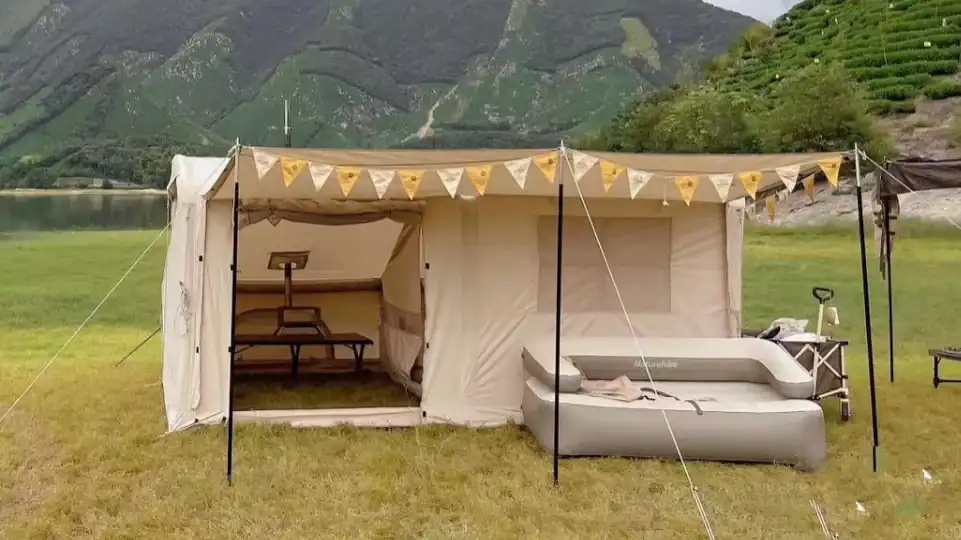
Coating Weight & GSM Impact on Inflation Pressure Retention
A coating weight below 180 g/m² on a 0.5mm base fabric will not hold inflation pressure overnight in field conditions.
Coating weight — measured in grams per square meter (GSM) — directly determines how well an inflatable relief tent holds air pressure over a 24-hour cycle. The fabric base provides tensile strength, but the coating layer seals the air inside. Skimp on GSM and you get micro-leakage through the weave, which shows up as a sagging structure by morning.
Minimum GSM Thresholds for Pressure Retention
For PVC-coated polyester at 0.5mm total thickness, the minimum coating weight to pass a 24-hour pressure hold test is 180 g/m². Drop to 150 g/m² and internal pressure drops by roughly 15-20% within 12 hours under direct sun exposure. TPU laminates require a slightly different baseline because the film itself is the seal — aim for a total laminate weight of at least 200 g/m² on a lightweight base fabric to match PVC’s retention curve.
Why Coating Weight Alone Is Not Enough
GSM numbers mean little if the coating penetration is uneven. A roll that averages 190 g/m² can have thin spots at the selvage edges where leakage starts. The factory should run a hydrostatic head test to confirm seal integrity — our QC protocol at Kelyland Outdoors uses accelerated weathering chambers and hydrostatic head testing up to 10,000 mm H₂O on every production batch before sample approval.
The Real Failure Pattern in Field Use
Most pressure loss in low-GSM fabrics happens not through puncture damage but through porosity migration over time. As the tent flexes during wind cycles, uncoated fiber bundles shift and create channels. A coating weight of 180 g/m² or higher prevents this by fully encapsulating the weave intersections. Below that threshold, you are essentially betting that no one will set up the tent on rough ground or leave it inflated during a gusty afternoon.
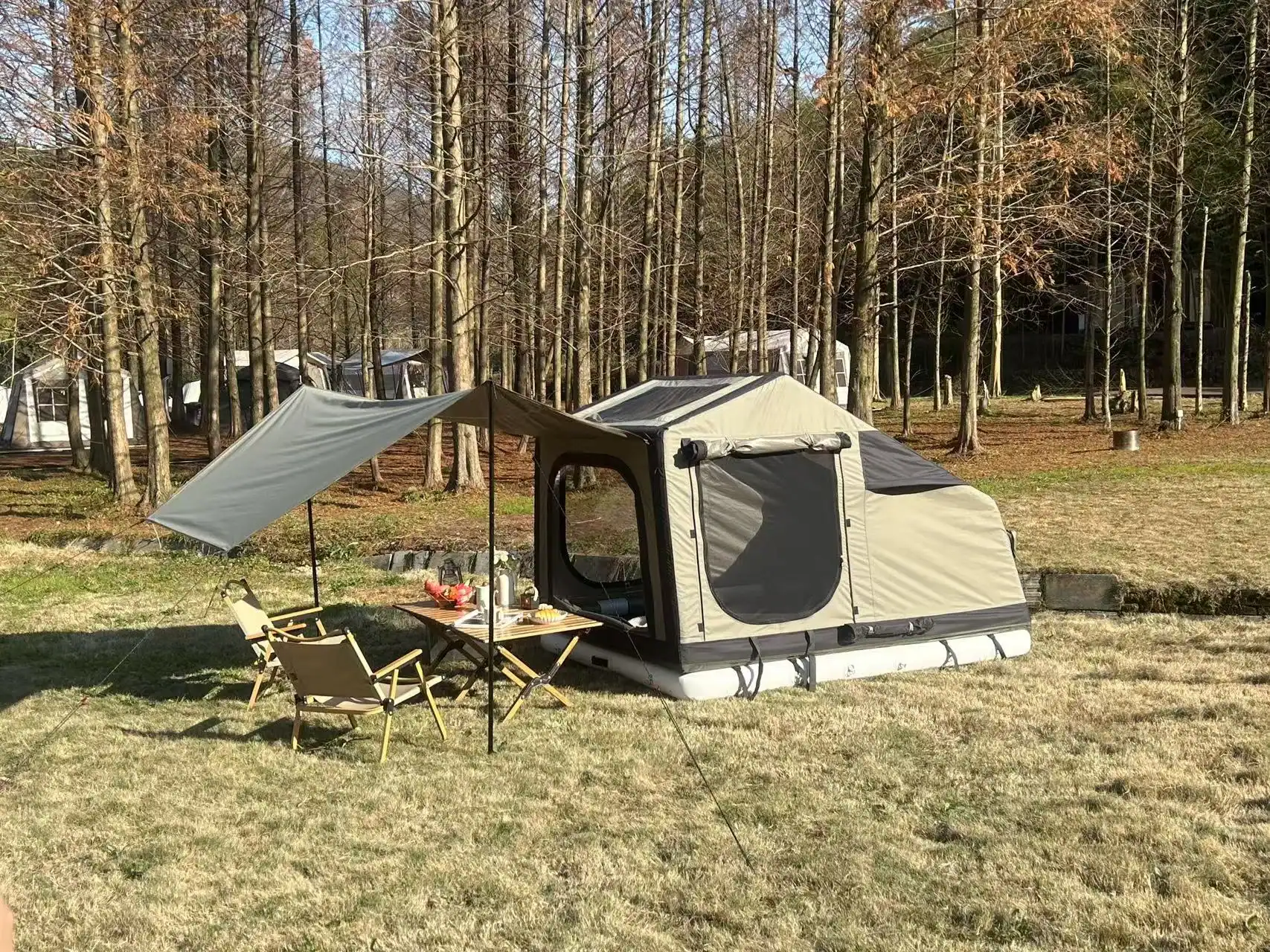
Field Data from UNHCR & IFRC Tenders (2019-2026)
UNHCR specs call for 0.55mm minimum PVC coating with 24-hour pressure hold at 80% inflation.
If you’re writing a tender for UNHCR or IFRC, the fabric spec isn’t negotiable. These organizations have been burned by supplier substitutions enough times that their procurement documents now read like a checklist designed to eliminate the bottom 50% of bidders before they even submit.
UNHCR Preferred Fabric Specs
The standard UNHCR inflatable shelter specification calls for PVC-coated polyester with a minimum thickness of 0.55mm and a coating weight no lower than 650 GSM. Tensile strength must exceed 2000 N/5cm in the warp direction and 1800 N/5cm in the fill direction — measured per ISO 13934-1. Tear resistance per ISO 4674 requires at least 250 N in both directions.
Flame retardancy follows NFPA 701 Test Method 2, with after-flame time under 2 seconds and char length not exceeding 150mm. The fabric must also pass the Wassersäulentest at minimum 8000 mm H₂O (ISO 811). These aren’t aspirational targets; they’re pass-fail gates that get verified during pre-shipment inspection by third-party labs contracted by the agency.
IFRC Tender Variations
IFRC tenders typically mirror UNHCR specs but add two critical requirements: cold-crack performance at -30°C (ISO 4646 method) and hydrolysis resistance tested at 70°C / 95% RH for 21 days with no more than a 20% loss in tensile strength. This hydrolysis clause is relatively new — added after multiple field failures in Southeast Asian deployments where tents degraded within eight months instead of the expected three-year lifespan.
# The REACH Trap Most Chinese Mills Don’t Flag
-
- Common Problem: Many Chinese mills test flame retardancy using brominated FR compounds that pass NFPA 701 but fail REACH SVHC screening.
- Required Fix: For EU or UN tenders, specify phosphorus-based FR formulations in your RFQ. Kelyland Outdoors sources fabrics from ISO 9001-certified mills that can supply REACH-compliant material certificates alongside each batch.
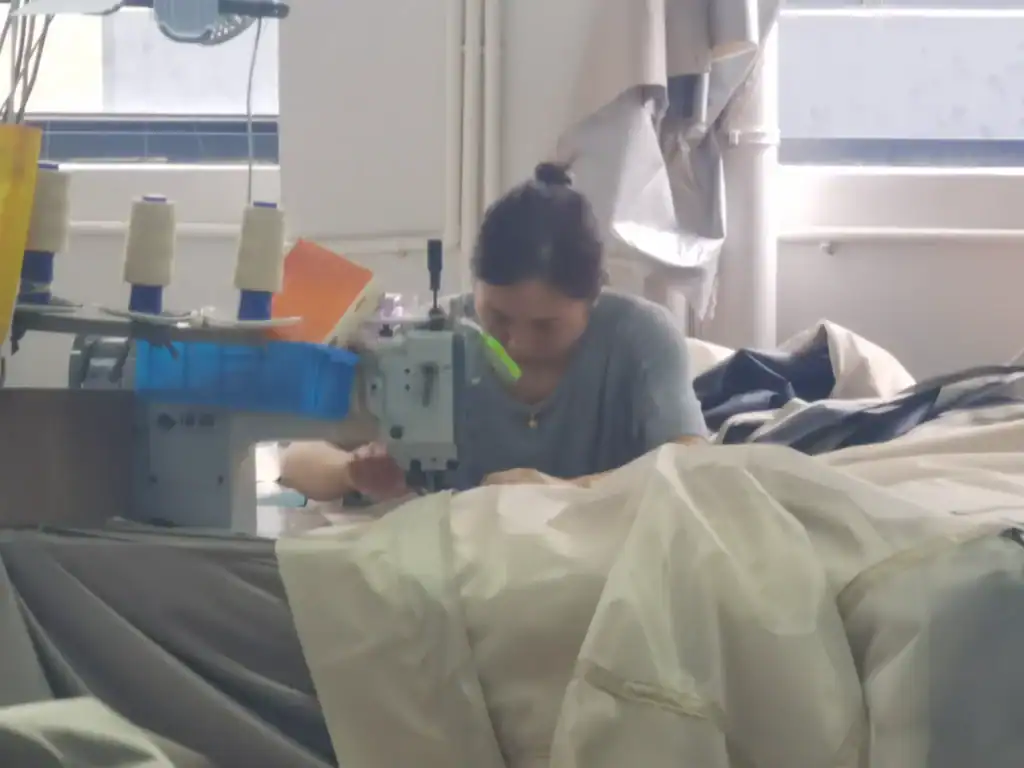
How Kelyland Outdoors Tests Fabric Batches Before Production
Three-stage QC catches failures before they reach your container.
A pre-production sample that looks perfect on a desk can hide problems that only show up after 500 hours of UV exposure or a monsoon downpour. That is why the fabric testing protocol here runs through three distinct gates before any production line starts cutting material.
Gate One: Accelerated Weathering in Xenon-Arc Chambers
We place fabric swatches in xenon-arc weathering chambers that simulate 12 months of tropical sun exposure in about 400 hours. The machine cycles UV irradiance, temperature spikes up to 70°C, and humidity bursts at 95% RH. After the cycle, we measure tensile strength loss using the grab test method — anything above 20% degradation fails the batch. This step filters out coatings that look opaque on day one but embrittle after three months in the field.
Gate Two: Hydrostatic Head Testing to 10,000 mm H₂O
For inflatable tent fabrics, waterproofing is not just about keeping rain out — it is about maintaining air pressure retention over a 24-hour cycle. We run hydrostatic head tests per ISO 811, pressurizing the fabric column until water penetrates. Our pass threshold for relief tent fabrics is 8,000 mm H₂O minimum; premium TPU laminates routinely hit above 10,000 mm H₂O. If a batch leaks at 6,000 mm, it gets rejected regardless of how clean the sample looked.
Gate Three: Welded Seam Integrity Under Cyclic Load
The most common failure point in inflatable structures is not the base fabric — it is the welded seam where panels join. We test seam peel strength using ASTM D751 with a crosshead speed of 300 mm/min. The minimum acceptable value is 40 N/cm for PVC and 35 N/cm for TPU. Any batch that falls below these numbers goes back to the mill. This gate caught a bad TPU lot last year where the factory had drifted ±3°C from the optimal welding window — precisely the kind of rejection rate issue that drives real cost differences between PVC and TPU.
Schlussfolgerung
The fabric spec you choose determines whether a relief tent lasts one season or five. PVC-coated polyester remains the cost-effective workhorse for general deployment, while TPU laminates justify their premium only in air-drop operations where weight and cold-crack performance are non-negotiable. The real separator is not the raw material cost — it’s the factory’s welding rejection rate and its ability to deliver phosphorus-based flame retardants that pass REACH scrutiny.
-
- PVC fails hydrolysis faster above 60°C/95% RH without anti-hydrolysis additives.
- TPU offers a -50°C cold-crack threshold versus PVC’s -30°C limit.
- Welding rejection rates for TPU can double if temperature control deviates ±2°C.
For your next tender, start by matching the fabric tier to the deployment environment rather than the budget line. If you are sourcing inflatable tents for NGO or government programs, review how Kelyland Outdoors tests fabric batches — including hydrostatic head testing up to 10,000 mm H₂O and accelerated weathering cycles — before production begins. Browse the air mattress product page to see how similar material standards apply across our inflatable product range.
Häufig gestellte Fragen
How to get a quote for Fabric Standards for Inflatable Relief Tents: PVC vs TPU?
Die genaue Antwort hängt von der Produktspezifikation, der Menge und dem Auftragsaufbau ab. Der sicherste Ansatz ist, die kommerziellen Bedingungen erst zu bestätigen, nachdem das endgültige Anforderungsblatt festgeschrieben wurde. Überprüfen Sie immer die Konformität anhand des genauen Modells und der Zielmarkt-Anforderungen.
Kann ich zuerst Muster anfordern?
Die genaue Antwort hängt von der Produktspezifikation, der Menge und der Auftragskonfiguration ab. Der sicherste Ansatz ist, die kommerziellen Konditionen erst zu bestätigen, nachdem das endgültige Anforderungsblatt festgelegt wurde. Die Musterverfügbarkeit sollte anhand des aktuellen Lagerbestands und des Versandplans bestätigt werden.

 English
 Español
 Deutsch
 Français
 Português do Brasil
 Русский
 العربية
 한국어
 日本語