
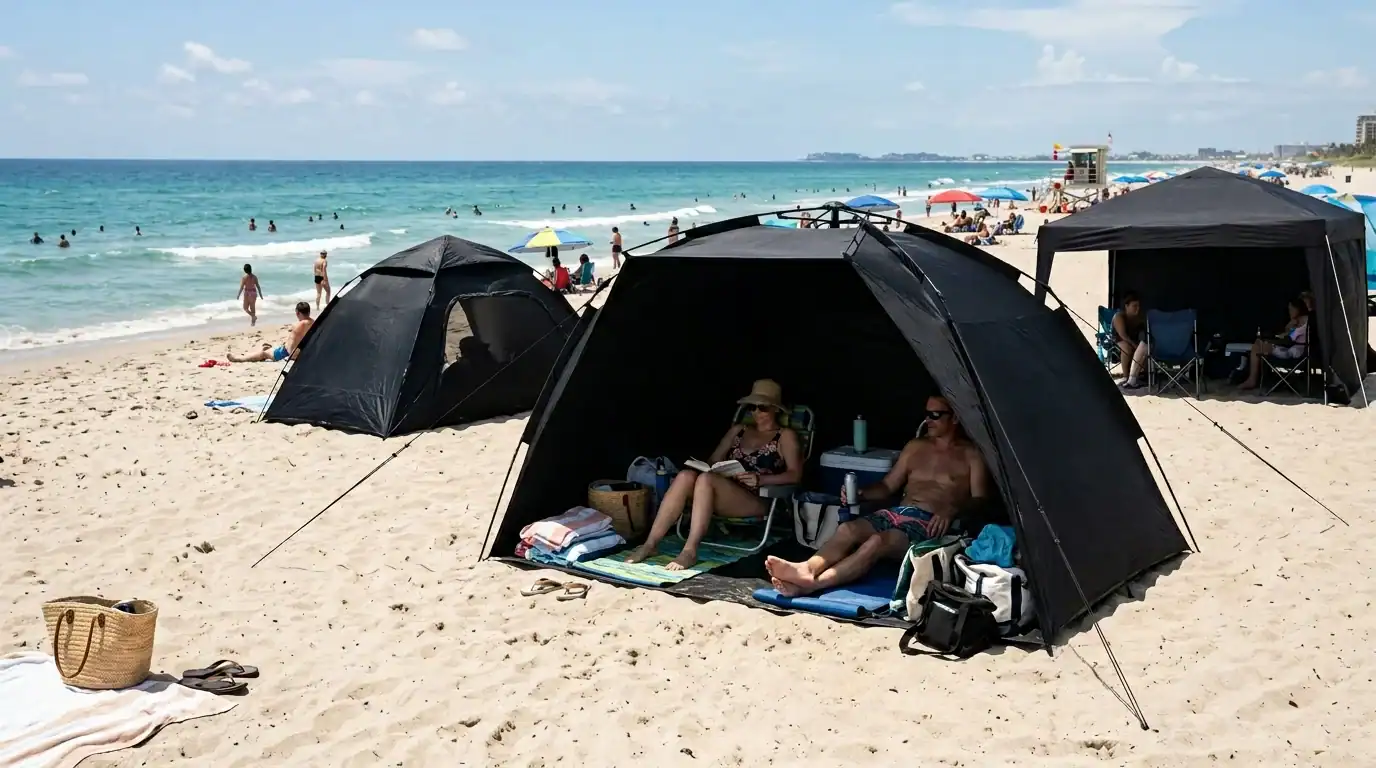
Ein Pop-up-Strandzelt ist die erste Hürde, die Käufer meistern müssen, bevor sie einen Lieferanten, Budget oder Produktionsplatz freigeben. “Wie viele Sandzyklen haben Sie am Gelenk getestet, bevor Sie die Probe freigegeben haben?” Der Lieferant zögerte. “Wir haben den Stoff auf UV-Beständigkeit und Wasserdichtigkeit getestet”, sagte er. “Der Rahmen war im Ausstellungsraum in Ordnung.” Diese Unterhaltung erklärt, warum ein Käufer, der einen $50K-Auftrag erteilte, am Ende mit einem Pop-up-Strandzelt endete, das sich nach drei Ausflügen zum Strand nicht mehr zusammenfalten ließ. Die Vorserienprobe passte perfekt – drinnen, auf einem sauberen Betonboden. Die Massenproduktion stimmte ebenfalls mit der Probe überein. Keine passte jedoch zu einem Strand.
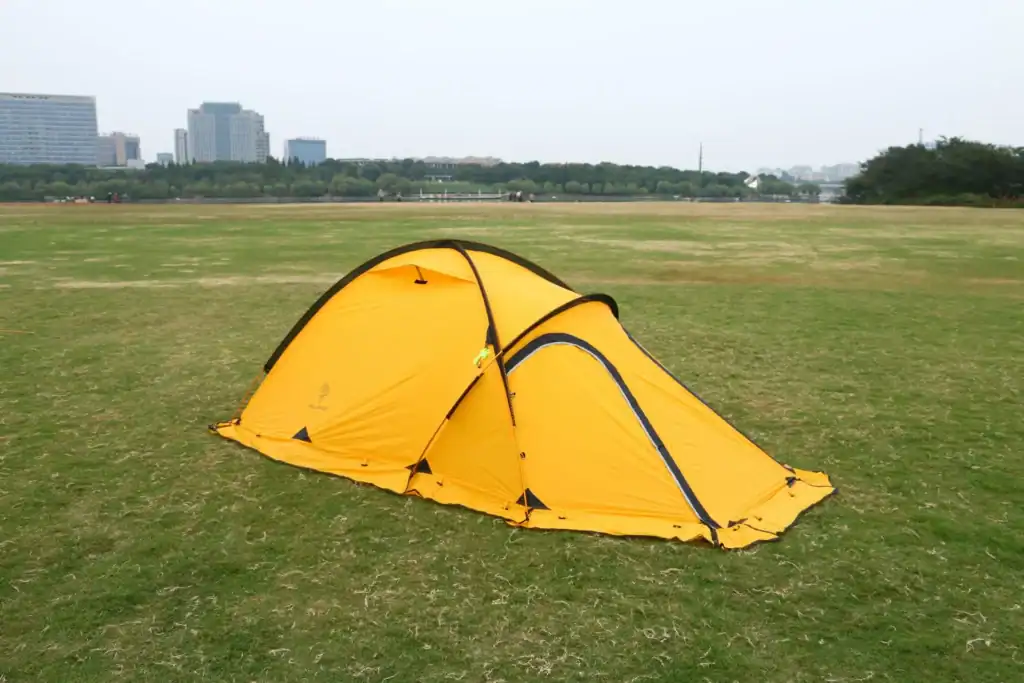
Bruch #1: Das durch Sand blockierte Gelenk – warum das Zusammenfalten stoppt
Offene Gelenke mit Nylon-Scheiben versagen nach 3–4 Strandbesuchen; versiegelte Gelenke mit Acetal-Scheiben bestehen 100+ Sandzyklen.
Jedes preisgünstige Pop-up-Strandzelt verwendet ein offenes Gelenk mit einem freiliegenden Verriegelungsknopf oder Ring. Windverwehter Sand und nasser Schmutz gelangen in diese Verbindung, vermischen sich mit Salzwasserfeuchtigkeit und bilden eine abrasive Paste. Diese Paste schleift die Nylon-Scheiben ab. Nach drei oder vier Strandbesuchen steigt der Faltwiderstand von einem leichten Klicken zu einem harten Stopp.
Der 20-Sekunden-Feldtest, den Käufer durchführen sollten
-
- Aufbau: Tragen Sie Strand sand an jedem Scharnierpunkt und den Verriegelungsring auf.
- Zyklustest: Führen Sie 20 Öffnen-Schließen-Zyklen durch; fühlen Sie nach Steifheit oder Reiben.
- Bestanden: Weisen Sie jede Probe zurück, die 100 Sandzyklus-Faltungen nicht ohne Blockaden abschließt.
Nylon-Scheiben nehmen Wasser auf und quellen auf, was das Reiben beschleunigt. Acetal-POM-Scheiben sind selbstschmierend, formstabil und salzwasserbeständig. Der Austausch des Scheibenmaterials kostet nur Cent pro Nabe. Kombiniert mit einer versiegelten Nabe und 304-Edelstahl-Scharnierstiften erhöht das Upgrade die Kosten um etwa $1.80 für den Lagerwert — und interne Produktionsdaten zeigen, dass es die Rücklaufquoten von Pop-up-Strandzelten um bis zu 40% senken kann.
Deshalb gehört der Sandzyklustest zur Überprüfung vor Produktionsbeginn, nicht zur Rückgabeabteilung. Die mit ISO 9001:2015 zertifizierten Partnerfabriken von Kelyland führen den Test durch, bei dem Strand sand auf jeden Scharnierpunkt aufgetragen wird, und protokollieren den Widerstand nach jeweils 25 Zyklen des 100-Zyklen-Protokolls. Käufer sollten diesen Bericht vor der Freigabe der Massenproduktion anfordern.
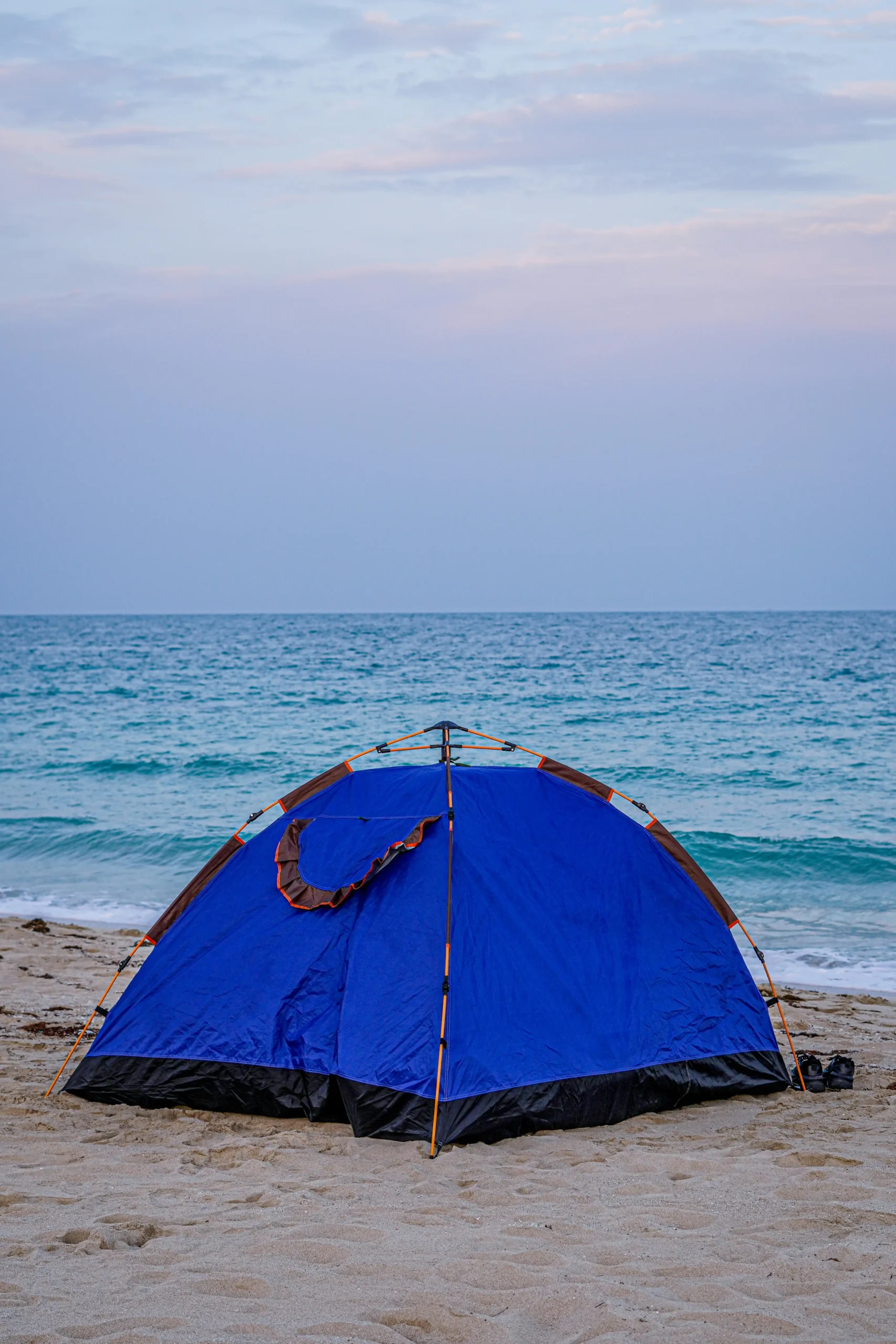
Bruch #2: Fiberglas-Splitterverletzungen und Materialermüdung
Ein gesplitterter Fiberglasstab ist ein Sicherheitsvorfall, der bei der nächsten Faltung passiert.
Günstige Pop-up-Strandzelte werden mit 7–9 mm Fiberglasstäben geliefert, weil die Stückkosten jedes anderen Rahmensmaterials übertreffen. Diese Ersparnis verdampft, wenn UV das Harz abbaut, Salzsprüh in die Fasern eindringt und wiederholtes Biegen die Spannungsstellen splittern lässt. Eine durch Sand blockierte Nabe verschlimmert die Lage: Der Benutzer drückt stärker, der Stab biegt sich über sein Limit hinaus, und der schwächste Abschnitt bricht — oft mit scharfen Fasern, die die Hände schneiden. Der Ausfall ist öffentlich, plötzlich und erinnert.
Warum 7–9 mm Fiberglas im Sand versagt
Fiberglas ist in einem Zelt akzeptabel, das auf Gras aufgebaut und auf Gras abgebaut wird. Strandebedingungen sind ein anderer Test. Direkte Sonne spröde das Harz. Salz und Schmutz dringen in das Geflecht ein. Jeder Faltungsprozess belastet dieselben Punkte, und wenn der Nabenmechanismus Widerstand leistet, absorbiert der Stab Torsionskräfte, für die er nie ausgelegt war. Zwei Saisons sind eine realistische Lebensdauer vor dem Beginn von Splitterschäden — zu kurz für jede Marke mit einem mehrjährigen Produktprogramm.
Die 11 mm Aluminium-Upgrades-Mathematik
Wechseln Sie zu 11 mm Aluminiumstäben hinzuzufügen Gewicht und erhöhen die Rahmenproduktionskosten, aber sie entfernen die Splitter-Beschwerde-Kategorie vollständig. Aluminium verbiegt sich unter Überlastung; Fiberglas zerbröselt. Wenn eine Nabe blockiert, bedeutet Aluminium “steife Faltung”, während Fiberglas “durch die Zelawand splittern” bedeutet. Für eine Marke, die bei Fiberglas bleibt, ist die Mindestspezifikation geflochtene Anti-Splitter-Hülsen an jedem Stababschnitt und kunststoffummantelte Nabenverbindungen — kostengünstige Eindämmung, wenn ein Stab bricht.
-
- Fiberglas (7–9 mm): Geringe Kosten, doch UV-Bruchigkeit und Schleifwirkung von Sand führen innerhalb von zwei Saison zu Splittern. Nur mit splitterhemmenden Hüllen akzeptabel.
- Aluminium (11 mm): Höhere COGS und höheres Gewicht, aber es hält wiederholte Sand-Zyklenfalten und küstennahe UV-Belastung ohne Zerbrechen aus.
Die Kelyland Core-Zeltfabrik in Ningbo führt ISO 9001:2015 und CE-zertifizierte Linien und produziert jährlich 800.000 Zelte. Rahmenoptionen, die für OEM/ODM-Projekte angeboten werden, umfassen sowohl Fiberglas als auch Aluminium, und die Checkliste zur Versandprüfung deckt die Funktionsfähigkeit des Mechanismus ab. Das bedeutet, dass ein Käufer Stangenprüfungsprotokolle zusammen mit den Stofftestberichten anfordern kann – die Dokumentation, die ein Category Manager benötigt, wenn eine Garantieleistung bei einem Rahmenfehler anfällt.
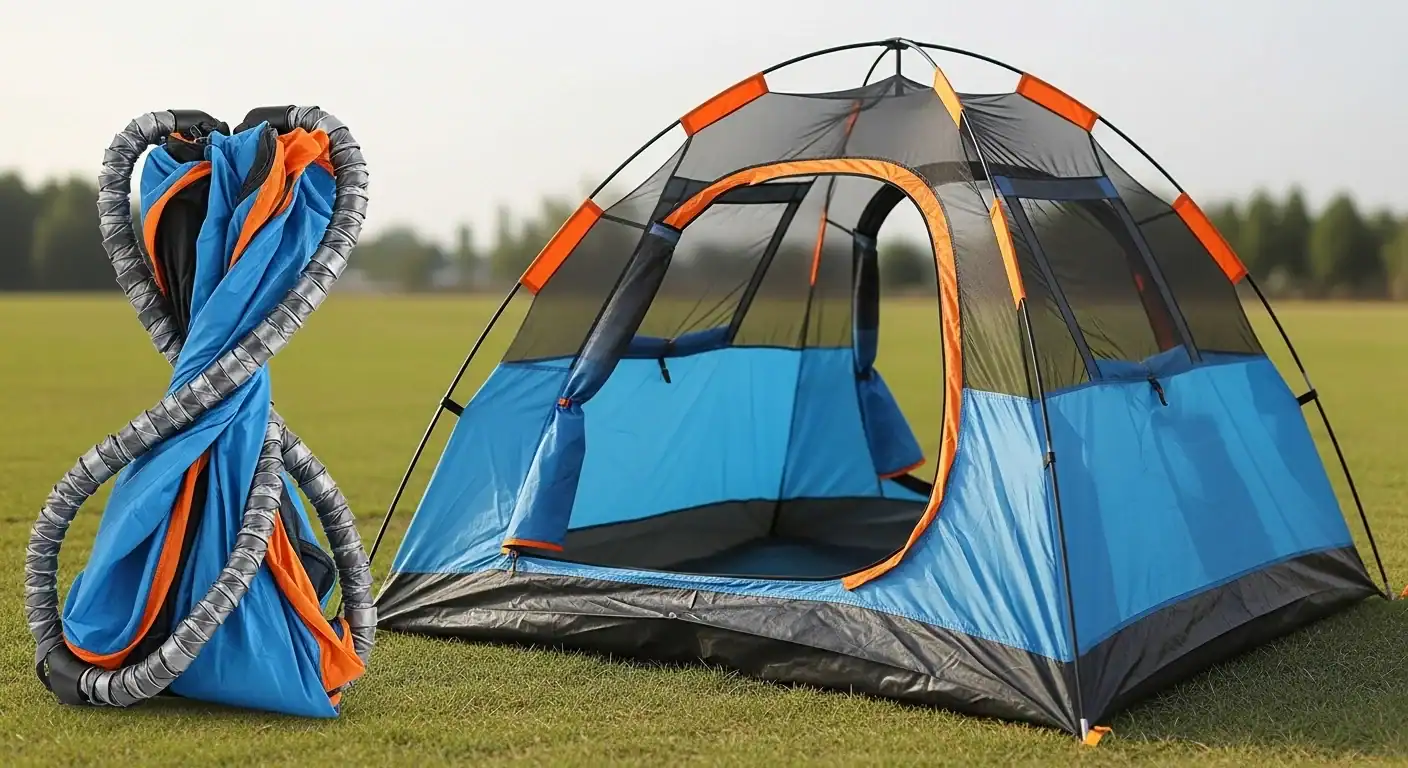
Bruch #3: Rostende Scharnierstifte nach einer einzigen Saison am Meer
Verzinkte Stifte versagen innerhalb einer einzigen Küstensaison.
Verzinkte Scharnierstifte sind die erste Komponente, die auf einem Strandzelt versagt. Salznebel korrodiert die Verzinkung, Sand schädigt den freiliegenden Stahl, und die Nabe wird innerhalb einer einzigen Küstensaison körnig. Das Schloss klemmt, der Faltwiderstand steigt stark an und der Rahmen verklemmt. Das ist die Rücksendung. Das ist die negative Bewertung.
Salznebel vs. verzinkter Stahl
Jeder Drehgelenk sollte 304-Edelstahl-Scharnierstifte tragen. Kein verzinkter Kohlenstoffstahl. Kein beschichteter Legierungsstahl mit Marketingname. 304er-Legierung übersteht einen 72-stündigen Salznebeltest. Das Netzwerk von 17 Kernstrategiefabriken und 200+ Produktionspartnern von Kelyland – die meisten ISO 9001:2015 zertifiziert – führt QC-Inspektionen an den Mechanismen in jeder Produktionsphase durch. Die Salznebelergebnisse gehen in den Versandbericht ein.
Acetal-Scheiben halten länger als Nylon
Nylonscheiben absorbieren Wasser und schwellen an. Innerhalb einer mit nassen Sand gefüllten Nabe beschleunigt dieses Schwellen das Schleifen, das die Faltung blockiert. Acetal-(POM)-Scheiben sind selbstschmierend, maßstabil und salzwasserbeständig. Der Preisunterschied beträgt nur wenige Cent pro Nabe. Kombiniert mit 304-Stiften und einer versiegelten Nabe liegt der Gesamt-Upgradewert bei etwa $1.80 zusätzlichen COGS pro Zelt.
-
- Spezifikation für Scharnierstifte: 304-Edelstahl an allen Drehgelenken, nicht verzinkter Stahl.
- Spezifikation für Scheiben: Acetal (POM) statt Nylon — keine Wasseraufnahme, kein Quellen.
- Testspezifikation: 72-stündiger Salzspraytest an Scharnierzapfen und Unterlegscheiben, dokumentiert in QC-Berichten.
- Kostenauswirkung: Ca. 1 TP für die 4T1,80-COGS-Umrüstung auf Full-Sealed-Hub, Edelstahlzapfen und Acetal-Unterlegscheibe.
- Return-Mathematik: One avoided return ($15–$30) covers the upgrade across roughly ten units.

Bruch #4: Der gerissene Gummizug – wenn das gesamte Gestell kollabiert
A snapped shock cord collapses the entire hub-and-spoke frame — and most beach tents ship without a spare.
Shock cord is the cheapest component in a pop-up beach tent frame and the one that kills the whole product when it breaks. That cord pulls every pole into tension. Snap it, and the poles go slack, the hub loses its geometry, and the tent becomes an unusable pile of fabric and fiberglass. No consumer can repair that on the beach.
Why the cord snaps after one season
Repeated bending does most of the damage. Each fold stretches the cord around the hub, and UV exposure breaks down the rubber over time. Sand adds fold resistance, so the user pushes harder — the extra force snaps a cord already weakened by flex fatigue. This is why the “pop up beach tent won’t fold” complaint shows up after the first summer.
What to spec and what to ship in the box
Require UV-stabilized elastic cord rated for at least 5,000 flex cycles. Demand a 72-hour UV exposure report from the factory, not a sales sheet. That report shows measurable tensile retention after accelerated sunlight aging, and it separates suppliers who actually test from suppliers who guess.
-
- Cord spec: UV-stabilized elastic cord rated for at least 5,000 flex cycles with no visible fraying or tensile loss.
- UV test report: 72-hour accelerated UV exposure data showing tensile retention, shared before production approval.
- Spare hub-and-cord kit: Adds under $2 per unit at factory cost and turns a total frame collapse into a five-minute field repair.
Kelyland’s partner factory in Ningbo, certified to CE, BSCI, and ISO 9001, runs a 100-cycle sand-fold test on every hub-and-spoke model. The shock cord is inspected at fixed intervals for fraying and tension loss, and the results go into the QC report. If a supplier can’t produce that document, the cord is unverified.
A returned beach tent costs $15–$30 in freight, restocking, and lost margin. A spare kit costs under $2 at factory level. Skip the kit and those pennies of savings become a chargeback every time a cord snaps. Add it, and you kill the most common field failure before your brand takes the blame.
Bruch #5: Windumwurf – warum billige Verankerungen bei Küstenböen versagen
A beach tent is a shade sail with a floor.
The 35 mph wind rating often quoted for engineered pop-up canopies comes from heavy steel frames and deep foot plates. A hub-and-spoke beach tent shares none of that. Low-slung polyester panels act like sails once a gust gets under the eave, so the whole structure lifts at 15–20 mph when the stakes are 12 cm plastic pins and the corners have no extra tie-downs.
Most suppliers test fabric waterproofing and UV, then call it windworthy. That is not a wind test. Demand anchor hardware and a wind-rating engineering report, not a marketing line.
Anchor specifications that hold on sand
-
- Pre-attached sandbag pockets: Sewn into the lower seams, not clip-on bags that customers lose. Each pocket should hold at least 4–5 kg of sand.
- Four guy-out points with webbing: One per corner, with high-visibility webbing that allows 20 cm+ stakes at a 45° angle. Two points is insufficient in coastal gusts.
- Stakes at least 20 cm long: Budget tents ship with 12 cm stakes. Dry sand cannot hold them. Spec 20 cm steel or aluminum sand stakes with a wide head.
- Wind-rating engineering test report: Ask for the test protocol that produced the number. If the supplier cannot produce one, treat the rating as fiction.
A sourcing partner with ISO 9001-certified factories can produce these anchor features without tooling changes, and low MOQs of 50–100 pieces let you validate the upgrade on a pilot run before committing to a full container. That is how you turn a beach tent wind flip from a season-ending return driver into a spec you control.
Warum versiegelte Gelenke und Acetal-Scheiben die intelligente Preis-Leistungs-Upgrad sind
A $1.80 sealed-hub upgrade removes the most common beach tent return trigger.
Most return dollars on pop-up beach tents trace back to one part: the open hub. Sand works into the joint, grinds the nylon washers, and after a few trips the frame locks up. The customer does not repair it. They return it.
The $1.80 COGS decision
Sealed hubs with 304 stainless steel hinge pins and acetal washers add roughly $1.80 to landed cost. A single returned unit runs $15–$30 once freight, restocking, and lost margin are counted. One avoided return per ten units pays for the upgrade across the entire order.
-
- Sealed hub: Keeps sand out of the pivot point, where most jams start.
- 304 stainless hinge pins: Resist salt corrosion far longer than zinc-plated steel.
- Acetal washers: Dimensionally stable in water, unlike nylon, which swells and grinds.
The 40% return reduction benchmark
Sand-cycle folding tests — 100 open-close cycles with beach sand applied to hinge points — show that sealed-hub construction can cut beach tent returns by up to 40%. On 10,000 units with a 6% return rate, that is roughly 240 fewer returns and several thousand dollars of recovered margin each season.
The fix is straightforward to spec. Kelyland’s partner factories run 72-hour salt spray tests on hinge pins and washers and document sand-cycle results before shipment, and select items carry MOQs as low as 50–100 pieces. That makes a pilot batch realistic before you commit to full production.
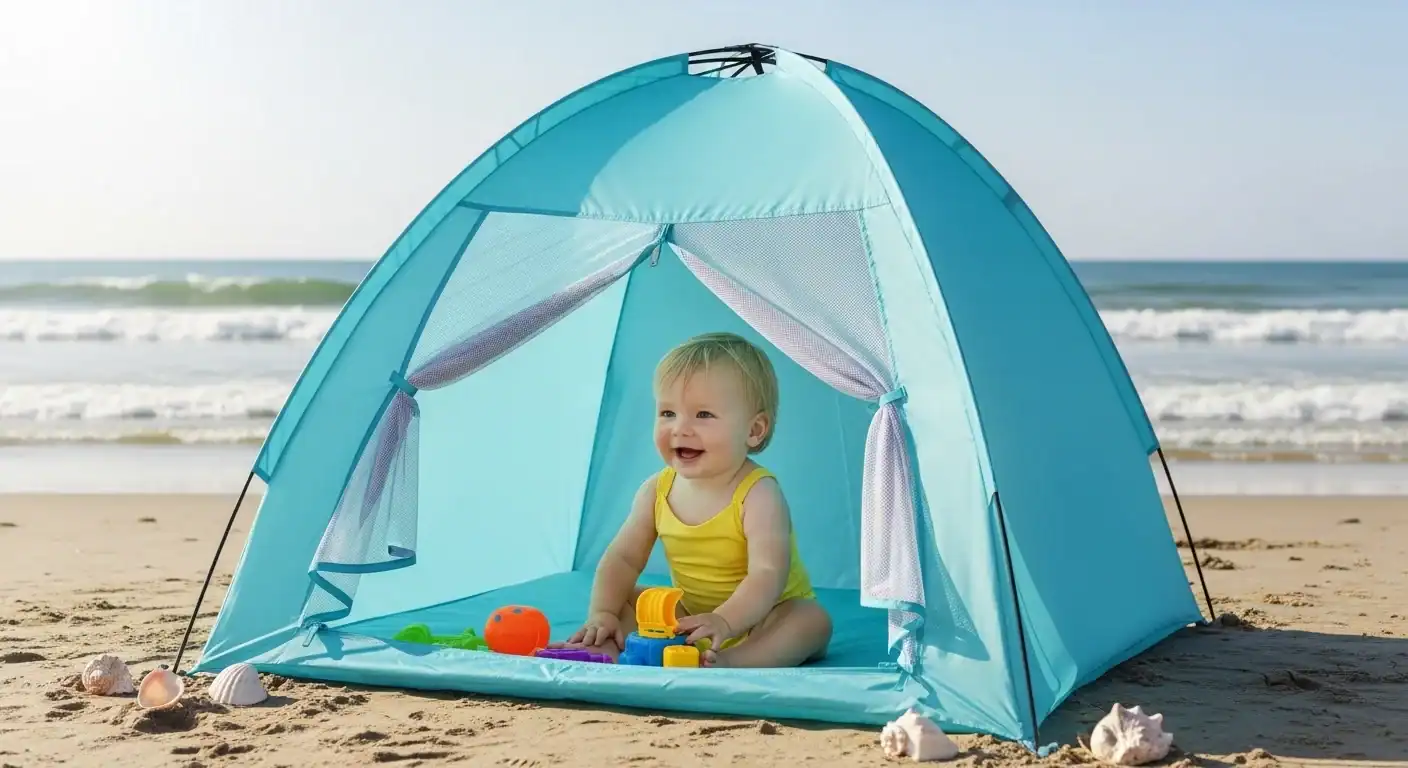
Was Sie bei der Beschaffung von Pop-up-Strandzelten für Ihre Marke spezifizieren sollten
Sealed hubs, stainless pins, and acetal washers add ~$1.80 per unit and cut beach tent returns by up to 40%.
Die meisten import spec sheets for pop-up beach tents cover fabric denier, coating, and UV rating. Rarely do they cover the hub — the mechanical joint that decides whether the tent survives a season. That gap is why buyers approve beautiful samples, then watch return rates climb after the summer rush.
Eight specs that prevent beach-frame failure
-
-
- Sealed hub: Keeps sand and salt moisture out of the folding joint. An open hub collects grit, mixes it with water, and grinds the mechanism into a hard stop.
- 304 stainless steel hinge pins: Zinc-plated pins corrode in salt spray, bind the hub, and seize the frame. Stainless removes that failure entirely.
- Acetal (POM) washers: Nylon washers absorb water, swell, and grind faster when sand enters. Acetal is self-lubricating and dimensionally stable in salt air.
- 11 mm aluminum or anti-splinter fiberglass poles: Budget 7–9 mm fiberglass splinters under UV and repeated bending. Aluminum, or fiberglass with a braided anti-splinter sleeve, removes the shard hazard.
- UV-stabilized shock cord: Standard elastic cord fatigues fast when sand adds fold resistance. UV-stabilized cord keeps the frame under tension for the life of the tent.
- Anchor kit: Sandbag pockets, four guy-out points, and stakes at least 20 cm long. Without anchors, a beach tent flips at 15–20 mph gusts.
-
Two factory tests to write into the contract
-
- 72-hour salt spray test: Hinge pins and washers sit in salt spray for 72 hours. Any corrosion on the hardware fails the spec.
- 100-cycle sand-fold test: Beach sand is applied to every hinge point, then the tent opens and closes 100 times. The hub must not jam or stiffen.
Most low-cost suppliers never run these tests. Their QC stops at fabric waterproofing and UV checks; the hub gets a visual inspection and nothing else. Kelyland’s network of 17 core factories, most ISO 9001:2015 certified, doesn’t stop there. Factory QC applies beach sand to every hinge point and completes 100 open-close cycles, logging resistance after every 25 cycles.
MOQ, lead time, and sampling protocol
Kelyland works with MOQs as low as 50–100 pieces on select items, with standard production lead times of 30–45 days. Order a paid sample first — the fee is potentially refundable at bulk order confirmation. Then run the sand-cycle test on that sample’s hub before approving mass production.
The upgrade math makes the spec an easy sell: sealed hubs, stainless pins, and acetal washers add about $1.80 per unit. One avoided return saves $15–$30 in freight and restocking. The sealed-hub spec pays for itself after one prevented return in every ten units.
Wie Kelyland Strandzelte auf Sand, Salz und UV-Strahlung testet
Sealed hubs and 304 stainless pins pass 100 sand cycles and 72 salt-spray hours before a unit ships.
Most suppliers test the fabric: waterproofing, UV fade, seam strength. The mechanism that fails on a beach — the hub-and-spoke fold — gets no test. Kelyland’s QC treats the folding system as the primary failure point.
Sand-cycle folding test
Factory QC applies beach sand to every hinge point, then completes 100 open-close cycles. Every 25 cycles, inspectors check the hub, washers, hinge pins, and shock cord. Resistance gets logged in the inspection report, not just marked pass or fail. Buyers receive that report before shipment.
This test exists because sand works into open hubs, mixes with salt moisture, and grinds nylon washers into paste. A sealed hub with acetal washers and 304 stainless steel hinge pins passes 100 cycles. Open nylon hubs rarely reach 50.
Salt spray and UV exposure
Hinge pins and washers go through a 72-hour salt spray test. Fabric and elastic shock cord go through UV exposure, measuring color fade, tensile loss, and cracking. One test targets the metal joint; the other targets the materials holding tension.
Pre-shipment inspection checklist
-
- Hub lock function: Every hub opens and locks cleanly, three times, with no grit sound.
- Fold smoothness: Full fold sequence runs even; no resistance spike at a single pole.
- Stitch integrity: Seam tension checked at canopy stress points and webbing junctions.
- Anchor attachment strength: Tug-test webbing loops, sandbag pockets, and stake loops — loose anchors fail at 15 mph.
- Packaging and photo proof: Confirm carton sizing and poly-bag protection, then ask for video of the sand-cycle test on the production sample.
Kelyland’s 17 core strategic factories run these checks under ISO 9001:2015, and the inspection report is shared before shipment approval. That report is the only ‘trust us’ that matters when importing beach tents from China.
Schlussfolgerung
Pick the frame before you pick the fabric. A pop-up beach tent’s return rate comes down to three components that rarely appear on a standard spec sheet: the hub seal, the hinge pin alloy, and the washer material. Put all three in writing, then verify them on a production sample before you commit to a bulk order.
-
- Ask for sealed hubs with acetal washers and 304 stainless steel hinge pins on every rotating joint.
- Demand a 100-cycle sand-fold test report before approving the pre-production sample.
- Confirm hinge pins pass a 72-hour salt spray test, not just fabric and UV checks.
- The $1.80 sealed-hub upgrade offsets the $15–$30 cost of a returned unit.
Put those three questions to your supplier in writing, then request a sand-tested sample from Kelyland’s beach tent line. Run the 100-cycle fold test on the actual hub, compare the inspection report to your spec sheet, and use a 50–100 piece trial run to benchmark return rates before the season window closes.
Häufig gestellte Fragen
Warum verhaken sich Pop-Up-Strandzelte?
Sand reibt die Nylon-Scheiben in der Nabe ab und verriegelt den Klappmechanismus nach einigen Strandbesuchen. Versiegelte Naben mit Acetal-Scheiben und Edelstahl-Scharnierstiften vermeiden dies. Lassen Sie versiegelte Naben vor der Freigabe der Muster prüfen.
Was sollten Käufer vor der Bestellung von Pop-up-Zelten testen?
Führen Sie 20 Sandzyklusfalten am Naben durch und weisen Sie jede Probe zurück, die nicht ohne Verklemmen 100 Zyklen completes. Die meisten Lieferanten testen nur Stoff und UV, nicht den Rahmen unter Sand. Fordern Sie die Sandzyklustestergebnisse schriftlich an.
Wie viel kostet die Behebung von Rahmenstock-Staus?
Die Aufrüstung auf versiegelte Naben kostet etwa $1,80 pro Zelt, während ein Rückgabefeld $15 bis $30 kostet. Die Aufrüstung ist günstiger als Fracht, Rückerstattungen und entgangener Gewinn. Kalkulieren Sie die Aufrüstung im Verhältnis zu Ihrer Rückgaberate.
Warum splittern Glasfaserstangen?
Fiberglasstangen ermüden bei wiederholten Strandfaltungen und splittern, was Sicherheitsrisiken birgt. Rahmen aus Aluminium oder Kohlefaser sind zwar teurer, reduzieren jedoch Splintern und Bruchgefahr. Wählen Sie das Stangenmaterial basierend auf Ihrem Ziemarkt.
Wie lange hält es, bis die Klammern von Popup-Zelten rosten?
Verzinkte Scharnierstifte können bereits innerhalb einer Saison an der Küste rosten. Edelstahlstifte sind die praktische Lösung für den Einsatz in Küstennähe.fordern Sie Edelstahlstifte in Ihren technischen Spezifikationen an.

 English
  Español
  Deutsch
  Français
  Português do Brasil
  Русский
  العربية
  한국어
한국어  日本語
日本語