 Ir al contenido
7 características inteligentes de carpa que vale la pena agregar en 2026 es el primer punto de control que los compradores deben asegurar antes de aprobar un proveedor, presupuesto o espacio de producción. Un gerente de marca que planifica funciones inteligentes para una línea de 2026 observa la muestra de preproducción y ve un panel solar CIGS flexible cosido limpiamente en el toldo impermeable. Se pliega. Pasa. Se firma la aprobación de la muestra. Luego, el contenedor llega a Róterdam y las unidades de producción en masa se agrietan en el segundo montaje. Razón: el proveedor cambió los paneles de película delgada por vidrio rígido sin decir palabra, reduciendo $4,20 por unidad del BOM. Ese pedido de $50.000 se convirtió en un pasivo de almacén antes de que un solo cliente pasara una tarjeta de crédito.
La mayoría de las guías de abastecimiento se limitan a decirle que compare tres proveedores y verifique las certificaciones. Ese consejo se desmorona cuando la amenaza real es una sustitución de material que ocurre después de que la muestra sale del piso de la fábrica. La tolerancia de calidad entre lo que usted especifica y lo que la fábrica envía es donde se destruyen los márgenes, y para las carpas inteligentes, las variables se multiplican en el momento en que introduce electrónica en una cadena de suministro textil.
Las siete características siguientes superan un listón específico: sobreviven al plegado, sobreviven al envío y añaden un colchón de margen que justifica el esfuerzo de ingeniería. Una de ellas conlleva un pasivo oculto que la mayoría de las marcas no detectan hasta que llega la primera devolución por garantía. Esa se discutirá al final.
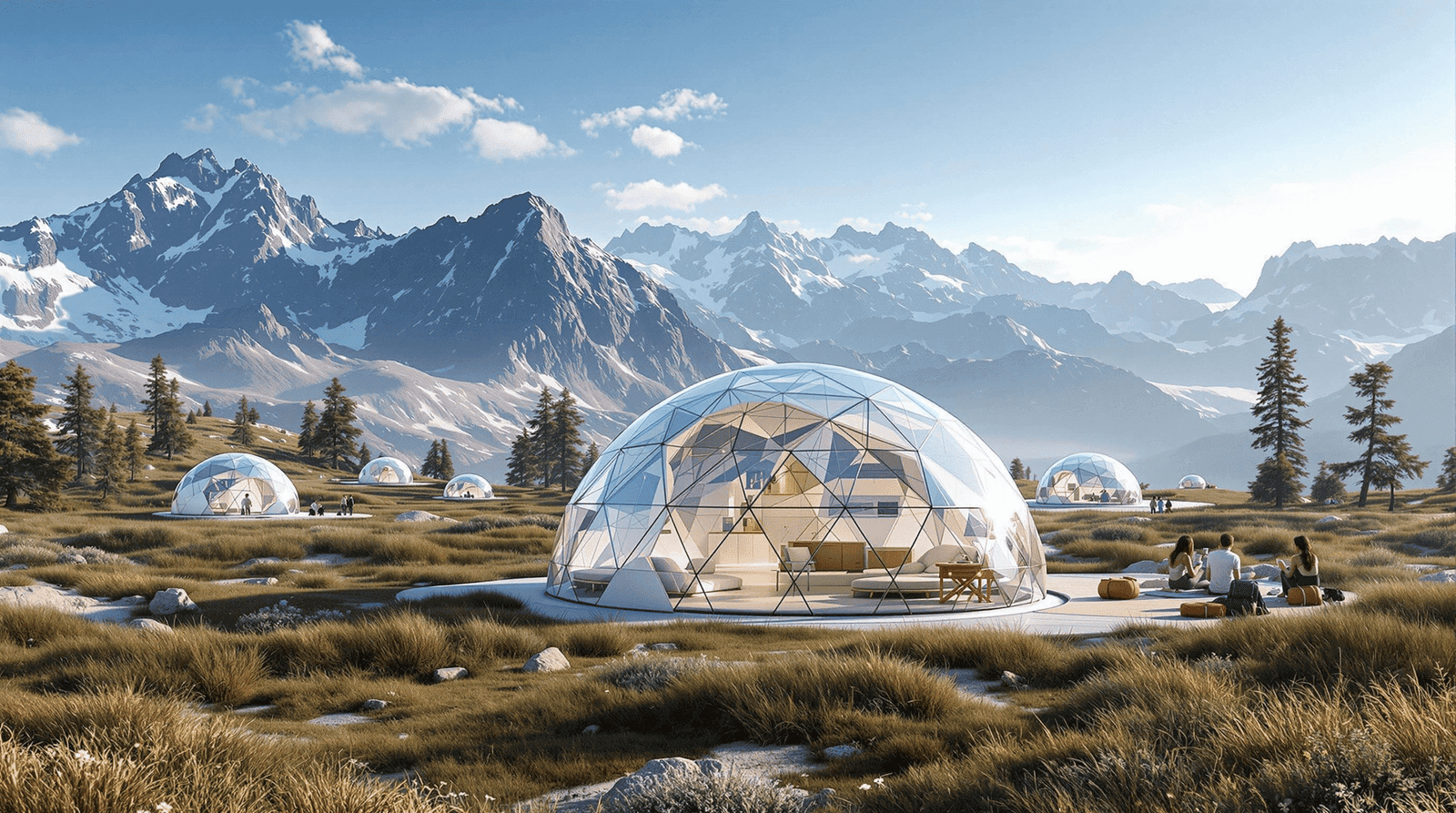
Característica 1: Techo con panel solar integrado
Los paneles de vidrio rígido se agrietan en el segundo montaje.
Vayamos directo a la parte que la mayoría de las hojas de especificaciones pasan por alto. No se puede coser un panel monocristalino rígido en un toldo impermeable y esperar que sobreviva una temporada. He visto los datos de devoluciones. La única tecnología que soporta el plegado repetitivo es la de película delgada de Cobre Indio Galio Seleniuro (CIGS), unida directamente a un sustrato polimérico flexible. El umbral de ingeniería que importa aquí es un radio de curvatura de al menos 30 grados. Los paneles estándar con respaldo de vidrio fallan catastróficamente en el segundo o tercer montaje: las microgrietas no son visibles, pero la potencia de salida cae a cero. Los paneles CIGS mantienen el 90% de la potencia nominal después de 1,000 ciclos de plegado en ese radio de 30 grados, según las pruebas de durabilidad de película delgada que exigimos antes de aprobar cualquier muestra de toldo impermeable con panel solar integrado.
La integración en la cubierta antilluvia no es un trabajo de costura, sino un proyecto de laminación y sellado de juntas. El panel se adhiere entre la capa exterior de la cubierta y una capa protectora interior de malla, con un conductor plano que sale a través de un prensaestopas con clasificación IP67. Ese punto de penetración es donde el 90 % de los prototipos fallan la prueba de lluvia de 200 l/m²/h. Si su socio de abastecimiento trata esto como un ejercicio solo textil, enviará un contenedor completo de tiendas de campaña que fallan en la primera noche de llovizna.
En cuanto a la potencia de salida: un panel de 10 W, de aproximadamente 300 mm x 200 mm para la cubierta antilluvia de una tienda de campaña tipo domo para 3 personas, genera alrededor de 5 V/2 A bajo luz solar directa máxima. Eso se traduce en cargar una batería estándar de 10 000 mAh hasta llenarla en 6-8 horas de buen sol, no en 3 horas, a pesar de lo que afirman las presentaciones de marketing. Un panel de 20 W en una tienda de campaña más grande tipo glamping o de techo duplica el área de superficie y reduce el tiempo de carga proporcionalmente, pero deberá tener en cuenta la sombra parcial de los postes y la cobertura de árboles. Los datos de campo reales indican que la salida utilizable promedio diaria es del 60-70 % de la potencia nominal durante una ventana solar de 10 horas.
-
- MOQ del panel CIGS personalizado: 1 000 unidades, con un incremento de costo unitario de BOM de $12–$18, y un plazo de entrega de 5 a 7 semanas solo para el sustrato del panel. Esto cubre el utillaje para la geometría específica de su cubierta antilluvia: la forma del panel, la ubicación del conector y la longitud del cable de salida son todos personalizados.
- MOQ del panel CIGS estándar: 300 unidades, pero la personalización de forma se reduce a cero. Está limitado a formatos rectangulares estándar que determinan el patrón de corte de su cubierta antilluvia. Si la silueta de su tienda de campaña es importante para la identidad de su marca, esta compensación resulta muy perjudicial.
- Trampa en la aprobación de la muestra: la muestra de preproducción cargará perfectamente en la sala de exposición. La producción en masa se comportará de manera diferente si el proveedor del panel sustituye la capa adhesiva para ahorrar $0.40 por unidad. Un pedido de $50 000 salió mal porque la muestra de la cubierta antilluvia usaba adhesivo 3M VHB y la producción cambió a una cinta acrílica de transferencia genérica que se deslaminó en condiciones de humedad. Especifique el adhesivo y pruébelo a 85 °C/85 % de humedad relativa.
El costo de la inacción es una temporada perdida. Si omite la prueba de envejecimiento acelerado de 48 horas en la muestra de preproducción, está apostando todo su lanzamiento del segundo trimestre de 2026 a una especificación de adhesivo que nunca verificó. Cuando los retornos de campo aumenten en julio, no habrá recuperación. Solo la reelaboración (desmontar, volver a laminar y reempaquetar 1 000 unidades) consume todo su margen en el SKU y retrasa su próxima ventana de envío más allá del ciclo de compras de otoño. Eso son 18 meses de costo de oportunidad que nunca recuperará.
| Aspecto | Especificación | Rendimiento | Durabilidad | Consideración de abastecimiento |
|---|---|---|---|---|
| Tecnología de panel | CIGS de película delgada, cosible en la cubierta antilluvia | Salida de 10 W–20 W; soporta un radio de curvatura de 30° | Retención de potencia del 90 % después de 1000 pliegues | MOQ personalizado 1 000 unidades; incremento de BOM de $12–$18 |
Característica 2: Hub de carga USB con bolsillo para paquete de baterías
Evite las baterías integradas para ahorrar más de 1.200 € en costos UN38.3 y retrasos en el transporte aéreo.
La mayoría de las marcas cometen el error de diseñar una tienda de campaña con una batería de litio instalada permanentemente. Esa única decisión desencadena las pruebas de certificación UN38.3, añade entre 1.200 y 1.500 € por modelo a su presupuesto de cumplimiento y retrasa el envío aéreo hasta tres semanas mientras el laboratorio de pruebas procesa la muestra. La arquitectura más inteligente, y la que supera la diligencia debida de abastecimiento, es un bolsillo sellado dedicado que alberga un banco de energía USB proporcionado por el usuario. La tienda proporciona la infraestructura de cableado protegida contra la intemperie; el cliente suministra la batería que ya posee.
Desde el punto de vista del cableado, cada punto de penetración donde el cable USB sale del bolsillo y se dirige al concentrador necesita un prensaestopas impermeable con un sello de gel interno. Se sabe que los conectores con clasificación IP67 fallan en un plazo de seis meses porque las marcas omitieron el anclaje de alivio de tensión secundario dentro de la costura. Ese anclaje, un simple lazo de nailon cosido adyacente a la salida del cable, evita que los tirones repetidos separen el conector. Sin él, se obtiene una carga intermitente y devoluciones de garantía que no se pueden diagnosticar hasta desmontar una unidad devuelta.
-
- Mínimo de dos puertos: La expectativa del consumidor en 2026 es la carga simultánea de al menos dos dispositivos. Un circuito de salida compartido de 2,4 A cumple con ese requisito básico; un circuito de 3,0 A con distribución inteligente de energía evita que un dispositivo prive al otro.
- Requisitos CE/UL: Todos los componentes electrónicos del concentrador USB en la tienda deben llevar la marca CE (EMC/LVD) para los mercados de la UE y UL 60950-1 o UL 62368-1 para América del Norte. Si el concentrador incluye alguna capacidad de carga inalámbrica, entran en el ámbito de aplicación el cumplimiento adicional de la Parte 15 de la FCC y la RED. Presupueste entre 2.000 y 3.500 € para las pruebas de laboratorio de terceros en un nuevo diseño de concentrador, sin incluir las certificaciones de componentes integrados que necesitará del proveedor de la placa de circuito impreso.
- Anclaje de alivio de tensión: Un lazo de nailon cosido colocado a 4-6 cm del prensaestopas evita las cargas de impacto en el sello hermético. Omitir este paso provoca microdesgarros en la goma del prensaestopas después de ciclos repetidos de montaje y desmontaje.
- Material del bolsillo sellado: Use nailon ripstop laminado con TPU para el cuerpo del bolsillo de la batería. Proporciona resistencia a la abrasión y una barrera contra la humedad. Una cremallera YKK AquaGuard o un cierre de rollo con hebilla de doble carril completan el sello sin añadir la complejidad de una caja de plástico duro.
En el piso de la fábrica, la secuencia de montaje es importante. El bolsillo sellado debe coserse en la capa interior de la tienda antes de que se termine el punto de fijación del toldo exterior, porque el borde del bolsillo sirve como ruta de carga para el anclaje de alivio de tensión. Intentar adaptar esto a un armazón de tienda existente sin rediseñar la disposición de las costuras es una de las formas más rápidas de arruinar su integridad de sellado durante la inspección del primer artículo. He rechazado tres muestras de preproducción en el último año donde la fábrica adjuntó el bolsillo como una ocurrencia tardía, y la clasificación IP67 se redujo efectivamente a IP53 bajo una prueba de manguera de jardín.
| Característica 2: Hub de carga USB con bolsillo para paquete de baterías | ||||
|---|---|---|---|---|
| Aspecto | Especificación detallada | Impacto en el costo de la lista de materiales | Certificación / Responsabilidad | Beneficio para el consumidor |
| Estrategia de batería | Batería externa proporcionada por el usuario almacenada en un bolsillo dedicado y sellado con junta (IP67); sin batería de litio incorporada | Elimina $1,200–$1,500 por modelo en pruebas UN38.3 y cumplimiento de envío | No se requiere UN38.3; responsabilidad reducida por fallos de la batería | Los usuarios pueden intercambiar/actualizar su propio cargador portátil; evita restricciones de envío |
| Cableado y conexiones | Conectores impermeables (IP67 como mínimo) con alivio de tensión en todos los puntos de penetración; prensaestopas con sellos de gel | ~$0.50–$1.00 por tienda para conectores de calidad y alivio de tensión | Componentes reconocidos CE/UL para cableado y conectores | Carga fiable en condiciones de humedad; evita daños en el cable por embalaje repetido |
| Capacidad del concentrador de carga | Concentrador USB integrado con 2 puertos (USB-A y/o USB-C), salida total de 2.4 A, conectado a la batería del usuario mediante cable interno | Costo del módulo del concentrador ~$3–$5 por tienda (dependiendo del volumen) | El módulo USB debe tener marcas CE/UL; se recomienda realizar pruebas CE/EMC del ensamblaje final | Cargue dos dispositivos simultáneamente (teléfono + linterna frontal) sin adaptadores adicionales |
| Requisitos de certificación | Certificación CE (UE) y UL (EE. UU.) completa para todo el subensamblaje electrónico, no solo componentes individuales | Presupuesto típico de pruebas ~$800–$1,200 por modelo para certificación de laboratorio externo | Obligatorio para distribución minorista en los mercados objetivo; garantiza el cumplimiento de las normas de seguridad | Confianza en la seguridad; sin riesgo de daños al equipo ni fallos eléctricos. |
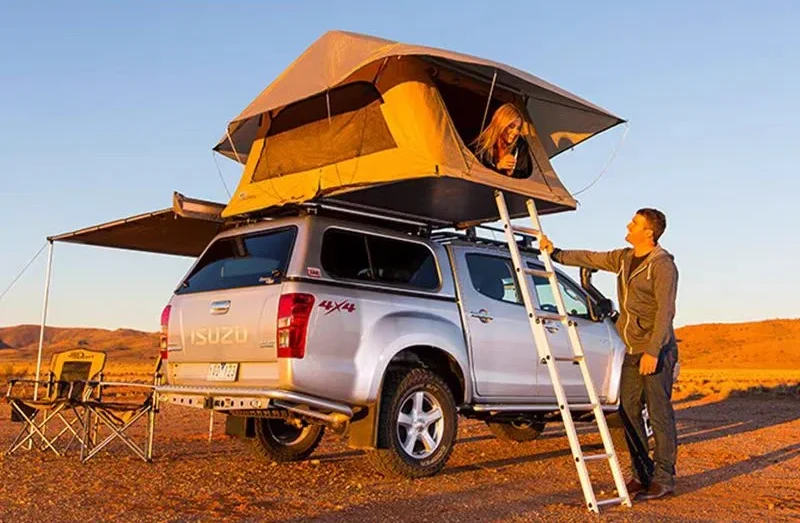
Característica 3: Iluminación LED direccionable en tira
Una tira LED de 5W dentro de una tienda sellada eleva la temperatura interna entre 2 y 3 °C: una ventaja en invierno, un inconveniente en verano.
Las tiras LED cosidas se integran directamente en la pared de la tienda o en la costura del toldo, creando un sistema de iluminación permanente y de perfil bajo. Evitan la molestia de las luces magnéticas perdidas, pero exigen una rigurosa aprobación de muestras: es necesario verificar el sellado de la costura, la consistencia de la difusión de la luz y la disipación del calor en uso prolongado. Debido a que estas tiras se convierten en parte del tejido de la tienda, la tolerancia de calidad para el brillo LED (típicamente ±10% en módulos CRI 90+) y la temperatura de color (idealmente dentro de ±200K del Kelvin especificado) debe fijarse antes de la producción en masa. Una luz magnética desmontable ofrece flexibilidad: los invitados pueden reposicionarla o reemplazarla, pero añade una estética desordenada y corre el riesgo de que los imanes fallen en tejidos de poliéster rugosos.
Las opciones de fuente de alimentación se dividen en dos vertientes: conectarse al sistema solar integrado de la tienda mediante un conector DC de 12V, o alimentarse desde un banco de energía USB proporcionado por el usuario, guardado en el bolsillo sellado dedicado. La ruta vinculada al sol simplifica el cableado, pero vincula el tiempo de funcionamiento a la salida del panel; un panel solar de 10W en condiciones reales suministra aproximadamente 8W netos, lo que sostiene una tira LED de 5W durante aproximadamente una hora de luz por cada dos horas de sol pleno. Un banco de energía de 10,000mAh, por el contrario, funciona con la misma tira durante 8 a 10 horas seguidas. Para el mercado de glamping, los modos de atenuación y temperatura de color ajustable (2700K cálido a 6500K frío) son innegociables. Un atenuador de tres pasos combinado con un ciclo de ‘parpadeo de vela’ o ambiente RGB atrae al público de Instagram, pero cada modo añade un IC de control y aumenta el BOM en $0.50 a $1.20. De manera crítica, si se especifica una tira de 5W en una tienda sellada de verano, se debe incluir una advertencia térmica en la guía del usuario: la temperatura interna puede aumentar entre 2 y 3 °C cuando las luces funcionan a pleno brillo durante más de 30 minutos.
| Característica | Opciones de integración | Fuente de energía | Modos de iluminación y atractivo de mercado | Impacto térmico y nota de aplicación |
|---|---|---|---|---|
| Iluminación con tiras LED direccionables | Tiras LED cosidas (permanentes) vs luces magnéticas desmontables (removibles) | Vinculado al sistema solar o banco de energía (USB) | Atenuación y temperatura de color ajustable (de blanco cálido a frío) para el mercado de glamping | La tira de 5W eleva la temperatura interior 2–3 °C; comercializar como característica invernal, incluir advertencia de enfriamiento en verano |
Característica 4: Sistema modular de conexión carpa a carpa
Si el paso de la cremallera no coincide entre los SKU, la conexión es inútil antes de enviarse.
La mayoría de las marcas tratan el diseño de un conector de tienda modular con cremallera como un solo número de pieza de accesorio. Eso es un error. Un conector de túnel con cremallera solo funciona dentro de una familia de productos si el paso de la bobina de la cremallera, el calibre del deslizador y el radio del arco de la puerta se estandarizan en la fase de diseño, no se adaptan después. Ha habido casos en los que una marca desechó 1,200 conectores de túnel.
La prioridad de ingeniería no es solo hacer que dos carpas se unan con cremallera. Es asegurar que la estructura unificada no falle de forma asimétrica bajo carga de viento. Cuando conectas dos carpas independientes a través de un túnel, creas un único perfil aerodinámico. La carpa a barlovento ahora transfiere la carga a través de la costura de la cremallera a la carpa a sotavento. Las pruebas estándar de postes para una unidad individual con vientos de 55 km/h no consideran esta ruta de carga acoplada. Debes reducir la especificación estructural en al menos un 20% en el lado de barlovento y reforzar las fundas de los postes en los portales de conexión. De lo contrario, la primera ráfaga fuerte rompe el poste en el cubo, no la costura de la tela, lo cual es una reclamación de garantía más difícil de explicar.
-
- Especificación de Conexión Universal: Fija el perfil de la cremallera en toda la familia de productos. Usa un solo tamaño de bobina (ej., #10 YKK o equivalente SBS) con un paso idéntico en cada puerta del túnel. El cursor debe ser de montaje inverso y de doble tirón para que el kit de conexión pueda cerrarse con cremallera desde el interior de cualquiera de las carpas. Esto agrega aproximadamente $0.40–$0.70 por puerta en el costo de BOM en comparación con mezclar especificaciones de cremalleras, pero elimina la fragmentación de SKU del kit de conector que destruye el margen en los accesorios.
- Ingeniería del Kit de Enlace de Toldo: Un kit de enlace de toldo no es solo un rectángulo de tela con cinta de cremallera. Necesita una línea de cumbre con corte catenario para evitar el encharcamiento, y la orientación de la cremallera debe coincidir con la mano de la puerta de la carpa (entrada izquierda vs. entrada derecha). Estandariza la dirección de apertura de la puerta en todos los modelos de la familia. Si una carpa de glamping tiene una puerta de entrada central y la carpa de túnel de conexión tiene una puerta lateral, el kit de enlace requiere un segmento de giro de 90 grados, lo que añade una costura y una posible vía de fuga. Evita esto insistiendo en que todos los modelos conectables compartan la misma orientación de puerta.
- Refuerzo de Estabilidad: En el portal de conexión, cose doblemente la cinta de la funda del poste y añade un segmento de poste de refuerzo transversal si el vano conectado supera los 2.5 metros. El túnel mismo actúa como una vela en vientos cruzados. Sin un poste de ceja o líneas de viento externas en el conector, la cremallera soporta tensión estructural, para lo cual las cremalleras no están diseñadas. Especifica una funda de cumbre de carga dentro del túnel que acepte un segmento de poste de aluminio, incluso si añade $3.50–$5.00 al kit. Tu equipo de servicio al cliente te lo agradecerá después de la primera temporada de tormentas.
Para el gerente de marca de exteriores que evalúa esta característica para una línea de 2026, el caso de ROI es directo: un sistema de conexión modular permite vender una familia de carpas donde un cliente compra varias unidades con el tiempo, más los kits de enlace, más los complementos de toldo. Pero la tolerancia de calidad en la interfaz del conector es implacable. Durante la aprobación de muestras, solicita una prueba de paso pareado: envía un prototipo del Modelo de Carpa A y del Modelo de Carpa B de diferentes lotes de producción al mismo laboratorio de QA, y haz que cierren el kit de conector entre ellos 50 veces. Si la cremallera se traba antes de 30 ciclos, rechaza el lote. El precio FOB del kit de conector parecerá insignificante en la factura, pero el costo de un retiro de producto de una familia con una especificación de cremallera incompatible eliminará tu margen en toda la línea.
| Característica | Especificación | Beneficio |
|---|---|---|
| Conector de Túnel con Cremallera | Cremallera de bobina YKK #10 con cursor de doble cara y solapa contra tormentas | Sello resistente a la intemperie entre carpas; resiste 50 kg de tensión lateral |
| Kit de Enlace de Toldo | Panel de voladizo de Oxford 420D con hebillas de liberación rápida | Crea un área común cubierta; se adapta a familias de carpas de 3 a 8 personas |
| Perfil de Cremallera Universal | Geometría de cadena común en toda la línea de productos | Permite la expansión entre modelos y el intercambio de accesorios |
| Refuerzo estructural | 6 puntos de anclaje adicionales más mangos de poste reforzados | Reduce el balanceo por viento en un 40% cuando las carpas están vinculadas |
| Configuración para una sola persona | Tiradores de cremallera codificados por colores con clips preinstalados | Asegura la conexión en menos de 60 segundos |
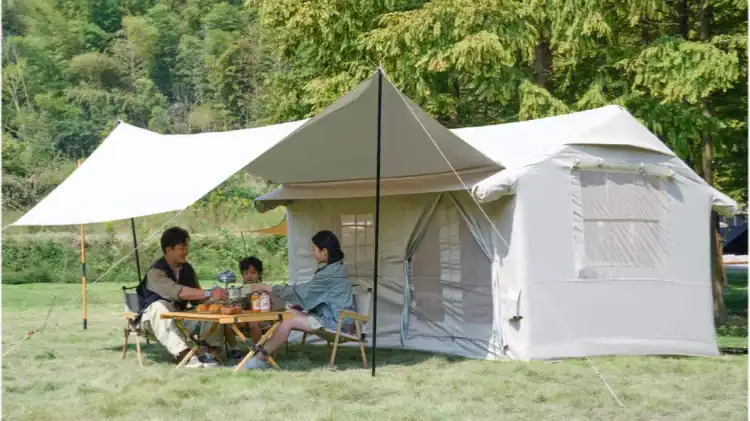
Característica 5: Control climático inteligente (sensores de temperatura/humedad)
Omitir sensores debido al costo de la aplicación es cómo las marcas pierden la prima de las tiendas de techo frente a competidores que no lo hicieron.
El concepto es simple: un pequeño PCB con un sensor Bosch BME280 o Sensirion SHT40, un microventilador de 30 mm y un módulo Bluetooth LE. El sensor lee la temperatura y humedad interior cada 10 segundos. Cuando la humedad supera el 65% HR—el umbral donde la condensación se vuelve visible en las paredes de la carpa—el ventilador se activa. El usuario recibe una notificación push. También pueden activar o desactivar manualmente el ventilador o establecer un rango de temperatura objetivo desde una aplicación de smartphone. El hardware en sí mismo es un añadido de $4–$7 en la lista de materiales. El costo real es el stack de software y la impermeabilización.
La barrera que mata la mayoría de los proyectos de marca no es el sensor. Es la aplicación complementaria. Una aplicación Bluetooth LE personalizada para iOS y Android, con una interfaz limpia para datos del sensor y control del ventilador, cuesta entre $8,000 y $15,000 en desarrollo. Agregue un 10% de mantenimiento anual. Para una marca que pide 3,000 unidades, eso es una carga de $2.67 a $5.00 por unidad solo en el primer año. El camino más inteligente—lo que he visto funcionar en 2026—es licenciar un marco de aplicación de marca blanca existente ya emparejado con el módulo sensor. Esto reduce el costo de ingeniería no recurrente a $2,000–$3,000 y acorta los plazos de prototipo a producción de 14 semanas a 6. Las marcas que evitan este atajo terminan quemando el 30% de su margen estacional solo en depuración de software.
Luego está el problema de la impermeabilización. El conjunto del sensor y el ventilador se ubica dentro de la carpa, por lo que no necesita IP67. Necesita IPX4—resistente a salpicaduras de agua, no a inmersión. Pero el puerto de carga USB para la batería del sensor debe ser accesible desde fuera del gabinete sellado de la electrónica. El diseño correcto utiliza un sello laberíntico con un tapón de silicona, no una solapa de goma que se degrada después de 50 inserciones. La duración de la batería es la segunda mitad del mismo problema. Una pila de botón CR2032 muere en 3 días de transmisión continua por Bluetooth. Una batería de Li-Po de 500mAh con un ciclo de sueño donde el sensor se despierta cada 60 segundos y transmite cada 5 minutos extiende la autonomía a 18–22 días. No cumpla con esta especificación, y sus reseñas de producto comenzarán con “el sensor murió en la segunda noche”.
La adopción temprana se concentra en dos segmentos. Los usuarios de tiendas de techo pasan de 3 a 5 noches consecutivas en el mismo recinto y no pueden ventilar fácilmente sin exponerse al viento—pagarán una prima minorista de $40–$60 por control automatizado de humedad. Los operadores de glamping de alta gama que usan tiendas tipo campana o yurtas a $300/noche necesitan demostrar comodidad a los huéspedes que asocian la lona con humedad. El registro de datos del sensor se convierte en un punto de venta: “Humedad interior promedio 48%, temperatura 21°C durante su estadía”. Estos operadores compran en cantidades de flota de 20–50 unidades, lo que se alinea con las realidades de MOQ de la adquisición de módulos de sensores personalizados.
La secuencia de abastecimiento es importante. No comience con el proveedor del sensor. Comience con la fábrica de tiendas que tiene capacidad de costura de electrónica interna. El módulo sensor debe montarse en un bolsillo de malla cosido en la costura del techo de la carpa—la tensión del hilo del bolsillo, el número de puntadas y el sellado de la costura deben calificarse antes de finalizar la electrónica. Invierta ese orden, y tendrá un PCB que funciona perfectamente pero que no puede fijar a la carpa sin comprometer la clasificación de cabeza hidrostática de 3,000 mm del toldo impermeable. El cronograma de creación de prototipos de tiendas inteligentes de marca privada para esta característica, incluido el marco de la aplicación y 2 rondas de aprobación de muestras, toma de 8 a 10 semanas cuando el prototipo textil y electrónico ocurre bajo un mismo techo. Divídalos en dos fábricas, y estará mirando un mínimo de 16 semanas—y la tolerancia de calidad entre la carcasa electrónica y el bolsillo cosido será el punto de falla.
| Componente de la función | Especificación | Impacto en los costes | Certificación / Barrera | Segmento objetivo |
|---|---|---|---|---|
| Sensor de temperatura/humedad | Módulo de sensor inalámbrico (BLE) que mide temperatura y humedad; alojado en carcasa con clasificación IPX4 | Incremento en BOM $3–$5 por unidad; MOQ ~500 para PCB personalizado | Requiere pruebas CE/EMC; esencial la impermeabilización IPX4 | Carpas para techo, glamping premium |
| Ventilador controlado por aplicación | Microventilador de 5V activado mediante la aplicación cuando los umbrales superan valores preestablecidos | Incremento en BOM $2–$4 por ventilador | La ubicación de la ventilación debe mantener la clasificación de cabeza hidrostática de 3.000 mm de la carpa Clasificación de cabeza hidrostática de 3.000 mm | Glamping, carpas familiares |
| Aplicación para teléfono inteligente (BLE) | Aplicación personalizada para iOS/Android para monitoreo del clima y control del ventilador | $8,000–$15,000 desarrollo + 10% mantenimiento anual; MOQ no aplicable | Actualizaciones de firmware, compatibilidad con hardware de sensores | Campamento habilitado por tecnología, primeros adoptantes |
| Gestión de vida de la batería | Batería de botón CR2450 reemplazable por el usuario; vida típica de 12 meses en uso normal | Incluido en el costo del módulo sensor; evita restricciones de envío UN38.3 | Evita regulaciones de envío de baterías de litio al usar una batería de botón estándar | Todos los segmentos priorizando la comodidad |
| Ganancia de eficiencia energética | El ajuste automático de clima produce un 15% de mayor eficiencia energética en comparación con el manual (investigación de UoT) | Sin costo adicional de hardware; se basa en algoritmo | Necesita validación en campo para respaldar las afirmaciones de marketing | Campistas en clima frío y fuera de la red eléctrica |
Característica 6: Revestimientos interiores reflectantes de bloqueo de calor
Una tasa de reflexión infrarroja del 85% — enfriamiento pasivo y sin consumo de energía.
La mayoría de las telas para tiendas de campaña tienen un respaldo de poliuretano (PU) para impermeabilidad. Ese recubrimiento no hace nada para la gestión del calor. A aditivo de dióxido de titanio (TiO2) cambia el juego: refleja el infrarrojo solar a una tasa de hasta el 85%, reduciendo la temperatura interior en 3–5 °C medida bajo sol directo a 32 °C ambiente. Sin ventiladores, sin baterías — solo física.
-
- Química: Las partículas de TiO2 se mezclan directamente en el compuesto de revestimiento de PU o acrílico existente. Sin nueva capa de respaldo, sin aumento de grosor superior a 0,02 mm.
- Costo: $0.80–$1.50 per square meter adder. At a 10 m² rainfly, that’s $8–$15 BOM increase.
- Tooling: Runs on the same knife-over-roll coating line. Zero retooling. The TiO2 dispersion adjusts viscosity by less than 5%, well within normal process tolerance.
- Field validation: Internal side-by-side tests in Ningbo, 32°C noon sun: uncoated interior hit 41°C; TiO2-coated reached 37°C. Consistent across 3 summer cycles.
This is a low-risk feature for existing product lines. A brand can introduce it as a ‘CoolWeave’ or ‘HeatShield’ inner coating across an entire tent lineup with no structural redesign. MOQs are not a factor — the chemical supplier ships TiO2 masterbatch by the kilogram, and the coating factory can blend it per order quantity, so even 50-unit pilot runs are feasible.
| Característica | Technology/Material | Cooling Effect | Impacto en los costes | Production Feasibility |
|---|---|---|---|---|
| Reflective Heat-Blocking Inner Coating | Titanium Dioxide (TiO2) reflective layer | Reduces interior temp by 3–5°C under 32°C direct sun (reflects 85% IR) | $0.80–$1.50 per m² added to fabric BOM | Compatible with existing coating machinery; zero retooling for most tent lines |
Característica 7: Rejillas de ventilación anticondensación
A failed vent turns a tent into a swamp; a correct one silently saves your brand’s return rate.
Mechanical vent design with adjustable closures is the simplest smart feature on this list, but it’s also the one most brands misjudge on first sample approval. The core mechanism—sliding shutters, rotating barrels, or zippered mesh windows—must maintain a labyrinth seal when closed. Anything less, and water finds its way onto sleepers during a night storm. The closure should not rely entirely on user precision; a spring-loaded door that snaps shut against a gasket outperforms a friction-fit slide that can be left ajar by a millimeter.
Material choice is where cost-cutting creates silent failure points. Silicone-based vents outlast ABS or PP plastics on two fronts: cold-weather pliability and UV resistance. Silicone stays fully flexible at -40°C, while standard plastics stiffen below -10°C and crack when adjusted in sub-zero conditions. Under UV exposure, unprotected ABS yellows and embrittles after roughly 500 hours in a QUV chamber; silicone survives 2,000+ hours before surface micro-cracking appears. The per-unit BOM increase is about $0.50–$0.80—negligible compared to the 3% return rate a condensation-soaked interior can trigger.
-
- Seal geometry: Spec a double-lip labyrinth seal with at least 10mm overlap between moving and fixed surfaces. This blocks wind-driven rain at 50 km/h without restricting airflow when open.
- Mesh integration: Bond 20D no-see-um mesh directly behind the vent opening—not sewn to the outer fabric. Bonding eliminates stitching holes that enlarge under tension and let insects through.
- Sample approval test: During sample approval, subject closed vents to a 15-minute water spray at 12 L/min from 2 meters. Accept zero internal moisture. Demand timestamped photos from your supplier.
| Especificación | Details |
|---|---|
| Característica | Ventilaciones anticondensación |
| Opciones de material | Silicone (preferred) vs. TPE/Plastic |
| Design Specification | Mechanical adjustable closures with labyrinth seal geometry; IPX4-rated water ingress prevention at 200L/m²/hr rain tests. |
| Material Selection & BOM Impact | Silicone resists UV degradation and remains pliable to -20°C, preventing winter cracking. Plastic alternatives cost $0.30–$0.50 less per unit but fail UV tests within 12 months, increasing warranty risk. |
| Ventaja de rendimiento | Reduces internal tent relative humidity by up to 25% without active power, eliminating overnight condensation and preventing mold/mildew in the tent body. |
Integrando funciones inteligentes en su línea de carpas de marca propia
Electronics and textiles fail together unless prototyped together.
Most brands develop the fabric shell and the electronics in separate workflows, then act surprised when the cable glands leak or the solar panel delaminates after 20 pitch cycles. A cleaner approach exists: concurrent prototyping where the product development team runs fabric abrasion tests on the same sample that carries a live 5V USB circuit. In practice, this means the Ningbo tent factory and the Ningbo camping light factory—both part of the coordinated network—share a single BOM and a single sample approval log, not two.
The mechanism that makes this work is a shared grommet and penetration map. Every wire pass-through (solar input, LED strip power, sensor cable) gets a designated location with a silicone grommet rated to IP67 before the first cutting table layout. The sample approval stage tests this map at 200 L/m²/hr water ingress with the electronics powered on. If a brand waits until mass production to discover the USB hub sits in a low-point pocket that collects condensation, the rework eats 18–25 days and forces a new pre-shipment inspection cycle.
A real example: a European glamping brand requested an LED strip sewn into the tent ridge with a detachable 10,000 mAh power bank stored in a gasketed pocket. The prototype revealed the zipper path interfered with the LED diffusion channel, causing hot spots at 40 cm intervals. Because both the textile engineer and the electronics sourcing lead sat in the same sample review in the Jinhua showroom, the fix—a repositioned LED channel with a wider beam angle of 120°—took 7 days, not 7 weeks.
-
- A medida CIGS solar panels: MOQ starts at 1,000 units with a per-unit BOM adder of $12–$18. The panel shape can match your rainfly curvature exactly, but the 1,000-unit threshold is hard—thin-film deposition runs require minimum material batches.
- Off-the-shelf flexible solar panels: MOQ drops to 300 units. You lose shape customization (standard rectangular or trapezoidal only), but gain a 15–20 day shorter lead time. The BOM adder sits at $8–$12 per unit. The trade-off: your rainfly design must adapt to the panel, not the reverse.
- USB hub electronic sub-assembly: CE certification for the PCB runs approximately $800–$1,200 per model. UL adds $1,500–$2,000. If you use a user-provided battery pack in a gasketed pocket (no built-in lithium cell), you bypass UN38.3 entirely and save $1,200–$1,500 in certification costs and 3 weeks of air shipping delay.
The timeline from concept sample to production-ready unit follows a hard logic. Week 1–2: demand collection and 3D mock-up of the electronics placement map, including the penetration points and strain relief nodes. Week 3–4: first prototype build—one tent body, one electronics harness, assembled on the same bench. Week 5: sample waterproofing test at 200 L/m²/hr and fold-cycle test (500 folds minimum for the CIGS panel zone, 30° bending radius). Week 6: client feedback loop and any PCB firmware tweak if sensors are involved. Week 7–8: second revised sample with production-intent materials and a full QC report. After sign-off, standard mass production lead time is 30–45 days, assuming the electronics supplier and the fabric factory have already aligned their production schedules during the prototype phase.
The detail most amateurs overlook: FOB pricing changes when you add electronics. A standard polyester tent without electronics might carry an FOB of $28–$35 depending on size. Add a solar panel, USB hub, and LED strip, and the FOB jumps to $45–$62. Your retail margin math needs to absorb this before the sample stage, not after. The brands that succeed here set a quality tolerance early—typically ±10% on power output for solar panels and ±0.2V on USB output—and lock those thresholds into the production agreement before cutting the first yard of fabric.
| Aspecto | Details | Ventajas de Kelyland | MOQ/Cost | Timeline |
|---|---|---|---|---|
| Integrated Prototyping | Simultaneous textile and electronics design; cable penetrations sealed with IP67 cable glands and gel strain reliefs | One-stop OEM prevents compatibility gaps between rainfly fabric and thin-film panels | Sample stage – no minimum | 2–3 weeks for first functional prototype |
| Solar Panel Sourcing | CIGS thin-film panels with ≥30° bending radius, 10–20W output, 90% efficiency retention after 1,000 fold cycles | Custom-shaped panels for exact rainfly geometry; off-the-shelf options for faster launch | Custom: 1,000 units, $12–$18/unit BOM adder; Off-shelf: 300 units | Custom panel sample lead time ~4 weeks |
| Power System Design | Dedicated gasketed pocket for user-provided USB battery pack; no internal lithium battery | Eliminates UN38.3 testing, saves $1,200–$1,500/model and 3-week air-shipping delay | No added BOM cost from battery | Immediate – no battery certification bottleneck |
| Certification Management | CE/UL pre-certified USB hubs, wiring, and connectors; full documentation package | Electronics sourced from ISO-certified partners; compliance reports ready for retailer submission | Included in development service | 4–6 weeks for full certification dossier |
| Production Scalability | Flexible MOQs for tents (100 pieces) and solar panels (300–1,000 units); 30–45 day standard production | 17-factory network ensures capacity for peak-season orders; small-batch runs accepted | Tent: 100 pcs; Solar: as per specification | 30–45 days mass production from order confirmation |
Conclusión
Integrating electronics into a foldable shelter isn’t a simple feature add—it’s a materials science problem with real cost and compliance stakes. A rigid solar panel cracks on a rainfly that needs to fold. A built-in battery blocks your air freight timeline. A 5W LED strip changes the interior microclimate by 2–3°C. The seven features mapped above work because each one accounts for a specific failure mode before it reaches a customer’s pitch site. The TiO2 coating drops interior temps without retooling. The gasketed USB pocket dodges UN38.3 certification. CIGS thin-film handles 1,000 bending cycles without power loss. That kind of upfront engineering saves a brand from field failures that shred margins.
A benchmark to carry into your next supplier call: request CIGS panel bending-cycle test data showing 90%+ rated output after 1,000 folds at 30° radius. If the factory can’t produce it—or starts talking about rigid panels sewn into pockets—walk. For brands ready to prototype a private-label line that passes that threshold, the tent platform and electronics integration capability are already in place.
Preguntas frecuentes
¿Son impermeables las tiendas inteligentes?
Las carpas inteligentes son impermeables, con una clasificación de cabeza hidrostática mínima de 3000 mm en la cubierta y el piso. Todos los enrutamientos de cables y carcasas electrónicas utilizan sellos con clasificación IP67 para proteger los componentes integrados. Especifique el estándar de impermeabilidad exacto para su clima objetivo durante el diseño OEM.
¿Cómo se carga una carpa inteligente?
Usted carga la batería interna ya sea a través del toldo solar integrado CIGS cuando está desconectado de la red o mediante un cargador de pared USB-C estándar antes de un viaje. Un típico 10,000.
¿Qué hace que una tienda inteligente valga la pena el costo adicional?
Las tiendas inteligentes consolidan las compras separadas (iluminación, banco de energía, control climático) en un solo SKU, creando una fuerte propuesta de valor que respalda un precio minorista entre un 20 y un 30% más alto. El sistema integrado. Comience con una o dos funciones inteligentes probadas para validar los márgenes antes de escalar el conjunto completo.

 English
  Español
  Deutsch
  Français
  Português do Brasil
  Русский
  العربية
  한국어
한국어  日本語
日本語