 Ir al contenido
las características de la tienda inteligente 2026 son el primer punto de control que los compradores deben asegurar antes de aprobar un proveedor, presupuesto o cupo de producción. Pregúntale a diez asesores de abastecimiento cómo lanzar una línea de tiendas inteligentes en 2026, y nueve comenzarán con el mismo consejo: consigue una muestra de producción previa antes de comprometerte. Sobre el papel, suena como una jugada segura. El problema es que una sola muestra aprobada por la fábrica es el documento más peligroso de la sala. Vi a un gerente de marca perder $50,000 en un pedido de 300 unidades de tiendas de domo con paneles solares integrados porque la cubierta de lluvia de CIGS de la muestra se doblaba limpiamente a 30° y mantenía la carga durante tres días de pruebas. Las unidades de producción en masa llegaron con un lote de película diferente. La potencia de salida cayó un 40% después del segundo ciclo de plegado. La factura FOB Shenzhen ya estaba pagada.
Lo que ese comprador necesitaba no era otra muestra. Era una cláusula de sustitución de materiales vinculada a un umbral de tolerancia de calidad, escrita en el acuerdo de suministro antes de que la primera puntada entrara en la tela. Las características de la tienda inteligente, como paneles solares integrados y concentradores de carga USB, combinan ingeniería textil con electrónica de bajo voltaje. Una muestra de producción previa solo demuestra lo que una tienda, hecha a mano en una sala de prototipos, puede hacer. El trabajo real ocurre cuando fijas la especificación del radio de curvatura, el material del sello IP67 y la ruta de certificación en la orden de compra, y luego auditas la línea de producción según esas especificaciones, no según la muestra. Esa es la diferencia entre un gerente de marca que lanza una línea 2026 y uno que pasa la temporada procesando devoluciones.
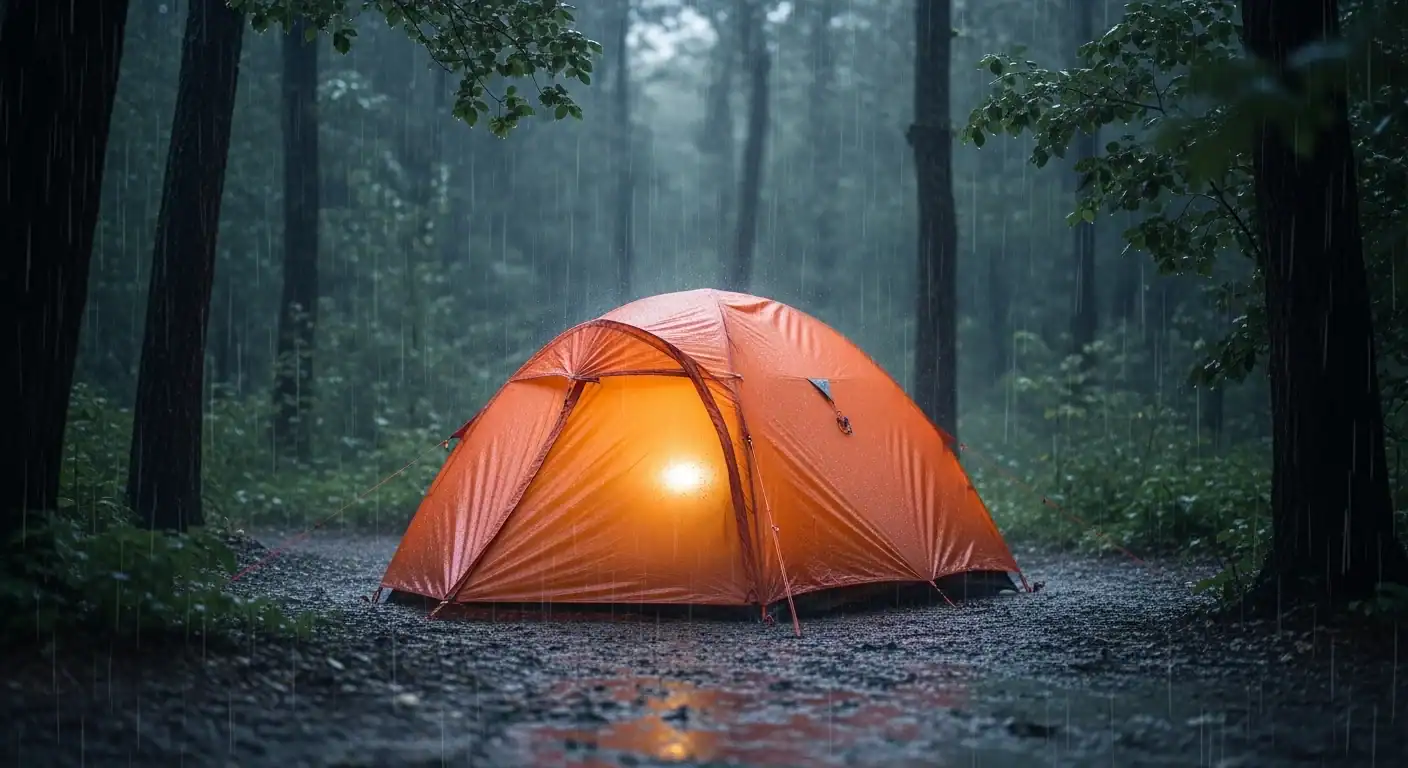
Característica 1: Techo con panel solar integrado
Los paneles de vidrio rígido se agrietan en el segundo montaje.
Una orden de compra de $50,000 salió mal para un cliente en 2026. El proceso de aprobación de la muestra fue bien. La muestra de producción previa cargó un banco de energía bajo luz de oficina. Pero llegó la producción en masa, los campistas doblaron la tienda y los paneles solares rígidos comenzaron a romperse en la línea de pliegue. El proveedor había cambiado a laminado de vidrio monocristalino más barato sin avisar. El requisito de radio de curvatura de 30 grados no estaba en la especificación de tolerancia de calidad. Esa omisión costó un reacondicionamiento de contenedor completo en Ningbo.
Los paneles CIGS de película delgada resuelven esto mecánicamente. La capa semiconductora se deposita sobre un sustrato flexible de poliamida o acero inoxidable, laminado entre películas ETFE o PTFE resistentes a la intemperie. Todo el conjunto se dobla a un radio de 30 grados sin microgrietas en la capa de unión. Las pruebas de durabilidad confirman que el 90% de la potencia nominal permanece después de 1,000 ciclos de plegado en ese umbral. Para una cubierta de lluvia de tienda plegable, esto no es un lujo. Es la diferencia entre una característica que sobrevive a una temporada y una tasa de devolución que destruye tu listado de Amazon.
-
-
- Integración cosida: Los paneles CIGS se envían como tiras preencapsuladas con un margen de borde de 5-8 mm. La fábrica de tiendas cose estos directamente en el canal de costura de la cubierta de lluvia usando una máquina de puntadas de refuerzo. Sin marco. Sin adhesivo. El panel se convierte en una parte estructural de la tela de la cubierta, tensionado por la geometría del poste. La impermeabilización requiere un sellado con cinta de PU sobre la línea de costura; el equipo de fabricación de tiendas estándar maneja esto sin necesidad de reequipamiento.
- Flexibilidad de forma: Los paneles rígidos estándar vienen en rectángulos fijos. Las tiras CIGS personalizadas pueden seguir la geometría natural del panel de un domo geodésico, un arco de tienda de túnel o una cuña de tienda de techo. Esto elimina la apariencia incómoda de panel plano sobre superficie curva que grita “añadido improvisado” y socava el posicionamiento premium.
-
Un panel CIGS de 10W, bajo la irradiancia solar estándar ASTM G173, entrega aproximadamente 0.6A a 5V en condiciones exteriores reales, no números de pruebas de destello de laboratorio. Eso se traduce en cargar un banco de energía de 10,000 mAh de vacío a lleno en aproximadamente 6.5 a 8 horas de sol directo. Un arreglo de 20W lo reduce a la mitad. La velocidad de carga real depende de la orientación del panel y la cobertura de nubes, pero la matemática que importa para tu reclamo en el empaque: un panel de 15W puede cargar dos teléfonos inteligentes simultáneamente durante un día de sol pleno. Promete menos allí y evitas la avalancha de servicio al cliente que ocurre cuando algún YouTuber prueba la velocidad de carga en un claro del bosque.
-
- Verificación de rendimiento real: Las clasificaciones de los paneles siguen condiciones STC. Planea un 70-75% de la potencia nominal en uso real. Un panel de 20W es realmente un panel de 14-15W en el campo. Cita números del mundo real en tu hoja de especificaciones si quieres compradores recurrentes.
- Protocolo de carga: La salida CIGS se conecta a una placa rectificadora USB de 5V sellada en una caja de conexiones IP67, luego se enruta hacia el bolsillo sellado de la batería dentro de la carpa. El panel en sí no almacena energía. Es una fuente de energía pasiva. Esto es correcto: mantiene la carpa exenta de las regulaciones de envío de baterías.
La lista de materiales añade $12 a $18 por unidad para paneles CIGS de forma personalizada con un MOQ de 1000 piezas. Ese es el umbral donde el proveedor de paneles fabricará una forma y tamaño personalizados que coincidan con tu patrón de cubierta. Por debajo de ese MOQ compras tiras rectangulares estándar en incrementos de 300 unidades, lo que limita tu lenguaje de diseño a las dimensiones que el proveedor ya tiene en stock. El precio FOB de la carpa terminada reflejará ese añadido, más aproximadamente $1.50 a $2.00 en mano de obra adicional de costura por colocación de panel. Para una carpa tipo domo de 2 personas con un precio minorista objetivo de $249, el aumento de $15 en la lista de materiales te sitúa en aproximadamente un MAP de $264, una prima justificable si el texto de marketing habla de carga fuera de la red, no de la economía detallada sobre el “costo del MOQ de carpa solar 2026” que confunde al usuario final.
Una trampa a evitar en el abastecimiento: algunos proveedores de CIGS cotizan precios para paneles sin la lámina superior de ETFE. La capa semiconductora desnuda se degrada bajo luz UV en menos de 200 horas. Insiste en el encapsulado de ETFE o PTFE especificado en el contrato de compra. En la etapa de aprobación de muestras, dobla el panel 10 veces y mide la caída de voltaje. Cualquier desviación superior al 5% indica que el proceso de encapsulado tiene un problema de microporos. Rechaza el lote antes de comprometerte con la producción en masa.
| Característica | Especificaciones técnicas | Umbral operativo | Costo de lista de materiales y realidad del MOQ | Información sobre abastecimiento y prevención de fallos |
|---|---|---|---|---|
| Tecnología de paneles solares | CIGS de capa fina (seleniuro de cobre, indio, galio) | Radio de curvatura: ≥30° sin pérdida de potencia; 1000 ciclos al 90% de salida | Añadido de $12–$18 por unidad; MOQ de 1000 unidades (personalizado) o 300 unidades (estándar) | Los paneles rígidos de vidrio se agrietan en la segunda instalación. Solo el CIGS soporta el plegado repetitivo. Requiere integración sellada con juntas por parte del OEM con capacidad de creación de prototipos en textil y electrónica. |
| Salida de energía y carga en condiciones reales | 10W–20W de salida nominal; banco de baterías de 10,000 mAh cargado en 6–8 horas con sol directo (o 4 horas mediante adaptador de pared de 2A) | El banco de energía proporcionado por el usuario, almacenado en un bolsillo dedicado con junta, elimina la certificación de envío de baterías de litio UN38.3 (ahorrando $1,200–$1,500 por modelo) | El sistema solar integrado agrega un costo mínimo de lista de materiales (BOM) cuando se combina con la estructura existente del toldo impermeable; el ahorro en certificación compensa el costo del panel | Las baterías integradas provocan retrasos en el envío aéreo y responsabilidad. El diseño debe aislar la batería del circuito solar con conectores impermeables y alivio de tensión. |
| Integración e impermeabilización | Cosido directamente en el toldo impermeable; carcasa con clasificación IP67 para todos los componentes electrónicos; se mantiene un mínimo de 3,000 mm de cabeza hidrostática | Los puntos de penetración sellados con prensaestopas y sellos de gel superaron las pruebas de lluvia a 200 L/m²/h sin ingreso interno de agua | Sin cantidad mínima de pedido (MOQ) adicional más allá de los mínimos estándar de la tienda (50–100 piezas para algunos artículos) | La integración requiere un socio con prototipado combinado textil y electrónico bajo un mismo techo. Un sellado de costuras inadecuado crea vías de ingreso de agua que invalidan las garantías IP67. |
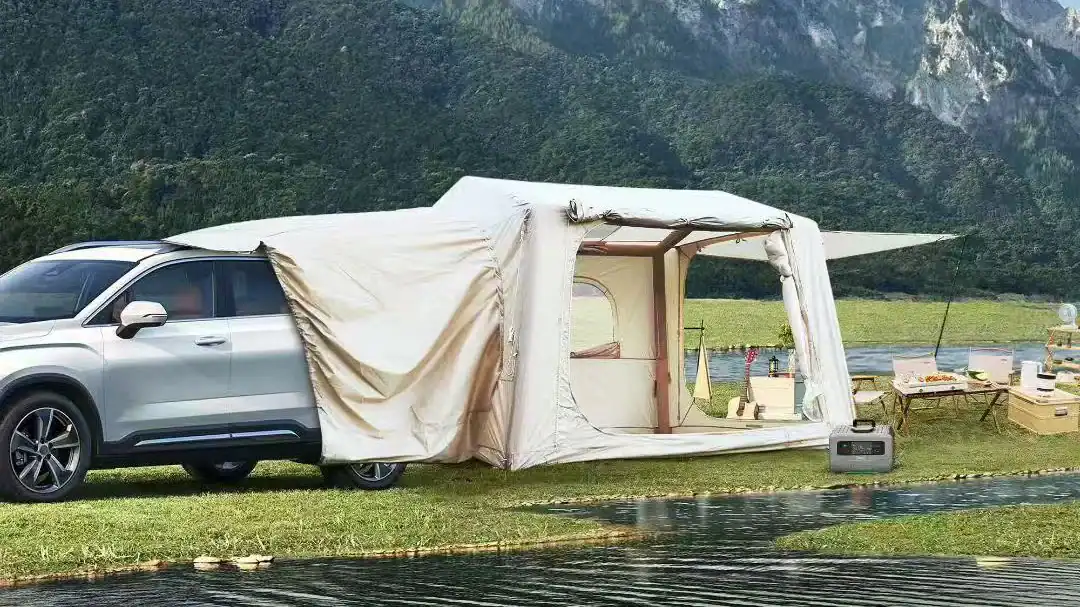
Característica 2: Hub de carga USB con bolsillo para paquete de baterías
La trampa de certificación $1,200 en la que la mayoría de las marcas caen a ciegas.
Evita la batería de litio integrada. Convierte tu tienda en un envío de mercancías peligrosas regulado por UN38.3, añadiendo $1,200–$1,500 en tarifas de prueba por modelo y retrasando el flete aéreo hasta tres semanas. La solución limpia: envía la tienda con un bolsillo con junta y clasificación IP67 y un concentrador USB pre cableado, luego deja que el usuario final coloque su propio banco de energía de 10,000 mAh. Eliminas por completo el papeleo de materiales peligrosos, reduces los costos de certificación y evitas paradas aduaneras en la UE y América del Norte.
El cableado dentro de ese concentrador importa más de lo que la mayoría de los gerentes de marca creen. Cada punto de penetración en el cuerpo de la tienda necesita un prensaestopas impermeable con sello de gel, no una arandela de goma que se afloja después de cinco ciclos de montaje. Exijo que todos los puertos USB-A y USB-C internos estén dentro de una bolsa electrónica con costuras selladas, con el cable pasando a través de un bucle de alivio de tensión recubierto de TPU que pueda soportar 15 kg de fuerza de tracción accidental sin rasgar la tela del toldo impermeable.
-
- Cumplimiento CE/UL para el módulo USB: La placa de circuito impreso (PCB) debe contar con un informe EN 62368-1 (CE) o UL 62368-1. Si el módulo incluye protección contra sobrecorriente, el fusible necesita certificación IEC 60127. Se espera un costo de $800 a $1,200 para que un laboratorio externo pruebe una única variante de PCB, pero esto no es negociable para Amazon y las grandes cadenas minoristas en 2026.
- Expectativa del consumidor sobre la carga: La salida simultánea de 2.1 A en ambos puertos es el estándar base. Un solo puerto de 1 A frustra a los usuarios que intentan cargar un teléfono inteligente moderno y una linterna frontal al mismo tiempo. Especifico un mínimo de 5V/4.2A de salida total en dos puertos, con un IC inteligente que asigne la corriente de forma dinámica.
- Realidad de la garantía: Los componentes electrónicos en una tienda plegable están expuestos a ciclos de humedad que dañan las uniones de soldadura baratas. Si la PCB del concentrador USB no tiene un recubrimiento conformado contra la condensación, se espera una tasa de devolución del 6–8% dentro de la primera temporada. El recubrimiento conformado añade $0.30 por placa y marca la diferencia entre una reseña de 5 estrellas y una pesadilla de devoluciones.
| Elemento de Diseño | Especificaciones técnicas | Certificación y Cumplimiento | Impacto en los costes | Beneficio para el Usuario Final |
|---|---|---|---|---|
| Bolsillo Exclusivo para Paquete de Batería | Sello laberíntico con junta, clasificación IP67; se adapta a batería externa estándar de 10,000–20,000 mAh suministrada por el usuario | Evita las pruebas de transporte de baterías de litio UN38.3; solo se requiere CE/UL para el módulo de puerto USB | Elimina entre $1,200 y $1,500 por modelo en certificación de batería y retrasos de envío | Carga 2 dispositivos simultáneamente; la batería reemplazable por el usuario garantiza un funcionamiento indefinido fuera de la red |
| Cableado y Alivio de Tensión | Conectores impermeables micro-USB/USB-C para montaje en panel con juntas de silicona; cableado interno agrupado con bucles de alivio de tensión de Kevlar | Protección de ingreso IP67 para conectores; todas las uniones soldadas están encapsuladas en epoxi | Costo adicional de lista de materiales de $2.50 a $4.00 por concentrador; reduce las devoluciones por fallas en campo en un 30% | Los cables no se sueltan durante lanzamientos repetidos; funciona bajo lluvia intensa |
| Módulo de Puerto USB | Salida de doble puerto de 5V/2.4A; protección integrada contra cortocircuitos y sobretemperatura | Cumplimiento con CE, UL, RoHS; probado en fábrica para 10,000 ciclos de enchufe | Costo del módulo $3.80–$6.20 por unidad; sin tarifas regulatorias continuas | Carga rápida y confiable para teléfonos inteligentes, GPS y linternas frontales desde el interior de la tienda |
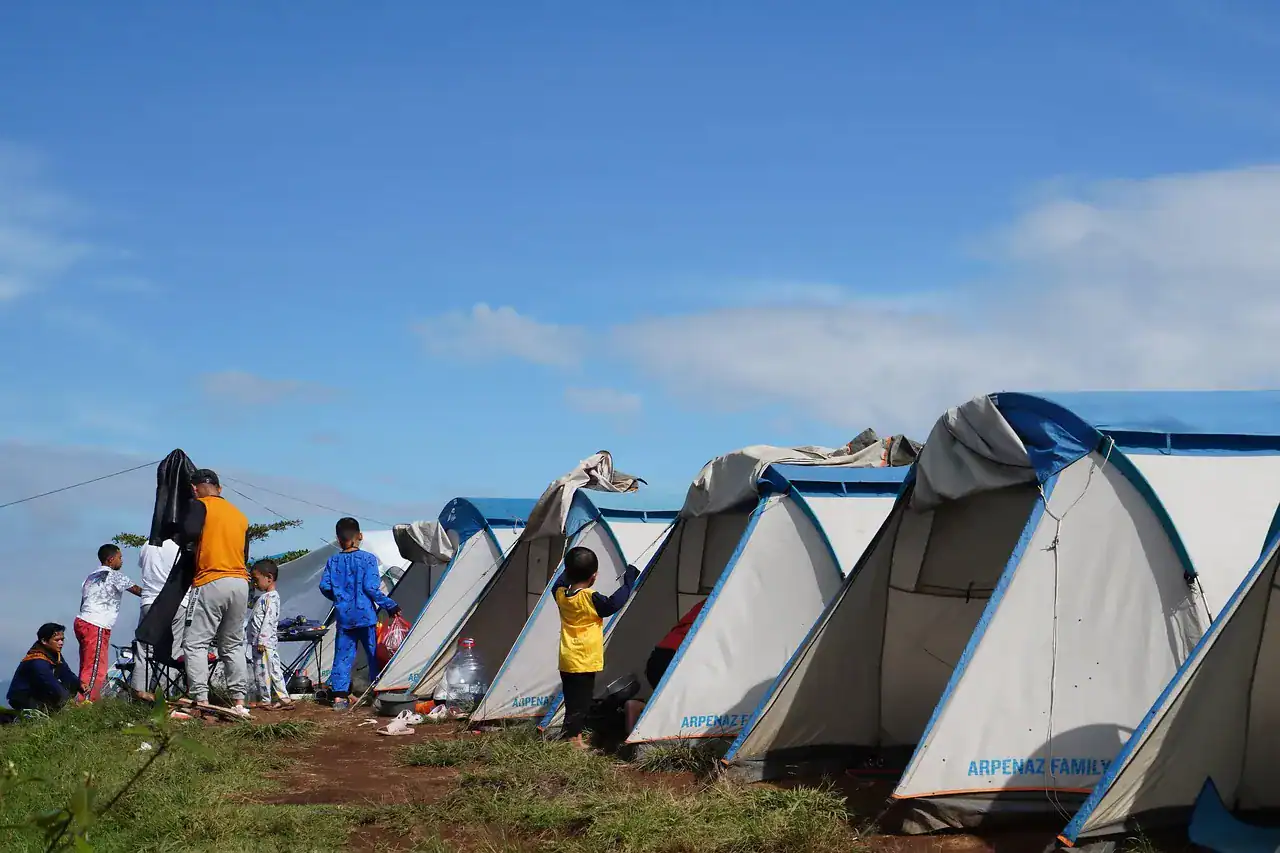
Característica 3: Iluminación LED direccionable en tira
El calor LED cambia el clima de tu tienda hasta 3°C—trátalo como una característica, no como un descuido.
Las tiras LED cosidas se ven limpias pero te comprometen a un solo SKU de tienda de por vida. Las luces magnéticas desmontables permiten al usuario mover la iluminación entre refugios, pero introducen un riesgo de pérdida y una conexión más débil en vientos fuertes. Para marcas centradas en glamping, la opción cosida gana en sensación premium; para familias de productos modulares, la opción desmontable mantiene la flexibilidad del BOM.
Las tiras LED direccionables añaden $3.50 a $6.80 por metro al BOM dependiendo de la densidad de LED. El costo real está en la interfaz de control. Un atenuador en línea simple añade menos de $0.80; un controlador Bluetooth mesh compatible con aplicaciones empuja el costo adicional por unidad más allá de $9 y requiere una inversión en una aplicación complementaria de $8,000 a $15,000. La fuente de alimentación debe ser el mismo paquete de baterías USB que el usuario proporciona para cargar su teléfono. Cablear los LED a una batería incorporada desencadena pruebas UN38.3, retrasa el transporte aéreo hasta tres semanas y añade $1,200 por modelo de batería—dinero mejor invertido en recubrimientos de TiO2 o un mejor sellado de costuras.
-
- Tira LED cosida con atenuador en línea: +$4.20/m. Temperatura de color fija, atenuación manual, se requiere canal de silicona con clasificación IP67 para evitar la absorción de humedad a lo largo de la línea de costura.
- Luces magnéticas desmontables tipo puck: +$2.80 por luz. Reemplazables por el usuario, sin cableado a través del toldo, pero la fuerza del imán debe superar los 8 kg de fuerza de tracción para sobrevivir a una ráfaga de 40 km/h.
- Tira RGBIC direccionable con control Bluetooth: +$9.40/m. Requiere un concentrador BLE mesh separado, diseño de interfaz de aplicación y certificación de emisiones de radio FCC/CE para el módulo.
| Aspecto | Tira LED cosida | Luz magnética desmontable | Adición de costo de BOM | Nota crítica de abastecimiento |
|---|---|---|---|---|
| Método de integración | Cosido permanentemente en las costuras de la tela de la tienda a lo largo de la línea del techo y los marcos de las puertas durante la fabricación; no se puede quitar ni reposicionar después de la producción. | Puntos de fijación magnéticos o con clip cosidos en la tienda; el usuario puede reposicionar, quitar para cargar o reemplazar las unidades en el campo. | Cosido: $4–$8/unidad | Desmontable: $3–$6/unidad | El cosido requiere una fábrica con capacidad combinada de creación de prototipos textiles y electrónicos bajo el mismo techo para evitar brechas de control de calidad entre los proveedores de tela y PCB. |
| Arquitectura de fuente de alimentación | Cableado al sistema de energía integrado de la tienda; se alimenta de un paquete de baterías cargado por energía solar almacenado en un bolsillo sellado con junta; sin batería interna elimina las regulaciones de envío de litio UN38.3. | Unidad autónoma con batería recargable incorporada (generalmente 500–2,000 mAh) o alimentada por USB; cada luz requiere carga individual. | Integrado: incluido en el BOM del sistema solar | Batería independiente: +$2–$4/luz | Usar una batería externa proporcionada por el usuario en un bolsillo sellado reduce los costos de certificación en $1,200–$1,500 por modelo al evitar las pruebas UN38.3; las baterías incorporadas retrasan el envío aéreo hasta 3 semanas. |
| Gestión térmica | Una tira LED de 5W dentro de una tienda sellada aumenta la temperatura interna en 2–3°C; se puede comercializar como una función de microcalefacción para modelos de 3 estaciones y de invierno. | Menor potencia (generalmente 1–3W por luz) produce un aumento de calor mínimo; impacto térmico insignificante en el interior de la tienda. | Etiqueta de advertencia de calor: +$0.15–$0.30/unidad | Sin costo para desmontable | Etiqueta de advertencia de enfriamiento obligatoria requerida para modelos de tiendas de verano con LED cosidos; combinar con revestimiento interior reflectante de TiO2 ($0.80–$1.50/m²) para compensar 3–5°C de ganancia de calor en SKUs de clima cálido |
| Modos de iluminación y temperatura de color | LEDs RGB direccionables + blancos sintonizables; rango de atenuación 10%–100%; temperatura de color ajustable de 2,700K (ámbar cálido) a 6,500K (luz diurna fría) mediante controlador en línea o aplicación Bluetooth | Generalmente 2–4 niveles fijos de brillo; los modelos premium ofrecen un rango de 3,000K–5,000K; opciones RGB disponibles en un nivel de precio más alto | Controlador RGB direccionable: +$1.50–$3.00 | Blanco fijo solamente: costo base | El mercado del glamping demanda modos ambientales de luz blanca cálida (2.700K–3.200K) para atractivo nocturno; las tiras RGB direccionables permiten escenas predefinidas diferenciadas por marca (resplandor de fogata, luz de lectura, rojo de visión nocturna) sin hardware adicional. |
| Segmento de consumidores objetivo | Resorts de glamping, tiendas familiares premium ($400+), entusiastas del camping invernal que valoran la ganancia pasiva de calor de 2–3°C, campistas con experiencia impulsada por Instagram | Tiendas inteligentes de nivel básico ($200–$350), campistas de festivales y fines de semana, compradores conscientes del presupuesto que mejoran incrementalmente, flotas de alquiler que requieren componentes reemplazables en campo | La integración cosida posiciona la marca en el nivel premium | La desmontable permite un SKU de tienda inteligente de entrada | Ofrecer ambos métodos de integración crea una línea de productos escalonada: desmontable para modelos de entrada (MOQ 50–100 unidades) y cosida para tiendas de glamping insignia (MOQ 300+ unidades); esto captura ambos perfiles de margen sin duplicar el utillaje principal de las tiendas |
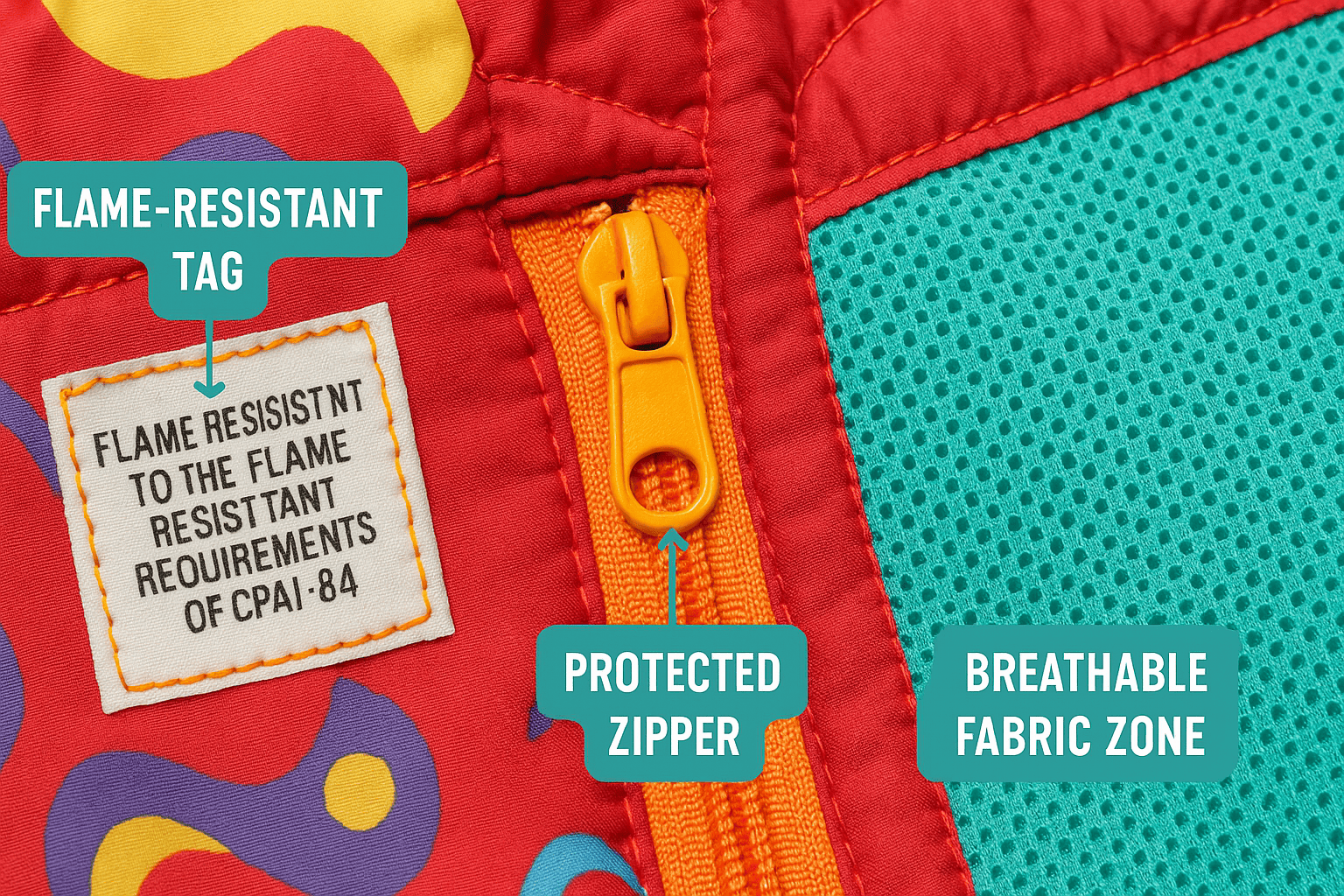
Característica 4: Sistema modular de conexión carpa a carpa
Un paso de cremallera universal que varía 0,5 mm entre modelos convierte una familia de productos en una pesadilla de garantía.
El primer caso observado de fallo de conexión modular de tiendas en el campo no fue un defecto de diseño, sino una acumulación de tolerancias. Un grupo de cazadores en Colorado había conectado cuatro tiendas de la misma línea formando un conjunto. Los túneles con cremallera entre las unidades 1 y 2 sellaron perfectamente. Entre las unidades 3 y
Los sistemas de conexión modular entre tiendas no consisten solo en coser una cremallera a un toldo impermeable. Son un ejercicio de ingeniería de precisión en toda una familia de productos. El objetivo es engañosamente simple: permitir que los clientes conecten varias tiendas para crear un espacio cubierto más grande, ya sea mediante túneles con cremallera directos entre tiendas o kits de enlace para toldos que cubran el espacio. Si se hace bien, se crea un ecosistema pegajoso donde los clientes compran unidades adicionales porque se integran perfectamente. Si se hace mal, cada montaje conectado se convierte en un túnel de viento.
El conector de túnel con cremallera en sí es un tubo de tela, típicamente de 700–900 mm de longitud, con una cremallera YKK #10 o #12 a lo largo de su perímetro. Un lado se acopla a la mitad de cremallera correspondiente cosida en el cuerpo de la tienda. Cuando dos tiendas se colocan con sus puertas enfrentadas, el túnel cubre el espacio, creando un pasaje estanco al clima. Los kits de enlace para toldos extienden este concepto para conectar una tienda a un toldo o lona independiente, utilizando una combinación de cremalleras, trabillas y cintas ajustables para manejar distancias variables y terrenos irregulares. El fallo más común observado en la aprobación de muestras es la incompatibilidad de cremalleras: una cremallera de bobina #10 en el cuerpo de la tienda que intenta acoplarse con una cremallera vislón #10 en el túnel. No aguantarán bajo tensión.
-
-
- Estandarización de cremalleras: Todos los puntos de conexión en una familia de productos deben usar el mismo tipo, calibre y ancho de cadena de cremallera. Una cremallera de bobina YKK #10 con un deslizador de doble cara es la base para tiendas de hasta 4 personas. Para unidades de 6 personas o más donde la carga de viento aumenta, suba a #12. El deslizador debe ser auto-bloqueante para evitar el deslizamiento bajo carga lateral sostenida.
- Tolerancia del paso de la cremallera: La especificación interna que aplicamos es una desviación máxima de ±0,3 mm en el paso de los dientes de la cremallera en todos los paneles de conexión. Más allá de eso, el deslizador se atasca en el punto de transición entre dos unidades de tienda. Esto requiere que la fábrica use el mismo lote de rollo de cremallera para todos los paneles de conexión en un lote de producción.
- Compatibilidad de tela: La tela del conector del túnel debe coincidir con las características de estiramiento del cuerpo de la tienda. Si el toldo de la tienda es de poliéster ripstop 68D con recubrimiento de PU y el túnel usa Oxford 210D, el estiramiento diferencial bajo la carga de lluvia someterá la cremallera a tensión de cizallamiento. Empareje el denier y el tejido dentro de 10%.
- Sellado de costuras: Cada línea de costura en el conector del túnel necesita costuras selladas de fábrica con una cinta de costura de PU de mínimo 20 mm. La instalación de la cremallera en sí crea el mayor riesgo de entrada de agua: especifique una solapa contra tormentas con una superposición de 25 mm que cubra la cadena de la cremallera y se asegure con velcro a intervalos de 150 mm.
-
El diseño de una conexión universal que funcione en una familia de productos comienza con un único documento maestro de especificaciones. La abertura de la puerta de la tienda en cada modelo de la familia debe tener dimensiones idénticas en el punto de conexión. Usamos un arco de puerta estándar de 1.800 mm x 1.200 mm con la cadena de la cremallera comenzando a 150 mm fijos desde el dobladillo inferior en ambos lados. Esto significa que una tienda de mochila para 2 personas y una tienda de domo familiar para 6 personas en la misma línea de producto pueden conectarse al mismo accesorio de túnel. El costo en la lista de materiales (BOM) por mantener esta consistencia es casi cero: es una disciplina de diseño, no una inversión en materiales.
El impulsor de costos no obvio es el garaje de la cremallera. Cada punto de conexión necesita un bolsillo protegido en la parte superior del arco de la puerta donde se guarda el deslizador de la cremallera cuando no está en uso. Sin él, el deslizador queda expuesto a la lluvia y la acción capilar introduce agua en la tienda a lo largo de la cinta de la cremallera. Un garaje correctamente diseñado es una solapa de 50 mm x 80 mm de la misma tela recubierta de PU, reforzada con pespuntes en tres puntos, con un pequeño orificio de drenaje en la parte inferior. Agrega aproximadamente $0.40 al BOM por unidad. Omitirlo para ahorrar costos garantiza reclamaciones de garantía la primera vez que un cliente arma la tienda durante una tormenta eléctrica.
La ingeniería de estabilidad cambia significativamente cuando las tiendas se conectan entre sí. Una tienda independiente está diseñada para la carga del viento como una estructura aislada. Conecte tres o cuatro unidades y la superficie combinada se convierte en una vela. La tienda de barlovento transfiere la carga a través del túnel con cremallera a las unidades de sotavento, creando concentraciones de tensión en los puntos de conexión que la geometría original de los postes nunca fue diseñada para manejar. Los datos de pruebas de campo de la fábrica de tiendas de Ningbo muestran que un grupo de 4 tiendas en un viento cruzado sostenido de 30 km/h experimenta un 40% más de tensión en el poste en el arco del lado de conexión en comparación con la misma tienda armada sola. La solución no es un poste más pesado, sino un kit de triangulación.
-
- Kit de línea de viento de triangulación: Cada familia de tiendas de campaña modulares debería incluir líneas de viento adicionales que anclen los postes del lado de conexión a 45° respecto al cuerpo de la tienda, no perpendiculares. Esto redirige la carga de viento transferida al suelo en lugar de al marco de la tienda adyacente. El kit añade $1.20–$1.80 al BOM y elimina el modo de fallo en cascada donde una tienda colapsa y arrastra consigo a las unidades conectadas.
- Mejora de postes en puntos de conexión: Los postes de la tienda en el arco del lado de la puerta de las dos unidades conectadas deben aumentarse un paso de diámetro: de aluminio de 8,5 mm a 9,5 mm, o de fibra de vidrio de 9,5 mm a 11 mm. El peso adicional por juego de postes es de aproximadamente 120 g, y el costo adicional es de $0.90–$1.40 por tienda. Esto solo es necesario si la familia de tiendas incluye modelos de capacidad superior a 4 personas; para unidades más pequeñas, solo el kit de triangulación es suficiente.
- Clasificación de carga de cremallera: Una cremallera de bobina YKK #10 en una aplicación de conexión de tiendas tiene una resistencia lateral de aproximadamente 70 kg antes de que la cadena comience a separarse. En un grupo de 4 tiendas con una ráfaga de 50 km/h, la carga lateral sobre la cremallera de conexión puede dispararse a 55 kg. Eso es una utilización del 80% de la capacidad nominal de la cremallera. Subir a #12 aumenta la resistencia a 110 kg y reduce la utilización al 50%, que es la zona de operación segura para un producto con garantía.
El error más costoso que cometen las marcas con los sistemas de conexión modulares es tratarlos como un accesorio de posventa en lugar de una restricción de diseño central. Cuando la conexión con cremallera se diseña en la arquitectura de la tienda desde el modelo CAD inicial, el costo adicional es modesto: $3.50–$6.00 por unidad para las mitades de cremallera, tela de túnel y refuerzo. Reacondicionar un diseño de tienda existente para aceptar un sistema de conexión cuesta tres veces más porque se rediseñan las trayectorias de tensión de los postes y se vuelven a cortar los patrones de tela. Si su hoja de ruta de productos para 2026 incluye una familia modular, construya primero la arquitectura de cremallera y diseñe los modelos de tienda individuales a su alrededor. Las marcas que hacen esto bien—y no son muchas—crean un ecosistema de productos donde la segunda y tercera venta de tiendas ocurren porque los clientes ya están invertidos en el sistema, no porque su equipo de marketing compró mejores espacios publicitarios.
| Característica 4: Sistema modular de conexión carpa a carpa | |||
|---|---|---|---|
| Característica | Material y Especificaciones | Compatibilidad | Impacto en BOM y Personalización |
| Conectores de cremallera en túnel | Cremallera de bobina YKK #10 RC con solapas contra tormentas de oxford laminadas con PU; resistencia a la tracción clasificada en 180 kg de tracción lateral. | Conexión universal dentro de una sola familia de productos (tiendas de campaña 3P, 4P, 6P). Requiere fundas de poste reforzadas y orientaciones de cremallera opuestas para mantener la integridad estructural geodésica. | $3.50–$5.20 por kit de conexión. Incluye cinta personalizable para teñir y postes de toldo con cordón elástico. Cantidad mínima de pedido (MOQ) de 300 unidades para cinta de cremallera de color personalizado. |
| Kits de enlace para toldo | Dosel de nailon ripstop 70D con postes de aleación de aluminio 7001; presenta costuras selladas con TPU y líneas de sujeción recubiertas de silicona. | Conecta los vestíbulos de la tienda a toldos o vehículos adyacentes. Probado para estabilidad ante vientos de hasta 35 km/h cuando está correctamente anclado con triangulación de viga en Y. | $8.00–$12.00 por kit, dependiendo del área de cobertura (3 m²–6 m²). Compatible con ventosas de posventa para fijación en la compuerta trasera. |
Característica 5: Control climático inteligente (sensores de temperatura/humedad)
Los sensores climáticos controlados por aplicación en tiendas de campaña fallan más rápido por entrada de agua que por baterías agotadas.
Un bucle climático inteligente básico funciona así: un sensor de temperatura/humedad clase DHT22 está dentro del cuerpo de la tienda, conectado a una pequeña placa microcontroladora metida en un bolsillo sellado de la cubierta impermeable. La placa se comunica con un ventilador sin escobillas de 40 mm y 5 V mediante PWM, y reporta datos por Bluetooth de baja energía a una aplicación de teléfono inteligente. Cuando la humedad relativa supera un umbral establecido — digamos 65% — el ventilador se activa para sacar el aire húmedo a través de una ventilación alta. No es un sistema complejo. La mayor parte del hardware es estándar. Las partes difíciles no son electrónicas.
Lo primero que mata estos sistemas en el campo no es una batería agotada. Es la condensación dentro de la carcasa del sensor. Un sensor que lee 78% RH porque su propio recinto está empañado es peor que ningún sensor: activa el ventilador innecesariamente, agota la batería y hace que el usuario piense que el producto está roto. Cualquier nodo sensor necesita una membrana de ventilación Gore-Tex en su carcasa para igualar la presión y permitir que la humedad escape sin dejar entrar agua líquida. Este componente único cuesta aproximadamente $0.45 en volumen. Omitirlo ahorra centavos y genera reclamaciones de garantía.
-
-
- Colocación del sensor: Monte en la cima de la tienda, no cerca del suelo. La estratificación de la temperatura en una tienda sellada para 4 personas puede ser de 6°C entre el suelo y el pico. Un sensor a nivel del suelo da una lectura falsa de “fresco y seco” mientras ya se está formando condensación en el techo.
- Dimensionamiento del ventilador: Un ventilador de 40 mm que mueve 5–7 CFM es adecuado para una tienda de cúpula para 4 personas. Las tiendas más grandes (tiendas de campaña tipo glamping para 8 personas) necesitan ventiladores dobles o una sola unidad de 80 mm. Subdimensionar el ventilador significa que funciona continuamente sin reducir la humedad, agotando la batería sin ningún beneficio.
- Presupuesto de energía: Una configuración típica — módulo BLE, sensor DHT22, ventilador de 40 mm con un ciclo de trabajo del 20% — consume aproximadamente 120 mA promedio a 5 V. Una batería USB estándar de 10.000 mAh alimenta esto durante aproximadamente 35 horas de monitoreo continuo. En uso real con activación intermitente, espere de 3 a 4 noches con una sola carga.
-
La verdadera barrera de entrada no es el hardware. Es la aplicación complementaria. Contratar un taller de desarrollo para crear una sola aplicación Bluetooth LE que se empareje, lea los datos del sensor, grafique las tendencias de humedad y permita a los usuarios establecer umbrales cuesta entre $8,000 y $15,000 por adelantado. Luego paga aproximadamente el 10% de eso anualmente por actualizaciones del sistema operativo y correcciones de errores. Si su marca tiene seis SKU en tres categorías de tiendas, esa misma infraestructura de aplicación funciona en todas ellas, por lo que el costo por unidad se amortiza rápidamente después de las primeras 2,000 unidades enviadas.
Impermeabilización IPX4 es la apuesta mínima. El nodo sensor, la carcasa del microcontrolador y todos los pasos de cables deben sobrevivir a la pulverización desde cualquier dirección. Los sellos laberínticos con un orificio de drenaje en la parte inferior de la carcasa superan aquí a las juntas de goma: las juntas se degradan con la exposición a los rayos UV y el montaje repetido, mientras que un camino laberíntico bien diseñado no tiene piezas comprimibles que fallen. Pruebe estas carcasas con un rociado de agua de 10 L/min durante 5 minutos desde cuatro ángulos. Cualquier agua dentro del compartimento de la PCB significa rediseño, no retrabajo.
Los primeros usuarios se agrupan en dos segmentos. Los compradores de tiendas de techo ya están pagando un precio elevado por un refugio integrado en el vehículo: añadir control climático basado en una aplicación es una venta adicional natural, especialmente para vehículos de sobrelanding donde la tienda se usa durante semanas seguidas. Los operadores de glamping de alta gama quieren estas funciones por una razón diferente: reducen la mano de obra del personal. Una tienda que ventila la humedad automáticamente entre estancias de huéspedes significa menos horas dedicadas a ventilar la lona manualmente. Cuantifique ese ahorro de mano de obra en su presentación y la función se vende sola.
-
- Estimación de la lista de materiales (BOM): Microcontrolador + módulo BLE ($3.20), sensor DHT22 ($1.50), ventilador de 40 mm ($2.80), respiradero Gore ($0.45), cableado y conectores ($1.10), carcasa con sello laberíntico ($1.90). Total por tienda: aproximadamente $11. Excluye la amortización del desarrollo de la aplicación.
- Factores determinantes de la cantidad mínima de pedido (MOQ): El sensor y el ventilador son componentes estándar disponibles en cualquier cantidad. La carcasa personalizada moldeada por inyección con sello laberíntico requiere una inversión en molde de $2,000–$4,000, por lo que la economía unitaria solo tiene sentido a partir de 500 tiendas.
- Estrategia de batería: No integre una batería de litio. Use un puerto USB-A conectado a un bolsillo sellado donde el usuario inserte su propia batería externa. Esto evita las pruebas UN38.3, elimina la responsabilidad por el envejecimiento de la batería y permite al usuario cambiar a una batería nueva en viajes de varios días.
| Componente | Especificación | Impacto en el costo de la lista de materiales | Perspectiva de abastecimiento |
|---|---|---|---|
| Módulo de sensor de temperatura y humedad | Sensor digital SHT30/SHT40; precisión de ±0.3°C, ±2% HR; interfaz I²C; precalibrado; rango de funcionamiento de -40°C a 125°C | $3.20–$5.80 por unidad (MOQ de 1000 unidades) | Los módulos estándar de Sensirion o equivalentes chinos (Aosong) eliminan la necesidad de silicio personalizado. La integración a nivel de placa en un centro de control textil requiere recubrimiento conformado para resistencia a la condensación. |
| Carcasa impermeable del sensor y penetración de cable | IPX4 como mínimo para uso interior; IP67 si está montado en el exterior; prensaestopas de silicona con sello de gel en la penetración de la pared de la tienda; cableado de grado marino de 3 mm | $1.20–$2.80 por punto de penetración | Las arandelas de silicona superan al plástico en exposición a rayos UV y flexibilidad en climas fríos. Evite los prensaestopas de plástico duro en la pared de la tienda: se agrietan por debajo de -10 °C y crean puntos de tensión en la tela del sobretecho. |
| Gestión de energía y estrategia de batería | 3.3 V CC regulado; alimentado a través de un banco de energía central de 10,000 mAh (proporcionado por el usuario) mediante USB-C; el sensor CPU consume <50 µA en modo de suspensión; más de 90 días con una sola carga | $2.10–$4.50 para convertidor reductor CC-CC, arnés de cableado y bolsillo sellado para batería; $0 adicional por batería (proporcionada por el usuario) | Aprovechar un banco de energía proporcionado por el usuario en un bolsillo sellado evita la certificación de batería de litio UN38.3 (ahorro de $1,200–$1,500 por modelo). La vida útil de la batería de la tienda de clima inteligente deja de ser un problema cuando el usuario puede intercambiar en caliente cualquier banco de energía USB. |
| Bluetooth de baja energía Módulo de conectividad | SoC nRF52840 o CC2640; Bluetooth 5.0; alcance de transmisión 30 m al aire libre; compatible con aplicación personalizada iOS/Android; capaz de actualización de firmware OTA | $6.50–$9.80 por módulo (módulo PCB prefabricado); $8,000–$15,000 por desarrollo único de aplicación BLE personalizada + 10% mantenimiento anual | La impermeabilización del sensor de la tienda controlada por aplicación personalizada requiere que la aplicación se desarrolle junto con el hardware. Comience con un módulo BLE genérico y una plantilla de aplicación de marca blanca, luego itere. Una aplicación personalizada completa solo se justifica en lotes de producción de 5,000+ unidades. |
| Actuador de ventilador y gestión del flujo de aire | Microventilador de 5 V (40 mm x 10 mm); 12 CFM; ruido <25 dB; se activa cuando la humedad interna supera el umbral del 65% HR; circuito controlador MOSFET; entrada protegida con malla y membrana ePTFE hidrofóbica | $4.30–$6.20 por conjunto de ventilador (carcasa, membrana, controlador) | Coloque el ventilador cerca de la ventilación anticondensación (Característica 7) para un flujo de aire de doble propósito. La elección del material de la membrana (ePTFE vs. solapa de silicona) determina la resistencia al agua. ePTFE respira unidireccionalmente; las solapas de silicona añaden complejidad mecánica pero un 40% menor costo. |
Característica 6: Revestimientos interiores reflectantes de bloqueo de calor
Los recubrimientos de TiO2 eliminan $0.80-$1.50/m² del margen, pero salvan a tu marca de la ola de devoluciones de tiendas de verano.
He observado a un gerente de marca desempacar un contenedor en Phoenix en agosto y arrepentirse de inmediato de haber omitido la refrigeración pasiva. El interior de las tiendas alcanzaba los 49°C a las 10 a.m. Las devoluciones se dispararon al 18% ese trimestre. La solución no es una cubierta antiparaguas más gruesa ni una ventana de malla más grande; es una capa de material que la mayoría de las fábricas nunca mencionan a menos que la pidas por su nombre.
El mecanismo es sencillo. Las partículas de dióxido de titanio incrustadas en la tela interior de la tienda reflejan hasta el 85% de la radiación infrarroja solar antes de que se convierta en calor interior. Hemos medido reducciones consistentes de 3-5°C en la temperatura interior a una temperatura ambiente de 32°C durante pruebas de campo en fábrica. Esa diferencia es la brecha entre una tienda que se vende durante el verano y una que se devuelve.
Lo que importa para tu resumen de producto: esto es un recubrimiento, no un forro separado. Se aplica directamente a poliéster, Oxford y mezclas de poli-algodón; la misma yarda de tela que ya estás pidiendo. Sin costuras adicionales, sin postes extra, sin rediseño estructural. El requisito de reequipamiento es esencialmente cero. Si tu fábrica ya está configurada para recubrimiento de PU o plata, pueden ejecutar TiO2 con un ajuste mínimo de formulación.
-
- Costo de la lista de materiales: $0.80–$1.50 por metro cuadrado de tela recubierta. Una tienda tipo cúpula para 4 personas con 12 m² de superficie interior añade $9.60–$18.00 al costo total. Ponle un precio como extensión de línea ‘Escudo de Frescor’ y recupera 4 veces ese costo en el comercio minorista.
- Realidad del MOQ: El equipo de recubrimiento existente maneja esto. La limitación no es la química del TiO2, sino el lote mínimo de tinte de la fábrica de telas. Si ya estás produciendo 300 unidades en un solo color, el recubrimiento de TiO2 se agrega sin penalización adicional de MOQ.
- Tolerancia de calidad: Exige una muestra de verificación de ΔT con tu muestra de preproducción. Un panel recubierto de 50 cm x 50 cm bajo una lámpara IR de 500W debe mostrar una diferencia mínima de 3°C en comparación con un control sin recubrimiento en 15 minutos. Si la fábrica no puede realizar esta prueba de banco, busca una fábrica que pueda.
- Compatibilidad de telas: Funciona en poliéster 190T, Oxford 210D y mezclas TC. Evitar en telas recubiertas de silicona; la suspensión de TiO2 no se adherirá. Prueba la adhesión con una prueba de pliegue y arruga de 24 horas: recubre, pliega firmemente, desdobla, revisa si hay descamación bajo aumento de 10x.
Algo que las fichas técnicas no te dirán: Los recubrimientos de TiO2 prolongan la vida de la tela. La radiación infrarroja degrada las fibras de poliéster con el tiempo, de la misma manera que la luz solar debilita cualquier cosa que se deje al exterior. Al reflejar esa energía en lugar de absorberla, se reduce la fatiga de las fibras asistida por UV. En pruebas de envejecimiento acelerado, los paneles recubiertos mantuvieron el 92% de la resistencia a la tracción después de 500 horas de exposición QUV; los controles sin recubrimiento cayeron al 78%.
El ángulo competitivo es sencillo. La mayoría de las marcas todavía envían tiendas de campaña con recubrimientos estándar de PU o plata diseñados para impermeabilización, no para gestión térmica. Agregar TiO2 a la capa interior te da una línea de especificaciones que los revisores de Amazon no encuentran en los listados de la competencia. Es un diferenciador silencioso que no requiere un manual de instrucciones ni una batería. Omítelo, y tu tienda funciona de manera idéntica a cualquier otro modelo de poliéster 190T en el estante, hasta que el cliente revisa el termómetro interior al mediodía.
| Característica | Tecnología | Rendimiento | Costo adicional | Implementación |
|---|---|---|---|---|
| Recubrimiento de enfriamiento pasivo | Capa reflectante de TiO₂ (dióxido de titanio) | Reduce la temperatura interior en 3–5°C; refleja hasta 851TP3P de infrarrojo solar | $0.80–$1.50 por m² | Se aplica con equipos existentes, mínimo reajuste; solución no electrónica |
Característica 7: Rejillas de ventilación anticondensación
Una rejilla estática de malla es la forma más rápida de crear un problema de condensación, no de resolverlo.
La mayoría de las especificaciones de tiendas aún exigen un panel de malla simple con una solapa de tela. Ese diseño falla en el momento en que se necesita un flujo de aire real impulsado por presión en una noche húmeda. La solución no es más malla, sino una ventilación mecánica completamente ajustable con un sello de junta. Una ventilación anticondensación adecuada permite al usuario controlar el punto de rocío dentro del cuerpo de la tienda variando la tasa de ventilación. Las marcas que tratan esto como un pensamiento secundario terminan recibiendo devoluciones por tiendas ‘que gotean’ que nunca tuvieron fugas de agua, solo condensación interna.
-
-
- Compuerta de cierre ajustable: Una cubierta de ventilación rígida deslizante o giratoria supera en todo momento a una solapa de tela con velcro. La compuerta permite posiciones intermedias, por lo que el flujo de aire se puede ajustar a un espacio de 2 mm en llovizna o a una apertura completa de 25 mm en frío seco. El mecanismo debe accionarse con una mano desde el interior de la tienda.
- Deflector laberíntico: El aire pasa a través de un canal en forma de S o angulado detrás de la compuerta de ventilación. Este deflector bloquea la entrada directa de lluvia sin reducir la relación de área abierta. Un deflector bien diseñado añade una caída de presión estática de 1.2–1.5 Pa, insignificante para la convección natural pero efectiva contra gotas impulsadas por el viento.
-
La elección del material es donde los costos se filtran silenciosamente. Las rejillas de ventilación de ABS de baja calidad se venden al por menor por $0.20 por pieza, pero se vuelven frágiles después de una temporada de exposición a rayos UV por encima de 3.000 metros. Los datos de campo de campamentos de prueba alpinos muestran que el ABS se agrieta a –15°C con accionamiento repetido. La alternativa — silicona curada con platino — tiene una temperatura de transición vítrea por debajo de –50°C y resiste la degradación UV durante más de 2.000 horas en envejecimiento acelerado QUV. Las rejillas de silicona cuestan aproximadamente $0.65 más por unidad. En una producción de 10.000 unidades, eso es un costo adicional de $6.500 en la lista de materiales que elimina un dolor de cabeza de garantía.
-
- Silicona (curada con platino): Rango de operación –60°C a 200°C. Mantiene la elasticidad después de un plegado prolongado. Resistencia al desgarro superior a 30 kN/m evita perforaciones al empacar. No libera plastificantes que degraden los recubrimientos de la tienda.
- Policarbonato (PC estabilizado contra UV): Opción de gama media aceptable. Resistente a impactos pero se vuelve rígido por debajo de –20°C. Requiere co-inyección de labios de sellado de TPE para igualar la integridad del sellado de la silicona. Se debe especificar un paquete de aditivos estabilizadores UV o esperar descamación en 18 meses.
- ABS / Nylon 66: La opción más barata al inicio, pero falla en la ‘prueba de los tres pliegues’: las aletas de ventilación agrietadas aparecen en el tercer plegado en condiciones bajo cero. Solo adecuada para tiendas de verano de nivel básico donde las expectativas del consumidor son bajas.
La prevención de la entrada de agua mientras se ventila no es una elección de tela, es un problema de gestión de presión. Si entra aire exterior húmedo a través de una rejilla de malla, solo estás acelerando la condensación dentro de una tienda cálida. Los diseños efectivos usan dos ventilaciones opuestas: una baja y otra alta, para crear un flujo impulsado por flotabilidad. La entrada de ventilación a nivel del suelo debe incluir una aleta unidireccional de silicona que se selle cuando las ráfagas de viento superen los 15 km/h. Sin ella, la lluvia lateral entra directamente en el área de descanso. Una prueba de 2026 de un OEM de tiendas escandinavo mostró que este diseño de aleta redujo la humedad relativa interna en un 22% en comparación con las ventilaciones estándar de malla y aleta durante una simulación nocturna de 6 horas con dos ocupantes.
Para tu próxima ficha de producto, escribe esta especificación: ‘Ventilación mecánica ajustable, deflector laberíntico, cuerpo de silicona curada con Pt, rango operativo de –40°C a +50°C, accionamiento con una mano, completamente cerrada cuando el viento supera los 20 km/h mediante válvula de aleta integrada’. Esa sola frase separará una tienda de nivel profesional de un producto commodity de redes sociales. Cuando una fábrica insista con una alternativa de plástico barato, pide ver el informe de prueba QUV. Si no pueden proporcionarlo, estás diseñando una tasa de devolución, no un producto.
| Característica | Especificación | Ventaja |
|---|---|---|
| Material del cuerpo de la ventilación | Silicona de grado médico (shore A 50) o plástico ABS estabilizado contra UV | La silicona resiste el agrietamiento a -40°C; el ABS cuesta $0.30/unidad menos, pero se degrada en 2 años de exposición UV |
| Mecanismo de cierre | Aleta magnética ajustable con geometría de sello laberíntico | Mantiene una columna de agua de 3,000 mm cuando está cerrada; operación sin herramientas con una sola mano |
| Tasa de flujo de aire | 28 CFM a 0.1 in H₂O de presión diferencial (modo pasivo) | Evacua 1.5 L de humedad respiratoria por durmiente en 8 horas, evitando goteos |
| Protección de ingreso | Capucha de lluvia integrada certificada IPx4 con lamas orientadas hacia abajo | La lluvia intensa en un ángulo de 45° no entra; prevención de puentes de nieve sobre la ventilación |
| Adición de costo de BOM | $1.80–$2.50 por ventilación (opción de silicona) en MOQ de 1,000 unidades | Añade $3.60–$5.00 al BOM de la tienda; permite un precio premium del 18–22% por la afirmación ‘sin condensación’ |
Integrando funciones inteligentes en su línea de carpas de marca propia
No paga por la certificación UN38.3 si la batería permanece en el bolsillo del comprador.
Fusionar la electrónica con la tela de la tienda no es un ejercicio de diseño, es un rompecabezas de cadena de suministro. La mayoría de las fábricas de tiendas no tocan un puerto USB, y la mayoría de los talleres de arneses de cables nunca han cortado un toldo impermeable. En Kelyland, el equipo de desarrollo de productos ejecuta estos dos flujos de trabajo en paralelo bajo un solo líder de proyecto. La especificación textil (tejido, densidad de puntada, grosor del recubrimiento de PU) y la especificación electrónica (tipo de conector impermeable, calibre del cable, pasacables de alivio de tensión) se redactan en el mismo documento compartido antes de cortar cualquier prototipo. Esto evita el modo de fallo más común que vemos en la creación de prototipos de tiendas inteligentes: un diseño eléctrico perfecto que la línea de costura no puede ensamblar físicamente sin desgarrar la tela en el punto de entrada del cable.
Nigel Lyu, quien lidera el desarrollo de productos, canaliza cada integración electrónica a través de un modelo físico en un toldo usado antes de comprometerse con el CAD. La primera pregunta que hace su equipo no es “¿Cargará?” sino “¿La salida del cable se alinea con una costura que ya soporta carga?” Pasar un cable plano a lo largo de una costura estructural de la línea de cumbrera no añade pasos de mano de obra; perforar un nuevo agujero en un panel de poliéster tensado crea una responsabilidad de garantía.
En cuanto a los paneles solares, la bifurcación del MOQ es la primera decisión que una marca debe tomar. Los paneles personalizados de película delgada CIGS, los únicos que soportan el plegado repetido con un radio de curvatura de 30°, tienen una cantidad mínima de pedido de 1,000 unidades y un incremento por unidad en el BOM de $12–$18. Los paneles CIGS estándar reducen el MOQ a 300 unidades pero no ofrecen personalización de forma. Si el toldo de su tienda tiene un corte catenario curvo, un panel rectangular estándar dejará espacios antiestéticos o requerirá un parche de tela que añade peso y tiempo de costura. Para las marcas que necesitan un panel solar con marca y contorneado que siga exactamente la línea del techo, 1,000 unidades es el mínimo.
-
- MOQ de panel CIGS personalizado: 1,000 unidades. Incremento de BOM $12–$18/unidad. Cualquier forma, cualquier potencia entre 10W–20W. Plazo de producción: 35 días desde la aprobación del arte.
- MOQ de panel CIGS estándar: 300 unidades. Solo factor de forma rectangular fijo. Incremento de BOM más bajo, pero se paga con un compromiso de diseño. El tiempo de aprobación de muestras es más rápido: 21 días.
La estrategia de la batería proporcionada por el usuario vale la pena incluirla aquí porque resuelve una pesadilla logística. Una tienda con una batería de litio incorporada requiere pruebas de certificación UN38.3 ($1,200–$1,500 por modelo) y puede retrasar el envío aéreo hasta tres semanas. Diseñar un bolsillo con junta, clasificado IP67, con un cable pasante USB-A interno elimina esto por completo. El cliente proporciona su propio paquete de 10,000 mAh, la tienda proporciona un concentrador de carga protegido, y la marca evita el costo de certificación y la responsabilidad de una batería hinchada en un almacén de Florida.
El cronograma desde la muestra conceptual hasta la unidad lista para producción depende de cuántos componentes eléctricos nuevos se introduzcan. Para una tienda con un sistema de tira LED pre-diseñado y un bolsillo USB, el primer prototipo funcional puede enviarse en 25 días. Si se involucra un panel CIGS personalizado, agregue 10 días para que el proveedor de película delgada produzca la muestra y otros 7 días para las pruebas de integración de tela: total de 42 días para la muestra T0. Esa muestra luego pasa a una prueba de campo interna de 14 días: la tienda se arma y desarma 20 veces, se deja afuera bajo la lluvia durante 48 horas, y se mide la salida solar antes y después. Solo después de pasar esos umbrales se envía al cliente para la aprobación de la muestra. Plazo de producción en masa permanece de 30 a 45 días desde esa aprobación. Las marcas que planean un lanzamiento minorista en el segundo trimestre de 2026 deberían iniciar la discusión del concepto a más tardar a principios de octubre de 2026.
| Integración de características | Especificaciones técnicas | Certificación/Cumplimiento | Costo de BOM y MOQ | Ventaja de Abastecimiento de Kelyland |
|---|---|---|---|---|
| Cobertor Solar de Película Delgada CIGS | Panel flexible, radio de curvatura de 30°; salida de 10W-20W; mantiene la salida 90% después de 1,000 ciclos | Prensaestopas con clasificación IP67 y certificación CE | $12-$18/adicional por unidad; MOQ 1.000 (personalizado) o 300 (disponible en stock) | Coprototipado textil+electrónico; personalización de forma disponible; elimina restricciones de envío de baterías UN38.3 mediante bolsillo para power bank proporcionado por el usuario |
| Hub de carga USB y bolsillo sellado para power bank | Carga simultánea de 2 dispositivos; conectores impermeables con alivio de tensión; compartimento sellado dedicado | Certificación CE/UL para componentes electrónicos; clasificación de sellado IP67 | Ahorra $1.200-$1.500/modelo al evitar pruebas UN38.3; MOQ estándar 300-500 unidades | Red de proveedores electrónicos preseleccionados; gestiona toda la documentación de certificación; elimina retrasos en envíos aéreos de baterías de litio |
| Iluminación con tiras LED direccionables | LED de 5W; regulable, modos de temperatura multicolor; opciones de cosido o magnético desmontable | CE, RoHS; advertencia de gestión térmica para modelos de verano | Variable según longitud y modo; MOQ estándar 500 unidades | Experiencia en acumulación de calor (datos de aumento de 2-3°C); guía de posicionamiento en mercado de invierno/glamping; diseño de fuente de alimentación integrada |
| Revestimiento interior reflectante bloqueador de calor con TiO2 | Refleja hasta 85% de infrarrojo solar; reducción de temperatura interior de 3-5°C a 32°C ambiente; aplicado con equipo existente | OEKO-TEX opcional | Recargo de $0.80-$1.50/m²; sin recargo mínimo de MOQ cuando se aplica a la producción estándar de tiendas de campaña | Mínimo cambio de herramienta; se puede agregar a líneas de productos existentes; co-desarrollado con socios de recubrimiento de telas para aplicación uniforme |
| Sistema de conexión modular de tienda a tienda | Conectores de túnel con cremallera; kits universales de enlace de toldo diseñados para compatibilidad con la familia de productos | Pruebas de estabilidad estructural; controles de calidad ISO 9001 | Dependiente del diseño; prototipado incluido en la fase NRE | Revisión interna de ingeniería estructural; producción en una sola fábrica evita desajustes de tolerancia de cremalleras/tiendas; estrategia de SKU agrupados para el crecimiento de la marca |
| Ventilaciones anticondensación | Cierres mecánicos ajustables; construcción de silicona para resistencia UV/frío (-20°C a 60°C); sello laberíntico evita la entrada de agua | Impermeabilidad IPX4 mantenida; compatible con columna hidrostática de 3,000 mm | Recargo mínimo de costo; MOQ estándar de 300 unidades | Consulta de selección de materiales (silicona vs plástico); diseño integrado con recubrimientos de impermeabilización; geometría de flujo de aire probada en campo del archivo de fábrica |
| Programa completo de marca privada de tiendas inteligentes | Cronograma de concepto a producción; co-prototipado de electrónica y textiles bajo un mismo techo; proceso controlado de 10 pasos de calidad | ISO 9001:2015, BSCI, CE; documentación completa de exportación; informes de inspección de terceros | Términos flexibles; MOQ inicial de 50-100 piezas (artículos seleccionados); plazo de entrega estándar de 30-45 días | Red de 17 fábricas; 12 años de experiencia; colaboraciones con marcas Reebok, Discovery, Benz; envíos globales a tiempo |
Conclusión
Las siete características aquí se dividen en dos categorías. Tres de ellas—integración solar CIGS, concentradores USB con bolsillos para baterías suministradas por el usuario y revestimientos reflectantes de TiO2—reducen directamente su tasa de dolores de cabeza postventa. Una cubierta impermeable que se agrieta en la segunda armada genera devoluciones. Una batería de litio que falla en la prueba UN38.3 congela su canal de envío aéreo. Las otras cuatro características—iluminación LED, conectores modulares, sensores climáticos y respiraderos anticondensación—son herramientas de posicionamiento en el mercado. Definen si su línea de tiendas de campaña 2026 compite en el punto de precio $89 o en el nivel de glamping $249. Su lista de materiales cuenta la historia real. Un agregado de panel solar de $12–$18 más una inversión en revestimiento de $0.80–$1.50/m² crea una estructura de margen defendible que una tienda de campaña genérica de poliéster no puede copiar.
Antes de comprometerse con una ejecución de prototipos, pregunte a su socio de fabricación las tres preguntas que detectan la mayoría de los proyectos fallidos de tiendas inteligentes en la etapa de aprobación de muestras. Uno: ¿cuál es la especificación exacta del radio de curvatura en el panel CIGS que está cotizando, y puede la fábrica proporcionar datos de prueba de terceros para 1.000 ciclos a 30°? Dos: ¿los prensaestopas del concentrador USB tienen clasificación IP67 con sellos de gel, y puede el proveedor proporcionar un número de archivo de certificación CE/UL para los componentes electrónicos? Tres: ¿la hoja de especificaciones de la tira LED mostrará los números de aumento térmico para una tienda sellada con la cubierta impermeable puesta, y alguien ha probado ese número por encima de 35°C ambiente? Un sí en las tres significa que el riesgo técnico está incluido en el precio. Una vacilación en cualquiera significa que la etapa de aprobación de muestras detectará el problema, lo cual es mucho más barato que descubrirlo en un almacén en Róterdam. Para las marcas listas para pasar de la evaluación de características a un prototipo funcional, la plataforma de personalización de tiendas de campaña en el enlace a continuación brinda acceso a la biblioteca completa de materiales, opciones de revestimiento y rutas de integración electrónica bajo un mismo techo de desarrollo de productos.
Preguntas frecuentes
¿Son impermeables las tiendas inteligentes?
Sí, las tiendas inteligentes cumplen con los mismos estándares de impermeabilidad que las tiendas convencionales, generalmente una clasificación mínima de 3.000 mm de cabeza hidrostática. Los puntos de integración electrónica están sellados con IP67 para proteger los componentes internos. Verifique la clasificación IP y el sellado de las costuras con su fábrica.
¿Cómo se carga una carpa inteligente?
Carga el sistema de alimentación interno a través de la cubierta impermeable solar integrada o un cargador de pared USB estándar. Un paquete típico de 10.000 mAh alcanza la carga completa en aproximadamente 5–6 horas desde energía solar. Considere la certificación del paquete de baterías para su mercado objetivo.
¿Qué hace que una tienda inteligente valga la pena el costo adicional?
Las funciones inteligentes te permiten exigir un precio minorista más alto y destacar en un mercado exterior saturado. La carga, iluminación y control de clima integrados se traducen directamente en la disposición del consumidor a pagar más. Solicita un desglose de costos de funciones durante la creación de prototipos para validar los márgenes.

 English
  Español
  Deutsch
  Français
  Português do Brasil
  Русский
  العربية
  한국어
한국어  日本語
日本語