 Ir al contenido
importar tiendas de campaña de glamping en canadá es el primer punto de control que los compradores deben fijar antes de aprobar un proveedor, presupuesto o espacio de producción. La brecha entre una muestra de preproducción que pasa una verificación de tolerancia de calidad y una corrida de producción masiva que no la pasa puede costarle a un gerente de categoría $50,000 en un solo contenedor al importar tiendas de campaña de glamping a Canadá. Ese número no incluye recálculos de aranceles si el precio FOB en la factura comercial no coincide con lo que CBSA espera. Un proveedor que omite detalles de aprobación de muestras—como el peso de la tela, seam construction, o la retardancia a la llama—crea una ventana de envío que se retrasa tres semanas mientras las tiendas permanecen en una bahía de examen aduanero. El comprador que aprobó la muestra basándose en un prototipo de sala de exhibición nunca ve el problema hasta que llega el contenedor, y para entonces el estante minorista de temporada está vacío.
Lo que separa un despacho limpio de una retención en puerto es la documentación que vincula la muestra con el envío. Obtenga un informe de prueba CPA 84 actual para el lote de tela exacto, no un certificado de laboratorio genérico de hace dos años. Presente una resolución arancelaria vinculante ante la CBSA—es gratuita y fija su clasificación del código HS durante cuatro años, lo que bloquea avisos DAS sorpresa después de que termine la temporada. Cuando el contrato de abastecimiento incluye un rango de tolerancia de calidad para peso, composición de fibra y rendimiento contra incendios, la revisión de la muestra deja de ser una formalidad y se convierte en la única palanca que controla el costo puesto en destino por unidad.
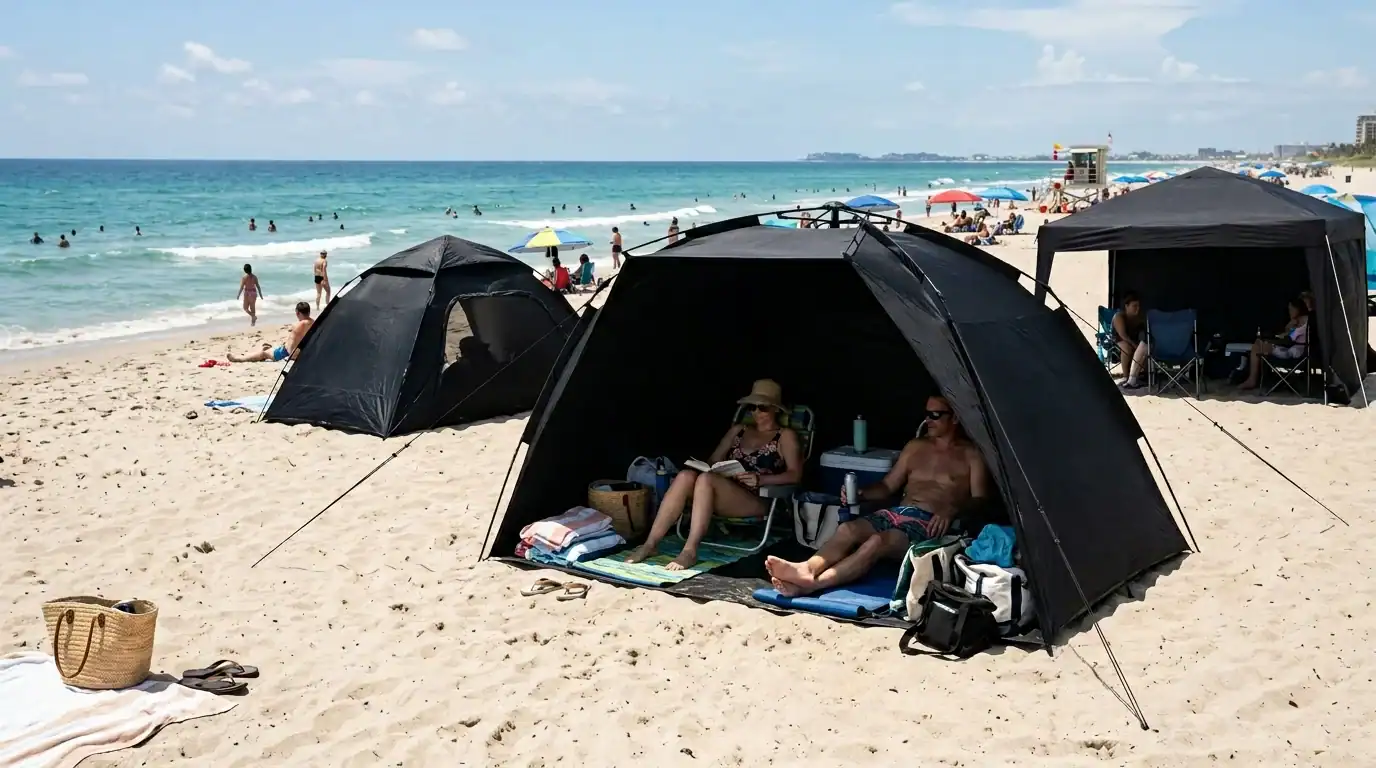
Código HS y Desglose Arancelario: 6306.22 vs. 6306.90
El arancel es solo la mitad de la ecuación: las resoluciones DAS posteriores a la entrada pueden llegar cuatro años después.
Las tiendas de glamping, independientemente de si se envían como tiendas de campana, yurtas o alojamientos safari, se clasifican por defecto en el Capítulo 63. La distinción entre 6306.22 y 6306.90 en última instancia se reduce a una sola prueba de composición de fibra. Si bien la diferencia de arancel NMF es menor (17% vs. 18%), una reclasificación de la CBSA después del hecho desencadena sanciones retroactivas más intereses.
-
- 6306.22 (Fibras Sintéticas): 18% NMF: Cubre tiendas de campaña hechas de poliéster, nailon o poliamida. El ítem arancelario 6306.22.00.10 de la CBSA se aplica cuando el poliéster constituye 85% o más en peso de la tela exterior. El ítem 6306.22.00.20 cubre otras mezclas de poliéster. El nailon y la poliamida caen bajo el 6306.22.00.30. Los tres llevan una tasa de 18%, pero etiquetar incorrectamente la subcategoría activa alertas de auditoría cuando el certificado de contenido de fibra no corrobora el código elegido.
- 6306.90 (Otros Textiles): 17%-18% NMF: Esta partida no es un cajón de sastre — se aplica estrictamente a tiendas de campaña textiles no sintéticas. Las tiendas tipo campana de lona de algodón caen bajo el 6306.90.10 al 17%. La trampa común es una mezcla de poli-algodón (tela TC). Si el contenido de poliéster supera el 50% en peso, la tienda legalmente pertenece al 6306.22, no al 6306.90. La clasificación errónea aquí es donde se originan las evaluaciones DAS.
La herramienta CBSA Tariff Finder es la base, pero no anula las Reglas Generales de Interpretación. La Regla 3(b) dicta que los textiles mezclados se clasifican por la fibra que imparte el carácter esencial — que, para un toldo de tienda impermeable, es casi siempre el componente sintético. He visto un contenedor de 40 pies de Tejido TC yurtas clasificadas bajo el 6306.90 ser reevaluado al 6306.22 porque el importador se basó en la suposición del proveedor en lugar de una prueba de laboratorio independiente. Un análisis de fibra de $300 previo al envío es un seguro barato contra una demanda de aranceles de $9,000 18 meses después.
Para diseños únicos sin precedente claro — grandes cúpulas geodésicas o estructuras híbridas de tienda-remolque — no adivine. Presente una resolución vinculante de clasificación arancelaria ante la CBSA. El proceso no cuesta nada y produce una decisión legalmente vinculante. Una vez emitida, un DAS no puede revertir esa resolución para las mercancías designadas. Los veteranos de adquisiciones tratan esto como un costo fijo de cumplimiento, incluido en la etapa de aprobación de muestras antes de que cualquier el precio FOB se finalice.
Proceso de Importación a Canadá Paso a Paso para Tiendas de Glamping
El certificado de incendios CPA 84 no es papeleo — es el único documento entre su contenedor y una orden de decomiso de la CBSA.
Un contenedor de 40 pies de carpas campana permaneció en el Puerto de Vancouver durante 19 días porque el comprador trató la documentación de retardancia al fuego como una ocurrencia de último momento. Solo la factura de demoras consumió $4.200. Eso no es hipotético: es lo que ocurre cuando se envía primero y se prueba después.
-
- Informe de prueba CPA 84: Debe provenir de un laboratorio acreditado ISO 17025. Nombres aceptables: SGS, Intertek, TÜV Rheinland o Bureau Veritas. El informe debe hacer referencia específica a CPAI-84, no solo a un certificado genérico de retardancia al fuego. Los inspectores de CBSA conocen la diferencia. Solicite el PDF completo —no una carta resumen— antes de autorizar a la fábrica a reservar el contenedor.
- Cumplimiento de etiquetado: Cada carpa debe llevar una etiqueta permanente tanto en inglés como en francés que indique que la tela cumple con CPAI-84. La etiqueta debe incluir el nombre del fabricante, el número de modelo y la declaración ‘Resistente a la llama: cumple con CPAI-84’. Si su fábrica solo imprime etiquetas en inglés, CBSA puede marcar el envío según el Reglamento de Productos Químicos y Contenedores para el Consumidor.
- Tiempos: Las pruebas toman de 7 a 14 días hábiles en SGS. La aprobación de muestras se agiliza, pero las pruebas de resistencia al fuego utilizan una cola separada. Incorpore esto en su plazo de producción de 30 a 45 días. Si la fábrica envía antes de que el informe llegue a su bandeja de entrada, está jugando con un contenedor retenido.
Su agente aduanal necesita un mínimo de cinco documentos antes de que el buque ataque: factura comercial con código HS 6306.22 (o 6306.90 para lona de algodón), lista de empaque con pesos por caja, certificado de origen, conocimiento de embarque original e informe de prueba CPA 84. Si falta uno, el agente no puede presentar la declaración B3. El contenedor se queda parado.
Elija un agente que maneje productos textiles con regularidad. Los agentes generalistas clasifican erróneamente las carpas bajo 9503 (juguetes) o 9404 (ropa de cama) con una frecuencia sorprendente. Una clasificación incorrecta desencadena una Verificación de Cumplimiento (examen dirigido). Pregunte directamente a su agente: ‘¿Cuántas declaraciones de carpas presentó el trimestre pasado?’ Si la respuesta es menos de cinco, busque a otra persona.
En el puerto, CBSA realiza dos tipos de exámenes que importan a los importadores de carpas. Un escaneo CET (Equipo de Examen de Contrabando) verifica anomalías —raro si su proveedor empacó correctamente—. Más común es una Verificación de Cumplimiento Comercial: un oficial revisa su código HS, su declaración de origen y su certificado CPA 84 contra los productos físicos. Si su carpa de glamping de 5 m tiene una cubierta de poli-algodón pero su factura dice 100% poliéster, eso es una declaración inexacta. CBSA puede reclasificar la declaración y emitir una DAS (Determinación del Monto de Derechos) de forma retroactiva hasta por cuatro años.
El seguro más barato contra esto es una clasificación arancelaria vinculante de la CBSA. Cuesta cero dólares. Usted envía su muestra de tienda de campaña, los datos de composición de las fibras y el uso previsto. La CBSA emite una carta de decisión legalmente vinculante con el código SA exacto. Presente esa carta a su agente aduanal con cada entrada. Si un inspector cuestiona su código más tarde, la carta de decisión termina el argumento. Los gerentes de categoría veteranos obtienen esta resolución antes de hacer su primera orden de producción, no después de que un contenedor sea marcado.
Un último detalle que los aficionados pasan por alto: únase al programa Socios en Protección (PIP). Los miembros de PIP reciben procesamiento prioritario y tarifas de examen reducidas en los puertos canadienses. Para un importador de tiendas de campaña que maneja inventario estacional con un crecimiento de mercado de 14.5% año tras año, esto puede significar la diferencia entre llegar a la ventana minorista de campamento de mayo y ver el producto despacharse en julio.
Calculadora de Aranceles e Impuestos: Costo Real de Importar un Contenedor
Solo el arancel puede inflar su costo FOB en casi un 37% una vez que se considera el efecto compuesto del GST sobre el monto con arancel pagado.
Un golpe directo del 18% ad valorem sobre el valor CIF es solo el punto de partida. El verdadero asesino del margen es el cálculo escalonado donde el GST del 5% se aplica al precio que incluye el arancel, no solo al FOB. Para un contenedor lleno, este efecto fiscal compuesto puede eliminar silenciosamente miles de su margen proyectado si usted fijó precios basándose en un multiplicador simple de FOB.
Tome este escenario real: usted hace una orden de compra de 100 unidades de una tienda de campaña tipo campana de poliéster de 5 metros a un precio FOB de $500 cada una. El costo de fábrica se sitúa exactamente en $50,000. El flete marítimo desde Ningbo hasta Vancouver para un contenedor high-cube de 40 pies promedia actualmente $3,500, lo que lleva el valor CIF a $53,500. Así es como se acumula el costo real.
-
- Valor CIF (100 unidades x $500 FOB + $3,500 de flete): $53,500. Esta es la base sobre la cual la CBSA calcula el arancel ad valorem.
- Arancel NMF (18% aplicado al CIF): $9,630. Debido a que China no tiene un acuerdo de libre comercio con Canadá, se aplica la tasa NMF completa a las tiendas de campaña de fibra sintética bajo el código HS 6306.22.
- Valor con aranceles pagados (CIF + Arancel): $63,130. Este total intermedio es crítico porque el GST se calcula sobre este número, no sobre el FOB original.
- GST (5% del valor con aranceles pagados): $3,156.50. Si se importa a una provincia con impuesto provincial sobre las ventas, se aplica una capa adicional aquí.
- Honorarios del agente aduanal y de terminal: $2,000. Esto cubre la tarifa de desembolso del agente de aduanas, los cargos por manipulación portuaria y el acarreo en almacén para desconsolidar el contenedor.
El costo total de importación del contenedor asciende a $68,286.50. Dividido entre 100 unidades, su costo real de importación por tienda de campaña es de aproximadamente $683. Si usted presupuestó un arancel del 18% únicamente sobre el valor FOB, habría calculado un costo de importación de aproximadamente $618 por unidad. Esa discrepancia de $65 por unidad proviene directamente del flete que amplifica la base del arancel y del GST que se acumula encima. Sobre un precio al por mayor de $850, este error de cálculo reduce su margen bruto en más de 15 puntos porcentuales.
Existe una manera de eliminar por completo esa línea de arancel de $9,630, pero requiere que las mercancías califiquen bajo un Acuerdo de Libre Comercio. Si las tiendas de campaña de glamping se fabrican en un país de la UE con una transformación sustancial y usted presenta un certificado EUR.1 válido, el código de tratamiento arancelario cambia a 10, reduciendo la tasa de arancel del 18% al 0%. Sin embargo, si usted obtiene el suministro de una fábrica china, incluso una administrada por una marca europea, el origen del material textil sigue vinculado a China. Esconderse detrás de un nombre de marca europeo sin una transformación real en suelo de la UE no superará una auditoría de verificación de la CBSA y desencadenará un DAS retroactivo.
| Componente de coste | Cálculo | Costo Total (USD) | Costo por Unidad (USD) | Notas |
|---|---|---|---|---|
| Valor FOB (100 carpas) | $500 × 100 unidades | $50,000 | $500.00 | Carpa tipo campana de 5 m, en fábrica China |
| Flete Marítimo (Ningbo→Vancouver) | Tarifa de contenedor HC de 40 pies | $3,500 | $35.00 | ~25-35 días de tránsito |
| Valor CIF (Costo + Seguro + Flete) | FOB + Flete | $53,500 | $535.00 | Base para el cálculo de aranceles |
| Arancel NMF (18% sobre 6306.22) | 18% × $53,500 | $9,630 | $96.30 | Carpas de fibras sintéticas; CETA = 0% si es originario de la UE |
| GST (5% sobre el Valor con Derechos Pagados) | 5% × ($53,500 + $9,630) | $3,157 | $31.57 | Impuesto federal; puede aplicarse impuesto provincial |
| Honorarios del Agente de Aduanas y Cargos de Terminal | Entrada del agente + desembolso + acarreo | $2,000 | $20.00 | Promedio para un contenedor HC de 40 pies |
| Costo Total Desembarcado (Ex-Almacén) | CIF + Arancel + GST + Agente | $68,287 | $682.87 | ~36.6% sobre FOB; verificar certificado CPA-84 |
Tarifas y Errores Ocultos: Agente Aduanal, Clasificación HS Incorrecta y Almacenamiento
Los honorarios del agente y la clasificación incorrecta pueden añadir 15-20% al costo nacionalizado antes de que siquiera reciba el contenedor.
He auditado facturas donde un pedido de tiendas de campaña de glamping de $50,000 desde Ningbo terminó costando $8,200 adicionales solo en fricción administrativa. El culpable no es solo el arancel NMF del 18%. Son los cargos escalonados que los agentes de aduanas cobran por adelantar los aranceles, la tarifa diaria de almacenamiento cuando la CBSA retira un envío para inspección, y el DAS retroactivo de tres años que toma por sorpresa a un gerente de categoría a mitad de temporada.
-
- Tarifa por entrada: Tarifa fija de $125-$250 por despacho de aduanas, independientemente del valor del contenedor. Si divide un envío de varios SKU en dos entradas (algunos agentes lo hacen por defecto), duplica la tarifa.
- Cargos por desembolso: Los agentes pagan sus aranceles y GST por adelantado a la CBSA y luego le facturan. Añaden un 1-2% del monto adelantado. En una factura de aranceles de $9,630, eso es un extra de $96-$193 solo por el flujo de caja.
- Ajustes de código HS posteriores a la corrección: Cuando un agente de aduanas se da cuenta de que declaró bajo 6306.22.00.10 pero las pruebas de composición de tejido muestran que predomina el algodón en peso, modificar la entrada genera tarifas de presentación adicionales ($50-$100) y posiblemente intereses sobre los derechos no pagados.
La mayor amenaza es un DAS – Determinación del Monto de los Derechos. La CBSA puede emitir uno hasta cuatro años después de la importación si reclasifican su carpa. Un julio de 202
La solución no es complicada pero es precisa. Antes de reservar el flete, obtenga una prueba de composición de tejido de la fábrica, no de una descripción de proveedor de Amazon. Documente si la cubierta exterior es ≥85% poliéster en peso, lo que lo fija en el subcódigo 6306.22.00.10. Si es una tienda de campaña tipo campana de lona de algodón, verifique la fibra dominante y solicite una clasificación arancelaria vinculante a la CBSA: es gratuita en línea, toma de 30 a 60 días, y la resolución es legalmente ejecutable contra una reclasificación futura. Un cliente usó esto para confirmar 6306.90.10 para una yurta de tejido TC, evitando un posible derecho arancelario en el peor caso de 18%.
Y cuando la clasificación errónea sí genera un DAS, no asuma el costo en silencio. Presente una Solicitud de Redeterminación (Formulario B2) dentro de los 90 días. Si es denegada, acuda al Tribunal Canadiense de Comercio Internacional (CITT). He guiado a proveedores a través del proceso del CITT dos veces. La evidencia clave no es solo la lógica del código HS: es la hoja de aprobación de muestra que muestra las especificaciones originales del tejido, el informe de prueba de SGS de terceros con aprobación/rechazo de CPA 84, y la orden de compra que confirma que la descripción del producto coincidía con lo que llegó a Vancouver.
Finalmente, incluya el costo de almacenamiento en su COGS desembarcado. Cuando un contenedor es marcado para examen CET, acumula $150-$300 por día en demoras de terminal después de los primeros 3 días gratuitos. Si la CBSA lo retiene dos semanas en espera de la certificación de inflamabilidad, eso equivale a $2,100 eliminados de su margen. Un envío preautorizado con documentos adjuntos al manifiesto electrónico evita esto por completo. Pregunte a su agente si presentan el ACI eManifest con el certificado de origen y el informe de laboratorio adjuntos: es una casilla simple que indica cumplimiento antes de que el barco atraca.
Cómo Abastecer Tiendas de Glamping que Pasen Aduana Rápido
Los inspectores de la CBSA ahora apuntan a los envíos de carpas para verificar el cumplimiento de CPA 84: sin un certificado de fuego válido, su contenedor incurre en tarifas de almacenamiento diarias que destruyen.
La preselección de proveedores no es opcional; es la única barrera entre un pedido de $50,000 y un decomiso aduanero. Antes de siquiera hablar de la aprobación de muestras, exija dos documentos: un activo Certificado ISO 9001:2015 y un informe de prueba de retardancia de fuego CPA 84 de un laboratorio acreditado como SGS o TÜV. ISO 9001 indica una fábrica con gestión de calidad documentada: una base al aceptar una tolerancia de ±5% en el peso del tejido y la resistencia de las costuras, pero no le dice nada sobre la inflamabilidad. El CPA 84 debe referirse a la composición exacta del tejido que está utilizando, incluidos los recubrimientos de PU o silicona. Un informe genérico para un modelo de carpa diferente es un atajo común que fallará en una auditoría de la CBSA.
-
- Peso del tejido: Pese el tejido del cuerpo de la carpa contra la hoja de especificaciones; un poliéster 210T que en realidad mide 185T se ondulará bajo la carga del viento y generará sospechas durante el examen físico.
- Resistencia de las costuras: Todas las costuras de carga deben soportar una fuerza de tracción mínima de 15 kg. Las costuras débiles provocan una retención de ‘mercancías no conformes’.
- Etiqueta de fuego en inglés/francés: La etiqueta de cuidado permanente debe indicar el cumplimiento de CPA 84 en ambos idiomas oficiales; la falta de traducción al francés es un rechazo automático.
- Marcado de origen: “Hecho en China” debe ser legible y permanente en cada tienda de campaña y su embalaje; una etiqueta removible no satisfará a la Aduana de Canadá.
Reserve una inspección previa al envío con SGS o Bureau Veritas mientras la producción está aún al 80% completa—detectar un error de etiquetado en ese momento significa que puede corregirlo antes de que salga el contenedor. La inspección cuesta unos cientos de dólares; reexportar un envío incautado a menudo asciende a miles, más la temporada de venta perdida. En la instalación de tiendas de campaña glamping Kelyland Outdoors en Shaoxing, tanto la certificación ISO 9001 como las pruebas CPA 84 están integradas en el flujo de trabajo de producción estándar, por lo que la aprobación de muestras ya viene con la documentación correcta. Ese hábito por sí solo ha prevenido retrasos para importadores que envían a Toronto y Vancouver.
Conclusión
Un arancel del 18% sobre el valor CIF de un contenedor completo añade aproximadamente $9,600 a su base de costos antes de que una sola unidad llegue a su almacén. Esa cifra no cambia según la negociación con la fábrica. Cambia según si sus documentos de envío coinciden con las expectativas de la CBSA para la subpartida 6306.22 — específicamente el desglose de composición de fibras y el certificado CPA 84 grapado a la factura comercial. Una entrada limpia despacha en 48 horas. Una entrada marcada quema tres semanas de demoras y gastos de almacenamiento mientras se cierra la ventana comercial de verano. El dictamen arancelario vinculante $0 que solicite hoy protege su P&L de una evaluación DAS que la CBSA puede emitir legalmente cuatro años después.
Antes de reservar el siguiente pedido de muestra, pida al proveedor su informe de prueba CPA 84 más reciente de un laboratorio tercero. Si el tiempo de respuesta para esa solicitud supera las 48 horas, tenga en cuenta ese retraso en su cronograma de preproducción. Revise toda la gama de carpas glamping en la página del producto para comparar las especificaciones de carpas de campana de lona y sintéticas que se envían con documentación de cumplimiento previamente aprobada.
Preguntas frecuentes
¿Cuál es el código SA para tiendas de glamping importadas a Canadá?
El código SA es 6306.22 para tiendas de glamping de fibra sintética. Si la tienda está hecha principalmente de algodón, puede clasificarse bajo el código 6306.90. Confirme siempre la composición del material con su proveedor antes del envío.
¿Cuánto arancel pago por las tiendas de campaña de glamping procedentes de China?
Usted paga un arancel MFN del 18%TP3T por tiendas de campaña de glamping de fibra sintética importadas desde China bajo el código SA 6306.22. Si importa desde un país de la UE bajo el CETA, el arancel podría ser del 0%TP3T, pero. Abastecerse desde China implica que se aplica el arancel MFN completo a menos que un futuro acuerdo comercial cambie la situación.
¿Necesito un certificado de resistencia a las llamas para importar una tienda de campaña a Canadá?
Sí, Canadá exige un certificado de retardancia a la llama CPA 84 para las tiendas de campaña textiles. Las aduanas pueden incautar los envíos sin un informe de pruebas de un laboratorio reconocido. Exija a su proveedor que proporcione un certificado SGS o TÜV válido antes del envío.
¿Puedo obtener importación libre de aranceles para tiendas de campaña bajo el CETA?
Sí, si la carpa cumple con las reglas de origen de la UE bajo el CETA, puede importarla libre de aranceles. Esto no aplica a carpas fabricadas en China. Verifique que el certificado de origen cumpla con las reglas preferenciales del CETA.
¿Cuál es el número máximo de tiendas de glamping que puedo cargar en un contenedor de 40 pies HC?
El número depende en gran medida del tamaño de la tienda de campaña, pero para tiendas de campaña tipo campana de 5 m, aproximadamente 180-220 unidades caben en un contenedor HC de 40 pies. Las tiendas más pequeñas o diferentes métodos de embalaje pueden aumentar la cantidad. Solicite un plan de carga del contenedor a su proveedor para un cálculo exacto.

 English
  Español
  Deutsch
  Français
  Português do Brasil
  Русский
  العربية
  한국어
한국어  日本語
日本語