 跳到内容
跳到内容 
deflate inflatable tent valve is the first checkpoint buyers should lock before they approve a supplier, budget, or production slot. Day 1 you place the order for a private-label inflatable tent line. Day 14 the pre-production sample arrives — you check the print alignment, the beam seam, the valve threading. It passes. Day 45 the container lands at your distribution hub, and by Day 90 your first customer return comes in with a photo of a cracked valve base. The supplier says it was packing damage. You know that $50K order just developed a leak you cannot easily plug.
That failure pattern is not bad luck or bad materials. After reviewing QC logs across multiple factory audits, the root cause is almost always mechanical kinking during deflation — specifically folding the beam into a tight Z-shape near the valve stem while forcing air out. A sharp fold within 20 mm of that valve-base junction creates a stress concentration that turns into a micro-crack after three or four pack cycles. The fix is not a stronger pump or lower pressure; it is changing how your packers handle that last burst of trapped air.
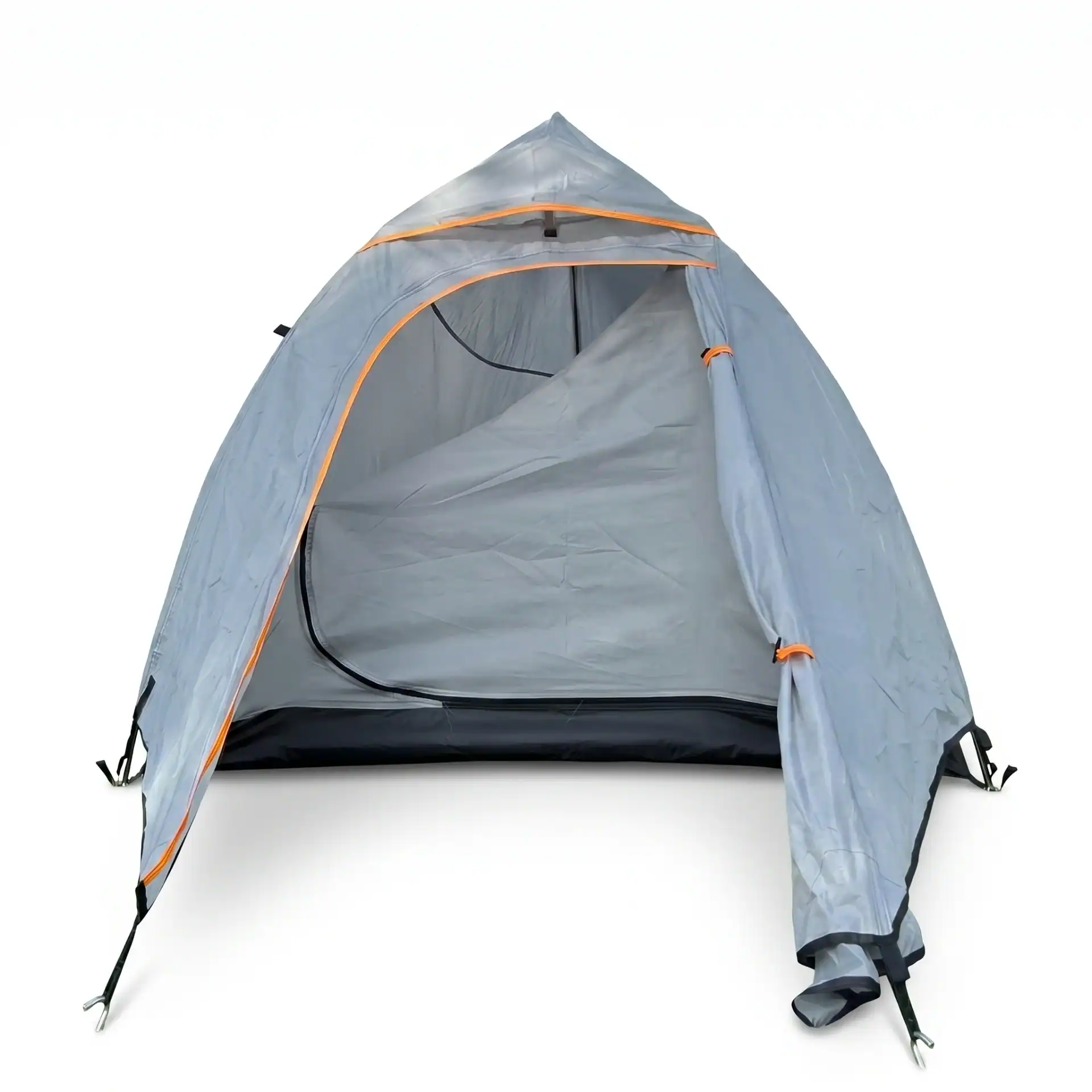
Why Inflatable Tent Valves Crack After Deflation
Most valve-base cracks come from Z-folding during deflation, not over-pressurization.
The Failure Sequence at the Valve Base
The damage starts when someone forces the beam flat near the valve. The TPU or PVC tube kinks at the junction where the stem meets the beam wall. That kink creates a sharp stress concentration — a micro-crack that grows each time the tent is packed. Internal QC logs from Kelyland partner factories show a clear pattern: any fold within 20 mm of the valve base turns routine packing into a slow structural failure. The material itself isn’t faulty. The geometry is.
Think of it as a paperclip bent back and forth at the same spot. The first bend does nothing visible. By the tenth, you have a fracture. A 12-16 mm valve stem needs at least 25 mm of clearance around it during packing to avoid that concentrated load path. Below that radius, the film yields.
Factory QC Data: Z-Fold Damage vs Steady Rolling Pressure
Kelyland’s partner factory quality logs tracked over 200 warranty returns on inflatable tents last year. The dominant failure mode wasn’t burst beams or defective valves from production. It was Z-fold compression damage introduced during deflation and packing.
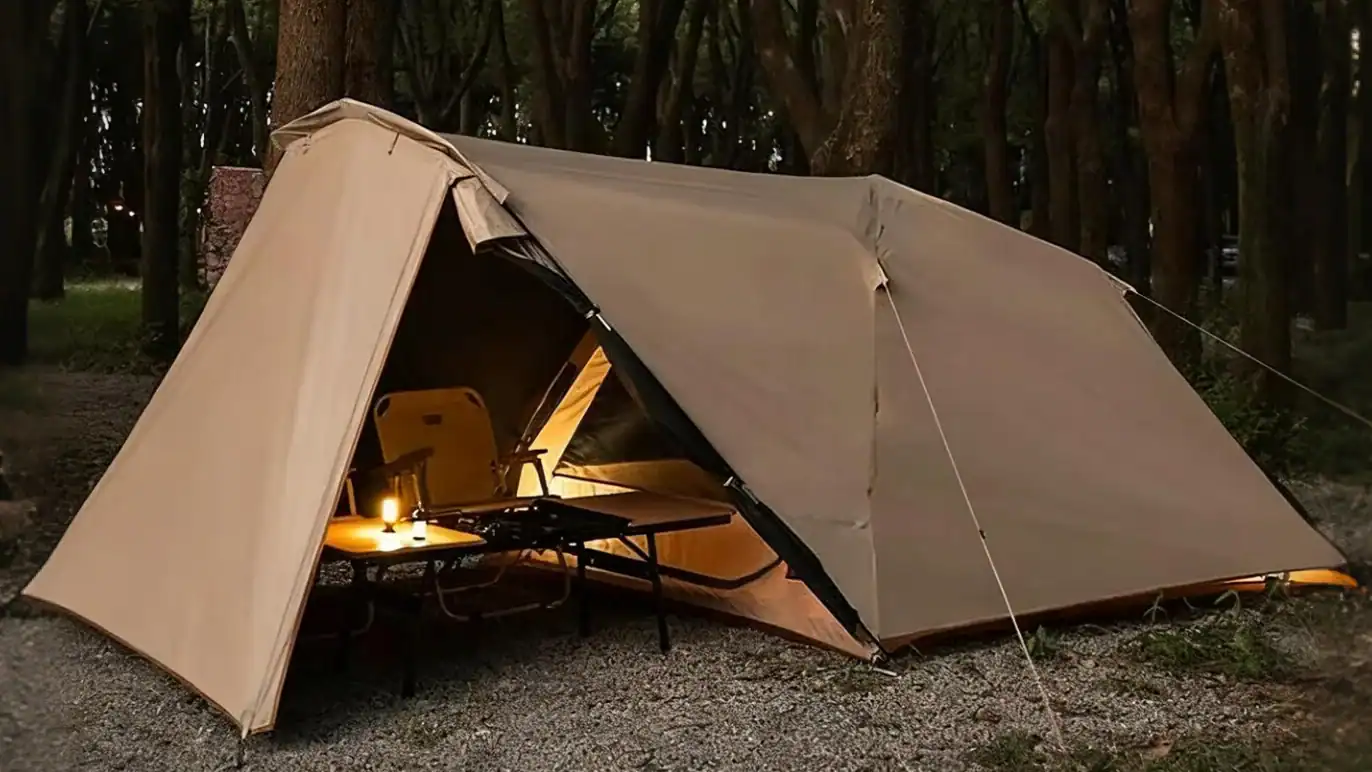
The Correct Deflation and Packing Technique
Roll from the foot end to the valve.
Open Both Valve Caps First
A single blocked valve traps high-pressure air in a remote beam end. That forces the packer to squeeze harder around the valve area, increasing kink risk. Open both caps before you start rolling. This also prevents a sudden air burst when the roll reaches the valve end.
Roll From the Closed End Toward the Valve
Start at the foot end and roll toward the valve, not the other way. Rolling this way keeps the last 20% of air moving out and maintains even tension across the TPU film. A Z-fold or sharp right-angle fold concentrates stress at the valve-base junction — exactly where QC logs show most cracks originate.
Kelyland partner factory QC data confirms: folding a beam into a tight Z-shape during deflation is the dominant failure mode, not over-pressurization within normal ranges (8-12 psi for TPU, 5-8 psi for PVC). The fix is a change in technique, not a change in pressure.
Push Trapped Air Safely
Use a 12 mm dowel or PVC pipe to direct residual air toward the valve. This removes trapped pockets without bending the beam over the stem. Keep at least 25 mm clearance around a standard 12-16 mm valve stem — any fold closer than that creates a micro-crack path that grows over repeated cycles.
Seal and Store Loose
Close both valves immediately after deflating to keep dust and grit out of internal surfaces. Store loosely in a compression sack rather than over-compressing tube ends. Tight storage causes cold-set crease memory — slow-leak failures that appear even when the tent sits unused in inventory.
How to Identify a Dying Valve Before It Fails
Three visual signs plus one pressure test flag a failing valve before it leaks.
Visual Red Flags Before Packing
Yellowing TPU around the valve stem is the first signal. TPU naturally yellows with UV exposure, but when the discoloration concentrates at the base, it means localized heat or chemical stress has started breaking the polymer chain. You will also see micro-cracking radiating from the edge of the valve flange if you hold the beam up to light.
Seal wear shows as a flattened or uneven dimple on the rubber gasket inside the cap. That dimple reduces sealing force and lets air bleed slowly over 6-8 hours. A customer who wakes up on a deflated mattress will blame your brand, not their own packing technique.
Pressure Leak Test at 8 psi
Inflate to 8 psi — that is within the safe range for both TPU (8-12 psi) and PVC (5-8 psi). Close the valve and spray soapy water around the base and stem junction. If bubbles appear below 5 psi, the valve base has already begun to degrade. This is a pass/fail test your QC team can run on every inbound sample during 7. approbation de l’échantillon.
Many brand managers skip this step because they assume new stock is sound. Kelyland partner factory QC logs show that roughly one in forty stock valves from standard production lines shows micro-leaks at this threshold — leaks that would never be caught by a visual-only inspection but will generate returns inside six months.
PVC vs TPU Valve Life Expectations
What to Specify When Ordering Custom Inflatable Tents
Specify reinforced valve bases and 16 mm ID openings to stop warranty returns at the source.
Most inflatable tent valve failures trace back to a single root cause: the supplier did not reinforce the junction where the TPU beam meets the valve stem. A standard stock valve is simply welded onto flat film. Under repeated deflation and packing, that weld line becomes a stress concentration point. The fix is straightforward — specify reinforced welded or inserted valve bases during the design phase, not after production begins.
Reinforced Valve Bases and Fabric Sleeves
A reinforced valve base uses an extra layer of TPU or PVC material around the weld zone, spreading the fold radius away from the stem. Some suppliers call this a “double-ply” base. More effective is adding a fabric sleeve over the beam end itself. That sleeve absorbs the bending load when the beam is rolled or folded, instead of transferring it directly into the valve-to-beam junction.
Kelyland partner factory QC logs confirm that specifying a fabric sleeve over beam ends removes the concentrated load path that causes most micro-cracks. Without it, packers who fold within 20 mm of the valve base turn routine storage into a warranty claim waiting to happen.
Demand 16 mm ID Valve Openings
Narrow stock valves — typically 12 mm internal diameter — restrict airflow during deflation. That forces users to squeeze harder and fold more aggressively to push air out, which increases kinking risk at the base. Specifying a 16 mm ID valve opening improves deflation airflow by roughly 75% compared to a 12 mm opening.
The wider bore also reduces back-pressure in remote beam ends during rolling, so trapped air escapes without requiring sharp bends near the stem. This spec matters most for larger family or glamping inflatable tents where beam length exceeds 3 meters.
Conclusion
The difference between a valve that lasts three seasons and one that fails after three pack cycles is a 20 mm fold-radius rule and a reinforced base spec. Most damage comes from Z-folding the beam during deflation, not from over-pressurization. Correct the packing technique first, then lock the OEM reinforcement into your next PO.
- TPU air beams run at 8-12 psi; PVC at 5-8 psi.
- Roll from foot end toward valve to avoid Z-fold cracks.
- Specify reinforced bases and fabric sleeves for OEM orders.
Before your next custom inflatable tent order, compare your current valve-base spec against the reinforced construction available through Kelyland’s ISO-certified factory network. Review the inflatable tent sourcing page to align MOQ, lead time, and technical requirements before sample approval locks in the design.
Questions fréquemment posées
Can you fold an inflatable tent flat? — No, folding flat creates sharp Z-fold creases that crack the valve base; rolled storage is safer?
La réponse exacte dépend de la spécification du produit, de la quantité et de la configuration de la commande. L'approche la plus sûre est de confirmer les conditions commerciales uniquement après le verrouillage de la fiche d'exigences finale. Les conditions finales doivent être confirmées en fonction de la spécification exacte du produit et des conditions de commande.
How do you deflate an inflatable tent fast? — Open both caps, roll from the closed end toward the valve, and use a 12 mm dowel to push trapped air out without k?
La réponse exacte dépend de la spécification du produit, de la quantité et de la configuration de la commande. L'approche la plus sûre est de confirmer les conditions commerciales uniquement après le verrouillage de la fiche d'exigences finale. Les conditions finales doivent être confirmées en fonction de la spécification exacte du produit et des conditions de commande.

 English
  Español
  Deutsch
  Français
  Português do Brasil
  Русский
  العربية
  한국어
한국어  日本語
日本語