 跳到内容
跳到内容 
Has a supplier ever told you their folding wagon warranty returns sit at “under 1%” while you’re staring at a $50K PO? Behind closed doors, that’s the number worth interrogating — because most return-rate claims are built on pre-production samples, not the mass production run that actually lands on your shelf.
The buyer who watched a flawless prototype turn into wagons with bent frames and loose wheel hubs at first delivery learned the hard way: sample approval is a starting line, not a finish line. Most category managers negotiate FOB pricing and sign off on a sample, then forget to verify the warranty clauses that determine who pays for the 8% defect rate that shows up in week 11. Those clauses are the safety net.
Retail buyers who source folding wagons for a living keep this checklist short. Request at least 2% free spare parts on the initial PO — wheels, fabric panels, cotter pins — and confirm whether replacement units ship from a domestic warehouse or a factory with a 30-45 day lead time. That distinction separates a seasonal plan from a hope.
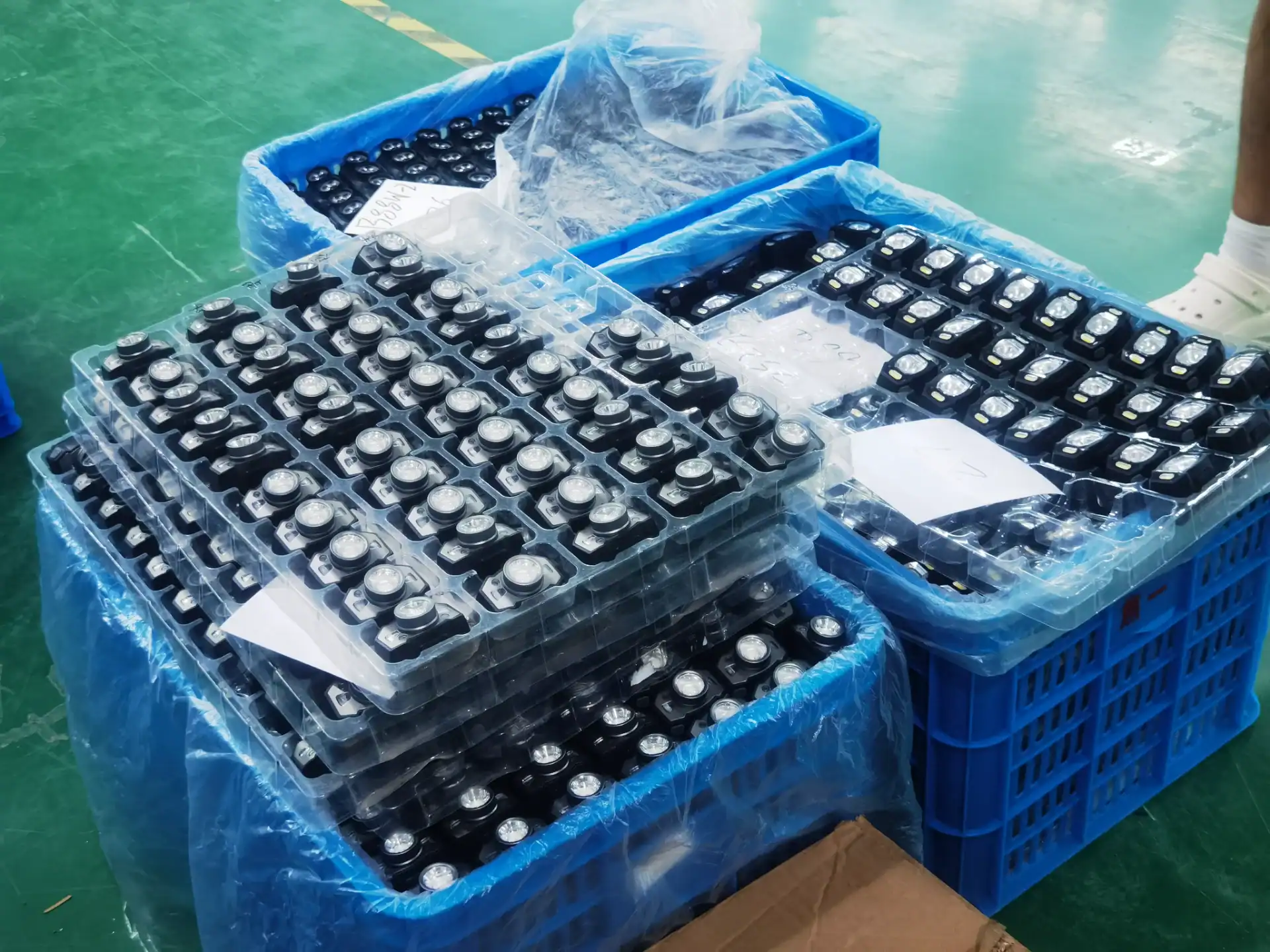
Warranty Terms to Require Before Signing
The frame carries the longest warranty.
Folding wagon warranty terms for retail start before the PO is signed. Your supply agreement determines whether a bad batch becomes a margin disaster or a manageable line item. Generic “1-year warranty” language means nothing — coverage differs completely between a steel frame, a fabric basket, and a set of wheels.
Frame, fabric, and wheel coverage durations
A folding wagon has three wear zones with three different lifespans. The frame is the most expensive component and the one customers expect to last. Insist on coverage that reflects that: 3 years minimum for a powder-coated carbon steel frame, 5 years for aluminum, with language covering welds, hinge points, and locking mechanisms — not just “the frame structure.”.
- Cadre : 3-year minimum for powder-coated carbon steel, 5-year for aluminum, covering welds, hinge points, and locking mechanisms. The Kelyland folding wagon partner factory in Jinhua — ISO 9001 and CE-certified with 1 million units of annual output — builds frames in powder-coated carbon steel or aluminum. Keep the material and hinge design named in the warranty sheet so coverage can’t be disputed.
- Tissu : 12 months from consumer purchase, covering seam separation, stitching failure, and zipper defects. Specify 600D-900D double-layer Oxford fabric as the baseline so the coverage matches the material actually sewn.
- Wheels: 6-12 months with the tire compound written into the contract. The factory offers PVC, PU, EVA, or TPE wheels. PU and EVA flex under load. Hard PVC cracks on uneven terrain — and that difference shows up in your seasonal return rate.
Exclusions for corrosion, abrasion, and misuse
Exclusions decide whether a warranty has teeth. Corrosion exclusions legitimately cover rust from scratches through the powder coating; deep rust from coating failure should stay covered. Abrasion excludes fabric tears from dragging or scraping sharp objects. Misuse covers exceeding stated load capacity. The retail trap sits inside that last clause: when the box’s load rating exceeds frame capability, every failure becomes a “misuse” claim — and the customer takes the hit.
Return rate data draws the line clearly. Folding wagon return rates stay under 2-3% when frames are mandrel-bent and wheels use PU or EVA tires instead of hard PVC. They spike above 8% when load capacity is overstated on the box. Ask for load test documentation that matches the weight rating you plan to print on l'emballage de détail. A supplier who hesitates is telling you something.
One more detail that separates professionals: a 30-45 day production lead time means mid-season replacement orders land after the season ends. Pre-book at least 2% free spare parts — wheels, fabric panels, cotter pins — with the initial PO. That way, quick replacements happen locally while the warranty claim runs its course.
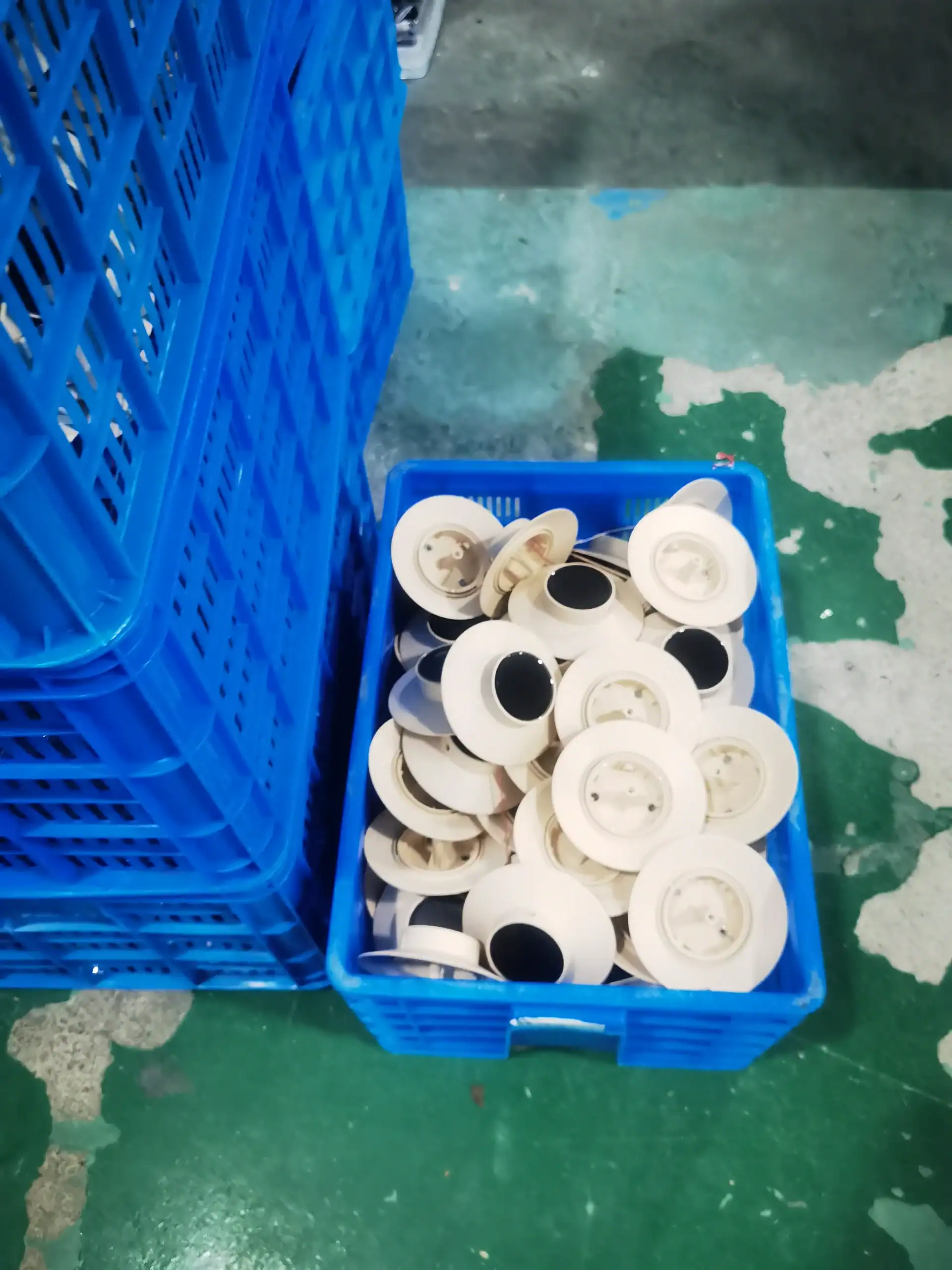
Return Rate Benchmarks by Segment
Healthy folding wagon return rates stay under 2-3%; overstated load capacity can push them above 8%.
Folding wagon return rate benchmarks are not a mystery. In retail, healthy programs hold a return rate under 2-3% when the frame is mandrel-bent and the wheels use PU or EVA tires. The same category can spike above 8% when the load capacity printed on the box exceeds what the frame can actually carry.
Defect Rates by Folding Wagon Segment
Single-fold wagons are the safest segment because the frame is one continuous bent tube. Multi-fold models add hinge points, and each hinge is a candidate for breakage on rough terrain. Double-decker and extended wagons add height and fabric surface, which moves the defect profile from frame failure to fabric seam tears and wheel hub damage.
- Retail benchmark: Use 2-3% as the folding wagon return rate benchmark for standard single-fold and extended models. Insist the supplier accepts this threshold in the quality agreement.
- Wheel material: Hard PVC tires are the first component to fail under summer heat and trail debris. PU or EVA tires keep the cart moving, and a metal hub with a through-axle beats a plastic clip-on hub.
Seasonal Return Spikes and Inspection Points
The spike window is the first 60 days of summer. Customers actually load the wagon to the number printed on the box, then hit a curb or a gravel path. If the frame flexes or the baseboard tears, the unit comes back. The problem is not random bad luck; it is a spec mismatch between the rated capacity and the real build.
Inspect at the sample stage. Load the wagon to the printed capacity and drag it over a curb. Check whether the baseboard is PP or MDF; both are in the Kelyland spec, and PP holds up better in wet conditions. Ask for the tire material in writing. The difference between PU and PVC is not visible on the carton.
The folding wagon factory Kelyland uses in Jinhua produces 1,000,000 units a year and holds CE and ISO 9001 certifications. That gives you a starting point, not a blank check. The production spec includes 600D-900D double-layer Oxford fabric, a powder-coated carbon steel or aluminum frame, and PP or MDF baseboards. Confirm those exact materials in your PO, then inspect the finished batch before it ships.
For high-volume retail programs, track seasonal return rate by model variant. If one color or one feature set climbs past 3%, pull the remaining stock from stores before the return wave expands.
After-Sales Support Setup
A 30-45 day lead time means mid-season replacement orders arrive after the season ends.
The folding wagon warranty conversation usually stops at the frame. It shouldn’t. The parts that fail first — wheels, fabric panels, cotter pins — are the ones that decide whether a return becomes a lost customer or a quick fix. Any supplier can promise after-sales support. Few keep actual spare parts inventory for the models you ordered.
Spare Parts Kits: The 2% Rule
Request at least 2% free spare parts — wheels, fabric panels, cotter pins — bundled into the first order. The folding wagon factory in Jinhua, Zhejiang produces one million wagons a year under ISO 9001:2015 and can build spares alongside the main run at near-zero cost. Skip this and every replacement part ships from China. A 30-45 day lead time means mid-season restocks arrive after the season ends.
- Wheels: PU and EVA tires survive rough terrain far better than hard PVC, which cracks under load. Confirm the spare wheel spec matches the production run — same tire compound, same bearing, same axle fit.
- Fabric panels: The 600D-900D double-layer Oxford fabric used on most wagons can tear at the corner seams after a season of heavy use. Pre-cut replacement panels, not rolls of generic fabric, are what your service desk actually needs.
- Cotter pins and axles: The cheapest components drive the most warranty claims. A folded pin or bent axle disables the entire wagon. Stocking these in your own warehouse — not the supplier’s — cuts resolution time from weeks to days.
Response SLAs and Complaint Handling
Put the response SLA in writing before the PO. A workable standard: 24-48 hours for first acknowledgment, 5 business days for a diagnosis, and a replacement part dispatched within 10 business days. Dedicated after-sales staff, like the service specialist managing post-sale support at Kelyland Outdoors, make that feasible. Without a named contact and a documented flow, every claim becomes a negotiation.
The complaint flow itself should be: customer photo or video evidence → retailer logs the claim → supplier confirms the diagnosis against the production spec → replacement part or unit ships. The step that breaks most programs is the diagnosis. If the supplier has no QC records for that batch, no spare parts stock, and no history with the model, an $8 wheel becomes a $40 return label.
Final Checklist Before Issuing the PO
Before you sign the PO, two paper trails decide whether your folding wagon season ends clean or in a pile of return labels. The first is the sample approval record. The second is the warranty and spare parts plan. Both are cheap to fix now and expensive to invent later.
Sample Approval Records and QC Reports
The approved sample is the legal baseline. If the mass production run shows up with a different wheel type or a thinner fabric, the signed sample is the only proof you have. Retail buyers who skip the formal sign-off often end up arguing with a supplier who refuses to accept responsibility.
- Signed sample or email confirmation: Include Pantone color codes, fabric weight (e.g., 600D Oxford), frame material, and wheel type (PU or EVA vs. hard PVC).
- Mid-production and final inspection reports: Confirm the factory documents weld points, wheel torque, and stitching integrity. Kelyland Outdoors’ partner factory in Jinhua runs these checks under ISO 9001:2015 and can share the final inspection sheet.
- Material certificates: Verify the raw materials match the sample specs. A wagon that is rated 200kg on the box but uses 0.5mm steel will fail fast and trigger returns.
- Coverage durations: Get 3 years on the frame, 1 year on fabric and wheels. This is realistic for a quality mandrel-bent frame and PU wheels.
- Exclusions: Confirm corrosion from salt air, abrasion from heavy load dragging, and misuse are excluded. Otherwise you’re paying for customer neglect.
- Spare parts kit: Ask for at least 2% of your order value as free spares (wheels, fabric panels, cotter pins). With a 30-45 day production lead time, a mid-season replacement order will miss the selling window. Pre-book the spares now.
- After-sales SLA: Get a written commitment to respond within 24 hours and to ship replacement parts within 72 hours. A supplier who hesitates on this is hiding something.
Warranty Documentation and Spare Parts Inventory
Folding wagons break in predictable places: wheels, fabric seams, and hinge points. If you don’t have a warranty doc and a spare parts box, every returned unit becomes a full refund instead of a quick replacement.
One more benchmark to write down: return rates stay under 2-3% when the frame is mandrel-bent and wheels are PU or EVA. If a supplier overstates load capacity on the box, expect that number to jump above 8%. Verify the load rating in the test report before you print it.
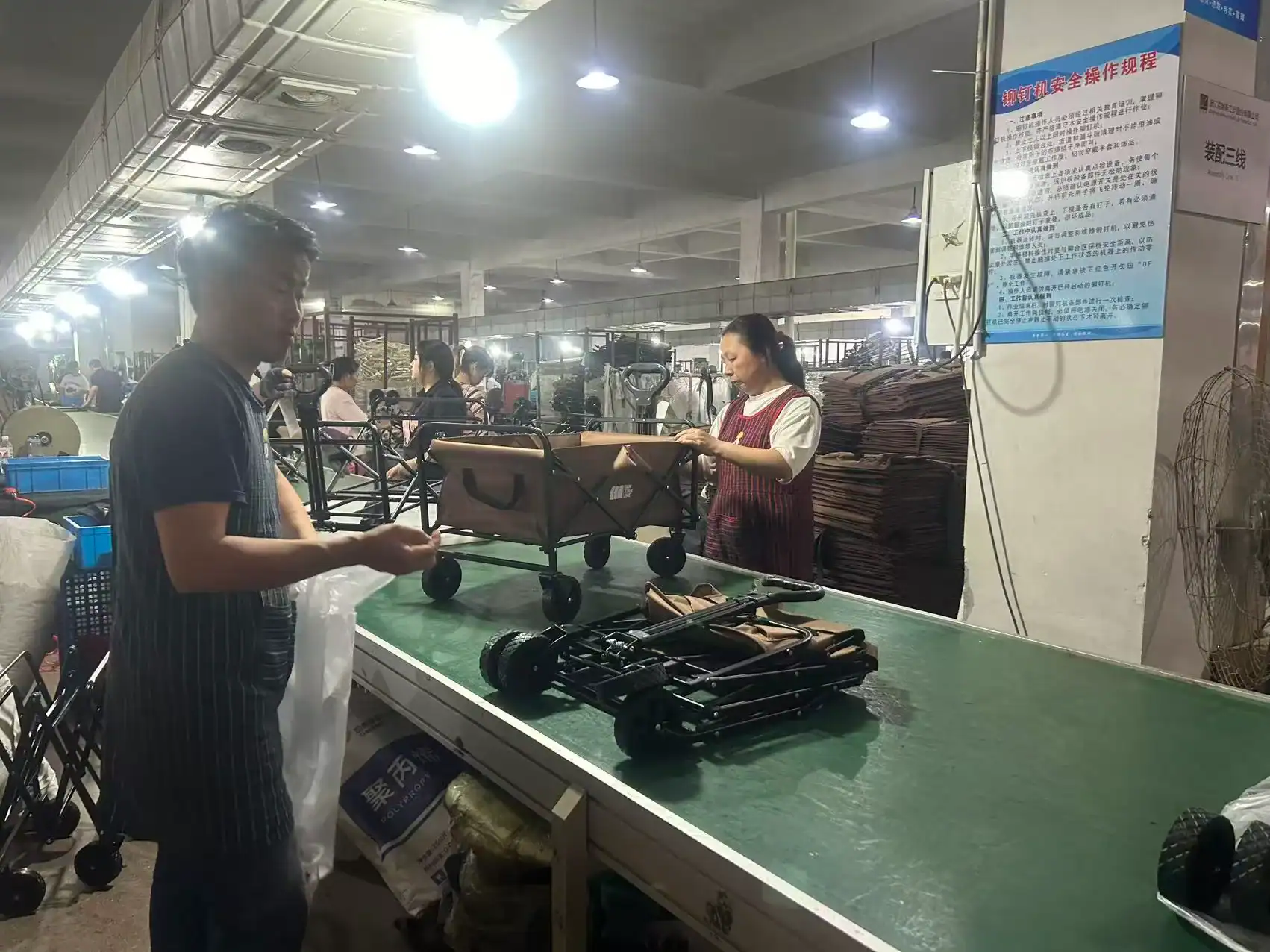
Post-Sale Continuous Improvement
Returns data only improves next season’s margins if the factory sees it before the spec locks.
Most retail returns systems capture a reason code at the register. For folding wagons, that code is nearly useless. A customer marks ‘defective’ and the unit heads to liquidation while the real failure — a cracked wheel hub, a bent frame tube, a torn 600D Oxford panel — never gets documented in a way the factory can act on. Category managers who skip this step reorder the same failure next season.
What the register code doesn’t capture
- Physical failure mode: Frame bend, wheel hub crack, fabric tear, hinge jam. A QR code on the warranty card lets store staff photograph and tag the fault before the unit leaves the building.
- Usage context: Did the load exceed the 50-200kg rating on the box? Was the wagon folded while loaded? Warranty disputes disappear when the return form includes a simple ‘how it broke’ field.
- Wheel failures: Switch the spec from PVC to PU or EVA tires. It’s a material change the factory can make without retooling, and it cuts the most common field complaint.
- Fabric tears: Move from 600D to 900D double-layer Oxford, or reinforce the stitch pattern at the corners. Both are documented changes the partner factory already runs.
- Spare parts buffer: Request at least 2% free spare parts — wheels, fabric panels, cotter pins — with the first order. With a 30-45 day lead time, you cannot wait for a restock mid-season.
The factory side needs this data before the next spec locks. Kelyland’s folding wagon partner factory in Jinhua runs a 1,000,000-unit annual line with CE and ISO 9001 certification, and the standard production window is 30-45 days. A mid-season replacement order placed after a defect appears won’t arrive until the season is over.
Turn the data into next season’s spec changes
Folding wagon return rates in retail typically stay under 2-3% when the frame is mandrel-bent and wheels use PU or EVA tires instead of hard PVC. When returns spike past 8%, the cause is almost always an overstated load capacity on the box. That’s a spec correction, not a supplier penalty clause.
Schedule the warranty review before the next spec lock date. Send the factory a defect breakdown with photos and quantities, and ask for a written correction plan. Suppliers who respond with a specific fix — a reinforced hinge, a different wheel compound, a revised load sticker — are worth the margin. Suppliers who respond with excuses will cost more in returns than any price difference at FOB.
Conclusion
Folding wagon warranty returns are a margin risk long before a customer opens the box. The due diligence that matters happens at the PO stage: warranty coverage by component, realistic return rate benchmarks, spare parts inventory, and after-sales response SLAs. A supplier that cannot document these in writing will cost you more in the first season than any price advantage on the quote.
- Folding wagon return rates stay under 2-3% with mandrel-bent frames and PU or EVA tires.
- Overstated load capacity on the box can push seasonal return rates above 8%.
- Request at least 2% free spare parts — wheels, fabric panels, cotter pins — with the initial PO.
- A 30-45 day production lead time means pre-booked spare parts are essential for mid-season replacements.
Before you issue the next PO, take the folding wagon warranty terms and return rate benchmarks from this checklist and compare them against the contract on your desk. Confirm the frame and wheel coverage durations, the free spare parts percentage, and the after-sales SLA in writing — not in the sales pitch. Browse the folding wagon sourcing resources at Kelyland Outdoors to see how a supplier with documented factory QC processes structures its support terms.
Questions fréquemment posées
Quelles conditions de garantie dois-je exiger pour les chariots pliants ?
Require separate coverage for the frame, fabric, and wheels, with the frame carrying the longest term. Spell out exclusions like corrosion, abrasion, and overload misuse so the supplier, not your retail margin, bears defect risk. Put the coverage table in the PO.
What return rate is normal for folding wagons?
A healthy folding wagon return rate stays under 2-3%. Overstated load capacity is a common trigger, so verify rated capacity against frame and wheel construction before committing. Audit the spec against real load tests first.
What after-sales support should a wagon supplier provide?
You need a spare parts kit covering replacement wheels, fabric panels, and frame connectors. Because lead time is 30-45 days, pre-stock parts before peak season or mid-season replacements arrive late. Agree on response SLAs before signing.
What should I check before issuing a wagon PO?
Confirm sample approval records, QC inspection reports, and warranty documentation are locked down before the PO. Verify spare parts inventory is already available so returns don’t wait on a new production run. Make QC reports and parts stock order conditions.
How do I use wagon returns data for next season?
Track field failures by component, such as frame, wheel, fabric, or brake, instead of a single return rate. Feed that data into next season’s spec and pre-shipment inspection checklist to stop recurring defects. Build the review into seasonal lineup planning.

 English
  Español
  Deutsch
  Français
  Português do Brasil
  Русский
  العربية
  한국어
한국어  日本語
日本語