 跳到内容

The luxury glamping tent canvas condensation fix separates two tents that look identical in a catalog but differ by 30% at FOB pricing. One ships with a 340gsm polycotton shell and double-needle flat-felled seams; the other runs 280gsm cotton with a single stitch line. The first tent breathes. The second drips condensation on guests’ faces by the third rental season.
The gap rarely surfaces at sample approval. A $50K order can clear pre-production inspection and still go sideways when the mass production run quietly shifts the fabric weight or loosens the stitch density. The sample looks right. The delivered tents sag at the wall panels, the lap seams weep, and the pole ferrules begin rusting at ground level.
Commercial glamping tents fail slowly, not dramatically. Mildew settles inside seam folds, rust eats the ferrule, and condensation pools on the ceiling fabric. A hot-dip galvanized steel frame and a certified 340gsm polycotton shell matter more than any chandelier inside. Check those specs before you approve a factory, because the renderings won’t show them.
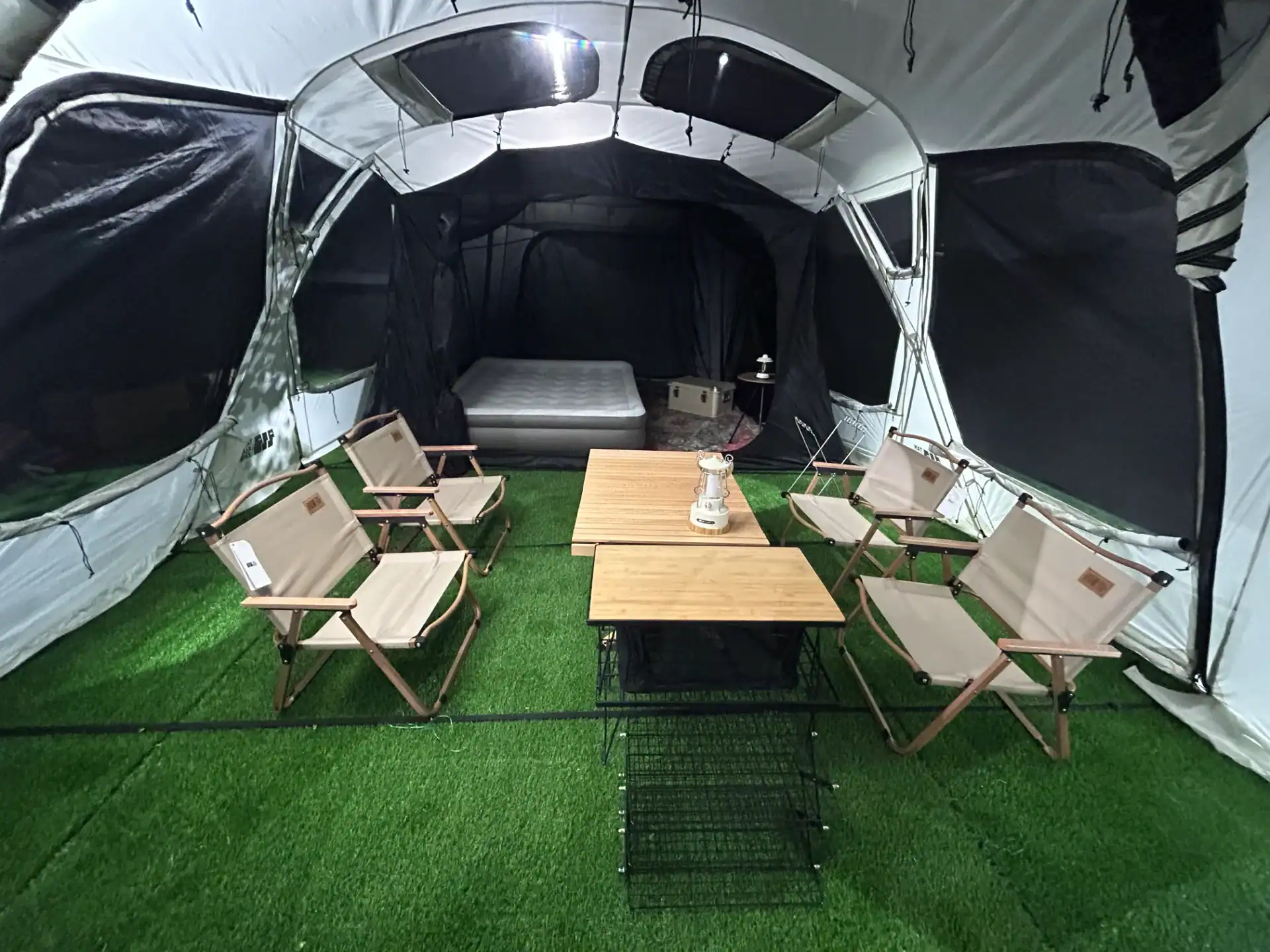
Canvas Weight and Weave: The Real Difference Between Cheap and Luxury
A 280gsm shell passes a photo test and fails by season three.
Start with the weave count, not the label. Budget canvas shells run around 20 weaves per centimetre. Premium cloth sits closer to 30. That gap creates larger micro-gaps between threads, and water finds those gaps after a season of UV exposure and tension — even through a water-repellent coating.
Fabric weight, measured in grams per square metre, splits the commercial market into three tiers. The choice between them decides how many seasons your tents stay dry and guest-ready.
The Three GSM Tiers for Commercial Use
-
- 280gsm cotton: Entry-level single-ply shell. Acceptable for weekend use or low-occupancy sites. Higher moisture absorption and looser weave make mildew a real risk by the second season of full-time rental.
- 340gsm polycotton (65/35): The commercial baseline. Polyester adds dimensional stability so panels don’t sag, while cotton keeps the breathable feel. Higher FOB than 280gsm, but the extra seasons of service make it cheaper per rental night.
- 400gsm heavy-duty cotton: Winter-grade shell. Heavier, slower to dry, and more expensive to ship. Spec it for cold, dry climates — not humid coastal sites where drying time works against you.
The condensation fix starts in the weave. Pure cotton absorbs moisture vapour during the day and releases it when the temperature drops overnight — that’s the drip on guests’ faces. Polyester doesn’t hold water the same way, so a 65/35 polycotton shell cuts interior condensation noticeably compared with all-cotton at the same weight.
Seams Fail Before the Fabric Does
A tent panel rarely rips in normal use. The 1. シームテープ peels, needle holes elongate, and water enters along the stitching line. Commercial-grade construction uses double-needle flat-felled seams with an internal binding tape at least 20mm wide. Anything narrower pulls away under repeated folding, and the seam starts wicking.
Stitch density matters even more below 340gsm. The spec is at least 8 stitches per centimetre; lower counts leave needle-hole distortion under tension, and rain follows the path of least resistance. The Shaoxing glamping tent factory behind Kelyland’s 300,000 units per year builds these checks into QC — CE and ISO 9001 certified, with standard production lead time of 30–45 days.
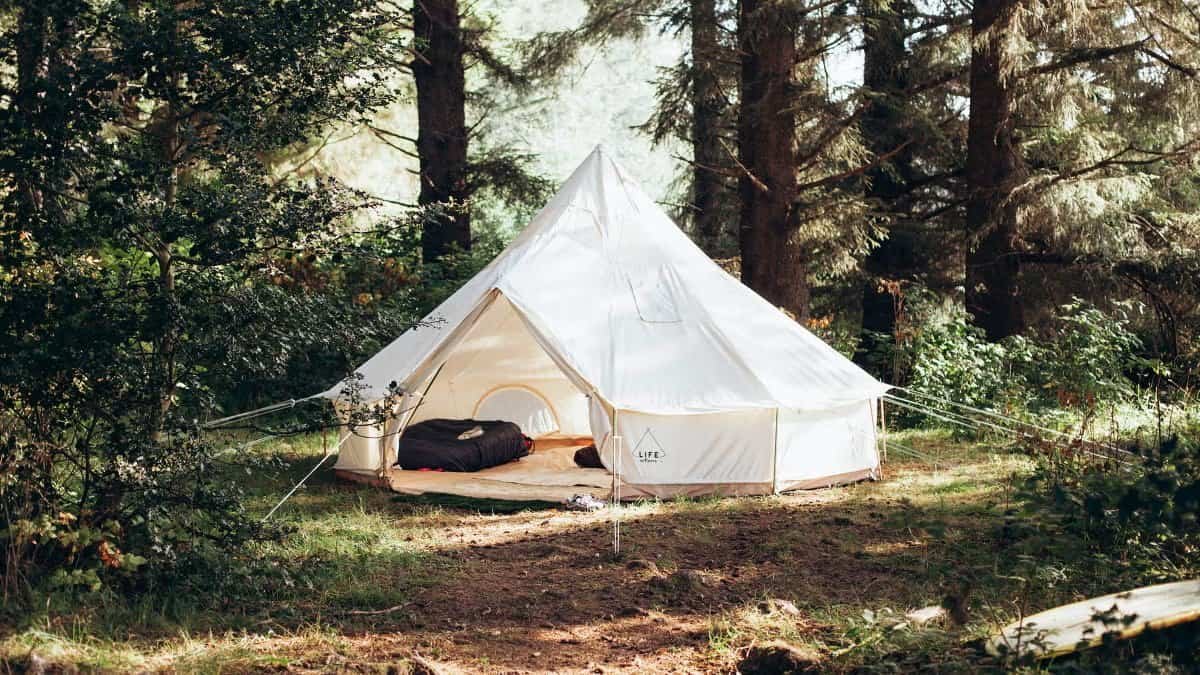
Condensation and Rain: Why Canvas Tents Fail Inside
Most glamping tents fail by mildew, rust, and ceiling drip — not by collapse.
Condensation is the quiet killer in a canvas tent. A guest wakes up with water dripping on their face, the canvas feels damp, and within three months of rental seasons, dark mildew spots appear along the seams. That’s not a fabric defect — it’s a physics problem the manufacturer didn’t engineer for. Walls breathe during the day when warm air holds moisture. At night, the temperature drops, and that vapor turns back into liquid on the coldest surface: your ceiling.
Why Polycotton Beats Pure Cotton for Wet Climates
Polyester fibers don’t absorb water the way cotton does. A 65/35 polycotton blend cuts moisture uptake by roughly half compared to pure cotton at the same relative humidity. That matters for a rental tent that gets packed up damp, stored in a trailer, and pitched again the next afternoon. A 340gsm polycotton shell dries faster, sags less, and resists the mildew cycle that turns a premium glamping tent into a musty liability by season two.
-
-
- Breathable wall target: Ask for MVTR above 500g/m²/24h per ASTM E96 Method B — the test that proves moisture vapor escapes through the weave instead of condensing on the ceiling.
- Sealed floor: The floor is the opposite job. It must stay sealed, with a hydrostatic head of at least 3000mm per EN ISO811, so groundwater can’t wick up through the bathtub floor.
-
Ventilation Layout: The 1% Rule
Vent placement is where cheap tents fail. Most factory drawings put windows where they look balanced, not where air actually flows. The working rule for commercial glamping tents: total roof vent area must be at least 1% of the floor area. Eaves vents should follow a Savonius airflow induction pattern, drawing stale air out along the ceiling line rather than letting it pool. Keep intake openings above 45cm from ground level — below that line, CO₂ and moisture pool overnight.
-
- Roof vent area: At least 1% of floor square footage. Below that, condensation forms faster than the fabric can move it out.
- Eaves vents: Positioned on a Savonius pattern — low on one side, high on the opposite — to create cross-flow instead of dead air pockets.
Drying Shrinkage: The Factory Defect Nobody Checks
Here’s the one nobody checks: drying shrinkage. If the fabric hasn’t been pre-shrunk to under 3% total width before the water-repellent coating goes on, the bathtub floor geometry splits during the first de-wetting cycles. The tent looks perfect in the sample photo. After three washes, the floor wrinkles, the seams pucker, and water finds the gaps. A factory running ISO 9001 QC — like the Shaoxing glamping tent plant that produces 300,000 units a year — checks shrinkage before coating, not after.
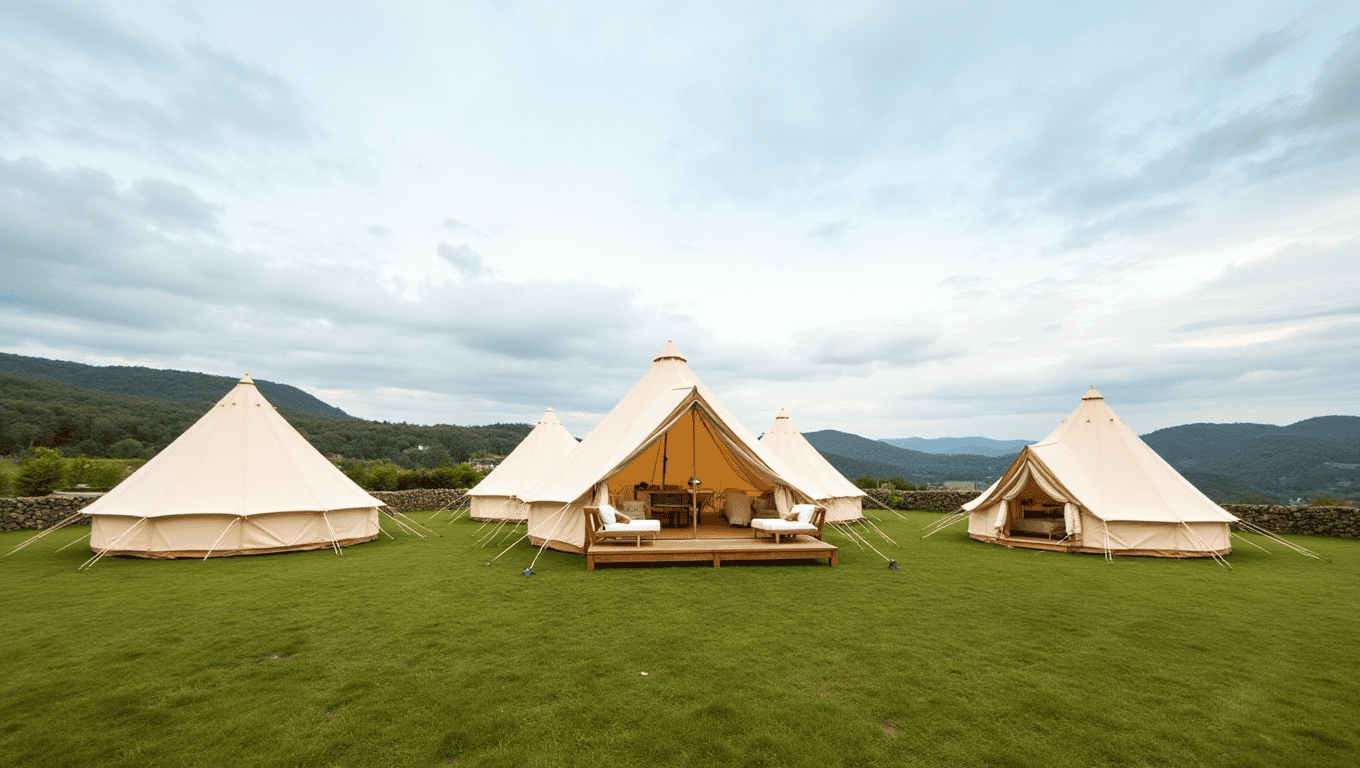
Frame Material Trade-Offs
Rust at the pole ferrule kills more glamping tents than collapsed frames ever will.
フレーム素材は、プライベートラベルの買い手が指定ではなく推測しがちなポイントです。340gsmのポリコットンシェルが完璧でも、ポールソケットが内部から腐食することでシーズン2目にテント全体が壊れることがあります。フレームはキャンバス、風荷重、湿度サイクルを支えますが、グレンピングテントの見積もりでコストを削減する最も安易な方法は、目に見えない部分の鋼材仕様を落とすことです。
スチール、アルミニウム6061、またはエアチューブ
恒設型グレンピングの商業標準は、肉厚0.8〜1.2mmの熱浸漬 galvanize 鋼管です。この仕様は沿岸部の塩害、張られたキャンバスによる常時張力、そして稀にポールにもたれかかるゲストへの耐性を備えています。アルミニウム6061は軽量でポータブルや季節限定のセットアップに適していますが、重たいキャンバス下ではたわみが大きくなり、メートル単価も高くなります。PVC/TPUのエアチューブは全く異なる製品カテゴリであり、輸送重量の課題は解決しますが、空気注入の管理に依存し、ゲストが刺してしまうと修復が難しいという欠点があります。
フェルールは最初に錆びる箇所です
ポールフェルールは、ポールセクションが接続し、フレームが地面と接する金属製の collar です。湿気の多い環境では、ここが錆びの発生源になります。一度錆が発生すると、キャンバスに粉状の錆が落ちて色移りし、床を汚し、ジョイントの強度を弱め、分解作業を面倒なものにします。熱浸漬 galvanize 処理されたフェルールはこのサイクルに耐えますが、電気めっきや塗装仕上げのフェルールは耐えられません——コーティングが薄すぎて、組み立て時に最初に剥がれてしまうからです。
-
- Hot-dip galvanized steel ferrule: Zinc coating survives repeated assembly, ground contact, and coastal humidity. Spec this on every pole for a fixed glamping site.
- Electroplated or painted ferrule: Coating thickness is a fraction of hot-dip. Chips appear within one season, rust follows, and the joint seizes.
- Aluminum 6061 ferrule: Lighter and corrosion-resistant on its own, but softer — a bent ferrule means a full pole section replacement on-site.
Ask your supplier which ferrule process they actually use. The Shaoxing facility that produces Kelyland’s glamping tents runs 300,000 units per year under CE and ISO 9001, and treats hot-dip galvanizing as the default, not an upgrade. Standard production lead time runs 30-45 days, and the QC check on ferrules happens before canvas assembly, not after. If a supplier cannot answer their galvanizing method without checking with production, treat that as a red flag.
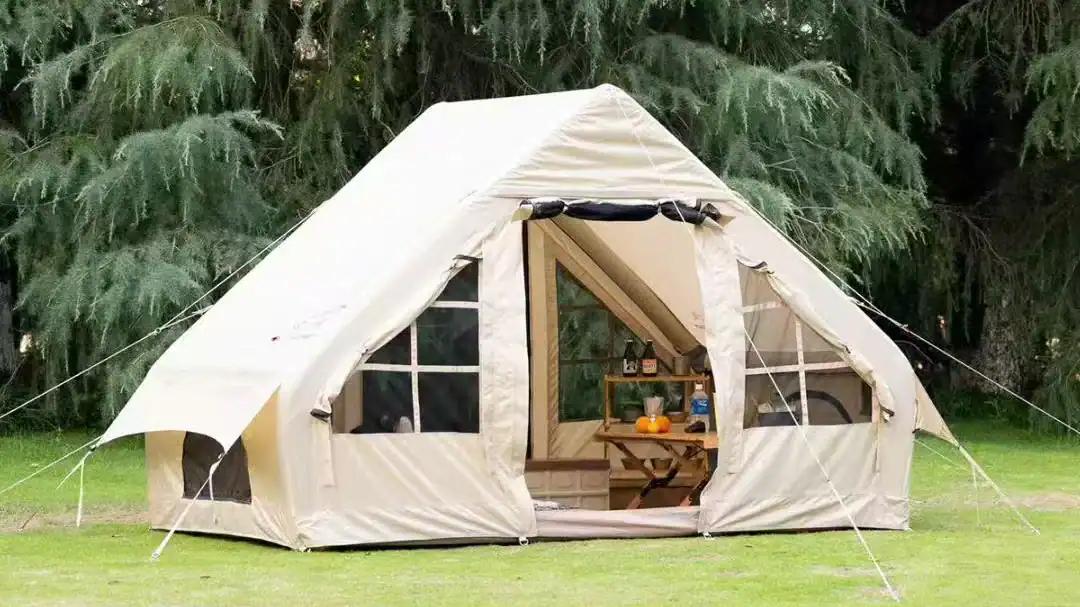
Factory Checklist: Avoid Buying Visual-Only Specs
Condensation, mildew, and rust kill glamping tents, not dramatic collapses.
Most buyers approve a glamping tent sample on looks alone — fabric color, the chandelier, the styled interior. Then the first humid night hits and condensation drips onto a guest’s face. One bad review later, your brand eats the replacement cost. This checklist skips the cosmetics entirely and covers four checks that separate a six-season tent from a one-season failure.
Wall and floor answer to different test standards
Condensation control is a wall problem. Puddle-proofing is a floor problem. Treat them as two separate certifications. The wall needs a moisture vapor transmission rate tested under ASTM E96 Method B — target above 500 g/m²/24h. The floor needs a hydrostatic head tested under EN ISO 811 — 3000mm minimum, 5000mm if the tent sits on wet ground. If a supplier hands you one combined waterproof rating, that’s a rejection.
Seam construction: where second-season failures start
Cheap tents rarely collapse in season one. They mildew inside the lap seams by season two. That’s the slow failure most buyers miss. Commercial-grade construction uses double-needle flat-felled seams with an internal binding tape at least 20mm wide. Below 340gsm fabric, demand at least 8 stitches per centimeter. The quality tolerance between 7 and 8 stitches decides whether a seam holds under wind load or unravels mid-season.
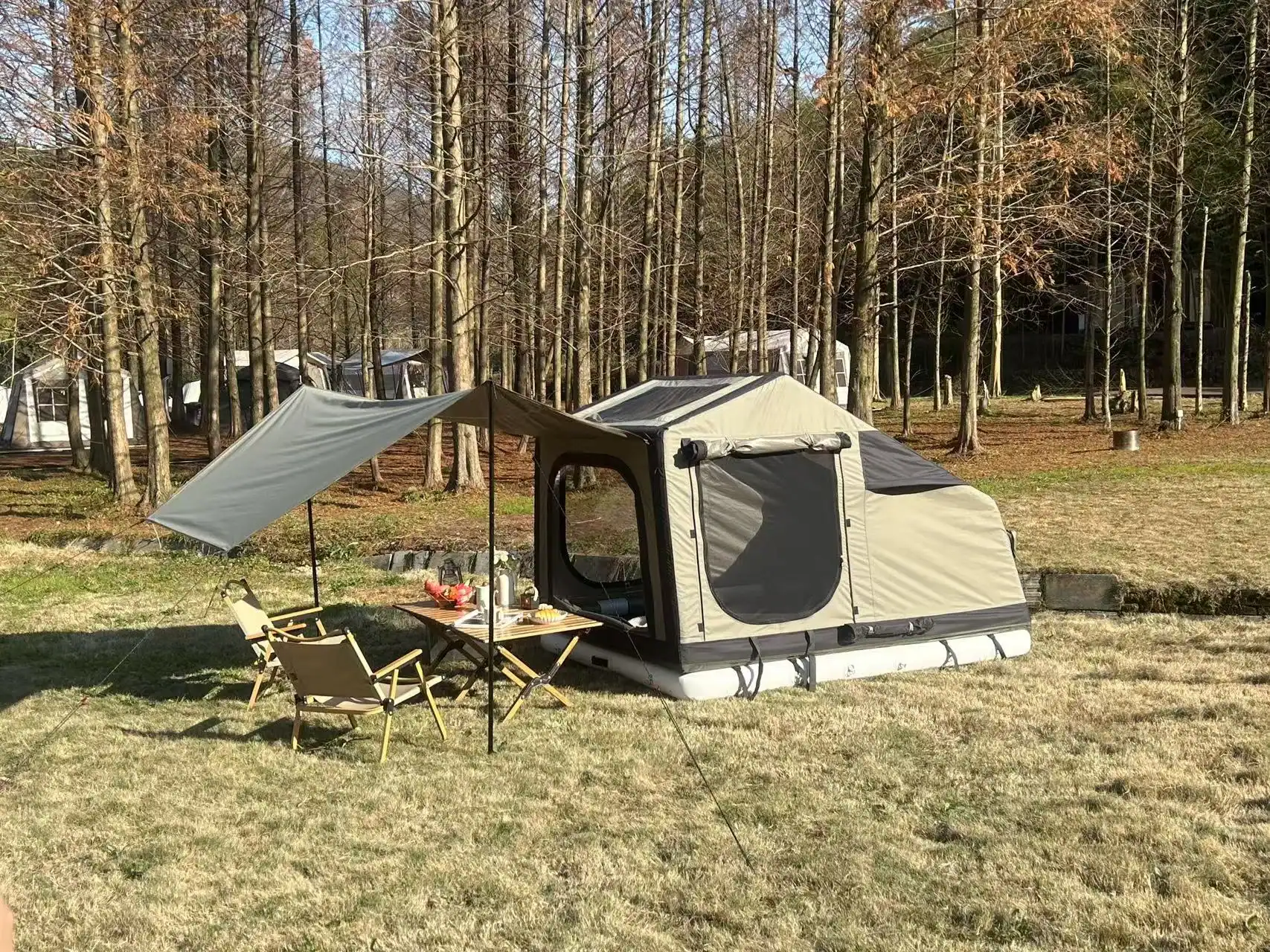
換気構造とフェルール:サンプル第1回前に確認せよ
窓の数では結露は解消しません。重要なのは換気口の位置です。屋根換気口の面積は床面積の少なくとも1%を確保し、暖かく湿った空気が確実に排出されるよう高位置に設置してください。 canopy中心線より低い位置にある軒換気口は二酸化炭素が溜まる層に位置し、十分な性能を発揮しません。また、サンプル第1回前にポールフェルールを確認してください:0.8〜1.2mm厚の壁を持つ熱浸亜鉛めっき鋼管は地中の湿気に対応できます。粉末塗装された軟鋼は同じ耐久性を持ちません。
紹興にあるKelyland提携グラピングテント工場はISO 9001 QC管理下で年間30万ユニットを生産し、標準的な生産リードタイムは30〜45日です。品質管理プロセスには、縫製、メカニズム、全体的な適合性に対する定期的な検査が含まれ、必要に応じてレポートを提供します。これが、コンテナ到着時に欠陥が見逃された場合に必要となる監査証跡です。
-
- 壁のMVTR(ASTM E96方法B): 水分蒸気透過率が500g/m²/24hを超える個別レポートを要求してください。レポートなし、サンプル承認なし。
- 床の静水圧耐水性(EN ISO 811): 3000〜5000mmを示す個別レポートを要求してください。1つの複合防水規格では却下されます。
- フラットファelledシーム施工: 最低幅20mmの内側バインディングテープ付き二重針ミシン。340gsm未満の場合は1cmあたり8 stitch以上を要求してください。
- 換気構造: 屋根換気口面積は床面積の少なくとも1%、高位置に設置。低軒換気口では空気層を逃し、依然として滴下する。
- 熱浸亜鉛めっきフェルール: 壁厚0.8〜1.2mmの鋼管を指定。量産後ではなく、第一サンプル時点で検証する。
結論
適切なキャンバスとフレーム仕様こそが、ラグジュアリーグラピングテントを丸一レンタルシーズンを通過させて立ち続けることができるのです。ブランドを傷つける故障― Guestの上に滴る結露、折り目シーム内のカビ、ポールフェルールでの錆―これらはすべて量産前に下された意思決定に起因します。生地の重さとフレーム素材を別々の項目としてではなく、一つのシステムとして選択してください。
-
- Spec a 340gsm polycotton (65/35) shell or a 400gsm cotton shell for commercial use; lighter fabric fails by season three.
- Demand separate wall and floor certifications: MVTR above 500 g/m²/24h; floor hydrostatic head at least 3000mm.
- Hot-dip galvanized steel tube frames with 0.8-1.2mm walls outlast aluminum in coastal and high-humidity sites.
- Flat-felled, double-needle seams with binding tape prevent the mildew failures that show up in year two.
Before you send out your next request for quotation, write down the three numbers that matter: canvas GSM, wall MVTR, and floor hydrostatic head. Then compare each supplier’s QC report against the 30-45 day lead time and the factory certifications behind it. Kelyland’s Shaoxing glamping tent line runs 300,000 units a year under CE and ISO 9001 checks — a reasonable benchmark to bring to the call.
よくある質問
ラグジュアリーなグラビングテントにはどのくらいのキャンバス重量が適しているのでしょうか?
Use at least 340gsm polycotton (65/35) or 400gsm cotton for a commercial-grade shell. A 280gsm shell passes the photo test but usually fails by season three under full rental use. Spec 340gsm polycotton minimum to protect lifecycle cost.
キャンバストンネル内の結露はどうやって対処すればよいですか?
Condensation is controlled by a breathable canvas weave plus proper airflow, not by sealing the fabric tighter. Choose polycotton or cotton with ventilation openings to stop ceiling drip and mildew buildup. Check both weave and vent design before approving samples.
グランピングテント、コットンポリコットンのどちら?
Polycotton at 340gsm is usually the better commercial trade-off because it resists mildew and sags less than standard cotton. Natural 400gsm cotton still works but often costs more to maintain over rental seasons. Choose based on your climate and expected rental lifespan.
グランピングテントのフレーム素材で最適なものは何ですか?
Spec hot-dip galvanized steel ferrules because rust at the pole ferrule kills more tents than collapsed frames. Test corrosion protection, not just pole diameter, when qualifying a factory. Ask for corrosion test reports before mass production.
なぜグルーミングテントの多くは失敗するのか?
Most glamping tents fail by mildew inside canvas lap seams, rust at pole ferrules, and condensation dripping from the ceiling. These failures appear after rain and humidity, so factory QC must check seam construction and. Inspect seams and ferrules during pre-shipment checks.

 English
 Español
 Deutsch
 Français
 Português do Brasil
 Русский
 العربية
 한국어
 日本語