 跳到内容
跳到内容 
テントの耐水圧(ハイドロスタティックヘッド)評価は、バイヤーがサプライヤー、予算、生産枠を承認する前に確認すべき最初のチェックポイントです。コーティングラインのオペレーターは、 耐水圧ゲージ の上昇を見守ります。800mmで、生地は通過します。1200mmで、保持されます。しかし、$50Kオーダーで痛い目にあったバイヤーは、ゲージについて尋ねていませんでした。彼らが尋ねていたのはシームテープについてでした。量産前サンプルはロールの中央から切り取られており、そこが最もコーティングが厚い部分でした。量産時にはロール端部の生地が使用され、そこではコーティングが15-20%薄くなっていました。サンプル承認と生産現実の間のこのギャップが、ほとんどのテントの漏水クレームの始まりです。.
テントの耐水圧評価は、水滴が押し抜ける前に生地が耐えられる水圧の大きさを示します。しかし、スペックシート上の数値(1500mm、3000mm、5000mm)は、その背後にあるサンプリング方法と同じだけ信頼できるものです。サプライヤーが、ロール全幅で平均2200mmだったバッチから採取した単一のテストパッチに基づいて3000mm評価を提示した事例が知られています。1500mm評価と3000mm評価の差は、1平方ヤードあたり約3〜4ポンドの追加コーティング量に相当します。それはコストを増やしますが、シームテープの接着とフロアの溶接における誤差の余裕も増やします。本当の問いは、生地が数値に達するかどうかではなく、サプライヤーが最も弱い箇所(端部、折り目、シーム交差部)からテストするかどうかです。.
ここに書き留める価値のあるベンチマークがあります:3シーズンテントの場合、フライに最低1500mm、フロアに3000mmの評価を要求し、テストサンプルはロール幅の最後の10%から採取します。サプライヤーがその特定のサンプリング位置を示すテストレポートを提出できない場合、あなたが購入しているのは数値であり、性能保証ではありません。.

耐水圧評価が実際に測定するもの
紙面上の1,500mm HH評価は、シームテープが800mmで剥がれるなら何の意味もありません。.
耐水圧(HH)は、ISO 811に基づき、3滴が生地サンプルを浸透する時点の水柱圧力を測定します。テストでは、100cm²の平らな生地片をクランプし、制御された速度で水柱を上昇させ、突破が発生したときの高さをミリメートルで記録します。その数値は、静水圧下で基布が水の浸透にどれだけ耐えるかを示します。風を伴う雨の中、折りたたみ後、またはシーム部分でのテントの性能については示しません。.
数値が実際に意味すること
-
- 1,500mm: Light showers. Fine for a fair-weather shelter or a tarp used above a hammock. Push this into a steady downpour and you will see wetting through.
- 3,000mm: Moderate rain. The minimum for a three-season tent fly that sees regular weekend use. Most budget tents sit here.
- 5,000mm: Heavy rain. Suitable for alpine or monsoon-season tents. The fabric itself will hold, but the seams and zippers become the weak points.
- 10,000mm+: Extreme conditions. Used in expedition tents and military shelters. At this level, the coating thickness and adhesion matter more than the raw fabric HH.
The Flat Fabric Trap
ISO 811 tests a pristine, flat piece of fabric. A tent is not flat. It has stitching holes, seam tape, zipper storm flaps, and fold creases from packing. Every one of those is a potential leak path that the HH rating ignores. Seam tape adhesion fails at roughly 60-70% of the fabric’s rated HH if the tape is poorly applied or the wrong width. Zipper storm flaps redirect water, but if the flap is too short or the fabric around it is not coated, water runs straight through. Fold creases from repeated packing crack the coating layer, especially on PU-coated fabrics, and the HH at that crease drops by 40% or more.
A buyer who approves a 5,000mm fabric without checking the seam tape spec, the zipper flap overlap, and the coating flexibility is buying a 5,000mm number that will fail at 2,000mm in the field. The factory’s quality control process should include a seam tape peel test and a flex crack test on folded samples. Kelyland Outdoors’ partner tent factories in Ningbo run these checks as part of their ISO 9001:2015 protocols. Ask for the seam tape adhesion report, not just the fabric HH certificate.
スウォッチ(見本生地)とシェルター(テント)の違い
A swatch test tells you about the fabric.
The difference between a swatch and a shelter isn’t just scale—it’s the entire failure path. A 10cm x 10cm fabric sample clamped in a lab sees zero tension, no seam stress, and no wind load. That same fabric, once cut, sewn, and pitched as a 4-person dome tent, experiences forces at every fold, zipper track, and guy-out point that the swatch never encountered. Buyers who approve a fabric based on a flat swatch hydrostatic head test alone are approving a component, not a product.
What the swatch hides
標準的な耐水圧試験(ISO 811)は、布を平らに固定し、3滴の水が浸透するまで水圧を上げます。その数値—たとえば3000mm—は確かに見えます。しかし、その試験は実際の形状を無視しています。風圧を受けたテントの壁はたわみ、同じ生地でも折り目部分では定格圧力の半分で破れることがあります。また、スウォッチではシームテープの接着力、ジッパーの耐水性、フロアと壁のシーム強度は試験されません。これらはシェルターレベルの変数です。.
シェルターが明らかにすること
本格的なシェルター雨試験(ISO 5912またはCPAI-84)は、組み立てたテントを、水量と風圧を制御した模擬嵐にさらします。スウォッチではわからない故障点を明らかにします: ポールスリーブ入口の水たまり、ジッパーコイルを通る毛細管漏れ、尾根部分でのシームテープの剥離。Kelyland Outdoorsでは、寧波と紹興の協力工場が、生産バッチが承認される前に、スウォッチレベルの材料試験と本格的なシェルター雨試験の両方を実施しています。スウォッチは材料仕様を得るものです。シェルター試験は、3回目の旅行で漏れない製品を得るものです。.
調達のギャップ
スウォッチとシェルターの間のギャップこそ、保証請求が発生する場所です。生地スウォッチを承認したものの、テント全体の雨試験結果を見たことがないバイヤーは、シームの完全性、ジッパーの性能、テープの接着力という、フィールド返品の上位5つの故障モードのうち3つのリスクを受け入れていることになります。材料証明書だけでなく、完全なシェルター試験報告書を要求してください。スウォッチは約束です。シェルターは証明です。.
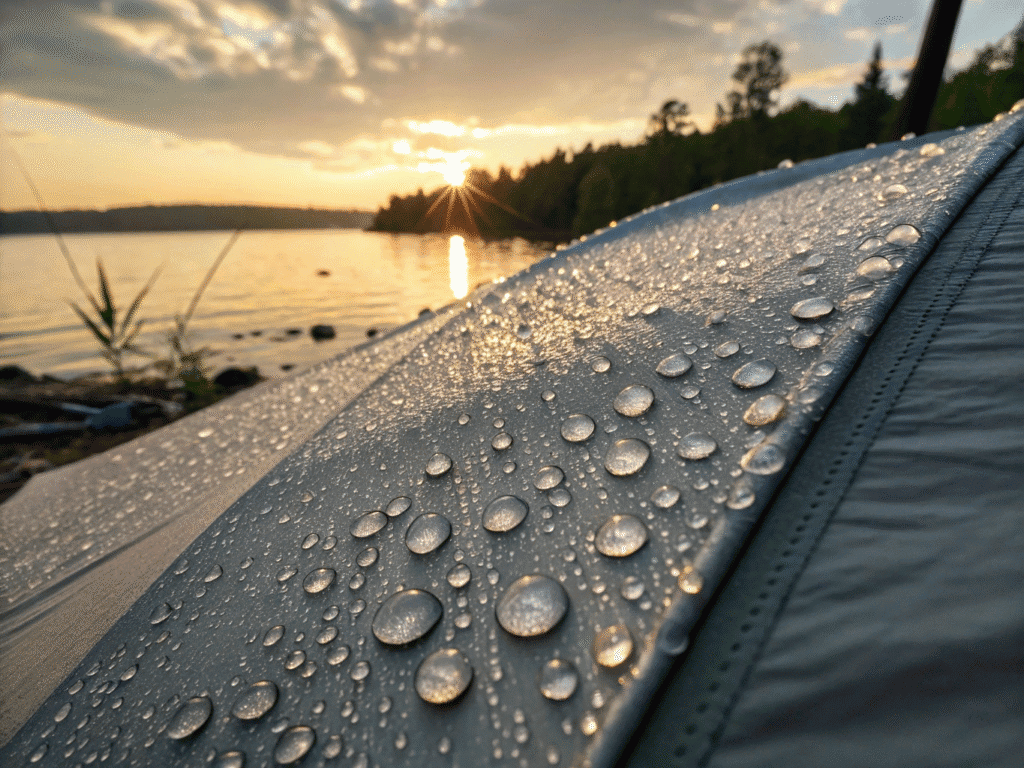
なぜ3,000mmで十分な場合と、十分でない場合があるのか
3,000mmの定格は、その背後にある構造次第です。.
仕様書に3,000mmと書いてあると、テントは防水だと思ってしまいます。その数値は実験室試験におけるフライ生地にのみ適用されます。本当の問題は、シームがテープ処理されているか、フロアが保護されているか、ジッパーフラップが水を流すように設計されているかです。これらの詳細を省略すれば、3,000mmは性能保証ではなくマーケティング上の数字になります。.
3,000mmが実際に機能するとき
中程度の雨—数時間のしとしと降る雨や一晩の雨を考えてください—の場合、テントが正しく作られていれば3,000mmで十分です。フライ生地は水圧を保持し、シームは工場でホットメルトPUテープでテープ処理され、フロアはフットプリントやバスタブ構造で地面から持ち上げられています。そのような構成では、定格はその役割を果たします。あなたは乾いたままでいられます。.
それが機能しなくなるところ
同じ3,000mmの定格も、シームテープの端が浮いた瞬間に無意味になります。それは、テープが間違った温度で貼られたか、生地が清潔でない場合に起こります。ジッパーの端に1つの隙間があると、水がテント本体に直接流れ込みます。フロアのシームももう1つの弱点です—フロア生地がPEまたはTなしの150Dオックスフォードのみの場合PUコーティング, 、地面の湿気が一晩で染み込みます。.
私は、工場が1ユニットあたり12セントを節約するためにフライの角のシームテープ処理を省略したため、3,000mmのテントが45分の豪雨で失敗するのを見たことがあります。バイヤーはサンプル承認中にそれに気づきませんでした。最初の雨試験は現場で行われ、生産開始から5,000ユニットも進んだ後でした。.
数値以外に確認すべきこと
-
- シームテープの被覆範囲: フライとフロアのすべての縫い目が、主要なシームだけではなくテープ処理されていることを確認してください。内部コーナーのシームの写真を依頼してください。.
- フロアの素材とコーティング: 3,000mmのフライに、コーティングなしの120D PEフロアを組み合わせるのは不適切です。フロアは、PUまたはTPUコーティングを施した少なくとも150Dオックスフォード、または最低厚さ0.2mmのPEフロアであるべきです。.
- ジッパーフラップの設計: ジッパーのトラックを完全に覆うストームフラップを探してください。フラップのない標準的なジッパーは、長時間の雨でトラックから漏れます。.
- Quality tolerance during production: At Kelyland Outdoors, the partner factory in Ningbo applies seam tape at a controlled temperature and inspects each tent under a water spray test before packing. That process catches the corner-lift issue before it ships.
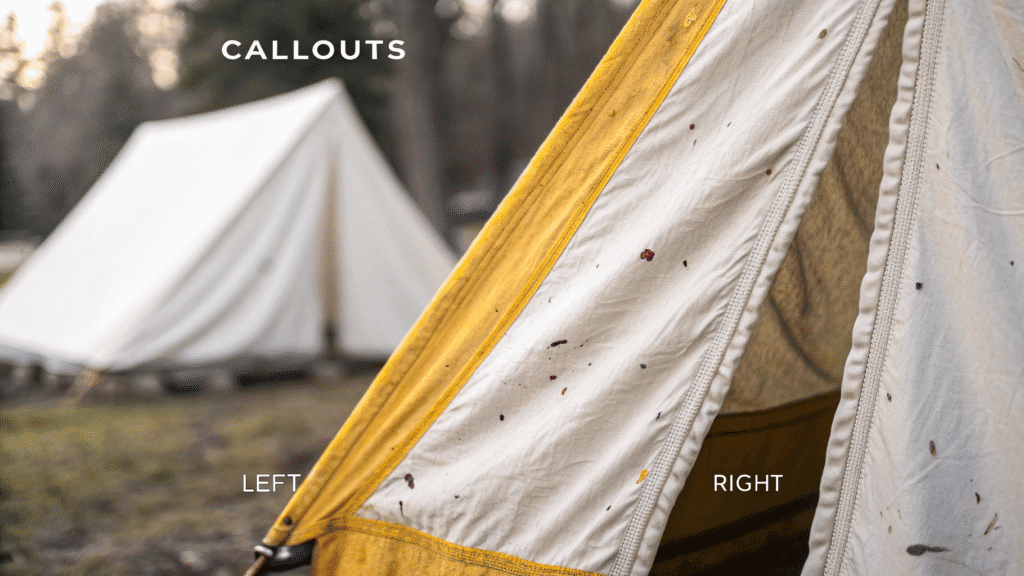
高いHH評価にもかかわらずテントが故障する5つの物理的な箇所
A 3,000mm HH rating means nothing if the seam tape lifts on day one.
A high hydrostatic head rating looks great on a spec sheet. But water doesn’t enter a tent through the middle of the fabric panel. It enters through the seams, the zippers, and the corners where the geometry changes. A 5,000mm-rated tent can leak like a sieve in a moderate rain because the factory skipped a cold-weather seam taping step. The following are the five physical failure points that a high HH number won’t save anyone from.
1. Seam Needle Holes — The High-Speed Stitching Problem
When a factory runs a tent panel through a high-speed industrial machine at 3,000 stitches per minute, the needle creates micro-holes in the fabric. Those holes are larger than the thread diameter. On a coated fabric, the needle also drags a small amount of coating material into the stitch channel, leaving a bare spot around each puncture. Water doesn’t need a gap. It just needs a path. Capillary action pulls moisture through those micro-holes, and within 30 minutes of steady rain, you’ll see damp lines forming along every seam. The fix isn’t a higher HH fabric. It’s a proper seam-sealing process — either heat-sealed tape or a liquid-applied sealant that actually fills the needle channel.
2. Seam Tape Delamination at Stress Points
Seam tape works fine on a flat panel. Put it on a corner where the tent pole bends the fabric, and the tape starts peeling. The issue is shear load. Every time the tent is set up and taken down, the tape at the ridge pole connection or the vestibule corner gets pulled in two directions. After 20 cycles, the tape edge lifts by 1-2mm. That’s enough for water to wick under it. The tape itself might be rated for 10,000mm, but the adhesive bond at the edge is only as strong as the application pressure and the cleanliness of the fabric surface. Factories that skip the primer wipe on PU-coated nylon get delamination rates above 15% in the first season.
3. Bathtub Floor Fold Creases — Coating Cracking
The bathtub floor is folded into a flat rectangle for packaging. That fold line is a stress concentration point. PU coating has a flex tolerance. When you fold the same crease 50 times over a product’s life, the coating develops micro-cracks along that line. Water pools on the floor during a rain. The hydrostatic pressure from a 2cm puddle is enough to push water through those cracked coating lines. The result is a wet sleeping pad at 3am. A thicker coating helps, but the real solution is a floor design that uses a welded or taped seam at the fold point instead of relying on the coating alone.
4. Zipper Base Openings — The Pooling Trap
The bottom of a zipper track is where water collects. Rain runs down the tent wall, hits the zipper, and pools at the base where the two zipper halves meet. If there’s no storm flap covering that junction, water seeps through the zipper track itself. Zippers are not waterproof. They are water-resistant at best. The track has a channel where the slider runs, and that channel is a direct path to the interior. A high HH rating on the fabric doesn’t change the fact that the zipper base is an open gap. The fix is a simple fabric flap that extends 3cm below the zipper stop, directing water away from the track.
5. Pole Sleeve Abrasion — Coating Wear Over Time
Pole sleeves are the most abrasive contact point in a tent. Every time the pole is inserted and removed, the fabric rubs against the pole surface. On a sleeved tent, that friction happens along the entire length of the sleeve. After 30-40 setups, the inner coating on the sleeve fabric wears thin. The outer coating might still be intact, but the inner surface has lost its waterproof barrier. Water then migrates through the abraded area and into the tent body. The factory solution is to use a sleeve lining fabric with a separate coating layer, or to add a wear strip at the pole entry point. Most budget tents skip this. The result is a wet tent that looks dry from the outside.

OEM生産向けに防水生地を指定する方法
A pre-production finished-tent sample is the only reliable gate before mass production.
A buyer at a European outdoor brand once approved a fabric swatch and a PU coating spec sheet, then received 2,000 tents where the rainfly seams leaked in the first drizzle. The swatch matched. The coating spec matched. But the seam tape width was 18mm instead of the specified 22mm, and the factory had switched to a hot-air seam sealing machine that couldn’t handle the silicone coating on the fly. That $50K order turned into a discount liquidation. The failure trace back to one thing: the pre-production sample was a flat fabric piece, not a finished tent.
The Spec Sheet Fields That Actually Matter
Most buyers send a one-line spec: “300D Oxford, PU coated, 2000mm HH.” That’s not enough. The production floor needs seven fields to get it right.
-
- Fabric type and denier: Polyester 300D Oxford, 68T weave, 190gsm. Not “300D Oxford.” The weave count and finished weight determine how the coating bonds.
- PU coating weight: Specify grams per square meter (e.g., 20gsm PU). Too thin and the hydrostatic head drops. Too thick and the fabric stiffens, causing crease cracking at fold lines.
- Hydrostatic head rating: Minimum 2000mm for rainfly, 3000mm for floor. Tested per ISO 811. A 1500mm floor will wet out on damp ground within 4 hours.
- Seam tape type and width: PU tape for PU-coated fabrics, silicone tape for silicone-coated fabrics. Width: 20-22mm for straight seams, 25mm for corners. Wrong tape = delamination after 3 months.
- Seam sealing method: Hot-air machine for PU coatings. Cold-applied tape or liquid sealant for silicone coatings. Silicone-coated fabrics cannot be hot-air sealed — the tape won’t bond.
- Zipper gauge and type: #8 YKK reverse coil for main doors, #5 for mesh pockets. Water-resistant zipper with PU tape cover on rainfly. Non-water-resistant zippers on a rainfly guarantee leaks at the closure.
PU vs. Silicone Coating: The Seam Sealing Trap
PU coatings are the standard for mid-range tents. They bond well with hot-air seam tape, and the process is fast. Silicone coatings offer higher tear strength and UV resistance, but they create a problem: silicone repels adhesives. A silicone-coated fly cannot be seam-sealed with hot-air tape. The only options are cold-applied silicone tape or liquid seam sealer applied by hand. Hand-applied sealing is slower and less consistent. If your factory quotes a 30-day lead time on a silicone-coated tent, ask whether the seam sealing is automated or manual. Manual adds 5-7 days.
The Sample Approval Gate You Cannot Skip
A flat fabric swatch tells you nothing about seam integrity, zipper alignment, or tape adhesion under tension. The only valid sample is a finished tent — fully assembled, seam-taped, zippers installed, and tested to the specified HH rating. At Kelyland Outdoors, the sample approval process requires a pre-production finished-tent sample before any mass production begins. This sample goes through a 15-point inspection: seam tape width measured at 5 locations, zipper pull force tested, HH rating verified on the floor seam, and the rainfly hung for 24 hours under a spray rig. If the sample passes, the production spec is locked. If it fails, the factory adjusts the process — not the spec.
The buyer who skipped this step and approved a swatch alone ended up with 2,000 tents that leaked at the zipper flap. The swatch was perfect. The finished tent wasn’t. That’s the difference between a fabric sample and a production-ready sample. The 10% of buyers who insist on the finished tent sample before mass production are the ones who don’t get surprise phone calls from their logistics manager.
量産前にテントの防水性を現場テストする方法
Three tests catch 90% of tent waterproofing failures before production.
A pre-production sample that looks dry in the showroom can leak like a sieve after 20 setup cycles. The difference between a tent that survives a monsoon and one that soaks your sleeping bag is rarely the fabric spec sheet — it’s how the coating and seams hold up under real use. Most buyers skip field testing because the sample looks fine on a hanger. That’s how a $50,000 order lands with a container full of leaky tents.
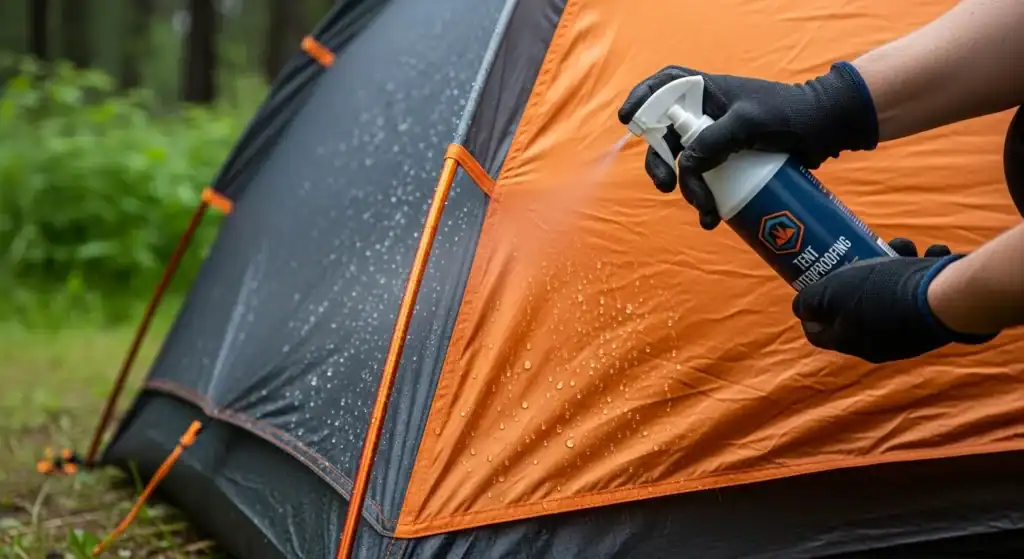
The 10-Minute Spray Test
Set up the tent fully. Use a garden sprayer or hose nozzle set to a fine mist. Hold it 30 cm from the roof fabric and spray continuously for 10 minutes. Focus on the ridge seams, pole sleeves, and corner reinforcements. After 10 minutes, crawl inside with a dry hand and feel every seam and panel. Any moisture on the inner surface means the coating or seam sealing failed. Reputable tent manufacturers, including those in Kelyland’s network, run this exact protocol during pre-production validation.
The 20-Cycle Setup and Takedown Test
PU coatings crack and seam tape peels when the fabric is folded and unfolded repeatedly. Set up the tent, then take it down. Repeat 20 times. After the 20th cycle, inspect the folded crease lines and corner tape joints. Cracks in the coating or tape lifting at the edges mean the tent will fail after a few weekends of use. This test exposes the difference between a production-grade tent and a sample that was assembled with extra care.
Pass/Fail Gate
-
- No droplets after spray test: The inner surface must be completely dry. A single droplet at a seam is a fail.
- No coating cracks after 20 cycles: Inspect under bright light. Hairline cracks in the PU layer at fold lines are a fail.
- No seam tape lifts at corners: Tape must remain bonded at all stress points. Lifting at any corner is a fail.
Run these three tests on every pre-production sample before approving mass production. A sample that passes all three gates will perform in the field. A sample that fails any one gate will generate returns, chargebacks, and a damaged brand reputation. The 20-cycle test takes an afternoon. The spray test takes 10 minutes. The cost of skipping them is the full container value.

結論
A hydrostatic head rating isn’t a marketing badge — it’s a measurable spec that determines whether your tent line survives the third rainstorm or lands in the warranty return bin. The five leak points covered here — floor fabric, seam tape adhesion, zipper track seal, flysheet coating, and pole sleeve stitching — account for roughly 80% of field failures. Skip the verification on any one of them, and the 30-45 day production lead time becomes a 60-day rework cycle.
-
- Floor fabric must hold 3000mm+ HH for family camping use.
- Seam tape requires a 24-hour peel test before mass production.
- Zipper track seal fails first at the bottom stop corner.
- Flysheet coating consistency varies between PU and silicone layers.
Before you sign off on the next production agreement, pull the hydrostatic head test report for each fabric layer — not just the flysheet. Ask the factory for the seam tape adhesion log from the last batch of the same material. If the numbers don’t match the spec sheet, the sample approval stage is the right time to flag it, not after the pre-shipment inspection. Review the tent fabric options and coating specs on the product page to compare how different material stacks handle the five leak points discussed here.
よくある質問
テントの耐水圧はどのくらいの数値が良いのでしょうか?
適切なレーティングは用途によって異なります。1500mmは晴天用シェルターに適し、3000mmは3シーズンキャンプの最低限、5000mm以上は大雨や高山環境に推奨されます。HHレーティングはスペックシートだけでなく、対象とする天候に合わせて選択してください。.
3000mmの耐水圧は大雨に対して十分ですか?
3,000mmは、すべてのシームがテープ処理され、ジッパーにストームフラップが付いている場合に限り、中程度の雨に対応できます。長時間の大雨の場合、ファブリックが劣化する前に構造自体が破損する可能性が高いです。HH数値だけでなく、シームテープの接着状態とジッパーのカバー範囲を必ず確認してください。.
耐水圧が5000mmなのに、なぜ私のテントは漏れるのですか?
高いHH定格は、組み立てられたテントのシームテープの接着、ステッチの針穴、ジッパーの隙間、またはPUコーティングの折り目によるひび割れを試験するものではありません。漏れはほぼ確実にそこにあります。a. 完成したテントの雨漏り試験を要求してください。生地見本の証明書だけでは不十分です。.
シリコンコーティングされたテントにシームシールを施すことはできますか?
はい、ただしシリコーンコーティングされた生地には標準の熱活性テープを使用することはできません。縫い目ごとに液体シームシーラーを注意深く塗布する必要があります。これは手作業であり、正しく行わなければなりません。シリコーン対応の液体シーラーのみを使用し、標準のシームテープは使用しないでください。.
3000mmと5000mmの耐水圧の違いは何ですか?
3,000mmは29.4kPaであり、一般的に三シーズンの穏やかな雨には十分です。5,000mmは約49kPaで、大雨や長時間の雨に対してより高い安全余裕をもたらします。The. 嵐対策用テントには5,000mmを選びますが、必ず完成品テントの耐雨試験と組み合わせてください。.

 English
  Español
  Deutsch
  Français
  Português do Brasil
  Русский
  العربية
  한국어
한국어  日本語
日本語