 콘텐츠로 건너뛰기
A $50,000 order went sideways because the pre-production sample of a modular inflatable tent didn’t match the mass production run. The zipper cuff looked fine in the sample room; on the production line it sat 12mm off, and every extension leaked air at the connection point. That gap between 샘플 승인 and actual batch output is where modular tent programs lose their margin.
For 2026, the three extension layouts worth evaluating are a porch vestibule, a sleeping wing, and a tunnel connector. Each solves a different space problem, but they share one technical make-or-break point: the joint. A simple zipper cuff costs less, but TPU-welded connectors add 15-20% to the unit cost and cut air leak complaints sharply. Custom-dyed TPU can match your tent wall color closely enough that the add-on reads as part of the original set, not an afterthought.
FOB pricing tells you the starting point, not the real cost. Run the math on a base tent plus two extensions; modular systems typically lift average transaction value by 30-40% if the add-ons look intentional. Benchmark to use on your next supplier call: ask for a 24-hour pressure-hold test on every connector, and reject any leak rate above 5%. That number separates inflatable tent modular extension manufacturers who understand quality tolerance from those who just stitch parts together.
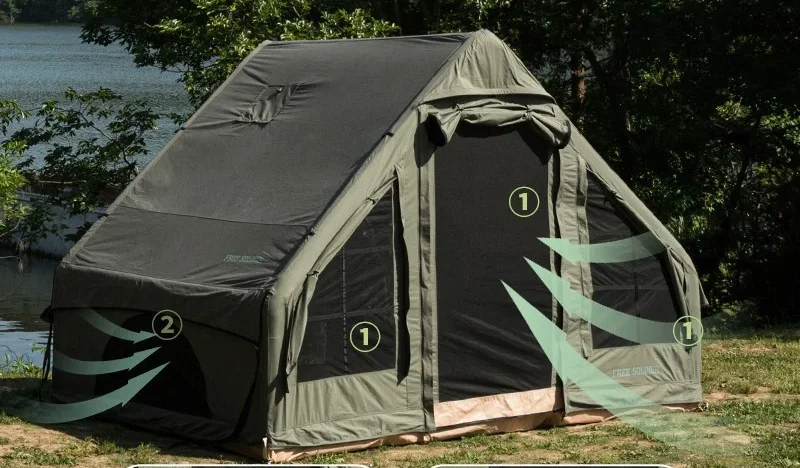
Why Modular Extensions Are the Next Retailing Hook
Modular extensions lift tent AOV by 30–40% and turn a one-time tent sale into a system sale.
Family campers no longer buy a tent for one trip. They buy a shelter system they can reconfigure across a season — a compact base for a couple of nights, a full camp for a week with kids. That shift is pushing modular inflatable tent demand from niche curiosity into core product strategy, across glamping sites and family campgrounds alike.
The manufacturing side already has the pieces. Kelyland’s supply network spans 17 core strategic factories, and the tent factory in Ningbo alone turns out 800,000 tents and tarps a year. The inflatable tent lineup covers solo shelters to 15-person glamping structures. Air-beam engineering is proven. The open question for 2026 is whether a family can add a room after purchase without buying a second tent.
That’s where the retail hook lives. A base tent plus add-ons lifts average transaction value by 30–40%, compared to the usual route of discounting a larger tent to move units. The second sale goes to an owner who already trusts the brand, so acquisition cost drops and the system margin beats a one-and-done tent sale.
The common mistake is assuming the answer is a bigger base tent. A 6-person inflatable tent spreads the cost of air beams, fabric, and valves across a single price point, and the buyer treats it as a commodity. Extensions flip that logic. The base tent sets the entry price; the porch vestibule and sleeping wing carry the margin.
The connector decides whether the extension sells
- Zipper cuff entry point: A simple zipper cuff is the lowest-cost way to attach an extension, but it’s a common source of air-leak complaints when the vestibule flexes in wind. It also caps the system at fair-weather use.
- TPU-welded connector: TPU-welded extension connectors add 15–20% to the cost of a zipper cuff, yet they hold pressure through three seasons and cut leak-related returns. Treat that premium as warranty-claim insurance, not an unnecessary upgrade.
- Fabric and color match: Custom-dyed TPU extension fabric can be matched to the base tent wall color, so the add-on reads as part of the original set. That visual consistency lets a brand price the extension at retail without customer skepticism.
For a brand manager planning a 2026 glamping line, the decision is less about floor space and more about system architecture. A generic 4-person or 6-person inflatable tent won’t differentiate a catalog. A base tent that accepts a custom inflatable tent porch vestibule or a sleeping wing add-on starts the retail conversation with a story — and finishes it with a higher basket value.
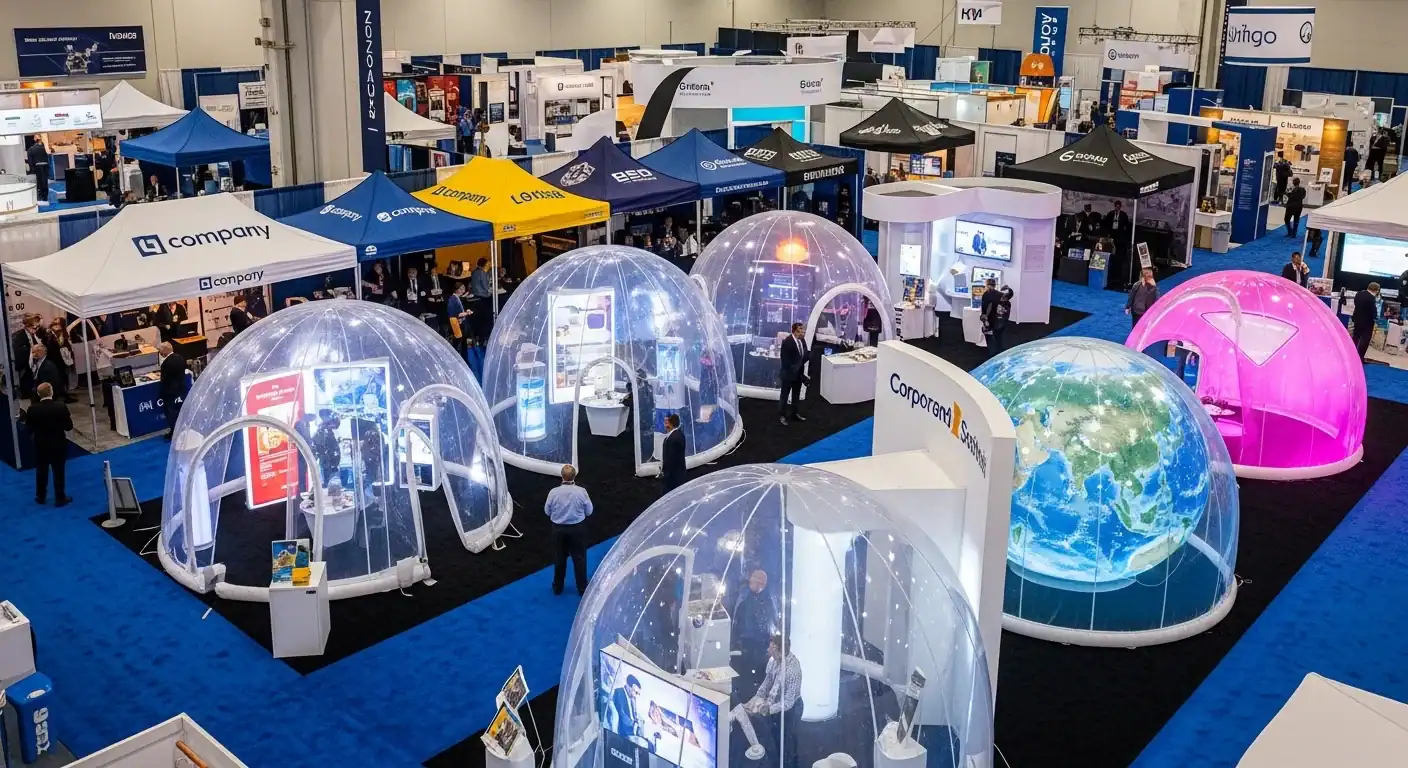
Layout 1: Inflatable Porch Vestibule Extension
A porch vestibule sells space.
The porch vestibule is the easiest extension to add to an existing inflatable tent line, but it is also the easiest to get wrong. Most failures trace back to the zipper cuff, not the canopy fabric or the TPU floor.
Zipper Cuff Compatibility
The zipper cuff is the only hard interface between the main tent and the vestibule. Match the zipper gauge, tape width, and slider orientation. Change any one variable and the extension binds when opening or gaps in wind-driven rain.
On a modular inflatable tent, the cuff is normally sewn into a TPU-reinforced panel that wraps around the existing door. That panel carries the weatherproofing load, so seam welding quality matters more than the vestibule’s fabric weight.
- Cuff spec: Verify the extension’s zipper matches the host tent’s exact zipper size, tape width, and slider orientation before approving a sample. The sample should be attached to an inflated tent, not zipped onto a table.
- Connector type: Simple zipper cuffs cost less, but TPU-welded connectors run 15-20% higher per unit and reduce air leak complaints while holding up for repeated 3-season use.
Kelyland’s partner tent factory in Ningbo—which outputs 800,000 tents per year and holds ISO 9001:2015—can run custom fabric dyeing and multiple printing methods. That matters when your vestibule needs to match a specific Pantone reference rather than sit beside the main tent as an obvious mismatch.
Target Market and Pricing Uplift
The porch vestibule buyer is not the ultralight backpacker. It’s the family camper or glamping operator who needs covered space for strollers, muddy boots, or a camp kitchen. Custom inflatable tent porch vestibule options give a brand a way to serve that user without redesigning the whole tent.
The commercial math is simple: modular systems let retailers sell a base tent plus add-ons, increasing average transaction value by 30-40%. The pricing uplift is the point. A vestibule is a margin-rich add-on because it shares zipper hardware and fabric sourcing with the main tent.
Get the sample approval process right—Kelyland’s 10-step workflow puts sample sign-off before mass production—and this extension can quietly become your most profitable line item in 2026.
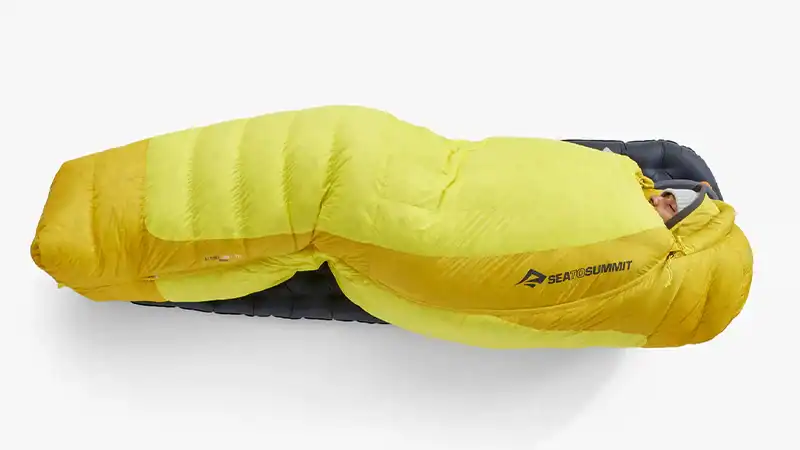
Layout 2: Inflatable Sleeping Wing Add-On
TPU-welded sleeping wings cost 15–20% more than zipper cuffs but slash leak complaints and hold up across three seasons.
A sleeping wing is a different engineering problem than a porch vestibule. The fabric panel spans a wide horizontal surface, so the air beams carry a continuous load. If the wing shares the main tent’s air system, you need pressure balancing between zones. If it runs on an independent valve, the pressure difference across the shared wall can deform the connection point. Independent inflation is the better route for family campers who set up in rain and want the main tent to stay rigid while the wing is being adjusted.
Air Beam Connection and Pressure Balancing
그리고 air beam connection has to handle both pneumatic pressure and mechanical stress. The TPU weld at the junction needs to be wider than a standard seam because the wing fabric pulls at an angle. Kelyland Outdoors’ partner network includes an air mattress factory in Xiangyang with an annual output of 2.5 million units; that plant’s work with TPU-welded chambers directly supports the air-tube construction used in modular inflatable tents. Partner factories follow ISO 9001:2015 standards, which matters here because pressure-balancing tests are only meaningful when the production process stays consistent from batch to batch.
The cost difference comes down to connection style. Simple zipper cuffs are cheaper and fine for a wind-block panel, but they create a leak path and can’t hold the internal pressure needed for a sleeping space. A TPU-welded connector adds 15–20% to the component cost and removes that failure point. For a premium glamping line, the math favors TPU welding. For a budget car-camping range, zipper cuffs might still work — just expect more leak-related returns in cold weather.
- Pressure balancing: Independent inflation valves let users set the sleeping wing pressure without deflating the main tent. Shared air systems need a manifold, or one side goes soft while the other over-tightens.
- Weld width: The TPU weld at the wing-to-tent junction should be wider than a standard seam because the wing fabric pulls at an angle. A narrow weld fails first in gusty conditions.
- Batch consistency: Pressure tests on samples don’t guarantee production quality. Inspect the connector weld and air-beam seam on every production batch, not just the pre-production sample.
Fabric Matching for Visual Consistency
A sleeping wing in a slightly different shade reads as an afterthought, and that kills the premium glamping positioning. Custom-dyed TPU extension fabric can match the existing tent wall color so the add-on looks like part of the original set. The base cloths — polyester, Oxford, and TC blends — are already in the supply chain, so the extra work is mainly in dyeing and confirming colorfastness under UV exposure rather than sourcing a brand-new material.
Get the fabric match approved at the sample stage, then lock the dye recipe into the production spec. That is the only way to keep the sleeping wing visually identical across reorder batches. Modular glamping tent extensions wholesale programs fail when the add-on arrives with a two-tone mismatch that buyers notice immediately on the campsite.
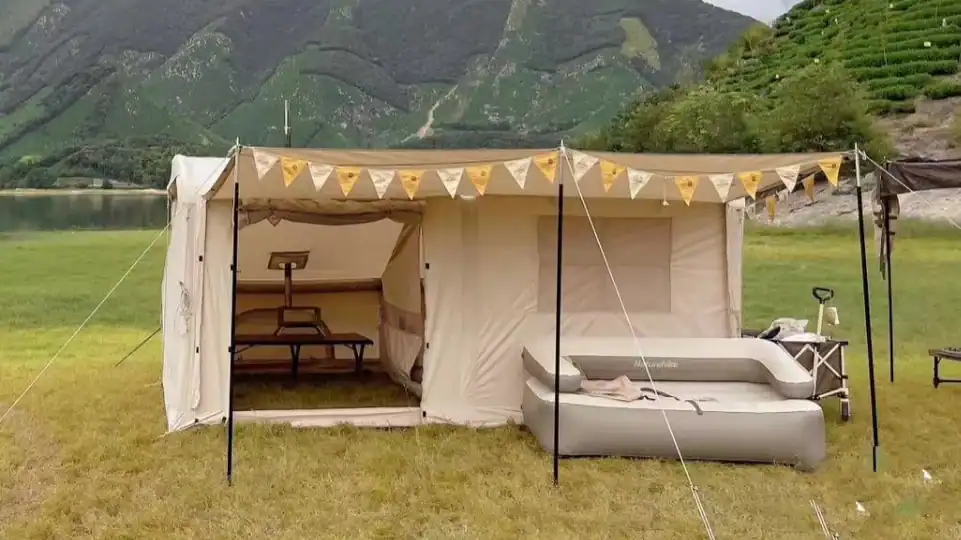
Layout 3: Inflatable Tunnel Connector for Multi-Tent Systems
The tunnel connector is the highest-leak-risk component in a modular inflatable tent system.
Of the three extension layouts, the tunnel connector is the most technically demanding. It carries air pressure between two independently pitched tents, seals at both ends, and takes wind load in the exposed gap. A zipper cuff with stitched seams will hold for a season or two. Then the needle holes around the zipper tape begin bleeding air.
TPU-welded connectors cost 15-20% more than simple zipper cuffs. That premium buys a radio-frequency welded seam with no stitch perforations, which is what keeps pressure stable through the cold-weather stiffness of PVC and PU materials. For a 3-season product line, the upgrade pays for itself in reduced warranty claims and fewer returns.
TPU Molding and Leak Prevention
The two spots where tunnel connectors fail are the welded overlap joint and the interface ring. The lap seam must be RF-welded, not stitched — even the smallest needle holes create micro-leaks at operating pressure. The end rings, which mate with the tent wall ports, should be custom-molded so the mating surface is consistent rather than hand-fitted.
- Seam construction: RF-welded TPU overlap joints eliminate stitch perforations and hold pressure at low temperatures where PU stiffens and cracks.
- Interface molding: Custom-molded end rings create a repeatable seal between the connector and the tent wall, reducing installation errors by end users.
- Pressure balancing: A shared air beam bridge equalizes pressure between two tents so wind force on one side doesn’t deflate the other.
Batch-to-batch consistency is where most sourcing projects fail. The Camping Tent & Tarp factory in Ningbo that Kelyland Outdoors works with produces 800,000 tents annually under ISO 9001:2015, and every production stage is inspected before shipment. That matters for a connector because the RF welding dies and molding tolerances must stay identical across every production run.
Retail Display and Bundle Packaging
Modular systems let retailers sell a base tent plus add-ons, increasing average transaction value by 30-40%. The tunnel connector is the gateway SKU — a customer who buys a 4-person tunnel tent at checkout is the same customer who adds a sleeping wing and a connector when the bundle is offered. The connection layout becomes the differentiator on shelf.
Custom-dyed TPU extension fabric can match existing tent wall colors so the add-on looks like part of the original set. A black connector on a sand-colored tent reads as an aftermarket hack. For OEM/ODM lines, specify Pantone-matched dyeing at the sample approval stage so the full system appears as one designed family. That visual consistency drives the premium price point.

How to Launch a Modular Inflatable Tent Line
从设计冻结到装运前检验,一个模块化充气帐篷系列在样品签收后需要30-45个生产日。但很多品牌经理没意识到,这30-45天并不包括最初的样品迭代周期。.
在Kelyland Outdoors,标准生产周期就是30-45天,但计时是从生产协议签署后开始的。在那之前,你会经过一个10步流程,其中三个关键节点决定你的上市速度:需求收集、设计,以及最重要的样品批准。对于模块化充气帐篷,样品批准不能只看面料颜色和缝线,你还得验证空气梁焊接完整性、压力保持力和连接器兼容性。.
样品阶段:最容易低估的时间陷阱
很多品牌经理把样品当成一道静态检查关。但在充气帐篷里,这恰恰是产品失败的高发区。如果TPU焊接连接器或气阀设计有问题,漏气问题只有在压力测试时才会暴露。所以,真正完整的样品流程通常要两到三轮:工程原型、视觉确认、然后修改。根据产品复杂程度,这会额外增加2-4周。.
生产阶段:30-45天里真正发生的事
样品批准后,项目进入材料采购。模块化帐篷的采购清单不只是面料和拉链,还包括空气梁、TPU连接器、压力阀和定制模具。Kelyland Outdoors依靠17个核心战略工厂和200多家稳定合作伙伴组成的网络,让采购、生产、检查同步推进。合作伙伴工厂多数通过ISO 9001:2015认证,每个生产阶段都有检查,报告可随时调阅。.
- 材料采购: 最耗时的环节,尤其是定制染色的面料和TPU连接器。如果面料需要重新染色,预留7-10天并不夸张。.
- 裁剪与缝制: 帐篷主体的缝制需要10-15天,取决于尺寸和结构复杂度。.
- 空气梁焊接与组装: 这是充气帐篷的独有工序。焊接质量直接影响气密性,通常需要5-7天,并包含压力测试。.
- 质量控制和装运前检验: 出货前逐项检查缝合、机制和整体合规性,预留3-5天。.
如果你的订单量低于通常的300-1,000件起订量,Kelyland Outdoors部分帐篷型号的最低起订量可以做到50-100件。小批量生产的优势是生产线切换快,但代价是定制模具和面料染色的固定成本分摊周期变长。对想先测市场反应的小品牌来说,这仍然是最稳妥的起跑方式。.
给你一个可以直接写进采购文件里的基准:从样品批准到货物备妥装运,35天是可靠的交期承诺。任何低于30天的承诺都值得警惕,除非供应商已经做过完全相同的设计并且你只改了颜色。在下单前,先问清楚他们能否并行处理材料采购和生产准备,这比合同里的任何违约金条款都更有实际意义。.
결론
Modular extensions turn a single inflatable tent SKU into a system that grows with the customer. The layout you choose affects everything from connector tooling to the packaging story, so the decision deserves the same rigor as the base tent spec. Get the zipper cuffs, pressure balancing, and TPU welding right, and you ship a line that feels complete from day one.
- TPU-welded connectors cost 15-20% more than zipper cuffs but cut air leak complaints and extend usable seasons.
- Modular add-ons raise average transaction value per tent by 30-40%, a compelling retail basket story.
- Ask suppliers for a connector pressure test report and zipper cuff gauge spec before approving samples.
Before you shortlist inflatable tent modular extension manufacturers for 2026, run each layout past your product team with a simple question: can the retail customer set this up without calling support? Compare sample lead times and connector quotes across suppliers, and review the current inflatable tent lineup on the Kelyland Outdoors product page to benchmark what a complete modular system looks like.
자주 묻는 질문
2026년에 새로운 모듈식 에어 텐트 레이아웃은 무엇인가요?
세 가지 새로운 레이아웃은 팽창식 현관 베스티블, 침실 날개 추가 모듈, 그리고 다중 텐트 시스템용 터널 커넥터입니다. 각 레이아웃은 기존 에어 빔 및 지퍼 커프 호환성에 따라 달라지므로, 레이아웃을 선택하기 전에 현재 텐트 사양을 검토하세요.
모듈식 에어텐트의 MOQ는 얼마인가요?
MOQ는 품목에 따라 다릅니다: 일부 제품은 50-100개까지 낮을 수 있는 반면, 표준 모델은 일반적으로 300-1,000개가 필요합니다. TPU 커넥터 및 에어 빔과 같은 맞춤형 모듈 부품은 MOQ를 더 높일 수 있습니다. 정확한 MOQ를 확인하려면 사양 기반 견적을 요청하세요.
맞춤 텐트 라인의 생산에는 얼마나 걸리나요?
표준 생산 리드타임은 샘플 승인 후 30-45일이며, 수량과 맞춤화 수준에 따라 달라집니다. 10단계 프로세스는 디자인 및 프로토타입 승인으로 시작되므로, 그 시점부터 기간이 산정됩니다. 샘플 라운드와 선적 전 검사를 위한 추가 시간을 확보하십시오.
Can I customize modular tent fabric and branding?
Yes, OEM/ODM customization includes fabric dyeing, multiple printing methods, custom-molded parts, and personalized packaging. For modular layouts, specify air beam connections and zipper cuffs during the design phase to avoid sample-to-production mismatch. Lock down materials and connection specs in the sample stage.

 English
  Español
  Deutsch
  Français
  Português do Brasil
  Русский
  العربية
  한국어
한국어  日本語
日本語