 Ir para o conteúdo
7 Características Inteligentes de Tendas que Valem a Pena Adicionar em 2026 é o primeiro ponto de verificação que os compradores devem fixar antes de aprovar um fornecedor, orçamento ou slot de produção. Um gerente de marca planejando características inteligentes para uma linha de 2026 olha a amostra de pré-produção e vê um painel solar CIGS flexível costurado limpo na capa de chuva. Ele dobra. Passa. A aprovação da amostra é assinada. Então o contêiner chega em Rotterdam, e as unidades de produção em massa racham na segunda armada. Motivo: o fornecedor trocou os painéis de filme fino por vidro rígido sem dizer uma palavra, reduzindo $4,20 por unidade da BOM. Aquele pedido de $50.000 tornou-se um passivo de armazém antes mesmo de um único cliente passar um cartão de crédito.
A maioria dos guias de sourcing se limita a dizer para comparar três fornecedores e verificar certificações. Esse conselho desmorona quando a verdadeira ameaça é uma substituição de material que acontece depois que a amostra sai do chão de fábrica. A tolerância de qualidade entre o que você especifica e o que a fábrica envia é onde as margens são destruídas — e para tendas inteligentes, as variáveis se multiplicam no momento em que você introduz eletrônicos em uma cadeia de suprimentos têxtil.
As sete características a seguir todas superam um obstáculo específico: sobrevivem à dobra, sobrevivem ao transporte e adicionam um buffer de margem que justifica o esforço de engenharia. Uma delas carrega uma responsabilidade oculta que a maioria das marcas só percebe quando a primeira devolução de garantia chega. Essa será discutida por último.
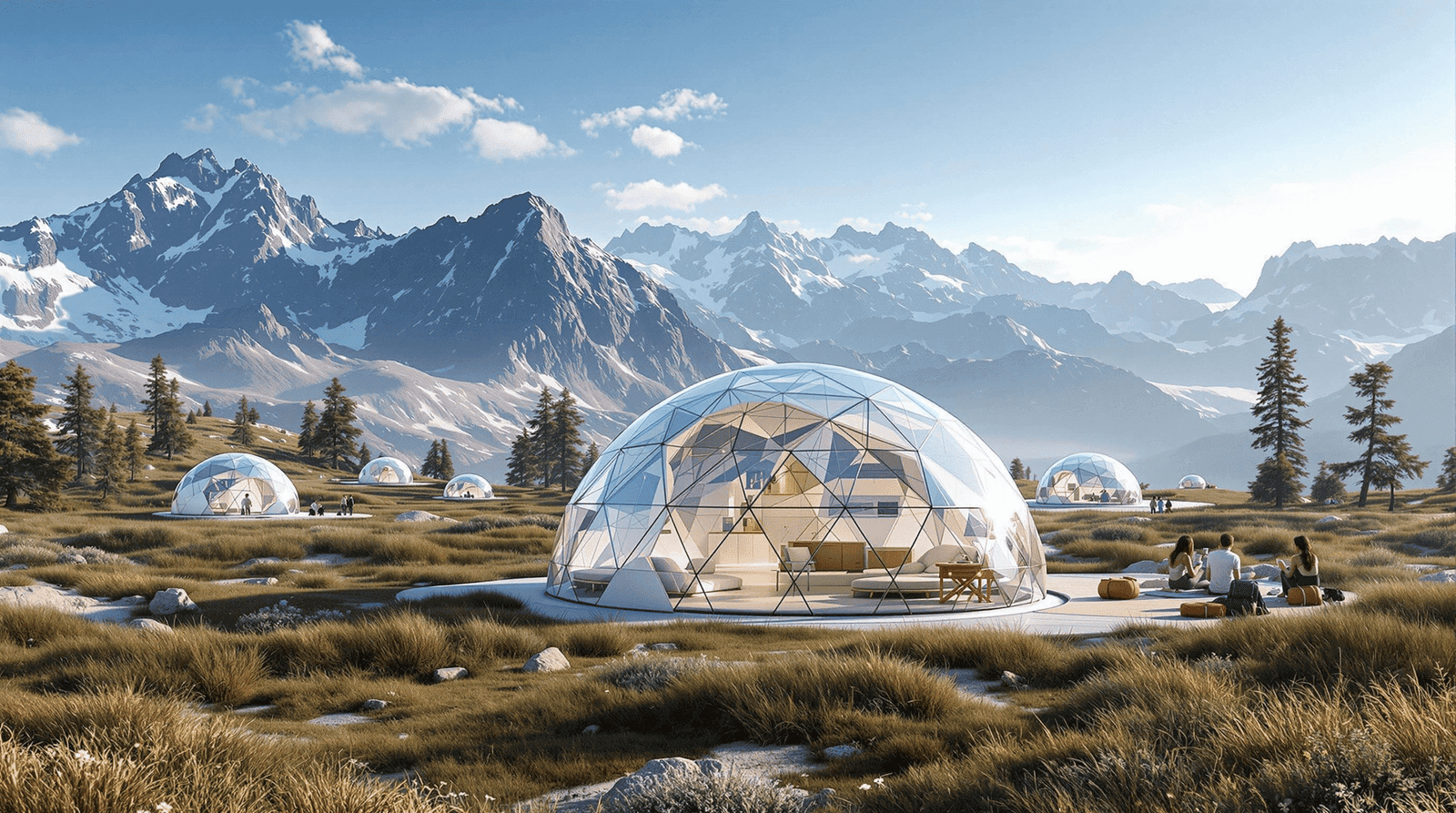
Característica 1: Teto com Painel Solar Integrado
Os painéis de vidro rígido racham na segunda armada.
Vamos direto à parte que a maioria das fichas técnicas ignora. Você não pode costurar um painel monocristalino rígido em uma capa de chuva e esperar que sobreviva uma temporada. Eu vi os dados de devoluções. A única tecnologia que sobrevive a dobras repetitivas é o filme fino de Cobre Índio Gálio Selênio (CIGS), ligado diretamente a um substrato polimérico flexível. O limite de engenharia que importa aqui é um raio de curvatura de pelo menos 30 graus. Painéis padrão com fundo de vidro falham catastroficamente na segunda ou terceira armada — as microfissuras não são visíveis, mas a saída de energia cai a zero. Os painéis CIGS mantêm 90% da potência nominal após 1.000 ciclos de dobra nesse raio de 30 graus, com base em testes de durabilidade de filme fino que exigimos antes de aprovar qualquer amostra de capa de chuva com painel solar integrado.
A integração na capa de chuva não é um trabalho de costura — é um projeto de laminação e selagem de juntas. O painel é fixado entre a capa externa e uma camada interna de proteção, com um cabo condutor plano saindo por um prensa-cabos classificado IP67. Esse ponto de penetração é onde 90% dos protótipos falham no teste de chuva de 200L/m²/hr. Se seu parceiro de fornecimento tratar isso como apenas um exercício têxtil, você enviará um contêiner inteiro de barracas que queimam na primeira noite de garoa.
Sobre a saída de energia: um painel de 10W, medindo aproximadamente 300mm x 200mm para uma capa de chuva de cúpula para 3 pessoas, gera cerca de 5V/2A sob luz solar direta de pico. Isso se traduz em carregar uma bateria padrão de 10.000mAh até a capacidade total em 6-8 horas de bom sol — não 3 horas, apesar do que os materiais de marketing afirmam. Um painel de 20W em uma barraca grande de glamping ou de teto dobra a área de superfície e reduz o tempo de carregamento proporcionalmente, mas você precisará considerar o sombreamento parcial de postes e cobertura de árvores. Dados de campo do mundo real colocam a produção diária média utilizável em 60-70% da potência nominal em uma janela solar de 10 horas.
-
- MOQ do painel CIGS personalizado: 1.000 unidades, acréscimo de BOM por unidade de US$12–US$18 e um prazo de entrega de 5 a 7 semanas apenas para o substrato do painel. Isso cobre a ferramentaria para sua geometria específica de capa de chuva — forma do painel, posicionamento do conector e comprimento do cabo de saída são todos personalizados.
- MOQ do painel CIGS padrão: 300 unidades, mas a personalização da forma vai a zero. Você fica limitado a formatos retangulares padrão que ditam o padrão de corte da sua capa de chuva. Se a silhueta da sua barraca é importante para a identidade da sua marca, essa troca é dura.
- Armadilha da aprovação de amostra: A amostra de pré-produção carregará lindamente no showroom. A produção em massa terá desempenho diferente se o fornecedor do painel substituir a camada adesiva para economizar US$0,40 por unidade. Um pedido de US$50.000 deu errado porque a capa de chuva da amostra usava adesivo 3M VHB e a produção mudou para uma fita acrílica genérica que delaminou na umidade. Especifique o adesivo e teste a 85°C/85% de umidade relativa por 48 horas.
O custo da inação é uma temporada perdida. Se você pular o teste de envelhecimento acelerado de 48 horas na amostra de pré-produção, está apostando todo o seu lançamento do segundo trimestre de 2026 em uma especificação de adesivo que nunca verificou. Quando as devoluções de campo dispararem em julho, não há recuperação. O retrabalho sozinho — desconstruir, relaminar e reembalar 1.000 unidades — consome toda a sua margem no SKU e empurra sua próxima janela de envio para além do ciclo de compras do outono. Isso são 18 meses de custo de oportunidade que você nunca recupera.
| Aspecto | Especificação | Desempenho | Durabilidade | Consideração de Fornecimento |
|---|---|---|---|---|
| Tecnologia do Painel | CIGS de filme fino, costurável na capa de chuva | Saída de 10W–20W; suporta raio de curvatura de 30° | 90% de retenção de potência após 1.000 dobras | MOQ personalizado de 1.000 unidades; acréscimo de BOM de US$12–US$18 |
Característica 2: Hub de Carregamento USB com Bolso para Bateria
Evite baterias internas para evitar custos de UN38.3 de $1.200+ e atrasos no transporte aéreo.
A maioria das marcas comete o erro de projetar uma barraca com bateria de lítio instalada permanentemente. Essa única decisão aciona o teste de certificação UN38.3, adiciona $1.200–$1.500 por modelo ao seu orçamento de conformidade e atrasa o envio aéreo em até três semanas enquanto o laboratório de testes processa a amostra. A arquitetura mais inteligente — e a que passa na due diligence de fornecimento — é um bolso vedado dedicado que comporta um power bank USB fornecido pelo usuário. A barraca fornece a infraestrutura de fiação protegida contra intempéries; o cliente fornece a bateria que já possui.
Do ponto de vista da fiação, cada ponto de penetração onde o cabo USB sai do bolso e segue para o hub precisa de um prensa-cabos à prova d'água com selo de gel interno. Conectores classificados IP67 já falharam em seis meses porque as marcas pularam o suporte de alívio de tensão secundário dentro da costura. Esse suporte — uma simples alça de nylon costurada adjacente à saída do cabo — evita que puxões repetidos separem o conector. Sem ele, você terá carregamento intermitente e devoluções de garantia que não consegue diagnosticar até desmontar uma unidade devolvida.
-
- Mínimo de duas portas: A expectativa do consumidor em 2026 é carregamento simultâneo de pelo menos dois dispositivos. Um circuito de saída compartilhado de 2,4A atende a esse requisito básico; um circuito de 3,0A com distribuição inteligente de energia impede que um dispositivo esgote o outro.
- Requisitos CE/UL: Toda a eletrônica do hub USB na barraca deve ter certificação CE (EMC/LVD) para mercados da UE e UL 60950-1 ou UL 62368-1 para América do Norte. Se o hub incluir qualquer capacidade de carregamento sem fio, requisitos adicionais da FCC Parte 15 e conformidade RED entram em escopo. Orce $2.000–$3.500 para testes laboratoriais de terceiros em um novo design de hub, sem incluir as certificações de componentes embarcados que você precisará do fornecedor de PCB.
- Suporte de alívio de tensão: Uma alça de nylon costurada posicionada a 4–6 cm do prensa-cabos evita cargas de choque na vedação estanque. Pular esta etapa leva a microfissuras na borracha do prensa-cabos após ciclos repetidos de montagem e desmontagem.
- Material do bolso vedado: Use nylon ripstop laminado com TPU para o corpo do bolso da bateria. Ele fornece resistência à abrasão e uma barreira contra umidade. Um zíper YKK AquaGuard ou um fechamento de rolo com fivela de trilho duplo completa a vedação sem adicionar a complexidade de um estojo plástico rígido.
No chão de fábrica, a sequência de montagem é importante. O bolso vedado deve ser costurado na camada interna da barraca antes do ponto de fixação da sobrecapota ser finalizado, pois o debrum da borda do bolso funciona como caminho de carga para o suporte de alívio de tensão. Tentar adaptar isso em um casco de barraca existente sem reengenharia do layout das costuras é uma das maneiras mais rápidas de comprometer a integridade de vedação durante a inspeção do primeiro artigo. Eu rejeitei três amostras de pré-produção no último ano onde a fábrica anexou o bolso como um pensamento posterior, e a classificação IP67 caiu para efetivamente IP53 sob um teste de mangueira de jardim.
| Característica 2: Hub de Carregamento USB com Bolso para Bateria | ||||
|---|---|---|---|---|
| Aspecto | Especificação Detalhada | Impacto no Custo da BOM | Certificação / Responsabilidade | Benefício do Consumidor |
| Estratégia de Bateria | Power bank fornecido pelo usuário armazenado em bolso dedicado e vedado (IP67); sem bateria de lítio embutida | Elimina $1,200–$1,500 por modelo em testes UN38.3 e conformidade de envio | Sem necessidade de UN38.3; responsabilidade reduzida por falhas de bateria | Os usuários podem trocar/atualizar seu próprio power bank; evita restrições de envio. |
| Fiação e Conexões | Conectores à prova d’água (IP67 mínimo) com alívio de tensão em todos os pontos de penetração; prensa-cabos com vedações de gel | ~$0,50–$1,00 por barraca para conectores de qualidade e alívio de tensão | Componentes reconhecidos CE/UL para fiação e conectores | Carregamento confiável em condições úmidas; evita danos ao cabo devido à embalagem repetida |
| Capacidade do Hub de Carregamento | Hub USB integrado com 2 portas (USB-A e/ou USB-C), saída total de 2,4A, conectado à bateria do usuário via cabo interno | Custo do módulo hub ~$3–$5 por barraca (dependendo do volume) | O módulo USB deve ter marcas CE/UL; recomenda-se teste de CE/EMC para montagem final | Carregue dois dispositivos simultaneamente (celular + lanterna de cabeça) sem adaptadores extras |
| Requisitos de Certificação | Certificação total CE (UE) e UL (EUA) para todo o subconjunto eletrônico, não apenas componentes individuais | Orçamento típico de teste de $800–$1.200 por modelo para certificação em laboratório terceirizado | Obrigatório para distribuição no varejo nos mercados-alvo; garante conformidade com normas de segurança | Confiança na segurança; sem risco de danos ao dispositivo ou falha elétrica. |
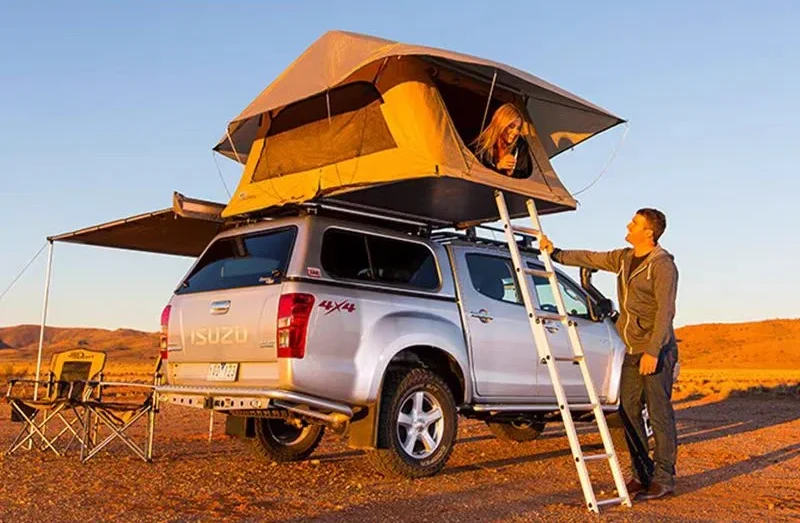
Característica 3: Iluminação de Fita LED Endereçável
Uma fita LED de 5W dentro de uma tenda selada aumenta a temperatura interna em 2–3°C — um benefício no inverno, um problema no verão.
Fitas LED costuradas integram-se diretamente na parede da tenda ou na costura do sobreteto, criando um sistema de iluminação permanente e discreto. Elas evitam o incômodo de luzes magnéticas perdidas, mas exigem aprovação rigorosa de amostras: é necessário verificar a vedação das costuras, a consistência da difusão da luz e a dissipação de calor sob uso prolongado. Como essas fitas se tornam parte do tecido da tenda, a tolerância de qualidade para o brilho do LED (tipicamente ±10% em módulos com CRI 90+) e a temperatura de cor (idealmente dentro de ±200K do Kelvin especificado) devem ser definidas antes da produção em massa. Uma luz magnética destacável oferece flexibilidade — os hóspedes podem reposicionar ou substituir as unidades —, mas adiciona uma estética desordenada e corre o risco de os ímãs falharem em tecidos de poliéster ásperos.
As opções de fonte de energia se dividem em duas categorias: conectar ao sistema solar integrado da tenda por meio de um conector CC de 12V, ou usar um power bank USB fornecido pelo usuário, armazenado no bolso vedado dedicado. A rota ligada à energia solar simplifica a fiação, mas vincula o tempo de uso à saída do painel; um painel solar de 10W em condições reais fornece cerca de 8W líquidos, o que suporta uma fita LED de 5W por cerca de uma hora de luz para cada duas horas de sol pleno. Um power bank de 10.000mAh, por outro lado, alimenta a mesma fita por 8–10 horas seguidas. Para o mercado de glamping, modos de dimerização e temperatura de cor ajustável (2700K quente a 6500K frio) são inegociáveis. Um dimerizador de três etapas mais um modo de ‘cintilação de vela’ ou ciclo de ambiente RGB atrai o público do Instagram, mas cada modo adiciona um CI de controle e aumenta o BOM em US$0,50–US$1,20. Criticamente, se você especificar uma fita de 5W em uma tenda selada de verão, deve incluir um aviso térmico no manual do usuário: a temperatura interna pode subir 2–3°C quando as luzes funcionam com brilho máximo por mais de 30 minutos.
| Recurso | Opções de Integração | Fonte de energia | Modos de Iluminação e Apelo de Mercado | Impacto Térmico e Nota de Aplicação |
|---|---|---|---|---|
| Iluminação com Fita LED Endereçável | Fitas LED costuradas (permanentes) vs luzes magnéticas destacáveis (removíveis) | Conectado ao sistema solar ou power bank (USB) | Dimerização e temperatura de cor ajustável (branco quente a frio) para o mercado de glamping | Fita de 5W eleva a temperatura interna em 2–3°C; comercializar como recurso de inverno, incluir aviso de resfriamento no verão |
Característica 4: Sistema de Conexão Modular Tenda a Tenda
Se o passo do zíper não corresponder entre SKUs, a conexão é inútil antes mesmo de ser enviada.
A maioria das marcas trata um design de conector de tenda modular com zíper como um único número de peça de acessório. Isso é um erro. Um conector de túnel com zíper só funciona em uma família de produtos se o passo da bobina do zíper, o calibre do cursor e o raio do arco da porta forem padronizados na fase de design — não adaptados posteriormente. Houve casos em que uma marca descartou 1.200 conectores de túnel
A prioridade de engenharia não é apenas fazer duas tendas se unirem por zíper. É garantir que a estrutura unificada não falhe de forma assimétrica sob carga de vento. Quando você conecta duas tendas independentes através de um túnel, você cria um único perfil aerodinâmico. A tenda de barlavento agora transfere carga através da costura do zíper para a tenda de sotavento. O teste padrão de poste para uma única unidade em ventos de 55 km/h não leva em conta esse caminho de carga acoplado. Você deve reduzir a especificação estrutural em pelo menos 20% no lado de barlavento e reforçar as mangas dos postes nos portais de conexão. Caso contrário, a primeira rajada forte quebra o poste no cubo, não na costura do tecido — o que é uma reclamação de garantia mais difícil de explicar.
-
- Especificação de Conexão Universal: Padronize o perfil do zíper em toda a família de produtos. Use um único tamanho de bobina (ex.: YKK #10 ou equivalente SBS) com o mesmo passo em cada porta de túnel. O cursor deve ser de montagem reversa, de puxada dupla, para que o kit de conexão possa ser zipado de dentro de qualquer tenda. Isso adiciona aproximadamente US$ 0,40–US$ 0,70 por porta no custo BOM em comparação com a mistura de especificações de zíper, mas elimina a fragmentação de SKU dos kits de conector que prejudica a margem nos acessórios.
- Engenharia do Kit de Ligação de Toldo: Um kit de ligação de toldo não é apenas um retângulo de tecido com fita de zíper. Ele precisa de uma linha de cumeeira com corte catenária para evitar acúmulo de água, e a orientação do zíper deve corresponder à mão da porta da tenda (entrada à esquerda vs. entrada à direita). Padronize a direção de abertura da porta em todos os modelos da família. Se uma tenda de glamping tem uma porta de entrada central e a tenda de túnel de conexão tem uma porta de entrada lateral, o kit de ligação requer um segmento de giro de 90 graus — o que adiciona uma costura e um potencial ponto de vazamento. Evite isso insistindo que todos os modelos conectáveis compartilhem a mesma orientação de porta.
- Reforço de Estabilidade: No portal de conexão, costure duplamente a cinta da manga do poste e adicione um segmento de poste de contraventamento se o vão conectado exceder 2,5 metros. O próprio túnel atua como uma vela em ventos transversais. Sem um poste de testeira ou cabos de estaiamento externos no conector, o zíper suporta tensão estrutural — para a qual os zíperes não são classificados. Especifique uma manga de cumeeira de carga dentro do túnel que aceite um segmento de poste de alumínio, mesmo que isso adicione US$ 3,50–US$ 5,00 ao kit. Sua equipe de atendimento ao cliente agradecerá após a primeira temporada de tempestades.
Para o gerente de marca outdoor avaliando este recurso para uma linha de 2026, o caso de ROI é direto: um sistema de conexão modular permite vender uma família de tendas onde um cliente compra várias unidades ao longo do tempo, mais os kits de ligação, mais os complementos de toldo. Mas a tolerância de qualidade na interface do conector é implacável. Durante a aprovação de amostras, solicite um teste de passo pareado: envie um protótipo do Modelo de Tenda A e do Modelo de Tenda B de diferentes lotes de produção para o mesmo laboratório de QA, e faça-os zipar o kit de conector entre eles 50 vezes. Se o zíper travar antes de 30 ciclos, rejeite o lote. O preço FOB do kit de conector parecerá insignificante na fatura, mas o custo de um recall em uma família de produtos com uma especificação de zíper incompatível eliminará sua margem em toda a linha.
| Recurso | Especificação | Benefício |
|---|---|---|
| Conector de Túnel com Zíper | Zíper de bobina YKK #10 com cursor dupla face e aba de tempestade | Vedação à prova de intempéries entre tendas; resiste a 50 kg de tensão lateral |
| Kit de Ligação de Toldo | Painel de 420D Oxford para cobertura de chuva com fivelas de liberação rápida | Cria uma área comum coberta; adequado para famílias de tendas de 3 a 8 pessoas |
| Perfil de Zíper Universal | Geometria de corrente comum em toda a linha de produtos | Permite expansão entre modelos e intercâmbio de acessórios |
| Reforço Estrutural | 6 pontos de ancoragem adicionais mais mangas de poste reforçadas | Reduz o balanço do vento em 40% quando as barracas estão ligadas |
| Configuração para uma pessoa | Puxadores de zíper codificados por cor com clipes pré-instalados | Fixa a conexão em menos de 60 segundos |
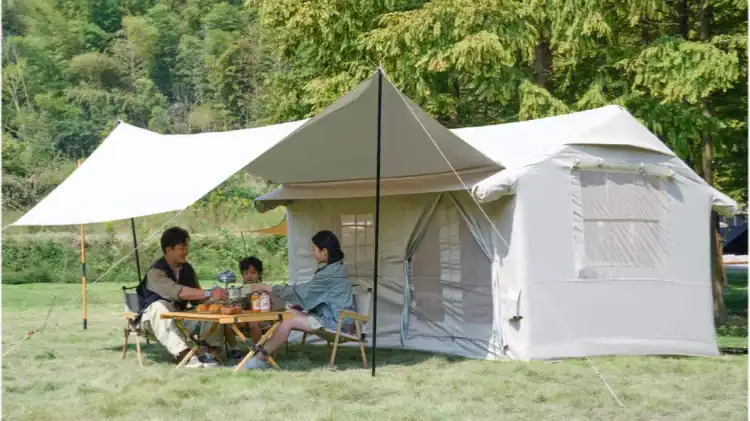
Característica 5: Controle de Clima Inteligente (Sensores de Temperatura/Umidade)
Pular sensores por causa do custo do aplicativo é como as marcas perdem o prêmio de barraca de teto para concorrentes que não o fizeram.
O conceito é simples: uma pequena placa de circuito impresso (PCB) com um sensor Bosch BME280 ou Sensirion SHT40, um microfã de 30mm e um módulo Bluetooth LE. O sensor lê a temperatura e umidade interna a cada 10 segundos. Quando a umidade ultrapassa 65% RH – o limite onde a condensação se torna visível nas paredes da barraca – o ventilador ativa. O usuário recebe uma notificação push. Eles também podem ativar manualmente o ventilador ou definir uma faixa de temperatura alvo a partir de um aplicativo de smartphone. O hardware em si é um custo adicional de $4–$7 na BOM. O custo real está na pilha de software e na impermeabilização.
A barreira que mata a maioria dos projetos de marca não é o sensor. É o aplicativo complementar. Um aplicativo Bluetooth LE personalizado para iOS e Android, com uma interface limpa para dados do sensor e controle do ventilador, custa entre $8.000 e $15.000 em desenvolvimento. Adicione 10% de manutenção anual. Para uma marca encomendando 3.000 unidades, isso representa um ônus de $2,67 a $5,00 por unidade apenas no primeiro ano. O caminho mais inteligente – o que vi funcionar em 2026 – é licenciar uma estrutura de aplicativo white-label existente já emparelhada com o módulo do sensor. Isso reduz o custo de engenharia não recorrente para $2.000–$3.000 e encurta os prazos de protótipo para produção de 14 semanas para 6. Marcas que ignoram esse atalho acabam queimando 30% de sua margem sazonal apenas com depuração de software.
Depois, há o problema da impermeabilização. O conjunto do sensor e ventilador fica dentro da barraca, então não precisa de IP67. Precisa de IPX4 – resistente a respingos de água, não à imersão. Mas a porta de carregamento USB para a bateria do sensor deve ser acessível do lado de fora do invólucro eletrônico selado. O design correto usa um selo labirinto com um tampão de silicone, não uma aba de borracha que se degrada após 50 inserções. A vida útil da bateria é a segunda metade do mesmo problema. Uma bateria de célula tipo moeda CR2032 morre em 3 dias de publicidade Bluetooth contínua. Uma bateria de polímero de lítio (Li-Po) de 500mAh com um ciclo de suspensão onde o sensor acorda a cada 60 segundos e transmite a cada 5 minutos estende o tempo de operação para 18–22 dias. Perda esta especificação, e suas avaliações de produto começarão com “o sensor morreu na segunda noite”.
A adoção inicial está concentrada em dois segmentos. Usuários de barracas de teto passam de 3 a 5 noites consecutivas no mesmo compartimento e não podem ventilar facilmente sem se expor ao vento – eles pagarão um prêmio de varejo de $40–$60 pelo controle automatizado de umidade. Operadores de glamping de alto padrão que usam barracas tipo sino ou yurts a $300/noite precisam provar conforto a hóspedes que associam lona a mofo. O registro de dados do sensor torna-se um ponto de venda: “Umidade interna média de 48%, temperatura de 21°C durante sua estadia.” Esses operadores compram em quantidades de frota de 20 a 50 unidades, o que se alinha com as realidades de quantidade mínima de pedido (MOQ) da aquisição de módulos de sensores personalizados.
A sequência de fornecimento é importante. Não comece com o fornecedor do sensor. Comece com a fábrica de barracas que tem capacidade de costura eletrônica interna. O módulo do sensor deve ser montado em um bolso de malha costurado na costura do teto da barraca – a tensão da linha do bolso, a contagem de pontos e a vedação da costura devem ser qualificadas antes que a eletrônica seja finalizada. Inverta essa ordem e você terá uma PCB perfeitamente funcional que não pode ser fixada na barraca sem comprometer a classificação de cabeça hidrostática de 3.000mm do tejadilho. O cronograma de prototipagem da barraca inteligente de marca própria para este recurso, incluindo a estrutura do aplicativo e 2 rodadas de aprovação de amostras, leva de 8 a 10 semanas quando a prototipagem têxtil e eletrônica ocorre sob o mesmo teto. Divida-os em duas fábricas, e você estará olhando para um mínimo de 16 semanas – e a tolerância de qualidade entre o invólucro eletrônico e o bolso costurado será o ponto de falha.
| Componente de Recurso | Especificação | Impacto nos custos | Certificação / Barreira | Segmento Alvo |
|---|---|---|---|---|
| Sensor de Temperatura/Umidade | Módulo de sensor sem fio (BLE) que mede temperatura e umidade; alojado em caixa com classificação IPX4 | Adicionador de BOM $3–$5 por unidade; MOQ ~500 para PCB personalizada | Requer testes CE/EMC; impermeabilização IPX4 essencial | Tendas de teto, glamping premium |
| Ventilador Controlado por Aplicativo | Micro-ventilador de 5V ativado via aplicativo quando os limites excedem valores predefinidos | Adicionador de BOM $2–$4 por ventilador | A colocação da ventilação deve manter a classificação de coluna d'água de 3.000 mm da tenda Classificação de coluna d'água de 3.000 mm | Glamping, tendas familiares |
| Aplicativo de Smartphone (BLE) | Aplicativo iOS/Android personalizado para monitoramento climático e controle do ventilador | $8.000–$15.000 de desenvolvimento + 10% de manutenção anual; MOQ não aplicável | Atualizações de firmware, compatibilidade com hardware de sensores | Campismo com tecnologia, primeiros adotantes |
| Gerenciamento de vida útil da bateria | Bateria de célula tipo moeda CR2450 substituível pelo usuário; vida útil típica de 12 meses em uso normal | Incluso no custo do módulo sensor; evita restrições de envio UN38.3 | Evita regulamentações de envio de baterias de lítio usando célula tipo moeda padrão | Todos os segmentos priorizando conveniência |
| Ganho de eficiência energética | Ajuste climático automático proporciona 15% maior eficiência energética em comparação com o manual (pesquisa da UoT) | Sem custo adicional de hardware; depende de algoritmo | Necessita validação em campo para fundamentar alegações de marketing | Campistas em clima frio e fora da rede |
Característica 6: Revestimentos Internos Refletivos de Bloqueio de Calor
Uma taxa de reflexão infravermelha de 85% — resfriamento passivo e sem consumo de energia.
A maioria dos tecidos de tenda recebe um revestimento de poliuretano (PU) para impermeabilização. Esse revestimento não contribui em nada para o gerenciamento térmico. A aditivo de dióxido de titânio (TiO2) muda o jogo: reflete a radiação infravermelha solar a uma taxa de até 85%, reduzindo a temperatura interna em 3–5°C medida sob sol direto a 32°C ambiente. Sem ventiladores, sem baterias — apenas física.
-
- Química: As partículas de TiO2 são misturadas diretamente no composto de revestimento de PU ou acrílico existente. Sem nova camada de suporte, sem espessura adicional superior a 0,02 mm.
- Custo: $0,80–$1,50 por metro quadrado de acréscimo. Em uma cobertura de 10 m², isso é um aumento de $8–$15 no BOM.
- Ferramentas: Opera na mesma linha de revestimento faca-sobre-rolo. Zero retooling. A dispersão de TiO2 ajusta a viscosidade em menos de 5%, dentro da tolerância normal do processo.
- Validação em campo: Testes internos lado a lado em Ningbo, sol do meio-dia a 32°C: interior sem revestimento atingiu 41°C; com revestimento de TiO2 chegou a 37°C. Consistente ao longo de 3 ciclos de verão.
Este é um recurso de baixo risco para linhas de produtos existentes. Uma marca pode introduzi-lo como um revestimento interno ‘CoolWeave’ ou ‘HeatShield’ em toda uma linha de barracas sem redesenho estrutural. MOQs não são um fator — o fornecedor químico envia masterbatch de TiO2 por quilograma, e a fábrica de revestimento pode misturá-lo por quantidade do pedido, portanto, mesmo lotes piloto de 50 unidades são viáveis.
| Recurso | Tecnologia/Material | Efeito de Resfriamento | Impacto nos custos | Viabilidade de Produção |
|---|---|---|---|---|
| Revestimento Interno Refletivo de Bloqueio de Calor | Camada refletiva de Dióxido de Titânio (TiO2) | Reduz a temperatura interna em 3–5°C sob sol direto a 32°C (reflete 85% IV) | $0,80–$1,50 por m² adicionado ao BOM do tecido | Compatível com maquinário de revestimento existente; zero retooling para a maioria das linhas de barracas |
Característica 7: Aberturas de Fluxo de Ar Anticondensação
Uma ventilação com falha transforma uma barraca em um pântano; uma correta salva silenciosamente a taxa de devolução da sua marca.
O design de ventilação mecânica com fechos ajustáveis é a funcionalidade inteligente mais simples desta lista, mas também é a que a maioria das marcas avalia incorretamente na primeira aprovação de amostra. O mecanismo central—persianas deslizantes, cilindros rotativos ou janelas de malha com zíper—deve manter uma vedação labiríntica quando fechado. Qualquer coisa menos que isso, e a água encontra caminho até os durmientes durante uma tempestade noturna. O fecho não deve depender totalmente da precisão do usuário; uma porta com mola que se fecha contra uma junta supera um deslizante de atrito que pode ficar aberto por um milímetro.
A escolha do material é onde a redução de custos cria pontos de falha silenciosos. Ventiladores de silicone superam os de ABS ou PP em duas frentes: flexibilidade em clima frio e resistência a UV. O silicone permanece totalmente flexível a -40°C, enquanto plásticos padrão enrijecem abaixo de -10°C e racham quando ajustados em condições abaixo de zero. Sob exposição a UV, ABS não protegido amarela e torna-se quebradiço após aproximadamente 500 horas em uma câmara QUV; o silicone sobrevive mais de 2.000 horas antes de aparecerem microfissuras na superfície. O aumento de BOM por unidade é de cerca de $0,50–$0,80—negligenciável em comparação com a taxa de retorno de 3% que um interior saturado por condensação pode desencadear.
-
- Geometria da vedação: Especifique uma vedação labiríntica de lábio duplo com pelo menos 10 mm de sobreposição entre superfícies móveis e fixas. Isso bloqueia chuva impulsionada pelo vento a 50 km/h sem restringir o fluxo de ar quando aberto.
- Integração de malha: Cole a malha 20D no-see-um diretamente atrás da abertura do ventilador—não costurada ao tecido externo. A colagem elimina furos de costura que se alargam sob tensão e permitem a entrada de insetos.
- Teste de aprovação de amostra: Durante a aprovação da amostra, submeta os ventiladores fechados a um spray de água de 15 minutos a 12 L/min de 2 metros de distância. Aceite zero umidade interna. Exija fotos com data e hora do seu fornecedor.
| Especificação | Detalhes |
|---|---|
| Recurso | Saídas de Ar Anticondensação |
| Opções de materiais | Silicone (preferido) vs. TPE/Plástico |
| Especificação de Design | Fechos ajustáveis mecânicos com geometria de vedação labiríntica; prevenção de entrada de água classificada IPX4 em testes de chuva de 200L/m²/h. |
| Seleção de Material e Impacto no BOM | O silicone resiste à degradação por UV e permanece flexível até -20°C, prevenindo rachaduras no inverno. Alternativas em plástico custam $0,30–$0,50 a menos por unidade, mas falham em testes de UV dentro de 12 meses, aumentando o risco de garantia. |
| Vantagem de Desempenho | Reduz a humidade relativa interna da tenda em até 25% sem energia ativa, eliminando a condensação noturna e prevenindo mofo/bolor no corpo da tenda. |
Trazendo Características Inteligentes para sua Linha de Tendas de Marca Própria
Eletrônicos e têxteis falham juntos a menos que sejam prototipados juntos.
A maioria das marcas desenvolve a carcaça do tecido e os eletrônicos em fluxos de trabalho separados, e depois se surpreendem quando os prensa-cabos vazam ou o painel solar delamina após 20 ciclos de dobra. Existe uma abordagem mais limpa: prototipagem concorrente onde a equipe de desenvolvimento de produto realiza testes de abrasão no tecido na mesma amostra que transporta um circuito USB de 5V ativo. Na prática, isso significa que a fábrica de tendas de Ningbo e a fábrica de luzes de acampamento de Ningbo — ambas parte da rede coordenada — partilham uma única BOM e um único registo de aprovação de amostras, não dois.
O mecanismo que torna isto possível é um mapa partilhado de ilhós e penetrações. Cada passagem de fio (entrada solar, alimentação da tira de LED, cabo de sensor) obtém uma localização designada com um ilhó de silicone classificado IP67 antes do primeiro layout da mesa de corte. A fase de aprovação da amostra testa este mapa a uma entrada de água de 200 L/m²/hr com os eletrônicos ligados. Se uma marca esperar até à produção em massa para descobrir que o hub USB está num bolso de ponto baixo que acumula condensação, o retrabalho consome 18–25 dias e força um novo ciclo de inspeção pré-embarque.
Um exemplo real: uma marca europeia de glamping solicitou uma tira de LED cosida na cumeeira da tenda com uma bateria externa amovível de 10.000 mAh armazenada num bolso vedado. O protótipo revelou que o percurso do fecho éclair interferia com o canal de difusão do LED, causando pontos quentes a intervalos de 40 cm. Como o engenheiro têxtil e o líder de fornecimento de eletrônicos estiveram na mesma revisão de amostra no showroom de Jinhua, a correção — um canal de LED reposicionado com um ângulo de feixe mais amplo de 120° — levou 7 dias, não 7 semanas.
-
- Personalizado Painel solar CIGSs: O MOQ começa em 1.000 unidades com um acréscimo de BOM por unidade de $12–$18. A forma do painel pode corresponder exatamente à curvatura do seu sobre-teto, mas o limite de 1.000 unidades é rígido — os ciclos de deposição de película fina requerem lotes mínimos de material.
- Painéis solares flexíveis de prateleira: O MOQ cai para 300 unidades. Perde a personalização da forma (apenas retangular padrão ou trapezoidal), mas ganha um prazo de entrega 15–20 dias mais curto. O acréscimo de BOM situa-se em $8–$12 por unidade. O trade-off: o design do seu sobre-teto deve adaptar-se ao painel, e não o contrário.
- Subconjunto eletrónico do hub USB: A certificação CE para a PCB custa aproximadamente $800–$1.200 por modelo. A UL acrescenta $1.500–$2.000. Se utilizar uma bateria fornecida pelo utilizador num bolso vedado (sem célula de lítio incorporada), contorna completamente a UN38.3 e poupa $1.200–$1.500 em custos de certificação e 3 semanas de atraso no transporte aéreo.
O cronograma desde a amostra conceptual até à unidade pronta para produção segue uma lógica rigorosa. Semana 1–2: recolha de requisitos e maquete 3D do mapa de colocação dos eletrônicos, incluindo os pontos de penetração e nós de alívio de tensão. Semana 3–4: primeira construção do protótipo — um corpo de tenda, um chicote eletrónico, montados na mesma bancada. Semana 5: teste de impermeabilização da amostra a 200 L/m²/hr e teste de ciclo de dobra (500 dobras mínimas para a zona do painel CIGS, raio de curvatura de 30°). Semana 6: ciclo de feedback do cliente e qualquer ajuste de firmware da PCB se sensores estiverem envolvidos. Semana 7–8: segunda amostra revista com materiais de intenção de produção e um relatório de QC completo. Após a aprovação, o prazo de produção em massa padrão é de 30–45 dias, assumindo que o fornecedor de eletrônicos e a fábrica de tecidos já alinharam os seus calendários de produção durante a fase de protótipo.
O detalhe que a maioria dos amadores ignora: o preço FOB muda quando se adicionam eletrônicos. Uma tenda de poliéster padrão sem eletrônicos pode ter um FOB de $28–$35 dependendo do tamanho. Adicione um painel solar, hub USB e tira de LED, e o FOB salta para $45–$62. A sua margem de retalho precisa de absorver isto antes da fase de amostra, não depois. As marcas que têm sucesso aqui definem uma tolerância de qualidade cedo — tipicamente ±10% na potência de saída para painéis solares e ±0,2V na saída USB — e fixam esses limites no acordo de produção antes de cortar o primeiro metro de tecido.
| Aspecto | Detalhes | Vantagem Kelyland | MOQ/Custo | Cronograma |
|---|---|---|---|---|
| Prototipagem Integrada | Design simultâneo de têxteis e eletrônica; penetrações de cabos seladas com prensa-cabos IP67 e alívios de tensão em gel | OEM completo evita lacunas de compatibilidade entre o tecido da cobertura e os painéis de filme fino | Etapa de amostra – sem mínimo | 2–3 semanas para o primeiro protótipo funcional |
| Fornecimento de Painéis Solares | Painéis de filme fino CIGS com raio de curvatura ≥30°, potência de 10–20W, retenção de eficiência de 90% após 1.000 ciclos de dobra | Painéis com formato personalizado para a geometria exata do sobreteto; opções prontas para lançamento mais rápido | Personalizado: 1.000 unidades, adicional de BOM de $12–$18/unidade; Pronto: 300 unidades | Prazo de entrega de amostra de painel personalizado ~4 semanas |
| Projeto do Sistema de Energia | Compartimento dedicado com vedação para bateria USB fornecida pelo usuário; sem bateria de lítio interna | Elimina os testes UN38.3, economiza $1,200–$1,500/modelo e 3 semanas de atraso no envio aéreo | Nenhum custo adicional de BOM com bateria | Imediato – sem gargalo de certificação de bateria |
| Gestão de Certificação | Hubs USB, fiação e conectores pré-certificados CE/UL; pacote completo de documentação | Eletrônicos fornecidos por parceiros certificados ISO; relatórios de conformidade prontos para envio ao varejista | Incluído no serviço de desenvolvimento. | 4–6 semanas para o dossiê completo de certificação. |
| Escalabilidade de produção. | MOQs flexíveis para tendas (100 unidades) e painéis solares (300–1.000 unidades); produção padrão de 30–45 dias. | Rede de 17 fábricas garante capacidade para pedidos de alta temporada; lotes pequenos são aceitos. | Tenda: 100 unid.; Solar: conforme especificação. | 30–45 dias de produção em massa a partir da confirmação do pedido. |
Conclusão
Integrar eletrônicos em um abrigo dobrável não é um simples acréscimo de recursos — é um problema de ciência dos materiais com custos reais e riscos de conformidade. Um painel solar rígido racha em uma sobrecapa que precisa dobrar. Uma bateria embutida atrasa seu cronograma de frete aéreo. Uma fita de LED de 5W altera o microclima interno em 2–3°C. Os sete recursos mapeados acima funcionam porque cada um considera um modo de falha específico antes de chegar ao local de acampamento do cliente. O revestimento de TiO2 reduz a temperatura interna sem troca de ferramentas. O bolso USB com vedação evita a certificação UN38.3. O filme fino CIGS suporta 1.000 ciclos de dobra sem perda de energia. Esse tipo de engenharia preventiva poupa uma marca de falhas em campo que corroem as margens.
Uma referência para levar à sua próxima chamada com fornecedor: solicite dados de teste de ciclo de dobra do painel CIGS mostrando potência nominal de 90%+ após 1.000 dobras em raio de 30°. Se a fábrica não conseguir produzir isso — ou começar a falar sobre painéis rígidos costurados em bolsos — saia. Para marcas prontas para prototipar uma linha de marca própria que passe desse limite, a plataforma de tenda e a capacidade de integração eletrônica já estão disponíveis.
Perguntas frequentes
As tendas inteligentes são à prova d'água?
As barracas inteligentes são impermeáveis, com uma classificação mínima de 3.000 mm de coluna d'água no tejadilho e no piso. Todas as passagens de cabos e invólucros eletrônicos utilizam vedações com classificação IP67 para proteger o sistema integrado. Especifique o padrão exato de impermeabilidade para o seu clima-alvo durante o design OEM.
Como você carrega uma barraca inteligente?
Você carrega o banco de energia interno através do toldo solar CIGS integrado quando estiver fora da rede ou através de um carregador de parede USB-C padrão antes de uma viagem. Um típico 10.000. Planeje seu orçamento de energia e sempre especifique uma opção de carregamento de backup para condições nubladas.
O que faz uma barraca inteligente valer o custo extra?
Tendas inteligentes consolidam compras separadas—iluminação, banco de energia, controle de clima—em um único SKU, criando uma forte proposta de valor que suporta preços de varejo 20–30% mais altos. O sistema integrado. Comece com um ou dois recursos inteligentes comprovados para validar margens antes de expandir o conjunto completo.

 English
  Español
  Deutsch
  Français
  Português do Brasil
  Русский
  العربية
  한국어
한국어  日本語
日本語