 Ir para o conteúdo

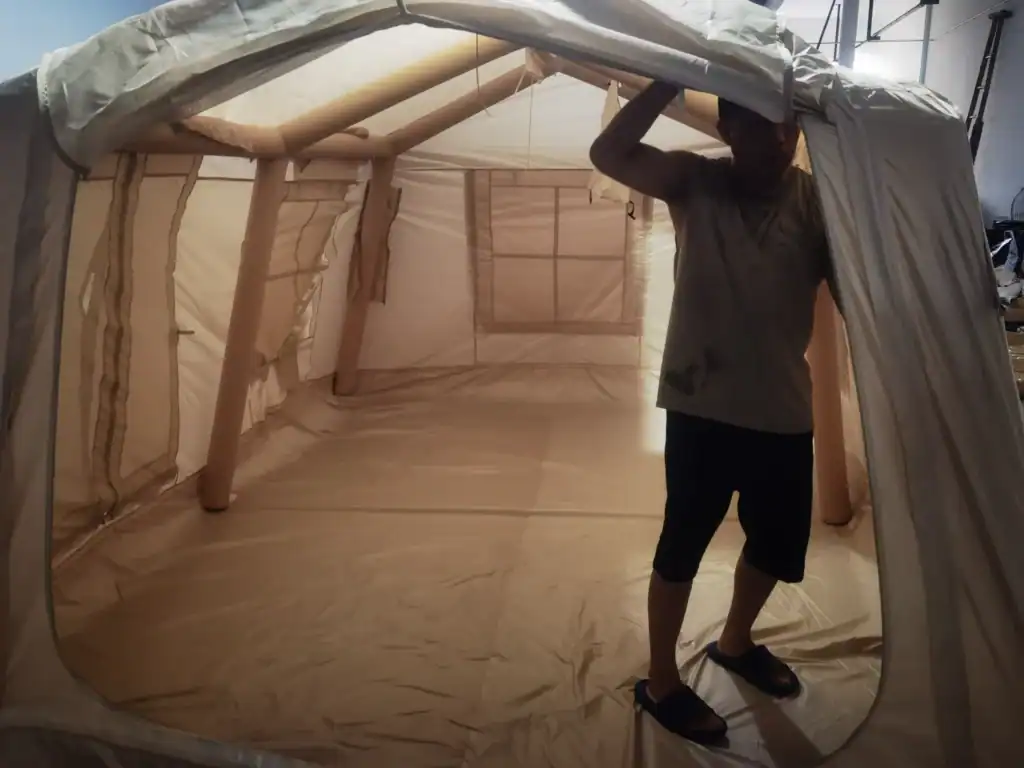
I just wrapped a QC review on a $50K inflatable tent order where the pre-production sample passed with flying colors — fabric weight, weld strength, valve placement all matched spec. The mass production run? Different story. The beam lamination was outsourced to a shop the factory never disclosed, and the weld adhesion dropped by nearly 20%. That gap between sample approval and production reality is exactly where the factory vs sourcing agent decision starts to matter. A direct factory quote might be 3–8% lower on paper, but if they don’t control every sub-process — especially for inflatable produtos where beam lamination is often subcontracted — you absorb that risk alone.
A one-stop supplier with technical staff who know which factories actually weld their own beams versus those that hand it off can flag that dependency before you sign anything. For a retail category manager building out a tent line, that difference in visibility is worth more than the margin spread on do preço FOB. The real question isn’t just who has the lower unit cost — it’s whether your supplier can trace every quality variable from material sourcing through final pack-out.
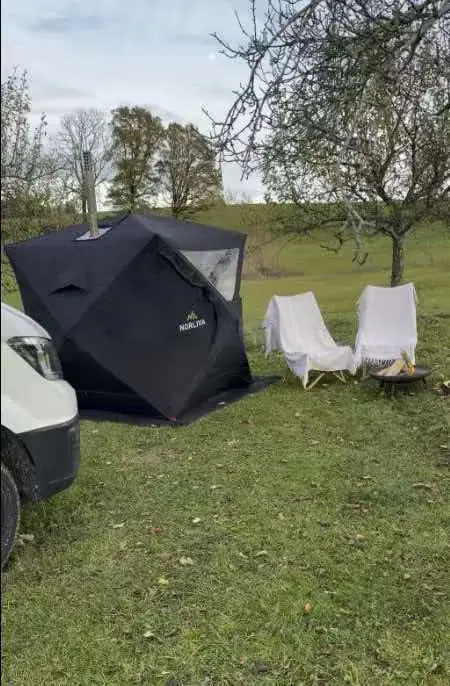
The Two Sourcing Routes for Inflatable Tents
Many Tenda inflável as fábricas apenas cosem o tecido e terceirizam a laminação dos perfis.
Um comprador que visitou uma fábrica em Ningbo no ano passado viu uma linha de costura impecável, assinou um contrato para 2.000 barracas infláveis e enviou o pedido. Três meses depois, metade das unidades apresentava vazamentos nas costuras dos perfis durante uma demonstração de vendas. A fábrica havia terceirizado a soldagem de TPU para um ateliê a 200 km sem informar o comprador. Esta é a realidade do sourcing direto de fábrica para barracas infláveis.
O que o sourcing direto de fábrica realmente significa na China
Quando você entra em contato com uma Tenda inflável fábrica diretamente, está falando com o proprietário da linha de produção cuja expertise frequentemente se limita a uma ou duas etapas de fabricação. Muitas instalações em Zhejiang e Jiangsu especializam-se no corte e na costura de poliéster ou Tecido Oxford. A etapa crítica – a união dos perfis de ar em TPU ou PVC aos canais do tecido – é frequentemente enviada a uma oficina de laminação separada, especializada em solda de alta frequência.
Essa divisão cria um problema de transferência de qualidade. A fábrica de costura inspeciona a densidade dos pontos e o alinhamento das costuras. A oficina de laminação testa a retenção de ar. Nenhuma das partes é responsável pelo produto completo. Se um perfil deslaminar após 200 ciclos de inflação, cada fornecedor culpa o processo do outro. O comprador acaba fazendo mediação entre duas empresas chinesas, sem alavancagem contratual sobre nenhuma delas.
O preço direto parece atraente – tipicamente 3-8% mais baixo do que contratar um intermediário, pois não há margem de agente. Mas essa vantagem desaparece rapidamente quando você considera seus próprios custos de viagem costs for factory audits, translation fees for technical discussions, and the time spent chasing QC reports across multiple sub-suppliers.
What a sourcing agent or one-stop supplier does differently
A sourcing agent with technical staff can identify these dependencies before you commit. When Kelyland Outdoors evaluates an inflatable tent project, their operations team visits both the primary sewing facility and any contracted lamination workshop during the initial audit phase. They verify that both sites hold ISO 9001:2015 certification and that their welding parameters match the material specification – not just what is written on the sales sheet.
The agent also handles what most buyers overlook: coordinating aprovação da amostra across multiple factories so that color matching between tent body and carry bag stays consistent, ensuring FOB pricing includes all inland freight from sub-suppliers, and setting quality tolerance thresholds that apply to every vendor involved.
For brands launching a full camping line – tents plus furniture plus air mattresses – a direct relationship with one tent factory creates fragmented vendor management. A one-stop supplier coordinates multiple factories under single branding guidelines, which matters when your logo appears on five different product categories shipping together.
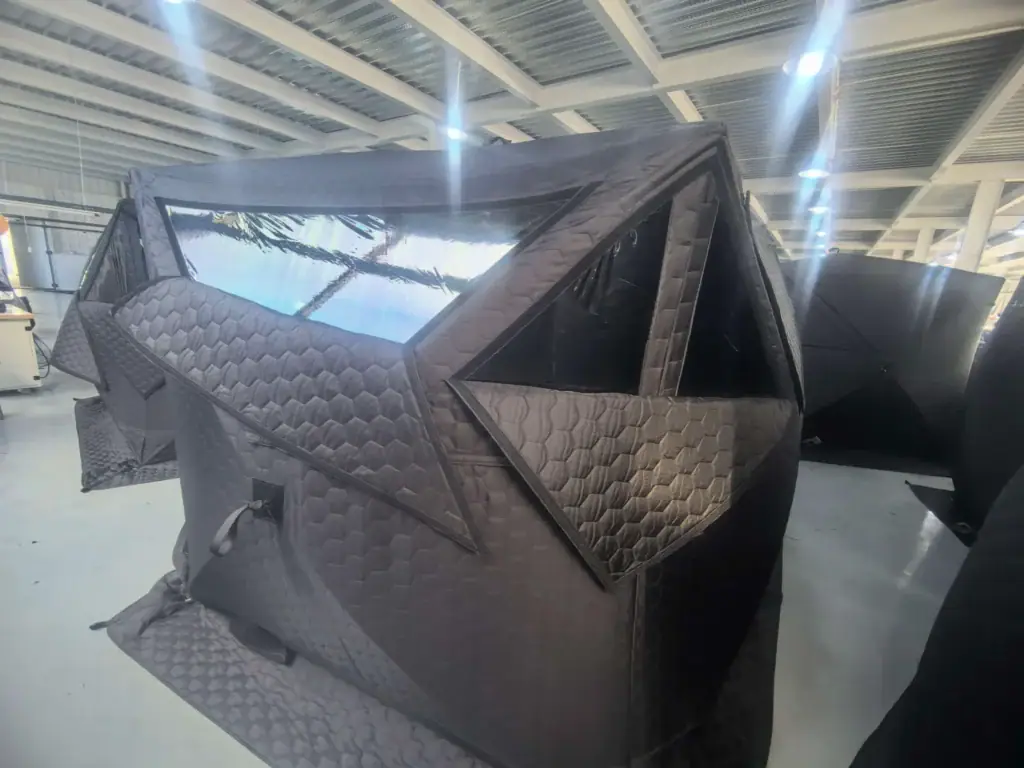
Cost Comparison: Factory Price vs Agent Fee
The 3–8% factory discount can vanish when you factor in shipping, defects, and your own time.
A direct factory quote for an inflatable tent will typically land 3–8% below what a sourcing agent charges. That gap looks clean on paper. No middleman markup, no commission layer. The factory owner tells you the price is FOB Ningbo, and you think you’ve saved the margin.
But that 3–8% rarely survives the full procurement cycle. The factory quote assumes one product type — tents only. It does not include consolidated shipping across multiple suppliers. It does not cover the cost of your team managing the export documentation, verifying the container load, or chasing down a missing sample approval letter.
Here’s what actually eats into that discount: freight costs on a partial container because you only ordered one SKU; rework fees when the beam lamination fails mid-production and the factory blames the material supplier; and lost sales when a quality tolerance issue — say a seam seal that holds at 2 psi instead of 3 — triggers returns six months later.
Agent service fees, QC, logistics, and consolidation
A sourcing agent or one-stop supplier charges a fee that covers what most buyers underestimate: technical verification of subcontracted processes like TPU beam welding; pre-shipment inspections at multiple factories; consolidation of tents with sleeping mats, chairs, and coolers into a single container; and Desembaraço aduaneiro support.
Many factories that advertise inflatable tents only handle sewing and outsource beam lamination,” as our internal research notes. An agent with technical staff catches that dependency before production starts — not after the first batch leaks.
When the agent model becomes cheaper overall
The math flips when your order involves three or more product categories. A single container carrying tents (from one factory), air mattresses (from another in Hubei), camping chairs (from Jinhua), and folding wagons (also Jinhua) would require four separate vendor relationships if bought direct.
Kelyland Outdoors coordinates exactly this scenario through its network of 17 core strategic factories. The buyer pays one invoice, receives one consolidated shipment with consistent branding across all items, and has one point of contact for any defect claim. The per-unit cost lands lower than managing four independent cadeias de abastecimento yourself — especially when your own time is valued at $75–150 per hour.
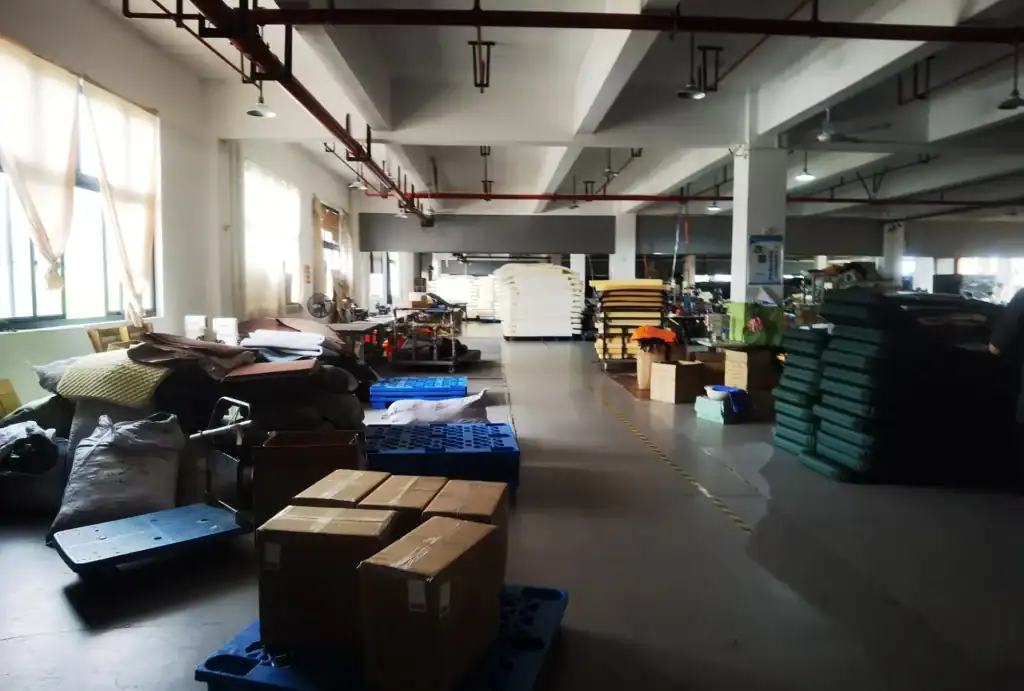
Product Range and Customization Flexibility
17 core factories, 200+ partners, and MOQs tão baixos as 50 pieces — this is the real range for a one-stop supplier.
1. A Kelyland Outdoors gerencia 17 estratégicas 2. fábricas 3. e mais de 200 parceiros de fabricação em toda a China. Essa rede cobre barracas de camping, 4. colchões de ar, sacos de dormir, móveis de camping (cadeiras, mesas, camas de campanha), carrinhos dobráveis, mochilas, utensílios para cozinha de acampamento, armazenamento externo e coolers, bastões de trekking, lanternas de camping, redes e guarda-sóis para o exterior. Cada 5. fábrica é especialista em sua categoria — o parceiro de tendas em Ningbo produz 800.000 unidades anualmente com certificação ISO 9001; a fábrica de colchões de ar em Xiangyang opera com 2,5 milhões de unidades por ano, com certificações CE e ETL. 6. Profundidade de personalização por linha de produto.
7. Para as tendas, as opções incluem tingimento de tecido conforme cores Pantone,
8. revestimento preto ou prateado, 9. para controle de UV, escolhas de estrutura desde fibra de vidro até fibra de carbono e tubos de ar de PVC/TPU, além de múltiplos métodos de impressão em etiquetas, manuais e bolsas de transporte. 10. Os colchões de ar. 11. recebem superfícies flocked, PVC ou TPU resistente a perfurações com espessura de 0,4–0,6 mm, além de três estruturas internas de feixe: feixe em espiral I ou drop-stitch. 12. O preenchimento varia desde penugem de ganso até fibras sintéticas ocas, com revestimentos em nylon ripstop ou tafetá. Saco de dormir 13. A personalização de móveis para camping vai mais longe.
14. A pintura em pó da estrutura. Frame powder coating or anodizing for chairs and tables. Wood options in beech or walnut for tabletops. Fabric printing on Oxford nylon mesh textilene or canvas surfaces. Load capacities span 80–150 kg for chairs up to 250 kg for heavy-duty cots. Folding wagons get custom injection-molded plastic parts plus powder-coated carbon steel or aluminum frames with wheel types from PVC to PU EVA or TPE.
Why multi-category sourcing matters
A brand launching a full camping line needs consistent branding across tents furniture cookware and storage bins. Managing separate factories for each category creates fragmented vendor oversight — different lead times different quality standards different shipping terms. A one-stop structure keeps color matching design de embalagens and logo application uniform across all SKUs because one team coordinates the entire production chain.
The MOQ flexibility here matters too. Some items start at 50–100 pieces while standard models run 300–1,000 units depending on complexity. Standard production lead time sits at 30–45 days across categories so a mixed order of tents chairs and coolers ships together rather than arriving in staggered batches that delay retail launch windows.
Quality Control and Production Oversight
Factory QC reports can be edited.
When you buy direct from a factory, their controle de qualidade team reports to the same management that needs to ship on time. That conflict of interest is real. A factory QC inspector who flags 15% of a batch for rework creates tension with the production manager who has a container deadline. Inspection sheets have been rewritten after the buyer left the premises.
How agent-managed QC breaks the conflict
A sourcing agent or one-stop supplier like Kelyland Outdoors places its own inspectors on the floor. Those inspectors answer to the buying team, not the factory owner. The difference is structural: when an inspector works for the agent, rejecting a bad batch costs the factory money but does not cost the inspector their job. That simple change in accountability shifts defect detection rates significantly.
Kelyland Outdoors runs inspections at every production stage across its network of 17 core strategic factories, most ISO 9001:2015 certified. Reports are available on request. The process covers raw material verification, in-line stitching checks, and a final pre-shipment inspection before any container leaves.
Handling defects when they happen
Even with good inspections, defects occur. The question is who manages the rework and who pays for it. With a direct factory relationship, you negotiate rework terms after the problem surfaces — often when your shipping window is collapsing. With an agent managing multiple factories, rework gets distributed across production lines that have available capacity.
For example, if an inflatable tent beam lamination fails on one line, an agent can shift remaining production to another qualified factory within their network without restarting lead times from zero. A buyer managing that directly would need to find and qualify a new sub-supplier first.
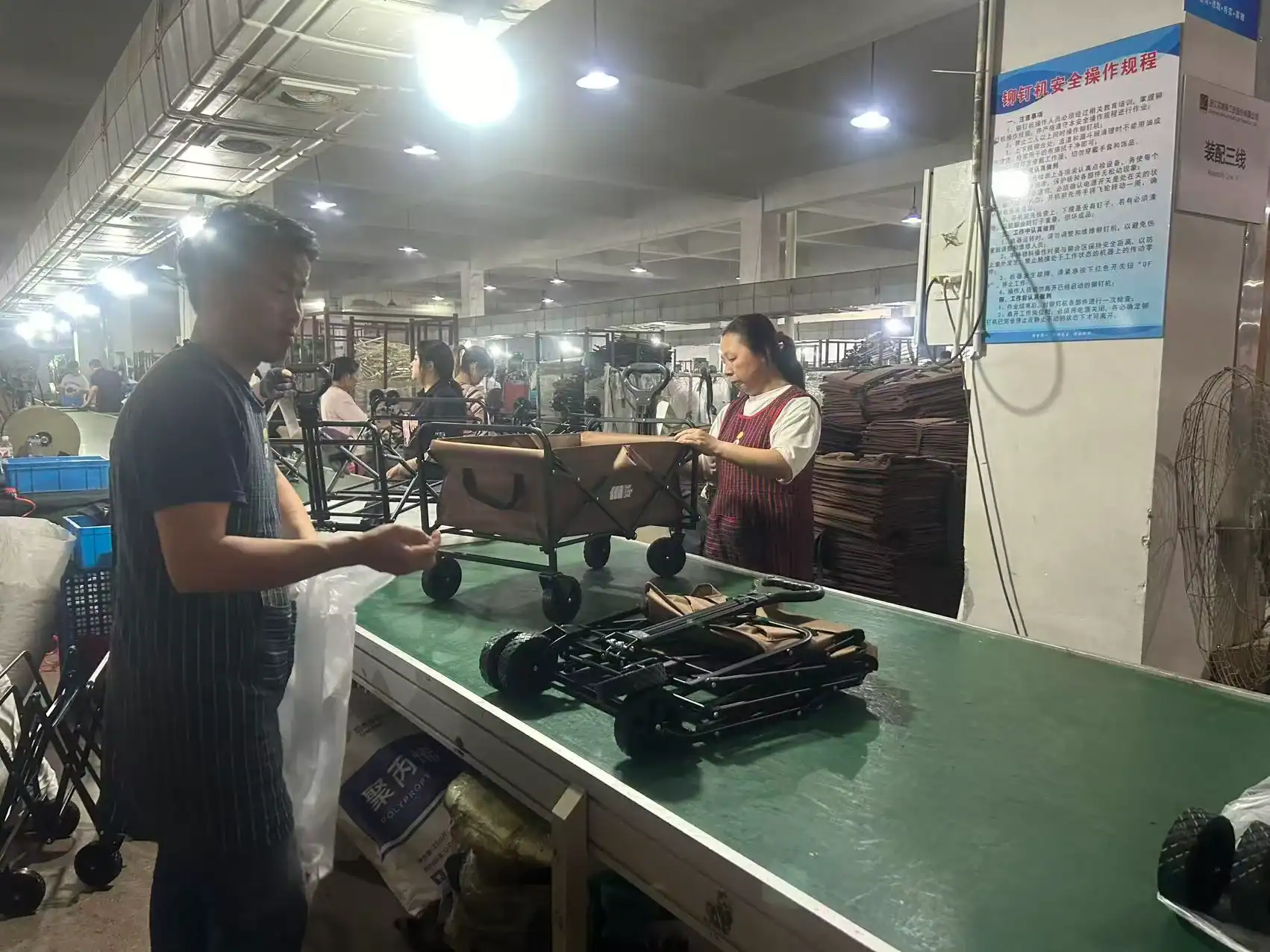
Communication and After-Sales Response
Post-sale support is where the agent model justifies its margin — or doesn’t.
A buyer in Europe spots a stitching defect on an Tenda inflável after the container lands. The clock starts ticking. Who do they call? If the relationship is direct with a factory, the answer is often a production manager whose English stops at “check email.” That manager then routes the complaint through internal channels, and three days later, the buyer gets a photo of the same defect with no resolution plan.
The Kelyland Response Structure
Kelyland Outdoors assigns Fanny Zhang to after-sales service — four years in customer-facing roles, fluent in English, and empowered to make decisions. When a defect report comes in, Fanny logs it into the order management system within two hours and escalates directly to the factory QC lead. The buyer gets an initial assessment within 24 hours, not a forwarded email chain.
Accountability Across Time Zones
Zhejiang factories operate on China Standard Time (UTC+8). A buyer in New York works UTC-5. That 13-hour gap kills momentum when problems arise. Kelyland’s team overlaps with both hemispheres: Hanke Chen manages key accounts personally, Anne Jing tracks order follow-up daily, and Fanny handles after-hours escalations via WhatsApp. The response window compresses from days to hours.
Why Long-Term Relationships Change Everything
A one-off factory relationship has no incentive to fix post-shipment issues beyond what the contract requires. A sourcing agent with repeat business across multiple categories does. Kelyland’s partnerships span 3–5 years with clients like Ace Hardware and Lucid — that continuity means rework gets prioritized because future orders depend on it. Internal data shows that repeated clients see issue resolution times roughly half those of first-time buyers.
Lead Times and Order Flexibility
MOQ flexibility is the hidden variable that determines whether a product line launches on schedule or sits in limbo.
A retail category manager launching a camping line faces a hard reality: direct factory MOQs for tendas infláveis typically start at 500–1,000 pieces per SKU. That works if you’re ordering one tent model in one color. It breaks down fast when you need three tent sizes, two colorways, and matching air mattresses — because each variant triggers its own MOQ threshold.
MOQ differences when buying direct vs through an agent
Direct factories protect their production efficiency by setting MOQs high enough to cover setup time, desperdício de corte de material e trocas de linha. A a dinâmica de capacidade da fábrica de tendas. produzir 800.000 unidades por ano não interromperá sua linha principal para um pedido de teste de 100 peças. Agentes de sourcing ou fornecedores completos, como a Kelyland Outdoors, operam de forma diferente — eles agregam demanda entre múltiplos clientes e fábricas. Isso permite que alguns itens comecem com 50–100 peças, enquanto modelos padrão variam de 300 a 1.000 peças, dependendo da categoria de produto.
Consolidar pedidos de pequenos lotes de múltiplas fábricas
A verdadeira vantagem de um modelo de agente emerge quando seu pedido abrange categorias: tendas de Ningbo, colchonetes infláveis de Xiangyang (produção anual: 2,5 milhões de unidades), sacos de dormir de Zhenjiang (1,5 milhão de unidades) e camping chairs de Jinhua (1,5 milhão de unidades). Cada fábrica envia de forma independente se você comprar diretamente — quatro contêineres separados, quatro faturas de frete, quatro desembaraços aduaneiros. Um fornecedor completo consolida tudo em um único envio, muitas vezes recuperando a taxa de intermediação apenas através das economias logísticas.
Gerenciar capacidade da fábrica e agendamento de pedidos
A capacidade das fábricas é sazonal em equipamentos de camping. A demanda máxima vai de janeiro a abril para pedidos de temporada de verão. Durante esse período, compradores diretos sem relacionamentos estabelecidos ficam atrás na fila, atrás de clientes recorrentes. Um agente de sourcing com contratos de longo prazo em 17 fábricas estratégicas principais pode negociar vagas prioritárias e ajustar cronogramas quando uma fábrica atinge sua capacidade — transferindo a produção de cadeiras para outro parceiro enquanto mantém o prazo das tendas intacto.
Conclusão
A escolha entre uma fábrica direta e um agente de sourcing completo para tendas infláveis depende do que você está disposto a gerenciar por conta própria. Um relacionamento direto com fábrica pode economizar de 3% a 8% no preço unitário, mas essa economia desaparece rapidamente se um amostra de pré-produção for aprovado sem detectar um problema de laminação de viga terceirizado. O verdadeiro custo de pular um processo estruturado de controle de qualidade não é a fatura — é o atraso na reprovisão e o espaço de prateleira perdido.
-
- Direct factory pricing runs 3–8% lower but carries hidden QC and vendor management risks.
- Agents consolidate multi-category orders, reducing os custos de envio and defect exposure.
- Inflatable tent quality depends on beam lamination, which many factories outsource.
- Fornecedores completos mantêm a consistência da marca em tendas,, móveis e acessórios.
Se a sua próxima estação incluir tendas infláveis junto com colchonetes ou carrinhos dobráveis, gerenciar três relações distintas com fábricas dispersará sua equipe de categoria em muitas frentes. Analise como um serviço de fornecimento de equipamentos de camping one-stop trata da aprovação de amostras em múltiplas linhas de produtos antes de firmar contratos separados com fornecedores. Um único ponto de responsabilidade sobre QC e lead time frequentemente oferece margens melhores do que buscar orçamentos de fábricas individuais quotes.
Perguntas frequentes
Como solicitar um orçamento: Fábrica Direta vs. Agente de Sourcing para Barracas Infláveis?
A resposta exata depende da especificação do produto, quantity, and order setup. The safest approach is to confirm the commercial terms only after the final requirement sheet is locked. Final terms should be confirmed against the exact product specification and order conditions.
Posso solicitar amostras primeiro?
A resposta exata depende da especificação do produto, da quantidade e da configuração do pedido. A abordagem mais segura é confirmar as condições comerciais somente após a ficha de requisitos final ser bloqueada. A disponibilidade de amostras deve ser confirmada com base no estoque atual e no plano de envio.

 English
 Español
 Deutsch
 Français
 Português do Brasil
 Русский
 العربية
 한국어
 日本語