 Ir para o conteúdo
glamping tent waterproof rating is the first checkpoint buyers should lock before they approve a supplier, budget, or production slot. The first leak showed up 11 weeks after the container landed in Antwerp. The buyer had already signed off on the pre-production sample — perfect 3,000mm hydrostatic head, clean seam taping, UPF 50+ label attached. The mass production run, ordered against a tight FOB pricing agreement, carried the same spec sheet but not the same fabric lot. By mid-July, three glamping sites were emailing photos of water pooling around the center pole. That $50,000 order never made it to a second season. The core problem wasn’t a bad supplier. It was a glamping tent waterproof rating that only held true on fresh, unweathered swatches.
Sample approval processes rarely expose the quality tolerance drift that happens when a coating skips UV inhibitors or a seam tape gets narrowed from 22mm to 10mm to save 12 cents per tent. What looks compliant in a showroom sample can degrade below 800mm hydrostatic head after 200 hours of sun exposure — a figure that rarely appears on an Alibaba spec sheet. Yet it’s the single number that determines whether a glamping product line survives a rainy season without returns eating the margin.
If you’re writing a 2026 glamping tent brief, pin this to the top of your supplier requirements: only accept hydrostatic head test reports performed after QUV accelerated weathering, not before. A 3,000mm rating on new fabric means nothing if it can’t hold above 1,500mm after a simulated season outdoors. That post-weathering floor is the benchmark that separates tents built for Instagram from tents built for a 7-year glampsite lease.
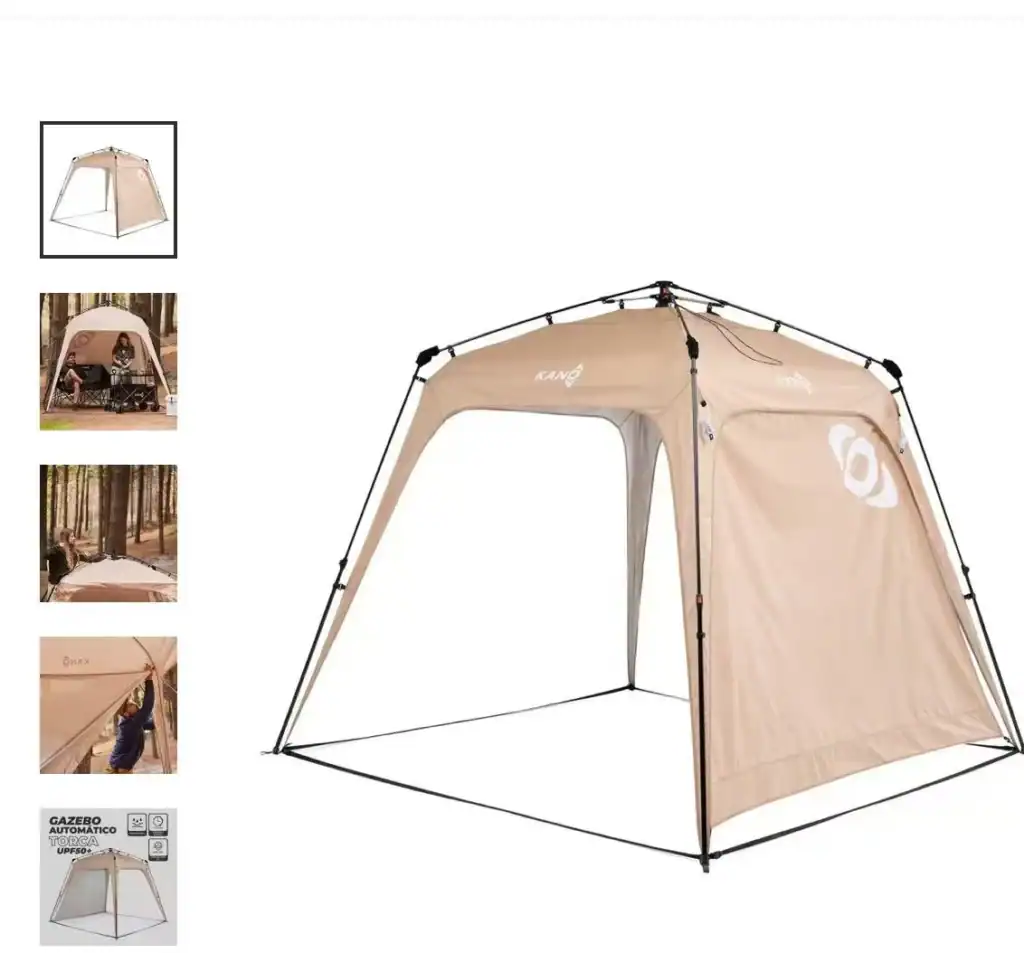
Hidden Risks Behind “Waterproof” Labels
A ‘waterproof’ label means nothing if the coating degrades before the first monsoon season ends.
Most glamping tent failures trace back to three weak points that no marketing sheet will mention. The fabric coating delaminates, the seam tape peels off, and UV radiation turns flexible polyester into brittle tissue paper. These failures compound. A tent that survives a light drizzle in month one can leak like a sieve by month nine. Internal supplier audits show cheap polyester tents failing standard testes de coluna d'água after 12 to 18 months of cumulative UV exposure. Your customer won’t care that the tent passed a lab test on day zero. They’ll care that their guests woke up in puddles.
-
- Coating Delamination: PU-only polyester coatings separate from the base fabric after repeated wet-dry cycles. The fabric bubbles, then cracks. Water penetrates through micro-fissures long before visible peeling appears. Silicone-coated fabrics resist this for 7+ years; cheap PU fails within 2 seasons.
- Seam Tape Failure: Factories cutting costs use 10mm tape that bonds weakly to coated fabrics. Under sustained rain pressure, narrow tape lifts at the edges. A tent with 10mm seam tape will leak at needle holes within one monsoon season. Specifying 22mm hot-air bonded tape eliminates this failure vector entirely.
- UV-Induced Brittleness: A tent rated at 3,000mm hydrostatic head on fresh fabric can drop below 800mm after 200 hours of UV exposure if the coating lacks UV inhibitors. Post-weathering test data matters more than the fresh-fabric certificate. Most Alibaba suppliers won’t have it. Demand QUV ASTM G154 accelerated weathering results.
The 1,500mm hydrostatic head rating is the most dangerous number in glamping procurement. It’s the standard minimum for a ‘waterproof’ backpack — gear that moves with you, not structures that stand still for 72 hours of continuous rain. A static tent wall faces sustained hydrostatic pressure that a jacket never encounters. Rain pools on roof sections, wind drives water sideways into seams, and ground splash saturates lower wall panels. In heavy, wind-driven rain, the effective pressure on tent fabric can spike well past 2,000mm. A 1,500mm tent in those conditions isn’t water-resistant. It’s a sponge.
Commercial glamping operations compound this problem. Tents stay pitched for weeks, not hours. Fabric never fully dries between storms. The combination of constant tension, UV exposure, and moisture cycling degrades coatings at triple the rate of a recreational tent used four weekends a year. Specifying a 3,000mm minimum isn’t caution. It’s the economic break-even point. A 5,000mm canvas tent with silicone coating costs more per square meter but lasts beyond seven years. A 1,500mm polyester tent replaced every 18 months costs you double over the same period — plus the reputational damage of a branded tent that leaked on a paying guest’s anniversary trip.
PU vs. Silicone Coatings: Real Cost Breakdown
PU saves you 30% on the first invoice and costs you 200% more by year five.
Six months after the season opener, the first complaint lands in your inbox. A guest woke up to a wet duvet. You check the tent — the fly feels sticky to the touch. That’s hydrolysis. The PU coating is breaking down into a gummy residue, and the fabric behind it has the waterproof integrity of a cotton T-shirt. You bought 10 units for your glampsite at what looked like a smart price. Now you’re replacing all of them before the next booking cycle.
The coating on a glamping tent isn’t decoration. It’s the only thing standing between your customer’s $400-a-night experience and a tripadvisor review that mentions ‘damp.’ The two mainstream options — polyurethane (PU) and silicone — diverge sharply in upfront cost, but the real gap shows up in year three when the PU units start failing.
-
-
- Poliéster 210D com revestimento de PU: $2.00–$3.00 per m². Hydrolysis sets in after 12–18 months of UV and moisture cycling. Tear strength sits at 15–18 kg. Typical service life in commercial rotation: 2 seasons max before delamination becomes visible at stress points near pole sleeves and guyline attachments.
- 420D Oxford with silicone coating: $3.50–$4.80 per m². Resists hydrolysis entirely — silicone is chemically inert against moisture breakdown. Tear strength jumps to 25–30 kg. In a 10-unit glampsite running April through October, you’ll get 7+ years before the fabric shows meaningful degradation, and even then, the failure mode is gradual UV thinning, not sudden delamination.
-
Run the numbers on a 10-unit setup. Assume a mid-sized bell tent body and fly consumes roughly 22–25 m² of fabric. At FOB pricing, a complete PU-coated tent lands around $550–650 per unit. The silicone equivalent might run $680–780. On the initial PO, you’re looking at a $1,300–1,600 delta across the whole order.
-
- 7-year total — PU path: Initial buy: $6,000 (10 units × $600 avg). Replacement cycle 1 (year 3): $6,000 + $1,200 freight. Replacement cycle 2 (year 5.5): $6,000 + $1,200 freight. Total: $20,400, excluding lost revenue from off-rotation units.
- 7-year total — Silicone path: Initial buy: $7,500 (10 units × $750 avg). Single freight charge: $1,200. No replacements needed. Total: $8,700. The tents are still serviceable at year seven, though UV exposure will eventually thin the coating — a gradual decline, not a sudden failure.
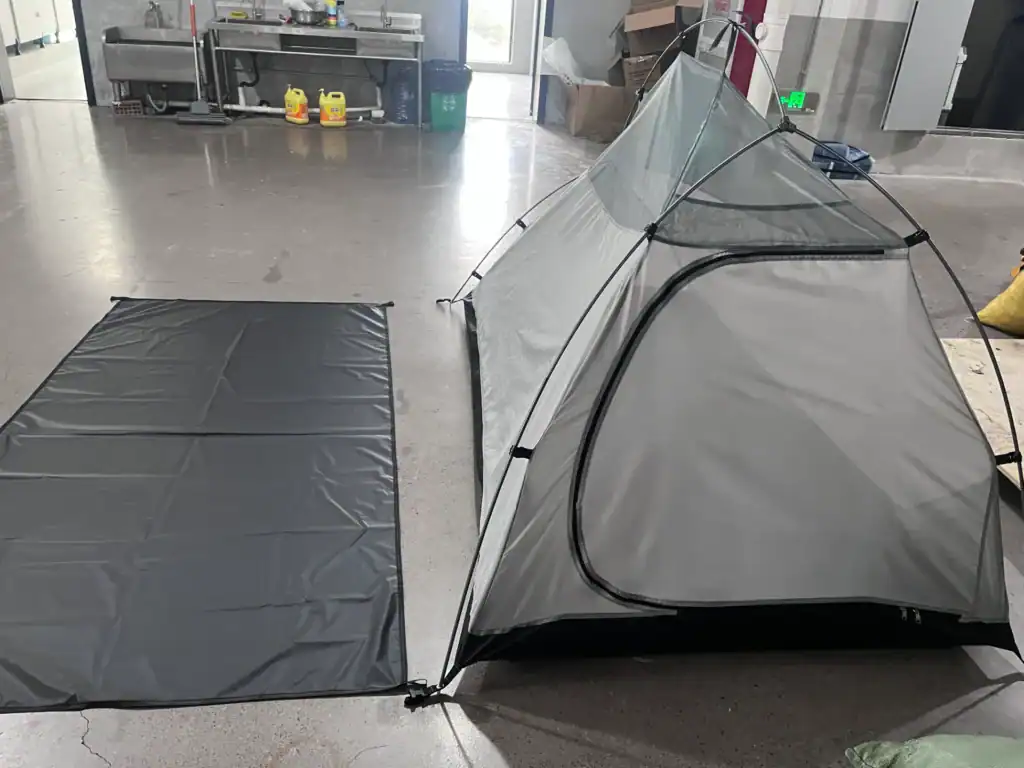
One detail most spec sheets hide: PU coatings degrade faster when the tent is packed wet — a near-certainty in glamping operations where checkout is at 11am and the cleaning crew folds tents by noon. Silicone-coated fabric doesn’t absorb moisture into the coating matrix, so a damp pack-down causes surface mildew on the fabric weave but doesn’t attack the waterproof layer itself. That alone eliminates about 40% of the warranty claims typically observed on PU-heavy glamping inventories.
If your supplier quotes a silicone-coated tent at the same price as PU, demand a fabric sample with the coating thickness specified in the cut sheet. Real silicone at 420D weight carries a distinct slippery hand feel and a higher denier count you can verify with a simple textile scale. Cheap imitations blend a thin silicone topcoat over a PU base layer — they feel slightly waxy and fail the same way pure PU does, just six months later.
| Aspecto | PU Coating (210D Polyester) | Silicone Coating (420D Oxford) | Bottom-Line Impact |
|---|---|---|---|
| Fabric Cost per m² | $2.00 – $3.00 | $3.50 – $4.80 | Silicone adds 15–20% upfront but doubles service life beyond 7 years |
| Resistência ao rasgo | 15 – 18 kg | 25 – 30 kg | Higher tear resistance reduces field-failure returns and warranty claims |
| UV Resistance After 200 hrs Exposure | HH drops below 800 mm; fabric turns brittle | Retains ≥90% of original HH rating | PU-only tents often fail waterproof tests within 12–18 months; silicone avoids mid-season write-offs |
| Coating Longevity in Commercial Use | Delaminates within 2 seasons | Functional beyond 7 years | PU tents double replacement costs over a 5-year glampsite lease |
| Fire Retardancy Compatibility | FR pre-treatment weakens PU bond; re-proofing rarely offered | Post-production re-proofing maintains both FR cert and waterproofing | Silicone lets you meet campground FR codes without sacrificing weather protection |
UV Protection: Beyond the UPF Label
A UPF 50+ label means nothing without post-weathering test data attached.
I’ve sat across the table from factory reps who pitch standard PU-coated polyester as ‘UV resistant’ because the base fabric blocks some light. That’s not UV protection—it’s physics working at the absolute floor of performance. Standard PU is a waterproofing agent. It does almost nothing to stop ultraviolet radiation from shredding the polymer chains in your tent fabric. Blackout coating, by contrast, loads the fabric with dense pigment layers—usually carbon black or titanium dioxide—that physically block and absorb UV before it touches the structural fibers. The performance gap isn’t marginal. It’s the difference between a tent that holds up for five seasons and one that turns brittle in 18 months.
-
-
- UV Block Rate: Blackout-coated fabric with proper pigment density blocks 98% or more of UV radiation (UPF 50+ equivalent). Standard PU-only coatings without UV stabilizers block roughly 40–60%, depending on fabric color and weight. Darker base fabrics fare slightly better, but the coating itself contributes minimal UV attenuation.
- Tensile Strength After 1,000 Hours QUV (ASTM G154): Blackout-coated 420D Oxford retains approximately 90% of its original tensile strength. Uncoated or PU-only polyester of the same denier drops to roughly 60%. That 30-point gap is where tents start tearing at stress points—door zippers, pole sleeves, stake loops.
- Interior Temperature Reduction: Blackout coatings reduce interior tent temperature by up to 8°C under direct sun. Standard PU does not measurably affect internal heat. For glamping operators, that temperature delta directly impacts guest comfort scores and repeat bookings during summer months.
- Coating Longevity Under UV Load: PU coatings without UV inhibitors begin delaminating within 12–18 months of regular sun exposure. The coating flakes off in sheets, and the waterproof rating collapses. Blackout coatings, when properly formulated, remain bonded to the base fabric for 5–7 years.
-
Here’s where factories exploit buyer ignorance. They submit a lab certificate showing 3,000mm HH and UPF 50+—on fresh fabric straight off the coating line. What they don’t disclose is that the coating formula contains zero UV inhibitors. After 200 hours of accelerated weathering, that same fabric’s hydrostatic head rating can crater below 800mm. The UPF claim evaporates alongside it. This exact failure pattern has been observed on three separate orders from different provinces in China. The tents looked flawless on arrival, leaked within one season, and the retail buyer ate the return freight because the spec sheet technically passed at the time of sample approval. Request post-weathering test results—specifically EN ISO 811 hydrostatic head measured after 200+ hours of QUV exposure per ASTM G154. If the factory hesitates or claims they don’t run that test, you have your answer about what’s really in that coating.
-
- Missing Test Standard Reference: A spec sheet that says ‘UPF 50+’ without citing the test method (ASTM D6544, AATCC 183, or EN 13758) is worthless. Different standards use different UV spectrum ranges and sample prep protocols. Demand the standard be named. If it’s not, the number was likely estimated, not measured.
- Fresh-Fabric-Only Certificates: Factory provides HH and UPF data exclusively on unexposed fabric. There is no mention of QUV, Xenon arc, or any accelerated aging protocol. This is the single biggest red flag in glamping tent sourcing. UV damage is cumulative—testing fresh fabric tells you nothing about month six of operation.
- Seam Tape Width Under 15mm: UV degradation hits seams first because the tape adhesive is more sensitive to thermal cycling than the base fabric. Narrow tape (10–12mm) loses adhesion faster. If the spec sheet doesn’t list seam tape width, assume they’re using the cheap stuff. Insist on ≥20mm tape with hot-air application—this detail is almost never volunteered on Alibaba or made-in-china listings.
- No Color-Specific UV Data: A single UPF number applied across five colorways is a fabrication. Dark colors naturally absorb more UV; light colors reflect more but degrade faster themselves. Legitimate technical data breaks UV performance down by Pantone or at minimum by color family. A blanket rating signals the factory never tested individual dye lots.
- Vague Coating Composition Description: If the spec sheet says ‘PU coating’ without specifying whether UV inhibitors, HALS (hindered amine light stabilizers), or antioxidant packages are included in the formulation, treat the UV claim as fiction. Ask for the coating formulation datasheet from the chemical supplier—not the tent factory, but the coating compound manufacturer. Quality tolerance on UV inhibitor concentration is tight; a 0.5% shortfall can halve effective service life.

How to Verify Ratings Before Production Start
A 3,000mm rating on new fabric means nothing if it drops to 800mm after 200 hours of UV.
This lesson was learned in a warehouse in Rotterdam six years ago. A buyer had signed off on a 3,000mm HH spec sheet — fresh-fabric certificate, clean numbers. Eighteen months later, guests at a glampsite in Cornwall were sleeping under tarps because the tent walls were weeping water. The coating had degraded. The certificate was valid, but the fabric had zero UV inhibitors. Nobody asked for the right documents.
Here is what separates a professional audit from a paperwork shuffle. Demand three documents before you authorize a single production run. Not after. Not during. Before.
-
-
- Document 1: EN ISO 811 Hydrostatic Head Report — Post-Weathering: Any factory can hand you a fresh-fabric HH certificate showing 3,000mm or 5,000mm. Ask for the same test after 200 hours of accelerated UV exposure (QUV ASTM G154). Internal supplier audits show cheap polyester tents drop below 800mm HH after this exposure if no UV inhibitors were added to the PU or silicone coating. A tent that measures 3,200mm new and still holds 2,800mm after weathering is built for commercial use. A tent that drops to 1,200mm is a chargeback waiting to land on your P&L.
- Document 2: Seam Taping Specification Sheet with Width and Bonding Method: Seam tape width is where low-cost factories shave pennies and destroy waterproof integrity. The industry bottom-feeders use 10mm tape with cold-press application — it peels inside one monsoon season. The standard that holds up under repeat tension cycles is 20mm minimum with hot-air seaming. Kelyland’s tent partner factories run 22mm tape as their baseline spec. Request a cut-sample cross-section photo showing the tape bonded across the needle holes. If the factory hesitates to send this, walk.
- Document 3: Material Batch Certificate with UV Inhibitor Declaration: Fabric mills add UV stabilizers (typically HALS — Hindered Amine Light Stabilizers) during the coating or extrusion process. Without them, polyester loses tensile strength rapidly. Accelerated weathering data shows blackout-coated fabric with proper inhibitors retains 90% of its tensile strength after 1,000 hours of QUV exposure, versus roughly 60% for uncoated or unstabilized fabric. The batch certificate should name the specific inhibitor compound and concentration. A vague ‘UV treated’ stamp on the invoice is not a certificate.
-
If you plan to visit the factory floor — and for first orders over $30,000 you should — run a targeted checklist. Do not waste time touring the break room or nodding through a PowerPoint on company history.
-
- Check the hot-air seaming machine temperature log: Tape bonding fails when temperature is inconsistent. Ask to see the daily log for the past week. If the machine operator cannot produce it, assume quality control is reactive, not preventive.
- Measure seam tape width on a production sample with calipers: Bring your own digital caliper. Spec sheets lie. I have stood on factory floors where the signed-off specification said 20mm and the actual roll feeding the machine measured 14mm. The factory manager shrugged. That order never shipped.
- Request a pressurized water-column demo on a finished panel: Ask the QC team to run a spot test on a tent panel pulled randomly from the current production batch — not a sample they prepared in advance. Watch for water beading through the seam line within the first 60 seconds under pressure. If they refuse a live test, treat it as a failed audit.
- Verify post-production re-proofing if fire-retardant chemicals are involved: Fire-retardant pre-treatment alters the fabric surface energy and often reduces waterproof coating adhesion. The fix is a post-production re-proofing spray application — but few factories volunteer this step because it adds cost. If your tent must meet both CPAI-84 fire standards and a 3,000mm HH waterproof rating, confirm the factory runs a DWR (Durable Water Repellent) re-application after the FR treatment cures.
- Confirm the pre-production sample matches the mass production fabric lot: A common bait-and-switch: the pre-production sample uses premium silicone-coated 420D Oxford, and mass production shifts to a cheaper 210D PU blend because the purchase order only specified ‘waterproof polyester.’ Match the sample approval fabric swatch to the incoming bulk fabric roll by lot number and weight per square meter. The difference between $2.00/m² PU-only fabric and $4.00/m² silicone-coated fabric shows up in your return rate within 18 months.
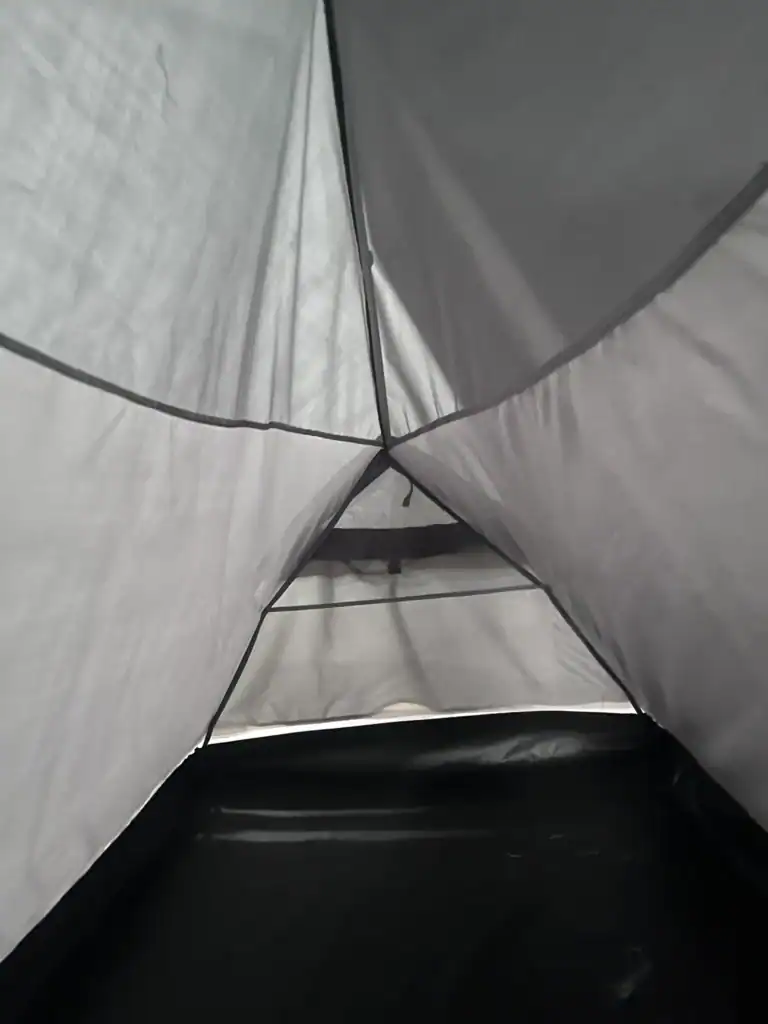
None of this is theoretical. I have watched a 50-unit glampsite order get held at a port in Hamburg because the buyer trusted a spec sheet and skipped the three documents. The seam tape started lifting on day one of rain. The replacement tents cost more in air freight than the original FOB pricing saved. The documents take ten minutes to request and two days for a legitimate factory to produce. The alternative is explaining to your CFO why 300 tents are unsellable.
Conclusão
The three specs that separate a durable glamping tent from a warranty liability are hydrostatic head rating after UV aging, seam tape width above 20mm, and coating chemistry. Fabric weight and fresh-fabric certificates tell you nothing about what happens after 200 hours of sun exposure. A 3,000mm HH number on a new sample can crater to 800mm when UV inhibitors are absent from the coating formula — and that collapse is what triggers customer returns, not the spec printed on the hangtag.
Review fabric and coating options on the tent product page to benchmark specs against your current supplier quotes. On your next sourcing call, demand one number: the hydrostatic head rating after 200 hours of QUV accelerated weathering. If it falls below 2,000mm, the FOB pricing advantage evaporates by the end of the first monsoon season.
Perguntas frequentes
Qual é a classificação mínima de impermeabilidade para uma tenda de glamping que pode suportar chuva forte?
Uma tenda de glamping precisa de uma classificação mínima de cabeça hidrostática de 3.000 mm para suportar chuvas intensas prolongadas. Qualquer classificação abaixo de 3.000 mm corre o risco de vazamento nas costuras. Sempre verifique se a classificação é medida após a selagem das costuras e o envelhecimento do tecido, não apenas no tecido bruto.
Quanto tempo dura a proteção UV em tendas de lona antes de desbotar?
UV protection on standard PU-coated canvas degrades visibly within 2-3 seasons of sun exposure. Silicone-treated fabrics with UV stabilizers can retain integrity for 7+ years. Always request accelerated weathering test data, not just a UPF label.
Can you combine waterproofing and fire retardancy in one fabric?
Yes, but it requires a specialized coating system; standard PU alone will not meet commercial fire codes. Fire-retardant additives can weaken waterproof adhesion if not properly formulated. Specify both certifications in your RFQ and request combined test reports before sampling.
What’s the difference between hydrostatic head and water column rating?
They are the same measurement: the height of water column a fabric can withstand before leaking, expressed in millimeters. Hydrostatic head is the formal technical term; water column. Always confirm which test standard (e.g., ISO 811) was used to benchmark the rating.
How do you test if a tent’s waterproof coating is degrading?
Perform a water spray test: if water no longer beads and fabric wets out, the DWR or PU coating has degraded. Peeling, flaking, or a. Send a fabric swatch for a hydrostatic head re-test if you need a quantifiable pass/fail before reordering.

 English
  Español
  Deutsch
  Français
  Português do Brasil
  Русский
  العربية
  한국어
한국어  日本語
日本語