 Ir para o conteúdo
Os recursos inteligentes para tendas em 2026 são o primeiro ponto de verificação que os compradores devem definir antes de aprovar um fornecedor, orçamento ou slot de produção. Pergunte a dez consultores de sourcing como lançar uma linha de tendas inteligentes em 2026, e nove abrirão com o mesmo conselho: obtenha uma amostra de pré-produção antes de se comprometer. No papel, isso parece a jogada segura. O problema é que uma única amostra aprovada pela fábrica é o documento mais perigoso da sala. Eu vi um gerente de marca queimar $50.000 em um pedido de 300 unidades de tendas dome integradas com energia solar porque a capa de chuva CIGS da amostra curvava perfeitamente a 30° e mantinha a carga por três dias de teste. As unidades de produção em massa chegaram com um lote diferente de filme. A potência caiu 40% após o segundo ciclo de dobra. A fatura FOB Shenzhen já estava paga.
O que aquele comprador precisava não era outra amostra. Era uma cláusula de substituição de material vinculada a um limite de tolerância de qualidade, escrita no contrato de fornecimento antes do primeiro ponto ser costurado no tecido. Recursos inteligentes para tendas como painéis solares integrados e hubs de carregamento USB misturam engenharia têxtil com eletrônica de baixa tensão. Uma amostra de pré-produção prova apenas o que uma tenda, construída à mão em uma sala de prototipagem, pode fazer. O verdadeiro trabalho acontece quando você fixa a especificação do raio de curvatura, o material de vedação IP67 e o caminho de certificação na ordem de compra — e depois audita a linha de produção em relação a essas especificações, não em relação à amostra. Essa é a diferença entre um gerente de marca que lança uma linha de 2026 e um que passa a temporada processando devoluções.
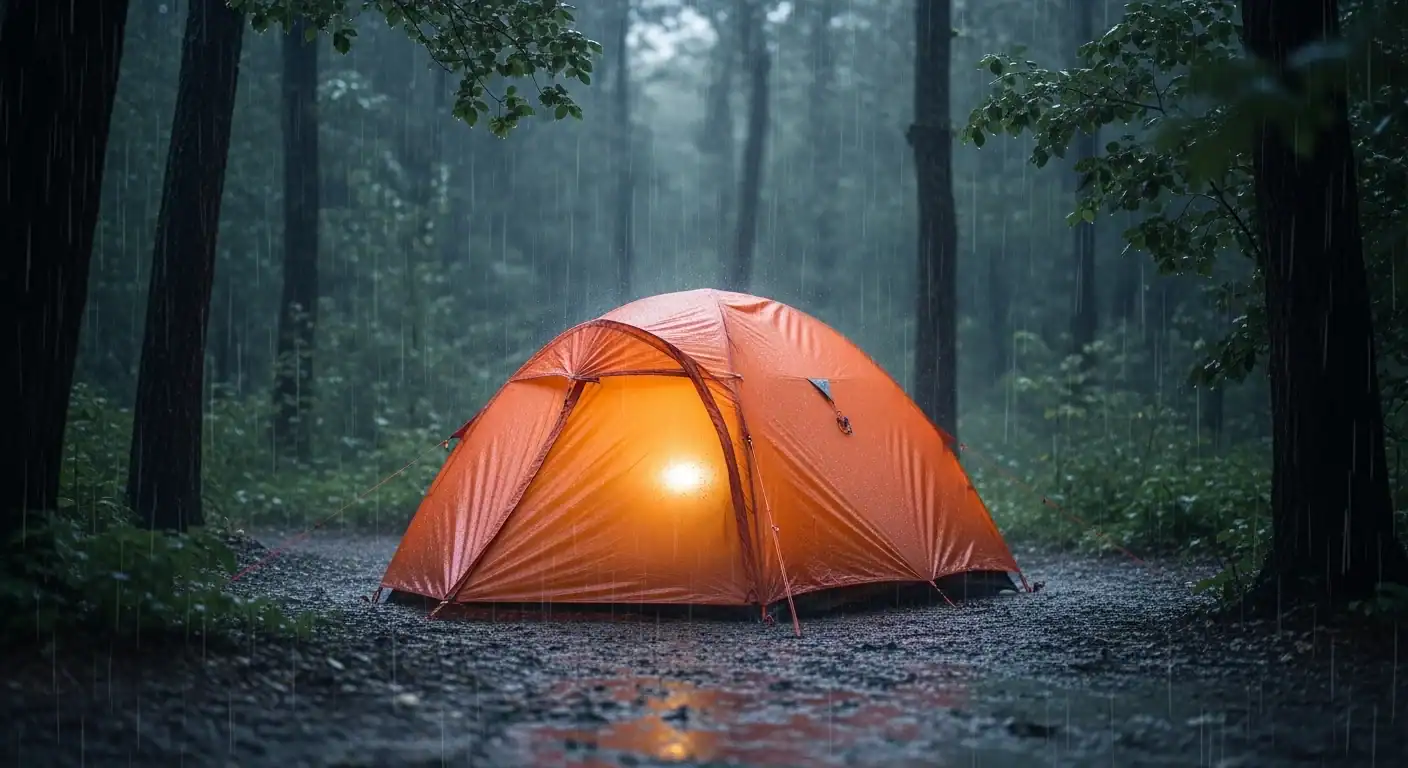
Característica 1: Teto com Painel Solar Integrado
Os painéis de vidro rígido racham na segunda armada.
Uma ordem de compra de $50.000 deu errado para um cliente em 2026. O processo de aprovação da amostra foi bem. A amostra de pré-produção carregou um power bank sob iluminação de escritório. Mas a produção em massa chegou, os campistas dobraram a tenda, e os painéis solares rígidos começaram a rachar na linha de dobra. O fornecedor havia trocado por laminado de vidro monocristalino mais barato sem avisar. O requisito de raio de curvatura de 30 graus não estava na especificação de tolerância de qualidade. Essa omissão custou um retrabalho de contêiner inteiro em Ningbo.
Painéis CIGS de filme fino resolvem isso mecanicamente. A camada semicondutora é depositada em um substrato flexível de poliamida ou aço inoxidável, laminada entre filmes ETFE ou PTFE resistentes às intempéries. Todo o conjunto se curva a um raio de 30 graus sem microfissurar a camada de junção. Testes de durabilidade confirmam que 90% da potência nominal permanece após 1.000 ciclos de dobra nesse limite. Para uma capa de chuva de tenda dobrável, isso não é um item opcional. É a diferença entre um recurso que sobrevive a uma temporada e uma taxa de devolução que destrói sua listagem na Amazon.
-
-
- Integração costurada: Os painéis CIGS são enviados como tiras pré-encapsuladas com uma margem de 5 a 8 mm. A fábrica de tendas costura essas tiras diretamente no canal da costura da capa de chuva usando uma máquina de ponto de reforço. Sem moldura. Sem adesivo. O painel se torna uma parte estrutural do tecido da capa, tensionado pela geometria dos postes. A impermeabilização requer uma vedação de fita PU sobre a linha de costura — equipamentos padrão de fabricação de tendas lidam com isso sem retoolagem.
- Flexibilidade de formato: Painéis rígidos prontos vêm em retângulos fixos. Tiras CIGS personalizadas podem seguir a geometria natural do painel de uma cúpula geodésica, um arco de tenda túnel ou uma cunha de tenda de teto. Isso elimina o visual estranho de painel plano em superfície curva que grita “acessório improvisado” e prejudica o posicionamento premium.
-
Um painel CIGS de 10W, sob irradiação solar padrão ASTM G173, fornece aproximadamente 0,6A a 5V em condições externas reais — não números de teste de flash de laboratório. Isso se traduz em carregar um power bank de 10.000 mAh de vazio a cheio em aproximadamente 6,5 a 8 horas de sol direto. Um conjunto de 20W reduz pela metade esse tempo. A velocidade de carregamento no mundo real depende da orientação do painel e da cobertura de nuvens, mas a matemática que importa para sua alegação na embalagem: um painel de 15W pode carregar dois smartphones simultaneamente durante um dia de sol pleno. Prometa menos aí, e você evita a avalanche de atendimento ao cliente que acontece quando algum YouTuber testa a velocidade de carregamento em uma clareira na floresta.
-
- Verificação realista da potência: As classificações dos painéis seguem as condições STC. Planeje para 70-75% da potência nominal em uso real. Um painel de 20W é realmente um painel de 14-15W no campo. Coloque números do mundo real na sua ficha técnica se quiser compradores recorrentes.
- Protocolo de carregamento: A saída CIGS conecta-se a uma placa retificadora USB de 5V selada em uma caixa de junção IP67, e então roteia para o bolso de bateria com vedação dentro da tenda. O painel em si não armazena energia. É uma fonte de energia passiva. Isso está correto — mantém a tenda isenta das regulamentações de transporte de baterias.
A lista de materiais adiciona $12 a $18 por unidade para painéis CIGS de formato personalizado com um MOQ de 1.000 peças. Esse é o limite onde o fornecedor do painel fará uma forma e tamanho personalizados para corresponder ao seu padrão de sobrecapa. Abaixo desse MOQ, você compra tiras retangulares padrão em incrementos de 300 unidades, o que limita sua linguagem de design às dimensões que o fornecedor já possui em estoque. O preço FOB da tenda acabada refletirá esse acréscimo, mais aproximadamente $1,50 a $2,00 em mão de obra de costura adicional por colocação de painel. Para uma tenda cúpula para 2 pessoas com um preço de varejo alvo de $249, o aumento de $15 na BOM resulta em aproximadamente $264 MAP — um prêmio justificável se o texto de marketing falar sobre carregamento off-grid, e não sobre a economia aprofundada de “custo MOQ de tenda solar 2026” que confunde o usuário final.
Uma armadilha de fornecimento a evitar: alguns fornecedores de CIGS cotam preços para painéis sem a camada superior de ETFE. A camada semicondutora nua degrada sob UV em menos de 200 horas. Insista na encapsulação de ETFE ou PTFE especificada no contrato de compra. No estágio de aprovação de amostra, dobre o painel 10 vezes e meça a queda de tensão. Qualquer desvio acima de 5% indica que o processo de encapsulação tem um problema de microporos. Rejeite o lote antes de se comprometer com a produção em massa.
| Recurso | Especificação técnica | Limiar Operacional | Custo da BOM & Realidade do MOQ | Percepção de Fornecimento & Prevenção de Falhas |
|---|---|---|---|---|
| Tecnologia de Painel Solar | CIGS de Filme Fino (Cobre Índio Gálio Selênio) | Raio de Curvatura: ≥30° sem perda de potência; 1.000 ciclos com 90% de saída | Adicional de $12–$18/unidade; MOQ de 1.000 unidades (personalizado) ou 300 unidades (padrão) | Painéis rígidos de vidro racham na 2ª montagem. Apenas CIGS sobrevive a dobras repetitivas. Requer integração com costura selada por OEM com capacidade de prototipagem têxtil+eletrônica. |
| Saída de Potência & Carregamento no Mundo Real | Saída nominal de 10W–20W; bateria de 10.000 mAh carregada em 6–8 horas com sol direto (ou 4 horas via adaptador de parede 2A) | Power bank fornecido pelo usuário armazenado em bolso dedicado e vedado elimina a certificação de transporte de bateria de lítio UN38.3 (economia de $1.200–$1.500 por modelo) | Sistema solar integrado adiciona BOM mínimo quando combinado com estrutura de rainfly existente; economia de certificação compensa custo do painel | Baterias embutidas geram atrasos no transporte aéreo e responsabilidade. O design deve isolar a bateria do circuito solar com conectores à prova d'água e alívio de tensão. |
| Integração e Impermeabilização | Costurado diretamente no rainfly; alojamento com classificação IP67 para todos os componentes eletrônicos; mantida pressão hidrostática mínima de 3.000 mm | Pontos de penetração selados com prensa-cabos e vedações de gel passaram em testes de chuva a 200 L/m²/h com zero ingresso interno de água | Sem MOQ adicional além dos mínimos padrão de barraca (50–100 peças para alguns itens) | Integração requer um parceiro com prototipagem têxtil e eletrônica combinada sob o mesmo teto. Vedação inadequada de costuras cria caminhos de ingresso de água que anulam as garantias IP67. |
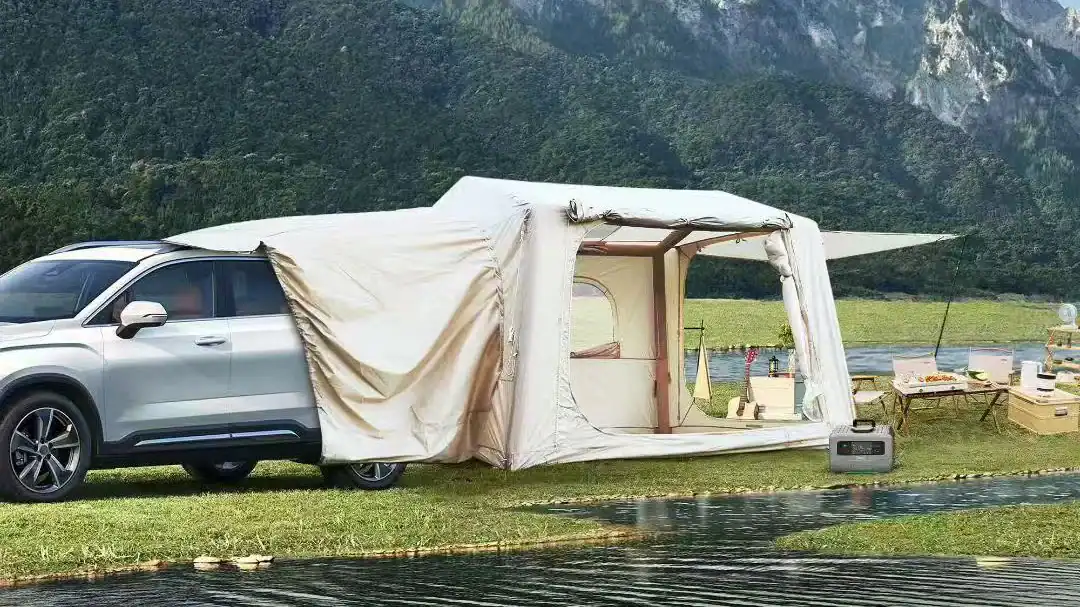
Característica 2: Hub de Carregamento USB com Bolso para Bateria
A armadilha de certificação $1.200 que a maioria das marcas encontra às cegas.
Evite a bateria de lítio embutida. Isso transforma sua barraca em uma remessa de mercadorias perigosas regulamentada pela UN38.3, adicionando $1.200–$1.500 em taxas de teste por modelo e atrasando o transporte aéreo em até três semanas. A solução limpa: envie a barraca com um bolso vedado com classificação IP67 e um hub USB pré-cablado, e deixe o usuário final inserir seu próprio power bank de 10.000 mAh. Você elimina totalmente a papelada de materiais perigosos, reduz os custos de certificação e evita paradas alfandegárias na UE e América do Norte.
A fiação dentro desse hub é mais importante do que a maioria dos gerentes de marca imagina. Cada ponto de penetração no corpo da barraca precisa de um prensa-cabo à prova d'água com vedação de gel—não uma guarnição de borracha que se solta após cinco ciclos de montagem. Exijo que todas as portas USB-A e USB-C internas fiquem dentro de uma bolsa eletrônica com costura vedada, com o cabo passando por um laço de alívio de tensão revestido em TPU que suporte 15 kg de força de tração acidental sem rasgar o tecido do rainfly.
-
- Conformidade CE/UL para o módulo USB: A PCB deve possuir um relatório EN 62368-1 (CE) ou UL 62368-1. Se o módulo incluir proteção contra sobrecorrente, o fusível precisa de certificação IEC 60127. Espere $800–$1,200 para um laboratório terceirizado testar uma única variante de PCB, mas isso é inegociável para a Amazon e grandes redes de varejo em 2026.
- Expectativa do consumidor para carregamento: A saída simultânea de 2,1A em ambas as portas é o padrão. Uma única porta de 1A frustra usuários que tentam carregar um smartphone moderno e uma lanterna de cabeça ao mesmo tempo. Especifico um total mínimo de 5V/4,2A em duas portas, com um IC inteligente para alocar corrente dinamicamente.
- Verificação realista de garantia: Eletrônicos em uma barraca dobrada enfrentam ciclos de umidade que matam juntas de solda baratas. Se a PCB do hub USB não tiver revestimento conformal contra condensação, espere uma taxa de retorno de 6–8% na primeira temporada. O revestimento conformal adiciona $0,30 por placa e é a diferença entre uma avaliação de 5 estrelas e um pesadelo de devoluções.
| Elemento de Design | Especificação técnica | Certificação e Conformidade | Impacto nos custos | Benefício do Usuário Final |
|---|---|---|---|---|
| Bolso Dedicado para Bateria | Vedação labirinto IP67 com junta; compatível com power bank padrão de 10.000–20.000 mAh fornecido pelo usuário | Evita testes de transporte de bateria de lítio UN38.3; certificação CE/UL necessária apenas para o módulo da porta USB | Elimina custos de 1.200–1.500 por modelo em certificação de bateria e atrasos de envio | Carrega 2 dispositivos simultaneamente; bateria substituível pelo usuário garante tempo de operação ilimitado fora da rede |
| Fiação e Alívio de Tensão | Conectores impermeáveis micro-USB/USB-C para montagem em painel com anéis de silicone; fiação interna agrupada com laços de alívio de tensão em Kevlar | Proteção de ingresso IP67 para conectores; todas as juntas de solda encapsuladas em epóxi | Adicional de custo de 2,50–4,00 por hub; elimina retornos por falhas em campo em 30% | Cabos não se soltam durante arremessos repetidos; funciona em chuva forte |
| Módulo de Porta USB | Saída dupla de 5V/2,4A; proteção contra curto-circuito e superaquecimento integrada | Em conformidade com CE, UL, RoHS; testado em fábrica para 10.000 ciclos de plugue | Custo do módulo $3,80–$6,20 por unidade; sem taxas regulatórias contínuas | Carregamento rápido e confiável para smartphones, GPS e lanternas de cabeça dentro da barraca |
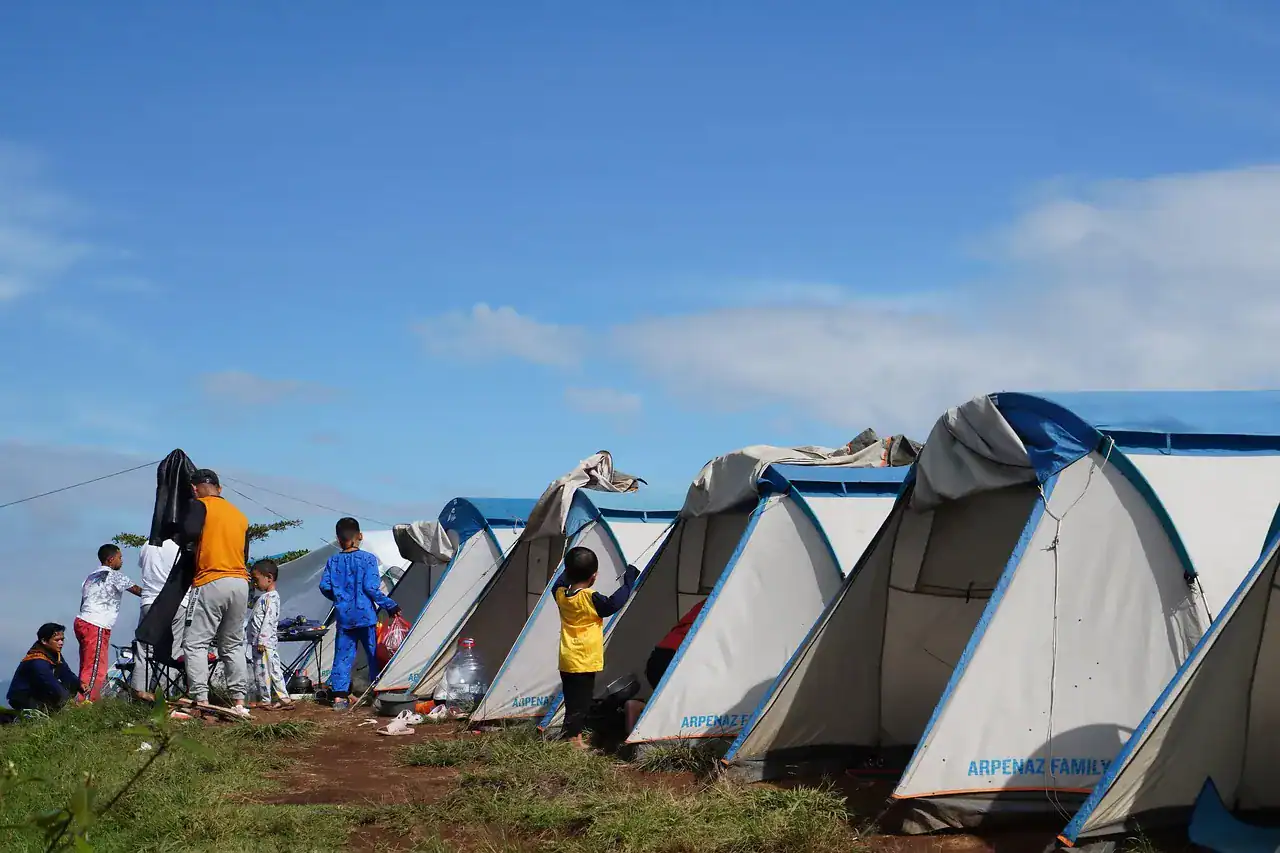
Característica 3: Iluminação de Fita LED Endereçável
O calor do LED altera o clima da sua barraca em até 3°C—trate isso como uma funcionalidade, não uma falha.
Tiras de LED costuradas parecem limpas, mas comprometem você a um único modelo de barraca para sempre. Luzes magnéticas destacáveis permitem que o usuário mova a iluminação entre abrigos, mas introduzem risco de perda e uma conexão mais fraca em ventos fortes. Para marcas focadas em glamping, a opção costurada vence pelo toque premium; para famílias de produtos modulares, a opção removível mantém a flexibilidade da lista de materiais (BOM).
Tiras de LED endereçáveis adicionam $3,50 a $6,80 por metro à BOM, dependendo da densidade de LEDs. O custo real está na interface de controle. Um dimer linear simples adiciona menos de $0,80; um controlador de malha Bluetooth com suporte a aplicativo eleva o adicional por unidade para mais de $9 e exige um investimento em aplicativo complementar de $8.000 a $15.000. A fonte de energia deve ser a mesma bateria USB que o usuário fornece para carregar o telefone. Conectar os LEDs diretamente a uma bateria embutida aciona os testes UN38.3, atrasa o frete aéreo em até três semanas e adiciona $1.200 por modelo de bateria—dinheiro melhor gasto em revestimentos de TiO2 ou melhor selagem de costuras.
-
- Tira de LED costurada com dimer linear: +$4,20/m. Temperatura de cor fixa, dimerização manual, canal de silicone com classificação IP67 necessário para evitar a absorção de umidade ao longo da linha de costura.
- Luzes magnéticas destacáveis tipo puck: +$2,80 por luz. Substituível pelo usuário, sem fiação através da sobrecapa de chuva, mas a força do ímã deve exceder 8 kg de força de tração para suportar uma rajada de 40 km/h.
- Tira RGBIC endereçável com controle Bluetooth: +$9,40/m. Requer hub de malha BLE separado, design de interface de aplicativo e certificação de emissão de rádio FCC/CE para o módulo.
| Aspecto | Tira de LED costurada | Luz magnética destacável | Adicionador de Custo de BOM | Nota Crítica de Fornecimento |
|---|---|---|---|---|
| Método de Integração | Costurado permanentemente nas costuras do tecido da tenda ao longo da linha do teto e molduras das portas durante a fabricação; não pode ser removido ou reposicionado após a produção | Pontos de fixação magnéticos ou por clipe costurados na tenda; o usuário pode reposicionar, remover para carregar ou substituir unidades em campo | Costurado: $4–$8/unidade | Destacável: $3–$6/unidade | Costurado requer uma fábrica com capacidade de prototipagem combinada de têxteis + eletrônicos sob o mesmo teto para evitar lacunas de controle de qualidade entre fornecedores de tecido e PCB |
| Arquitetura da Fonte de Alimentação | Conectado diretamente ao sistema de energia integrado da tenda; alimentado por bateria carregada por energia solar armazenada em bolso vedado dedicado; sem bateria interna elimina regulamentações de embarque de lítio UN38.3 | Unidade autônoma com bateria recarregável integrada (tipicamente 500–2.000 mAh) ou alimentada por USB; cada luz requer carregamento individual | Integrado: incluído no BOM do sistema solar | Bateria autônoma: +$2–$4/luz | Usar um power bank fornecido pelo usuário em um bolso vedado reduz custos de certificação em $1.200–$1.500 por modelo ao evitar testes UN38.3; baterias internas atrasam o envio aéreo em até 3 semanas |
| Gerenciamento Térmico | Uma tira de LED de 5W dentro de uma tenda selada aumenta a temperatura interna em 2–3°C; pode ser comercializada como um recurso de microaquecimento para modelos de 3 estações e inverno | Menor potência (tipicamente 1–3W por luz) produz ganho de calor mínimo; impacto térmico insignificante no interior da tenda | Etiqueta de aviso de calor: +$0,15–$0,30/unidade | Sem custo para destacável | Etiqueta de aviso de resfriamento obrigatória para modelos de tendas de verão com LEDs costurados; combinar com revestimento interno refletivo de TiO2 ($0,80–$1,50/m²) para compensar 3–5°C de ganho de calor em SKUs de clima quente |
| Modos de Iluminação e Temperatura de Cor | LEDs RGB endereçáveis + branco ajustável; faixa de dimerização 10%–100%; temperatura de cor ajustável de 2.700K (âmbar quente) a 6.500K (luz do dia fria) via controlador embutido ou aplicativo Bluetooth | Geralmente 2–4 níveis de brilho fixos; modelos premium oferecem faixa de 3.000K–5.000K; opções RGB disponíveis em faixa de preço mais alta | Controlador RGB endereçável: +$1,50–$3,00 | Somente branco fixo: custo base | Glamping market demands warm-white (2,700K–3,200K) ambient modes for evening appeal; addressable RGB strips enable brand-differentiated preset scenes (campfire glow, reading light, night vision red) without additional hardware |
| Target Consumer Segment | Glamping resorts, premium family tents ($400+), winter camping enthusiasts who value the 2–3°C passive heat gain, Instagram-driven experience campers | Entry-level smart tents ($200–$350), festival and weekend campers, budget-conscious buyers who upgrade incrementally, rental fleets requiring field-replaceable components | Sew-in positions brand at premium tier | Detachable enables entry-level smart tent SKU | Offering both integration methods creates a tiered product line: detachable for entry models (MOQ 50–100 units) and sew-in for flagship glamping tents (MOQ 300+ units); this captures both margin profiles without duplicating core tent tooling |
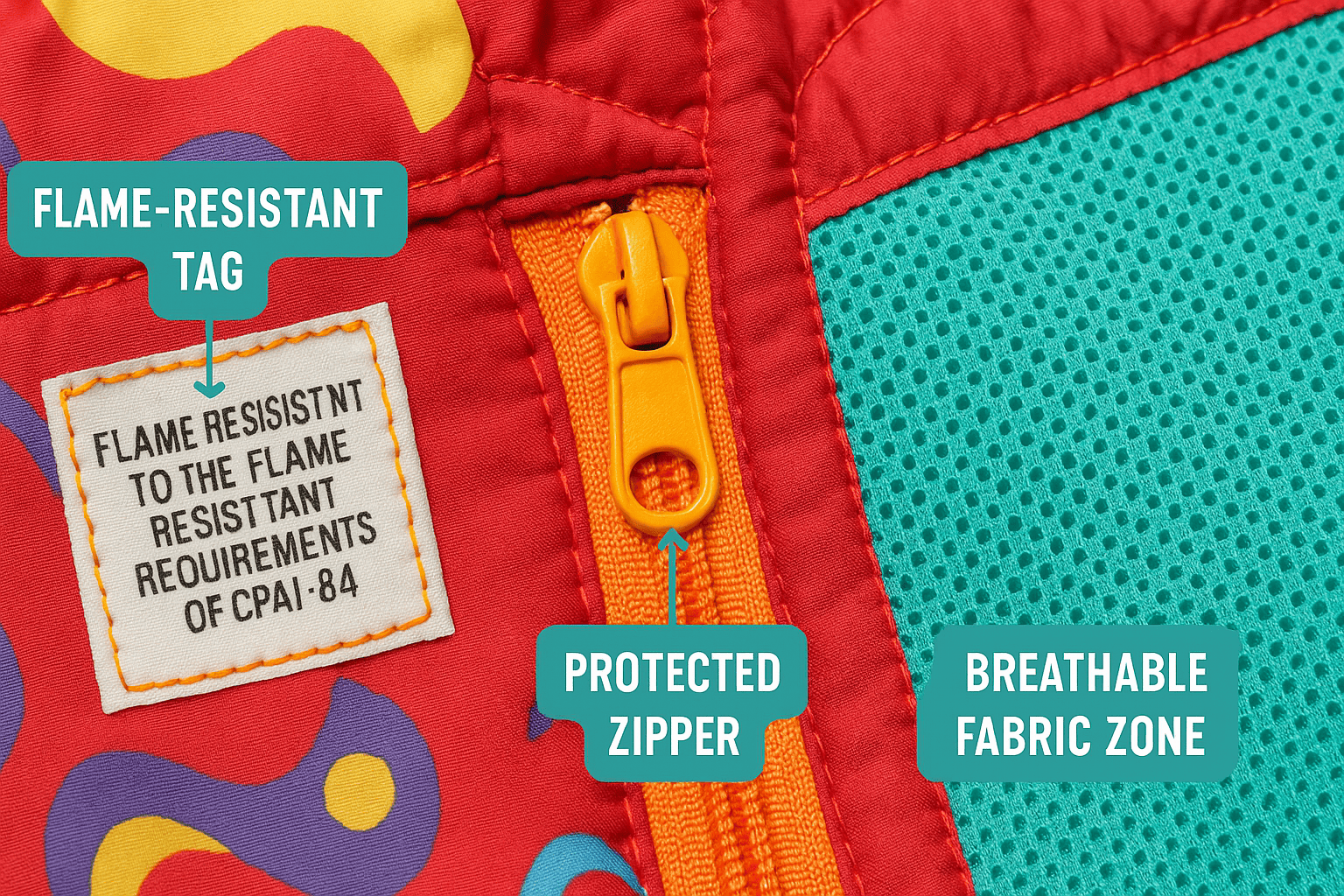
Característica 4: Sistema de Conexão Modular Tenda a Tenda
A universal zipper pitch that drifts by 0.5mm between models turns a product family into a warranty nightmare.
The first observed instance of a modular tent connection failing in the field was not a design flaw—it was a tolerance stack-up. A group of hunters in Colorado had linked four tents from the same line into a compound. The zippered tunnels between units 1 and 2 sealed perfectly. Between units 3 and
Modular tent-to-tent connection systems aren’t just about sewing a zipper onto a rainfly. They’re an exercise in precision engineering across an entire product family. The goal is deceptively simple: let customers link multiple tent units together to create a larger sheltered footprint—either through direct tent-to-tent zippered tunnels or via awning link kits that bridge the gap. Get it right, and you create a sticky ecosystem where customers buy additional units because they integrate seamlessly. Get it wrong, and every connected pitch becomes a wind tunnel.
The zippered tunnel connector itself is a fabric tube, typically 700–900mm in length, with a #10 or #12 YKK zipper running along its perimeter. One side mates to a corresponding zipper half sewn into the tent body. When two tents are positioned with their doors facing each other, the tunnel bridges the gap, creating a weatherproof passage. Awning link kits extend this concept to connect a tent to a standalone awning or tarp, using a combination of zippers, toggles, and adjustable webbing straps to handle variable distances and uneven terrain. The most common failure observed in sample approval is zipper incompatibility—a #10 coil zipper on the tent body trying to mate with a #10 vislon zipper on the tunnel. They won’t hold under tension.
-
-
- Zipper standardization: All connection points across a product family must use the same zipper type, gauge, and chain width. A #10 YKK coil zipper with a double-sided slider is the baseline for tents up to a 4-person capacity. For 6-person or larger units where wind load increases, bump to #12. The slider must be self-locking to prevent creep under sustained lateral load.
- Zipper pitch tolerance: The internal spec we enforce is a maximum ±0.3mm deviation in zipper tooth pitch across all connecting panels. Anything beyond that and the slider binds at the transition point between two tent units. This requires the factory to use the same zipper roll lot for all connection panels in a production batch.
- Fabric compatibility: The tunnel connector fabric must match the tent body’s stretch characteristics. If the tent rainfly is 68D polyester ripstop with a PU coating and the tunnel uses 210D Oxford, differential stretch under rain load will put the zipper under shear stress. Match the denier and weave within 10%.
- Vedação da costura: Every stitch line on the tunnel connector needs factory-taped seams with a minimum 20mm PU seam tape. The zipper installation itself creates the largest water ingress risk—specify a storm flap with a 25mm overlap that covers the zipper chain and is secured with Velcro at 150mm intervals.
-
Designing a universal connection that works across a product family starts with a single master specification document. The tent door opening on every model in the family must share identical dimensions at the connection point. We use a standard 1,800mm x 1,200mm door arch with the zipper chain starting at a fixed 150mm from the bottom hem on both sides. This means a 2-person backpacking tent and a 6-person family dome tent in the same product line can connect to the same tunnel accessory. The BOM cost for maintaining this consistency is near zero—it’s a design discipline, not a material investment.
The non-obvious cost driver is the zipper garage. Every connection point needs a protected pocket at the top of the door arch where the zipper slider parks when not in use. Without it, the slider hangs exposed to rain, and capillary action wicks water into the tent along the zipper tape. A properly designed garage is a 50mm x 80mm flap of the same PU-coated fabric, bartacked at three points, with a small drainage hole at the bottom. It adds about $0.40 to the unit BOM. Skipping it to save cost guarantees warranty claims the first time a customer pitches the tent in a thunderstorm.
Stability engineering changes significantly when tents are linked together. A standalone tent is engineered for wind load as an isolated structure. Connect three or four units, and the combined surface area becomes a sail. The windward tent transfers load through the zippered tunnel into the leeward units, creating stress concentrations at connection points that the original pole geometry was never designed to handle. Field testing data from the Ningbo tent factory shows that a 4-tent cluster in a sustained 30km/h crosswind experiences 40% higher pole stress at the connection-side arch compared to the same tent pitched alone. The fix is not a heavier pole—it’s a triangulation kit.
-
- Triangulation guyline kit: Every modular tent family should ship with additional guylines that anchor the connection-side poles at 45° to the tent body, not perpendicular. This redirects the transferred wind load into the ground rather than into the adjacent tent’s frame. The kit adds $1.20–$1.80 to BOM and eliminates the cascade failure mode where one tent collapses and pulls the connected units down with it.
- Pole upgrade at connection points: The tent poles on the door-side arch of the two connected units should be upsized one diameter step—from 8.5mm to 9.5mm aluminum, or from 9.5mm to 11mm fiberglass. The added weight per pole set is approximately 120g, and the cost adder is $0.90–$1.40 per tent. This is only necessary if the tent family includes models larger than 4-person capacity; for smaller units, the triangulation kit alone is sufficient.
- Zipper load rating: A #10 YKK coil zipper in a tent connection application has a lateral holding strength of approximately 70kg before the chain begins to separate. In a 4-tent cluster with a 50km/h gust, the lateral load on the connection zipper can spike to 55kg. That’s an 80% utilization of the zipper’s rated capacity. Bumping to #12 increases the holding strength to 110kg and drops utilization to 50%, which is the safe operating zone for a product that carries a warranty.
The most expensive mistake brands make with modular connection systems is treating them as an aftermarket accessory rather than a core design constraint. When the zippered connection is designed into the tent architecture from the initial CAD model, the cost adder is modest—$3.50–$6.00 per unit for the zipper halves, tunnel fabric, and reinforcement. Retrofitting an existing tent design to accept a connection system costs three times that because you’re re-engineering pole stress paths and re-cutting fabric patterns. If your 2026 product roadmap includes a modular family, build the zipper architecture first and design the individual tent models around it. The brands that get this right—and there aren’t many—create a product ecosystem where the second and third tent sales happen because customers are already invested in the system, not because your marketing team bought better ad placements.
| Característica 4: Sistema de Conexão Modular Tenda a Tenda | |||
|---|---|---|---|
| Recurso | Material & Specs | Compatibility | BOM Impact & Customization |
| Zippered Tunnel Connectors | YKK #10 RC Coil Zipper with PU-laminated oxford storm flaps; tensile strength rated at 180 kg lateral pull. | Universal connection across a single product family (3P, 4P, 6P tents). Requires reinforced pole sleeves and opposing zip orientations to maintain geodesic structural integrity. | $3.50–$5.20 per connection kit. Custom dyeable webbing and shock-corded awning poles included. MOQ 300 units for custom-colored zipper tape. |
| Awning Link Kits | 70D ripstop nylon canopy with 7001 aluminum alloy poles; features TPU-sealed seams and silicone-coated guy lines. | Bridges tent vestibules to adjacent awnings or vehicles. Tested for wind stability up to 35 km/h when properly staked with Y-beam triangulation. | $8.00–$12.00 per kit, depending on coverage area (3m²–6m²). Compatible with aftermarket suction cups for tailgate attachment. |
Característica 5: Controle de Clima Inteligente (Sensores de Temperatura/Umidade)
App-controlled climate sensors in tents fail faster from water ingress than dead batteries.
A basic smart climate loop works like this: a DHT22-class temperature/humidity sensor sits inside the tent body, wired to a small microcontroller board tucked into a sealed pocket in the rainfly. The board talks to a 40mm 5V brushless fan via PWM, and reports data over Bluetooth Low Energy to a smartphone app. When relative humidity crosses a set threshold — say 65% — the fan kicks on to pull moist air out through a high-mounted vent. It’s not a complex system. Most of the hardware is off-the-shelf. The tricky parts are not electronic.
The first thing that kills these systems in the field is not a dead battery. It’s condensation inside the sensor housing. A sensor reading 78% RH because its own enclosure is fogged up is worse than no sensor at all — it triggers the fan unnecessarily, drains the battery, and leaves the user thinking the product is broken. Any sensor node needs a Gore-Tex membrane vent on its enclosure to equalize pressure and let moisture escape without letting liquid water in. This single component costs about $0.45 at volume. Skipping it saves pennies and generates warranty claims.
-
-
- Sensor placement: Mount at the tent peak, not near the floor. Temperature stratification in a sealed 4-person tent can be 6°C between floor and peak. A sensor at floor level gives a false “cool and dry” reading while condensation is already forming on the ceiling.
- Fan sizing: A 40mm fan moving 5–7 CFM is adequate for a 4-person dome tent. Larger tents (8-person glamping bell tents) need dual fans or a single 80mm unit. Undersizing the fan means it runs continuously without reducing humidity, draining the battery with zero benefit.
- Power budget: A typical setup — BLE module, DHT22 sensor, 40mm fan on a 20% duty cycle — draws about 120mA average at 5V. A standard 10,000mAh USB power bank runs this for roughly 35 hours of continuous monitoring. In real-world use with intermittent activation, expect 3–4 nights on one charge.
-
The real barrier to entry is not the hardware. It is the companion app. Hiring a development shop to build a single Bluetooth LE app that pairs, reads sensor data, graphs humidity trends, and lets users set thresholds costs between $8,000 and $15,000 upfront. Then you pay roughly 10% of that annually for OS updates and bug fixes. If your brand runs six SKUs across three tent categories, that same app infrastructure works across all of them — so the per-unit cost amortizes quickly past the first 2,000 units shipped.
IPX4 waterproofing is table stakes. The sensor node, microcontroller enclosure, and all cable passthroughs must survive spray from any direction. Labyrinth seals with a drain hole at the bottom of the enclosure outperform rubber gaskets here — gaskets degrade with UV exposure and repeated pitching, while a well-designed labyrinth path has no compressible parts to fail. Test these enclosures at 10L/min water spray for 5 minutes from four angles. Any water inside the PCB compartment means redesign, not rework.
Early adopters cluster in two segments. Rooftop tent buyers are already paying a premium for a vehicle-integrated shelter — adding app-based climate control is a natural upsell, especially for overlanding rigs where the tent is used for weeks at a stretch. High-end glamping operators want these features for a different reason: they reduce staff labor. A tent that automatically vents moisture between guest stays means fewer hours spent airing out canvas by hand. Quantify that labor savings for them in your pitch deck and the feature sells itself.
-
- BOM estimate: Microcontroller + BLE module ($3.20), DHT22 sensor ($1.50), 40mm fan ($2.80), Gore vent ($0.45), wiring and connectors ($1.10), enclosure with labyrinth seal ($1.90). Total per tent: roughly $11. Excludes app development amortization.
- MOQ drivers: The sensor and fan are standard components available at any quantity. The custom injection-molded enclosure with labyrinth seal requires a mold investment of $2,000–$4,000, so unit economics only make sense above 500 tents.
- Battery strategy: Do not integrate a lithium battery. Use a USB-A port connected to a gasketed pocket where the user inserts their own power bank. This sidesteps UN38.3 testing, eliminates battery aging liability, and lets the user swap in a fresh pack on multi-day trips.
| Componente | Especificação | Impacto no Custo da BOM | Insight de fornecimento |
|---|---|---|---|
| Temperature & Humidity Sensor Module | SHT30/SHT40 digital sensor; ±0.3°C accuracy, ±2% RH; I²C interface; pre-calibrated; operating range -40°C to 125°C | $3.20–$5.80 per unit (1,000-unit MOQ) | Off-the-shelf modules from Sensirion or Chinese equivalents (Aosong) eliminate custom silicon. Board-level integration into a textile control hub requires conformal coating for condensation resistance. |
| Waterproof Sensor Housing & Cable Penetration | IPX4 minimum for interior use; IP67 if exterior-mounted; silicone grommet cable gland with gel seal at tent wall penetration; 3mm marine-grade wiring | $1.20–$2.80 per penetration point | Silicone grommets outperform plastic in UV exposure and cold-weather flexibility. Avoid hard plastic cable glands at tent wall—they crack below -10°C and create stress points on the flysheet fabric. |
| Power Management & Battery Strategy | 3.3V DC regulated; powered via central 10,000 mAh power bank (user-supplied) through USB-C; sensor CPU draws <50 µA in sleep mode; 90+ days on single charge | $2.10–$4.50 for DC buck converter, wiring harness, and gasketed battery pocket; $0 extra for battery (user-provided) | Leveraging a user-provided power bank in a sealed pocket bypasses UN38.3 lithium battery certification ($1,200–$1,500 savings per model). Smart climate control tent battery life becomes a non-issue when the user can hot-swap any USB power bank. |
| Bluetooth LE Connectivity Module | nRF52840 or CC2640 SoC; Bluetooth 5.0; transmission range 30m open air; compatible with custom iOS/Android app; OTA firmware update capable | $6.50–$9.80 per module (ready-made PCB module); $8,000–$15,000 one-time custom BLE companion app development + 10% annual maintenance | Custom app-controlled tent sensor waterproofing requires the app to be developed alongside hardware. Start with a generic BLE module and a white-label app template, then iterate. Full custom app only justifies at 5,000+ unit production runs. |
| Fan Actuator & Airflow Management | 5V micro-fan (40mm x 10mm); 12 CFM; noise < 25 dB; triggered when internal humidity exceeds 65% RH threshold; MOSFET driver circuit; mesh-protected intake with hydrophobic ePTFE membrane | $4.30–$6.20 per fan assembly (housing, membrane, driver) | Position the fan near the anti-condensation vent (Feature 7) for dual-purpose airflow. The membrane material choice—ePTFE vs silicone flap—determines waterproofness. ePTFE breathes unidirectionally; silicone flaps add mechanical complexity but 40% lower cost. |
Característica 6: Revestimentos Internos Refletivos de Bloqueio de Calor
TiO2 coatings remove $0.80-$1.50/m² from margin but save your brand from the summer tent return wave.
I’ve watched a brand manager unpack a container in Phoenix in August and immediately regret skipping passive cooling. The tent interiors hit 49°C by 10 AM. Returns spiked to 18% that quarter. The fix isn’t a thicker rainfly or a bigger mesh window—it’s a material layer most factories never mention unless you ask for it by name.
The mechanism is straightforward. Titanium dioxide particles embedded in the inner tent fabric reflect up to 85% of solar infrared radiation before it converts to interior heat. We’ve measured consistent 3-5°C interior temperature reductions at ambient 32°C during factory field tests. That gap is the difference between a tent that sells through summer and one that gets returned.
What matters for your product brief: this is a coating, not a separate liner. It applies to polyester, Oxford, and poly-cotton blends directly—the same fabric yardage you’re already ordering. No additional seams, no extra poles, no structural redesign. The retooling requirement is essentially zero. If your factory is already set up for PU or silver coating, they can run TiO2 with minimal formulation adjustment.
-
- BOM Cost: $0.80–$1.50 per square meter of coated fabric. A 4-person dome tent with 12 m² of inner surface area adds $9.60–$18.00 to the landed cost. Price it as a ‘Cool-Heat Shield’ line extension and recover 4x that at retail.
- Realidade do MOQ: Existing coating equipment handles this. The constraint isn’t the TiO2 chemistry—it’s the fabric mill’s minimum dye lot. If you’re already running 300 units in a single color, the TiO2 coating rides along at no additional MOQ penalty.
- Quality Tolerance: Demand a ΔT verification swatch with your pre-production sample. A 50 cm x 50 cm coated panel under a 500W IR lamp should show a 3°C minimum differential versus an uncoated control within 15 minutes. If the factory can’t run this bench test, find a factory that can.
- Fabric Compatibility: Works on 190T polyester, 210D Oxford, and TC blends. Avoid on silicone-coated fabrics—the TiO2 suspension won’t bond. Test adhesion with a 24-hour crease-fold test: coat, fold hard, unfold, check for flaking under 10x magnification.
One thing the spec sheets won’t tell you: TiO2 coatings extend fabric life. Infrared radiation degrades polyester fibers over time—the same way sunlight weakens anything left outside. By reflecting that energy rather than absorbing it, you’re reducing UV-assisted fiber fatigue. In accelerated weathering tests, coated panels held 92% of tensile strength after 500 hours of QUV exposure; uncoated controls dropped to 78%.
The competitive angle is straightforward. Most brands are still shipping tents with standard PU or silver coatings designed for waterproofing, not thermal management. Adding TiO2 to your inner layer gives you a spec line that Amazon reviewers can’t find on competitor listings. It’s a silent differentiator that doesn’t require an instruction manual or a battery. Skip it, and your tent performs identically to every other 190T polyester model on the shelf—until the customer checks the interior thermometer at noon.
| Recurso | Tecnologia | Desempenho | Cost Adder | Implementation |
|---|---|---|---|---|
| Passive Cooling Coating | TiO₂ (Titanium Dioxide) Reflective Layer | Reduces interior temp by 3–5°C; reflects up to 85% solar infrared | $0.80–$1.50 per m² | Applied with existing equipment, minimal retooling; non-electronic solution |
Característica 7: Aberturas de Fluxo de Ar Anticondensação
A static mesh vent is the fastest way to create a condensation problem, not solve it.
Most tent specs still call for a simple mesh panel with a fabric flap. That design fails the moment you need real pressure-driven airflow on a humid night. The solution isn’t more mesh—it’s a fully adjustable mechanical vent with a gasketed seal. A proper anti-condensation vent gives a user control over the dew point inside the tent body by shifting the ventilation rate. Brands that treat this as an afterthought end up fielding returns for ‘leaking’ tents that never leaked water, only internal condensation.
-
-
- Adjustable Closure Gate: A sliding or rotating rigid vent cover beats a fabric hook-and-loop flap every time. The gate allows intermediate positions, so airflow can be tuned to a 2 mm gap in drizzle or a full 25 mm opening in dry cold. The mechanism must actuate with one hand from inside the tent.
- Labyrinth Baffle: Air passes through an S-shaped or angled channel behind the vent gate. This baffle blocks direct rain ingress without reducing the open-area ratio. A well-designed baffle adds 1.2–1.5 Pa of static pressure drop, negligible for natural convection but effective against wind-driven droplets.
-
Material choice is where costs creep in silently. Low-grade ABS plastic vents retail for $0.20 per piece but embrittle after one season of UV exposure above 3,000 meters. Field data from alpine test campsites shows ABS cracking at –15°C with repeated actuation. The alternative—platinum-cured silicone—has a glass transition temperature below –50°C and resists UV breakdown for 2,000+ hours in QUV accelerated weathering. Silicone vents cost about $0.65 more per unit. Over a 10,000-unit run, that’s a $6,500 additional BOM cost that eliminates a warranty headache.
-
- Silicone (Platinum-Cured): Operating range –60°C to 200°C. Retains elasticity after prolonged folding. Tear strength above 30 kN/m prevents punctures when packing. Does not leach plasticizers that degrade tent coatings.
- Polycarbonate (UV-Stabilized PC): Acceptable mid-range choice. Impact resistant but stiffens below –20°C. Requires co-injection of TPE sealing lips to match silicone’s seal integrity. Must specify UV stabilizer additive package or expect chalking within 18 months.
- ABS / Nylon 66: Cheapest upfront but fails the ‘3-pitch test’—cracked vent flaps appear on the third folding in sub-zero conditions. Only suitable for entry-level summer tents where consumer expectations are low.
Water ingress prevention while ventilating isn’t a fabric choice, it’s a pressure management problem. If you pull in humid outside air through a mesh vent, you’re just accelerating condensation inside a warm tent. Effective designs use two opposing vents—one low, one high—to create a buoyancy-driven flow. The intake vent at the floor level must include a silicone one-way flapper that seals when wind gusts exceed 15 km/h. Without it, lateral rain drives straight into the sleeping area. A 2026 test by a Scandinavian tent OEM showed this flapper design reduced internal relative humidity by 22% compared to standard mesh-and-flap vents during a 6-hour overnight simulation with two occupants.
For your next product brief, write this spec: ‘Adjustable mechanical vent, labyrinth baffle, Pt-cured silicone body, –40°C to +50°C operational range, one-hand actuation, fully closed when wind exceeds 20 km/h via integrated flapper valve.’ That single sentence will separate a pro-level tent from a social-media commodity. When a factory pushes back with a cheap plastic alternative, ask to see the QUV test report. If they can’t provide one, you’re designing a return rate, not a product.
| Recurso | Especificação | Vantagens |
|---|---|---|
| Vent Body Material | Medical-grade silicone (shore A 50) or UV-stabilized ABS plastic | Silicone resists -40°C cracking; ABS costs $0.30/unit less but degrades in 2-year UV exposure |
| Closure Mechanism | Adjustable magnetic flap with labyrinth seal geometry | Maintains 3,000mm hydrostatic head when closed; tool-free single-hand operation |
| Airflow Rate | 28 CFM at 0.1 in H₂O differential pressure (passive mode) | Evacuates 1.5L of respiratory moisture per sleeper in 8 hours, preventing drips |
| Ingress Protection | IPx4 certified integrated rain hood with downward-facing louvers | Driving rain at 45° angle does not enter; snow bridging prevention above vent |
| Adicionador de Custo de BOM | $1.80–$2.50 per vent (silicone option) in 1,000-unit MOQ | Adds $3.60–$5.00 to tent BOM; allows 18–22% premium pricing for ‘condensation-free’ claim |
Trazendo Características Inteligentes para sua Linha de Tendas de Marca Própria
You do not pay for UN38.3 certification if the battery stays in the buyer’s pocket.
Merging electronics with tent fabric is not a design exercise—it is a supply-chain puzzle. Most tent factories will not touch a USB port, and most cable harness shops have never cut a rainfly. At Kelyland, the product development team runs these two workflows in parallel under a single project lead. The textile spec (fabric weave, stitch density, PU coating thickness) and the electronics spec (waterproof connector type, wire gauge, strain-relief grommet) are drafted in the same shared document before any prototype is cut. This avoids the single biggest failure mode we see in smart tent prototyping: a perfect electrical design that the sewing line cannot physically assemble without tearing the fabric at the cable entry point.
Nigel Lyu, who leads product development, routes every electronics integration through a physical mock-up on a used rainfly before committing to CAD. The first question his team asks is not “Will it charge?” but “Does the cable exit align with a seam that already carries load?” Running a flat cable along a structural ridgeline seam adds zero labor steps; punching a new hole in a tensioned polyester panel creates a warranty liability.
When it comes to solar panels, the MOQ fork is the first decision a brand must make. Custom CIGS thin-film panels—the only panels that survive repeated folding at a 30° bending radius—carry a minimum order quantity of 1,000 units and a per-unit BOM adder of $12–$18. Off-the-shelf CIGS panels drop the MOQ to 300 units but offer zero shape customization. If your tent rainfly has a curved catenary cut, an off-the-shelf rectangular panel will leave ugly gaps or require a fabric patch that adds weight and sewing time. For brands that need a branded, contoured solar panel that follows the roofline exactly, 1,000 units is the floor.
-
- Custom CIGS Panel MOQ: 1,000 units. BOM adder $12–$18/unit. Any shape, any wattage between 10W–20W. Production lead time: 35 days from artwork approval.
- Off-the-Shelf CIGS Panel MOQ: 300 units. Fixed rectangular form factor only. Lower BOM adder but you pay with design compromise. Sample approval turnaround is faster—21 days.
The user-provided battery pack strategy is worth embedding here because it solves a logistics nightmare. A tent with a built-in lithium battery requires UN38.3 certification testing ($1,200–$1,500 per model) and can delay air shipping by up to three weeks. Designing a gasketed, IP67-rated pocket with an internal USB-A pass-through cable eliminates this entirely. The customer provides their own 10,000 mAh pack, the tent provides a protected charging hub, and the brand avoids the certification cost and the liability of a swollen battery in a Florida warehouse.
The timeline from concept sample to production-ready unit depends on how many new electrical components are introduced. For a tent with a pre-engineered LED strip system and a USB pocket, the first functional prototype can ship within 25 days. If a custom CIGS panel is involved, add 10 days for the thin-film supplier to produce the sample and another 7 days for fabric integration testing—total of 42 days to T0 sample. That sample then goes into a 14-day internal field test: the tent is pitched and struck 20 times, left outside in rain for 48 hours, and the solar output is measured before and after. Only after passing those thresholds does it go to the client for sample approval. Mass production lead time remains 30–45 days from that approval. Brands planning a Q2 2026 retail launch should initiate the concept discussion by early October 2026 at the latest.
| Feature Integration | Especificação técnica | Certification/Compliance | BOM Cost & MOQ | Kelyland Sourcing Edge |
|---|---|---|---|---|
| CIGS Thin-Film Solar Rainfly | Flexible panel, 30° bending radius; 10W-20W output; maintains 90% output after 1,000 cycles | CE, IP67-rated cable glands | $12-$18/adaptador por unidade; quantidade mínima de pedido 1.000 (personalizado) ou 300 (padrão) | Coprototipagem têxtil+eletrónica; personalização de forma disponível; elimina restrições de envio de baterias UN38.3 através de bolso para power bank fornecido pelo utilizador |
| Hub de carregamento USB e bolso para power bank com vedação | Carregamento simultâneo de 2 dispositivos; conectores à prova de água com alívio de tensão; compartimento selado dedicado | Certificação CE/UL para componentes eletrónicos; classificação de vedação IP67 | Poupa $1.200-$1.500/modelo ao evitar testes UN38.3; quantidade mínima de pedido padrão 300-500 unidades | Rede de fornecedores eletrónicos pré-avaliada; trata de toda a documentação de certificação; elimina atrasos no transporte aéreo de baterias de lítio |
| Iluminação com Fita LED Endereçável | LED de 5W; regulável, com modos de temperatura de cor múltiplos; opções costuráveis ou magnéticas removíveis | CE, RoHS; aviso de gestão térmica para modelos de verão | Variável conforme comprimento e modo; quantidade mínima de pedido padrão de 500 unidades | Conhecimento em acumulação de calor (dados de aumento de 2-3°C); orientação de posicionamento de mercado para inverno/glamping; design de fonte de alimentação integrada |
| Revestimento interno refletor de bloqueio de calor TiO2 | Reflete até 85% da radiação solar infravermelha; redução da temperatura interior de 3-5°C a 32°C ambiente; aplicado com equipamento existente | OEKO-TEX opcional | Sobretaxa de 0,80–1,50/m²; sem sobretaxa de pedido mínimo quando aplicado à produção padrão de tendas | Retooling mínimo; pode ser adicionado a linhas de produtos existentes; co-desenvolvido com parceiros de revestimento de tecidos para aplicação uniforme |
| Sistema Modular de Conexão Tenda-a-Tenda | Conectores de túnel com zíper; kits universais de ligação de toldos projetados para compatibilidade com a família de produtos | Testes de estabilidade estrutural; verificações de controle de qualidade ISO 9001 | Depende do design; prototipagem incluída na fase de NRE | Revisão interna de engenharia estrutural; produção em uma única fábrica evita incompatibilidades de zíper/tenda; estratégia de SKU agrupado para crescimento da marca |
| Saídas de Ar Anticondensação | Fechamentos mecânicos ajustáveis; construção em silicone para resistência a UV/frio (-20°C a 60°C); selo labirinto impede a entrada de água | Impermeabilidade IPX4 mantida; compatível com coluna de água de 3.000 mm | Custo adicional mínimo; pedido mínimo padrão de 300 unidades | Consultoria de seleção de materiais (silicone vs plástico); design integrado com revestimentos de cobertura; geometria de fluxo de ar testada em campo do arquivo da fábrica |
| Programa Completo de Private-Label de Tenda Inteligente | Cronograma do conceito à produção; coprototipagem de eletrônicos + têxteis sob o mesmo teto; processo de 10 etapas com controle de qualidade | ISO 9001:2015, BSCI, CE; documentação completa de exportação; relatórios de inspeção de terceiros | Condições flexíveis; pedido mínimo inicial de 50-100 peças (itens selecionados); prazo padrão de 30-45 dias | Rede de 17 fábricas; 12 anos de experiência; colaborações com as marcas Reebok, Discovery, Benz; envio global pontual |
Conclusão
Os sete recursos aqui se dividem em duas categorias. Três deles—integração solar CIGS, hubs USB com bolsos para bateria fornecidos pelo usuário e revestimentos reflexivos de TiO2—reduzem diretamente sua taxa de dor de cabeça pós-venda. Uma capa de chuva que racha na segunda montagem gera devoluções. Uma bateria de lítio que falha no teste UN38.3 congela seu pipeline de transporte aéreo. Os outros quatro recursos—iluminação LED, conectores modulares, sensores climáticos e aberturas anticondensação—são ferramentas de posicionamento de mercado. Eles definem se sua linha de tendas 2026 compete no ponto de preço $89 ou no nível glamping $249. Seu BOM conta a história real. Um adicional de painel solar de $12–$18 mais um investimento em revestimento de $0.80–$1.50/m² cria uma estrutura de margem defensável que uma tenda domo genérica de poliéster não pode copiar.
Antes de se comprometer com uma rodada de prototipagem, pergunte ao seu parceiro de fabricação as três perguntas que capturam a maioria dos projetos de tendas inteligentes que falham na etapa de aprovação de amostra. Um: qual é a especificação exata do raio de curvatura do painel CIGS que você está cotando, e a fábrica pode fornecer dados de teste de terceiros para 1.000 ciclos a 30°? Dois: os prensa-cabos do hub USB têm classificação IP67 com vedações de gel, e o fornecedor pode fornecer um número de arquivo de certificação CE/UL para os componentes eletrônicos? Três: a ficha de especificações da fita de LED mostrará números de aumento térmico para uma tenda selada com a capa de chuva colocada, e alguém testou esse número acima de 35°C ambiente? Um sim em todos os três significa que o risco técnico está precificado. Uma hesitação em qualquer um significa que a etapa de aprovação de amostra detectará o problema—o que é muito mais barato do que descobri-lo em um armazém em Roterdã. Para marcas prontas para passar da avaliação de recursos para um protótipo funcional, a plataforma de personalização de tendas no link abaixo dá acesso à biblioteca completa de materiais, opções de revestimento e caminhos de integração eletrônica sob o mesmo teto de desenvolvimento de produto.
Perguntas frequentes
As tendas inteligentes são à prova d'água?
Sim, as tendas inteligentes atendem aos mesmos padrões de impermeabilidade que as tendas convencionais, geralmente com uma classificação mínima de 3.000 mm de coluna d'água. Os pontos de integração eletrônica são selados com classificação IP67 para proteger os componentes internos. Verifique a classificação IP e a vedação das costuras com sua fábrica.
Como você carrega uma barraca inteligente?
Você carrega o sistema de energia interno via capa de chuva solar integrada ou um carregador de parede USB padrão. Uma bateria típica de 10.000 mAh atinge a carga completa em cerca de 5–6 horas a partir da energia solar. Leve em consideração a certificação do pacote de baterias para o seu mercado-alvo.
O que faz uma barraca inteligente valer o custo extra?
Recursos inteligentes permitem que você cobre um preço de varejo mais alto e se destaque em um mercado externo saturado. Carregamento, iluminação e controle climático integrados traduzem-se diretamente na disposição do consumidor em pagar mais. Solicite uma análise de custos dos recursos durante a prototipagem para validar as margens.

 English
  Español
  Deutsch
  Français
  Português do Brasil
  Русский
  العربية
  한국어
한국어  日本語
日本語