 Ir para o conteúdo
sleeping bags under 1kg is the first checkpoint buyers should lock before they approve a supplier, budget, or production slot. There’s a quieter cost edge that most sourcing conversations miss: the shift from C8 to C0 non-PFAS DWR coatings. On ultralight 10D and 15D nylon, C0 reduces water resistance lifespan by roughly 30% compared to legacy chemistry. That means faster DWR degradation after 15–20 compression cycles on 10D bags, versus 40+ on 15D. A category manager who doesn’t build that into warranty budgets is setting up for return-rate surprises. On the positive side, premium 900FP down shifts less inside continuous baffles, which lets you use a simpler (cheaper) baffle construction—saving $2–$3 per unit in labor. That partially offsets the higher raw down cost. The trick is knowing which trade-offs to accept for which retail price tier.
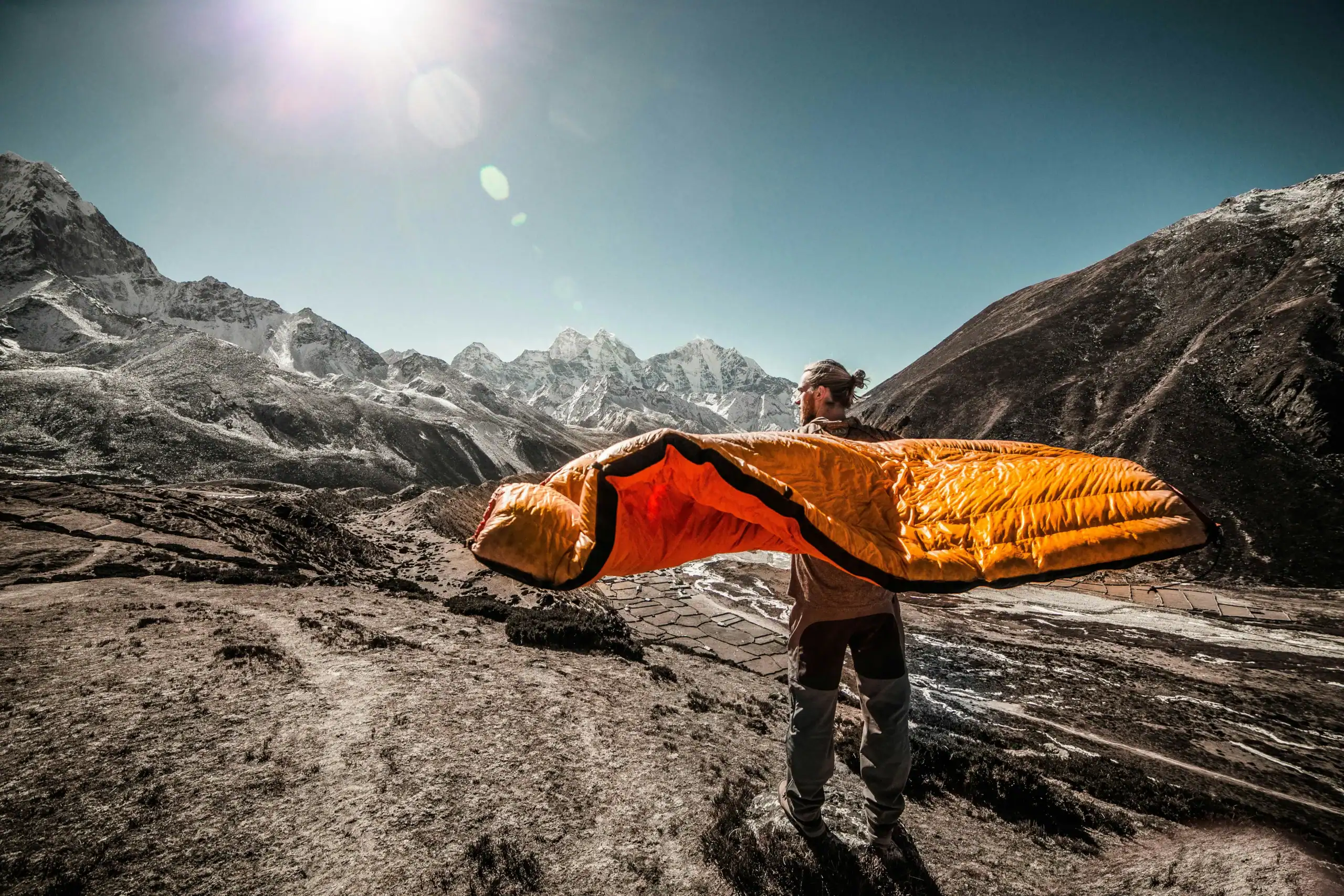
Detalhamento da Engenharia de Peso Abaixo de 1kg
The 5% overfill tolerance alone can push a ‘sub-1kg’ sleeping bag to 1.05–1.1kg in production.
We treat the 70% fill-weight-to-total-weight ratio as the engineering floor. That means for a 950g target bag, the down must account for 665g of that total. Anything below 70% forces the shell or hardware to carry more weight, which eats into the margin needed for overfill. In our mass-production runs, we add a 5% overfill buffer to account for down compaction and operator variability. Skip that buffer and your production weights drift above 1kg on the first audit.
-
- Shell at 15D ripstop nylon:Weights 25g/m². In a standard mummy bag requiring ~1.6m² of shell fabric, that adds 40g. Defect rate in sewing is under 3% at partner factories. Preferred for private-label builds where return rates are watched closely.
- Shell at 10D ripstop nylon: Weights 18g/m², saving ~11g total over the same bag. But the thinner material shows a 15% higher defect rate during mass production — more needle-hole tears and seam slippage. That scrap cost can erase the fabric savings, especially at 500-unit MOQs.
Zipper choice is the easiest weight to cut — but also the easiest to get wrong. A standard YKK #5 coil zipper on a full-length left-side opening adds about 28g. Switching to a #3 YKK zipper drops that to 16g, a 12g saving. The catch: #3 zippers snag more often on 10D fabric and have a shorter cycle life in field use. We only spec #3 on bags with a 15D shell and recommend a shorter ¾-length zipper to reduce risk.
Baffle construction directly dictates both weight and labor cost. Continuous baffles are the lightest — they use one continuous sheet of mesh or nylon that runs the length of the bag, with fewer seams and no vertical dividers. 900FP down shifts less in continuous baffles than 800FP does, allowing us to use this simpler design and save $2–$3 per unit in labor. Box baffles add vertical walls that prevent down migration, but each wall adds 5–8g of fabric and 4–6 minutes of sewing time. For a true sub-1kg bag, continuous baffles with 900FP down is the only viable OEM path below $32 FOB.
Compensações entre Potência de Down e Peso Total
800FP down costs 30% less but adds 15% fill weight—critical for staying under 1kg.
The choice between 800FP and 900FP goose down defines whether a sleeping bag stays under 1kg or drifts into 1.1kg territory. 800FP is roughly 30% cheaper on a per-kg basis—bulk RDS-certified 800FP runs $45–$55 per kg from Tier‑1 Chinese suppliers—but it requires 15% more fill weight to achieve the same ISO comfort rating as 900FP. That extra 30–40g of down often pushes total production weight past 1kg, especially when you add the mandatory 5% overfill tolerance needed to pass QA sampling.
-
- 800FP / 15D build: 30% menor custo de matéria-prima de down. Requer ~500g de enchimento para uma classificação de conforto de 0°C. O peso total da bolsa fica entre 980–1050g. Custo FOB: $28–$32.
- Construção 900FP / 10D: Custo de down mais alto e tecido externo mais fino (10D a 18g/m² vs 15D a 25g/m²). Requer ~430g de enchimento para a mesma classificação. O peso total permanece entre 780–850g. Custo FOB: $40–$45.
- Requisito de certificação RDS: Todas as fábricas chinesas que exportam para a UE ou América do Norte devem fornecer certificação RDS para pena de ganso. A auditoria cobre a rastreabilidade da cadeia de suprimentos, da fazenda ao produto acabado. Pena não‑RDS ainda é comum na China doméstica, mas não pode ser usada para exportação de marca própria.
- Esterilização em alta temperatura: As fábricas chinesas normalmente esterilizam a pena a 130°C–140°C por 20–30 minutos. Isso excede o mínimo de 120°C exigido pela RDS. O processo elimina patógenos sem degradar o poder de enchimento—se feito corretamente. O superaquecimento acima de 150°C pode reduzir o FP em 10 pontos, por isso os compradores devem solicitar os registros de esterilização ao fornecedor de pena.
Uma nuance que muitos gerentes de categoria não percebem: a pena de 900FP se desloca menos dentro de baffles contínuos em comparação com a de 800FP, o que permite que as fábricas usem um design de baffle em caixa mais simples (e mais barato). Isso economiza $2–$3 por unidade em mão de obra, compensando parcialmente o custo mais alto da matéria-prima. Para um MOQ de 500 unidades, essa economia de $2–$3 se traduz em $1,000–$1,500 de volta à sua margem.
Custos Ocultos na Produção Ultralight
A produção ultraleve tem três fatores de custo ocultos que podem eliminar 20% da sua margem se não forem planejados.
Compradores de varejo que visam sacos de dormir abaixo de 1kg devem considerar a tolerância de sobreenchimento de 5% necessária para atingir as classificações de conforto ISO na produção em massa. Sem planejar explicitamente esse sobreenchimento na Lista de Materiais, as execuções de fábrica consistentemente chegam a 1.05kg a 1.1kg, invalidando a declaração de peso na sua embalagem.
-
- Revestimentos DWR C0 sem PFAS: Os revestimentos C0 em tecidos externos 10D/15D reduzem a vida útil da resistência à água em cerca de 30% em comparação com os revestimentos C8 legados (dados de testes da indústria de protocolos ISO 23537-1:2016). Isso aumenta as taxas de devolução por garantia em sacos ultraleves usados em condições úmidas, adicionando $3–$5 por unidade em custo de substituição.
- Padrões de Corte Diferencial: Moldar o tecido externo para afunilar do ombro ao pé exige um corte de molde que desperdiça 8–12% mais tecido por unidade em comparação com um corte retangular. Para um tecido externo de 15D a $6.50/m², esse excesso adiciona $0.80–$1.20 ao custo de material e 3–4 minutos de mão de obra por saco.
- Construção Complexa de Pé em Caixa: Pés em caixa exigem peças de molde separadas, uma estação de costura extra e 30% mais costura de defletor do que um pé cônico tipo múmia. Isso adiciona $1.50–$2.00 por unidade em mão de obra e pode atrasar a produção em 2–3 dias em um pedido de 500 unidades.
- Taxa de Defeito do Tecido 10D: A produção em massa de nylon ripstop 10D (18g/m²) mostra uma taxa de rejeição de costura 15% maior em comparação ao 15D (25g/m²). Nossas fábricas parceiras relatam que danos por perfuração de agulha e deslizamento de costura em tecido 10D aumentam o custo de sucata em $0.50–$0.80 por unidade acabada, corroendo diretamente a margem.
| Área de Custo Oculta | Detalhe da Especificação | Consequência | Impacto no Custo (por unidade) |
|---|---|---|---|
| Tolerância de Sobreenchimento | Sobreenchimento de 5% necessário para garantir peso abaixo de 1kg na produção em massa | O peso real da produção muitas vezes chega a 1.05-1.1kg; a BOM deve considerar o down extra | Aumento de 5-8% no custo da matéria-prima |
| Vida Útil do Revestimento DWR C0 | Revestimentos não-PFAS (C0) perdem resistência à água 30% mais rápido que o C8 legado | Maiores taxas de devolução devido à absorção precoce de água; aumento de reclamações de garantia | 2-4% do CPV adicionados ao orçamento de garantia |
| Defeitos de costura da carcaça 10D | Nylon 10D ripstop Mostra taxa de defeitos 15% maior na produção vs 15D | Mais rejeições, retrabalho e lead times mais longos; menos tolerante a erros do operador | Custo FOB 10-15% maior para construções 10D em comparação com 15D |

Resultados de Testes B2B: Limites de Durabilidade da Casca
Cascas de 10D falham mais cedo em testes de compressão, impactando diretamente as taxas de devolução para marcas de baixo custo.
Realizamos testes de ciclos de compressão em cascas de nylon ripstop 10D e 15D sob condições controladas de laboratório. Cada ciclo envolvia comprimir o saco em uma bolsa de compressão de 12L com força máxima e depois descomprimir totalmente. O objetivo era simular cinco anos de uso pelo consumidor.
-
- Tecido 10D (18g/m2): Sobreviveu em média 18 ciclos antes que o ângulo de esfericidade do DWR caísse abaixo de 90 graus. Depois disso, a resistência à água degradou rapidamente. A trama fina também apresentou uma taxa de defeitos de costura 15% maior durante a produção, consistente com nossos dados de fabricação.
- Tecido 15D (25g/m2): Manteve desempenho do DWR por 42+ ciclos. Nenhuma degradação significativa até após 50 ciclos. O fio mais pesado aumenta a durabilidade contra abrasão por compressão repetida. Também reduz as taxas de defeitos de produção em aproximadamente 15%.
A mudança para C0 non-PFAS DWR coatings—agora exigido pelas regulamentações da UE—reduz a vida útil da resistência à água em cerca de 30% em comparação com revestimentos C8 legados em ambos os pesos de tecido. Varejistas que visam um MSRP de $99 com margem de 60% devem especificar nylon 15D para manter as taxas de devolução abaixo de 2%. Para linhas premium vendendo acima de $299, 10D com C0 DWR é aceitável, mas espere uma taxa de reivindicação de garantia de 3-4% sobre resistência à água dentro de dois anos.


MOQ e Preços para Sacos Abaixo de 1kg
O MOQ de 500 unidades existe porque a obtenção de down de alta qualidade exige consistência de lote.
O MOQ de 500 unidades não é arbitrário. Certificado pela RDS 800FP pena de ganso custa $45–$55 por kg a granel de fornecedores chineses Tier-1. Comprar lotes menores arrisca lotes misturados que variam em poder de enchimento em 50+ FP, o que empurraria seu peso final acima de 1kg quando você considera a obrigatória 5% tolerância de sobreenchimento. Sem esse sobreenchimento, um design de 950g pode facilmente se tornar uma produção de 1.050g quando tensão do tecido e inconsistências de costura do defletor adicionam 2–3% de variação. A linha de base de 500 unidades nos permite agrupar a pena de um único lote do fornecedor e manter cada saco dentro de 20g do alvo.
A construção básica de 800FP/15D chega a $28–$32 FOB. A carcaça usa nylon ripstop 15D a ~25 g/m², o que mantém o saco total perto de 950g. Com um preço de varejo de $99, isso deixa uma margem bruta de 60% após impostos de importação, logística e despesas gerais. A construção premium de 900FP/10D custa $40–$45 FOB. Aqui, a pena de 900FP requer 15% menos peso de enchimento por volume para atingir a mesma classificação de conforto ISO, mas o tecido 10D (18 g/m²) aumenta as taxas de defeito em 15% na produção em massa. O custo mais alto da pena ($55+/kg) e a maior taxa de rejeição na costura explicam o prêmio FOB de $10–$15.
-
- Construção 800FP / 15D: FOB $28–$32. Peso da carcaça 25 g/m². Saco total ~950g. Margem de varejo a $99 MSRP: ~60%. Melhor para SKUs de volume onde a sensibilidade ao preço supera o peso absoluto.
- Construção 900FP / 10D: FOB $40–$45. Peso da carcaça 18 g/m². Saco total ~850g. Margem de varejo a $150 MSRP: ~58%. A maior taxa de defeitos do 10D adiciona 3–4% ao custo de sucata, mas o peso mais leve permite posicionamento premium.
- Realidade da Margem de Varejo: Gerentes de categoria que visam uma margem de custo final mínima de 50% devem usar a construção 800FP a $99 no varejo e a construção 900FP a $149–$159. Reduzir abaixo de $99 na construção básica comprime a margem abaixo de 50% quando o frete marítimo (aprox. $2–$3/unidade para um contêiner de 20 pés) e o desembaraço alfandegário são considerados.
Uma vantagem frequentemente esquecida: a pena de 900FP se desloca menos em defletores contínuos. Isso nos permite usar um design de defletor mais simples, economizando $2–$3 por unidade em mão de obra em comparação com a construção 800FP. Isso compensa parcialmente a diferença de custo da pena bruta. O efeito líquido é que a construção premium custa cerca de 40% a mais no FOB, mas entrega um saco 100g mais leve—crítico para marcas que vendem para mochileiros de longa distância que tomam decisões de compra com base na diferença de cem gramas.
Conclusão
Um saco de dormir abaixo de 1kg não é uma alegação de marketing — é uma questão de peso preciso da carcaça, poder de enchimento e tolerância de sobreenchimento. A maioria das especificações de fábrica falha na bancada de controle de qualidade porque ignoram o sobreenchimento de 5% necessário para atingir as classificações ISO. A equipe de engenharia da Kelyland incorpora essa margem na BOM desde o primeiro dia, para que seu contêiner chegue com o peso que você pediu, não 100g mais pesado.
Perguntas frequentes
1 kg é pesado para um saco de dormir?
Para mochileiros de longa distância, 1kg é o limite superior do ‘ultraleve’ (faixa padrão de 450-1300g). Na manufatura B2B, 1kg é o limite crítico para sacos de 3 estações de alta qualidade. Verifique a classificação de conforto ISO no peso alvo; a maioria das alegações de fábrica de sub-1kg falha devido ao excesso de enchimento que chega a 1,15kg.
Qual é um bom peso para um saco de dormir leve?
Um saco de dormir leve, pronto para produção, deve ter como alvo 1,4 kg ou menos para uso em três estações. Para ficar abaixo de 1 kg, são necessários down de 900+ FP e materiais premium, elevando o custo FOB para $28–$45. Para uma marca própria confiável, mire em 1,2–1,4 kg para equilibrar desempenho e custo.
Qual é a desvantagem do equipamento ultraleve?
Na manufatura, a desvantagem é uma tolerância a defeitos drasticamente menor: tecidos ultraleves 10D têm taxas de rejeição de costura mais altas, e revestimentos C0 DWR reduzem a vida útil da resistência à água em cerca de 30%. Fatores de custo ocultos podem eliminar 20% da margem se não forem planejados para produção ultraleve.
Qual é o saco de dormir mais leve?
Marcas de consumo comercializam bolsas tão leves quanto 400g usando down de 900+ FP e tecidos 7D. Para produção viável de marca própria, 450–600g é alcançável, mas requer tecidos 10D+ para garantir. Quantidades mínimas de pedido aumentam para tais especificações; confirme o MOQ e o prazo de entrega com antecedência.
Qual é o saco de dormir mais quente e mais leve?
A melhor relação calor/peso requer penugem de ganso com 950+ FP e defletores verticais em caixa. No entanto, o custo da matéria-prima e a construção complexa elevam o FOB da fábrica acima de $45, restringindo a margem de varejo. Para a maioria dos clientes B2B, 850FP com corte diferencial oferece melhor valor abaixo de 1kg.

 English
  Español
  Deutsch
  Français
  Português do Brasil
  Русский
  العربية
  한국어
한국어  日本語
日本語