 跳到内容
跳到内容 
Day 1 the purchase order lands, Day 14 the sample passes approval, Day 45 the container arrives — and that’s when an inflatable tent frozen zipper stops being a spec-sheet footnote and becomes the customer complaint. In a winter inflatable tent, the freeze rarely appears in the pre-production sample, because the sample gets handled in a heated office or warehouse. The cold weather finds it later, after the units are already in the distribution network.
A $50,000 order gets burned this way every season: sample approval is clean, FOB pricing looks right, but the mass production run ships with slightly different zipper tape tension and a smaller slider. The quality tolerance window between what was approved and what was produced is where the failure hides. For anyone sourcing private-label inflatable tents, the frozen zipper is not just a field repair problem — it’s a spec verification problem that has to be answered before bulk production, not after the container lands.
So the practical question is not only how to unfreeze a winter inflatable tent zipper safely; it’s what factory-level choices prevent the ice from forming in the first place. That shifts the conversation from a campsite hack to a procurement checklist: zipper spec, condensation path, and cold-flex material testing.

Why the Zipper Freezes on a Winter Inflatable Tent
Frozen zipper?
Two sleepers add roughly 240 mL of water vapor to the tent air every night. That moisture has to land somewhere. In sub-zero conditions, the coldest surface inside an inflatable tent is the zipper teeth — they have almost no thermal mass and reach ambient temperature within minutes. Condensation forms there first and freezes on contact. The zipper isn’t broken. It’s iced.
240 mL Moisture Load
That 240 mL is the entire winter tent condensation zipper ice problem in one number. Every exhale carries warm, saturated air; inside a sealed winter tent, that humidity migrates to the cold shell and deposits as frost. The zipper track collects the most because bare coil teeth conduct heat away faster than the surrounding fabric. By morning, the teeth sit inside a thin ice film.
Air Beam Cold Bridge
This is the inflatable tent zipper freeze cause that pole tents never have. A pole frame leaves an insulating air gap between the structure and the zipper tape. An inflatable tent’s TPU or PVC air beam runs directly against the fabric, conducting sub-zero temperature straight into the zipper tape. The air beam is a cold bridge, accelerating ice formation exactly where the slider has to travel.
Material stiffness compounds the problem. Standard PVC valve rings and zipper tape stiffen or crack around -20°C — an ordinary overnight low in mountain winter camps. Kelyland’s winter inflatable tent spec solves it at the build level by cold-flexing TPU bladders to -30°C, so the structure stays compliant where standard PVC turns brittle. That’s a spec you can put in an RFQ.
#5 vs #8 Reverse-Coil
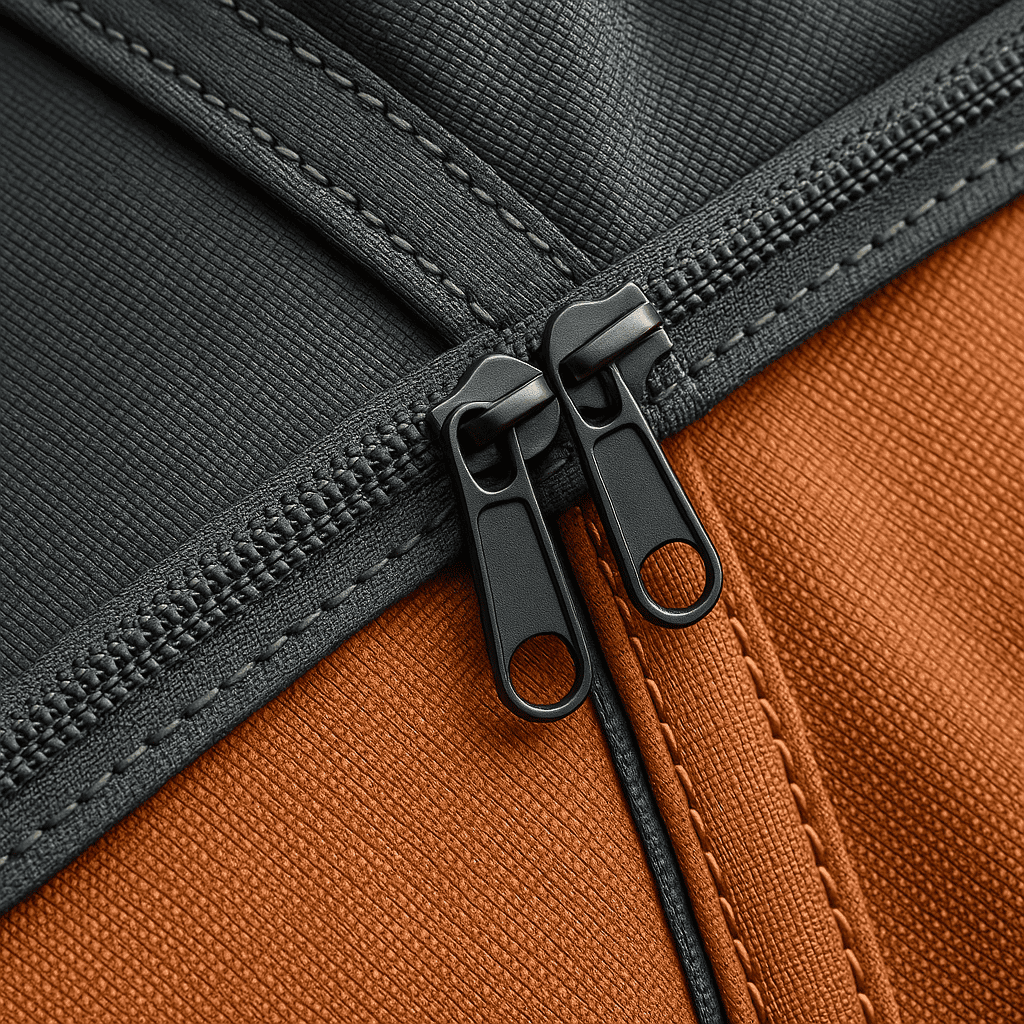
- #5 Standard: Thin coil profile and a short slider. Ice bridges the teeth quickly, and the small slider lacks the mass to break through. Standard #5 zippers with short sliders jam first.
- #8 Reverse-Coil: Larger coil diameter and heavier slider deliver more force per stroke. The reverse-coil profile sheds frost instead of trapping it, which is why #8 reverse-coil zippers resist ice build-up.
- Fleece-Lined Flap: An underused manufacturing fix. The fleece traps body heat from inside the tent around the zipper teeth, keeping them above the frost point and preventing ice formation before it starts.
The fix follows directly from the physics: melt the ice, clear the teeth, and work the slider in short strokes. Pulling hard on a frozen zipper converts an ice problem into a torn tape problem — and in a rental fleet, a torn door tape takes the tent out of service. Unfreezing is never about force; it’s about removing the condensation bridge.
The 5-Step Unfreezing Routine That Won’t Rip the Fabric
Pull sideways on a frozen zipper and you will bend the tape or tear the fly.
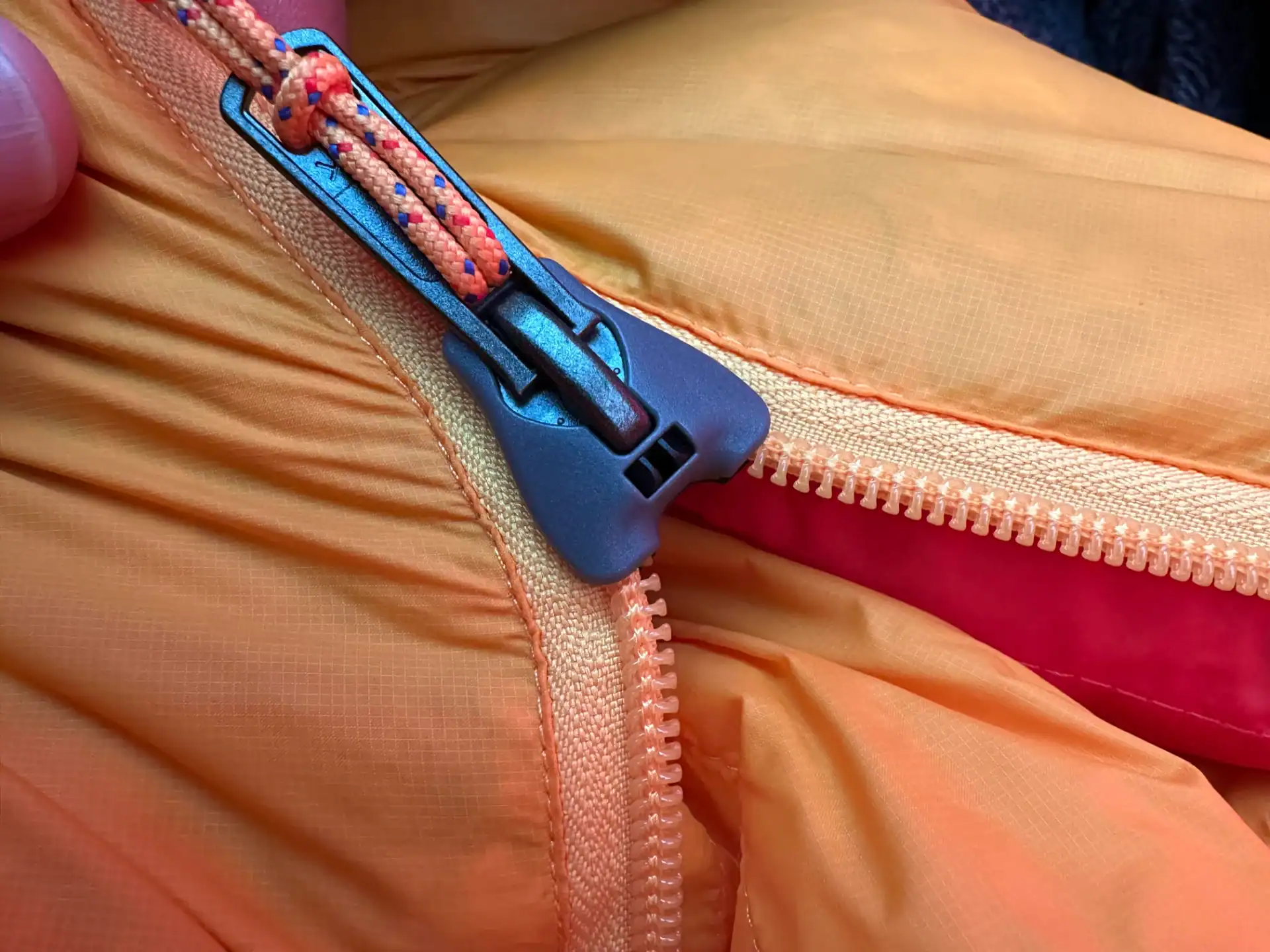
A frozen inflatable tent zipper fails one way in the field: the owner pulls on it like a stuck drawer. The slider won’t move, so they grab the pull with both hands and yank sideways. That lateral force bends the zipper tape, distorts the coil, and can tear tent fabric at the stitching line. The zipper was not broken. The user broke it.
Apply 40°C Heat Before Touching the Slider
The fastest safe way to unfreeze a winter inflatable tent zipper is to remove the ice bond. Two sleepers generate about 240 mL of water vapor per night inside a closed winter tent. That moisture condenses on the zipper teeth, and the air beam conducts cold directly to the zipper tape — so the track is the first frost point.
Press a hot water bottle against the zipper or aim tent heater airflow at the slider for 3–5 minutes. 40°C melts surface ice without softening TPU or PVC coated fabric. No open flame. No heat gun on high. Factory freeze-cycle tests use climate-controlled chambers, not direct heat on the tape.
Clear Ice Crystals, Then Work in 3 cm Strokes
After warming, use the edge of a plastic card to scrape ice crystals out of the teeth and the slider channel. Loose crystals act like sand in the track and jam a reverse coil even after the ice bond breaks. Clear both sides of the tape, not just the visible run.
Move the slider in 3 cm strokes. Short, controlled passes let it chew through the frozen section gradually instead of loading all the force onto one set of teeth. Pull a few centimeters, stop, clear new crystals, repeat. Never pull sideways.
Finish with PTFE Dry Lube, Not Silicone
Once the zipper is fully dry, apply PTFE dry-film lube. It stays effective to -40°C and leaves no residue that can refreeze. Silicone spray is the hidden failure: it thickens below -20°C, collects dirt, and turns gummy — which accelerates ice buildup on the next cold night. If a customer service rep recommends silicone for a winter tent, correct that advice before it becomes a return.
For B2B buyers, this routine is the symptom fix. The real fix is upstream: spec #8 reverse-coil zippers with fleece-lined flaps instead of standard #5 zippers with short sliders, and request a 50-cycle zipper freeze test at -20°C before production sign-off. Kelyland’s strategic factories run that test alongside TPU bladder cold-flex ratings to -30°C.
What a Factory Can Do to Stop Freeze-Ups
A frozen zipper is a condensation problem, not a hardware defect.
A frozen zipper on an inflatable tent is seldom a hardware defect. The air beam conducts sub-zero cold straight to the zipper tape, turning breath vapor to ice. Field fixes treat the symptom. The factory can eliminate the failure at the design stage. Kelyland’s 17 core strategic factories — most ISO 9001:2015 certified — build these fixes into production runs.
Valve in a Warm Vestibule
Valve placement is the first line of defense. Standard PVC valve rings sit exposed to ambient cold and stiffen or crack around -20°C. Relocating the inflation valve into a protected vestibule — the warmer zone where the air beam meets body heat — keeps the sealing surface above the failure threshold.
TPU Bladders to -30°C
Material selection decides the low-temperature limit. Standard PVC bladders lose flexibility as the mercury drops; a frozen fold becomes a stress crack under inflation pressure. Thermoplastic polyurethane holds its flex to -30°C. That is the cold-flex spec Kelyland uses for winter inflatable tents, and it belongs in your tech pack.
#8 YKK Reverse-Coil Spec
Zipper size is not a comfort upgrade. Standard #5 zippers with short sliders jam first; the teeth mesh poorly under ice load and the slider lacks leverage. An #8 YKK reverse-coil with large ergonomic sliders clears the track and gives a gloved hand something to grip. A fleece-lined flap traps body heat around the teeth so ice never gets a foothold.
50-Cycle Freeze Test Before Production
The buyer shouldn’t rely on a sample inspection. Kelyland specs a 50-cycle zipper freeze test at -20°C plus a valve cold-crack test. That means the zipper goes through fifty full freeze-and-open cycles without fabric tearing or the slider bending. If a supplier hesitates to run it, the tent has no place in a rental fleet.
- Cold-flex: TPU bladder rated to -30°C; reject standard PVC that stiffens near -20°C.
- Zipper spec: #8 YKK reverse-coil with large slider and fleece-lined flap.
- Test data: 50-cycle zipper freeze at -20°C, valve cold-crack test, and 3000 mm hydrostatic head.
How to Spec a Winter Tent for a Rental Fleet or Private Label
Frozen zippers are a design specification failure.
A frozen zipper is not a user problem. It is a spec problem. Procurement teams that skip cold-weather validation end up owning chargebacks after the first sub-zero shipment. The fix starts at the factory, not the campsite.
Rental Fleet Test Data
Rental fleets need documented proof before units go into rotation. Three reports matter: the zipper freeze-cycle test, the valve cold-flex test, and the hydrostatic head report. Without them, a bad batch can take down an entire season’s rental availability.
- Zipper freeze-cycle test: Run 50 cycles at -20°C. Standard #5 zippers with short sliders jam first; #8 reverse-coil zippers with fleece-lined flaps hold up.
- Valve cold-flex test: Standard PVC valve rings and zipper tape stiffen or crack at -20°C. A TPU bladder cold-flexed to -30°C is the threshold to spec.
- Hydrostatic head report: Set a minimum of 3000 mm for rental-fleet winter tents. That is the baseline Kelyland builds to for inflatable models.
- Zipper spec: #8 YKK reverse-coil with a large ergonomic slider and fleece-lined flap. Avoid #5 coils and short sliders.
- Bladder material: TPU rated to -30°C cold-flex, not standard PVC. PVC valve rings fail around -20°C.
- Cold-flex threshold: Require the factory’s actual test report. Ask for the temperature and the number of cycles, not a general ‘cold tested’ note.
- Test reports: Demand the 50-cycle zipper freeze test at -20°C, valve cold-crack test, and 3000 mm hydrostatic head report before sample approval.
- QC documentation: Kelyland’s partner factories are most ISO 9001:2015 certified, with inspections at each stage and reports available on request. That paper trail protects you during bulk production.
Private-Label Manufacturing Terms
Минимальные объёмы заказа start at 50–100 pieces on select inflatable tent items. Production lead time runs 30–45 days depending on complexity and customization. That keeps small-brand launches viable while still allowing bulk replenishment.
Customization scope covers fabric dyeing, multiple printing methods, custom-molded parts, and personalized packaging. You can lock in a specific zipper type, valve placement, and cold-weather venting without hitting a massive order threshold.
Sourcing Checklist
Build the RFQ around five data points. Each one prevents a known failure mode. Skipping these specs means your first winter season becomes the field test. That is expensive.
Заключение
A frozen zipper on a winter inflatable tent is rarely a hardware defect. It’s condensation from breath hitting a cold zipper tooth, and the air beam acts as a cold bridge straight to the tape. Fix the routine first, then fix the spec.
- Two sleepers add about 240 mL of water vapor per night, and zipper teeth become the first frost point.
- #8 reverse-coil zippers with fleece-lined flaps resist ice far longer than standard #5 units.
- PTFE dry-film lube survives -40°C; silicone spray turns gummy below -20°C.
- Spec a 50-cycle zipper freeze test at -20°C, a valve cold-flex at -30°C, and at least 3000 mm hydrostatic head.
Before you finalize a private-label winter tent program, demand documented freeze-cycle and cold-flex results from any supplier you shortlist. Review the -20°C zipper test data, TPU bladder rating, and zipper hardware specs on Kelyland’s winter inflatable tent page, and compare them against your rental fleet or field-use requirements.
Часто задаваемые вопросы
Можно ли использовать силиконовый спрей на замёрзшей молнии палатки?
No. Silicone spray gets sticky below -20°C, picks up dirt, and makes the problem worse. Stick with dry lube for winter tent zippers.
Why does my inflatable tent zipper freeze from the inside?
Breath moisture condenses on the zipper teeth because the air beam conducts cold directly to the zipper tape. Two sleepers add about 240 mL of water vapor overnight, and that vapor freezes on the coldest surface. Manage condensation to prevent freeze-ups.
How do I open a frozen zipper without tearing the fabric?
Warm the teeth with a hot water bottle or heater airflow for 3–5 minutes, clear ice crystals, then move the slider in 3 cm strokes. Never pull sideways, or you’ll bend the tape or tear. Warm first, then work the slider gently.

 English
  Español
  Deutsch
  Français
  Português do Brasil
  Русский
  العربية
  한국어
한국어  日本語
日本語