 Zum Inhalt springen
Zwei Zelte auf dem Showroom-Boden können identisch aussehen, doch die Entscheidung für Luftstreben oder Gestänge erklärt eine Kostenlücke von 30% zwischen beiden. Diese Aufpreis ist nicht nur optisch begründet. Er spiegelt eine andere Stückliste, ein anderes Herstellungsverfahren sowie eine andere Herangehensweise an Feldreparaturen und Garantieansprüche wider. Ein Käufer, der bereits negative Erfahrungen mit einer $50K-Bestellung gemacht hat, weil die Probe nicht der Serienproduktion entsprach, weiß genau, weshalb diese strukturellen Unterschiede vor der Musterfreigabe sorgfältig geprüft werden müssen.
Aus kaufmännischer Sicht zeigen die beiden Konstruktionen ganz unterschiedliche Schwachstellen. Ein Geständzelt versagt am Gestänge und den Nähverbindungen der Gestängehülsen; ein Luftzelt versagt an den Schweißnähten der Luftkammern und am Ventil. Dieser Unterschied bestimmt, wie Ersatzteile beschafft, Garantiebedingungen gestaltet und sogar die Verpackungsstrategie umgesetzt werden.
Luftstreben-Bauweise verursacht typischerweise 15–30% höhere Fertigungskosten durch TPU-Rohrschweißung und Hochfrequenz-Siegeltechnik. Die Stückliste für Gestänge und Beschläge gleicht diesen Unterschied jedoch im größeren Maßstab teilweise aus. Vergleichen Sie bei den FOB-Preisen sicherzustellen, dass die Struktur tatsächlich die variierende Komponente ist — und nicht etwa ein Stoffupgrade oder lockerere Qualitäts toleranzen.
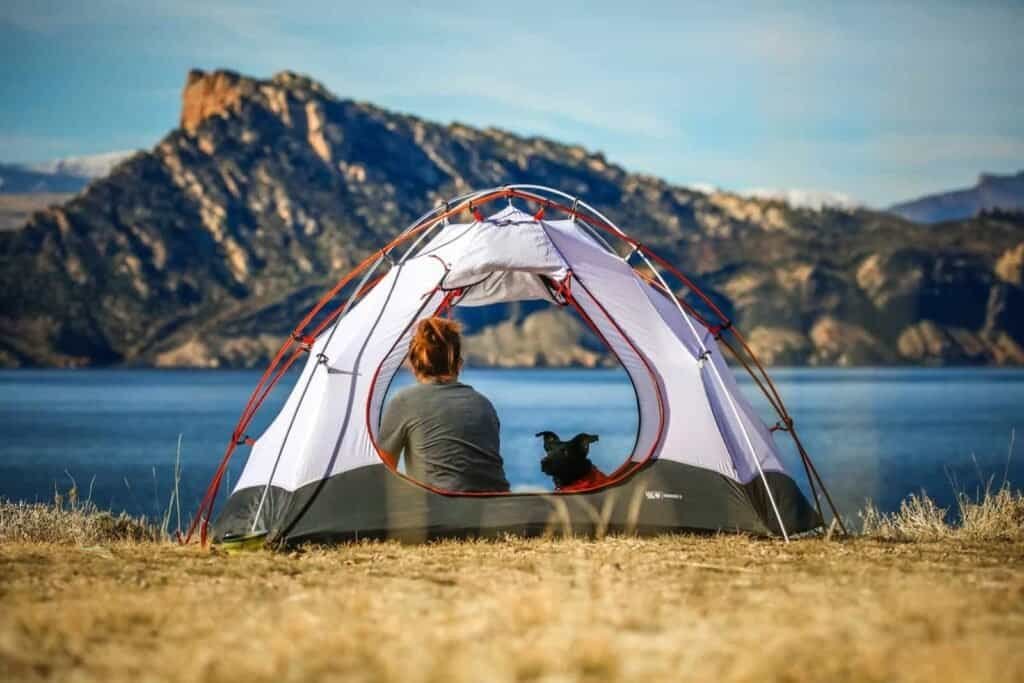
Warum die Debatte Luftstreben vs. Gestänge relevant ist
Die Strukturwahl entscheidet über Ihre Versandkosten, Garantieansprüche und darüber, wie Kunden das Zelt in den ersten 10 Minuten bewerten.
Die meisten Checklisten für die Zeltbeschaffung sehen gründlich aus: Gewebedenier, hydrostatischer Druck, Reißverschlussmarke, Bodendicke. Die einzige Zeile, die die meisten Marketingleiter überspringen, betrifft die Konstruktion selbst — Luftstreben oder Gestänge. Diese Entscheidung bestimmt, wie Ihr Produkt verpackt wird, wo es versagt und welche Garantieansprüche Sie selbst tragen müssen. Ein makeloses Vorschubmuster kann weiterhin Probleme verbergen, die erst sichtbar werden, wenn 500 Einheiten den Einzelhandel erreichen.
Geständzelte lassen sich zu kompakten Bündeln zusammenlegen, weil die Segmente zerlegt und neben dem Gewebe gestapelt werden können. Mehr Kartons pro Container, niedrigere Frachtkosten pro Einheit. Luftzelt-te verpacken sich flacher, benötigen jedoch eine Pumpe, und der entleerte Schlauch darf nicht wiederholt an derselben Stelle gefaltet werden, ohne die TPU-Schweißnaht zu belasten. Für eine Marke, die jährlich tausende Einheiten liefert, verändert dieser Volumendifferenz der FOB-Preis.
-
- Geständzelte: Gliederte Fiberglas- oder Aluminiumgestänge lassen sich in einen kurzen Tragebeuteln packen. Typische Transportschäden sind durchstoßene Zelttaschen an den Gestängeenden — verstärkte Enden und eine stabile Bodenplatte lösen dieses Problem.
- Luftzelt-te: Matten entweichen vollständig, doch Ventilgehäuse und Pumpe verursachen voluminöse Sperrigkeit. Hohe Palettenstapel können auf den gefalteten Ventilbereich dauerhaft Druck ausüben und die Dichtung im Laufe der Zeit verformen.
Verbrauchererwartungen: Aufbau-Geschwindigkeit vs. Reparierbarkeit
Der Endkunde bildet sich innerhalb der ersten fünf Minuten nach dem Auspacken eine Meinung. Aufblasbare Zelte mit Mehrkammer-System lassen sich mit einer Hand aufbauen und benötigen weniger Griffkraft – ein echter Vorteil für ältere Camper und Gelegenheitstouristen. Stangen-Zelte erfordern das Ausrichten der Segmente und das Einfädeln der Hüllen, was bei 20 Uhr im Dunkeln schnell zu Bedienfehlern führt. Doch sobald etwas kaputtgeht, kehrt sich die Entscheidung zugunsten der Reparierbarkeit um.
Stangenversagen ist mechanisch: ein eingerissenes Fiberglassegment oder eine zerrissene Stangen-Hülle. Beides ist kostengünstig zu reparieren, manchmal noch vor Ort. Luftstrang-Versagen tritt an der Nahtschweißung oder am Ventil auf – hier helfen Reparatur-Kits oder Werksdienstleistungen. Die Reparaturkosten von Stangen-Zelten bleiben niedrig; die Herstellkosten aufblasbarer Zelte liegen aufgrund von TPU/PVC-Rohrschweißungen und Hochfrequenz-Siegelanlagen um 15–30 % höher. Das Kernnetzwerk von Kelyland aus 17 strategischen Fabriken – die meisten ISO 9001:2015 zertifiziert – legt Schweißtest- und Stichinspektionsberichte vor, bevor Sie die Konstruktion final festlegen.
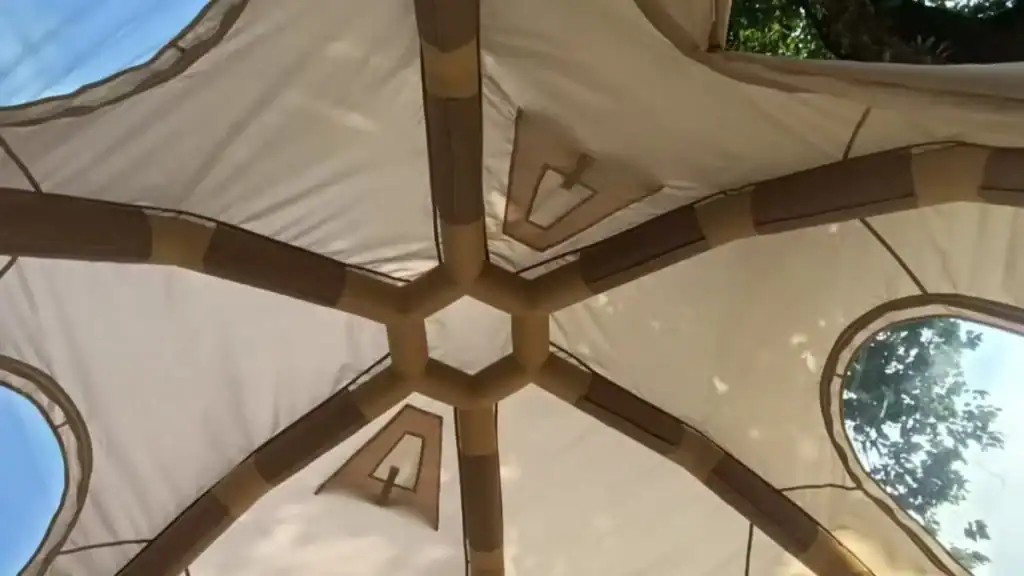
Direkter Vergleich
Stangen-Zelte gewinnen bei Reparierbarkeit und Kosten.
Für einen Markenmanager, der eine Private-Label-Zeltlinie aufbaut, ist die Entscheidung zwischen Luftstrang und Stange keine Campingplatz-Debatte. Die Konstruktion bestimmt Verpackung, Garantiebedingungen, Ersatzteil-Strategie und welche Fabrik die Linie realistisch beziffern kann. Stangen-Zelte bleiben der Standard für Trekking- und wertorientierte Linien; Luftstrang-Zelte rechtfertigen ihren höheren Preis dort, wo Aufbau-Geschwindigkeit und Windverhalten wichtiger sind als das Packgewicht.
Aufbauzeit und Bedienfehler
Das ist das stärkste Argument für Luftstränge. Ein Mehrkammer-Aufblasesystem lässt sich mit einer Hand deployen und bleibt selbst aufrecht, wenn eine Kammer an Druck verliert. Ältere Camper und Solo-Nutzer müssen im Wind und Regen keine Stangen mehr mit Hüllen abgleichen. Bei Stangen-Zelten reißt eine gebrochene Stange oder eine zerrissene Hülle während des Aufbaus das gesamte Zelt zusammen.
Verpackungsgröße und Gewicht
Stangen-Zelte packen länger und dünner; Luftstränge packen kürzer, sind aber schwerer, da das Rohrmaterial und die Pumpe mit dem Zelt reisen. Für Backcountry- und Trekking-Linien tötet das Packgewicht die Luftstrang-Option. Für Car-Camping und Glamping passt die kürzere Packlänge oft besser in den Kofferraum und ist bedeutender als das zusätzliche Kilogramm.
Windwiderstand und Stabilität
Luftstränge flexen unter Böen und federn in ihre Form zurück, was ihnen einen echten Vorteil an offenen, exponierten Campsites verschafft. Stangen-Zelte leiten die Windlast direkt auf die Stangen und Befestigungspunkte über, sodass ein versagendes Stangenstück eine Wand- oder Dachfläche zusammenbrechen lassen kann. Mehrkammer-Luftgestelle fügen Redundanz hinzu: Ein einzelner Stich verursacht nicht das Kompletteplätten des Zeltes.
Reparatur- und Ersatzkosten
Konstruieren Sie Ihre Garantie rund um den richtigen Ausfallpunkt. Stangen-Zelte versagen an der Stange und der Stangen-Hüllen-Naht; Ersatz-Stangenabschnitte sind kostengünstig vorrätig und vom Kunden einfach zu tauschen. Aufblasbare Zelte versagen an der Schweißnaht oder am Ventil, und die Reparatur von TPU/PVC-Rohren erfordert Lösungsmittelschweißungen oder einen Rohraustausch. Genau das ist der Grund, warum Reparaturkosten von Stangen-Zelten niedrig bleiben und warum Luftstrang-Ersatzteile einem geplanten Inventar bedürfen.
Herstellvorlaufzeit und Anpassungsgrenzen
Luftschlauchzelte kosten in der Regel 15-30% mehr in der Fertigung als vergleichbare Stangenzelte, aufgrund von TPU/PVC-Rohrschweißungen und Hochfrequenz-Siegelanlagen. Dieser Prozess schränkt zudem den Kreis der Lieferanten ein und treibt die Mindestbestellmengen nach oben. Stangenzelte werden aus Hüllen, Streben und Fiberglas- oder Aluminiumstangen gefertigt, sodass sich mehr Fabriken dafür anbieten und individuelle Formen leichter entworfen werden können.
Unter Kelyland im Freien, die Kernzeltfabrik in Ningbo ist ISO 9001:2015 zertifiziert und produziert 800.000 Zelte jährlich, sodass beide Konstruktionsarten durch dasselbe Qualitätssicherungssystem laufen. DieStandard-Fertigungszeit beträgt 30-45 Tage, und obwohl die Mindestmengen produktspezifisch variieren, können einige Artikel bereits ab 50-100 Stück für einen kleinen Erstlauf bestellt werden.
-
- Wählen Sie Stangenzelte, wenn: Ihre Linie Wanderer, preisbewusste Händler oder Käufer anspricht, die feldreparierbare Ausrüstung erwarten.
- Wählen Sie Luftschlauchzelte, wenn: Ihre Käufer mit Familien campen, schnelle Aufbauzeit schätzen und mehr für eine stabile Konstruktion auf offenen Plätzen bezahlen.
| Merkmal | Luftschlauch-Zelt | Stangenzelt | Markenberücksichtigung |
|---|---|---|---|
| Aufbauzeit & Benutzerfehler | 10–20 Min. mit Pumpe; Mehrkammersysteme lassen sich sicher mit einer Hand aufbauen | 15–30 Min.; höheres Risiko von Stangenfehlern und benutzerbedingten Brüchen | Luftschläuche reduzieren Reklamationen vor Ort und sind für ältere Camper einfacher zu handhaben |
| Verpackungsgröße & Gewicht | Rohre erhöhen Volumen und Gewicht; erfordert separate Pumpe oder integriertes Aufblsystem | Stangen und Hüllen ermöglichen kleineres Packmaß; bei gleicher Kapazität in der Regel leichter | Zeltstangen eignen sich besser für Trekkingrouten; Air-Beams sind ideal für Familien- und Glamping-Kunden |
| Primary Failure Point | Nähte und Ventilbauweise sind die schwächsten Glieder | Zeltstangenteile und die Verstärkungsstiche an den Hüllschläuchen versagen am häufigsten | Aussehen Sie Garantie- und Ersatzteilkonzepte gezielt auf diese spezifischen Fehlermuster aus |
| Reparatur- und Ersatzteilkosten | Ersatz-Luftkammern sind teuer; Feldreparaturen erfordern Patches oder Dichtungskits | Ersatzstangen sind kostengünstig und weit verbreitet verfügbar; Ärmel-Reparaturen sind preiswert | Zeltstangen senken die After-Sales-Kosten; Luftstrahlen rechtfertigen Premiumpreise zur Abdeckung von Reparaturrisiken |
| Windwiderstand & Stabilität | Flexible Strukturen absorbieren Böen, können sich aber bei anhaltendem Starkwind verformen | Starre Rahmen bieten vorhersehbare Form; Stangen können unter extremer Belastung verbiegen oder brechen | Passen Sie die Struktur an die angegebenen Wetteransprüche und das Marketing-Versprechen des Einzelhandels an |
| Herstellungskosten | 15–30% ist teurer als vergleichbare Stangenzelte aufgrund von TPU/PVC-Rohrschweißungen und Hochfrequenz-Siegelgeräten | Niedrigere Materialumwandlungskosten; Fiberglas- oder Aluminiumstangen-BOM gleichen Skaleneffekte aus | Der Luftstrahl-Preisnachteil muss im Einzelhandelspreis berücksichtigt werden; Stangenzelte liefern einen geringeren Endpreis |
| Fertigungszeiten & Anpassung | Längere Produktionszeit; kundenspezifische Rohrlängen und Ventilpositionierung schränken Designiterationen ein | Standard 30–45 Tage; einfacher, Geometrie der Stangen und Ärmelanordnungen zu ändern | Stangenzelte bieten schnellere Muster und einfachere Design-Updates während der Saison |
| Auswirkungen auf MOQ | Hochfrequenz-Schweißnähte erfordern größere Losgrößen; MOQs beginnen typischerweise bei 300–500 Stück | Einige Modelle können bereits ab 50–100 Stück bestellt werden, ideal zum Testen neuer Private-Label-SKUs | E-Commerce-Unternehmer mit begrenztem Kapital können zunächst mit Stangenzelten starten |
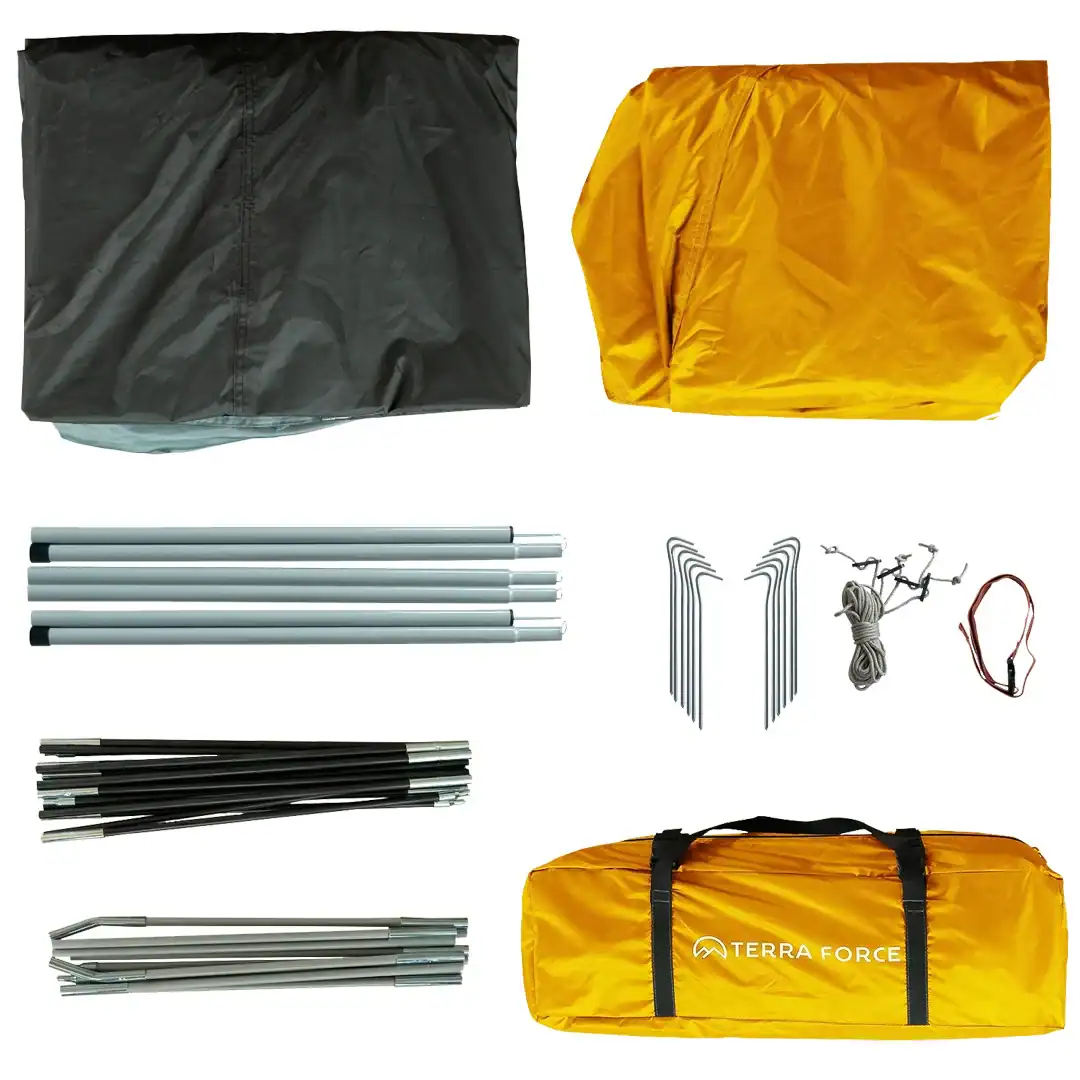
Was der Aufbau jeder Bauart kostet
Airbeam-Zelte der Modellreihe 15-30% verursachen höhere Herstellungskosten, doch schließt sich diese Lücke bei steigenden Stückzahlen.
Die Herstellaufschläge für Airbeam-Zelte der Modellreihe 15-30% sind real, aber kein Grund, davon abzusehen. Die Mehrkosten entstehen an bestimmten Stellen: TPU-/PVC-Schlauchmaterial, Hochfrequenz-Schweißnähte und Ventile. Sobald genau klar ist, wo das Geld fließt, wird die Entscheidung zwischen Airbeam und Stange zu einer Positionierungsfrage und nicht zu einem simplen Preisvergleich.
Materialkosten: Airbeams vs. Fiberglas- und Aluminiumstangen
Der Rahmen eines Stangenzelts besteht aus mehreren Fiberglas- oder Aluminiumsegmenten, Stoßbandschnur und in den Zeltkörper eingenähten Stangenhülsen. Ein Airbeam-Zelt ersetzt all dies durch beschichtete Stoffschläuche, Luftventile und eine Pumpe. Das Schlauchmaterial und die Ventilbeschläge kosten pro Zelt mehr, und kleine Serien verschrotten einen größeren Anteil der TPU-/PVC-Folienrolle.
-
-
- Airbeam-Zelt -Stücklistenpositionen: Mit TPU/PVC beschichtete Schlauchgewebe, verschweißte Nahtkonstruktion, Ventile, Pumpe und Mehrkammer-Ventilblock.
- Stangenzelt -Stücklistenpositionen: Fiberglas- oder Aluminiumsegmente, Stoßbandschnur, Stangenhülsen, Clips und Streben-Beschläge.
- Skaleneffekt: Die Stangen-Beschläge bleiben pro Einheit konstant; die Stückkosten für Airbeams sinken, sobald die Hochfrequenz-Verschweißanlage über eine längere Laufzeit abgeschrieben ist.
-
Arbeitslohn: Schweißen vs. Nähen von Hülsen und Montage der Streben
Das Verschweißen eines TPU-Schlauchs erfordert Hochfrequenz-Verschweißanlagen und Bediener, die sich mit Hitze, Druck und Einwirkzeit auskennen. Ein schlechter Schweißnaht zeigt sich beim ersten Aufpumpen nicht – er versagt erst nach wiederholter Nutzung, was zu Garantiefällen und Ersatzteilkosten führt. Das Nähen von Stangenhülsen und das Montieren von Streben ist traditionelle Zeltfabrikarbeit, fügt aber entlang der gesamten Produktionslinie weitere Montageschritte hinzu.
Die Zeltfabrik in Ningbo im Netzwerk von Kelyland produziert jährlich 800.000 Zelte nach ISO 9001:2015. Diese Durchlaufmenge ist entscheidend. Schweißlinien müssen mit konstanten Stückzahlen laufen, um profitabel zu sein – ein Lieferant, der die Air-Beam-Produktion bereits fährt, kann daher bessere Stückpreise bieten als einer, der den Prozess für Ihre erste Bestellung erst aufbauen müsste.
MOQ-Implications für Private-Label-Marken
Die Standardproduktion im Netzwerk von Kelyland läuft typischerweise mit 300–1.000 Stück, wobei einige Artikel bereits ab 50–100 Stück verfügbar sind, wenn die Werkzeuge bereits vorhanden sind. Stangenzelte können realistisch am unteren Ende dieser Spanne starten. Air-Beam-Programme liegen eher im Bereich von 300–1.000 Stück, da die Schweißeinrichtung und die Mindestmengen der Filmrollen kurze Laufzeiten unverhältnismäßig teuer machen.
-
- Wählen Sie Air Beam, wenn: Sie eine Glamping- oder Familienlinie aufbauen, bei der Aufbau速度和 One-Hand-Einsatz eine um 15–30 % höhere gelandete Kosten rechtfertigen.
- Wählen Sie Pole, wenn: Sie einen niedrigeren Einstieg-MOQ, einfachere Stangen-Zelt-Reparaturkosten für Endkunden und einen engeren Preisrahmen für die erste Bestellung benötigen.
| Kostenfaktor | Luftschlauch-Zelt | Stangenzelt | Beschaffungsimplikation |
|---|---|---|---|
| Materialkosten | TPU-/PVC-Luftschläuche, hochfrequent verschweißte Nähte und Mehrkammerventile; Premium-Rohstoffe treiben die Fertigungskosten von Luftzelt um 15–30 % über denen vergleichbarer Stangenmodelle. | Fiberglas- oder Aluminiumstangen, Stangenhülsen, Naben und Streben; gängige Materialien mit niedrigeren Stückkosten, obwohl die Stangenhardware im großen Maßstab die Lücke schließt. | TPU-Schlauchschweißen vs. Fiberglas-Stangen-Einkauf: Air Beam begünstigt Lieferanten mit spezialisierten Schweißlinien; Stangenzelte lassen sich bei mehreren Fabriken leichter anfragen. |
| Arbeitskosten | Erfordert geschulte Bedienpersonal für TPU-Schlauchschweißen und Hochfrequenz-Versiegelung; mehr Produktionsstunden pro Einheit und strengere Qualitätskontroll-Schwellenwerte. | Standardnähen von Stangenhülsen, Streben und verstärkten Nähten; breit verfügbares Arbeitskraft hält die Montagekosten niedriger und die Produktion schneller. | Der Arbeitsaufwand bei Air Beam ist ein versteckter Kostentreiber; prüfen Sie vor der Musterbestellung das Schweißtestprotokoll der Fabrik, um Chargeninkonsistenzen zu vermeiden. |
| MOQ-Anforderungen | Die MOQ-Anforderungen für Air-Beam-Zelte beginnen typischerweise bei 300–500 Stück aufgrund dedizierter Werkzeuge, Versiegelungsvorrichtungen und der Investition in Kammformenv. | Flexiblere MOQs; ausgewählte Artikel sind ab 50–100 Stück verfügbar, sodass Gestellzelte eine risikoärmere Option für private-Label-Tests darstellen | Wenn Ihre Marke eine Kleinserientestung benötigt, bieten Gestellzelte einen schnelleren Weg; Luftkammerzelte eignen sich etablierte SKUs bei garantiertem Mindestabnahmevolumen |
| Reparatur und Ersatz | Schwachstelle sind die Nahtschweißstellen und das Ventil; Reparaturen erfordern den Austausch der Kammern oder Klebstoffsets in Fabrikqualität, was die Komplexität der Strategie zur Kostenvermeidung bei der Reparatur von Zeltstangen erhöht | Schwachstelle sind die Zeltstange und die Nähmaschine der Stangenmanschette; Ersatzstangen und -manschetten sind kostengünstig und können von Endanwendern vor Ort ersetzt werden | Entwickeln Sie eine Garantiestrategie rund um die Struktur: Mehrkammer-Luftsysteme für Redundanz gegenüber Ersatzstangensätzen und verstärkten Nähten für Stangen |
| Qualitätskonsistenz | Die Konsistenz hängt von der Schweißnahtintegrität, der Ventildichtleistung und der Luftdichtheitstests ab; ISO 9001-zertifizierte Anlagen mit Druckprüfungsaufzeichnungen sind unerlässlich | Die Konsistenz hängt von den Nähtentoleranzen, der Wanddicke der Stangen und der Passform der Manschetten ab; einfacher zu prüfen mit standardisierten Fabrik-Checkpunkten | Ein Vergleich der privaten Marken-Zeltstruktur sollte Inspektions-Checklisten pro Charge beinhalten, insbesondere für Nahtschweißstellen an Luftbalken und Spannungspunkten an Stangenmanschetten |
Welche Wahl zu Ihrer Marke passt
Luftbalken eignen sich für Glamping und Vermietung; Stangen sind weiterhin die erste Wahl für Trekking.
Die richtige Struktur hängt davon ab, wer Ihr Endkunde ist und wo Ihre Marge nach Versand, Retouren und Garantieansprüchen überlebt. Bei den meisten Vergleichen der privaten Zeltstrukturen ist der entscheidende Faktor nicht die einfache Montage auf dem Papier – sondern das Ausfallprofil. Luftbalken und Stangen fallen unterschiedlich aus, daher muss Ihr After-Sales-Plan zur gewählten Struktur passen.
Familien-Glamping-Marken
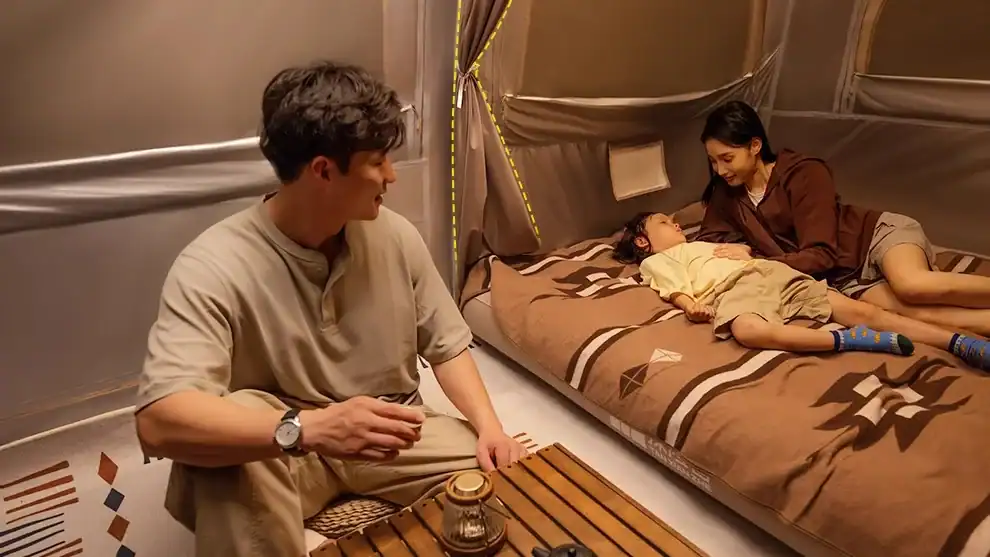
Familien-Glamping-Marken sollten auf Luftbalken setzen. Aufblasbare Mehrkammer-Zelte lassen sich in wenigen Minuten mit einer Hand aufbauen, was entscheidend ist, wenn der Käufer ein Paar oder eine Familie mit null technischer Geduld ist. Die höheren Herstellungskosten für aufblasbare Zelte – in der Regel 15–30 % mehr als bei einem Stangenäquivalent – sind im Einzelhandel wieder hereinzuholen, da Glamping-Kunden für Komfort und Bequemlichkeit bezahlen, nicht für minimiertes Packgewicht. Die Glamping-Zeltfabrik von Kelyland in Shaoxing, Zhejiang, produziert jährlich 300.000 Einheiten, sodass die Kapazität für individuelle Markenwarenbatches nachgewiesen ist.
-
-
- Beste Wahl: Luftbalken-Glamping-Zelte im Zelt- oder Jurystil mit Mehrkammer-Rahmensystemen.
- Warum: Die Ein-Pumpe-Montage eliminiert Benutzerfehler, und der hohe wahrgenommene Wert unterstützt einen Premium-Preis.
- Achtung: Schulen Sie Kunden in der Pflege von Nahtschweißungen und Ventilen; Ersatz-Luftschläuche müssen einfach bestellbar sein.
-
Trekking- und Backpacking-Marken
Trekking- und Backpacking-Marken sollten vorerst bei Stangen bleiben. Luftstrahl-Systeme können das Packgewicht oder die Feldreparierbarkeit eines hochwertigen Aluminium-Stangensets noch nicht gleichziehen. Ein gebrochener Stock wird mit einer Reparaturhülse splintet; ein geplatzter Luftschlauch beendet die Tour, sofern der Wanderer kein Ersatzset dabei hat. Die Camping-Zelt-Fabrik Kelyland in Ningbo, mit der wir partnerschaftlich verbunden sind, baut jährlich 800.000 Zelte mit Rahmenoptionen von Fiberglas bis Kohlefaser, sodass die Beschaffung von Stangenzelten bestens abgesichert ist.
-
-
- Beste Wahl: Stangenzelte mit 7075-Aluminium- oder Kohlefaser-Stangen für gewichtsbewusste Trekking-Linien.
- Warum: Stangen packen kleiner, sind vor Ort reparierbar, und Ärmel-Nähte stellen einen überschaubaren QC-Checkpoint dar.
- Achtung: Ärmel-Nähte sind der erste Ausfallpunkt — schreiben Sie an allen Stressstellen Bar-Tack-Verstärkungen vor.
-
Eventvermietungsbetriebe
Eventvermietungsbetriebe sehen sich einer anderen Abwägung gegenüber. Mietzelte werden pro Saison Dutzende Male auf- und abgebaut, daher senken Aufbau-Geschwindigkeit und konsistente Spanngeometrie direkt die Arbeitskosten. Luftstrahl-Balken punkten bei der Geschwindigkeit, doch der Ausfallpunkt verlagert sich zum Ventil und zur Nahtschweißung. Stangenzelte sind pro Einheit günstiger, doch Stangen- und Ärmelverschleiß treibt die Instandhaltungskosten über Jahre von Mietzyklen. Auch die MOQ-Anforderungen für Luftstrahl-Zelte tendieren dazu, höher zu sein, da das Schweißen von TPU-Schläuchen dedizierte Ausrüstung erfordert.
-
- Beste Wahl: Luftstrahl für hochfrequentierte Events; Stangenzelte für budgetbewusste Saisonsvermietungen.
- Warum: Luftstrahl-Balken sparen Aufbau-Arbeitszeit und vermeidet Spannfehler; Stangen kosten pro Einheit weniger und lassen sich vor Ort einfacher reparieren.
- Achtung: Multi-Kammer-Systeme benötigen Ersatzschläuche in Bereitschaft. Prüfen Sie die Ventilqualität, bevor Sie eine Massenbestellung in Auftrag geben.
-
- Wählen Sie Air Beam, wenn: Ihre Marke verkauft komfortorientiertes Familien-Camping oder Mietflotten, bei denen Aufbau-Geschwindigkeit Wiederholungskäufe antreibt.
- Wählen Sie Pole, wenn: Ihre Linie zielt auf Trekker, Backpacker oder preisgetriebene Saisonkäufer ab, die Reparierbarkeit, niedrigere Stückkosten und handhabbare Reparaturkosten für Stangenzelte schätzen.
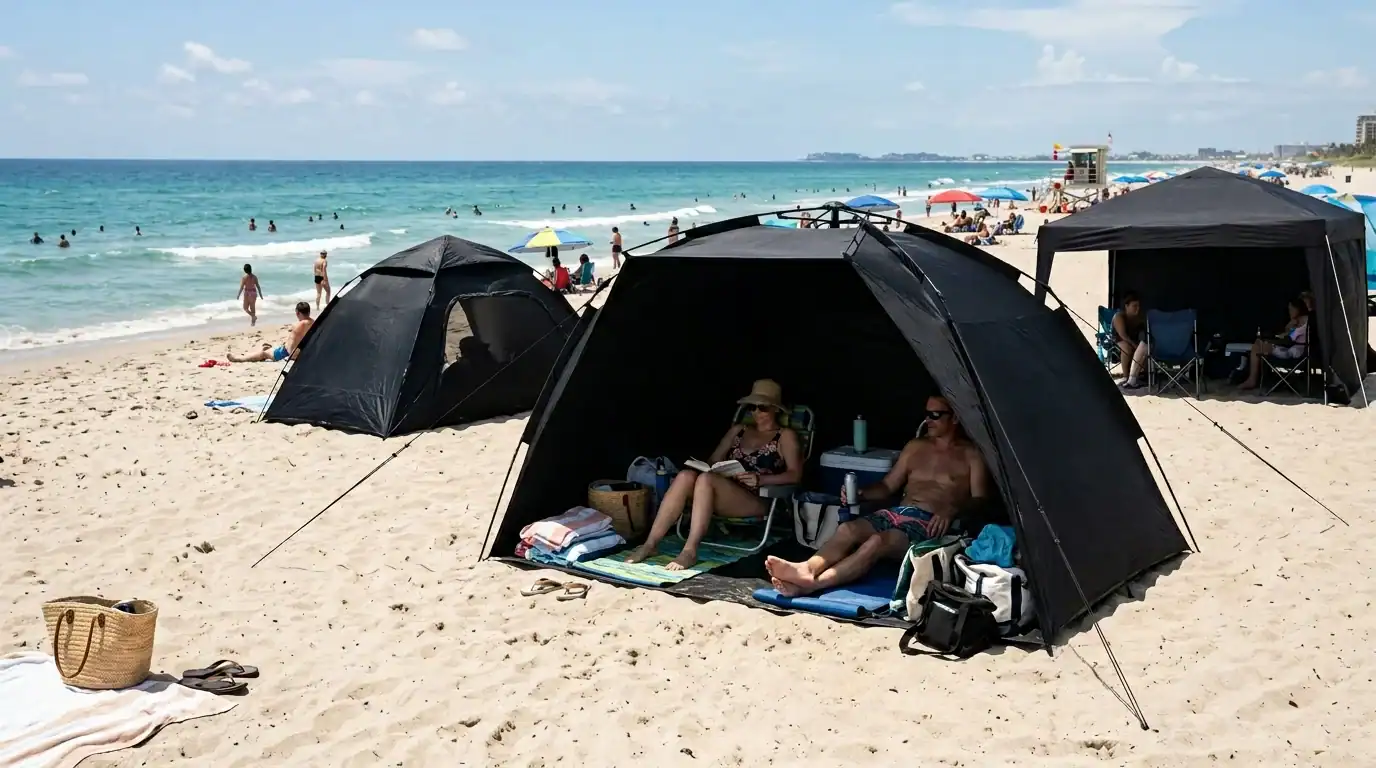
Wie ein One-Stop-Zulieferer bei beiden Konstruktionen unterstützt
Die Prototypenprüfung entscheidet über den Großteil des Ergebnisses.
Der Kernvorteil eines Beschaffungspartners liegt darin, dass dasselbe Team beide Konstruktionen verwaltet. Bei Stangenzelten sitzen die technischen Details in den Stangenbiegungen, der Bündchenverstärkung und den Abspannpunkten. Bei Luftstrebenzelten liegen sie in der Rohrqualität, der Schweißnahtbreite und der Ventilplatzierung. Jede Konstruktion erfordert eine andere Fachkompetenz in der Fertigung, und ein Partner mit dedizierten Zeltfabriken kann zwischen beiden wechseln, ohne Qualitätseinbußen.
Die interne Prototypenfertigung beginnt mit der Musterfreigabe
Die meisten fehlgeschlagenen Aufträge gehen auf einen zu früh freigegebenen Prototypen zurück. Der interne Prozess bei Kelyland Outdoors umfasst 10 Schritte, von der Bedarfsanalyse bis zum After-Sales-Support. Die Musterfreigabe steht zwischen Design und Massenproduktion. Der Kunde prüft einen physischen Prototypen, keine Renderung. Das ist der Moment, um die Nahtdichtung, die Zahnstangenausrichtung der Reißverschlüsse und die Spannung der Bündchen zu kontrollieren.
Bei Stangenzelten offenbart der Prototyp Schwachstellen in der Nähte der Bündchen. Bei Luftstrebenzelten zeigt er Schweißnähte und die Ventilabdichtung. Ein Luftsystem mit mehreren Kammern muss während der Prüfung mehrmals befüllt und entleert werden, um Materialkriechen zu erkennen. Eine einmalige optische Kontrolle auf dem Tisch reicht nicht aus.
OEM und ODM münden ins gleiche Tor
Kelyland Outdoors behandelt OEM und ODM als getrennte Pfade. Ein OEM-Projekt beginnt mit Ihren Zeichnungen und der Materialvorgabe. Ein ODM-Projekt startet mit einer Kurzbeschreibung, und der Zulieferer schlägt das Konzept vor. Beide Pfade enden mit derselben deliverable: einem freigegebenen Muster, das der Massenproduktion entspricht.
-
- OEM-Route: Die Marke kontrolliert das Produktspezifikationsblatt, die Stoffauswahl und den Druck. Der Zulieferer übernimmt die technishe Dokumentation, das Musterzeichnen und die Prototypenfertigung.
- ODM-Route: Der Zulieferer schlägt das vollständige Design vor und fertigt dann einen funktionsfähigen Prototypen für eine Feedbackschleife. Das eignet sich für Marken, die eine schnellere Markteinführung benötigen.
Reality of MOQ and Lead Time
MOQs variieren je nach Konstruktion. Kelyland Outdoors kann bei einigen Artikeln ab 50-100 Stück starten, während standardisierte Zeltmodelle im Bereich von 300-1.000 Stück liegen. Luftstrebenzelte benötigen mehr Schweißarbeit, sodass die MOQ-Schwelle tendenziell höher liegt. Luftstrebenzelte haben zudem 15-30% höhere Produktionskosten als vergleichbare Stangenzelte. Fragen Sie nach einer Kostenaufschlüsselung für Ihr Zielfertigungsvolumen.
Die Produktionsvorlaufzeit für beide Konstruktionsarten liegt bei 30-45 Tagen, abhängig von der Auftragskomplexität und -menge. Die Partnerfabriken verfügen über eine ISO 9001:2015-Zertifizierung, und Inspektionen finden in jeder Phase statt. Das ist besonders für Luftstrebenzelte wichtig, da ein Schweißnahtversagen nach 50 Nutzungen Gewährleistungsansprüche auslöst, die keine Marke möchte.
Der praktische Unterschied liegt in der Fehlerfallplanung. Ein Stangenzelt versagt an der Stange oder der Bündchennaht. Ein Luftstrebenzelt versagt an der Schweißnaht oder dem Ventil. Ein Beschaffungspartner sollte diese Fehlermodi dokumentieren und Ersatzteillösungen dafür entwickeln, nicht eine generische Ein-Jahres-Garantie.
Schlussfolgerung
Die strukturelle Entscheidung ist im Grunde eine Garantieentscheidung. Stangenzelte versagen an der Stange oder der Bündchennaht; Luftstrebenzelte versagen an der Schweißnaht oder dem Ventil. Planen Sie Ihre Ersatzteillösung an diesen Punkten, bevor Sie die Spezifikation festlegen.
-
- Luftstrebenzelte kosten 15-30% mehr in der Fertigung als vergleichbare Stangenzelte, wobei die Stangenhardware die Lücke verkleinert.
- Garantien für Stangenzelte sollten Nähte von Stange und Hülse abdecken; Garantien für aufblasbare Zelte sollten Schweißnähte und Ventile abdecken.
- Multi-Kammer-Luftstreben-Zelte lassen sich mit einer Hand aufstellen, was Händlern einen klaren Grund gibt, sie höher zu preisen.
- Die Mindestbestellmengen für Eigenmarken können bei 50-100 Stück beginnen, daher testen Sie beide Konstruktionen, bevor Sie sich für eine vollständige Produktlinie entscheiden.
Senden Sie Ihre Ziel-Spezifikation an einen Beschaffungspartner mit Erfahrung in beiden Konstruktionen und lassen Sie sich die Ventil- und Stangen-Hub hardware sowie nicht nur das Zeltgewebe zur Musterfreigabe zusenden. Definieren Sie die Qualitäts-Toleranz für die Ausrichtung der Schweißnähte und die Nähte der Hülsen schriftlich und sehen Sie sich die Auswahl an Campingzelten auf der Kelyland Outdoors Website an. Diese Details entscheiden darüber, ob eine Produktlinie dem Feldtest standhält oder zu Retouren führt.
Häufig gestellte Fragen
Sind Luftballon-Zelte teurer als Gestängezelte?
Ja, Airbeam-Zelte sind in der Herstellung typischerweise 15–30 % teurer als stabgestützte Zelte. Der Kostenunterschied schrumpft mit steigendem Volumen an Stabkomponenten, daher vergleichen Sie die vollständige Stückliste (BOM) für Ihre Zielmenge. Lassen Sie sich vor der Entscheidung ein BOM-Angebot für Ihre Wunschmenge erstellen.
Welches Zeltdach ist einfacher zu reparieren?
Zeltstangen sind einfacher zu reparieren, da sie und die Schlaufen ohne Spezialwerkzeug ausgetauscht werden können. Defekte an Luftstreben erfordern normalerweise das Flickens oder Austauschen des TPU-/PVC-Rohrs, was für Endanwender schwieriger ist. Berücksichtigen Sie die vor Ort durchführbare Reparaturfähigkeit bei der Planung Ihrer Garantieleistungen.
Wie vergleichen sich die Versandkosten für Zelte mit Luftstab und herkömmlichen Stangen?
Airbeam-Zelte lassen sich in der Regel kompakter verpacken und verzichten auf lange starre Teile, was das volumetrische Gewicht und die Versandkosten senken kann. Stangenzelte werden in längeren Paketen geliefert, sodass die Frachtkosten davon abhängen, wie die Stangen verpackt sind. Fordern Sie vor einem Angebot die verpackten Abmessungen und das CBM pro Einheit an.
Wie hoch ist die Mindestbestellmenge (MOQ) für benutzerdefinierte Luftballon- oder Stangenzelte?
Das MOQ hängt vom Zelttyp und dem Grad der Individualisierung ab; einige Sonderaufträge können bereits ab 50–100 Stück beginnen, während Standardmodelle in der Regel 300–1.000 Stück erfordern. Ihre endgültige Spezifikation, Druck- und Stoffauswahl bestimmen den genauen Mindestbestellbetrag. Lassen Sie sich das MOQ nach Festlegung Ihrer Spezifikationen bestätigen.
Welches Zelt ist besser für Glamping-Marken geeignet?
Luftstreben-Zelte eignen sich in der Regel besser für Family-Glamping, da sie schneller aufgebaut sind und den Innenraum stangenfrei lassen. Stangenzelte sind günstiger und leichter reparabel, therefore sollten Sie die Aufbauzeit gegen andere Faktoren abwägen. Lassen Sie die Aufbau-Priorität Ihres Zielkunden die Entscheidung treffen.

 English
  Español
  Deutsch
  Français
  Português do Brasil
  Русский
  العربية
  한국어
한국어  日本語
日本語