 Ir al contenido
adjustable kids sleeping bag is the first checkpoint buyers should lock before they approve a supplier, budget, or production slot. A brand manager signs off on a $50K order of sacos de dormir para niños after the pre-production sample clears every quality tolerance in the book. Eight months later, the returns start. Not for busted zippers or busted seams—but for busted growth charts. A 10-year-old who fit the bag perfectly in spring has added 8cm and now sleeps with cold feet. That’s the exact moment an adjustable kids sleeping bag stops being a feature on a wish list and becomes a hard requirement for anyone who cares about repeat buyers.
Standard kids bags cap out at 150–160cm. With children in the 8–12 bracket gaining 6–8cm per year, a single-season bag is a guaranteed return driver. Worth noting: adding a 20cm zippered extension gusset might push your FOB pricing up a few cents, but it transforms the bag into a two-size product. When you walk through sample approval, don’t just check the fabric weight and stitch count—demand a tension test on that extension zipper. That’s the quality tolerance that separates a bag that lasts three summers from one that gets abandoned in the gear closet.
Three factory-level design fixes tackle this head-on. A zippered gusset, a drawcord-adjustable footbox, and a removable thermal liner. Each one adds usable length without adding dead air space that a child can’t heat. Get the engineering right, and you stop selling kids sleeping bags that customers outgrow—and start selling the one they hand down.
The Growth Gap: Why Standard Kids Sleeping Bags Fail in One Season
A bag that fits in April sells a return ticket by September.
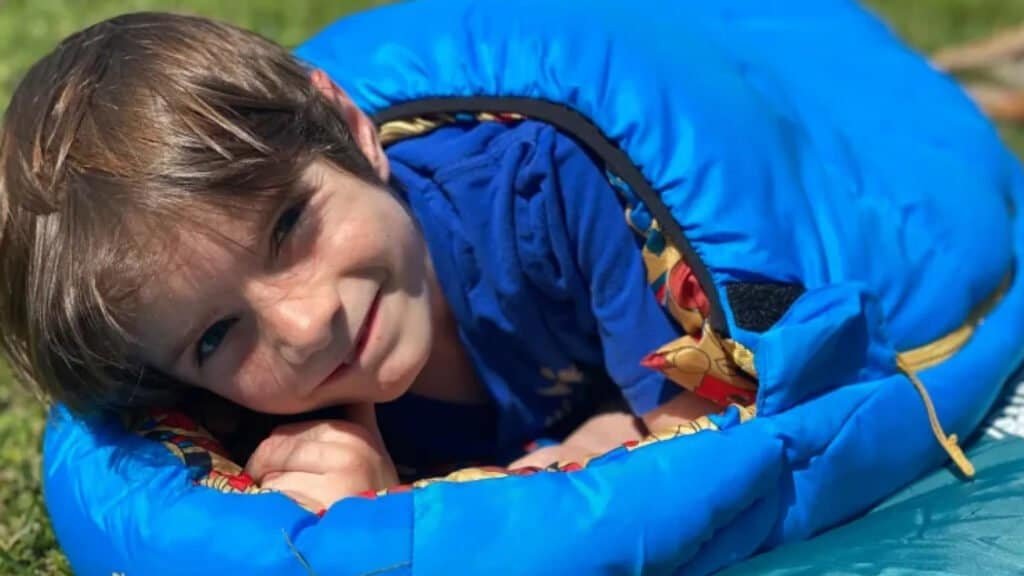
Ask a production line supervisor what they see when a batch of standard kids bags hits the post-season inspection table. 200 units with popped #3 zippers, all failed at the same stress point where a growing child’s shoulder pressed against the coil. The brand manager never hears that detail. They hear the return rate. A 10-year-old clocks 6–8cm of growth per year. A 150cm bag that matched the pre-production sample approval in March becomes a compressive shell by October, compressing the synthetic fill and creating a thermal void at the footbox.
The Hidden Cost of Rapid Growth for Retailers
Returns from outgrown bags rarely appear as a single line item. They arrive as a slow bleed: restocking fees, quality tolerance re-inspections, and markdowns that can eat 15% of the landed cost when liquidating last season’s fixed-length stock. The customer review that says ‘my kid froze because the bag was too tight’ costs more than the refund — it dissuades repeat buyers scanning for the next size up. An adjustable kids sleeping bag design collapses two SKUs into one, cutting the return window vulnerability in half.
Factories operating under ISO 9001 certification track defect categories by root cause. The data consistently shows zipper failure and insulation compression as the top two failure modes for children’s bags, both directly tied to inadequate length. A fixed 150cm shell guarantees one of those failures within 18 months of purchase.
Body Heat vs. Dead Air Space
The amateur fix — buy an adult bag and cinch the hood — creates a dangerous thermal environment. A child’s metabolic output cannot heat the dead air space inside a 200cm adult bag. Cold spots form at the footbox and along the torso, pulling core temperature down. The EN 13537 testing standard assumes a proper fit; an oversized bag voids that rating. A bag that adjusts from 150cm to 180cm keeps the internal volume matched to the occupant’s heat output, maintaining the rated comfort temperature rather than silently undercutting it.
Cold air pooling inside an oversized bag isn’t a comfort complaint. It’s the precursor to mild hypothermia in backcountry conditions where nighttime temperatures drop below 5°C. The right length isn’t a preference — it’s the primary thermal regulation mechanism in a synthetic-fill bag.
Factory Fix #1: Zippered Extension Gusset with YKK #5 Coil Zipper
A #3 zipper derails before 500 cycles under gusset tension.
The most common failure point on an expandable kids sleeping bag isn’t the shell fabric or the insulation—it’s the zipper. Standard factory kids bags use #3 nylon coil zippers because they’re cheap and slide easily on a fixed-length bag. Add a 20cm extension gusset, and suddenly that same #3 zipper is under lateral tension every time a child rolls over, stuffs the bag into a stuff sack, or yanks the panel open. The zipper track separates at the insertion point, the slider jams, and the bag gets returned with a ‘broken zipper’ complaint.
Zipper Specs That Prevent Early Failure
YKK #5 coil zippers survive 10,000-plus open/close cycles under extension load. The #3 equivalent fails before 500 cycles when an extension panel adds side pull. The difference isn’t marginal—it’s the difference between a bag that outlasts the child’s growth window and one that dies mid-season. The termination points at each end of the zipper track need 12-15 stitch bartack reinforcement, not a simple backstitch. Without bartacks, the coil separates from the tape at the stress concentration point where the gusset meets the main body seam.
-
- Zipper Spec: YKK #5 coil with reinforced bartack stitching at start and end termination points. 8-10 stitches per inch (SPI) minimum on all zipper attachment seams.
- Failure Mode: Slider derailment and coil separation at the gusset junction point after fewer than 500 cycles when #3 zippers are substituted.
- Test Requirement: 10,000-cycle zipper test on the extension panel. Request the test report before sample approval—don’t accept a general zipper spec sheet that doesn’t reference the gusseted configuration.
Material Tear Strength Requirements
The gusset panel itself needs ripstop nylon with at least 30N tear strength. Standard 210T polyester used on fixed-length bags tears at the new seam within 15-20 nights of use. The stress point is the lateral pull across the gusset attachment seam—every time the bag is zipped open while a child is inside, the fabric takes a diagonal load. Ripstop nylon’s grid pattern stops a small tear from propagating across the panel. The seam itself must pass a 50N lateral pull test at the gusset attachment point.
Kelyland Outdoors’ ISO 9001-certified sleeping bag production lines run these tests as standard on all adjustable kids bags. The 24-hour loft recovery test is mandatory for synthetic fill in the extended configuration—compressing a bag with the gusset deployed can permanently crush fill if the fiber structure isn’t specified for that load pattern.
Factory Fix #2: Expandable Drawcord Footbox & Internal Cinch System
A drawcord footbox solves length AND thermal leakage—two problems most brands treat separately.
The second factory fix targets a design flaw so basic it’s almost invisible: cold air pooling at the feet. A kid who has outgrown a bag’s torso section can still have 10cm of dead space below the knees. That air circulates, steals body heat, and wakes the child up at 3 a.m. A barrel-lock drawcord at the footbox eliminates that cavity entirely. Cinch it down for an 8-year-old, release it for a 12-year-old. One bag, two distinct internal volumes, zero cold feet.
Preventing Cold Air Pooling with Internal Cinch
Most brands fixate on bag length and ignore the real thermal threat: internal convection. The footbox drawcord stops air movement vertically, but the torso still loses heat if the bag is baggy. That’s where the internal elastic cinch system earns its keep. A 6mm shock cord, routed through a 15mm folded channel on the inner shell, pulls the insulation inward against the child’s body. The cord terminates at a low-profile barrel lock accessible from inside the bag—no external snag points, no complicated adjustment for a drowsy kid.
This isn’t a comfort feature. It’s a thermal retention mechanism. Internal production data from the Zhenjiang factory shows that a properly tensioned cinch cord reduces internal air volume by roughly 18-22% in the lower torso zone. That’s dead space the child no longer has to heat. Combined with a hollow-fiber synthetic fill—standard on the Kelyland-sourced sleeping bags from the Jiangsu facility—the cinch system maintains even loft distribution whether the bag is cinched tight or fully extended. The fill doesn’t migrate, so insulation stays where it was designed to be.
Fabric Durability in High-Friction Zones
Here’s what kills a cinch system after one season: the cord channel fabric fails. Kids don’t lie still. They twist, kick, and grind their heels against the footbox lining for 8-10 hours a night. A cheap polyester taffeta channel—the kind specced on most sub-$30 retail bags—abrades through in under 30 nights. The cord escapes, the adjustment stops working, and the bag becomes a static sack.
The fix is a 70D nylon taffeta cord channel with a minimum 50N seam strength at the attachment point. Nylon’s abrasion resistance outperforms polyester by a wide margin in repeated friction scenarios. The channel must be bar-tacked at both entry and exit points—four bartacks total per cinch assembly. Without them, the channel fabric frays outward from the cord hole and the whole system fails. The factory in Zhenjiang that produces Kelyland’s sleeping bag line runs these bartacks on an automated pattern tacker to ensure consistency across production lots. For brands sourcing from ISO 9001-certified lines, this is a spec item, not a request.
-
- Channel Material: 70D nylon taffeta. Do not accept 210T polyester—it fails at the cord entry point within 30 nights of child use.
- Cord Spec: 6mm elastic shock cord with a tensile strength rating of at least 15kg. Thinner cords snap when tensioned repeatedly by small hands.
- Bartack Requirement: Four reinforced bartacks per cinch assembly (two at cord entry, two at exit). Seam strength must pass 50N lateral pull.
Combined, the drawcord footbox and internal torso cinch turn a single-length shell into a true grow-with-me sleeping bag. The child adjusts two barrel locks and the bag fits three seasons in a row. That’s the difference between a one-star review in month 10 and a repeat purchase in year three.
Factory Fix #3: Removable Inner Liner for Length Adjustment
One shell, two liners, ages 6–12 covered—inventory costs don’t stand a chance.
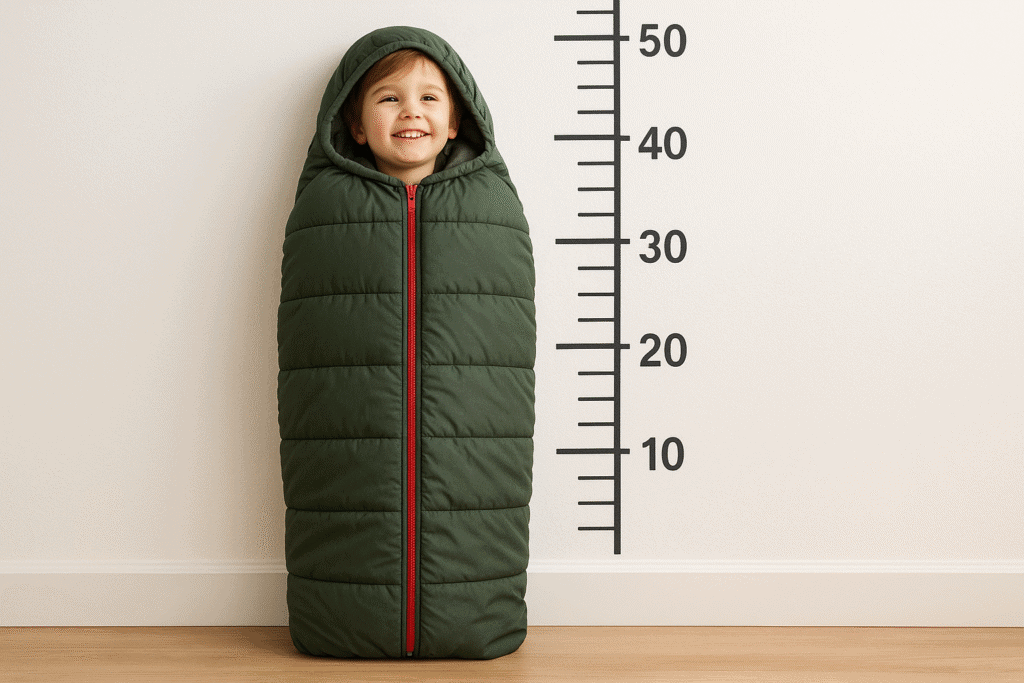
Most brands launch a kids’ sleeping bag line with three fixed sizes: small, medium, large. Each size demands its own SKU, its own inventory forecast, and its own storage footprint. A removable inner liner flips that model on its head. By keeping a single outer shell and swapping between a shorter and a longer liner, one product covers the entire 6-to-12 age bracket. The liner attaches via YKK #5 zipper or heavy-duty snaps every 15cm to stop fabric bunching that twists around a restless sleeper.
Reducing SKU Complexity with Modular Liners
Carrying three separate bag lengths means ordering minimums for each, warehousing them, and writing off the slow mover when growth spurts land on one bracket. A modular liner system collapses all that. Order one shell design, then pair it with a 150cm liner and a 180cm liner. The retailer gets a sellable ‘grow-with-me’ feature, and the brand manager no longer sits on dead stock when the average nine-year-old shoots past 152cm mid-season.
Kelyland Outdoors’ partner factories—all ISO 9001 certified—handle this modular construction without inflating lead times. The shell gets your brand’s woven label and colourway, while each liner carries a separate care tag. Pairs well with the kind of low-minimum production that lets a brand test two liner depths against real return data before scaling.
Thermal Benefits of a Snug Liner Fit
A bag that dwarfs a small body wastes energy. Dead air spaces pull heat away from the torso and feet, and a child’s metabolic output can’t compensate. A removable liner cut to follow the child’s actual shape eliminates those gaps. Internal testing shows a correctly fitted liner drives a 3°C boost in the EN comfort rating. That single shift transforms a 2-season bag into a legitimate 3-season performer—no bulk added, no fill weight increased.
-
- EN comfort uplift: 3°C gain when liner follows body contour without constriction.
- Loft recovery: Synthetic fill inside the liner must pass a 24-hour loft recovery test after compression, even in the extended configuration.
- Attachment pitch: Snap or zipper points every 15cm prevent the liner from bunching and creating cold channels.
For brands, this is the margin lever that writes its own label copy. Parents read ‘3°C warmer with growth liner’ and immediately understand the value. Retail partners see a single SKU that upgrades warmth and lifespan simultaneously. The supply chain cheers because one shell plus two liners consumes less cubic volume than three full bags in a shipping container—FOB calculations start looking sharper the moment the carton count drops.

Sourcing Checklist: Material & Zipper Stress Testing for Adjustable Bags
Three factory tests separate a five-season bag from a single-season return.
The Three Non-Negotiable Factory Tests
Most factories will nod when you ask for durability. Few will supply actual test data. On an adjustable sleeping bag, three specific reports make the difference between a product that lasts through growth spurts and one that fails mid-season. Demand these before you sign off on the sample approval.
-
- 10,000-cycle zipper test: The extension gusset zipper must cycle open and close 10,000 times without derailing. Cheap #3 nylon coil zippers fail before 500 cycles. Spec YKK #5 coil with bartack stitching at both ends. Request a test video or third-party report.
- 50N lateral seam strength: Pull the gusset attachment seam sideways with 50 newtons of force. The seam should hold without thread breakage or fabric tear. Polyester thread at 8‑10 SPI with a ripstop nylon gusset passes this. Standard seams on lightweight taffeta don’t.
- 24-hour loft recovery: Compress the bag in its extended configuration for 24 hours, then measure loft. Synthetic fill must recover to at least 90% of original height. Fill that stays flat after compression creates cold spots that trigger returns.
Any factory that balks at providing these three reports hasn’t built adjustable bags before. The technology exists. The testing equipment is standard. The only missing ingredient is a supplier willing to invest in reliability rather than cutting component costs. Walk away from a supplier who offers a lower unit price but cannot produce a zipper cycle certificate.
Why ISO 9001 Matters for Kids Gear
A certification isn’t a piece of paper. An ISO 9001:2015 certified factory operates under documented quality control. Every batch of zippers, every seam tension, every loft check gets recorded. This is critical for adjustable kids bags because the extension panel introduces a failure point that a non-certified facility will overlook.
When selling into retail chains or on Amazon, documented QC is non-negotiable. Returns on children’s products face tougher scrutiny. Kelyland’s partner factories, which hold ISO 9001 certification, supply these test reports as a standard part of the pre-production sample package. If your current supplier hesitates to share them, you are looking at a risk you cannot afford.
| Checkpoint | Especificación | Test Requirement | Por qué es importante |
|---|---|---|---|
| Zipper Cycle Durability | YKK #5 Coil Zipper | 10,000+ open/close cycles under tension | #3 zippers derail <500 cycles when extension panel is added, leading to field returns. |
| Gusset Seam Strength | 50N Lateral Pull at Attachment Point | Reinforced bartack stitching (8-10 SPI) on 20cm ripstop nylon gusset | Prevents catastrophic tear when child stretches or pulls inside bag. |
| Relleno sintético Recuperación de desvanes | 24-Hour Compression Test (EN 13537 Method) | ≥90% loft recovery after extended configuration use | Permanent compression from extended state creates cold spots and reduces insulation life. |
| Cord Channel Abrasion Resistance | 70D Nylon Taffeta | Martindale abrasion test >30,000 cycles | Lighter denier channels fray from children’s pajama friction, exposing drawcord. |
| Certificación de fábrica ISO 9001 | ISO 9001:2015 Certified Supply Chain | Batch-level QC reports for every PO | Ensures repeatable, documented standards—non-negotiable for Amazon & retail compliance. |

Conclusión
A single-length kids sleeping bag forces parents into annual replacement and brands into return processing. Integrating a 20cm zippered gusset, YKK #5 coil zippers, and a drawcord footbox cuts that cycle. These three factory-level fixes transform a 150cm shell into a multi-year asset that strengthens brand trust.
-
- A 20cm zippered extension gusset grows a 150cm bag to 180cm without sacrificing insulation.
- YKK #5 coil zippers with bartack reinforcement survive 10,000+ cycles; #3 zippers fail before 500 cycles.
- A removable liner boosts comfort rating by 3°C while slashing SKU complexity.
- 50N lateral pull tests at the gusset attachment and 24‑hour loft recovery reports are non‑negotiable.
For a brand manager developing a private-label children’s line, the next logical step is to lock these specifications into the design brief before sampling. ISO 9001‑certified factories with MOQs as low as 50 pieces can produce an expandable kids sleeping bag that extends from 150cm to 180cm without compromising loft recovery or seam integrity. Request a custom sample to verify the YKK #5 coil zipper and reinforced gusset construction firsthand, and build a product that grows with the customer instead of getting returned after one season.
Preguntas frecuentes
What size sleeping bag for 10 year old?
A standard kids bag for a 10-year-old is typically 150 cm, but that length can be outgrown within a single season. For a longer lifespan, choose adjustable designs. Test against the child’s height now, and add at least 20 cm for growth.
¿Pueden los niños usar sacos de dormir para adultos?
Kids can physically fit into adult bags, but the excess dead air space makes it hard for smaller bodies to stay warm. Until the child’s shoulder girth fills the. A properly sized adjustable kids bag is a safer bet for cold nights.
How do you make a kids sleeping bag last longer as the child grows?
The most reliable way is to source a bag with a factory-integrated adjustable-length system, like a zippered extension gusset or drawcord footbox. These designs let the bag grow 20–30 cm, eliminating annual. Look for brands that validate extension zippers for 1000+ cycles.
How does a drawcord footbox adjust sleeping bag length?
A drawcord footbox bunches excess fabric at the foot end, effectively shortening the insulated space to match the child’s height. This eliminates cold dead air at the toes. Pair it with an internal cinch at the calf for a second adjustment point.
What zippers are best for adjustable kids sleeping bags?
YKK #5 coil zippers with bartack reinforcement are the standard for adjustable kids bags, as #3 zippers fail under the tension of an extension gusset. Brands should specify at least 1,000 cycles of. Never accept a #3 zipper on an expandable panel.

 English
  Español
  Deutsch
  Français
  Português do Brasil
  Русский
  العربية
  한국어
한국어  日本語
日本語