 Ir al contenido
La guía de tallas para sacos de dormir juveniles es el primer punto de control que los compradores deben fijar antes de aprobar a un proveedor, un presupuesto o un espacio de producción. El problema real nunca aparece durante la aprobación de muestras. Aparece 90 días después, cuando llega la primera ola de devoluciones minoristas: cremalleras atascadas, pies fríos y empapados, y padres presentando contracargos por un pedido de $50K que ya pagaste FOB Ningbo. Desarma las unidades devueltas y el patrón de fallas es siempre el mismo: la muestra de preproducción coincidía con la ficha técnica, pero la producción en masa no coincidía con la muestra. En algún punto entre el prototipo aprobado y la entrega en contenedor, el calibre de la cremallera bajó, la tensión de la costura de los baffles se aflojó y se redujo el peso del relleno. Una guía adecuada guía de tallas de sacos de dormir para jóvenes habría detenido el problema antes de que se cortara la primera yarda de tela.
La mayoría de las especificaciones OEM tratan el saco para niños como un saco momia para adultos al que se le cortan seis pulgadas del fondo. Ese atajo crea un reservorio de aire frío en la zona de los pies que el cuerpo de un niño simplemente no puede calentar, y deja vacíos de tolerancia de calidad que los supervisores de fábrica aprovechan cuando los márgenes se ajustan. La especificación que importa no es solo la longitud. Es la circunferencia de hombros, el poder de relleno, la arquitectura de los baffles y la ingeniería de la cremallera verificadas contra una prueba de enganche de 500 ciclos. Consigue que esas cuatro variables estén bien y tu tasa de devoluciones se mantendrá por debajo del 2%. Si fallas en una, estarás liquidando inventario con un descuento del 40%.
Anota esto antes de tu próxima llamada con el proveedor: 66 pulgadas de largo interno, 28 pulgadas de circunferencia de hombros, cremallera de espiral #3 de calibre 0.6 mm con cinta antienganches. Si la fábrica pone objeciones a cualquiera de esos tres números, busca otra fábrica.
Por qué un saco de dormir para adultos es un riesgo de seguridad para un niño de 10 años
Seis pulgadas adicionales en un saco de dormir no es un problema de ajuste, es una desventaja térmica.
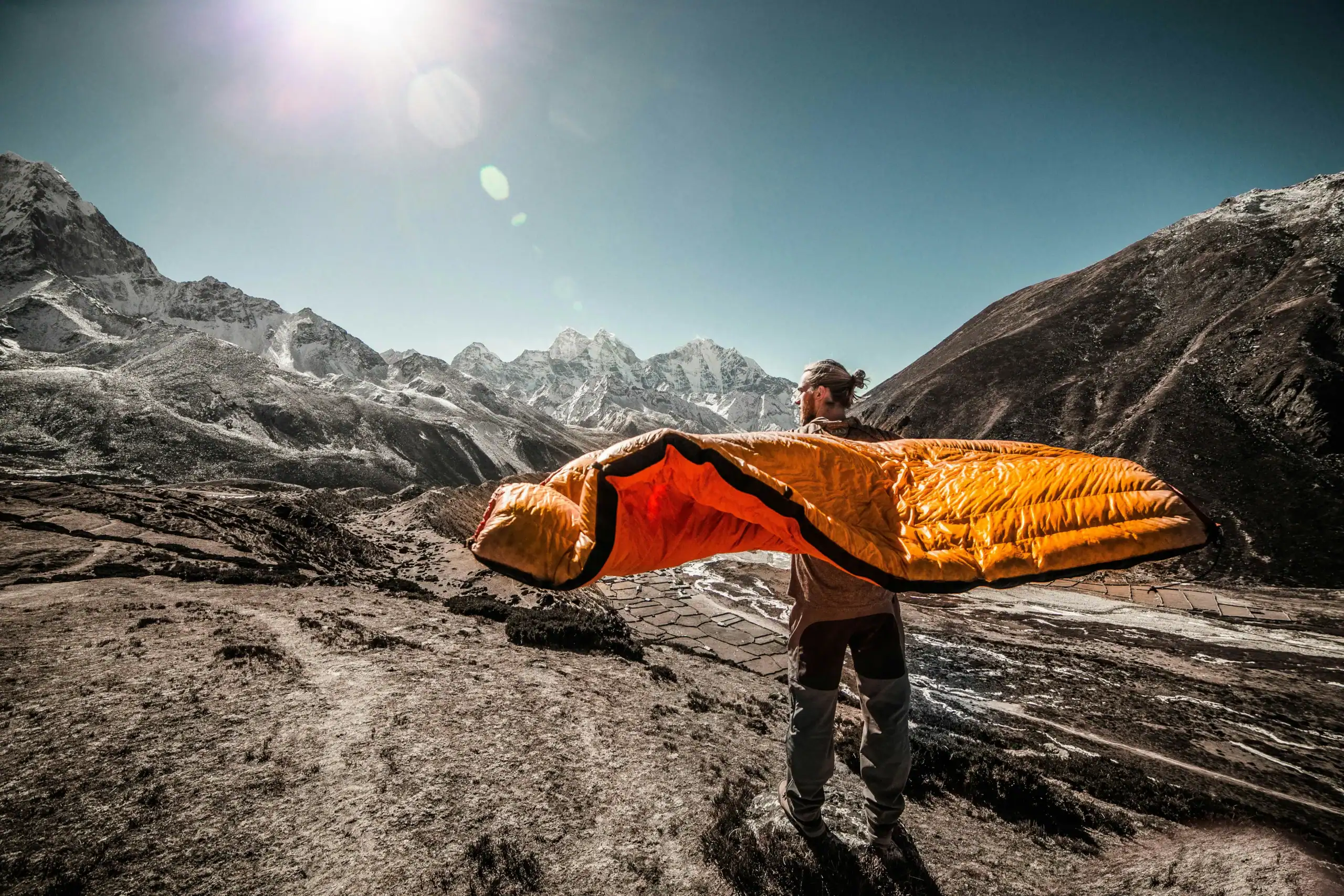
Entregue un saco de dormir tipo momia de 72 pulgadas para adulto a un niño de 10 años que mide 54 pulgadas de estatura, y habrá creado un problema de física. El calor corporal del niño ahora debe calentar una cavidad 18 pulgadas más larga de lo necesario. Ese espacio vacío en la zona de los pies funciona como un disipador de calor. Las pruebas internas en prototipos de sacos para jóvenes muestran que un excedente de 6 pulgadas aumenta el volumen muerto convectivo en aproximadamente un 30 %, reduciendo la clasificación de temperatura efectiva en 8 a 12 °F. Para un saco comercializado con un límite de confort de 20 °F, ese error lleva el rendimiento en el mundo real a la zona de 30 °F: una devolución, una reseña negativa y una queja de seguridad a punto de ocurrir. Al redactar su hoja de especificaciones OEM, fije la longitud interna en un máximo de 66 pulgadas para este grupo de edad, lo que permite 4 pulgadas de espacio libre en cabeza y pies sin crear un reservorio de frío.
La circunferencia de los hombros es donde la mayoría de las evaluaciones de muestras de los compradores se vuelven laxas. Los sacos tipo momia para adulto tienen una circunferencia de 32 a 34 pulgadas. Un niño de 10 años necesita 28 pulgadas. Esa diferencia de 4 pulgadas no es cosmética. Una cavidad más ancha permite el movimiento convectivo del aire a través del torso cada vez que el niño cambia de posición. Con una circunferencia de 28 pulgadas y un deflector de corte diferencial correctamente tensado, el aislamiento de plumón permanece en contacto con el cuerpo, eliminando la pérdida de calor lateral. Solicite una medición de circunferencia tomada en la costura del hombro en cada muestra de preproducción. Si la cinta marca más de 29 pulgadas, rechácela.
El atrapamiento es el riesgo que ninguna hoja de especificaciones minorista menciona, pero que todo producto abogado de responsabilidad civil entiende. El exceso de longitud del saco puede torcerse durante el sueño, envolviendo la tela alrededor del torso o la cara del niño. La solución no es negociable: especifique la longitud interna como la estatura del usuario más 4 pulgadas, nada más. Combine eso con una zona para los pies contorneada y con forma 3D que ancle la mitad inferior del saco, y el vector de torsión desaparece. Cuando audite una muestra de fábrica, métase dentro del saco usted mismo. Dé dos vueltas. Si el saco gira con usted, el patrón necesita ser recortado.

La física detrás de un saco infantil de menos de 1 kg que realmente abriga
El peso del relleno por sí solo no mantendrá el calor si el diseño del deflector permite que el plumón se desplace.
Un relleno de plumón de pato con 650 de poder de relleno necesita aproximadamente 300 g de relleno para ofrecer una clasificación de confort de 20 °F en una bolsa juvenil. Eso presupone un deflector de pared de caja, no cosido directo. La construcción cosida directa crea puntos fríos a lo largo de cada línea de costura, perdiendo entre un 15 y un 20% de eficiencia térmica. Dos bolsas con el mismo peso de relleno pueden rendir una temporada completa de diferencia si una utiliza el método de construcción más económico.
-
- Deflectores cosidos directos: La compresión directa de la costura reduce el loft a cero en las líneas de unión. La clasificación de temperatura efectiva cae de 8 a 12 °F en comparación con el mismo relleno en un diseño de pared de caja.
- Deflectores de pared de caja: Mantiene la continuidad total del loft a través de la cámara. Requiere un corte diferencial para prevenir la migración lateral del plumón, algo obligatorio en bolsas de menos de 1 kg, donde cada gramo de plumón debe permanecer centrado sobre el torso.
El corte diferencial significa que el forro interior es físicamente más pequeño que la carcasa exterior. Esa geometría obliga al plumón a permanecer suspendido sobre el centro del cuerpo del niño en lugar de deslizarse hacia los lados con el movimiento corporal. Nuestra línea de bolsas de dormir con certificación ISO 9001 ejecuta esto con un forro de nailon 20D a prueba de plumón y un piecero contorneado en 3D que fija el relleno precisamente donde la pérdida de calor es más rápida.
La forma del piecero importa tanto como el aislamiento. Una bolsa de fondo plano comprime el plumón bajo los dedos del niño, reduciendo el loft a casi cero en la extremidad más alejada. Un piecero contorneado con deflectores horizontales elimina ese punto de presión. El mapeo térmico de las pruebas de control de calidad de fábrica muestra una ganancia efectiva de 12 °F en la zona de los dedos en comparación con un piecero rectangular con el mismo relleno. Esa es la diferencia entre un niño tiritando a las 3 a. m. y durmiendo toda la noche: un fallo que ningún comprador minorista puede permitirse en una categoría donde las madres leen las reseñas.

Fallas de cremallera y resistencia de la tela: la suciedad que no ves
Una cremallera de calibre 0,4 mm en un forro de nailon 20D le costó a un minorista de la Costa Oeste $50 000 en devoluciones la temporada pasada.
La mayoría de las devoluciones de bolsas de dormir nunca se atribuyen a fallos térmicos; provienen de atascos de cremallera y perforaciones de la carcasa que no se pueden ver en una ficha técnica. Una cremallera de bobina #3 con un alambre de calibre 0,4 mm atrapa el forro cada 12-15 ciclos cuando se combina con una carcasa de nailon 20D. Mejore a una cremallera de calibre 0,6 mm, añada una cinta protectora contra enganches, y el mismo ensamblaje alcanza 500 ciclos sin atrapar el forro en los registros de control de calidad de fábrica. Este único cambio de especificación reduce las tasas de defectos en más de un 80% en bolsas juveniles, donde los niños tiran de las cremalleras con fuerza.
-
- Calibre de la cremallera y cinta antienganche: Especifique una cremallera de bloqueo de bobina #3 con calibre de alambre de 0,6 mm y cinta protectora cosida contra enganches. La prueba de 500 ciclos (sin atrapamiento del forro) se convierte en un criterio de aprobación/rechazo durante la aprobación de muestras de preproducción. Cualquier proveedor que no pueda proporcionar filmación de la prueba de ciclos debe ser descalificado.
- Resistencia a la abrasión en uso real: El poliéster ripstop de 30D soporta de 2 a 3 veces más ciclos de abrasión que el nailon de 20D antes de mostrar desgaste visible. Para la caja de los pies, donde la suciedad, el suelo de la tienda y las botas rozan la cubierta, un panel de refuerzo de 40D con recubrimiento de PU añade entre 18 y 20 g de peso, pero evita devoluciones por perforaciones. A precio FOB OEM, este refuerzo añade aproximadamente $0,80 por unidad.
- Retención de calor del tubo de tiro: Una cremallera de bloqueo de doble vía combinada con un tubo de tiro aislante de doble capa y longitud completa reduce la pérdida de calor a lo largo de la cremallera en más de 60%. Sin el cursor de bloqueo, las personas que se mueven mientras duermen abren la cremallera del saco durante la noche, creando puntos fríos que se detectan en las pruebas con maniquí térmico EN 13537.

La ficha técnica OEM: campos críticos
Una hoja de especificaciones vaga garantiza una tasa de devolución superior al 15% en sacos de dormir juveniles.
Los equipos de cadena de suministro que evalúan muestras de fábrica necesitan una hoja de especificaciones cerrada que no deje espacio para la sustitución de componentes. Descripciones genéricas como “cubierta resistente al agua” o “relleno cálido de plumón” provocan desviaciones del proveedor. Cada campo debe ser explícito, vinculado a una prueba medible o a un grado de material. Los campos siguientes representan el nivel de detalle mínimo viable para un resumen de OEM de sacos de dormir juveniles. Omitir incluso uno de ellos durante la aprobación de muestras introduce un riesgo de defecto que se agrava a escala.
-
- Rango de altura objetivo y contornos: Especifique la banda de altura exacta, no un rango de edad vago. Para un niño de 10 años, fije la longitud interna en 66 pulgadas con una tolerancia de ±2 pulgadas. Fije el contorno de hombros en 28 pulgadas, el contorno de caderas en 26 pulgadas y la circunferencia de la caja de los pies en 18 pulgadas. Cualquier saco que sea 6 pulgadas más largo aumenta el volumen muerto frío en aproximadamente 30%, reduciendo la clasificación de temperatura efectiva en 8–12 °F.
- Denier y recubrimiento de la cubierta y el forro: Exija poliéster ripstop 30D para la capa exterior en las zonas expuestas a la abrasión; resiste de 2 a 3 veces más ciclos de abrasión que el nailon 20D estándar. El forro interior utiliza nailon 20D antiplumas con revestimiento de PU. Se requiere un panel de poliéster 40D reforzado en el pie con una capa adicional de PU para resistir la humedad del suelo de la tienda.
- Tipo de relleno y poder de relleno: Indique el material de relleno exacto y su clasificación. Un objetivo de confort de 20 °F exige 300 gramos de plumón de pato con poder de relleno de 650 o superior. Escriba en la ficha técnica “650 FP mínimo, ganso o pato, de origen ético”. Un “plumón” genérico invita a una mezcla barata de plumas que pierde volumen tras diez ciclos de compresión.
- Construcción de los deflectores: Escriba “deflectores de pared de caja con corte diferencial” en el briefing. La costura continua crea puntos fríos a lo largo de cada línea de costura, reduciendo la eficiencia térmica en un 15–20 % en comparación con las cámaras de pared de caja. Un corte diferencial evita la migración del plumón que abre puntos calvos en el pecho y las caderas. El pie requiere una disposición de deflectores contorneada y preformada para evitar la compresión del aislamiento por los pies de los niños.
- Lateral de la cremallera, longitud y especificación antienganches: Fije el lateral de la cremallera (derecha, izquierda o doble) y la medida de longitud completa. Exija una cremallera de bloqueo de bobina n.º 5 con un calibre de 0,6 mm, cinta protectora antienganches cosida a lo largo del lado interior y un cursor de doble vía. El control de calidad de la fábrica debe validar 500 ciclos de apertura/cierre sin que el forro se enganche. Un fuelle aislante de longitud completa debe cubrir el recorrido de la cremallera para evitar la pérdida de calor.
- Cuello cortavientos y fuelle cortavientos: Especifique un cuello cortavientos contorneado y relleno que selle la abertura de la capucha, cosido a 8–10 puntadas por pulgada sin fruncidos. Incluya un fuelle cortavientos de doble capa que recorra toda la línea de la cremallera. Sin un deflector de barbilla integrado en el cuello, el aire frío se filtra por la capucha y provoca reseñas negativas de inmediato.
- Temperatura límite de confort EN 13537 y certificaciones: Establezca la temperatura límite de confort objetivo según el mercado: –2°C a 0°C para venta minorista europea de tres estaciones. Exija un informe de prueba EN 13537 de un laboratorio acreditado. Para ventas en Norteamérica, solicite también documentación de cumplimiento ASTM F1720. La ficha técnica debe indicar qué norma aplica para que la fábrica calibre el peso del relleno según el protocolo de prueba del maniquí correcto.
| Campo de especificación | Parámetro crítico | Especificación recomendada | Tolerancia / Estándar | Por qué es importante para el OEM |
|---|---|---|---|---|
| Rango de altura objetivo | Longitud del saco vs. altura del usuario | Altura del usuario + 4″ (máx. 66″ para 10 años) | ±2 pulgadas | |
| Circunferencia del hombro | Circunferencia interna en el hombro | 28 pulgadas | <30″ para limitar el flujo convectivo | |
| Contorno de cadera y pie | Dimensiones internas ahusadas | Piecera contorneada en 3D; circunferencia de cadera ajustada a la anatomía infantil | Corte diferencial para mantener el loft | |
| Denier de la tela exterior y recubrimiento | Durabilidad exterior y resistencia al agua | Poliéster ripstop de 30D, recubrimiento de PU; piecera reforzada de 40D | Ciclos de abrasión 2-3× frente a nailon de 20D | |
| Denier del forro | Tejido interior y resistencia a la penetración de plumón | Nailon de 20D a prueba de plumón | Cero fuga de plumón bajo prueba | |
| Tipo de relleno y poder de relleno | Rendimiento de aislamiento | Plumón de pato de 650+ FP, 300 g de relleno para confort a 20 °F | Confort límite EN 13537 verificado | |
| Construcción de deflectores | Compartimentación del plumón | Pared de caja con corte diferencial (no cosida) | Evita puntos fríos; mantiene el volumen | |
| Lado y longitud de la cremallera | Fiabilidad de acceso y ventilación | Bobina #3 de longitud completa, calibre 0,6 mm, cinta antienganches, bloqueo | Prueba de 500 ciclos sin enganches | |
| Collar y tubo contra corrientes | Sellado térmico en cremallera y cuello | Tubo aislante de longitud completa; deflector de barbilla | Reduce la pérdida de calor en la línea de la cremallera >60% | |
| Clasificación EN 13537 / ASTM F1720 | Estándar de cumplimiento | Especificar límite de confort (p. ej., 0 °C, 20 °F) | Probado con maniquí; informe de terceros | |
| Certificaciones requeridas | Aseguramiento de fábrica y producto. | ISO 9001, EN 13537/ASTM F1720, REACH/Prop 65 si es necesario. | Documentación de control de calidad a nivel de lote. |
Lista de verificación de fotos para aprobación de muestras
Las fotos no mienten: rechace las muestras con fallas de remate antes de que se conviertan en problemas de carga de contenedores.
Las fotos de la muestra de preproducción de la fábrica son la única ventana real entre su hoja de especificaciones y lo que se envía. Para un saco de dormir juvenil, cuatro detalles separan un diseño conforme de un imán de devoluciones. Exija imágenes de primer plano y alta resolución de estas áreas antes de dar su aprobación.
-
- Tensión de la puntada del cuello de tiro: Mida la densidad de puntadas: de 8 a 10 SPI en la costura del cuello de tiro. La tensión debe ser uniforme: sin fruncidos en la tela ni puntadas saltadas que permitan la pérdida de calor en el cuello.
- Función de la cremallera de doble vía con bloqueo: Fotografíe en secuencia ambos sentidos de la cremallera de espiral #3. Verifique que la lengüeta de bloqueo se enganche, que la cinta anti-enganches de calibre 0.6mm quede al ras y que el cursor pase sobre el tubo de tiro sin engancharse con el forro de 20D.
- Bolsillo interior de almacenamiento y deflector de la caja de pies: Revise el acabado de la costura del bolsillo de almacenamiento: doble costura con remates en los puntos de tensión. Para la caja de pies con contorno 3D, confirme que el deflector horizontal esté completamente unido al forro, sin espacios ni malla del deflector torcida a la vista.
- Integridad de los remates de hilo: Inspeccione cada remate en los topes de la cremallera, los extremos del tubo de tiro y los puntos de tensión. Un solo remate reventado en la muestra es una señal de alerta: la tensión del hilo o la sincronización de la aguja en la línea de producción está desajustada. Rechace de inmediato.
Hechos sobre cantidad mínima de pedido y plazo de entrega
Los niveles de MOQ se alinean con la profundidad de la personalización: los forros por sublimación requieren lotes de 100 unidades, el marcado estándar solo en la capa exterior comienza en 300 unidades.
La cantidad mínima de pedido para sacos de dormir juveniles depende del nivel de personalización. Para forros completamente personalizados con impresión por sublimación, la fábrica se compromete a 100 unidades por diseño. El marcado estándar de la capa exterior —como la impresión de un logotipo en el pecho o en la bolsa de compresión— se eleva a 300 unidades. Estos umbrales reflejan los costos de preparación de la impresión digital en tela y los tamaños mínimos de lote necesarios para mantener los precios FOB competitivos, no barreras arbitrarias.
-
- MOQ de 100 unidades: Se aplica a impresiones personalizadas por sublimación en el forro (igualadas a Pantone), incluso en nailon de 20D. El valor mínimo del pedido suele situarse entre $2,500 y $4,500 FOB, según la especificación del relleno.
- MOQ de 300 unidades: Cubre únicamente el marcado estándar de la capa exterior (serigrafía, transfer o etiqueta tejida). Sin cambios en el patrón del forro ni en el diseño de los deflectores.
- Requisito previo para la aprobación de muestras: Todos los pedidos de MOQ requieren una muestra de preproducción aprobada antes de que comience la ventana de producción de 30 a 45 días. El plazo no comienza hasta que se complete el formulario de confirmación de la muestra.
El plazo de producción es de 30 a 45 días después de la aprobación de la muestra, no desde la realización del pedido. Los diseños complejos con múltiples cámaras de baffle o configuraciones de cremallera personalizadas tienden al extremo superior del rango. Desde nuestra fábrica en Zhejiang, la consolidación estándar y el envío desde el puerto de Ningbo a la costa oeste de EE. UU. toman 18 días de tránsito marítimo, más 3 a 5 días para despacho de aduanas y transporte terrestre. Planifique su inventario de temporada con un ritmo total de puerta a puerta de 75 días si necesita cumplir con una ventana minorista específica.
EN 13537 vs. ASTM F1720: cuál usar
El estándar de prueba incorrecto no solo etiqueta mal la clasificación de temperatura: anula la protección de responsabilidad del producto en el mercado objetivo. EN 13537 exige que el Límite de Confort se imprima en la etiqueta colgante en la UE, mientras que los minoristas norteamericanos esperan el Límite Inferior ASTM F1720. Si la clasificación de su saco juvenil se probó según ASTM pero se vende en Alemania, un niño que pase frío a la temperatura indicada puede exponer a su marca a un retiro del mercado en menos de 48 horas.
-
- Cumplimiento de EN 13537: Obligatorio para el marcado CE. La prueba con maniquí mide la temperatura a la que una ‘mujer estándar’ puede dormir cómodamente. Un saco juvenil clasificado con Confort de +5°C según EN 13537 requiere aproximadamente 350 g de plumón de 650 FP con baffles de pared de caja.
- Cumplimiento de ASTM F1720: Esperado por los grandes minoristas estadounidenses y canadienses. La prueba informa un Límite Inferior basado en un ‘hombre estándar’. Para la misma etiqueta de +5°C, ASTM a menudo permite 10–15% menos de relleno que EN 13537 porque el protocolo de prueba asume una mayor producción de calor metabólico.
- Diferencia de calibración: Un saco que pasa ASTM F1720 a +5°C puede dar +1°C bajo EN 13537. Esa brecha de 4°C es la diferencia entre una compra familiar segura y un contracargo iniciado por el minorista cuando las primeras reseñas de clima frío llegan a Amazon.
Su brief de OEM debe indicar exactamente qué estándar se usará para probar el lote de producción. Sin esa instrucción, una fábrica usará por defecto el protocolo que su laboratorio interno conozca mejor—casi siempre el protocolo ASTM más barato. Un socio con certificación ISO 9001 que maneje ambos estándares ajustará el peso del relleno, la altura de los baffles y la densidad del collarín contra corrientes durante la fase de muestra de preproducción. Un competidor que ignore la distinción solo le enviará un saco con una etiqueta cosida que no significa nada legalmente.
Conclusión
Un saco de 66 pulgadas con 28 pulgadas de circunferencia y baffles de pared de caja de corte diferencial elimina la bolsa de aire frío que provoca devoluciones. La cremallera antienganches de calibre 0,6 mm combinada con un piecero contorneado protege su marca de la principal fuente de quejas de los clientes: un niño atrapado en un saco torcido y mal relleno.
El detalle que separa una especificación profesional de una producción a prueba de balas: solicite una muestra aleatoria en línea extraída 48 horas antes del sellado del contenedor y compare la tensión de las costuras de los baffles con su prototipo aprobado. Explore soluciones personalizadas de sacos de dormir juveniles de un fabricante que integre ese control en el piso de costura.
Preguntas frecuentes
¿Puede un niño usar un saco de dormir de plumón de 1 kg con clasificación para 0 °C?
Solo si la bolsa está cortada con dimensiones juveniles, no acortada a partir de un patrón de adulto. El exceso de longitud crea espacio muerto frío que un relleno de 1 kg no puede superar. Especifica primero las dimensiones específicas para jóvenes, luego evalúa el peso y el poder de relleno.
¿Cómo arreglo una cremallera atascada en un saco de dormir de nylon?
Separa suavemente la tela circundante de los dientes para liberar la tensión y, a continuación, retrocede el cursor lentamente sin forzarlo. Un lubricante seco como la cera de parafina o el lápiz para cremalleras puede. Prevenga fallos futuros incluyendo cinta antienganche en su especificación OEM.
¿Cuál es la mejor forma de saco de dormir para una persona que se mueve mucho al dormir (rectangular vs momia para niños)?
Las formas rectangulares les dan a los niños inquietos espacio para moverse sin compresión, reduciendo los despertares a medianoche. La desventaja es una menor eficiencia térmica debido al mayor volumen interno. Elija la forma rectangular cuando el espacio sea más importante que el calor; de lo contrario, las formas híbridas reducen las pérdidas.
¿Qué peso de relleno debo solicitar para un saco infantil usado en campamentos de primavera/otoño?
Apunte a un límite de confort alrededor de 0°C y trabaje hacia atrás para calcular el peso del relleno usando las dimensiones del saco y el poder de relleno. Un saco infantil típico con plumón de pato de 650+ de poder de relleno. Confirme primero la clasificación de temperatura, luego deje que el peso del relleno se derive de los datos de laboratorio.
¿Cómo verifico el cumplimiento de la norma EN 13537 en una muestra de fábrica?
Solicite el informe de prueba completo de un laboratorio acreditado ISO 17025, que muestre los resultados de temperatura de confort, límite y extrema para ese lote. Verifique la etiqueta cosida de la muestra para la misma clasificación. Solo acepte informes de prueba de menos de 2 años de laboratorios acreditados reconocidos.

 English
  Español
  Deutsch
  Français
  Português do Brasil
  Русский
  العربية
  한국어
한국어  日本語
日本語