 Ir al contenido

The luxury glamping tent canvas condensation fix separates two tents that look identical in a catalog but differ by 30% at FOB pricing. One ships with a 340gsm polycotton shell and double-needle flat-felled seams; the other runs 280gsm cotton with a single stitch line. The first tent breathes. The second drips condensation on guests’ faces by the third rental season.
The gap rarely surfaces at sample approval. A $50K order can clear pre-production inspection and still go sideways when the mass production run quietly shifts the fabric weight or loosens the stitch density. The sample looks right. The delivered tents sag at the wall panels, the lap seams weep, and the pole ferrules begin rusting at ground level.
Commercial glamping tents fail slowly, not dramatically. Mildew settles inside seam folds, rust eats the ferrule, and condensation pools on the ceiling fabric. A hot-dip galvanized steel frame and a certified 340gsm polycotton shell matter more than any chandelier inside. Check those specs before you approve a factory, because the renderings won’t show them.
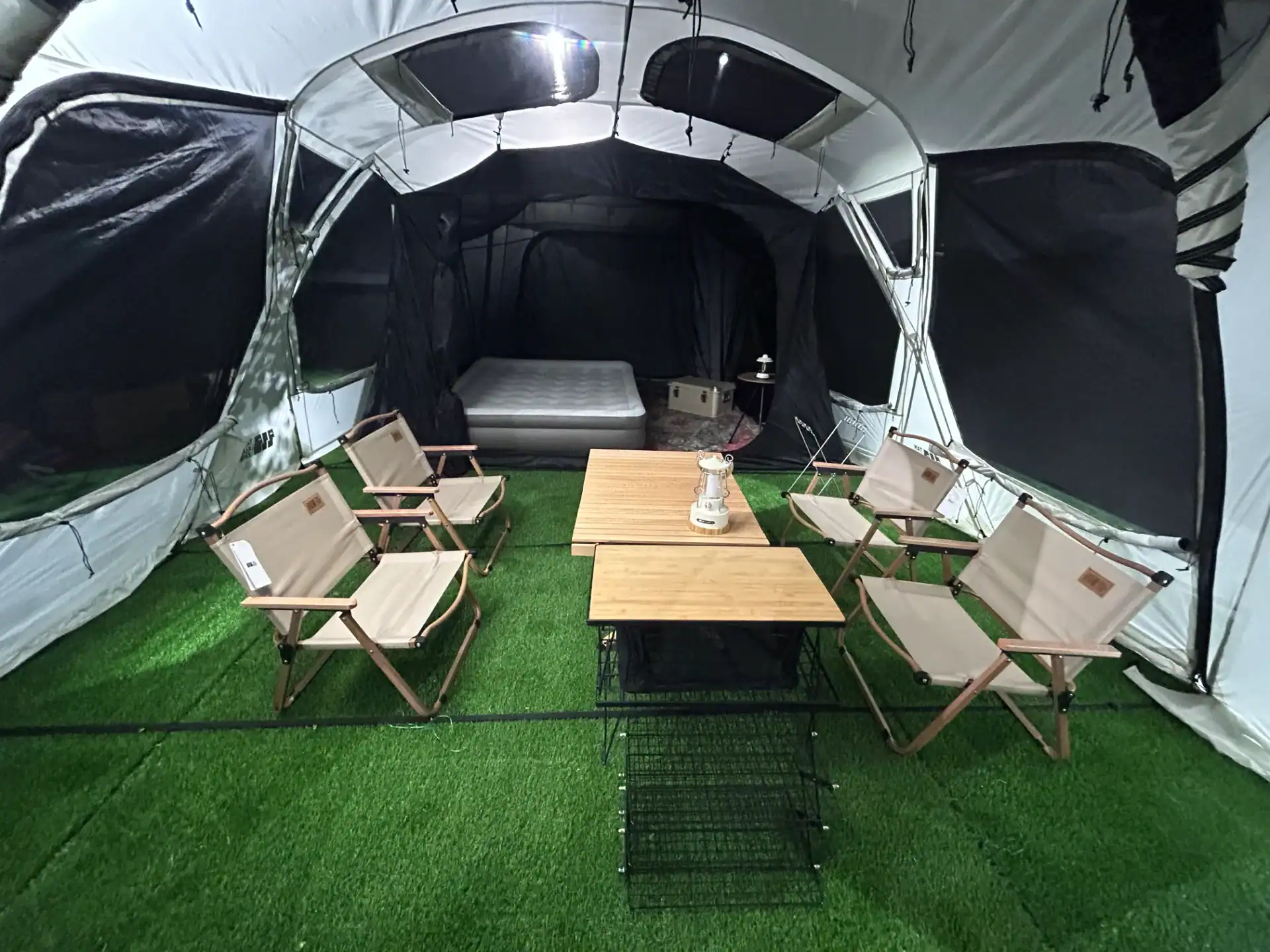
Canvas Weight and Weave: The Real Difference Between Cheap and Luxury
A 280gsm shell passes a photo test and fails by season three.
Start with the weave count, not the label. Budget canvas shells run around 20 weaves per centimetre. Premium cloth sits closer to 30. That gap creates larger micro-gaps between threads, and water finds those gaps after a season of UV exposure and tension — even through a water-repellent coating.
Fabric weight, measured in grams per square metre, splits the commercial market into three tiers. The choice between them decides how many seasons your tents stay dry and guest-ready.
The Three GSM Tiers for Commercial Use
-
- 280gsm cotton: Entry-level single-ply shell. Acceptable for weekend use or low-occupancy sites. Higher moisture absorption and looser weave make mildew a real risk by the second season of full-time rental.
- 340gsm polycotton (65/35): The commercial baseline. Polyester adds dimensional stability so panels don’t sag, while cotton keeps the breathable feel. Higher FOB than 280gsm, but the extra seasons of service make it cheaper per rental night.
- 400gsm heavy-duty cotton: Winter-grade shell. Heavier, slower to dry, and more expensive to ship. Spec it for cold, dry climates — not humid coastal sites where drying time works against you.
The condensation fix starts in the weave. Pure cotton absorbs moisture vapour during the day and releases it when the temperature drops overnight — that’s the drip on guests’ faces. Polyester doesn’t hold water the same way, so a 65/35 polycotton shell cuts interior condensation noticeably compared with all-cotton at the same weight.
Seams Fail Before the Fabric Does
A tent panel rarely rips in normal use. The cinta de costura peels, needle holes elongate, and water enters along the stitching line. Commercial-grade construction uses double-needle flat-felled seams with an internal binding tape at least 20mm wide. Anything narrower pulls away under repeated folding, and the seam starts wicking.
Stitch density matters even more below 340gsm. The spec is at least 8 stitches per centimetre; lower counts leave needle-hole distortion under tension, and rain follows the path of least resistance. The Shaoxing glamping tent factory behind Kelyland’s 300,000 units per year builds these checks into QC — CE and ISO 9001 certified, with standard production lead time of 30–45 days.

Condensation and Rain: Why Canvas Tents Fail Inside
Most glamping tents fail by mildew, rust, and ceiling drip — not by collapse.
Condensation is the quiet killer in a canvas tent. A guest wakes up with water dripping on their face, the canvas feels damp, and within three months of rental seasons, dark mildew spots appear along the seams. That’s not a fabric defect — it’s a physics problem the manufacturer didn’t engineer for. Walls breathe during the day when warm air holds moisture. At night, the temperature drops, and that vapor turns back into liquid on the coldest surface: your ceiling.
Why Polycotton Beats Pure Cotton for Wet Climates
Polyester fibers don’t absorb water the way cotton does. A 65/35 polycotton blend cuts moisture uptake by roughly half compared to pure cotton at the same relative humidity. That matters for a rental tent that gets packed up damp, stored in a trailer, and pitched again the next afternoon. A 340gsm polycotton shell dries faster, sags less, and resists the mildew cycle that turns a premium glamping tent into a musty liability by season two.
-
-
- Breathable wall target: Ask for MVTR above 500g/m²/24h per ASTM E96 Method B — the test that proves moisture vapor escapes through the weave instead of condensing on the ceiling.
- Sealed floor: The floor is the opposite job. It must stay sealed, with a hydrostatic head of at least 3000mm per EN ISO811, so groundwater can’t wick up through the bathtub floor.
-
Ventilation Layout: The 1% Rule
Vent placement is where cheap tents fail. Most factory drawings put windows where they look balanced, not where air actually flows. The working rule for commercial glamping tents: total roof vent area must be at least 1% of the floor area. Eaves vents should follow a Savonius airflow induction pattern, drawing stale air out along the ceiling line rather than letting it pool. Keep intake openings above 45cm from ground level — below that line, CO₂ and moisture pool overnight.
-
- Roof vent area: At least 1% of floor square footage. Below that, condensation forms faster than the fabric can move it out.
- Eaves vents: Positioned on a Savonius pattern — low on one side, high on the opposite — to create cross-flow instead of dead air pockets.
Drying Shrinkage: The Factory Defect Nobody Checks
Here’s the one nobody checks: drying shrinkage. If the fabric hasn’t been pre-shrunk to under 3% total width before the water-repellent coating goes on, the bathtub floor geometry splits during the first de-wetting cycles. The tent looks perfect in the sample photo. After three washes, the floor wrinkles, the seams pucker, and water finds the gaps. A factory running ISO 9001 QC — like the Shaoxing glamping tent plant that produces 300,000 units a year — checks shrinkage before coating, not after.
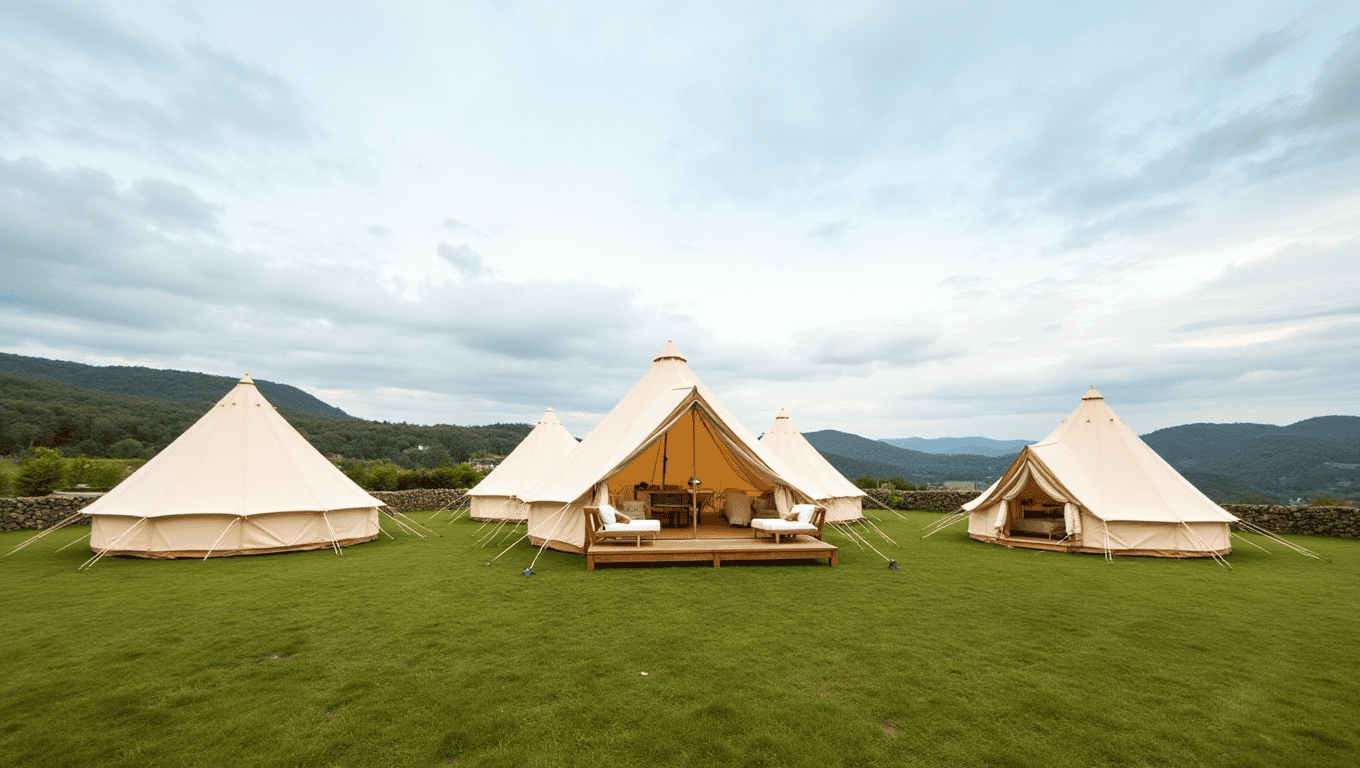
Frame Material Trade-Offs
Rust at the pole ferrule kills more glamping tents than collapsed frames ever will.
Frame material is where private-label buyers usually guess instead of specify. A 340gsm polycotton shell can be flawless and the whole tent still fails in season two because the pole sockets corroded from the inside out. The frame carries the canvas, the wind load, and the humidity cycle — and the cheapest way to cut cost in a glamping tent quote is to downgrade the steel spec where you can’t see it.
Steel, Aluminum 6061, or Air Tubes
The commercial standard for permanent glamping installs is hot-dip galvanized steel tube with a 0.8-1.2mm wall. That spec handles coastal salt air, constant tension from a stretched canvas, and the occasional guest who leans on a pole. Aluminum 6061 is lighter and works for portable or seasonal setups, but it flexes more under heavy canvas and costs more per meter. PVC/TPU air tubes are a different product category entirely — they solve transport weight but depend on inflation discipline and are unforgiving if a guest punctures one.
The Ferrule Is the First Thing to Rust
The pole ferrule is the metal collar where pole sections connect and where the frame meets the ground. Humid environments turn it into a rust magnet. Once rust forms, it flakes onto the canvas, stains the floor, weakens the joint, and makes breakdown a fight. A hot-dip galvanized ferrule resists that cycle; an electroplated or painted ferrule does not — the coating is too thin and chips at the first assembly.
-
- Hot-dip galvanized steel ferrule: Zinc coating survives repeated assembly, ground contact, and coastal humidity. Spec this on every pole for a fixed glamping site.
- Electroplated or painted ferrule: Coating thickness is a fraction of hot-dip. Chips appear within one season, rust follows, and the joint seizes.
- Aluminum 6061 ferrule: Lighter and corrosion-resistant on its own, but softer — a bent ferrule means a full pole section replacement on-site.
Ask your supplier which ferrule process they actually use. The Shaoxing facility that produces Kelyland’s glamping tents runs 300,000 units per year under CE and ISO 9001, and treats hot-dip galvanizing as the default, not an upgrade. Standard production lead time runs 30-45 days, and the QC check on ferrules happens before canvas assembly, not after. If a supplier cannot answer their galvanizing method without checking with production, treat that as a red flag.
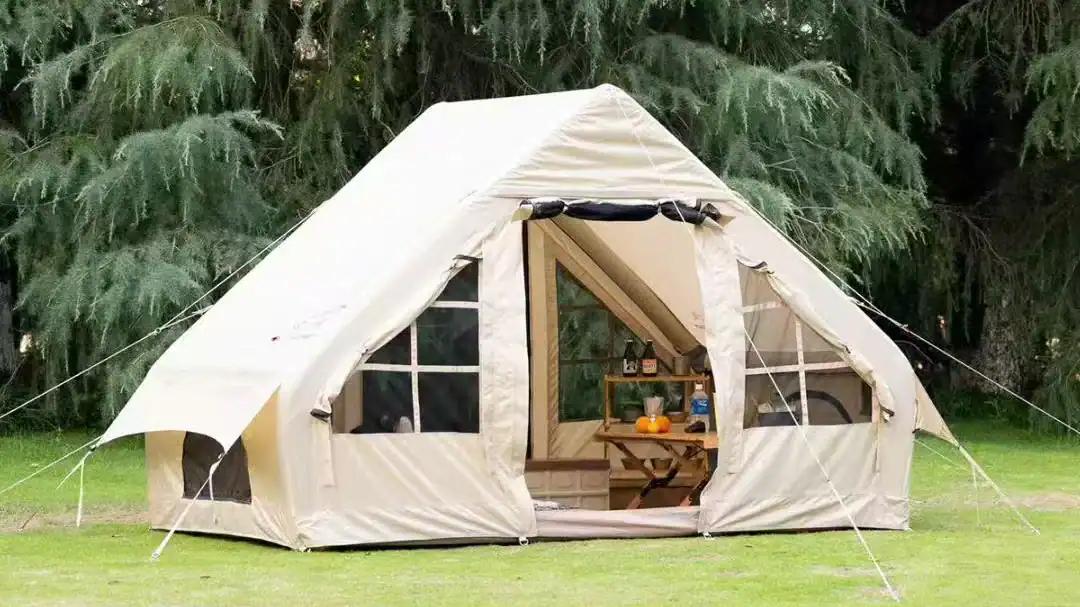
Factory Checklist: Avoid Buying Visual-Only Specs
Condensation, mildew, and rust kill glamping tents, not dramatic collapses.
Most buyers approve a glamping tent sample on looks alone — fabric color, the chandelier, the styled interior. Then the first humid night hits and condensation drips onto a guest’s face. One bad review later, your brand eats the replacement cost. This checklist skips the cosmetics entirely and covers four checks that separate a six-season tent from a one-season failure.
Wall and floor answer to different test standards
Condensation control is a wall problem. Puddle-proofing is a floor problem. Treat them as two separate certifications. The wall needs a moisture vapor transmission rate tested under ASTM E96 Method B — target above 500 g/m²/24h. The floor needs a hydrostatic head tested under EN ISO 811 — 3000mm minimum, 5000mm if the tent sits on wet ground. If a supplier hands you one combined waterproof rating, that’s a rejection.
Seam construction: where second-season failures start
Cheap tents rarely collapse in season one. They mildew inside the lap seams by season two. That’s the slow failure most buyers miss. Commercial-grade construction uses double-needle flat-felled seams with an internal binding tape at least 20mm wide. Below 340gsm fabric, demand at least 8 stitches per centimeter. The quality tolerance between 7 and 8 stitches decides whether a seam holds under wind load or unravels mid-season.
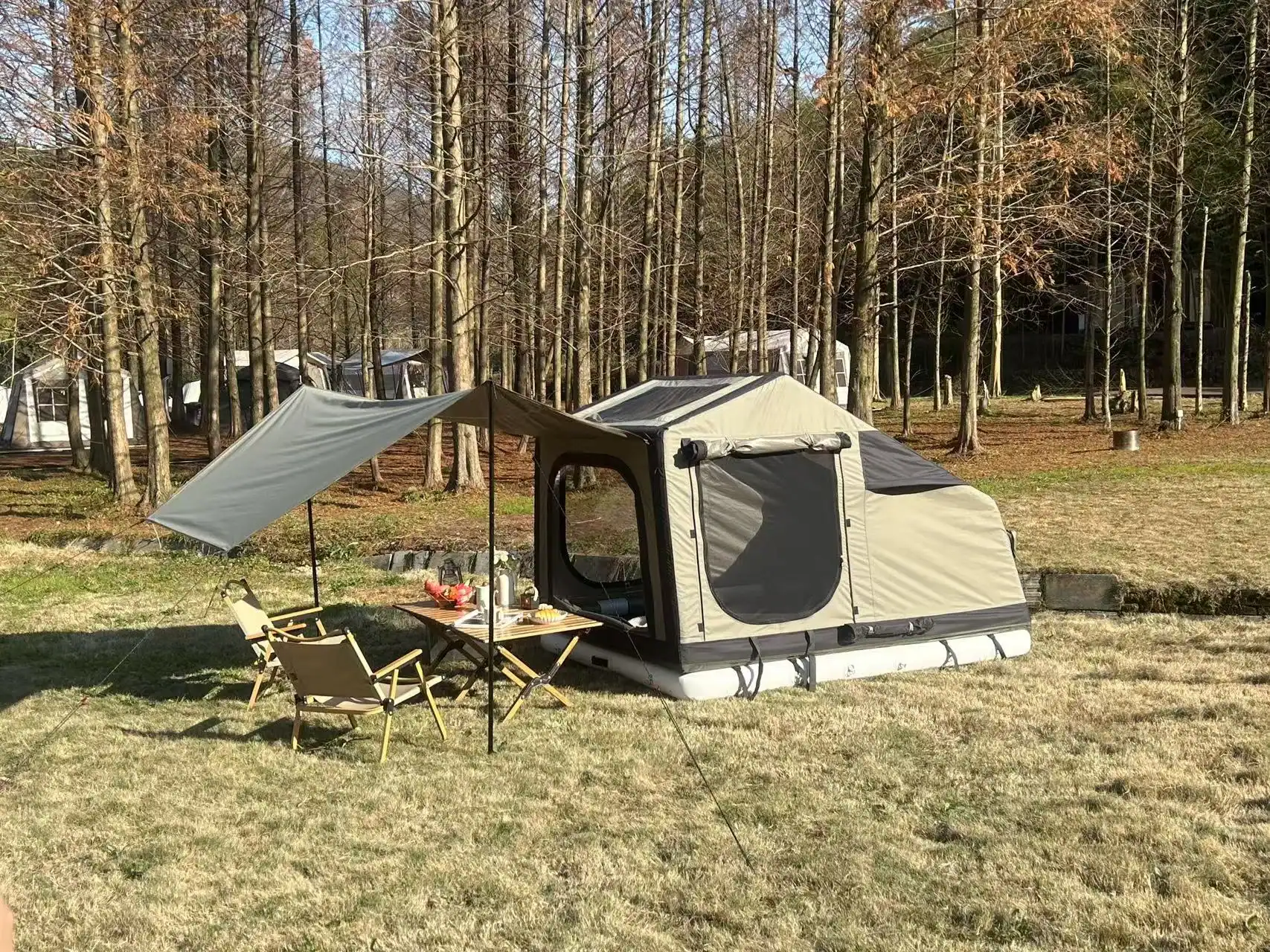
Ventilation geometry and ferrules: check before sample round one
Window count doesn’t fix condensation; vent placement does. Roof vent area should cover at least 1% of the floor area, set high so warm, moist air actually escapes. Eaves vents below the canopy center line sit in the CO₂ pooling layer and underperform. And check the pole ferrules before sample round one: hot-dip galvanized steel tube with a 0.8–1.2mm wall handles ground moisture. Powder-coated mild steel won’t last the same way.
The glamping tent factory Kelyland works with in Shaoxing produces 300,000 units per year under ISO 9001 QC, with a standard production lead time of 30–45 days. Their quality-control process includes regular inspections of stitching, mechanisms, and overall compliance, with reports available on request. That’s the audit trail you need when a container arrives and a defect slips through.
-
- Wall MVTR (ASTM E96 Method B): Demand a separate report showing moisture vapor transmission above 500 g/m²/24h. No report, no sample approval.
- Floor hydrostatic head (EN ISO 811): Demand a separate report showing 3000–5000mm. One combined waterproof rating triggers rejection.
- Flat-felled seam construction: Double-needle seams with internal binding tape at least 20mm wide. Below 340gsm, require 8+ stitches per cm.
- Ventilation geometry: Roof vent area at least 1% of floor area, mounted high. Low eaves vents miss the air layer and still drip.
- Hot-dip galvanized ferrules: Specify steel tube with 0.8–1.2mm wall thickness. Verify on the first sample, not after mass production.
Conclusión
Proper canvas and frame specs are what keep a luxury glamping tent standing through a full rental season. The failures that hurt your brand — condensation dripping on guests, mildew in the lap seams, rust at the pole ferrule — all trace back to decisions made before production. Choose the fabric weight and frame metal as a system, not as two separate line items.
-
- Spec a 340gsm polycotton (65/35) shell or a 400gsm cotton shell for commercial use; lighter fabric fails by season three.
- Demand separate wall and floor certifications: MVTR above 500 g/m²/24h; floor hydrostatic head at least 3000mm.
- Hot-dip galvanized steel tube frames with 0.8-1.2mm walls outlast aluminum in coastal and high-humidity sites.
- Flat-felled, double-needle seams with binding tape prevent the mildew failures that show up in year two.
Before you send out your next request for quotation, write down the three numbers that matter: canvas GSM, wall MVTR, and floor hydrostatic head. Then compare each supplier’s QC report against the 30-45 day lead time and the factory certifications behind it. Kelyland’s Shaoxing glamping tent line runs 300,000 units a year under CE and ISO 9001 checks — a reasonable benchmark to bring to the call.
Preguntas frecuentes
What canvas weight should a luxury glamping tent use?
Use at least 340gsm polycotton (65/35) or 400gsm cotton for a commercial-grade shell. A 280gsm shell passes the photo test but usually fails by season three under full rental use. Spec 340gsm polycotton minimum to protect lifecycle cost.
How do you fix condensation inside a canvas tent?
Condensation is controlled by a breathable canvas weave plus proper airflow, not by sealing the fabric tighter. Choose polycotton or cotton with ventilation openings to stop ceiling drip and mildew buildup. Check both weave and vent design before approving samples.
Cotton or polycotton for a glamping tent?
Polycotton at 340gsm is usually the better commercial trade-off because it resists mildew and sags less than standard cotton. Natural 400gsm cotton still works but often costs more to maintain over rental seasons. Choose based on your climate and expected rental lifespan.
What frame material is best for glamping tents?
Spec hot-dip galvanized steel ferrules because rust at the pole ferrule kills more tents than collapsed frames. Test corrosion protection, not just pole diameter, when qualifying a factory. Ask for corrosion test reports before mass production.
Why do most glamping tents fail?
Most glamping tents fail by mildew inside canvas lap seams, rust at pole ferrules, and condensation dripping from the ceiling. These failures appear after rain and humidity, so factory QC must check seam construction and. Inspect seams and ferrules during pre-shipment checks.

 English
 Español
 Deutsch
 Français
 Português do Brasil
 Русский
 العربية
 한국어
 日本語