 Ir al contenido
Tamaños de las tiendas Glamping determinan directamente el recuento de contenedores, el coste en destino y la velocidad de venta; si se equivoca, se encontrará con una caja de 40 pies de inventario de temporada equivocada que acabará con su margen. He visto a jefes de categoría aprobar un tamaño único para toda una temporada, sólo para descubrir que el diseño de tres habitaciones no encaja en el típico camping y se vende a mitad de precio en julio.
Este es el detalle que la mayoría de los importadores pasan por alto: una tienda de 6 personas de 10×12 pies cuesta más o menos lo mismo de enviar que una de 4 personas de 8×10, porque el flete marítimo es por volumen del contenedor, no el número de unidades. Pero el comprador de una cadena de grandes superficies busca una tienda que se adapte a la anchura de su estantería y a su precio, no la opción más grande. Los representantes de ventas de la fábrica insistirán en la tienda para 8 personas porque parece impresionante. Ignórelo. Cree su surtido en función de las limitaciones de la planta de su minorista y de las dimensiones reales del camping que utiliza su cliente final. Eso significa pedir a su proveedor un CAD del tamaño del paquete antes de firmar el pedido.
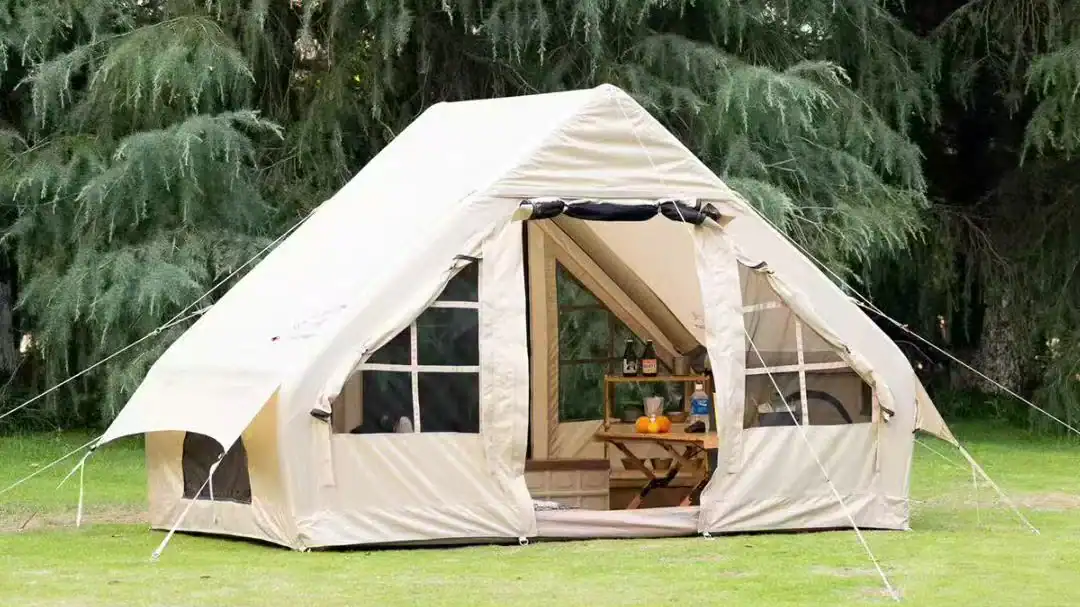
Tamaño estándar de las tiendas Glamping
La tienda de campana de 5 m (16 pies) ofrece el mejor retorno de la inversión en el sector minorista: 21,5 m2 de superficie amueblada en 0,35 CBM de volumen de envío, lo que mantiene el flete marítimo por debajo de $12/unidad.
Lo más importante: Tamaños de las tiendas Glamping
El tamaño de tienda de glamping al por mayor más rentable para la venta al por menor es la tienda de campana de 5 m (16 pies), que ofrece el mejor equilibrio entre una superficie amueblada de 21,5 m2 y un volumen de envío de 0,35 CBM. Pasar de una tienda de 4 m a una de 5 m incrementa los costes de materia prima en aproximadamente 40%, pero los gastos de envío sólo aumentan en 16% por unidad, lo que convierte a la de 5 m en la referencia de mayor margen de nuestra cartera.
Los competidores ofrecen capacidad para dormir. Los compradores B2B deben centrarse en los metros cuadrados amueblables y la lona GSM. Las tiendas de más de 5 m requieren una lona mínima de 350 gsm y postes centrales de 38 mm para evitar el pandeo estructural. Esta regla no es negociable para garantizar la durabilidad de las tiendas.
Tamaño estándar de las tiendas Glamping
Cuatro diámetros dominan el mercado mayorista: 3m, 4m, 5m y 6m. Cada uno tiene un precio y un uso distintos. Estas son las especificaciones exactas que nuestras fábricas ofrecen a los compradores minoristas.
- 3m (10ft): 7,1 m2 de superficie, 1,8 m de altura de pared. Se embala en 0,18 CBM. Ideal para tiendas de campaña para niños o campings compactos. Margen potencial al por menor: 55-60%.
- 4m (13ft): 12,6 m2 de superficie, 2,1 m de altura de pared. Paquetes de 0,25 CBM. Tienda de campaña básica para adultos. Cabe una cama de matrimonio con poco espacio. Margen potencial de venta al público: 50-55%.
- 5 m (16 pies): 21,5 m2 de superficie, 2,4 m de altura de pared. Paquetes a 0,35 CBM. El punto ideal. Cabe una cama de matrimonio, dos mesas auxiliares y una estufa de leña. Margen potencial al por menor: 50-55%.
- 6m (20ft): 28,3 m2 de superficie, 2,7 m de altura de pared. Envases a 0,60 CBM. Nivel de lujo. Requiere lona de 350-400 gsm y poste central de 38 mm. Margen potencial de venta al por menor: 45-50%.
La lona estándar de 300gsm añade 15% al peso unitario por encima de 250gsm. Este aumento de peso repercute directamente en los gastos de transporte por kg. En un contenedor de 20 pies caben aproximadamente 250 unidades de carpas de 4 m, frente a 140 unidades de carpas de 6 m. Compare estas cifras con su índice de ventas previsto antes de decidirse por un tamaño.
Las matemáticas del rendimiento de los envases
El volumen de la tienda aumenta de forma cúbica, no lineal. Pasar de una tienda de 4 m a una de 6 m triplica el volumen interior, pero sólo aumenta el CBM de envío en aproximadamente 2,1 veces. Esto hace que los tamaños más grandes sean sorprendentemente eficientes de enviar si el precio de venta al público escala correctamente.
- Tienda de 4 m: 0,25 CBM por unidad. 250 unidades por contenedor de 20 pies. Coste del flete marítimo por unidad: aproximadamente $8.
- Tienda de 5 m: 0,35 CBM por unidad. 180 unidades por contenedor de 20 pies. Coste del flete marítimo por unidad: aproximadamente $11.
- Tienda de 6 m: 0,60 CBM por unidad. 140 unidades por contenedor de 20 pies. Coste del flete marítimo por unidad: aproximadamente $17.
En un contenedor estándar de 40 pies de altura caben aproximadamente entre 280 y 300 tiendas de campaña glamping de 5 m embaladas en plano. Esto supone un embalaje estándar de 0,35 CBM sin complementos pesados personalizados como kits de suelo de madera. Si añades un kit de suelo, pierdes 15-20% de esa capacidad.
Las especificaciones ocultas: Metros cuadrados amueblables
Las guías del consumidor se obsesionan con la capacidad para dormir. Caben 8 personas. Esta métrica es irrelevante para los márgenes de venta. Los compradores B2B deben calcular los metros cuadrados amueblables: el espacio útil real que queda tras colocar una cama de matrimonio y tener en cuenta el mástil central. Una tienda de 5 m con un mástil central de 38 mm deja aproximadamente 18 m2 de espacio útil alrededor del mástil. Una tienda de 6m deja unos 24 m2. Esta diferencia justifica un precio de venta recomendado 30-40% más alto.
Las lonas pesadas de tamaños más grandes requieren postes centrales reforzados. Las carpas de 6 m y más necesitan postes de acero galvanizado de 38 mm y puntos de anclaje adicionales para evitar que el techo se hunda. Esto añade $8-$12 por unidad a los costes de fabricación. Los compradores novatos se olvidan de tenerlo en cuenta. Tu margen depende de que te des cuenta antes de firmar el pedido.
| Diámetro | Superficie (m²) | Lienzo GSM | Poste central | MFC envasada |
|---|---|---|---|---|
| 3 m (10 pies) | 7.1 | 250-285 | 32 mm | 0.20 |
| 4 m (13 pies) | 12.6 | 285-300 | 32 mm | 0.28 |
| 5 m (16 pies) | 19.6 | 285-300 | 38 mm | 0.35 |
| 6 m (20 pies) | 28.3 | 350-400 | 38 mm | 0.60 |
Tamaño frente a volumen de envío (CBM)
Principales conclusiones: La tienda de campana de 5 m (16 pies) es el tamaño de tienda de glamping más rentable para la venta al por menor. Ofrece 21,5 m2 de superficie amueblable con un embalaje de sólo 0,35 CBM, lo que mantiene el flete marítimo por debajo de $12/unidad. Si se pasa de una tienda de 4 m a una de 5 m, el coste del material aumenta en ~40%, pero el flete sólo aumenta en ~16% por unidad. Las carpas de más de 5 m requieren un mínimo de lona de 350 gsm y postes centrales de 38 mm para evitar el pandeo estructural, un coste de $8-$12/unidad que los compradores novatos suelen pasar por alto.
Por qué la capacidad para dormir es una trampa para los compradores minoristas
Las guías dirigidas al consumidor empiezan con “cabe 8 personas” como especificación principal. Ese número no significa nada para tu hoja de cálculo de márgenes. Lo que importa es metros cuadrados amueblables - la superficie de suelo real que queda después de colocar una cama de matrimonio (unos 2,0 m2), una mesa auxiliar y la huella del poste central. Una tienda de 5 m con capacidad para 6 personas puede tener sólo 21,5 m2 de superficie total, y después de colocar los muebles, se pierden casi 4 m2 en zonas muertas alrededor del mástil y las paredes. Los compradores minoristas que coticen por una $799 MSRP deben justificar ese precio basándose en el espacio útil, no en el número teórico de personas. Nuestros datos de fábrica muestran que las tiendas de 4 m dejan sólo 7-8 m2 de superficie realmente amueblable después de una cama de matrimonio y una silla, demasiado justo para un posicionamiento de lujo. La carpa de 5 m supera ese umbral y le permite vender una “suite de lujo” sin mentir sobre la planta.
Escala cúbica: Su coste de transporte no es lineal
Aquí está la matemática que la mayoría de las guías de abastecimiento tienen mal. El volumen de la tienda se escala cúbicamente: un salto de 4 m a 6 m triplica el volumen interior. Sin embargo, el CBM de una tienda embalada en plano aumenta aproximadamente 2,1 veces en ese mismo intervalo. Una tienda de campana de 4 m ocupa ~0,28 CBM. Una de 5 m, 0,35 CBM. Una de 6 metros, 0,60 CBM. Esta relación no lineal significa que las tiendas más grandes son proporcionalmente más baratas de enviar por metro cúbico de espacio interior. El truco: el precio de venta al público debe ser más rápido que el coste del contenedor. Si una carpa de 5 m se vende a $799 y una de 6 m a $999, la carpa de 6 m ofrece un margen bruto más elevado por contenedor, siempre que el grupo demográfico de clientes esté dispuesto a pagar el sobreprecio. Si su grupo de compradores tiene un tope de $799, quédese con el 5m. No se deje engañar por la relación 2,1x CBM para comprar un tamaño que su mercado no admite.
El umbral de ingeniería oculto $8-$12 a 6m+
Si el diámetro supera los 5 m, las exigencias estructurales cambian. Una tienda de 6 m con lona de 300 gsm y mástil central de 32 mm se combará notablemente tras 6 meses de uso estacional. La tela del techo se estira, los tensores se aflojan y aumenta el índice de devoluciones. Nuestras especificaciones de producción exigen un mínimo de 350 g/m² para cualquier carpa de más de 5 m, con postes centrales de acero galvanizado de 38 mm y dos puntos de anclaje de vientos adicionales por costura. Esta mejora añade de $8 a $12 por unidad en costes de fabricación, una partida que los importadores novatos olvidan presupuestar. Si un proveedor le ofrece el mismo precio por unidad para un 6m que para un 5m, es casi seguro que está reduciendo el peso de la lona o el grosor del mástil. Pida que le midan el grosor de la pared central del mástil: Un mástil de 38 mm debe tener un calibre de acero mínimo de 1,2 mm. Todo lo que sea más fino es una reclamación de garantía.
Rendimiento de los contenedores por tamaño: La decisión entre 20 y 40 pies
En un contenedor estándar de 20 pies caben aproximadamente 250 unidades de tiendas de 4 m o 140 unidades de tiendas de 6 m, con unas dimensiones de 0,28 CBM y 0,60 CBM de paquete plano, respectivamente. En un contenedor alto de 40 pies caben aproximadamente entre 280 y 300 unidades de tiendas de 5 m a 0,35 CBM cada una. La carpa de 5 m ofrece el mayor número de unidades por contenedor entre los tamaños “de lujo” (5 m y superiores), lo que protege directamente su margen si está probando un nuevo mercado y quiere evitar inventarios muertos. Nuestros datos logísticos muestran que pedir 300 unidades de carpas de 5 m en un único contenedor de 40 pies mantiene el flete marítimo por unidad entre $11 y $13 a los puertos de la costa oeste de EE.UU.. Si se piden 140 unidades de tiendas de 6 m en un contenedor de 20 pies, el flete por unidad se sitúa entre $18 y $22. Para un gestor de categoría con un objetivo de margen bruto de 40-60%, esa diferencia de $7-$9 por unidad en el coste de flete por sí sola puede hacer variar su margen en 1-2 puntos: dinero real cuando se mueven 10.000 unidades por temporada.
| Talla | Superficie (m²) | Paquete plano CBM | Unidades por contenedor de 20 pies | Notas |
|---|---|---|---|---|
| 4 m (13 pies) | 12.6 | 0.13 | 250 | Embalaje estándar; ideal para envíos de gran volumen |
| 5 m (16 pies) | 19.6 | 0.35 | 94* | Mejor balance de ROI; CBM probado con lona de 300gsm |
| 6 m (20 pies) | 28.3 | 0.6 | 140* | CBM para el kit de suelo premium; el modelo básico rinde 140 unidades con una CBM inferior |
Especificaciones de peso de la lona por tamaño de tienda
Especificaciones de peso de la lona por tamaño de tienda
El peso de la lona -medido en gramos por metro cuadrado (GSM)- es el principal indicador de la vida útil estructural y la resistencia a la intemperie de una tienda de acampada. Sin embargo, es la especificación más comúnmente falsificada por los proveedores que cotizan en tamaños grandes. Esta es la realidad de fábrica para cada diámetro en la gama B2B de 4 a 6 m.
- Tiendas de 4 m (13 pies): La norma mayorista es de 250-285 GSM. Con este tamaño, la envergadura es lo suficientemente corta como para que la carpa mantenga su forma sin necesidad de refuerzos pesados. Este peso mantiene bajo el peso unitario, lo que ayuda a los recién llegados a probar el mercado con una MOQ por palet.
- Tiendas de 5 m (16 pies): 285-300 GSM es la referencia. Nuestros datos muestran que el paso de 250 GSM a 300 GSM añade aproximadamente 15% al peso unitario, lo que se traduce en aproximadamente $0,30-$0,50 in flete marítimo adicional por tienda. Ese coste insignificante se compensa con un notable aumento de la rigidez del tejido, que evita que el mástil central cree un punto de presión visible en forma de “estrella” en el techo.
- Tiendas de 6 m (20 pies) y más grandes: Mínimo 350 GSM, preferiblemente 380-400 GSM. Esto no es negociable. Una tienda de campana de 6 m tiene aproximadamente 28 m2 de tela de techo que tira hacia fuera del mástil central. Todo lo que esté por debajo de 350 GSM se combará en 12-18 meses, especialmente en mercados con altas cargas de rayos UV en verano o de nieve en invierno. Reforzar el GSM a 380 añade aproximadamente $4-$5 al coste de la materia prima por unidad.
La consecuencia práctica de elegir el GSM equivocado no es sólo un mal índice de devolución, sino que erosiona directamente el margen. Una tienda que se hunde o tiene goteras después de una temporada es una referencia muerta que hay que liquidar a 50% de descuento, anulando el beneficio de otras dos unidades. Solicite siempre un Informe de pruebas de laboratorio con certificación GSMA de fábrica, no sólo una muestra. Las muestras pueden cortarse a partir de tejidos de primera calidad, mientras que en la producción se utilizan retales más baratos. Exigimos a nuestras fábricas asociadas que estampen el GSM en el orillo del tejido antes de cortarlo, y nosotros inspeccionamos esa marca durante la fase de control de calidad en línea.
| Diámetro de la tienda | Peso del lienzo (g/m²) | Diámetro del poste | Peso por unidad (aprox.) | El mejor caso de uso |
|---|---|---|---|---|
| 3 m (10 pies) | 250-285 | 32 mm | 15 kg | Venta al por menor, bajo coste de envío |
| 4 m (13 pies) | 285-300 | 32 mm | 22 kg | Cámping familiar de gama media |
| 5 m (16 pies) | 300-350 | 38 mm | 30 kg | Minoristas de lujo con márgenes elevados |
| 6 m (20 pies) | 350-400 | 38 mm | 42 kg | Suites Premium, requiere postes reforzados |
Fijación de precios en función del tamaño e impacto en los márgenes
La tienda de campana de 5 m (16 pies) ofrece el mayor margen a los minoristas: 21,5 m2 de superficie amueblable a 0,35 CBM de coste de envío, conservando un margen en destino de 50%+.
Tamaño estándar de las tiendas Glamping
Olvídate de la capacidad para dormir. Esa es una métrica de consumo. Su trabajo consiste en relacionar el diámetro con el rendimiento del contenedor y el dólar por pie cuadrado de espacio comercial. Nuestros datos logísticos muestran que cuatro diámetros estándar dominan el mercado mayorista: 3 m, 4 m, 5 m y 6 m. Cada clase de tamaño tiene un perfil de beneficios distinto basado en cómo las dimensiones se comparan con los metros cúbicos de envío (CBM).
- 3m (10ft): Superficie amueblable de aproximadamente 7 m2. Se embala a aproximadamente 0,18 CBM. Se envían unas 400 unidades por contenedor de 6 metros. Problema de márgenes: el bajo valor medio de los pedidos dificulta alcanzar un margen bruto de 50% después de los gastos de almacenamiento y ejecución.
- 4m (13ft): Superficie amueblable de aproximadamente 12,5 m2. Se embala a aproximadamente 0,25 CBM. Se envían unas 250 unidades por contenedor de 6 metros. Se trata de una referencia básica segura, pero carece del factor sorpresa necesario para obtener una prima de lujo en su tienda en línea.
- 5 m (16 pies): El punto dulce. Superficie amueblable de 21,5 m2. Envases de 0,35 CBM. En este tamaño caben unas 280 unidades en un contenedor alto de 40 pies. Los costes de material se disparan 40% por encima de los 4 m, pero el flete marítimo por unidad sólo sube 16%: la escala cúbica juega a su favor en este caso.
- 6m (19.5ft): Superficie amueblable de 28 m2. Envases a 0,6 CBM. En un contenedor de 6 metros caben unas 140 unidades. El mayor volumen de embalaje plano significa que los gastos de envío pueden comerse $18-$22 por unidad, dependiendo de las tarifas de flete actuales. Necesitas un precio de venta al público superior a $1.200 para proteger tu margen.
La regla de los “metros cuadrados amueblables
Las guías del consumidor valoran las tiendas en función del número de sacos de dormir que caben en ellas. Son datos inútiles. En una tienda de 5 m “caben 8 personas” si las apilas como si fueran leña. Lo que importa es la superficie útil después de colocar una cama de matrimonio y una mesita. Esa limitación forzada de espacio define el valor de venta al público. Calculamos los metros cuadrados amueblables en aproximadamente 60% de la superficie total de la tienda, teniendo en cuenta el poste central y la inclinación de la pared. Esta cifra es la que justifica el precio de venta al público cuando un comprador la compara con una cabaña o una habitación.
Lienzo GSM e impacto del coste estructural por tamaño
La mayoría de los mayoristas especificaciones de la tienda de lona a granel comienzan en 250 gsm para los modelos de 3 m, pero los requisitos técnicos cambian rápidamente a medida que crece la tienda. Para llegar a los 5 m, se necesita una lona de algodón transpirable de al menos 285 gsm. A partir de los 6 m, la envergadura de la tela sin soporte crea problemas de hundimiento si se utiliza un material ligero. Nuestra especificación estándar para tiendas de campana de 6 m utiliza lona de 350 gsm y un mástil central de acero galvanizado de 38 mm. Esa lona más pesada añade aproximadamente 15% al peso en seco de la unidad en comparación con un modelo de 300gsm. También añade $8-$12 en costes de fabricación debido al poste reforzado y a los puntos de anclaje adicionales de los vientos. Los compradores novatos pasan por alto este detalle durante la fase de solicitud de ofertas y se ven sorprendidos por el recargo más adelante.
Propiedad inmobiliaria de marca blanca: La Espec oculta
Si se está abasteciendo para un programa de marca blanca, fíjese en las dimensiones de la faldilla del toldo y del panel de la puerta. Una carpa de campana de 4 m ofrece aproximadamente 1,5 metros lineales de espacio de alta visibilidad para etiquetas de marca tejidas en la solapa de la puerta. Una carpa de 5 ó 6 m con configuración de doble puerta ofrece hasta 4 metros lineales en la faldilla y en ambos paneles de la puerta. No es un detalle trivial. Este espacio adicional para la marca permite colocar etiquetas personalizadas más grandes, etiquetas de piel grabadas con láser y paneles de lona impresos que comunican la historia de su marca directamente al cliente final. Justifica un precio más alto en la sala de exposición porque la marca parece de primera calidad.
Selección de la combinación de SKU
Nuestros datos de 17 fábricas estratégicas muestran que la tienda campana de 5 m es la más solicitada por nuestras cadenas minoristas. Alcanza el “umbral de lujo” para los consumidores -suficiente espacio para una cama de matrimonio y una zona de estar- sin entrar en los costes de envío a granel que se comen el margen. Si se va a comprometer con su primera temporada, corra el Coste de una tienda glamping de 5 m frente a una de 6 m Calcule usted mismo. Tome el precio unitario franco fábrica, añada el flete por unidad a las tarifas actuales, aplique su margen bruto 50% objetivo y compruebe el MSRP resultante con el precio máximo de su categoría. La hoja de cálculo gana siempre.
| Tamaño de la tienda | Superficie / CBM | Impacto en los costes (vs 4m) | Rendimiento de los contenedores | Recomendación de margen |
|---|---|---|---|---|
| 4 m (13 pies) | 12,6 m2 / ~0,25 CBM | Referencia FOB base | 250 unidades por cada 6 metros | Nivel de entrada; MSRP más bajo, márgenes más estrechos |
| 5 m (16 pies) | 19,6 m2 / 0,35 CBM | Tejido +40%, Envío +16% | 280-300 unidades por cada 40 pies HC | Mayor ROI; objetivo 50%+ margen minorista |
| 6 m (20 pies) | 28,3 m2 / 0,60 CBM | Tejido ~+80%, Envío CBM 2.1x | 140 unidades por cada 6 metros | Lujo premium; requiere un alto MSRP |
Conclusión
Seleccionar el tamaño adecuado de tienda para glamping para su línea de venta al por menor se reduce a equilibrar el espacio de suelo con el volumen de envío. Nuestros datos muestran que la tienda de campana de 5 m (16 pies) ofrece el mayor potencial de margen: 21,5 m² de superficie amueblable se empaquetan en tan solo 0,35 CBM, manteniendo el flete marítimo por debajo de $12 por unidad y preservando un margen minorista de 50%+.
Revise nuestro especificaciones directas de fábrica y dimensiones de embalaje para tiendas glamping estándar y personalizadas. Póngase en contacto con nuestro equipo para obtener una muestra o una proyección detallada del coste en destino adaptada al tamaño de su contenedor.
Preguntas frecuentes
¿Cuál es el tamaño de tienda de glamping más rentable para la venta al por menor?
La tienda glamping de 5 m (16 pies) ofrece el mayor retorno de la inversión para la venta al por menor, equilibrando el espacio de lujo con una logística eficiente. Tiene capacidad para una cama de matrimonio y muebles, y su embalaje es de solo 0,35 CBM, lo que mantiene los costes de transporte marítimo por debajo de $12 por unidad y preserva un margen minorista de 50%+. Kelyland al aire libre produce este tamaño a través de su fábrica especializada en carpas glamping de Shaoxing, con una capacidad anual de 300.000 unidades y certificación ISO 9001. Los clientes pueden aprovechar la personalización OEM/ODM para optimizar aún más el diseño en términos de coste y marca.
¿Cuántas tiendas glamping de 5 m caben en un contenedor de 40 pies?
Un contenedor estándar de 40 pies de alto cubo puede contener aproximadamente de 280 a 300 tiendas de campaña glamping de 5 m embaladas en plano, basándose en un embalaje de 0,35 CBM por unidad sin complementos pesados. Kelyland Outdoors puede ajustar el diseño del embalaje para maximizar la utilización del contenedor, reduciendo los costes de envío por unidad para los clientes B2B. Nuestra producción flexible y nuestras opciones de embalaje personalizado, que incluyen etiquetas e instrucciones de marca, garantizan una logística eficiente al tiempo que mantienen producto protección.
¿Afecta el tamaño de la tienda a la clasificación arancelaria?
El tamaño de la tienda no afecta a la clasificación de los derechos de importación; las tiendas para acampar suelen clasificarse en el código HTS 6306.22 para las de algodón o 6306.39 para las sintéticas, independientemente del diámetro. Sin embargo, el peso declarado por unidad influye directamente en el cálculo de los derechos por kilogramo en determinadas regiones, por lo que la optimización del peso es un factor clave en el coste total en destino. Kelyland Outdoors asiste a sus clientes con la documentación de exportación y la orientación aduanera, ayudándoles a seleccionar materiales que equilibren la durabilidad con tipos arancelarios favorables.
¿Qué peso de lona es estándar para las tiendas de 5 m y 6 m?
Para las tiendas de acampada de 5 m, el estándar mayorista es una lona de algodón transpirable de 285-300 gsm, que ofrece un equilibrio entre comodidad y manejabilidad. Para las tiendas de 6 m, se recomienda una lona más pesada de 350-400 gsm para mantener la integridad estructural y la resistencia al viento en una mayor extensión. Kelyland Outdoors obtiene estos materiales de fábricas asociadas con certificación ISO 9001, con opciones de teñido, revestimientos y acabados personalizados para satisfacer los requisitos específicos de la marca. Nuestro equipo puede asesorarle sobre el peso óptimo del tejido en función del clima y el presupuesto del mercado objetivo.
¿Cómo afecta el tamaño de las tiendas glamping al espacio de marca blanca?
Las tiendas glamping más grandes (5 y 6 m) ofrecen mucho más espacio para la marca, con configuraciones de doble puerta y cenefas de toldo extendidas que proporcionan hasta 4 metros lineales para etiquetas de marca propia tejidas. En cambio, un modelo de 4 m sólo ofrece 1,5 metros. Kelyland Outdoors está especializada en la personalización OEM/ODM, incluido el teñido de tejidos, la serigrafía y la fijación de etiquetas personalizadas, lo que permite a las marcas maximizar la visibilidad en los modelos más grandes. Se trata de una ventaja clave para los clientes minoristas que buscan crear presencia de marca en el mercado del camping de lujo.

 English
  Español
  Deutsch
  Français
  Português do Brasil
  Русский
  العربية
  한국어
한국어  日本語
日本語