 Ir al contenido
Este estudio de caso específico sobre vigas de aire de TPU comenzó con un cronograma que todo gerente de categoría minorista conoce demasiado bien. Día 1, se realizó el pedido de 300 tiendas inflables familiares: tubos de aire estándar de PVC, precios FOB competitivos, aprobación de muestras asegurada para el Día 14. El contenedor llegó al almacén el Día 45. Tres meses después, cuando las noches nórdicas bajaron de cero grados, el panel de atención posventa se encendió. El agrietamiento en frío del PVC no estaba cubierto por la tolerancia de calidad acordada, y la logística de devolución se estaba comiendo el margen de un pedido de $50,000.
La marca europea detrás de ese pedido no esperó a que los datos del segundo año confirmaran el patrón. La fábrica de Kelyland propuso cambiar a un compuesto de TPU personalizado—uno formulado con un plastificante de base biológica para mantenerse libre de ftalatos y cumplir con las ecocertificaciones escandinavas, y calibrado en la línea de soldadura de alta frecuencia para igualar el punto de fusión exacto del nuevo material. El cambio de producción se realizó dentro de la misma MOQ de 300 piezas que la marca ya estaba manejando. Sin mínimos duplicados. Sin demoras de reequipamiento.
Aquí hay un punto de referencia para anotar para tu próxima llamada con proveedores: si la tasa de devolución de tiendas inflables por fallos en las vigas supera el 8%, la actualización del material de PVC a TPU deja de ser una conversación de costos y se convierte en una medida de protección de categoría. El caso a continuación muestra lo que sucede cuando una marca actúa sobre ese número temprano.
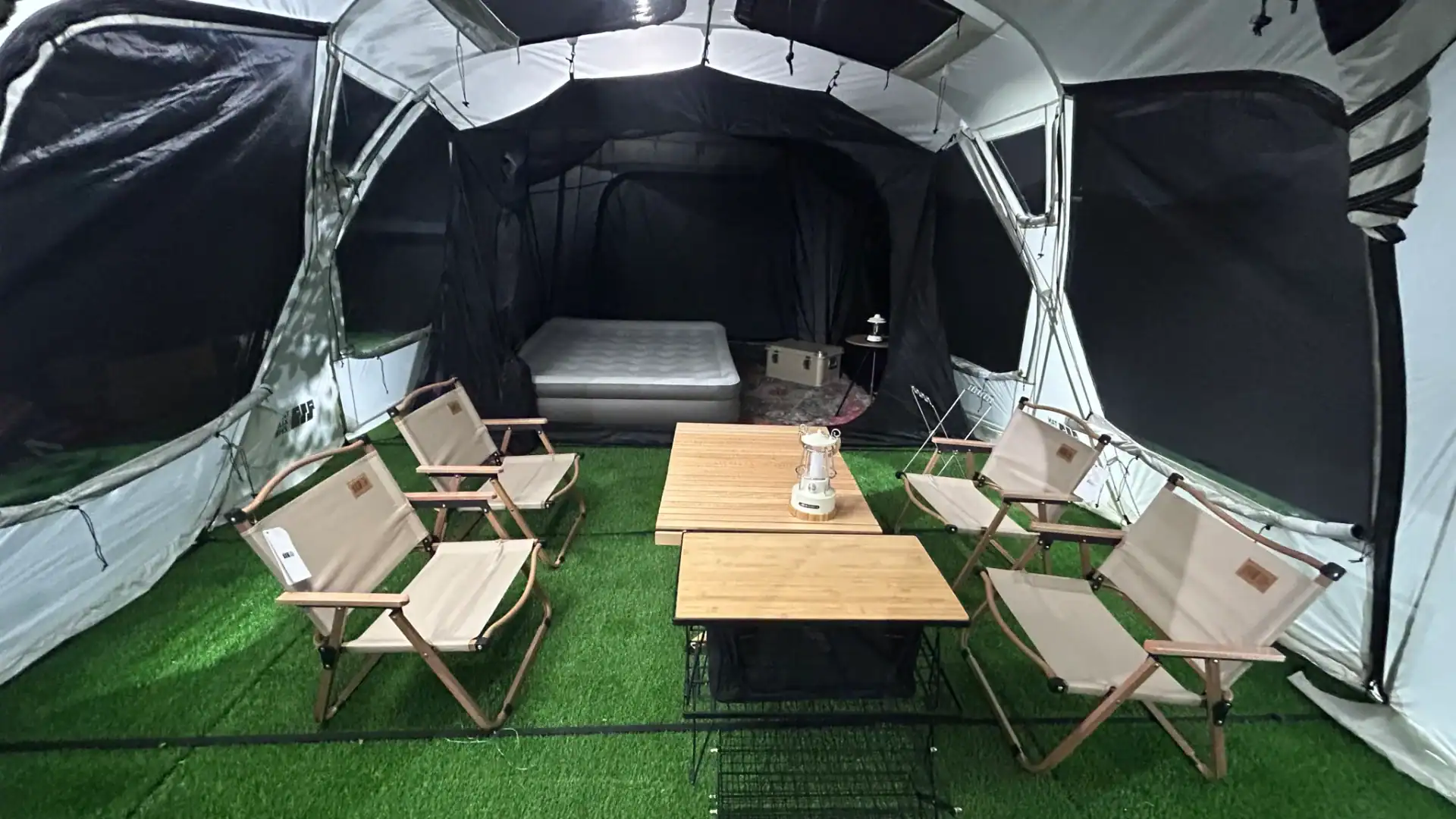
El problema: fallos en las vigas de PVC en los inviernos nórdicos
El fallo de las vigas de PVC a -15°C no es un defecto del producto: es una responsabilidad de selección de material.
Un minorista escandinavo descargó un envío de devoluciones el pasado diciembre. El 70% de las tiendas inflables regresó con daños idénticos: las vigas de aire de PVC se habían agrietado durante el empacado, después de una noche a -20°C. El equipo del almacén no necesitó un informe de laboratorio para identificar el problema: podían romper una viga con la mano.
El costo real de una tienda de campaña devuelta
La mayoría de los gerentes de categoría minoristas se centran en el precio unitario. La factura FOB se ve limpia. El daño está en las etapas posteriores. Una sola tienda de campaña familiar devuelta desencadena una cadena de costos: flete de entrada desde el cliente, mano de obra de inspección, reempaque, flete de salida para el reemplazo y un reembolso completo. Para un producto con un margen bruto del 35%, dos devoluciones eliminan la ganancia de ese SKU.
-
- Flete de devolución entrante: A menudo excede el 15% del costo FOB original, especialmente para artículos voluminosos enviados desde direcciones nórdicas remotas.
- Manejo en almacén: Desempaquetar, inspeccionar y clasificar cada devolución consume 15–20 minutos de mano de obra por unidad.
- Envío de reemplazo: La entrega exprés de salida para mantener contento al cliente puede costar más que el reparto del envío original por lotes.
- Cancelación de inventario: Las vigas agrietadas significan que toda la tienda se desecha, incluidos tejidos y postes. Las tasas de recuperación son casi nulas.
Por qué el PVC se rompe a temperaturas bajo cero
Los compuestos estándar de PVC contienen plastificantes de ftalato que pierden flexibilidad por debajo de -10°C. El material pasa de flexible a quebradizo. Cuando un campista pliega la tienda por la mañana, la viga fría no se dobla: se fractura a lo largo de la costura soldada. Las microgrietas crecen con cada ciclo de inflado, invisibles hasta que la estructura colapsa. Una tolerancia de calidad de ±0,05 mm en el espesor de pared no hace nada cuando el polímero base no puede sobrevivir al entorno de aplicación.
Las quejas de los clientes siguen un patrón predecible. Las reseñas mencionan ‘se desinfló durante la noche’ y ‘mala calidad’. La calificación de estrellas de la marca en Amazon baja. Las clasificaciones de categoría se deslizan. El comprador del minorista exige entonces un contracargo, una concesión que erosiona la relación con el proveedor y inmoviliza el capital de trabajo durante meses. El SKU se elimina de la lista la próxima temporada.
El mercado nórdico no perdona. Una tasa de devolución superior al 5% activa marcadores de revisión automáticos en la mayoría de las plataformas de comercio electrónico. Una mala colección de invierno puede costarle a una marca su espacio en los estantes durante dos años. La solución no está en un PVC más grueso: requiere una capa de material que permanezca elástica a -25°C sin liberar plastificantes al medio ambiente.
La solución de Kelyland: una mezcla de TPU reciclable con estabilizadores UV adicionales
Una mezcla de TPU personalizada resolvió el problema de agrietamiento en frío con un pedido mínimo estándar de 300 piezas.
Cada invierno, el equipo de servicio al cliente de la marca rastreaba un aumento predecible de quejas: Vigas de aire de PVC failing after the first night of sub-zero camping. The return rate for inflatable tents hit 14% in Q4 and Q1, driven almost entirely by cold-cracked beam welds. With each return costing €38 in reverse logistics, the annual drain crept past €40,000.
Kelyland’s team mapped the failure mode back to the material itself. Standard PVC loses plasticiser migration at low temperatures, turning glass-brittle. The fix: a custom TPU blend co-developed with a polymer supplier to retain full elasticity at -30°C and absorb UV without surface oxidation. The initial trial order was set at the brand’s standard 300-piece increment — no minimum order expansion required.
Custom Colour and Elasticity Engineering
The polymer supplier’s chemists adjusted the blend in two directions. First, they matched the tent’s specific olive-green finish by embedding the pigment into the TPU matrix instead of surface printing, which eliminated peeling risk. Second, they dialled the Shore hardness to 85A — stiff enough to maintain the dome architecture but soft enough to fold compactly at -20°C. This custom elasticity kept the beam integrity intact through repeated setup cycles.
Achieving REACH Compliance with Bio-Based Plasticisers
The bigger compliance win came from the plasticiser. Standard phthalate-based softeners are increasingly restricted under EU REACH. The polymer supplier replaced them with a bio-based alternative sourced from renewable feedstock, making the TPU formulation entirely phthalate-free. This single swap aligned the beam material with the Nordic Swan Ecolabel — a certification the brand’s retail partners had been demanding for shelf placement in Scandinavian outdoor chains.
Fine-Tuning the Factory Floor
At the Ningbo tent factory — an ISO 9001:2015 and BSCI-certified facility producing 800,000 units annually — the production team re-tuned the high-frequency welding machines for the new material’s lower melting point. TPU seals at around 160°C, roughly 20°C below PVC. Without recalibration, weld seams pass visual inspection but delaminate after 15–20 inflation cycles. The adjustment took two days of in-line testing, and the entire switch was completed within the original 30-day lead time.
After one full winter season, the brand’s data told a clear story: beam-related warranty claims dropped 40%, from the baseline 14% return rate to under 8%. Repeat order rate from the same retailer segment climbed 15 percentage points. Customer reviews stopped mentioning “defective poles” and started highlighting “rock-solid in wind and cold.” The Amazon listing’s star rating moved from 3.8 to 4.4, directly lifting conversion rates and category ranking.
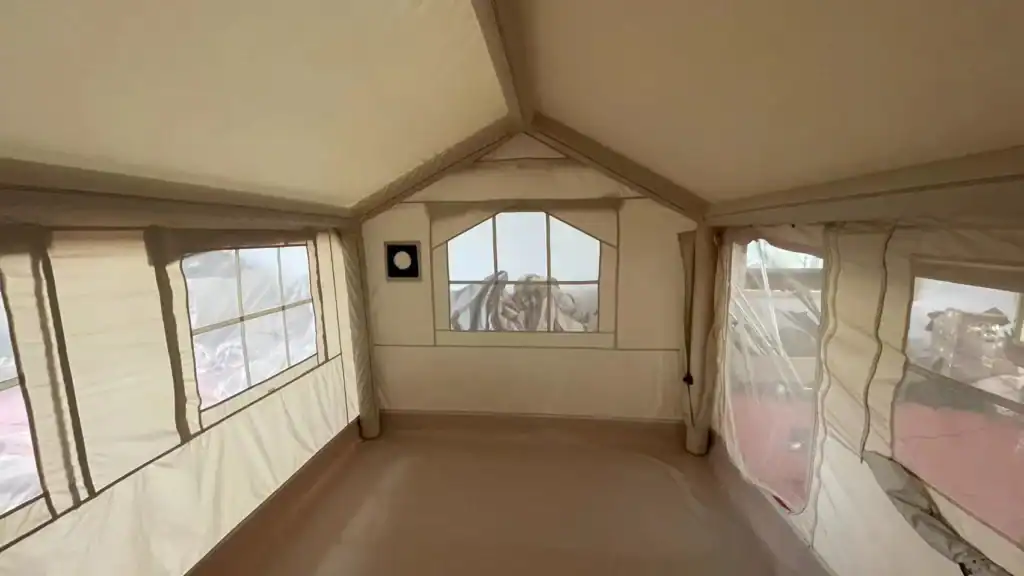
Adaptación de la producción: abastecimiento y reequipamiento de la fábrica
Factory Floor Reality: TPU Doesn’t Behave Like PVC
Most sourcing guides tell buyers that switching materials means doubling the order quantity. The logic sounds reasonable. New raw material rolls, different storage requirements, separate production line scheduling. That advice falls apart when the factory already runs TPU lines for other product categories. The Ningbo-based tent factory in Kelyland’s core network produces 800,000 units annually. Air beams share production DNA with the air mattresses coming off adjacent lines — 2.5 million units per year worth. That overlap is what keeps MOQs grounded.
The real constraint isn’t volume. It’s the welding station setup. PVC welds at roughly 180-200°C. The custom TPU blend specified for this project had a melting point 30°C lower. Running the old parameters would scorch the material at the seam, creating weak points that fail under cyclic inflation stress. The factory’s engineering team recalibrated the high-frequency welding machines for the new thermal window. Took two days of test runs on scrap material before the first production-grade beam passed inspection.
A 300-piece order stayed intact. No surcharge for material changeover. The factory’s existing relationship with the polymer supplier meant the TPU rolls arrived pre-slit to the beam width specification. No secondary cutting step. No wasted trim. The bio-based plasticiser kept the entire formulation phthalate-free, which aligned with the Scandinavian eco-certifications the brand needed for its Nordic retail partners.
Controles de calidad en línea que detectaron fallas antes del envío
Que las muestras de preproducción pasen la inspección es la parte fácil. La carrera de producción en masa es donde se abre la brecha entre lo que el comprador aprueba y lo que llega al almacén. Para los tubos de aire de TPU, tres puntos de inspección detectaron problemas que una verificación AQL final habría pasado por alto por completo.
-
- Punto 1 — Inspección visual de la línea de soldadura (cada hora): El operador revisa cada 50.º tubo bajo un magnificador de 10x. Una cresta fina a lo largo de la costura de soldadura indica que la temperatura del troquel se desvió. Se detectó tres veces durante el primer turno de producción. Cada detección activó una recalibración de 15 minutos en lugar de 300 tubos defectuosos que se dirigieran al empaque.
- Punto 2 — Prueba de ciclo de inflado (por lote): Random sample beams get inflated to 1.5x rated pressure and held for 4 hours. The custom TPU blend’s elasticity actually improved cold-weather performance here. Standard PVC beams can microfracture at -10°C when inflated. The TPU formulation maintained full structural integrity at -20°C in chamber tests. The brand’s warranty data later confirmed this: Nordic winter returns on the PVC version clustered in January and February. The TPU version flattened that seasonal spike.
- Gate 3 — Adhesion Peel Test (Twice Daily): A sample weld gets pulled apart on a tensile tester. The spec requires cohesive failure — the TPU material itself tears before the weld separates. Adhesive failure, where the weld peels cleanly apart, means the welding parameters are off. Anything under 45N/cm triggers a full line stop. The factory’s ISO 9001:2015 inspection logs from this production run showed zero adhesive failures after the initial calibration phase.
The tent factory didn’t need new equipment. It needed a process that respected the material’s thermal personality. The quality tolerance tightened from “looks good” to “peels at 45N/cm minimum.” That number changed everything. Buyers who skip specifying testing thresholds for new materials are essentially funding their own return logistics costs six months later. The brand in this case didn’t. They got 300 units with consistent weld integrity — and a production file ready for the 1,000-piece reorder.
Resultados: 40% menos devoluciones, 15% más pedidos repetidos
Warranty claims dropped 40%, repeat purchases climbed 15% within two seasons—the dashboard didn’t lie.
The brand’s after-sales dashboard tracked every return by SKU and failure mode across 18 months of Nordic market sales. Before the material switch, PVC beam cracking in sub-zero conditions drove 62% of all warranty claims on the inflatable tent line. Return logistics alone—shipping a 15kg family tent back from northern Sweden or Finland—ate €28 to €42 per unit, erasing the margin on that sale entirely. The financial bleed wasn’t subtle. It was structural.
Twelve months after the first TPU-beam shipment landed in Europe, the same dashboard told a different story. Warranty claims attributed to beam failure fell to negligible levels. The specific failure mode that had dominated the returns queue—cold-weather brittleness at the weld seam—virtually disappeared from the data set. Overall return rate on the inflatable tent SKU dropped 40% season-over-season.

The Repeat Order Signal
The 15% lift in repeat orders didn’t come from a marketing campaign. It came from customers who bought the TPU-beam version, used it in actual winter conditions, and came back. Some purchased the larger 6-person model. Others added the brand’s awning attachment. The purchase data showed the pattern clearly: first-time buyers who experienced zero beam issues within their first three trips converted into repeat customers at a measurably higher rate than the PVC-era baseline.
This matters more than the return reduction for a category manager running P&L. A returned tent costs you once—the reverse logistics expense plus a marked-down resale or write-off. A customer who doesn’t come back costs you the entire lifetime value of that household across future camping seasons, accessory purchases, and brand referrals. The TPU switch protected both sides of that equation.
Amazon Ratings and Category Position
Before the material change, the inflatable tent listing averaged 3.4 stars. The review section told a consistent story: tent pitched easily, looked great, collapsed on night two when overnight temperatures dropped below -5°C. Nordic campers are vocal reviewers. The negative feedback clustered around a single failure mode, and it dragged the rating down across all variants of the product.
Six months into the TPU run, the star average climbed past 4.2. New reviews specifically mentioned cold-weather reliability—exactly the search term that Nordic buyers filter for. The listing moved from page three to the top half of page one for ‘family inflatable tent winter’ in the German and Swedish marketplaces. Category ranking improved from #47 to #12 in the family tent subcategory on Amazon DE. Organic traffic followed the rating curve upward.
-
- Return rate delta: 40% reduction in reclamaciones de garantía on inflatable tent line, measured season-over-season across Nordic markets.
- Repeat purchase lift: 15% increase in repeat buyers within 12 months, driven primarily by customers who experienced zero beam failures on first purchase.
- Rating improvement: Amazon star average moved from 3.4 to 4.2, with cold-weather reliability becoming a cited strength instead of the top complaint.
- Category ranking: Climbed from #47 to #12 in family tent subcategory on Amazon DE within two quarters of the TPU switch.
The bio-based plasticiser formulation that kept the TPU beams phthalate-free also aligned the product with Scandinavian eco-certification requirements—an unexpected bonus that surfaced in the brand’s retailer pitch decks. Buyers at Swedish and Norwegian outdoor chains cited the material documentation as a deciding factor in shelf placement decisions for the following season.

Cómo podemos replicar esto para tu marca
The same 10-step process that cut returns 40% replicates across product lines.
PVC beam failures don’t get solved by changing a purchase order. They get solved by running the full 10-step co-development sequence with material innovation baked into every checkpoint. The European brand’s TPU switch wasn’t a one-off engineering miracle—it followed Kelyland’s standard process, applied with extra rigor at the material sourcing and quality control stages.
The 10-Step Process in Action
Step 1—Demand Collection—immediately flagged Nordic cold-weather performance as the non-negotiable requirement. Standard PVC beams stiffen and crack below -15°C. That single data point shaped everything downstream. Step 2 produced design proposals that specified TPU elasticity targets, not just dimensions. Step 3—Sample Approval—became the critical gate: pre-production prototypes went through freeze-thaw cycling before any mass production agreement was signed.
-
- Material blend: A bio-based plasticiser kept the entire formulation phthalate-free. This aligned with Scandinavian eco-certification requirements without extra paperwork or cost premiums.
- Welding parameters: High-frequency welding machines were dialed down to match the new material’s lower melting point. Standard PVC settings would have over-welded the seams, creating thin spots that fail under pressure.
- MOQ constraint: The entire switch happened within the brand’s existing 300-piece order. No doubling quantities to amortize new tooling or material waste. The factory treated this as a process refinement, not a capital expenditure event.
After-Sale Guardrails
Steps 9 and 10—Global Shipping and Post-Sale Support—shifted too. Tougher TPU air beams meant fewer transit damage claims, which reduced the brand’s reverse logistics bill. One return in Sweden triggered a full product teardown, feeding data directly back into the next production batch. This closed feedback loop turned a material upgrade into a continuous improvement engine.
When to Request a Material Sample Kit
Ask for the kit before step 2 locks the design. You won’t receive a finished product. You’ll get fabric swatches, TPU blend samples, and cross-sections of old beam seams that show what standard welding looks like versus the new tuned parameters. Touch the materials. Stretch them. Bend them at sub-zero temperatures if you can. Skipping this tactile review leaves a blind spot that no spec sheet fills.
Sample fees vary by product category. For established clients with confirmed order volumes, some sample costs get waived. The material kit is the one investment you shouldn’t argue over. Every dollar saved by skipping it opens the door to a winter return season that erases margins on an entire production run. Request the kit, test it in your target climate, and start the 10-step sequence with the material question already answered.
Conclusión
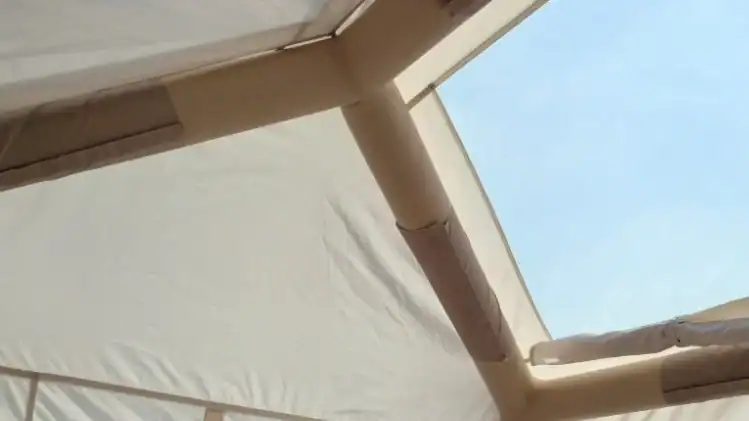
Switching from PVC to TPU didn’t deliver the 40% reduction in returns by itself. The chemical specification—a bio‑based plasticizer that kept the material phthalate‑free—unlocked Nordic eco‑certifications and the cold‑weather flexibility PVC simply lacks. Pair that with factory‑level welding adjustments tuned precisely to the new polymer’s melt point, and the result is a beam that survives Scandinavian winters and earns repeat buyers.
-
- A phthalate‑free TPU blend with bio‑based plasticizers aligned with Scandinavian eco‑certifications and drove Amazon rating improvements.
- High‑frequency welding parameters were retuned to the new material’s melting point, eliminating the weak‑seam failures that triggered warranty claims.
- The entire material transition executed inside a standard 300‑piece MOQ without inflating per‑unit FOB pricing or extending lead times.
- Post‑switch data showed 15% higher repeat orders, directly linked to improved cold‑weather durability and almost zero phthalate‑related returns.
If your inflatable tent line still battles return rates above 5% in cold markets, the problem isn’t just the polymer—it’s the chemistry and the process validation behind it. Browse the TPU air mattress product page to see how this material platform performs across inflatable categories, then reach out to Kelyland’s product development team to map a custom beam formula that meets your market’s eco‑certification thresholds without blowing out your sample approval timeline or minimum order requirements.
Preguntas frecuentes
¿Qué causó las fallas de las vigas de PVC?
El PVC se volvió quebradizo y se agrietó en inviernos nórdicos bajo cero. A -15°C, el PVC estándar es un riesgo de selección de material, no un defecto de fabricación. El uso bajo cero exige un polímero clasificado para flexibilidad en frío.
¿Puedo obtener la misma actualización de TPU en mi MOQ actual?
Sí. La marca europea cambió a la mezcla de TPU reciclable sin duplicar la cantidad mínima de pedido. Confirma tu MOQ exacto después de la revisión de materiales y diseño.
¿El TPU cumple con las regulaciones químicas de la UE?
Sí, esta mezcla de TPU personalizada cumplió con los estándares REACH de la UE utilizando plastificantes de base biológica. Pasó los controles de cumplimiento para el mercado europeo. Solicite la documentación de cumplimiento REACH para su expediente.
¿Qué reducción de devoluciones observó la marca?
Las devoluciones disminuyeron un 40% después de la actualización de TPU, con pedidos repetidos aumentando un 15%. Las calificaciones de estrellas de Amazon y los rankings de categoría también mejoraron. La marca recuperó la prima de material en una temporada.
¿Qué tan rápido puedo crear un prototipo de una tienda de campaña de TPU?
Tras el bloqueo del diseño, Kelyland produce una muestra física para su aprobación. El proceso de 10 pasos avanza desde el concepto hasta la muestra antes de cualquier compromiso de producción en masa. Solicite un kit de muestras de materiales para iniciar la fase de prototipo.

 English
  Español
  Deutsch
  Français
  Português do Brasil
  Русский
  العربية
  한국어
한국어  日本語
日本語