 Ir al contenido

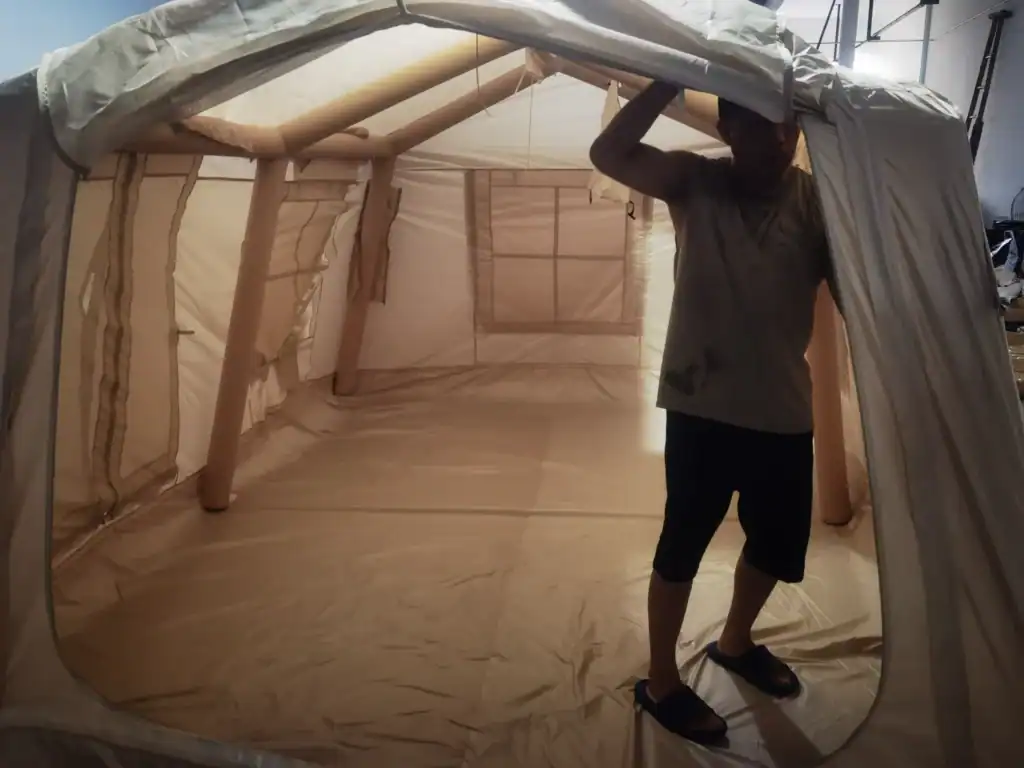
I just wrapped a QC review on a $50K inflatable tent order where the pre-production sample passed with flying colors — fabric weight, weld strength, valve placement all matched spec. The mass production run? Different story. The beam lamination was outsourced to a shop the factory never disclosed, and the weld adhesion dropped by nearly 20%. That gap between sample approval and production reality is exactly where the factory vs sourcing agent decision starts to matter. A direct factory quote might be 3–8% lower on paper, but if they don’t control every sub-process — especially for inflatable productos where beam lamination is often subcontracted — you absorb that risk alone.
A one-stop supplier with technical staff who know which factories actually weld their own beams versus those that hand it off can flag that dependency before you sign anything. For a retail category manager building out a tent line, that difference in visibility is worth more than the margin spread on el precio FOB. The real question isn’t just who has the lower unit cost — it’s whether your supplier can trace every quality variable from material sourcing through final pack-out.
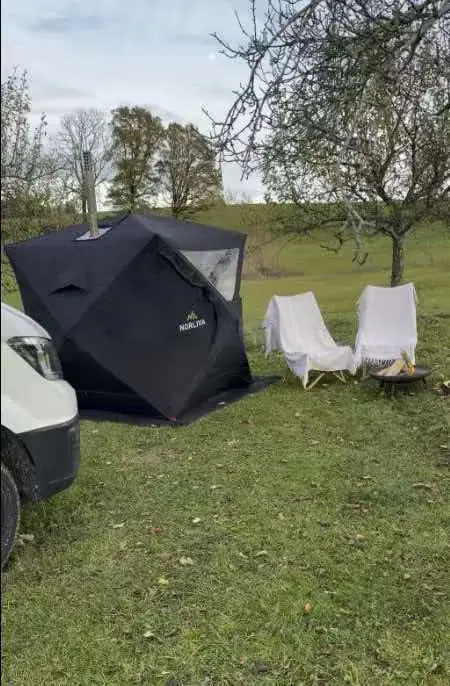
The Two Sourcing Routes for Inflatable Tents
Many tienda hinchable las fábricas solo cosen la tela y externalizan el laminado de vigas.
Un comprador que visitó una fábrica en Ningbo el año pasado vio una línea de costura impecable, firmó un contrato para 2.000 tiendas inflables y envió la mercancía. Tres meses después, la mitad de las unidades presentaban fugas en las uniones de las vigas durante una demostración en la sala de ventas. La fábrica había subcontratado la soldadura de TPU a un taller ubicado a 200 km sin informar al comprador. Esa es la realidad del sourcing directo de fábricas para tiendas inflables.
Qué significa realmente el sourcing directo a fábrica en China
Cuando se contacta a una tienda hinchable fábrica directamente, uno habla con el propietario de una línea de producción cuya experiencia a menudo se limita a uno o dos pasos de fabricación. Muchas instalaciones en Zhejiang y Jiangsu se especializan en el corte y la costura de poliéster o Tejido Oxford. El paso crítico: unir las vigas de aire de TPU o PVC en los canales de la tela, frecuentemente se envía a un taller de laminado separado especializado en soldadura de alta frecuencia.
Esta división genera un problema de transmisión de calidad. La fábrica de costura inspecciona la densidad de puntadas y la alineación de las costuras. El taller de laminado prueba la retención de aire. Ninguna de las partes es dueña del producto completo. Si una viga se deslamina después de 200 ciclos de inflado, cada proveedor culpa al proceso del otro. El comprador termina mediando entre dos empresas chinas sin poder contractual sobre ninguna de ellas.
Los precios directos parecen atractivos: típicamente un 3-8% más bajos que comprar a través de un intermediario porque no hay margen de agente. Pero esa diferencia desaparece rápido cuando consideras tus propios gastos de viaje costs for factory audits, translation fees for technical discussions, and the time spent chasing QC reports across multiple sub-suppliers.
What a sourcing agent or one-stop supplier does differently
A sourcing agent with technical staff can identify these dependencies before you commit. When Kelyland Outdoors evaluates an inflatable tent project, their operations team visits both the primary sewing facility and any contracted lamination workshop during the initial audit phase. They verify that both sites hold ISO 9001:2015 certification and that their welding parameters match the material specification – not just what is written on the sales sheet.
The agent also handles what most buyers overlook: coordinating la aprobación de la muestra across multiple factories so that color matching between tent body and carry bag stays consistent, ensuring FOB pricing includes all inland freight from sub-suppliers, and setting quality tolerance thresholds that apply to every vendor involved.
For brands launching a full camping line – tents plus furniture plus air mattresses – a direct relationship with one tent factory creates fragmented vendor management. A one-stop supplier coordinates multiple factories under single branding guidelines, which matters when your logo appears on five different product categories shipping together.
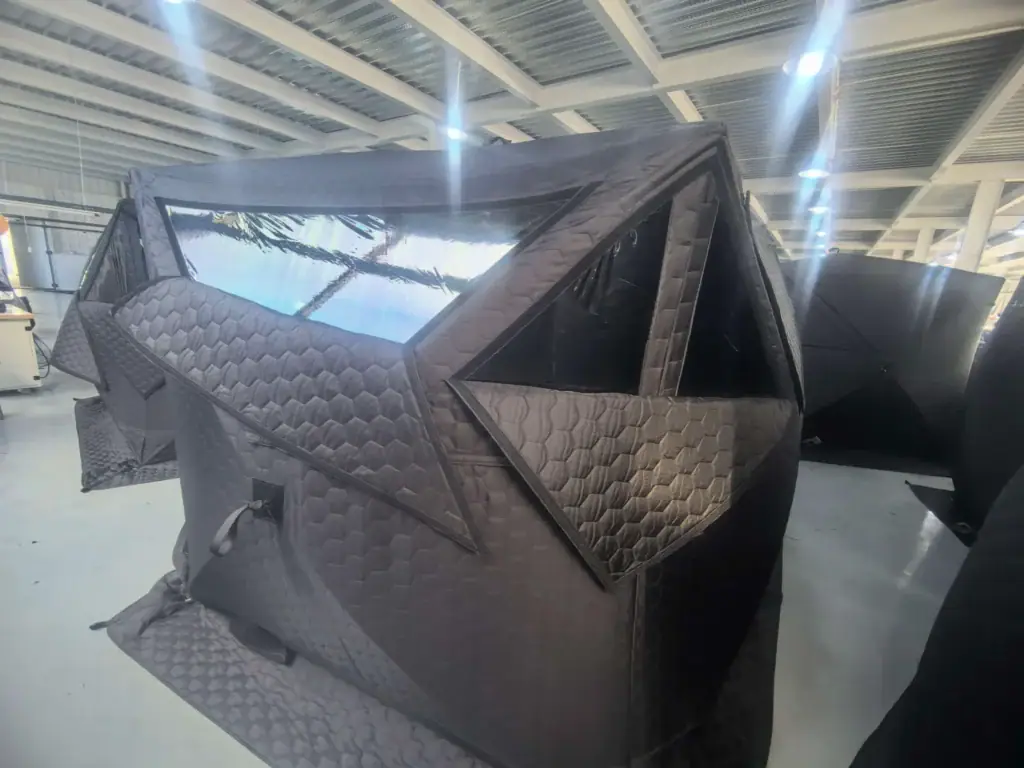
Cost Comparison: Factory Price vs Agent Fee
The 3–8% factory discount can vanish when you factor in shipping, defects, and your own time.
A direct factory quote for an inflatable tent will typically land 3–8% below what a sourcing agent charges. That gap looks clean on paper. No middleman markup, no commission layer. The factory owner tells you the price is FOB Ningbo, and you think you’ve saved the margin.
But that 3–8% rarely survives the full procurement cycle. The factory quote assumes one product type — tents only. It does not include consolidated shipping across multiple suppliers. It does not cover the cost of your team managing the export documentation, verifying the container load, or chasing down a missing sample approval letter.
Here’s what actually eats into that discount: freight costs on a partial container because you only ordered one SKU; rework fees when the beam lamination fails mid-production and the factory blames the material supplier; and lost sales when a quality tolerance issue — say a seam seal that holds at 2 psi instead of 3 — triggers returns six months later.
Agent service fees, QC, logistics, and consolidation
A sourcing agent or one-stop supplier charges a fee that covers what most buyers underestimate: technical verification of subcontracted processes like TPU beam welding; pre-shipment inspections at multiple factories; consolidation of tents with sleeping mats, chairs, and coolers into a single container; and despacho aduanero support.
Many factories that advertise inflatable tents only handle sewing and outsource beam lamination,” as our internal research notes. An agent with technical staff catches that dependency before production starts — not after the first batch leaks.
When the agent model becomes cheaper overall
The math flips when your order involves three or more product categories. A single container carrying tents (from one factory), air mattresses (from another in Hubei), sillas de camping (from Jinhua), and folding wagons (also Jinhua) would require four separate vendor relationships if bought direct.
Kelyland Outdoors coordinates exactly this scenario through its network of 17 core strategic factories. The buyer pays one invoice, receives one consolidated shipment with consistent branding across all items, and has one point of contact for any defect claim. The per-unit cost lands lower than managing four independent bastones de tienda y bastones de trekking yourself — especially when your own time is valued at $75–150 per hour.
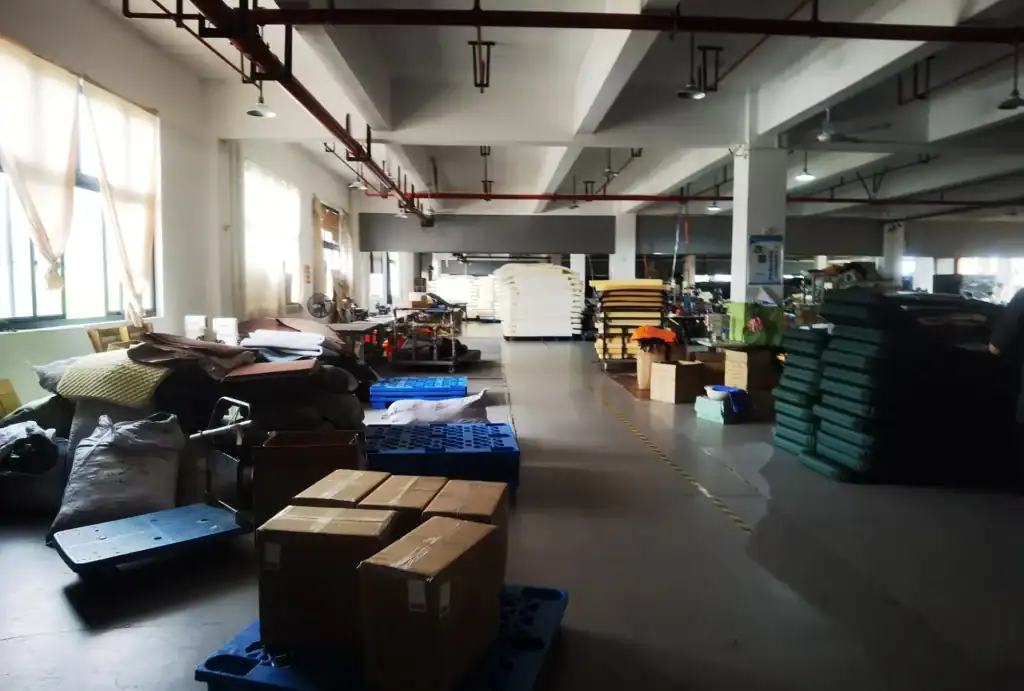
Product Range and Customization Flexibility
17 core factories, 200+ partners, and MOQ tan bajos as 50 pieces — this is the real range for a one-stop supplier.
Kelyland Outdoors manages 17 strategic factories and over 200 manufacturing partners across China. That network covers tiendas de campaña, air mattresses, sleeping bags, camping furniture (chairs, tables, cots), folding wagons, backpacks, camp kitchen gear, outdoor storage and coolers, trekking poles, camping lights, hammocks, and outdoor umbrellas. Each factory specializes in its category — the tent partner in Ningbo produces 800,000 units annually with ISO 9001 certification; the air mattress factory in Xiangyang runs at 2.5 million units per year with CE and ETL certs.
Customization depth per product line
For tents alone the options include fabric dyeing to Pantone matches, black or silver coating for UV control, frame choices from fiberglass to carbon fiber to PVC/TPU air tubes, and multiple printing methods on tags manuals and carry bags. Air mattresses get flocked surfaces puncture-resistant PVC or TPU at 0.4–0.6mm thickness and three internal beam structures: coil I-beam or drop-stitch. Saco de dormir fill ranges from goose down to hollow fiber synthetic with nylon ripstop or taffeta shells.
Camping furniture customization goes further. Frame powder coating or anodizing for chairs and tables. Wood options in beech or walnut for tabletops. Fabric printing on Oxford nylon mesh textilene or canvas surfaces. Load capacities span 80–150 kg for chairs up to 250 kg for heavy-duty cots. Folding wagons get custom injection-molded plastic parts plus powder-coated carbon steel or aluminum frames with wheel types from PVC to PU EVA or TPE.
Why multi-category sourcing matters
A brand launching a full camping line needs consistent branding across tents furniture cookware and storage bins. Managing separate factories for each category creates fragmented vendor oversight — different lead times different quality standards different shipping terms. A one-stop structure keeps color matching diseño de envases and logo application uniform across all SKUs because one team coordinates the entire production chain.
The MOQ flexibility here matters too. Some items start at 50–100 pieces while standard models run 300–1,000 units depending on complexity. Standard production lead time sits at 30–45 days across categories so a mixed order of tents chairs and coolers ships together rather than arriving in staggered batches that delay retail launch windows.
Quality Control and Production Oversight
Los informes de control de calidad de la fábrica son editables.
Cuando compras directamente a la fábrica, su control de calidad equipo reporta ante la misma dirección que debe cumplir los plazos de envío. Ese conflicto de intereses es real. Un inspector de control de calidad de la fábrica que detecta un 15 % de la partida para reproceso genera tensión con el gerente de producción, quien tiene una fecha límite de contenedores. Hemos visto hojas de inspección reescritas después de que el comprador abandonaba las instalaciones.
Cómo el control de calidad gestionado por un agente resuelve el conflicto
Un agente de aprovisionamiento o un proveedor integral como Kelyland Outdoors despliega a sus propios inspectores en el terreno. Esos inspectores responden al equipo de compra, no al propietario de la fábrica. La diferencia es estructural: cuando un inspector trabaja para el agente, rechazar una partida defectuosa le cuesta dinero a la fábrica, pero no le cuesta su empleo al inspector. Ese simple cambio de responsabilidad mejora notablemente las tasas de detección de defectos.
Kelyland Outdoors lleva a cabo inspecciones en cada etapa de producción a través de su red de 17 fábricas estratégicas principales, la mayoría certificadas según ISO 9001:2015. Los informes están disponibles bajo petición. El proceso abarca la verificación de materias primas, la inspección en línea de las costuras, y una inspección final antes del envío antes de que salga cualquier contenedor.
Gestión de defectos cuando ocurren
Incluso con buenas inspecciones, los defectos ocurren. La pregunta es quién gestiona el retrabajo y quién paga por él. Con una relación directa con la fábrica, usted negocia los términos del retrabajo después de que surge el problema, a menudo cuando su ventana de envío se está colapsando. Con un agente que gestiona múltiples fábricas, el retrabajo se distribuye entre líneas de producción que tienen capacidad disponible.
Por ejemplo, si un mstil inflable de tienda falla en el laminado en una línea, un agente puede trasladar la producción restante a otra fábrica cualificada dentro de su red sin reiniciar los plazos desde cero. Un comprador que gestione eso directamente necesitaría buscar y calificar a un nuevo subproveedor primero.
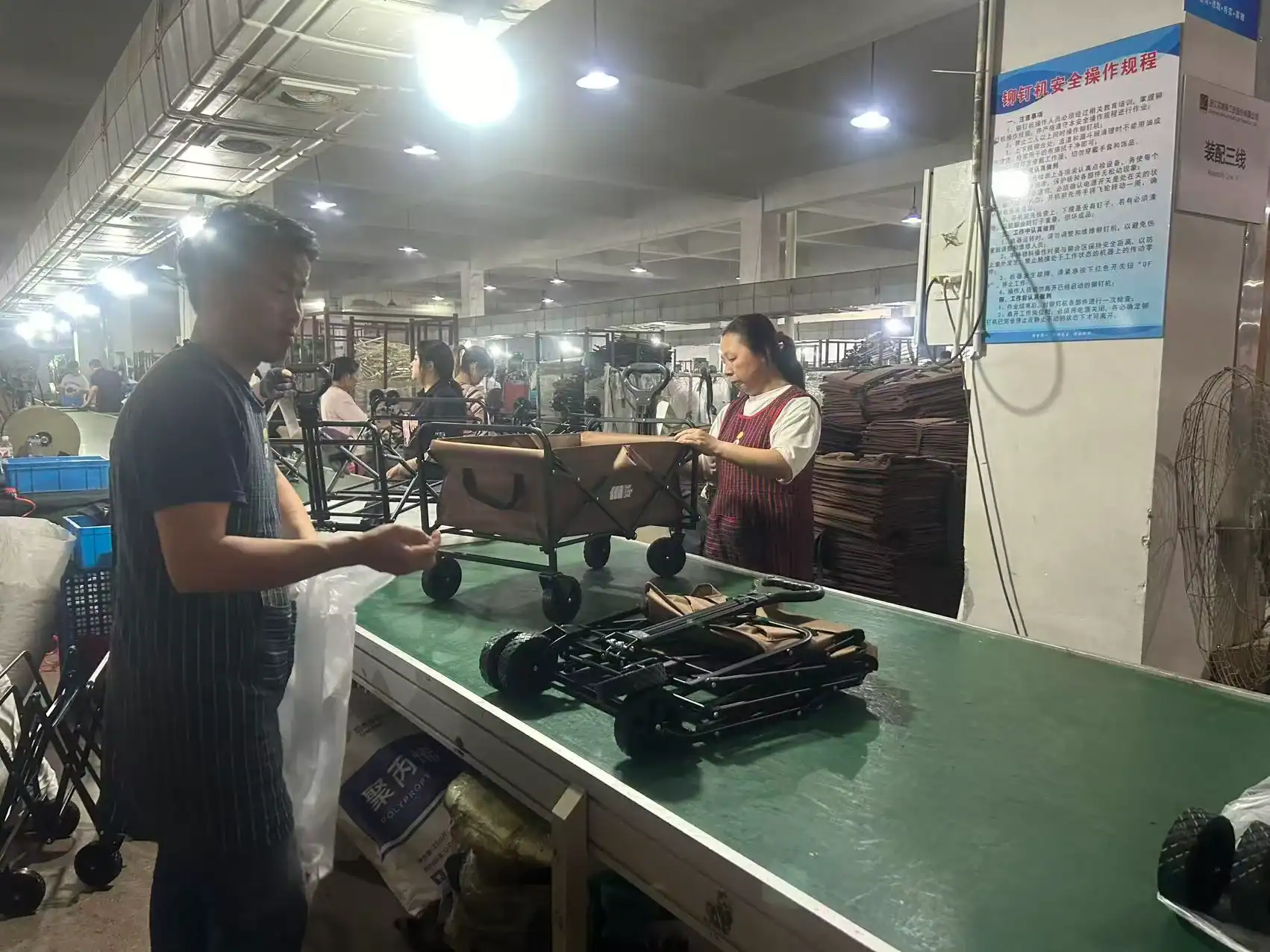
Communication and After-Sales Response
El soporte postventa es donde el modelo de agente justifica su margen, o no lo hace.
Un comprador en Europa detecta un defecto de costura en un tienda hinchable después de que el contenedor haya llegado. El reloj comienza a correr. ¿A quién llaman? Si la relación es directa con una fábrica, la respuesta suele ser un gerente de producción cuyo inglés se detiene en “revisar el correo electrónico”. Ese gerente luego enruta la queja a través de los canales internos, y tres días después, el comprador recibe una foto del mismo defecto sin plan de resolución.
La Estructura de Respuesta de Kelyland
Kelyland Outdoors asigna a Fanny Zhang para el servicio postventa: cuatro años en roles de atención al cliente, dominio del inglés y facultad para tomar decisiones. Cuando se recibe un informe de defecto, Fanny lo registra en el sistema de gestión de pedidos dentro de las dos horas y lo escala directamente al líder de control de calidad de la fábrica. El comprador recibe una evaluación inicial en 24 horas, no una cadena de correos reenviados.
Accountability Across Time Zones
Zhejiang factories operate on China Standard Time (UTC+8). A buyer in New York works UTC-5. That 13-hour gap kills momentum when problems arise. Kelyland’s team overlaps with both hemispheres: Hanke Chen manages key accounts personally, Anne Jing tracks order follow-up daily, and Fanny handles after-hours escalations via WhatsApp. The response window compresses from days to hours.
Why Long-Term Relationships Change Everything
A one-off factory relationship has no incentive to fix post-shipment issues beyond what the contract requires. A sourcing agent with repeat business across multiple categories does. Kelyland’s partnerships span 3–5 years with clients like Ace Hardware and Lucid — that continuity means rework gets prioritized because future orders depend on it. Internal data shows that repeated clients see issue resolution times roughly half those of first-time buyers.
Lead Times and Order Flexibility
MOQ flexibility is the hidden variable that determines whether a product line launches on schedule or sits in limbo.
A retail category manager launching a camping line faces a hard reality: direct factory MOQs for tiendas hinchables typically start at 500–1,000 pieces per SKU. That works if you’re ordering one tent model in one color. It breaks down fast when you need three tent sizes, two colorways, and matching air mattresses — because each variant triggers its own MOQ threshold.
MOQ differences when buying direct vs through an agent
Direct factories protect their production efficiency by setting MOQs high enough to cover setup time, material cutting waste, and line changeovers. A fábrica de tiendas making 800,000 units annually won’t stop its main line for a 100-piece test order. Sourcing agents or one-stop suppliers like Kelyland Outdoors operate differently — they aggregate demand across multiple clients and factories. This allows some items to start at 50–100 pieces while standard models range from 300–1,000 pieces, depending on the product category.
Consolidating small batch orders from multiple factories
The real advantage of an agent model emerges when your order spans categories: tents from Ningbo, air mattresses from Xiangyang (annual output: 2.5 million units), sleeping bags from Zhenjiang (1.5 million units), and sillas de camping from Jinhua (1.5 million units). Each factory ships independently if you buy direct — four separate containers, four freight bills, four customs clearances. A one-stop supplier consolidates those into a single shipment, often recovering the intermediary fee through logistics savings alone.
Managing factory capacity and order scheduling
Factory capacity is seasonal in outdoor gear. Peak demand runs January through April for summer-season orders. During that window, direct buyers without established relationships get pushed to the back of the queue behind repeat clients. A sourcing agent with long-term contracts across 17 core strategic factories can negotiate priority slots and adjust schedules when one factory hits capacity — shifting your chair production to another partner while keeping the tent timeline intact.
Conclusión
The choice between a direct factory and a one-stop sourcing agent for tiendas hinchables comes down to what you are willing to manage yourself. A factory relationship can save you 3–8% on the unit price, but that saving disappears fast if a muestra de preproducción is approved without catching a subcontracted beam lamination issue. The real cost of skipping a structured QC process is not the invoice — it is the reorder delay and the lost shelf space.
-
- Direct factory pricing runs 3–8% lower but carries hidden QC and vendor management risks.
- Agents consolidate multi-category orders, reducing shipping costs and defect exposure.
- Inflatable tent quality depends on beam lamination, which many factories outsource.
- Los proveedores integrales mantienen la coherencia de marca en tiendas, muebles y accesorios.
Si su próxima temporada incluye tiendas inflables junto con colchones de espuma o carros plegables, gestionar tres relaciones separadas con fábricas dispersará a su equipo de categorías. Revise cómo un servicio de sourcing de equipamiento de camping integral gestiona la aprobación de muestras entre múltiples líneas de producto antes de comprometerse con contratos de proveedores individuales. Un único punto de responsabilidad en control de calidad y tiempos de entrega suele ofrecer márgenes más rentables que solicitar cotizaciones a cada fábrica por separado.
Preguntas frecuentes
¿Cómo solicitar una cotización para tiendas de campaña hinchables: fábrica directa vs. agente de sourcing?
La respuesta exacta depende de la especificación del producto, quantity, and order setup. The safest approach is to confirm the commercial terms only after the final requirement sheet is locked. Final terms should be confirmed against the exact product specification and order conditions.
¿Puedo solicitar muestras primero?
La respuesta exacta depende de la especificación del producto, la cantidad y la configuración del pedido. El enfoque más seguro es confirmar las condiciones comerciales solo después de que se fije la hoja de requisitos final. La disponibilidad de muestras debe confirmarse según el stock actual y el plan de envío.

 English
 Español
 Deutsch
 Français
 Português do Brasil
 Русский
 العربية
 한국어
 日本語