 Ir al contenido
Behind closed doors, the real question about folding wagon wheel types is deceptively simple: why do the wheels on the pre-production sample feel so different from the ones in your mass production run? That mismatch burned a buyer on a $50K order, and the root cause wasn’t the tread pattern. It was the hub insert.
Most factories quote PVC wheels as standard, which keeps FOB pricing competitive. A folding wagon wheel material comparison shouldn’t stop at the quote, though. PVC, PU, EVA, and TPE look like a pricing menu, but each material changes how the wagon rolls under a full load. On sand or gravel, a 10-inch PU or TPE wheel supports heavier loads and rolls significantly better, which reduces the perceived quality complaints that drive returns. EVA wheels, meanwhile, are not a low-cost downgrade for a beach-focused wagon—they never puncture and they weigh less.
The detail that separates the pros sits in the hub. Plain bushing wheels fail quickly under continuous load, while ball-bearing wheels add only $1.50-$3.00 to landed cost. Put the OEM folding wagon wheel specification in writing—durometer, bearing type, hub bore quality tolerance—and treat any hesitation on that spec as a red flag before sample approval.

Why Wheel Material Matters in OEM Folding Wagons
Wheel spec decides whether a wagon rolls on sand — or gets returned.
Load Capacity Is Only as Real as the Wheel
| Factor | Por qué es importante | Sourcing Recommendation |
|---|---|---|
| Capacidad de Carga | Wheel material directly affects maximum payload; soft compounds deform permanently under continuous heavy loads. | For heavy-duty wagons over 100kg, specify 10-inch PU or TPE wheels instead of standard PVC to maintain structural integrity. |
| Rolling Resistance | High rolling resistance on sand, gravel, or grass makes wagons feel poorly built and drives negative reviews. | PU and TPE roll significantly better on unpacked terrain; keep PVC for smooth paths, events, and indoor use. |
| Warranty Claims | Wheel failure—cracking, flat-spotting, and hub wear—is the top warranty claim on folding wagons. | Require ball-bearing hubs; they add only $1.50-$3.00 to landed cost but dramatically reduce premature failure returns. |
| Puncture & Flat-Spotting | Punctured or deformed wheels create in-field failures and costly replacements for retail buyers. | For lightweight beach-focused SKUs, EVA wheels are puncture-proof and cut overall wagon weight without sacrificing rollability. |
| Perceived Quality | Wheels are a highly visible touchpoint; buyers associate wobbly or stiff wheels with low build quality. | Upgrading mid-tier SKUs from PVC to PU or TPE reduces negative reviews and protects brand positioning at minimal cost. |
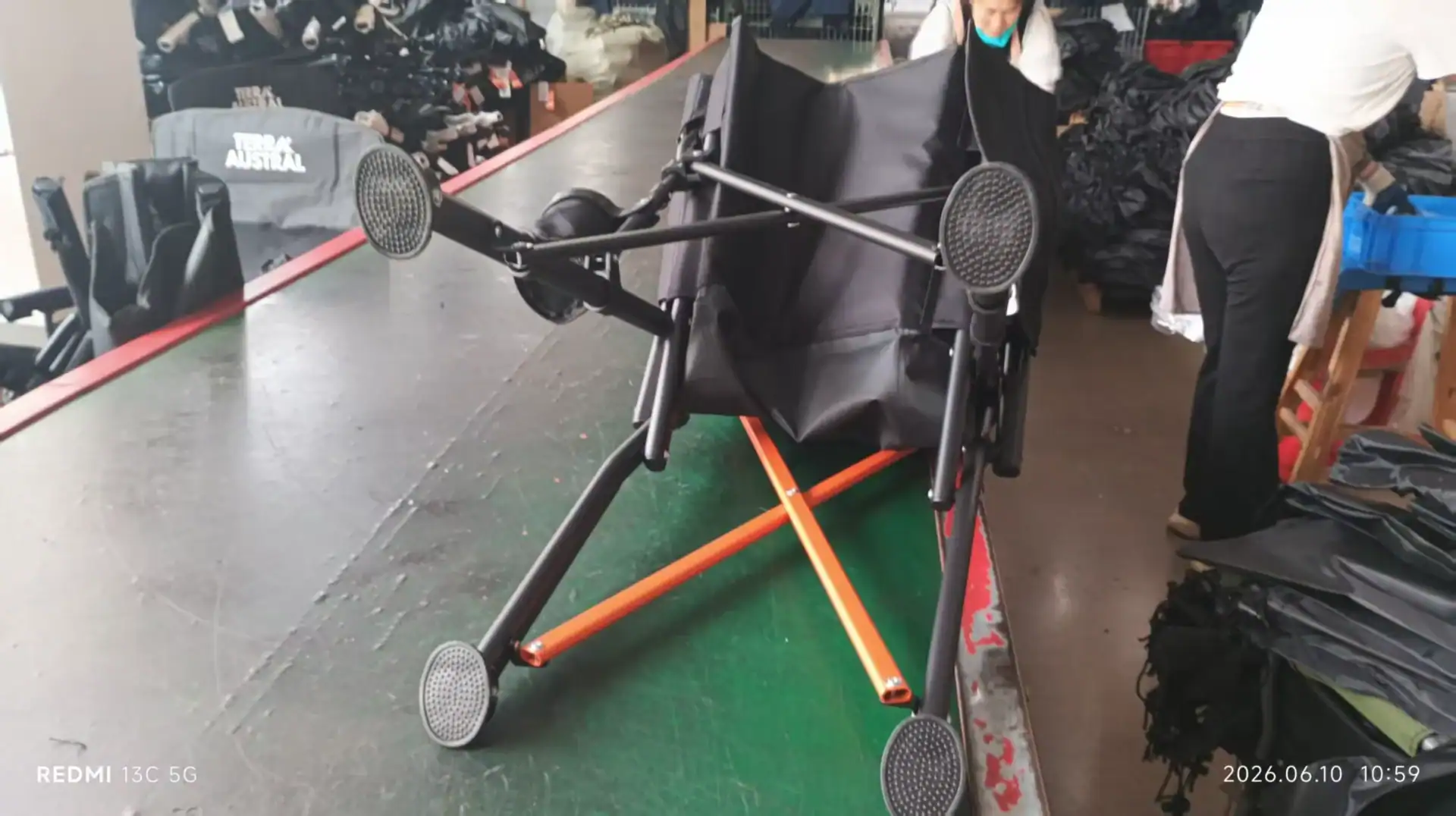
PVC Wheels: Cost-Effective but Firm
PVC wheels cut the entry price, but they transfer every bump straight to the frame — and your return rate.
PVC is the default wheel compound on value-tier folding wagons — it keeps the unit price competitive. The folding wagon partner factory in Jinhua, Zhejiang produces 1,000,000 units a year under CE and ISO 9001 systems, and PVC is the standard fit on entry-level models. For a retail category manager, that pricing math works. The trouble starts when the wagon leaves the pavement.
PVC rolls acceptably on smooth, hard surfaces: parking lots, paved festival grounds, boardwalks. Push it into sand, loose gravel, or damp grass and the hard compound digs in instead of rolling over. The wagon still carries its load — the specified range is 50-200kg — but the customer pushing it feels every kilogram. That’s how “wagon is hard to push” reviews begin.
Hardness, wear, and temperature behavior
PVC is firmer than PU and TPE, so shock absorption is minimal and abrasive surfaces wear it faster. In cold weather the compound hardens further, raising the risk of chips or cracks on impact. The offset is cost. On an entry-level program, PVC wheels hold the landed price down — but only if your customers stay on groomed surfaces.
-
- Rolling resistance: High on sand, gravel, and soft ground — the wheel slips instead of gripping.
- Cold-weather behavior: PVC stiffens in low temperatures; impact loads can chip or crack the compound.
- Best application fit: Paved paths, indoor events, short distances — not mixed-terrain camping.
- Hub warning: Plain bushings fail quickly under continuous load. Ball-bearing hubs add roughly $1.50-$3.00 to landed cost and change the failure profile.
If your customers will push a wagon onto sand or gravel, the standard PVC fit is the wrong baseline. Specify 10-inch PU or TPE wheels on the same powder-coated frame — Kelyland’s wagon program builds frames in carbon steel or aluminum with 600D-900D Oxford fabric. The wagon rolls significantly easier on soft ground and supports heavier loads. Unit price rises. Return rate drops.
| Característica | Especificación | Performance Note | Sourcing Advice |
|---|---|---|---|
| Material | PVC (cloruro de polivinilo) | Firm ride with low rolling resistance on smooth surfaces | Lowest per-unit cost; standard on entry-level wagons |
| Hardness | Shore A ~90–95 | Good durability on pavement but limited shock absorption | Widely available from injection-molding factories |
| Terrain Suitability | Smooth paths, beaches, event floors | Struggles on gravel or sand; increases user effort | Specify 10-inch PU or TPE for mixed-terrain models |
| Tolerancia térmica | -10°C to 55°C | Can become brittle and crack in freezing conditions | Use cold-resistant compounds for northern Europe/US |
| Riesgo de garantía | Higher flat-spotting under continuous load | Frequent cause of wheel deformation complaints | Upgrade to ball-bearing hubs to extend service life |

PU (Polyurethane) Wheels: Balanced Performance
PU wheels cost more than PVC but cut warranty claims on mixed-terrain wagons — the math usually favors PU.
PU (polyurethane) wheels sit in the middle of the pricing spectrum, and for most folding wagon lineups that is exactly where you want to be. PVC transmits every pebble through the frame. PU absorbs that vibration, keeping the wagon stable under heavier loads and slowing wear on frame joints.
The bigger advantage is flat-spotting. A PVC wheel parked under load in a hot warehouse develops a flat contact patch, and every revolution after that thumps. PU rebounds to its original shape. Customers notice this within the first hour of use. It reads as a cheap wagon even when the frame is solid.
Where PU fits in your lineup
Specify PU wheels on any wagon marketed for mixed terrain or loads above the 100 kg mark. A 10-inch PU wheel spreads the load across more contact surface than a 7-inch PVC wheel, which is why brands selling beach and tailgate wagons move to PU at the la aprobación de la muestra stage and rarely switch back.
On the Jinhua folding wagon line — ISO 9001 certified, producing a million units a year — PU wheels swap directly onto the 360° swivel hubs without changing frame tooling. That keeps the upgrade cost predictable for bulk orders.
The hub insert check
-
- Bushing vs ball bearing: PU’s grip increases rolling resistance, which accelerates wear on plain bushing hubs. Ball-bearing wheels add roughly $1.50-$3.00 to landed cost and are the difference between a wagon that rolls smoothly for years and one that seizes mid-season.
- RFQ spec: Put the hub type in writing. A supplier can quote a PU wheel on a bushing hub that fails under continuous load. The wheel was not the problem — the hub was.

EVA Wheels: Lightweight and Puncture-Proof
EVA wheels never puncture and cut wagon weight — but foam compresses under heavy loads.
EVA (ethylene-vinyl acetate) is a closed-cell foam, not a rubber compound, and that distinction drives every performance difference. A foam wheel has no air chamber to rupture, so punctures are physically impossible. It also weighs less than a PVC or PU wheel of the same diameter, which matters the moment a customer lifts a folded wagon into a car trunk after a long beach day.
Where EVA wins: weight and sand performance
The folding wagon production line in Jinhua builds frames from powder-coated carbon steel or aluminum. Aluminum saves weight on the chassis, but the wheels are the next heaviest component — and EVA shaves meaningful weight off the total package compared with PVC or PU. For single-buyer households or older customers, that difference can tip the purchase decision.
Sand is where EVA earns its place. The closed-cell structure keeps the wheel light enough to stay near the surface instead of digging in, which is why beach-specific wagons commonly spec EVA as the standard tire. In that application, EVA is not a low-cost downgrade; it is the right engineering call.
The trade-offs: load compression and abrasion
EVA compresses under sustained weight. It performs best in the lower half of the 50–200 kg load range that the Jinhua wagon factory rates across its lineup. Push a wagon toward the top of that range on EVA wheels and the foam flattens, rolling resistance climbs, and the tire wears unevenly. PU or TPE is the safer specification for heavy loads.
Abrasion is the second compromise. Closed-cell foam cuts and scuffs faster on rough concrete or gravel than polyurethane does. A wagon that spends its life on paved paths will wear EVA wheels noticeably faster, and replacement-wheel requests land on your warranty ledger, not the factory floor.
-
- Best use: Beach trips, festivals, light grocery runs — soft or flat terrain with loads in the lower half of the 50–200 kg range.
- Weak point: Abrasion on rough pavement and compression under heavy static loads.
- RFQ note: If your target customer hauls camping gear over gravel, spec PU or TPE on a 10-inch wheel instead — the added cost is modest and the return rate drops.
TPE Wheels: Premium Grip and All-Terrain Feel
TPE costs more at the molding stage.
TPE — thermoplastic elastomer — tops the folding wagon wheel types hierarchy because it behaves like rubber but molds like plastic. On a 360° swivel wheel, the difference is immediate. A hard PVC wheel skates sideways on gravel under load. TPE bites the surface, tracks where the handle pulls, and absorbs vibration before it reaches your customer’s arms.
Read that as a returns metric, not a spec sheet line. A customer pushing a 50-200kg load across sand won’t file a warranty claim for ‘bad wheel compound.’ They file for bent frames, seized hubs, or ‘this wagon won’t steer straight.’ TPE removes one of the root causes before the claim reaches your desk.
The 360° swivel is the roughest test a wheel faces. Every pivot scrubs the tire sideways against the ground. Stiff compounds lose traction under that scrub, so the wagon drifts wide on loose dirt or beach sand. TPE’s rubber-like grip keeps the contact patch planted. It also resists flat-spotting better than PVC when a wagon sits loaded in a hot trunk between trips — a common summer complaint in retail reviews.
The wholesale price difference
TPE resin costs more than PVC or EVA, so the RFQ unit price runs higher. The wholesale premium, though, is a fraction of what buyers assume. The real trap is pairing TPE wheels with plain bushing hubs — that assembly fails under continuous load. Ball-bearing hubs add only $1.50-$3.00 to landed cost. Upgrade the hub first, then spec TPE.
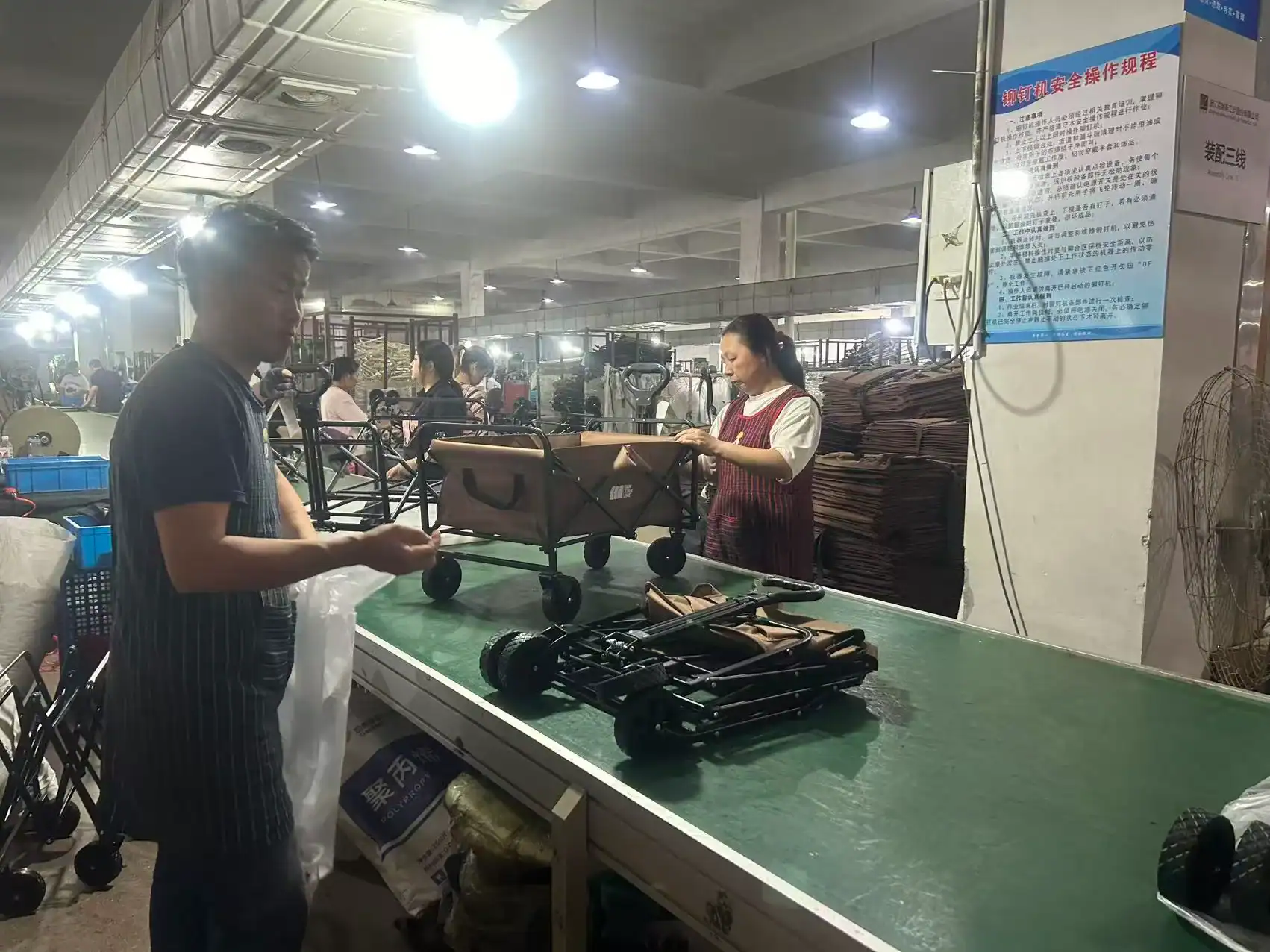
The Jinhua, Zhejiang folding wagon factory in Kelyland’s network — established 2017, CE and ISO 9001 certified, one million wagons a year — handles custom injection molding for wheel parts. That means your private label can specify the exact TPE hardness, tread pattern, and color at the la aprobación de la muestra stage, not just take the stock black wheel.
Wheel Size, Bearing Type, and Hub Compatibility
Ball bearings add only $1.50–$3.00 to landed cost and cut the most common wheel-related warranty claims.
Wheel size is not a cosmetic choice. A 7-inch wheel rolls fine on pavement and in store aisles, but it struggles to move a fully loaded wagon over grass or sand. The Kelyland wagon lineup spans load ratings from 50–200kg, with heavy-duty models exceeding 200kg — and on those units, a 10-inch wheel is the minimum spec for acceptable rolling resistance on soft ground. On lighter wagons rated at 50–100kg, 7-inch wheels remain a cost-effective option, especially for buyers positioning the product as a compact tailgate or beach cart.
What 7-inch vs 10-inch Actually Changes
The smaller wheel concentrates the wagon’s weight onto a narrow contact patch, which digs into sand and gravel. A 10-inch wheel spreads that load over a wider footprint, so the wagon keeps rolling instead of sinking. The trade-off is a small increase in weight and folded size. For a category manager, the practical difference shows up in customer reviews: ‘hard to pull’ complaints drop off once the wheel diameter suits the intended terrain.
Ball Bearings vs Plain Bushings
The hub type determines how long the wheel stays true. It is also the cheapest upgrade in the entire wagon — and the one most buyers skip.
-
- Plain bushing: A press-fit plastic sleeve that works for light, occasional use. Under continuous load it wears quickly, the wheel wobbles, and the user blames the frame.
- Ball bearing: A steel or sealed bearing that keeps the wheel true and rolling smoothly. It raises landed cost by roughly $1.50–$3.00 per wagon — far less than administering a single warranty return.
Custom Wheel Options
Custom wheels go beyond color. The Jinhua wagon factory supports custom injection molding for the plastic hub and rim, so a brand can match wheel color to frame accents or mold a spoke pattern that reinforces its identity. A custom tread pattern or two-tone wheel requires a new mold, but for a retail order with a distinctive look, the tooling locks in exclusivity that standard wheel catalogs do not offer. The factory’s ISO 9001:2015 system applies to the wheel assembly line, with inspections at each production stage.
| Característica | Especificación | Hub & Bearing Compatibility | Lo mejor para | Cost & Warranty Note |
|---|---|---|---|---|
| Wheel Diameter | 7-inch (165-175mm) | Universal through-axle; plain bushing or PP/PE hub insert | Lightweight entry-level wagons, flat pavement, beach events | Lowest cost; bushing wears faster under continuous load |
| Wheel Diameter | 10-inch (approx. 250mm) | Reinforced steel/metal hub; ball bearing (e.g., 608ZZ/6001ZZ) | Heavy-duty and all-terrain wagons; sand, gravel, grass, curbs | Adds $1.50-$3.00 to landed cost; sharply reduces wheel-related warranty claims |
| Bearing Type | Plain bushing (nylon/brass sleeve) | Slip-fit into PP/PE wheel hub; standard axle bolt | Light loads, occasional use, promotional/entry price points | Cheapest option; fails quickly under 80kg+ continuous load |
| Bearing Type | Single ball bearing | Integrated metal hub insert; press-fit into wheel core | Mid-tier wagons, mixed terrain, 100-150kg loads | Moderate cost increase; balanced durability and rolling smoothness |
| Bearing Type | Dual/flanged ball bearings | Flanged cartridge bearing; steel hub housing | Premium wagons, 360° swivel front wheels, heavy loads over 150kg | Highest reliability; minimizes lateral wobble and axle wear |
| Hub Insert Material | PP or PE plastic insert | Molded directly into the wheel; low-friction surface | Standard 7-8 inch wheels, light-duty wagons | Can deform under heat/load; replacement wheel cost is low |
| Hub Insert Material | Reinforced steel or aluminum insert | Riveted or over-molded metal housing; accepts ball bearings | 10-inch heavy-duty and off-road wagon wheels | Higher upfront cost but extends wheel life and axle stability |
| Replacement Compatibility | OEM-specific axle diameter, hub width, and bolt pattern | Must match wagon frame fork width and axle thread spec | Retail SKUs offering replacement wheels as an accessory | Standardizing 10-inch wheels across models lowers spare-parts inventory |
| Opciones personalizadas | Injection-molded colors, tread patterns, and branded hub caps | Custom tooling for wheel mold and bearing seat; axle adapter options | Private-label branding and premium retail differentiation | Mold investment required; reduces warranty claims with material-matched specs |
How to Choose the Right Wheel for Your Market
Match the wheel to your customer’s terrain before the RFQ goes out.
Start with the surface your end customer actually drags the wagon across. Beach wagons get EVA wheels because they never puncture and weigh less. Heavy-duty campsite wagons need 10-inch PU or TPE — a 150kg load rating means nothing if standard PVC wheels flat-spot and seize after one season.
EVA is not a downgrade when the wagon is designed for light beach use. It never punctures and cuts weight, which matters more on sand than load capacity. For mixed terrain and heavier loads, PU or TPE holds up better. Match the material to the real use case, not to the cheapest standard build.
Ask for a wheel test chart, not a sales sheet
Every serious factory tracks rolling resistance, Shore A hardness, flat-spotting under static load, and abrasion loss. The folding wagon line Kelyland sources in Jinhua, Zhejiang produces 1,000,000 units a year under ISO 9001:2015, and wheel test data is filed per production batch. If your supplier cannot produce that chart, they are guessing at durability.
Build the wheel spec table into your RFQ
-
- Wheel diameter: Specify 7-inch for standard compact wagons. Go 10-inch for heavy-duty models above 150kg load rating — larger wheels roll over sand and gravel with far less effort, which cuts “hard to push” complaints.
- Tire material: PVC keeps entry pricing on smooth terrain. PU and TPE lift perceived quality on mixed terrain and pair with 360° swivel setups. EVA suits lightweight beach wagons where puncture-proofing matters more than load capacity.
- Hub insert: Plain bushings fail fast under continuous load. Ball bearings add only about $1.50-$3.00 to landed cost per wagon — cheap against a single warranty return.
- Per-wheel load rating: Ask the supplier to state the per-wheel rating and how it was measured in writing. Uneven terrain concentrates load on one or two wheels, so never assume the wagon’s total capacity applies to every wheel.
Replacement wheels sit near the top of folding wagon warranty claims. Locking the spec — material, hub, diameter, load rating — costs nothing at the RFQ stage. Custom injection-molded hubs and brake covers let you brand the wagon properly while the spec protects your margin. The savings show up later, in fewer returns and fewer “it broke after two trips” reviews.
Conclusión
Wheel material selection comes down to one trade-off: how much rolling resistance your customers accept versus how much load the wagon must carry. PVC wheels are fine on smooth paths, but 10-inch PU or TPE wheels make a wagon feel substantial on sand and gravel, which is where most perceived-quality complaints start. The hub decision matters just as much — ball-bearing wheels add roughly $1.50 to $3.00 to landed cost and remove the most common warranty claim.
-
- PVC wheels suit smooth paths and event use; budget for a firmer ride and faster wear.
- PU and TPE wheels offer better shock absorption, higher load support, and easier rolling on sand.
- EVA wheels stay lightweight and puncture-proof, with lower abrasion resistance and load capacity.
- Ball-bearing hubs add only $1.50-$3.00 to landed cost and outlast plain bushings.
Before you send the next RFQ, ask your supplier for a wheel test chart that lists durometer, flat-spot data, terrain notes, and bearing type. Set the quality tolerance around wheel diameter, rolling resistance, and hub performance — not just fabric stitching. Confirm the same wheel spec in the sample approval, and ask for FOB pricing on the 10-inch ball-bearing upgrade; then compare that number against your target price point. For a working reference, browse Kelyland’s folding wagon product page and review the wheel options built through its ISO 9001:2015 factory network.
Preguntas frecuentes
¿Cuál es el mejor material para las ruedas de un carrito plegable?
Para terrenos mixtos y cargas más pesadas, el PU es la opción equilibrada; el TPE ofrece agarre premium para los modelos giratorios 360°. El PVC es más económico pero más duro y tiene mayor riesgo de generar reclamos de garantía en terrenos agresivos. Defina las especificaciones de las ruedas tras determinar el perfil de terreno y carga.
¿Cuál es la diferencia entre las ruedas de carrito de PVC y PU?
Las ruedas de PVC son más firmes, más económicas y ideales para caminos lisos, mientras que las ruedas de PU absorben mejor los impactos y duran más en terrenos mixtos. Para carretillas industriales, el PU es la opción más segura para reducir la resistencia al rodamiento. Elija el modelo con ruedas PU para artículos industriales o de terreno mixto.
¿Por qué fallan las ruedas de los carritos plegables?
El fallo de las ruedas es la principal reclamación de garantía en los carros plegables, generalmente provocada por la transferencia de golpes del material o por el desgaste en terrenos irregulares. Adaptar el material de las ruedas al tipo de terreno y a la carga evita la mayoría de las devoluciones. Solicita a tu proveedor los datos de prueba de las ruedas antes de iniciar la producción en masa.
¿Puedo personalizar las ruedas de los carritos plegables para mi marca?
Sí, la personalización de ruedas incluye colores, estampados, moldeo por inyección personalizado y recubrimiento en polvo del marco. También puede especificar el tamaño de la rueda, el tipo de rodamiento y el material de los neumáticos (PVC, PU, EVA o TPE) según sus necesidades. Defina las especificaciones técnicas de las ruedas en su RFQ para asegurar la muestra.
What wheel size is best for a folding wagon?
Larger wheels, such as 10-inch, roll over obstacles more easily and suit off-road wagons, while 7-inch wheels keep cost and folded size down. Choose size based on the terrain your end customer will actually encounter. Decide wheel size and bearing type together.

 English
  Español
  Deutsch
  Français
  Português do Brasil
  Русский
  العربية
  한국어
한국어  日本語
日本語