
inflatable tent materials tpu pvc is the first checkpoint buyers should lock before they approve a supplier, budget, or production slot. A buyer’s checklist for an inflatable tent line looks solid on paper: confirmed denier, approved coating spec, signed-off color swatch. Then the $50K shipment lands and three things happen — the air beams lose pressure overnight in sub-zero temps, the fabric feels stiff enough to crack at the fold lines, and your retail partners start asking questions. The one item nobody checks before production is the welded seam peel strength on the air beam itself. That number determines whether your tent holds air for a season or fails during the first cold snap.
Most brand managers I work with get caught in the TPU vs PVC cost debate — and they should. TPU air beams run roughly 25-40% lighter than PVC and stay flexible well below freezing, but they cost anywhere from 50% to double what PVC does. That’s why most wholesale inflatable tents coming out of China still use PVC. The real gap shows up when you compare a cheap PVC beam that cracks at -5°C against a properly formulated TPU beam that flexes at -20°C without losing air retention. The price delta makes sense once you map it to your target market’s climate and expected product lifespan.
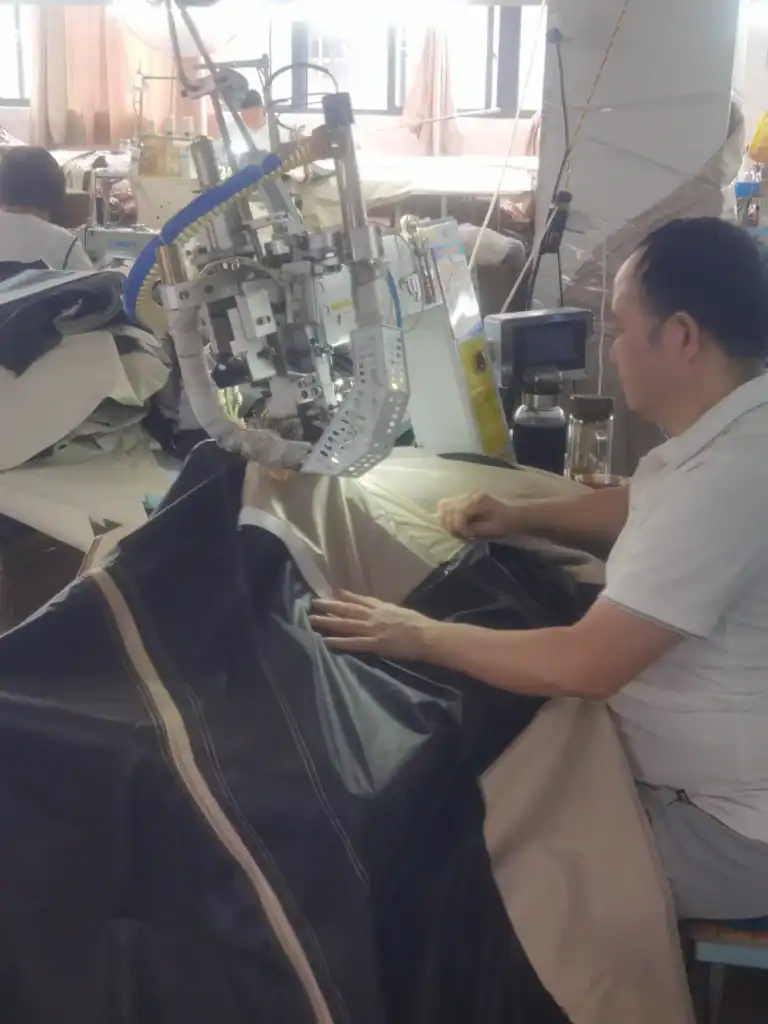
Inflatable Tent Material Basics
Fabric denier alone won’t predict field failure — coating thickness and seam peel strength will.
The single biggest mistake brand managers make when sourcing inflatable tents is treating fabric weight as the primary quality indicator. A 210D polyester with a thin PU coating will delaminate after two seasons in UV exposure, while a 150D fabric with a properly applied 0.3mm PU coating can hold up for five years. The coating system determines waterproofing longevity, not the denier number.
Why material choice determines product lifespan
An inflatable tent fails in one of three ways: air beam delamination at the weld seam, fabric coating breakdown from UV exposure, or puncture from abrasion against the ground sheet. The first two are material chemistry failures, not structural failures. Vigas de aire de PVC lose plasticizer over time — in high-heat environments, they stiffen and crack at the folds after 18-24 months. TPU beams don’t have that problem because TPU doesn’t rely on migratory plasticizers; it remains flexible down to -30°C without embrittlement.
The fabric shell faces a different degradation path. Polyester resists UV better than nylon — nylon loses roughly 40% of its tensile strength after 500 hours of direct sunlight exposure, while polyester drops only about 15% under the same conditions. But even polyester needs a robust coating layer to block moisture ingress through the weave. A supplier that skimps on coating thickness saves maybe $0.08 per square meter at the raw material stage, but that savings translates directly into warranty claims when the tent starts leaking in month 14.
How to read a technical specification sheet from a Chinese supplier
Mayoría spec sheets from Chinese factories list fabric composition (100% polyester), denier (150D or 210D), and carga hidrostática nominal (2000mm or 3000mm). Those three numbers tell you almost nothing about real-world durability if they aren’t paired with two critical data points: coating thickness in microns and welded seam peel strength in Newtons per centimeter.
Vigas de aire TPU vs PVC
TPU air beams are 25–40% lighter than PVC and flex down to -20°C, but cost 50–100% more per unit.
The choice between TPU and PVC air beams comes down to a direct trade-off: performance per gram versus cost per unit. TPU (thermoplastic polyurethane) delivers better cold-weather flexibility, lower weight, and higher UV resistance. PVC (polyvinyl chloride) holds the price advantage — roughly half the material cost in most Chinese supply chains. For a brand manager deciding between a premium glamping line and a mid-range camping tent, this gap defines the product tier.
Cost and Weight Comparison
TPU typically costs 50–100% more than PVC for the same beam dimensions. The weight difference is equally stark: TPU beams weigh about 25–40% less. A standard 4-meter PVC beam for a 4-person inflatable tent weighs roughly 1.2 kg; the same beam in TPU drops to around 0.8 kg. That adds up fast across a full shelter frame — saving up to 2 kg on a family-sized tent.
Cold Weather Flexibility and Crack Resistance
PVC becomes brittle below -10°C. Below -15°C, field failures are common — the material cracks at stress points where the beam bends over the tent geometry. TPU stays flexible down to -20°C without embrittlement. This matters for alpine or winter camping products where warranty claims spike due to se agriete en climas fríos.
UV Stability and Long-Term Air Retention
TPU resists UV degradation significantly better than PVC. After three months of continuous sun exposure, PVC loses roughly 30% of its tensile strength; TPU retains over 90%. Air retention follows the same pattern — TPU holds pressure longer because it doesn’t plasticize or leach stabilizers over time.
Repair Difficulty in the Field
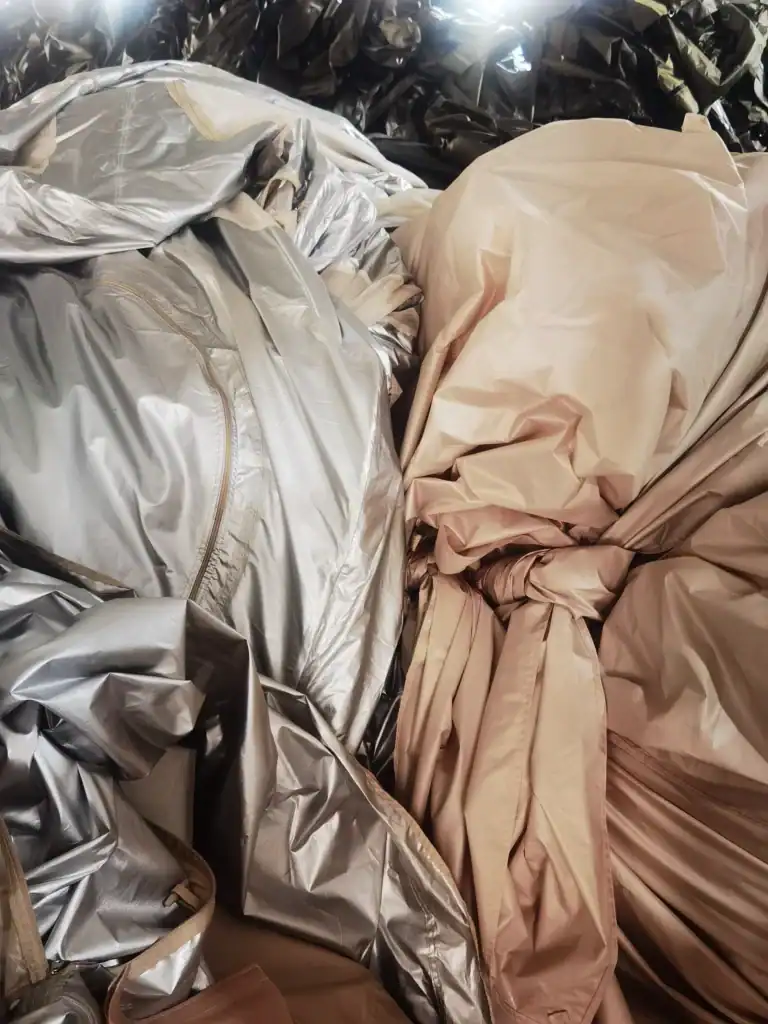
Tent Fabric Options for Inflatable Shelters
Fabric weight alone won’t tell you if the tent lasts — coating and seam construction decide that.
Most brand managers start by asking for a denier number. That’s useful, but it’s not the full picture. A 150D polyester with a thick PU coating can outperform a 210D fabric with a thin coating in real-world use. The coating system and seam construction determine where failures actually happen.
Polyester vs Nylon vs Blended Fabrics
El poliéster domina las cubiertas de tiendas inflables porque resiste mejor la degradación por UV que el nailon y tiene un costo menor. El nailon es más resistente por denier y más resistente a la abrasión, pero absorbe agua y se relaja cuando está mojado, lo que es un problema para estructuras inflables grandes. Las mezclas de poliéster y algodón (tejido TC) son comunes en tiendas glamping donde la estética importa más que el ahorro de peso.
Para refugios inflables específicamente, el poliéster ripstop es la opción estándar. La cuadrícula de refuerzo evita que las pequeñas rasgaduras se extiendan a través del panel. El nailon solo tiene sentido para inflables ultraligeros para senderismo donde cada gramo cuenta, pero espere una vida útil más corta bajo exposición constante al sol.
Peso de la tela (Denier) y durabilidad
El denier mide el grosor del hilo: números más altos significan tela más pesada y, teóricamente, más resistente. Una tela de 150D pesa aproximadamente 110-130 g/m²; la de 210D se acerca a 170-190 g/m². Para tiendas inflables tamaño familiar, el poliéster de 150D a 210D cubre la mayoría de las necesidades. Los modelos glamping resistentes suelen usar tela Oxford de 300D a 600D para resistencia a perforaciones contra lonas de suelo rugosas.
Hydrostatic Head and Waterproofing
Una clasificación de head hidrostático de 3000 mm es el mínimo para una protección confiable contra la lluvia en una tienda glamping.
Head hidrostático (HH) mide cuánta presión de agua puede soportar una tela antes de filtrarse. La prueba es sencilla: una columna de agua asciende contra la tela y, cuando la primera gota penetra, esa altura en milímetros se convierte en la clasificación. Una tela de 1500 mm soportas llovizna ligera. Una tela de 3000 mm soporta lluvia sostenida. Para tiendas glamping donde los huéspedes esperan un refugio seco independientemente del clima, cualquier valor por debajo de 3000 mm genera riesgo de devoluciones.
Qué clasificación realmente necesita su línea de productos
Para tiendas de camping de tres estaciones vendidas a usuarios de fin de semana, 2000 mm a 3000 mm en la cubierta y 4000 mm en el suelo es el rango estándar de la industria. Las tiendas glamping con lona o mezclas de poliéster-algodón necesitan un enfoque diferente: esos tejidos dependen de la hinchazón de las fibras en lugar de solo del recubrimiento, por lo que la cifra de HH importa menos que la densidad del tejido y la construcción de las costuras. Para tiendas inflables con cubiertas de poliéster o nailon con recubrimientos de PU, especifique un mínimo de 3000 mm en la cubierta y 5000 mm en la lona de suelo si desea cero quejas durante una tormenta nocturna.
Por qué las costuras con cinta fallan más a menudo que la tela
La tela misma rara vez filtra primero. Los agujeros de aguja de la costura crean miles de microcanales por los que sigue el agua, especialmente bajo presión del viento que fuerza el agua lateralmente a través de la trayectoria del hilo. En las tiendas inflables, cada costura donde se unen dos paneles debe estar encolada o soldada. Los tejidos revestidos de PVC obtienen costuras soldadas por alta frecuencia que fusionan el material: sin cinta necesaria, sin punto de falla. Los tejidos con recubrimiento de PU requieren encolado de costuras con aire caliente mediante una tira de cinta de poliuretano aplicada sobre cada costura cosida.
- Costuras soldadas (PVC): No requiere cinta. El material base se fusiona bajo soldadura RF en un enlace monolítico único. Esto elimina por completo la vía de fuga más común.
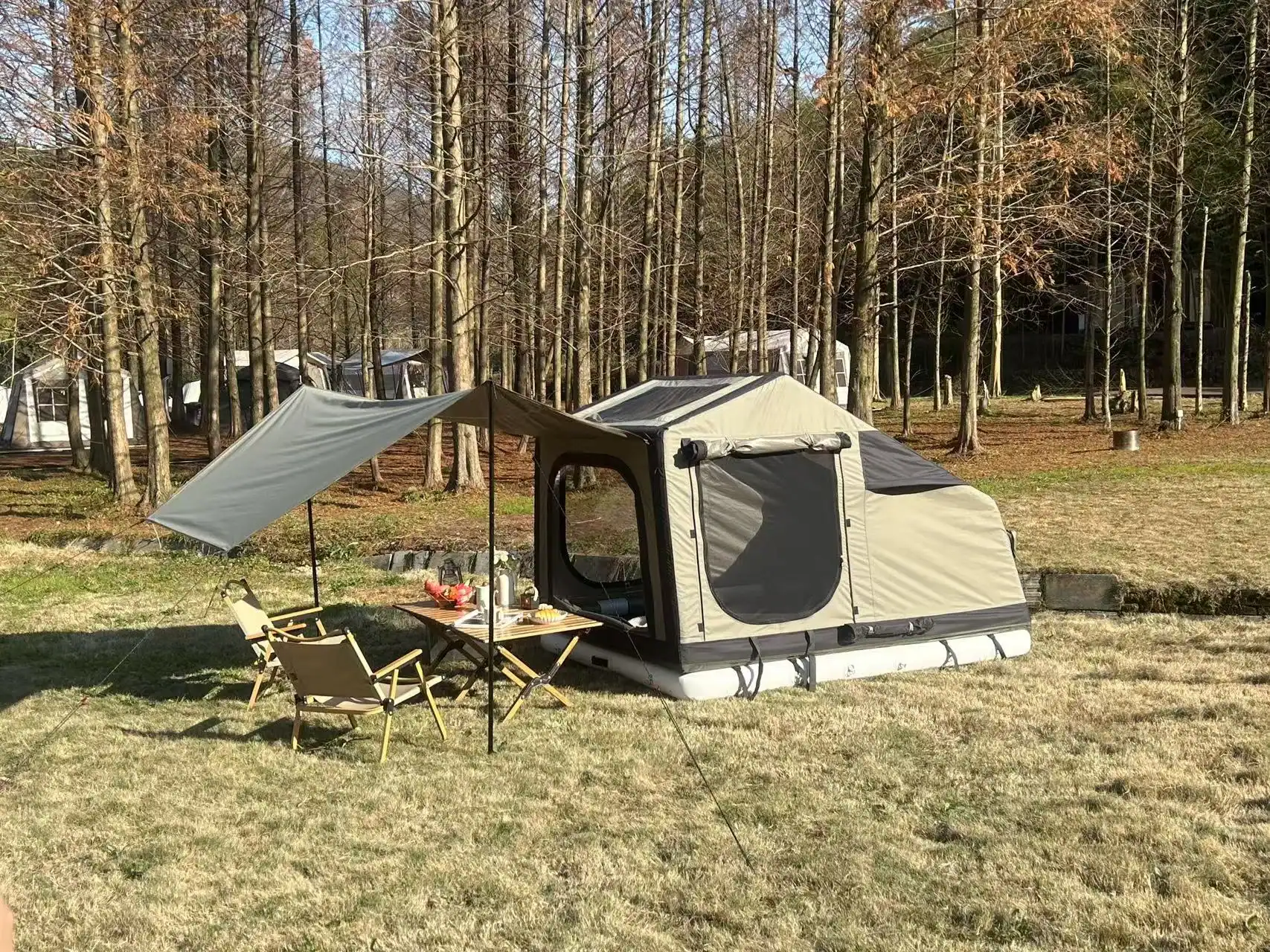
Air Retention and Valve Quality
Una diferencia de grosor de 0,1 mm puede reducir la retención de presión en un 40%.
How Material Thickness Affects Pressure Holding
Air retention starts with the beam material itself. PVC air beams used in most wholesale inflatable tents range from 0.4mm to 0.6mm wall thickness. At 0.4mm, the material stretches more under pressure and loses air through micro-porosity over a 48-hour window. At 0.6mm, that same beam holds usable pressure for four to five days without a top-up.
TPU beams behave differently because the polymer structure has lower gas permeability to begin with. A TPU beam at 0.3mm wall thickness can outperform a PVC beam at 0.5mm on air retention alone. The trade-off is puncture resistance — thinner walls are easier to damage on rocky ground or if a tent stake shifts during wind.
Valve Types and Leak Points
The valve assembly is where most field failures happen, not the beam wall itself. High-volume inflatable tents use one of three valve designs: flap valves (cheapest, slowest deflation), twist-lock valves (mid-range, better seal), or high-flow dump valves (fast deflation, more moving parts). Each has a characteristic failure mode.
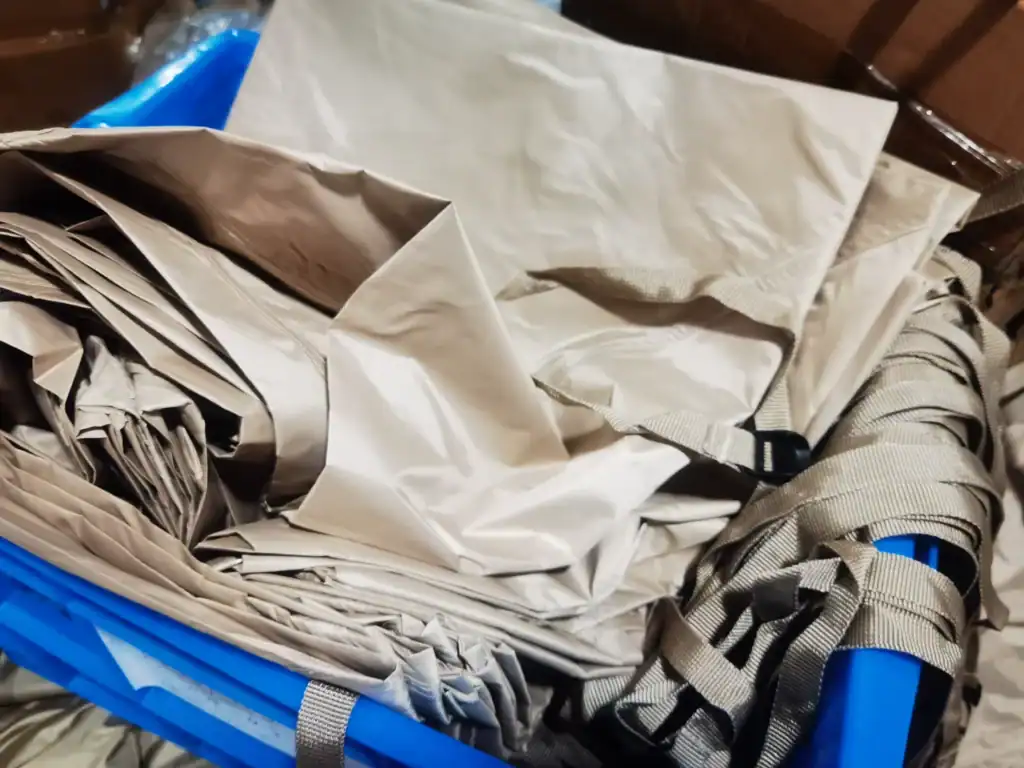
Comparing Long-Term Cost per Use
A $4.80 PVC tent can cost $16.20 over 3 years.
Most brand managers compare unit prices on a spreadsheet. That comparison misses the real metric: cost per use over the product’s lifecycle. A glamping tent that fails in month 14 doesn’t just generate a refund — it generates a negative review, a lost customer, and a replacement shipment under warranty.
The PVC replacement cycle math
A typical entry-level PVC inflatable tent from China hits retail at roughly $4.80–$6.00 FOB per unit for a 2-person model using 0.4mm wall thickness beams. The first failure point is almost never the fabric — it’s the beam weld seam or the valve base. Internal production data from ISO 9001:2015 certified factories shows that roughly one in four PVC tents shipped at this price point develops a slow leak within 12 to 18 months of intermittent seasonal use.
That means if you sell 1,000 units, about 250 will come back as reclamaciones de garantía or negative reviews within two seasons. The replacement cost — including shipping, handling, and lost margin — often exceeds the original profit on the sale.
TPU air beams carry a material cost premium of roughly 50–100% over PVC for the same beam diameter and wall thickness. That pushes the FOB unit price to $7.50–$12.00 for an equivalent tent shell with TPU tubes instead of PVC tubes.
$7.50 vs $5.00 looks like an easy choice on paper — until you run the three-year projection.
Conclusión
|
The material choice for an inflatable tent defines its performance ceiling and its failure mode. PVC delivers the lowest cost per unit but introduces cold-crack risk below -10°C. TPU saves weight and survives sub-zero use, but the price premium can hit 100%. Fabric denier alone won’t tell you if a tent lasts three seasons or three years—coating thickness and seam peel strength are the real metrics.
Antes de cerrar tu próximo lote de producción, revisa la ficha técnica de tu proveedor con estas tres preguntas. ¿El material del air beam coincide con tu clima objetivo? ¿El recubrimiento de la tela es lo suficientemente grueso para alcanzar una resistencia hidrostática de al menos 3000mm para campamento o 5000mm para glamping? ¿Y la fábrica proporciona una prueba documentada de resistencia a la tracción para las costuras soldadas? Si buscas un socio que responda a las tres con datos verificables, explora la gama de tiendas inflables y colchones neumáticos de Kelyland Outdoors para iniciar una conversación sobre tus requisitos técnicos específicos. |
Preguntas frecuentes
How to get a quote for Inflatable Tent Materials: TPU vs PVC vs Fabric Weights?
|
La respuesta exacta depende de la especificación del producto, la cantidad y la configuración del pedido. El enfoque más seguro es confirmar los términos comerciales solo después de que se haya definido la hoja de requisitos final. La elección final debe ajustarse al caso de uso real y al objetivo de rendimiento. |
¿Puedo solicitar muestras primero?
|
La respuesta exacta depende de la especificación del producto, la cantidad y la configuración del pedido. El enfoque más seguro es confirmar las condiciones comerciales solo después de que se fije la hoja de requisitos final. La disponibilidad de muestras debe confirmarse según el stock actual y el plan de envío. |

 English
 Español
 Deutsch
 Français
 Português do Brasil
 Русский
 العربية
 한국어
 日本語