 Ir al contenido
Los materiales de la mesa de campamento son el primer punto de control que los compradores deben fijar antes de aprobar a un proveedor, un presupuesto o un espacio de producción. La ficha técnica dice acero recubierto de polvo, con capacidad de carga de 60 kg. Lo que llega en el contenedor se ve bien. Seis meses después, los clientes empiezan a publicar fotos de manchas de óxido en cada costura de soldadura de las patas. Ese pedido de $50K que aprobaste en la muestra basándote solo en la coincidencia visual se convirtió en un desastre de márgenes de categoría para la próxima temporada.
Esa brecha entre lo que se escribe en la página del producto y lo que realmente resiste el uso al aire libre es donde ocurre el verdadero trabajo de abastecimiento de materiales para mesas de campamento . El aluminio no se oxida, pero las esquinas fundidas baratas se rompen sin aviso. El acero soporta cargas más pesadas, pero las salpicaduras de soldadura crean microanclajes para la corrosión si se omite el pretratamiento de fosfatado. Las superficies de madera etiquetadas como impermeables suelen usar MDF de 15 mm con chapa de papel: la hinchazón de los bordes comienza a las 24 horas de exposición a la lluvia, y luego sigue la delaminación.
Necesitas datos de modos de fallo, no afirmaciones de marketing. Una extrusión de aluminio correctamente especificada con acabado anodizado durará tres temporadas sin óxido rojo. Un marco de acero que supera una prueba de niebla salina de 72 horas cuesta menos por adelantado que uno que falla en el campo y dispara una tasa de devolución por encima de tu umbral KPI de <2%.
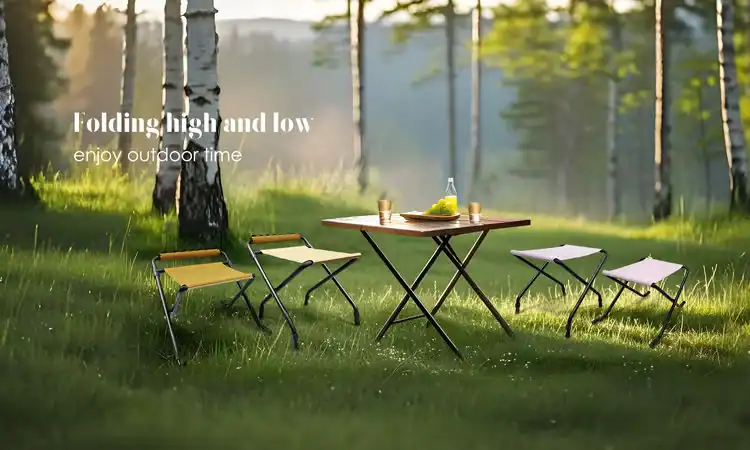
Por qué los marcos de las mesas de campamento de acero se oxidan en las costuras de soldadura
El recubrimiento de polvo se agrieta en los puntos de salpicadura de soldadura.
Un marco de mesa de campamento de acero se ve sólido en el piso de exhibición. Recubrimiento de polvo liso, color uniforme, sin defectos visibles. Seis meses después, un cliente envía una foto de óxido rojo anaranjado emanando de cada unión soldada. El marco no ha sido rayado ni abollado. El recubrimiento simplemente falló donde más importa.
El problema de las grietas en el recubrimiento de polvo
Las salpicaduras de soldadura dejan picos y valles microscópicos en la superficie del acero. El recubrimiento de polvo fluye sobre estas irregularidades, pero forma una película más delgada en los puntos de los picos. Bajo la flexión mecánica durante el plegado o el transporte, esos puntos delgados se agrietan primero. La humedad del rocío matutino o de una lluvia ligera se filtra en la grieta y alcanza el acero desnudo.
Si la fábrica omitió el pretratamiento de fosfatado, no hay capa de conversión protectora entre el acero y el recubrimiento. El óxido rojo comienza en semanas, no en meses. La corrosión se extiende lateralmente bajo el recubrimiento de polvo intacto, causando que se delamine en láminas para la segunda temporada.
Cómo especificar pruebas de fosfatado y niebla salina
Escribe en tu acuerdo OEM: todos los marcos de acero deben someterse a fosfatado de zinc o hierro antes de la aplicación de recubrimiento en polvo. Luego exige una prueba de niebla salina neutra según ASTM B117 (o equivalente) en una muestra de ensamblaje soldado.
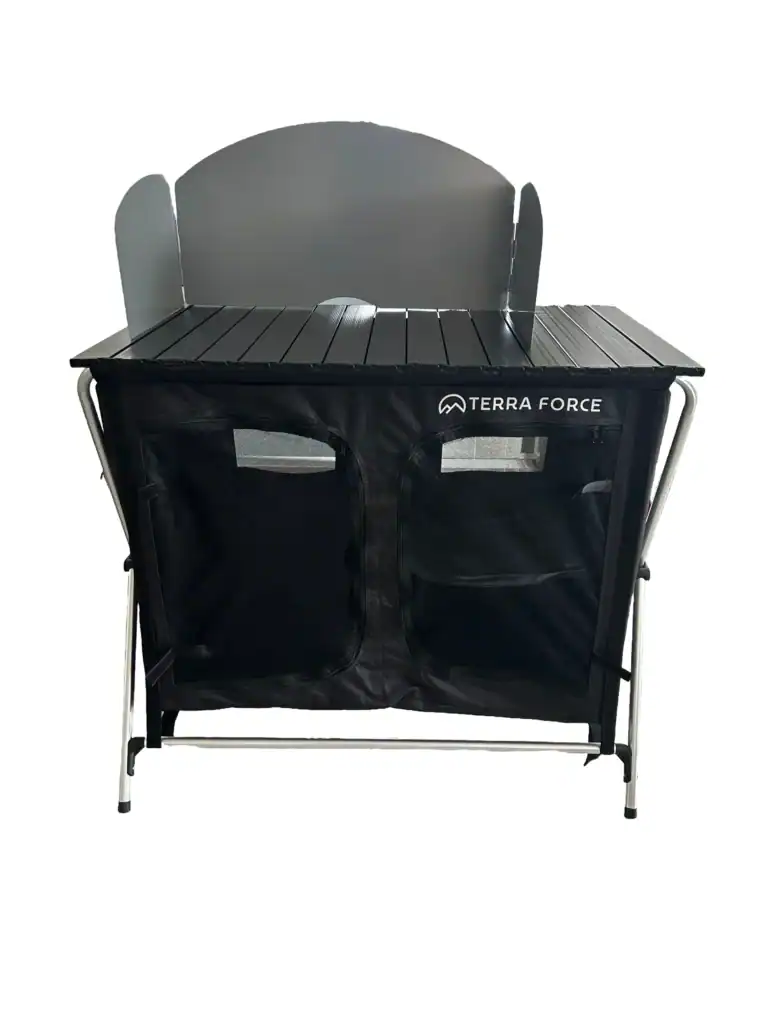

Extrusión de aluminio: la opción sin óxido, pero presta atención al grado de la aleación
La extrusión de aluminio 6061 anodizado resiste la oxidación; las esquinas fundidas se agrietan sin aviso.
El debate sobre los marcos de aluminio en las mesas de campamento generalmente se reduce a una pregunta: ¿es extruido o fundido? Los perfiles extruidos de aluminio 6061 anodizado te brindan inmunidad a la corrosión y un modo de falla predecible de doblarse antes de romperse. Las esquinas de aluminio fundido baratas, por otro lado, son frágiles y tienen una estructura de grano inconsistente. Se agrietan en los puntos de bisagra plegable donde se concentra el estrés cíclico, a menudo sin ninguna deformación visible previa.
Perfiles extruidos de 6061 vs esquinas de aluminio fundido
Los perfiles extruidos de 6061 se pasan a través de un troquel, creando una estructura de grano uniforme que se dobla bajo carga en lugar de hacerse añicos. Las esquinas fundidas, hechas vertiendo aluminio fundido en un molde, desarrollan vacíos internos y enfriamiento no uniforme que crean concentradores de tensión. El resultado: una bisagra de pata que se rompe a mitad de temporada cuando un invitado de 90 kg se apoya en la mesa. Una red OEM bien abastecida, como las fábricas asociadas de mesas de campamento de Kelyland, utiliza aluminio extruido 6061 con un espesor mínimo de pared de 1,5 mm y un acabado anodizado como especificación base. Eso elimina la oxidación por completo y da una advertencia visible antes de una falla estructural.
-
- Extruido 6061: Grano uniforme, se dobla visiblemente antes de fallar, sin oxidación después del anodizado. Requiere un espesor de pared de 1,5 mm o más para las patas principales.
- Esquinas de aluminio fundido: Frágiles, propensas a vacíos internos, se agrietan en los puntos de bisagra sin aviso. Acéptalas solo si el proveedor proporciona datos de ciclos de fatiga.
Reglas de capacidad de carga y espesor de pared
Establece un espesor mínimo de pared de 1,5 mm para todas las extrusiones de patas principales. Cualquier cosa más delgada corre el riesgo de deformación permanente bajo la carga nominal, especialmente en terreno irregular. Los perfiles extruidos se doblarán visiblemente antes de una falla catastrófica, dando al usuario una señal de advertencia. Las esquinas fundidas se rompen sin aviso. Para mesas comercializadas como de “servicio pesado”, insiste en un espesor de pared de 1,8 mm y un refuerzo lateral triangular en cada unión pata-tablero. Esa geometría transfiere la tensión de corte lejos de la bisagra, donde se originan la mayoría de las fallas.
El conjunto de bloqueo de patas es el segundo punto de falla más común después de la unión de esquina. Un proveedor OEM confiable crea prototipos de bloqueos de patas con refuerzos laterales triangulares y realiza una prueba de bloqueo de 10,000 ciclos más una prueba de carga estática de una sola pata a 2x la carga nominal antes de aprobar la producción en masa. Si tu proveedor no puede proporcionar ese informe de prueba, los bloqueos de patas fallarán antes que el tablero.
Conclusión
El costo real de un lote malo de mesas de campamento no es el precio unitario. Es la tasa de devoluciones que se dispara después del primer fin de semana lluvioso, la erosión del margen por procesar 200 reclamos de garantía y el daño a la marca cuando la pata de la mesa de un cliente se dobla durante el uso. Ahora tienes las especificaciones de fábrica para prevenir eso: exige pretratamiento de fosfatado en acero, especifica aluminio 6061 extruido con espesor de pared de 1,5 mm, y rechace cualquier tablero de madera que no tenga canteado PUR y un informe de prueba de inmersión de 24 horas.
-
- Los marcos de acero requieren fosfatado de zinc y una prueba de 48-72 h prueba de niebla salina. aprobada.
- Las mesas de aluminio deben usar perfiles extruidos 6061, no esquinas fundidas.
- Los tableros de madera requieren pegamento PMDI y canteado PUR para limitar la hinchazón por debajo del 5%.
- Los seguros de las patas fallan primero: exija una prueba de resistencia certificada de 10.000 ciclos.
Omitir estos controles significa aceptar un lote de mesas que se ve bien en la inspección de entrada pero que comienza a generar devoluciones seis meses después, exactamente cuando vencen los pedidos repetidos de temporada. El siguiente paso es sencillo: revise su hoja de especificaciones del proveedor actual contra estos umbrales de material y prueba. Si su socio OEM proveedor no puede mostrarle un informe de niebla salina o una certificación de la máquina de canteado, es hora de comparar alternativas calificadas como la línea de mesas de camping de Kelyland Outdoors, que incorpora estos estándares en cada ciclo de producción desde el primer día.
Preguntas frecuentes
¿Son las mesas de camping de aluminio a prueba de óxido?
Sí, la extrusión de aluminio 6061 anodizado resiste completamente el óxido, a diferencia del acero. Sin embargo, las esquinas de aluminio fundido pueden agrietarse sin previo aviso, por lo que especifique un espesor de pared de 1,5 mm o más y un acabado anodizado. Confirme siempre el tratamiento de anodizado y el grado de aleación en su especificación OEM.
¿Cuál es el mejor material para una mesa de camping?
El aluminio 6061 con acabado anodizado ofrece el mejor equilibrio entre resistencia a la corrosión, peso ligero (2,5–4,5 kg) y capacidad de carga de 30–50 kg. Para necesidades de carga mayores, el acero Q195/Q235 soporta 50–80. Elija aluminio para mayor durabilidad, acero solo si aplica una especificación estricta de anticorrosión.
¿Por qué se oxidan las patas de mi mesa después de una temporada?
El recubrimiento en polvo se agrieta en los puntos de salpicadura de soldadura, permitiendo que la humedad llegue al acero desnudo. Si la fábrica omite el pretratamiento de fosfatado de zinc, el óxido florece bajo el recubrimiento incluso en una temporada. Especifique el fosfatado de zinc y una prueba de niebla salina neutra de 48 horas en su acuerdo con el OEM.
¿Es adecuado el MDF para uso exterior?
No, el MDF estándar de 15 mm con chapa de papel se hincha en los bordes dentro de las 24 a 72 horas de exposición a la lluvia. Mejore a madera contrachapada de 15 a 18 mm con canteado de PUR para eliminar el 80% en obra. Especifique madera contrachapada con canteado de PUR para cualquier tablero de mesa exterior.
¿Cuánto peso puede soportar una mesa de camping plegable?
Las mesas de aluminio normalmente soportan 30–50 kg, mientras que las mesas de acero soportan 50–80 kg. Sin embargo, los seguros de las patas y los refuerzos de las esquinas fallan antes que el tablero, así que insista en un espesor de pared de extrusión de 1,5 mm o más, con lateral triangular. Solicite un informe de carga nominal de una sola pata de 2x para verificar la seguridad en condiciones reales.

 English
  Español
  Deutsch
  Français
  Português do Brasil
  Русский
  العربية
  한국어
한국어  日本語
日本語