 Ir al contenido
Repuesto de punta para bastón de trekking Suelen aparecer como problema meses después de que el contenedor llega, no en la mesa de muestra. Ese es el momento en que un comprador se da cuenta de que el pedido $50K tiene un defecto que la muestra preproducción nunca mostró: la producción en masa utilizó un compuesto de collar ligeramente diferente, y las primeras devoluciones de campo comienzan a filtrarse desde los distribuidores. La brecha entre la aprobación de la muestra y el lote de producción real es donde comienzan la mayoría de las reclamaciones de garantía relacionadas con las puntas.
El punto metálico raramente es lo primero en fallar. El carburo de tungsteno alcanza 89-91 HRA y dura 500-800 millas en suelo mineral; el acero endurecido está alrededor de 58-62 HRC y se gasta de forma plana en 150-250 millas. Pero el carburo es frágil y se astilla en granito. Ningún material sobrevive a un collar de retención deformado: si la base de nylon o aluminio se afloja bajo impactos laterales repetidos, todo el conjunto de punta sale del tubo.
Los compradores de fábrica deben especificar al menos 15 mm de longitud de protrusión y un collar amortiguador de impactos, luego comparar cómo los proveedores mantienen esas dimensiones antes de profundizar el precio FOB. Una punta que cuesta diez centavos menos por unidad pero falla la prueba de extracción de 25 kgf es la parte más costosa del bastón.

Por qué fallan las puntas de los bastones de trekking en el sendero
La punta raramente falla primero.
El carburo de tungsteno dura más que el acero endurecido en suelo abrasivo: 500–800 millas frente a 150–250 millas en terreno mineral. Pero en granito, un inserto de carburo de 89–91 HRA se astilla. El acero endurecido de 58–62 HRC se dobla en lugar de quebrarse. Ninguno sobrevive a un sistema de retención defectuoso.
La mayoría de los fallos en campo comienzan en la unión collar-tubo, no en el punto metálico. Cuando el vástago de un inserto inferior a 6,5 mm golpea una roca en un ángulo mayor a 30 grados, la fuerza lateral se concentra donde el collar sujeta el tubo. Los golpes repetidos crean microfisuras en los collares de nylon o adherencia en los tubos de aluminio. La punta queda inestable. Luego se cae.
Mecánica del impacto: diámetro del punto y fuerzas laterales
El diámetro del vástago es un número estructural, no un detalle de ajuste. Los vástagos estándar de insertos van de 6,5 mm, 7 mm u 8 mm, con pasos de rosca de 15 mm o 20 mm. La opción de 6,5 mm ahorra peso, pero ofrece menos superficie de agarre al collar. En descensos rocosos, esa área de contacto más pequeña transfiere más tensión al collar.
La fábrica socia de Kelyland para bastones de trekking en Ningbo, Zhejiang, produce 3.000.000 unidades por año bajo certificación ISO 9001 y CE. Cuando sus ingenieros hablan de retención de puntas, la conversación comienza con la fuerza de extracción, no con la dureza del material. Una prueba de tracción horizontal de 25 kgf antes del envío detecta collares flojos antes de que lleguen a los clientes.
Patrón de desgaste por suelo abrasivo
La tierra arenosa y el granito descompuesto desgastan una punta hasta dejarla plana cuando la longitud de protrusión es inferior a 12 mm. La punta cónica se convierte en un tocho. El área de contacto aumenta de aproximadamente 1 mm² a más de 10 mm², y la eficiencia de agarre disminuye en más de un factor de dos. El bastón comienza a patinar en lugar de clavarse.
Los registros de producción internos de líneas de bastones de senderismo indican que los puntos con protrusión de al menos 15 mm conservan funcionalidad de mordida tras el doble de kilómetros de sendero. Ese es el número que debe figurar en su hoja de especificaciones. Si un proveedor cotiza una protrusión más corta, espere reclamaciones de garantía por ‘punta se desgasta demasiado rápido’.
Secuencia de aflojamiento del collar
La progresión del fallo sigue un orden predecible. Primero, aparece holgura vertical de 0,5–1 mm. Luego se escucha un clic durante la plantada con carga lateral. Finalmente, el ensamblaje completo se separa en el sendero. Los compradores suelen culpar al material de la punta. El collar de retención era el problema desde el inicio.
Especifique un collar amortiguador de impactos y una longitud de protrusión de al menos 15 mm. Pruebe cada lote a 25 kgf de arranque. Cuando un collar necesite reemplazo, nunca lo retire mediante impacto seco con una llama directa—el calor ablanda los ejes de carbono. Un remojo en agua tibia libera el collar sin comprometer el material del eje.
-
- Carburo sobre suelo mineral: 500–800 millas, 89–91 HRA, alta retención de filo, pero astilla en granito.
- Acero sobre suelo mineral: 150–250 millas, 58–62 HRC, menor retención de filo, se deforma bajo el impacto.
- Especificación de retención: 25 kgf de arranque mínimo, vástago de 6,5/7/8 mm, protrusión ≥15 mm.
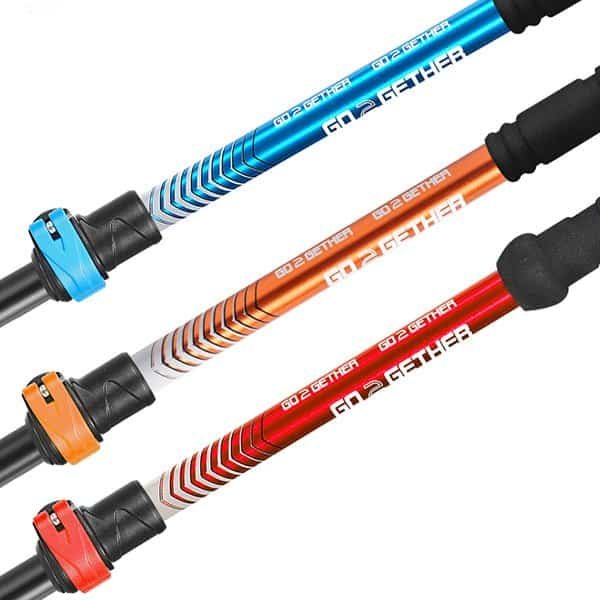
Carburo vs. Acero: los números que importan
El carburo gana en vida útil.
Aquí está la versión corta: las puntas de carburo de tungsteno (89–91 HRA) duran entre 500 y 800 millas más que el acero endurecido (58–62 HRC), frente a 150–250 millas sobre suelo mineral. Pero el carburo se astilla en granito y el acero se deforma antes de romperse. Para compradores minoristas, la decisión depende de dónde caminan realmente sus clientes.
Dureza del material (HRA / HRC)
La dureza es la primera especificación que solicitan los compradores, pero las escalas suelen confundirse. El carburo de tungsteno se sitúa entre 89 y 91 HRA, mientras que el acero templado suele tener entre 58 y 62 HRC. Son escalas Rockwell diferentes; HRA y HRC no son directamente intercambiables. Esa sola especificación explica por qué el carburo mantiene su agarre en suelos abrasivos durante más tiempo.
La densidad también diferencia ambos materiales. La densidad del carburo es de 15,6 g/cm³. Mayor masa en la punta implica mayor momentum en el impacto, razón por la cual los bastones con punta de carburo se sienten más estables sobre terreno compacto.
Retención del filo y fragilidad
-
-
- Factor de retención del filo: El carburo mantiene su agarre entre 3 y 5 veces más que el acero en suelos abrasivos: 500-800 km frente a 150-250 km. Una protrusión corta reduce este rango rápidamente. Especifica al menos 15 mm de protrusión para mantener la geometría del cono funcionando correctamente.
- Índice de fragilidad: La dureza del carburo conlleva una compensación: se astilla cuando golpea granito en un ángulo inadecuado. El acero, en cambio, se abolla y deforma en lugar de astillarse, motivo por el cual algunas marcas aún especifican acero para campos de talus y rutas alpinas.
-
La retención del filo no es lo mismo que un filo de cuchillo. La punta de un bastón de trekking necesita un cono estable. A medida que el cono se desgasta y se aplanó, el área de contacto aumenta y el agarre disminuye; los bastones comienzan a resbalar en rocas húmedas o descensos pronunciados. Una protrusión de 15 mm retrasa este modo de fallo más que cualquier cambio de aleación.
El punto débil no siempre es el metal. El collar de retención soporta impactos laterales repetidos, y si el collar o la argolla de crimpado se deforman, ninguna punta permanecerá fija. Por eso las pruebas de extracción son importantes: un conjunto de punta debe soportar al menos 25 kgf antes del envío. Si su proveedor no puede mostrar el resultado de esa prueba, siga buscando.
Costo por punta al por mayor
Las puntas de carburo cuestan más por unidad que las de acero. La diferencia exacta depende del diámetro del vástago (6,5 mm, 7 mm, 8 mm), del paso de rosca (15 mm vs 20 mm) y de su tolerancia de calidad. Una pieza de carburo sinterizado la punta con vástago integrado tiene un coste mayor que un inserto de carburo soldado a un vástago de acero.
No existe cotización honesta sin un volumen de pedido. Ahí es donde MOQ flexibles importa. En Kelyland, los modelos específicos comienzan desde 50-100 unidades, la producción estándar maneja pedidos de 300-1.000 unidades con un tiempo de entrega de 30-45 días. Una marca puede probar 100 bastones con puntas de carburo, recopilar opiniones reales en terreno y luego escalar a un contenedor completo sin que la fábrica le obligue a asumir un pedido inicial muy grande.
Vida útil en el campo y tipo de terreno
-
- Suelo mineral / tierra abrasiva: Carburo: 500–800 millas. Acero: 150–250 millas. La dureza del carburo mantiene su forma cónica; el acero se redondea más rápido.
- Granito / roca afilada: El carburo puede astillarse, acortando su vida útil. El acero es menos propenso a fracturarse, pero se desgasta más rápido una vez que el borde se deforma.
- Asfalto / pasarelas de tablas: Ambos se desgastan rápidamente. Las puntas de goma o nailon son más adecuadas para superficies duras y lisas, aunque presentan sus propias limitaciones de tracción.
Muchas marcas sobreestiman el entorno de abrasión de sus clientes. Un bastón utilizado principalmente en tierra del sendero Appalachian consumirá una punta de acero por cada 150–250 millas. En un thru-hike de 500 millas, eso representa 2–3 reemplazos de punta de acero o una sola de carburo. El cálculo de costos de reemplazo varía según si su marca envía puntas de repuesto con cada bastón.
El detalle de fábrica que muchos spec sheetpasan por alto es la interacción con el material del eje. Un eje de carbono 3K se flexiona de manera diferente al de aluminio 6061 o 7075. Si el conjunto de la punta es rígido y el eje se flexiona en exceso, el collarín absorbe el estrés adicional. La producción de bastones de trekking de Kelyland se realiza en una instalación de Ningbo a razón de más de 3 millones de unidades al año bajo ISO 9001:2015, por lo que el emparejamiento punta-eje ya se maneja durante la producción.
Relacione la punta con el terreno, no con la promoción. Si está lanzando un bastón de senderismo general, especifique carburo con 15 mm de protrusión, un collarín probado a 25 kgf y realice muestras preproducción antes la aprobación de la muestra. Cubre la gama más amplia de condiciones de sendero y protege su presupuesto de garantías.

Conclusión
La elección entre puntas de carburo y acero se reduce al terreno y a la economía de reemplazo. El carburo resiste suelos abrasivos durante 500-800 millas, mientras que el acero se desgasta en 150-250 millas en el mismo terreno. El material de la punta es solo parte de la ecuación: sin un collarín de retención que soporte 25 kgf y una longitud de protrusión de al menos 15 mm, tendrá reclamaciones de garantía que ningún inserto podrá resolver.
-
- El carburo de tungsteno dura aproximadamente 3-5 veces más que el acero templado en suelos minerales, pero se astilla sobre granito.
- Especifique una longitud de protrusión de al menos 15 mm para preservar el agarre a lo largo de los kilómetros de sendero.
- Exija una prueba de extracción del collarín a 25 kgf antes de aprobar la producción.
- Verifique el diámetro del vástago de 6.5-8 mm y el paso de rosca de 15-20 mm para garantizar la compatibilidad de las piezas de repuesto.
Antes de hacer tu próximo pedido por volumen, especifica por escrito los requisitos de retención de la punta: prueba de tracción de 25 kgf para extracción, 15 mm de protrusión y inserts de carburo para terreno mixto. Verifica si la fábrica ofrece puntas de repuesto y piezas compatibles dentro del programa, y confirma la política de reembolso del costo de muestra en pedidos al por mayor. Esa sencilla lista de chequeo mantendrá tus bastones en el sendero, no de vuelta en el almacén.
Preguntas frecuentes
¿Cuántos kilómetros duran las puntas de carburo?
El carburo dura entre 800 y 1280 km en suelo abrasivo, mientras que el acero endurecido se desgasta en solo 240 a 400 km. Para una línea económica, el acero puede funcionar, pero el carburo es la opción de mayor durabilidad. Elija carburo para bastones de alto kilometraje y terrenos abrasivos.
¿Los puntas de carburo se astillan en el granito?
Sí, las puntas de carburo pueden astillarse sobre granito y roca dura, a pesar de durar más que el acero en suelos abrasivos. Si sus clientes caminan principalmente por terrenos rocosos, el acero o una pata de goma pueden ser más rentables. Seleccione el material de la punta según el terreno predominante, no solo por la distancia recorrida.
¿Por qué se caen las puntas de los bastones de trekking?
La mayoría de los fallos en campo se deben en realidad a la deformación del collar de retención, no al desgaste de la punta metálica. Los impactos laterales repetidos en descensos rocosos aflojan el collar, lo que provoca que el conjunto de la punta se separe. Se exige una prueba de extracción de 25 kgf antes del envío.
¿Qué prueba de extracción debo especificar?
El requisito mínimo es una prueba de extracción horizontal de 25 kgf para detectar aflojamientos tempranos. Además, verifique la estabilidad bajo carga lateral, ya que la deformación del collar, no el desgaste de la punta, es la causa principal de fallos. Añada la prueba de extracción de 25 kgf a su lista de control de calidad.
¿Cómo quito una puntera de bastón de trekking atascada?
Remoje la empuñadura en agua tibia, nunca uses llama abierta, ya que el calor puede ablandar el vástagos de carbono. Deja que el conjunto se expanda antes de destornillar la punta. Nunca intentes retirar la flecha disparándola sin punta con llama abierta.

 English
  Español
  Deutsch
  Français
  Português do Brasil
  Русский
  العربية
  한국어
한국어  日本語
日本語