 跳到内容
跳到内容 
Fwd: Folding wagon wheel durability test — hold the shipment. The body was one sharp observation: the pre-production sample rolled smoothly across the factory floor, but the mass production wheels already showed hairline cracks around the hub. A $50K order parked at the dock because nobody froze the wheel spec during 。.
That mismatch is why the folding wagon caster wheel failure rate keeps showing up in warranty data. The sample is a supplier’s best attempt, not their average. When margins get tight, the wheel assembly is the first line item to get cheaper — which usually means PVC tires without any UV stabilizer package. Six months in warehouse storage or a sunny retail display, and the tread turns brittle. On the customer’s first beach trip, it cracks.
Most buyers never ask the question that actually matters: will the production wheels match the sample you signed off on? Fewer than 10% of new buyers ever ask for a wheel-specific QC plan before placing an order, and that blind spot explains why wheel collapse dominates returns in this category. You can close the gap with tools that cost a few hundred dollars — a Shore A durometer for tread hardness, a dial indicator for axle straightness, and a loaded rolling resistance test on a shop floor incline. Ask a supplier for those three numbers before you commit. If they hesitate, you already know what your FOB価格は is buying, and it is not the wagon you approved.
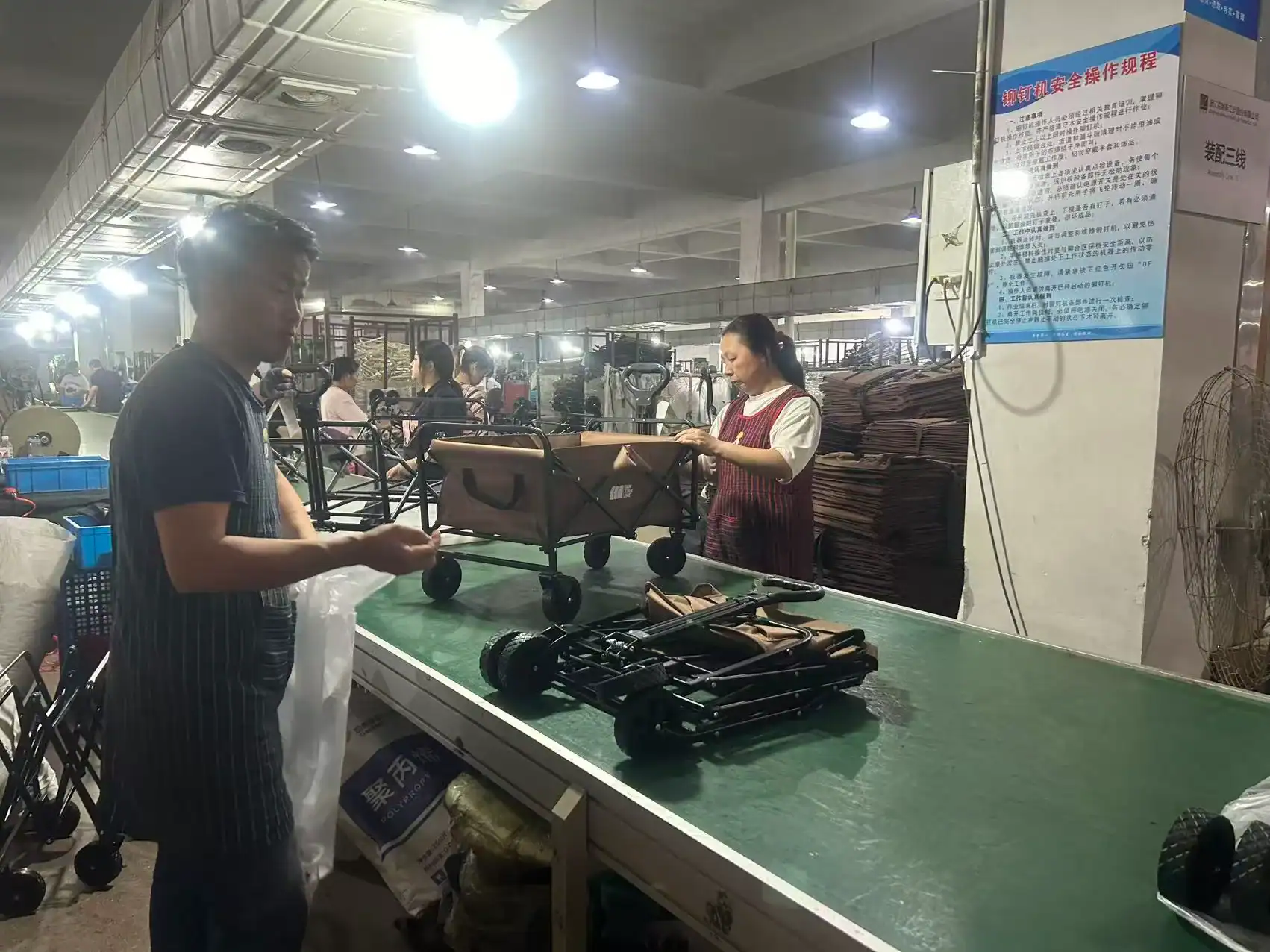
Why Wheel Failure Is the #1 Returns Driver for Folding Wagons
The cheapest part on the wagon creates the most expensive warranty claim — wheel QC is margin insurance.
Most folding wagon returns come from wheel collapse within the first three months of ownership. The sharper stat is that fewer than 10% of new buyers ask suppliers for a wheel-specific QC plan before signing a purchase order. They check the 600D-900D Oxford fabric and the powder-coated carbon steel frame, then trust the most load-stressed component on the wagon, the caster, to the lowest quoted price.
Where Budget Suppliers Make the Hidden Cuts
- Recycled hub plastic: Filled PP/Nylon compounds can mimic virgin resin in color but go brittle under load cycling. A loose bearing seat keeps the axle straight until the first bump, then it wobbles and self-destructs.
- PVC tires without UV stabilizers: Six months in retail stock or a bright warehouse turns the tread brittle. The customer gets it home, rolls it over gravel, and the rubber cracks on first use. The factory saved a few cents per wheel. You pay the return freight.
- Zinc brake pins over steel: Zinc die-cast pins are cheaper to mold but wear quickly through repeated lock and release cycles. The brake feels smooth during the sample review and grinds by week six in the field.
The financial math is brutal. The wheel is one of the cheapest components in the entire bill of materials, often costing far less than the fabric or the frame tube. A warranty claim drags in an inbound return label, a refund or replacement, outbound freight, and staff hours. That total can exceed the gross margin on the entire wagon.
Timing makes it worse. Wheel collapses cluster in the first 90 days, right when your season is active and support tickets are peaking. You are not just refunding a cart; you are subsidizing a customer experience that will end up in a one-star review and a permanent block on repeat purchases.
What the QC Plan Should Catch
The ISO 9001:2015 certified factories in Kelyland’s supply network document every production stage, and their pre-shipment inspection step verifies final quality before the container leaves. But a visual check will not expose a brittle PVC tread or a sloppy bearing seat. The spec must include loaded rolling tests and durometer readings. Ask for those numbers before you approve the sample, not after the first return lands.
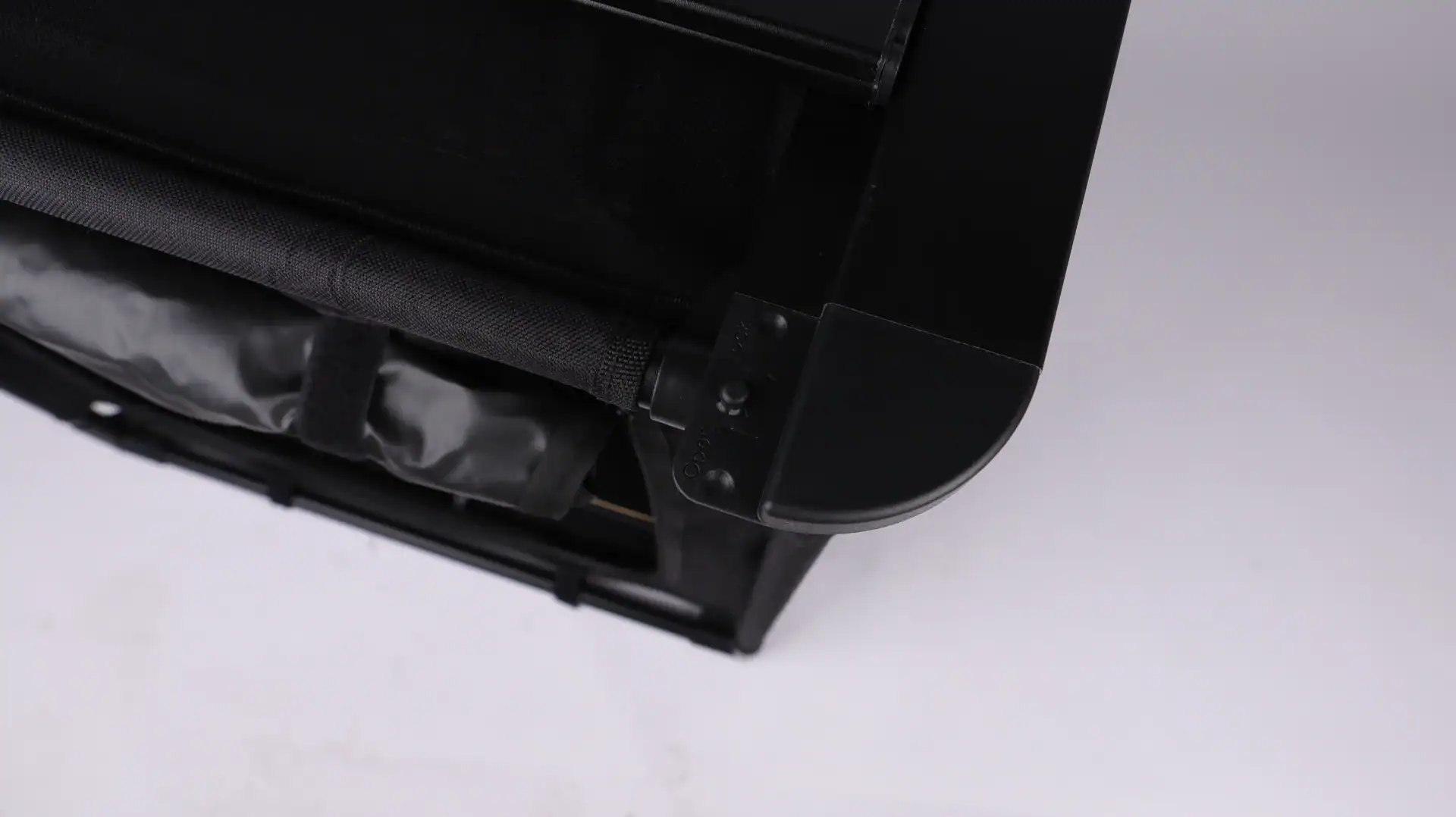
Visual Inspection: 4 Red Flags in the Hub and Axle
A 30-second fingernail test on the hub catches the defects that drive most three-month wheel failures.
Wheel collapse is the top reason folding wagons come back to retail within three months. Fewer than 10% of new buyers ask suppliers for a wheel-specific QC plan, which is why the same defect pattern keeps repeating. The hub and axle reveal most of it — no tools needed.
Three Hub Defects That Matter
Run a fingernail along the hub’s parting line. A raised ridge means the injection mold is worn or the clamping pressure was set too low. Flash looks cosmetic on a sample, but it cracks at the spoke junction under lateral load — the moment a customer pops the wagon over a curb.
Weight tells the truth about material content. A hub molded from virgin PP feels dense. Spokes with sink marks or a hollowed cross-section mean the factory trimmed resin to save cents per unit. Those spokes fatigue at the root and fail on uneven ground with a loaded cart.
Spin the wheel on the axle. Grinding, clicking, or side-to-side play at the hub face points to a bore machined oversize or a bearing pressed out of square. That wobble turns into the ‘wobbly wheel’ review within the first week of ownership.
Virgin Resin vs. Recycled: Reading the Hub
Dark plastic hides recycled content well, which is why budget wagons use it in hubs. Look for a chalky grey cast, tiny specks of contamination, or color drift between hubs in the same batch. Virgin PP and Nylon mold with uniform color and a slightly waxy sheen. Burn streaks near the gate mark point to regrind.
The folding wagon factory in Kelyland’s network produces 1 million units a year out of Jinhua under ISO 9001, and runs custom injection molding for hub and caster parts. Use that as a benchmark. Ask any supplier for the resin grade and the mold’s maintenance log — a vague answer tells you what you need to know.
- Mold flash: Nail catches a ridge on the parting line — worn tooling or low clamp pressure.
- Thin spokes: Sink marks or hollowed sections — resin trimmed to hit a lower unit price.
- Bearing seating: Wobble or grinding on axle spin — oversize bore or bearing not pressed square.
- Recycled resin: Chalky cast, specks, or batch color drift — assume some regrind content.
Rolling Resistance Test: Replicating 500 Meters of Loaded Use
A loaded wagon that drags generates complaints even if nothing breaks.
Most wagon sampling happens on a clean warehouse floor. Empty cart, two quick pushes, done. That tells you nothing about how the wagon behaves with 50 kg of gear on a gravel lot. The folding wagon line at the Jinhua factory — an ISO 9001:2015 certified plant producing 1,000,000 wagons annually — treats rolling resistance as a structural test, not a feel check.
The shop floor incline rig
固定テスト区間を3つの交互に配置された表面で構築する: 締固めた砂, 、緩い砂利、およびキャストアスファルト — 顧客が実際にワゴンを引く地面。管理されたループで500メートルの積載走行を行い、安定した歩行ペースでワゴンを動かし続けるのに必要な力を測定する。牽引力ゲージがトレースを記録する。.
- 荷重: 50kgをバランスの取れた位置に固定する。これは標準的な折りたたみワゴンの定格容量範囲50〜200kg内に収まる。.
- 合格/不合格の指標: 全トラックにわたる50kg荷重時の最大転がり力を牽引力ゲージで記録する。3つの表面すべてでの一貫した読み取り値が、単一のピーク値よりも重要である。.
- 不合格となる条件: 走行後半での力の上昇は、ベアリングの過熱またはハブの固着を示している。砂利でのスパイクは通常、タイヤが硬すぎることを意味する。.
力のトレースを読み取る
高い転がり抵抗には、ベアリングの引きずりとタイヤの剛性という2つの異なる欠陥が隠れている。. TPEホイール はアスファルト上では静かだが、同じ硬度ではトレッド寿命の約30%を犠牲にする。PVCは長時間の日光暴露後に硬化する。力のトレースは、目視検査では捉えられないタイヤと車軸の相互作用を明らかにする。.
Tread Hardness & Material ID (PVC vs. PU vs. EVA vs. TPE)
Shore Aデュロメーターを購入してください。.
The foam-filled EVA wheel that feels fine in a showroom is the same wheel that cracks after a summer of beach duty. Material ID is the cheapest durability test you can run — a $40 durometer beats a $4,000 warranty claim. Here are the minimums we enforce on wagon tire compounds across our partner factories, plus the one material that fails predictably under UV exposure.
Shore A Minimums for Wagon Tread Materials
- PVC (with UV stabilizer): Minimum 70 Shore A. Below that, the tire flexes too much on hot pavement and accelerates hub bearing wear. Without a UV stabilizer package, PVC becomes brittle within six months of outdoor display — the exact failure pattern seen in budget wagons returned after a single season.
- PU (polyurethane): Minimum 80 Shore A. PU delivers the best tread life for load-bearing wagons, but it runs harder and transmits more vibration. A 90A PU tire will outlast a 70A PVC tire on gravel by a wide margin — the trade-off is noise.
- TPE: Minimum 70 Shore A. TPE runs quieter than PU and feels smoother on boardwalks, but at the same hardness it gives up roughly 30% of tread life compared to PU. If your retail customers are complaining about noise, TPE helps. If they are complaining about wobble and flat spots after three months, you bought the wrong material.
- EVA (expanded foam): Acceptable only for beach carts and light-duty 50 kg wagons. Even at 55-65 Shore A, EVA lacks the abrasion resistance for gravel or curbs. It also degrades faster under UV — which is why the next point matters.
The EVA Blind Spot
EVA foam tires fail in a specific way: they oxidize and harden on the surface first, then crack where the wheel meets the axle. You won’t see it in the sample approval stage because the wheel is fresh. But leave a wagon on a retail loading dock in Arizona for eight weeks, and the tread will chip on the first curb. That is why every EVA-spec wagon gets a written UV-exposure warning in the パッケージング, and why our stronger partners default to PVC with a stabilizer or TPE for anything above 50 kg rated capacity.
Ask your supplier for the Shore A reading on the actual production batch, not the datasheet. ISO 9001-certified factories — like the ones in our network producing 1 million wagons annually — track material batch data and will share it. A supplier that cannot produce a durometer reading from the last run is telling you the compound spec is not controlled.
| 素材 | ショアA硬さ | Performance Profile | 一般的な故障モード | 買い手の対応 |
|---|---|---|---|---|
| PVC(ポリ塩化ビニル) | 70–90(合格最低点:75) | 低コスト、初期グリップ良好、トレッド剛性あり | UV劣化 — 安定剤パッケージなしで小売在庫に約6ヶ月置くと脆くなりひび割れる | 書面によるUV安定剤仕様を要求。サプライヤーが文書化できない場合は不合格とする |
| PU(ポリウレタン) | 80–95(合格最低点:85) | トレッド寿命が最長、耐引裂き性・耐摩耗性が高い、転動音が静か | 高コスト、一部のグレードは極度の暑さで軟化する | 重量物用手押し車(150kg超)およびプレミアム小売プログラム向けに指定する |
| EVA(エチレン・酢酸ビニル共重合体) | 55–75(合格最低点:60) | 軽量、衝撃吸収性あり、平滑面での騒音が低い | UV耐性と耐摩耗性が低い — 直射日光で偏平化・ひび割れ発生、砂利道で急速に摩耗 | 屋内の軽負荷用途に限定し、日光の当たる店頭展示では決して使用しない |
| TPE(熱可塑性エラストマー) | 60–85(合格最低点:70) | PUよりも静かで、寒冷時の柔軟性に優れ、グリップも良好 | 同等硬度のPUに比べ、トレッド寿命が約30%短い | 騒音クレームが目標指標である場合に選択してください。保証交換サイクルを短く計画してください |
Brake Mechanism Reliability Check (Crack-Open & Lock Cycle)
サンプルベンチでしっかりとクリックするブレーキも、3回目のビーチ旅行までには滑る可能性がある.
フットブレーキは折りたたみワゴンで最も踏み込まれる部品です。ユーザーはワゴンに満載した状態で、芝生、砂利、または砂の上でそれを踏みます。砂がピボットにすり込まれます。スプリングは張力を失います。ピンが摩耗します。ショールームのデモを通過するブレーキでも、最初のシーズンが終わる前に故障することがあります。.
100回エンゲージ&リリーステスト
の場合 ワゴンブレーキメカニズムの信頼性テスト 手法:工場QCでは、サンプルユニットに対し最低100回の完全なペダルサイクルを実行します。各サイクルではブレーキを engages し、積載状態でワゴンを前後に揺らしてホイールが保持されることを確認し、その後リリースします。一連のテストを通じてペダル力、スプリングの戻り速度、ピンの着座深さを監視します。.
- エンゲージ: ペダルを一押しするだけでブレーキピンが着座します。研磨音や2回目の押しが必要であれば、ロック穴にバリがあるかピンがずれている可能性があります。.
- ホールド: ブレーキが engaged な状態では、積載状態でワゴンを前後に揺らしてもホイールは回転してはなりません。クレイプ(かすかな動き)が生じる場合は、ピンが十分に深く着座していないことを意味します。.
- リリース: レバーは解放すると完全に.snap back(元の位置に戻ります)。戻りが遅い、または不完全な場合は、現場で早期に故障する可能性のある弱体化したスプリングを示唆しています。.
- 亜鉛合金: 鋳造コストは安いものの柔らかく、100回のテスト終了前に先端変形が生じる可能性があり、実際の野外使用における有効な保持力が短縮されます。.
- ステンレス鋼: より硬く耐食性に優れています。テスト全体を通してシートプロファイルを維持し、亜鉛表面の腐食を促進する湿気や沿岸地域での保管にも耐えます。.
ブレーキピン素材:亜鉛合金 vs ステンレス鋼
ピンの素材が、その100回の信頼性がどれほど持続するかを決定します。. 亜鉛合金 コストは安く、低予算の生産で主流です。一方、ステンレス鋼は高価ですが、繰り返し衝撃下でも形状を保持します。亜鉛ピンはロック穴への衝突時に先端が変形する可能性があります。変形した先端は浅く着座するため、ブレーキの保持力が低下します。.
サプライヤーの能力が重要です。浙江省金華の折りたたみワゴン工場ネットワークはISO 9001認定を取得しており、最終組み立て前にメカニズムのライン検査を実施しています。ブレーキサイクルデータシートを共有する調達パートナーは、小売業者に対してホイールおよびブレーキの返品に関する直接の保証クレーム削減経路を提供します。.
Axle Straightness & Bracket Weld Integrity
曲がったアクスルは、使用開始から100メートル以内にガタつきの苦情として顕現します。.
曲がったアクスルは営業電話や製品写真ではまず見えません。それは顧客が50kgのギアを積んで駐車場をワゴンを押したときに見えます。ワゴンが左に引っ張り、ホイールがガタつき、返品は工場の床ではなくあなたの机に乗ってきます。.
そのため、ダイヤルインジケータを用いたワゴンアクスルの直線性チェックは、単なる書類上のものではなく、すべての出荷前検査に組み込む必要があります。固定ベースに取り付けたダイヤルインジケータと、ハブフェイスで読み取りを行うためにホイールハブをゆっくり回転させる必要があります。工場許容値を上回るビート読み取り値は、アクスルが溶接、粉体塗装、または取扱い中に曲げられたことを意味します。タイヤがどれだけ良くなっても、ワゴンは一直線に転がりません。.
スイベルブラケットタブの溶接スロット:最小2mm
スイベルブラケットタブは、積載されたワゴンの隅の負荷全体を支えます。溶接スロットが不適切なサイズの場合、タブは押し途中にせん断されます。許容される最小の溶接スロット寸法は2mmです。それ以下は、低温溶接、気孔、または不均一な地面での繰り返しねじれ力に対処するのに十分に材料がないリスクがあります。.
- 検証方法: ブケットタブの接合部に溶接ゲージを使用します。視覚的な脚長ではなく、実際のスロットを測定します。脚長は良好に見えても、有効スロットは2mm未満である場合があります。.
- 故障モード: 静荷重では合格するが、動的ねじれでは失敗するタブ。溶接が toes でひび割れ、ブラケットが傾き、荷重下でホイールが内側に折りたたまれます。.
折りたたみワゴンで使用される製造パートナーであるKelyland OutdoorsはISO 9001:2015のもとで運営され、生産中に段階的検査を行っています。しかし、証明書はサンプルユニットの溶接ゲージに取って代わるものではありません。サプライヤーに、出荷前検査報告書でのアクスルビート読み取り値および溶接スロット測定値を依頼してください。躊躇する場合は、それを警告サインとして扱うべきです。.
Loading the Wagon: Weight Distribution Test for Corner Wheels
均等荷重試験では、角落ち(片輪)の故障は隠れてしまいます。.
荷物を均等に積んだ状態での台車試験は、実際の故障パターンについてほとんど何も教えてくれません。ギアは決して真ん中に置かれたままであることはなく、クーラーボックスや薪の束、またはフレームに乗った子供によって重量が片方の角落ちへと大きく偏ります。その結果、その片輪だけが定格荷重の4分の1をはるかに超える負担を強いられることになります。ひび割れが始まるのは、過重負荷がかかるこの角落ちです。.
120% 角落ち負荷プロトコル
弱いたる車輪を暴き出すテスト:台車を定格容量に20%を加えた状態で積み、荷重を偏らせて一角に全重量の半分をかけます。縁石の端や締め固められた砂利の上を30往復させ、重い角落ちを回転させてこれを繰り返します。台車1台あたり1時間以内で完了します。.
年間約1,000,000台を生産する浙江省金華の折りたたみ台車生産ネットワークにあるISO 9001:2015認証工場では、出荷前検査の一環としてこのプロトコルを実行できます。これにより、ユーザー使用開始後2~3ヶ月目によく見られる角落ちの故障を事前に排除できます。.
- 積載構成: 定格容量の120%、荷重の半分を一角に集中。30往復ごとに4角落ちを回転させる。.
- 走行路面: 縁石の端、または締め固められた砂利。平滑なコンクリートでは、ハブを破壊する応力を隠蔽してしまいます。.
- ハブ点検: スポーク根元に応力痕やマイクロクラックがないか確認します。これは車輪の完全な崩壊に至る前兆です。.
- アクスル測定: ディアルインジケータを使い、使用前と使用後に比較します。測定可能なたわみがあれば、アクスル鋼材の変形またはベアリング座面の failures を示します。.
10%未満の購入者数 オーダー済のプライベートラベル台車 ホイール固有のQCプランを請求するのが一般的です。そのため、大半の輸入業者はコンテナ到着後、返品対応開始後、コストが利益を圧迫した後にのみ重量配分不良に気づきます。コーナードロードテストは工場ラインで40分かかります。これを省略すると保証請求で実損害が生じます。.
このプロトコルを実施し、出荷前検品報告書と共に各コーナー荷重データシートを提供するようサプライヤーに依頼してください。簡単な荷重移動テストすら実施できない工場であれば、サンプルのホイールアセンブリも現場では同じように持ちこたえられません。.
Reporting Template: 5-Point Wheel QC Data Sheet for Factory Audits
ホイールテストは監査シートに記載すべき項目です。.
大半の折りたたみワゴン 監査レポート 生地、フレーム、折りたたみ機構をカバーします。ホイールデータはほとんど表示されません。ホイール専用のQCプランを要求するバイヤーはすでに大多数の先を行っています。ほとんどの輸入業者は問い合わせず、最初のコンテナが届いた後にのみ折りたたみワゴンのキャスターホイールの故障率を発見します。この5点データシートをサプライヤー監査および出荷前検査のテンプレートとして使用してください。.
5点ホイールQCデータシート
- ハブとアクスル: スポーク根部の周囲のハブプラスチックのモールドフラッシュ、シンクマーク、リサイクル材のストリーキングを点検します。各ホイールをダイヤルインジケータに取り付けて軸の偏心を記録します。ホイールが直軸上で暴れる場合は、ハブボアが円形ではありません。.
- タイヤ素材と硬度: ホアA hardnessメータを シャーA硬度計 でタイヤ上で測定します。PVCは硬度基準を満たしても経時劣化で失敗することがあります。UV安定化剤パッケージのないPVCは店頭在庫で6ヶ月後に脆くなります。TPEはPUよりも静かに回転しますが、同じ硬度で走行寿命は短くなります。あなたのプログラムが許容するトレードオフを必ず記録してください。.
- 転がり抵抗: 50kgの荷重をかけて引っ張りテストを行います。最大の転がり力を記録し、前後輪を比較します。荷重下でホイールが引きずったり跳ねたりする場合は、ベアリングの着座またはハブボアの不良を示しています。.
- ブレーキサイクル信頼性: ブレーキごとに100回のロック/アンロックサイクルを実行します。サイクル後のピンをチェックします: ズンクピン はホイールへの着座部で摩耗が目立ちます。ステンレス鋼はロック形状をより長期間保持します。テスト中にブレーキが滑る Wagen は全て却下してください。.
- 溶接と過負荷: スウィベルブラケットの溶接スロットルを測定し、最小2mmとする。その後、ワゴンを定格容量プラス20%で負荷し、ホイールブラケットを観察する。ブラケットの塑性変形や軸の曲がりは、現場での崩壊を示す前兆である。.
浙江金華のKelyland折りたたみワゴンパートナー工場は、ISO 9001:2015の下で年間100万台のワゴンを生産しています。そのラインからのホイール検査報告書にはこれらの5つのポイントが含まれており、記録は要請に応じて購入者と共有されます。サプライヤーが同等のデータを生成できない場合、監査は完了していません。.
結論
折りたたみワゴンキャスターホイールの失敗率は、輸送や物流の問題ではありません — それは設計とQC仕様問題です。ホイール監査をスキップすると、小売配置から90日以内に最初の保証請求が届きます。積載状態のワゴンでのホイール落下は単価利益を消し飛ばし、消費者にブランド全体が信頼できないという印象を与えます。.
- 生産バッチ承認前に、50kgの積載状態でローリング抵抗テストを実施するよう要求してください。.
- Shore A硬度計数値を依頼してください — UV安定剤なしのPVCは、小売在庫中で数ヶ月後に脆化します。.
- ブレーキロック/アンロックを100回実施してください;亜鉛ピンはステンレススチールより長くテストすると早く摩耗します。.
- ホブの成型フラッシュと再生材料を検査してください — virgin PPまたはナイロンホブはより長いサービスライフをサポートします。.
次の折りたたみワゴン発注を評価する際には、ホイール耐久テストを工場監査チェックリストの最上位に置いてください。大量生産承認前に500メートルの積載ローリング抵抗データ、Shore A硬度計レポート、100サイクルブレーキテスト記録を求めてください。PVC、PU、TPEホイールオプション間でこれらの数値を比較し、製品を保証条件に合致させてください。現在の折りたたみワゴン仕様についてはKelyland製品ページで確認できます。.
よくある質問
折りたたみワゴンの車輪耐久性試験とは何ですか?
これは、出荷前に荷重をかけた使用をシミュレートしてホイール部品をチェックする工場のQCプロセスです。コアとなる合否判定基準は、a全体での50kg荷重時における最大転がり力です。.
折りたたみワゴンのホイールが最も頻繁に故障する理由は何ですか?
Wheels fail most often from cracked hubs and bent axles, which are the top return driver for folding wagons. Cheap caster wheels with recycled plastic hubs and poor bearing seating fail within. Inspect hub and axle red flags before approving mass production.
How do I test folding wagon wheel hubs?
Run a 30-second visual inspection for mold flash, thin spokes, and poor bearing seating in the hub and axle. You can spot recycled plastic versus virgin PP or nylon hubs by. Reject hubs with flash or weak spoke structure on the spot.
How many cycles should wagon brakes survive?
Folding wagon brakes should survive 100 lock/unlock cycles without cracking or losing lock. If brakes fail early, the likely cause is a zinc brake pin instead of stainless steel. Require stainless steel brake pins for long warranty life.
Which wheel material is best for folding wagons?
For loaded outdoor use, PU treads are the more durable choice compared to PVC, EVA, or TPE. EVA wheels can fail quickly under direct sun, so grade by Shore A hardness per. Set minimum durometer values based on wheel material and route.

 English
  Español
  Deutsch
  Français
  Português do Brasil
  Русский
  العربية
  한국어
한국어  日本語
日本語