
inflatable tent materials tpu pvc is the first checkpoint buyers should lock before they approve a supplier, budget, or production slot. A buyer’s checklist for an inflatable tent line looks solid on paper: confirmed denier, approved coating spec, signed-off color swatch. Then the $50K shipment lands and three things happen — the air beams lose pressure overnight in sub-zero temps, the fabric feels stiff enough to crack at the fold lines, and your retail partners start asking questions. The one item nobody checks before production is the welded seam peel strength on the air beam itself. That number determines whether your tent holds air for a season or fails during the first cold snap.
Most brand managers I work with get caught in the TPU vs PVC cost debate — and they should. TPU air beams run roughly 25-40% lighter than PVC and stay flexible well below freezing, but they cost anywhere from 50% to double what PVC does. That’s why most wholesale inflatable tents coming out of China still use PVC. The real gap shows up when you compare a cheap PVC beam that cracks at -5°C against a properly formulated TPU beam that flexes at -20°C without losing air retention. The price delta makes sense once you map it to your target market’s climate and expected product lifespan.
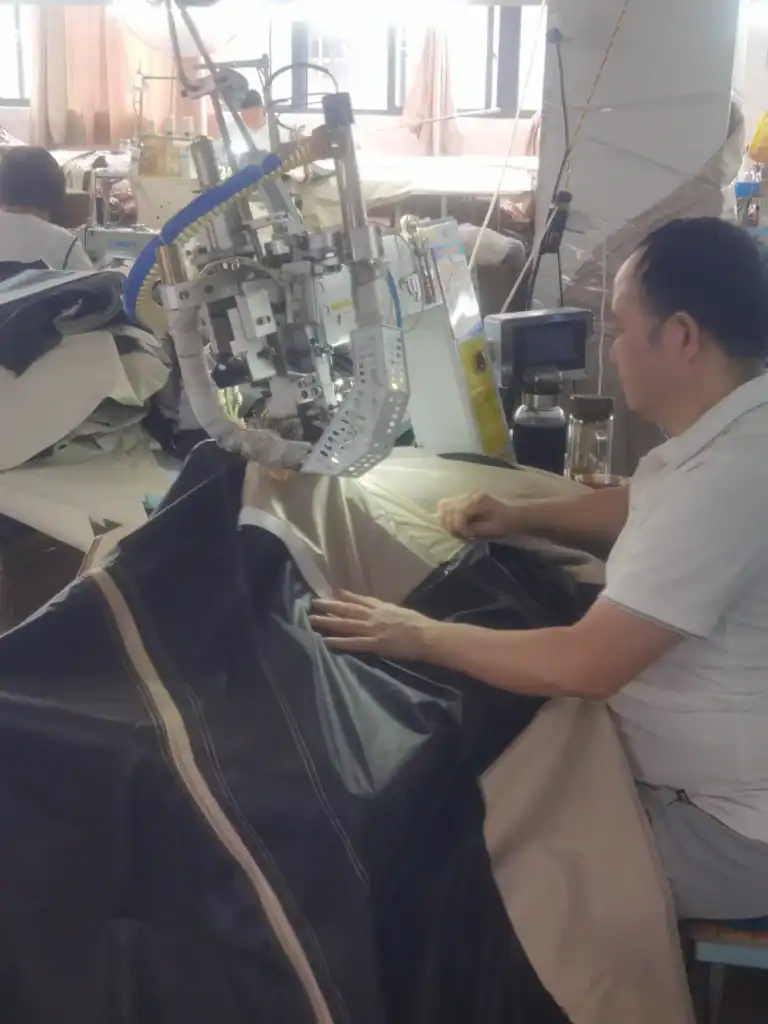
Inflatable Tent Material Basics
Fabric denier alone won’t predict field failure — coating thickness and seam peel strength will.
The single biggest mistake brand managers make when sourcing inflatable tents is treating fabric weight as the primary quality indicator. A 210D polyester with a thin PU coating will delaminate after two seasons in UV exposure, while a 150D fabric with a properly applied 0.3mm PU coating can hold up for five years. The coating system determines waterproofing longevity, not the denier number.
Why material choice determines product lifespan
An inflatable tent fails in one of three ways: air beam delamination at the weld seam, fabric coating breakdown from UV exposure, or puncture from abrasion against the ground sheet. The first two are material chemistry failures, not structural failures. Vigas de ar de PVC. lose plasticizer over time — in high-heat environments, they stiffen and crack at the folds after 18-24 months. TPU beams don’t have that problem because TPU doesn’t rely on migratory plasticizers; it remains flexible down to -30°C without embrittlement.
The fabric shell faces a different degradation path. Polyester resists UV better than nylon — nylon loses roughly 40% of its tensile strength after 500 hours of direct sunlight exposure, while polyester drops only about 15% under the same conditions. But even polyester needs a robust coating layer to block moisture ingress through the weave. A supplier that skimps on coating thickness saves maybe $0.08 per square meter at the raw material stage, but that savings translates directly into warranty claims when the tent starts leaking in month 14.
How to read a technical specification sheet from a Chinese supplier
A maioria fichas técnicas from Chinese factories list fabric composition (100% polyester), denier (150D or 210D), and classificação da cabeça hidrostática (2000mm or 3000mm). Those three numbers tell you almost nothing about real-world durability if they aren’t paired with two critical data points: coating thickness in microns and welded seam peel strength in Newtons per centimeter.
TPU vs PVC Air Beams
TPU air beams are 25–40% lighter than PVC and flex down to -20°C, but cost 50–100% more per unit.
The choice between TPU and PVC air beams comes down to a direct trade-off: performance per gram versus cost per unit. TPU (thermoplastic polyurethane) delivers better cold-weather flexibility, lower weight, and higher UV resistance. PVC (polyvinyl chloride) holds the price advantage — roughly half the material cost in most Chinese supply chains. For a brand manager deciding between a premium glamping line and a mid-range camping tent, this gap defines the product tier.
Cost and Weight Comparison
TPU typically costs 50–100% more than PVC for the same beam dimensions. The weight difference is equally stark: TPU beams weigh about 25–40% less. A standard 4-meter PVC beam for a 4-person inflatable tent weighs roughly 1.2 kg; the same beam in TPU drops to around 0.8 kg. That adds up fast across a full shelter frame — saving up to 2 kg on a family-sized tent.
Cold Weather Flexibility and Crack Resistance
PVC becomes brittle below -10°C. Below -15°C, field failures are common — the material cracks at stress points where the beam bends over the tent geometry. TPU stays flexible down to -20°C without embrittlement. This matters for alpine or winter camping products where warranty claims spike due to formação de trincas em condições de frio intenso.
UV Stability and Long-Term Air Retention
TPU resists UV degradation significantly better than PVC. After three months of continuous sun exposure, PVC loses roughly 30% of its tensile strength; TPU retains over 90%. Air retention follows the same pattern — TPU holds pressure longer because it doesn’t plasticize or leach stabilizers over time.
Repair Difficulty in the Field
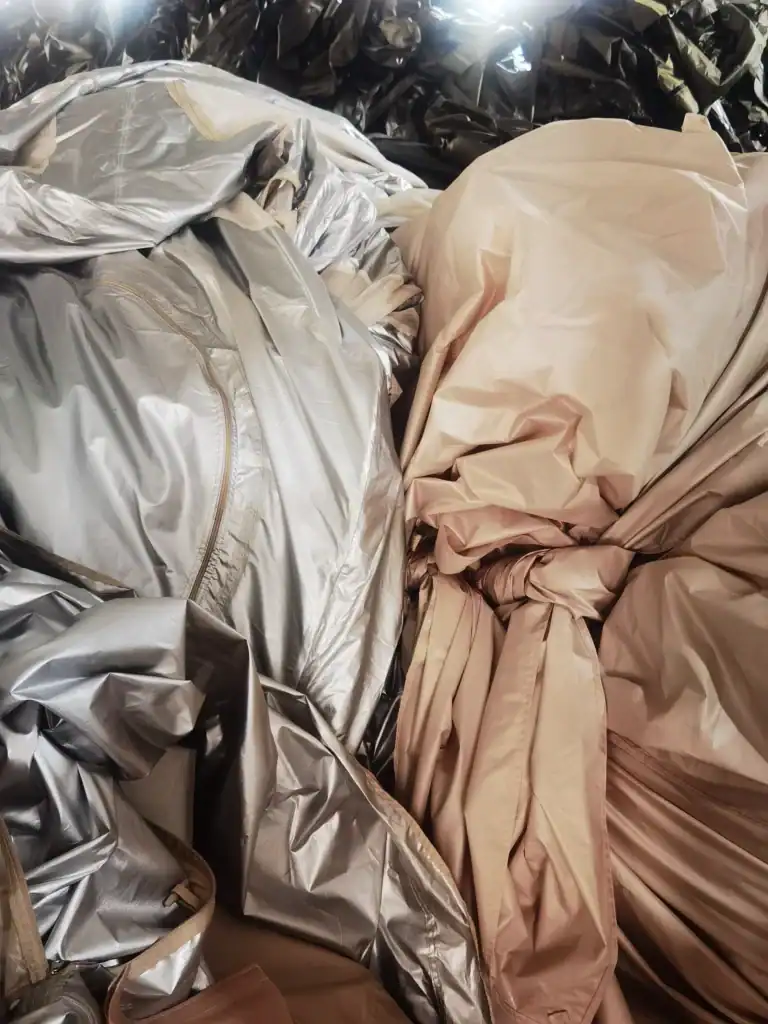
Tent Fabric Options for Inflatable Shelters
Fabric weight alone won’t tell you if the tent lasts — coating and seam construction decide that.
Most brand managers start by asking for a denier number. That’s useful, but it’s not the full picture. A 150D polyester with a thick PU coating can outperform a 210D fabric with a thin coating in real-world use. The coating system and seam construction determine where failures actually happen.
Polyester vs Nylon vs Blended Fabrics
Polyester dominates inflatable tent shells because it resists UV degradation better than nylon and costs less. Nylon is stronger per denier and more abrasion-resistant, but it absorbs water and sags when wet — a problem for large inflatable structures. Polyester-cotton blends (TC fabric) are common in glamping tents where aesthetics matter more than weight savings.
For inflatable shelters specifically, polyester ripstop is the standard choice. The reinforcing grid stops small tears from running across the panel. Nylon makes sense only for ultralight backpacking inflatables where every gram counts, but expect shorter lifespan under constant sun exposure.
Fabric Weight (Denier) and Durability
Denier measures thread thickness — higher numbers mean heavier, theoretically tougher fabric. A 150D fabric runs around 110-130 gsm; 210D runs closer to 170-190 gsm. For family-size inflatable tents, 150D to 210D polyester covers most needs. Heavy-duty glamping models often use 300D to 600D Oxford fabric for puncture resistance against rough ground sheets.
Hydrostatic Head and Waterproofing
A 3000mm hydrostatic head rating is the minimum for reliable rain protection in a glamping tent.
Hydrostatic head (HH) measures how much water pressure a fabric can withstand before leaking. The test is simple: a column of water rises against the fabric, and when the first droplet penetrates, that height in millimeters becomes the rating. A 1500mm fabric handles light drizzle. A 3000mm fabric handles sustained rain. For glamping tents where guests expect dry shelter regardless of weather, anything below 3000mm creates return risk.
What rating your product line actually needs
For three-season camping tents sold to weekend users, 2000mm to 3000mm on the fly and 4000mm on the floor is the industry standard range. Glamping tents with canvas or poly-cotton blends need a different approach — those fabrics rely on fiber swelling rather than coating alone, so the HH figure matters less than weave density and seam construction. For inflatable tents using polyester or nylon shells with PU coatings, specify a minimum of 3000mm on the fly and 5000mm on the groundsheet if you want zero complaints during an overnight downpour.
Why seam taping fails more often than fabric
The fabric itself rarely leaks first. The needle holes from stitching create thousands of micro-channels for water to follow, especially under wind pressure that forces water sideways through the thread path. On inflatable tents, every seam where two panels join must be taped or welded. PVC-coated fabrics get high-frequency welded seams that fuse the material — no tape needed, no failure point. PU-coated fabrics require hot-air seam taping with a polyurethane tape strip applied over every stitched seam.
- Welded seams (PVC): No tape required. The base material fuses under RF welding into a single monolithic bond. This eliminates the most common leak path entirely.
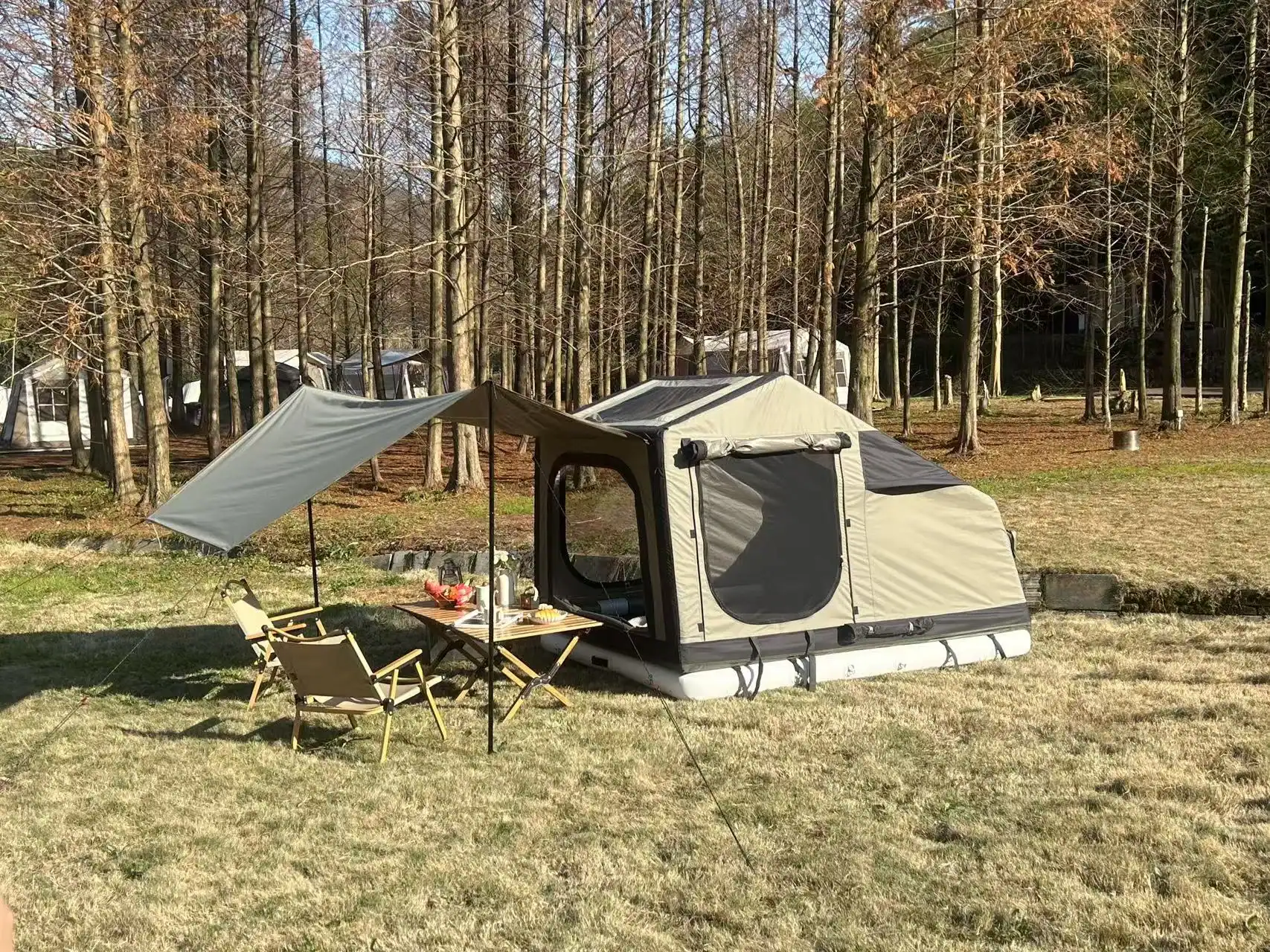
Air Retention and Valve Quality
A 0.1mm thickness difference can cut pressure retention by 40%.
Como a Espessura do Material Afeta a Retenção de Pressão
A retenção de ar começa pelo próprio material do viga. As vigas infláveis de PVC usadas na maioria das barracas infláveis para atacado variam de 0,4 mm a 0,6 mm de espessura de parede. Com 0,4 mm, o material estica mais sob pressão e perde ar por micro porosidade em uma janela de 48 horas. Com 0,6 mm, essa mesma viga mantém pressão utilizável por quatro a cinco dias sem necessidade de reposição.
As vigas de TPU comportam-se de forma diferente porque a estrutura do polímero já possui menor permeabilidade gasosa. Uma viga de TPU com 0,3 mm de espessura de parede pode superar uma viga de PVC com 0,5 mm apenas em retenção de ar. O diferencial é a resistência a perfurações — paredes mais finas são mais fáceis de danificar em terreno rochoso ou se uma estaca da barraca se deslocar durante o vento.
Tipos de Válvulas e Pontos de Vazamento
O conjunto da válvula é onde ocorrem a maioria das falhas em campo, não na parede da viga em si. Barracas infláveis de alto volume utilizam um de três designs de válvula: válvulas de aba (mais baratas, despressurização mais lenta), válvulas de travamento rotativo (faixa intermediária, melhor vedação) ou válvulas de descarga de alto fluxo (despressurização rápida, mais peças móveis). Cada uma possui um modo característico de falha.
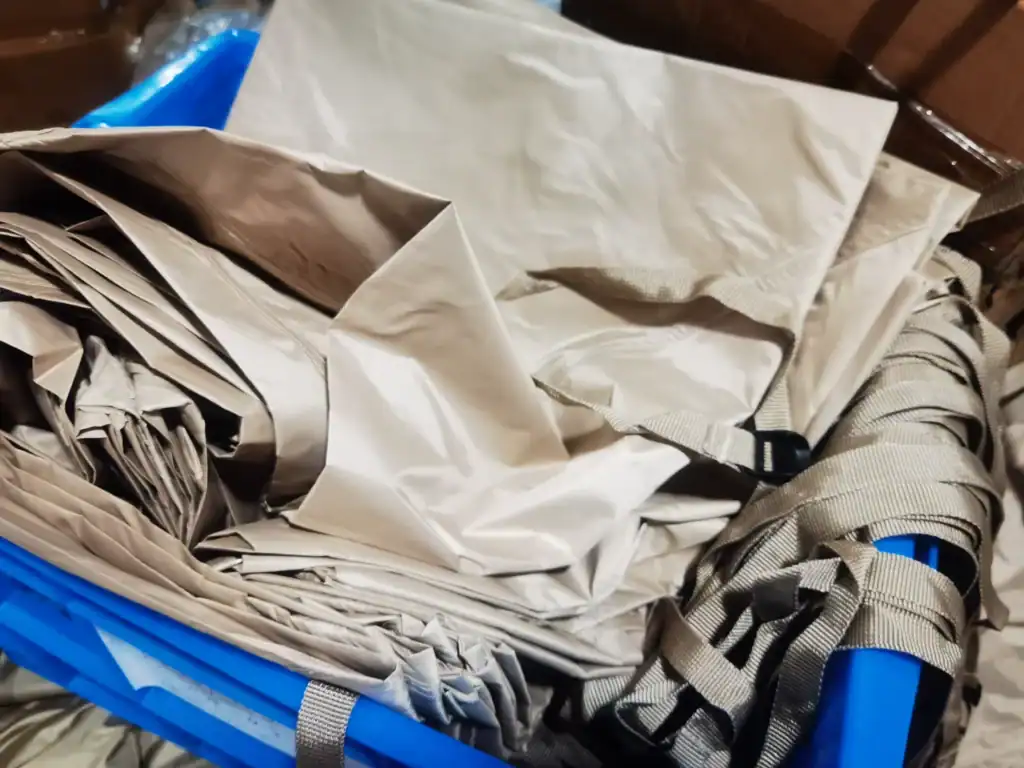
Comparing Long-Term Cost per Use
A $4.80 PVC tent can cost $16.20 over 3 years.
Most brand managers compare unit prices on a spreadsheet. That comparison misses the real metric: cost per use over the product’s lifecycle. A glamping tent that fails in month 14 doesn’t just generate a refund — it generates a negative review, a lost customer, and a replacement shipment under warranty.
The PVC replacement cycle math
A typical entry-level PVC inflatable tent from China hits retail at roughly $4.80–$6.00 FOB per unit for a 2-person model using 0.4mm wall thickness beams. The first failure point is almost never the fabric — it’s the beam weld seam or the valve base. Internal production data from ISO 9001:2015 certified factories shows that roughly one in four PVC tents shipped at this price point develops a slow leak within 12 to 18 months of intermittent seasonal use.
That means if you sell 1,000 units, about 250 will come back as reclamações de garantia or negative reviews within two seasons. The replacement cost — including shipping, handling, and lost margin — often exceeds the original profit on the sale.
TPU air beams carry a material cost premium of roughly 50–100% over PVC for the same beam diameter and wall thickness. That pushes the FOB unit price to $7.50–$12.00 for an equivalent tent shell with TPU tubes instead of PVC tubes.
$7.50 vs $5.00 looks like an easy choice on paper — until you run the three-year projection.
Conclusão
|
The material choice for an inflatable tent defines its performance ceiling and its failure mode. PVC delivers the lowest cost per unit but introduces cold-crack risk below -10°C. TPU saves weight and survives sub-zero use, but the price premium can hit 100%. Fabric denier alone won’t tell you if a tent lasts three seasons or three years—coating thickness and seam peel strength are the real metrics.
Before you lock in your next production run, review your supplier’s technical datasheet against these three questions. Does the air beam material match your target climate? Is the fabric coating thick enough to hit a hydrostatic head of at least 3000mm for camping or 5000mm for glamping? And does the factory provide a documented peel strength test for welded seams? If you need a partner who answers all three with verifiable data, browse Kelyland Outdoors’ inflatable tent and air mattress product range to start a conversation about your specific spec requirements. |
Perguntas frequentes
How to get a quote for Inflatable Tent Materials: TPU vs PVC vs Fabric Weights?
|
A resposta exata depende da especificação do produto, quantidade e configuração do pedido. A abordagem mais segura é confirmar os termos comerciais somente depois que a ficha de requisitos final estiver. A escolha final deve ser correspondida ao caso de uso real e ao alvo de desempenho. |
Posso solicitar amostras primeiro?
|
A resposta exata depende da especificação do produto, da quantidade e da configuração do pedido. A abordagem mais segura é confirmar as condições comerciais somente após a ficha de requisitos final ser bloqueada. A disponibilidade de amostras deve ser confirmada com base no estoque atual e no plano de envio. |

 English
 Español
 Deutsch
 Français
 Português do Brasil
 Русский
 العربية
 한국어
 日本語