
Deploying reliable Beach & Screen Tents is a critical operational decision that directly impacts guest safety, equipment longevity, and potential liability. Most commercially available shelters are designed for casual use, not the high-stress demands of rental fleets or resort properties where anchoring failure in high winds can turn a capital asset into a dangerous projectile. A single structural collapse or runaway tent not only results in a total equipment loss but also exposes an organization to significant reputational and financial risk.
This guide provides a technical framework for evaluating pop-up shelters based on performance metrics, not marketing claims. We analyze the core engineering specifications that prevent field failure, focusing on anchoring systems (sandbags vs. pegs), structural designs (floored vs. floorless), and material durability. We’ll examine what UPF 50+ ratings actually mean for UV protection and whether fine-weave mesh can truly stop determined insects like no-see-ums, ensuring your procurement choice meets commercial-grade standards.
Protection: What Does UPF 50+ Actually Block?
A UPF 50+ rating is a lab-validated standard, not a marketing claim. It certifies that the fabric physically blocks at least 98% of all incoming UVA and UVB radiation, offering more consistent and reliable coverage than topical sunscreens.
Understanding sun protection ratings is critical for evaluating equipamentos para atividades ao ar livre. The Ultraviolet Protection Factor (UPF) measures how much UV radiation a fabric allows to reach your skin. A UPF 50+ rating represents the highest level of protection available for textiles, making it the benchmark for any shelter or apparel designed for prolonged sun exposure.
The 98% Blockage Standard
A UPF 50+ rating signifies that the material stops a minimum of 98% of the sun’s rays, or allows only 1/50th of the available UV radiation to pass through. This level of protection is verified through rigorous spectrophotometer testing by independent bodies like the Australian Radiation Protection and Nuclear Safety Agency (ARPANSA). Unlike conventional fabrics that offer minimal and inconsistent UV resistance, UPF 50+ material is specifically engineered for safety.
- Blocks UVA & UVB: The 98% blockage applies to both types of harmful ultraviolet rays.
- Engineered Protection: This performance is achieved through dense fabric weaves, specific fiber types, and sometimes specialized coatings.
- Validated Performance: The rating isn’t self-declared; it’s confirmed through standardized laboratory testing to ensure compliance.
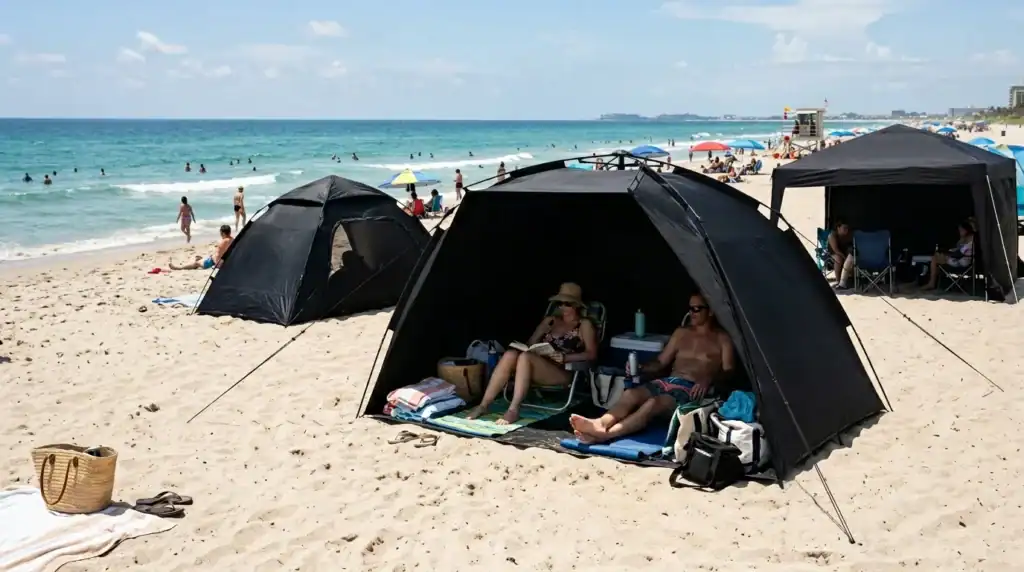
Kelyland Outdoors black beach tent providing shade for a couple enjoying a sunny day by the sea
UVA vs. UVB Rays
The sun emits two primary forms of skin-damaging ultraviolet radiation, and a quality shelter must block both. Cumulative exposure to either type increases long-term health risks, but they affect the skin differently. Comprehensive UPF 50+ protection is engineered to neutralize the full spectrum of solar threats.
- UVA Rays (Aging): These longer-wavelength rays penetrate deep into the skin’s thickest layer. They are primarily responsible for premature skin aging, wrinkling, and long-term cell damage.
- UVB Rays (Burning): These shorter-wavelength rays are the main culprit behind painful sunburns and play the most significant role in the development of skin cancer.
Consistent Coverage vs. Sunscreen
While sunscreen is a crucial tool, it has limitations. Its effectiveness depends on proper application, even coverage, and frequent reapplication, especially after swimming or sweating. UPF-rated fabric provides a physical barrier that offers more reliable and persistent protection for any skin it covers. For this reason, dermatologists often recommend UPF-rated shelters and clothing as a primary line of defense against sun damage, supplemented by sunscreen on exposed skin.
- No Degradation: The protection is woven into the fabric and doesn’t wear off with sweat or over time.
- Eliminates Human Error: It removes the risk of missing a spot or forgetting to reapply sunscreen on covered areas.
- Dependable Physical Barrier: A shelter provides a constant, measurable shield that isn’t subject to the inconsistencies of topical lotions.
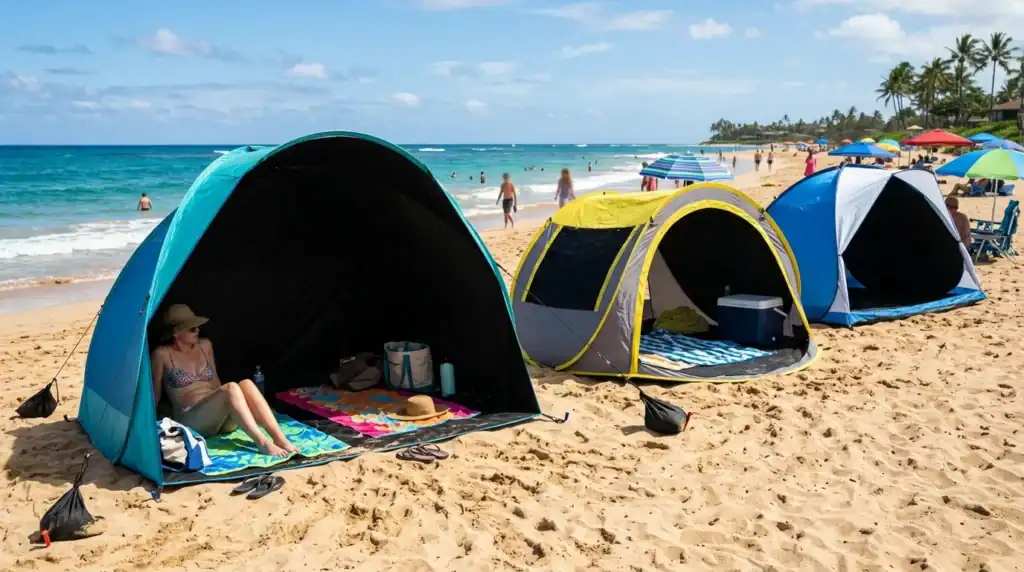
Kelyland Outdoors-style beach tents offering shade and comfort for seaside relaxation
Anchoring: Sand Bags vs. Pegs – What Holds?
Effective beach anchoring in 2026 relies on engineered combinations, using broad surface-area stakes at high-stress points and supplemental weights elsewhere to create a stable system.
Modern Anchor Designs for Sand
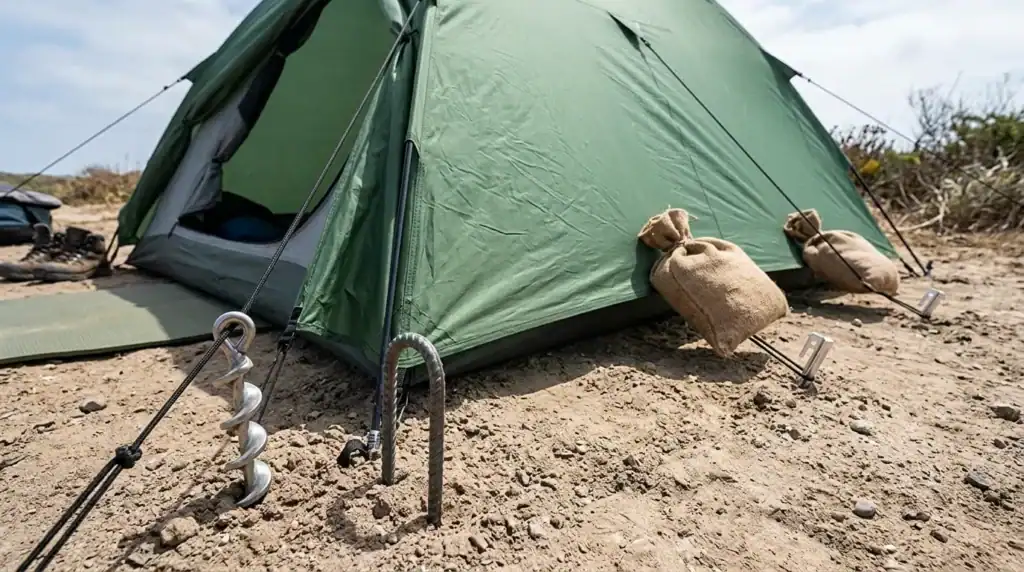
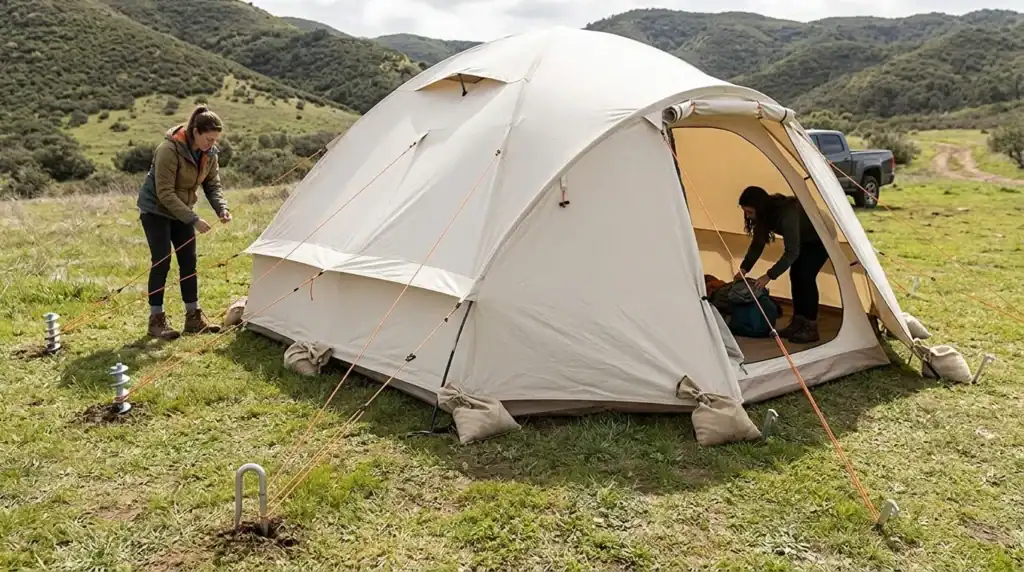
Standard, thin tent pegs fail in loose, dry sand because they can’t create enough friction. The industry has shifted to anchors designed for high displacement and broad surface area. Screw-in augers and large U-shaped stakes bite into the sand, using its own volume to generate holding power. Another effective option, the fabric deadman anchor, functions like a buried pouch that you fill with sand. It leverages the weight of the sand itself, creating an incredibly secure, yet lightweight, anchoring point that far outperforms traditional pegs.
| Anchor Type | Holding Mechanism | Optimal Use Case |
|---|---|---|
| Screw / Auger Stakes | Deep rotational grip and friction | Primary corners in high wind; deep sand |
| U-Shaped Stakes | Broad surface area resistance | All-purpose in soft or loose sand |
| Sandbags / Deadman Anchors | Dead weight and distributed pressure | Secondary anchor; low-wind conditions |
| Traditional Thin Pegs | Minimal point friction | Compacted, wet sand only; supplemental use |
The Role of Sandbags and Traditional Pegs
Sandbags are a reliable, weight-based solution. Their effectiveness is simple: mass holds the tent down. They are a cost-effective and readily available option, especially when the ground is too hard for stakes or you need to supplement your primary anchors. Traditional thin pegs still have a niche use. They can achieve a decent hold in compacted, wet sand near the waterline where the substrate is dense. In loose, dry sand, they are almost useless and should not be relied upon as a primary anchor.
Engineered Combinations for Stability
The most robust anchoring strategy involves a modular approach. You don’t pick one anchor type; you build a system tailored to the conditions. This method maximizes stability by placing your strongest anchors where the structural load is highest, typically on the corners facing the prevailing wind. Lighter anchors can then be used on less critical points to maintain the tent’s shape without adding unnecessary weight to your gear. A properly engineered system provides far greater security than relying on a single type of anchor.
- Use screw anchors or U-stakes at tent corners and on the side facing the wind for maximum holding power.
- Supplement with sandbags or smaller pegs at less critical points for a balanced, secure setup that distributes the load.
Boost Your Brand with Premium Tents

Mesh Quality: Does “No-See-Um” Stop Tiny Gnats?
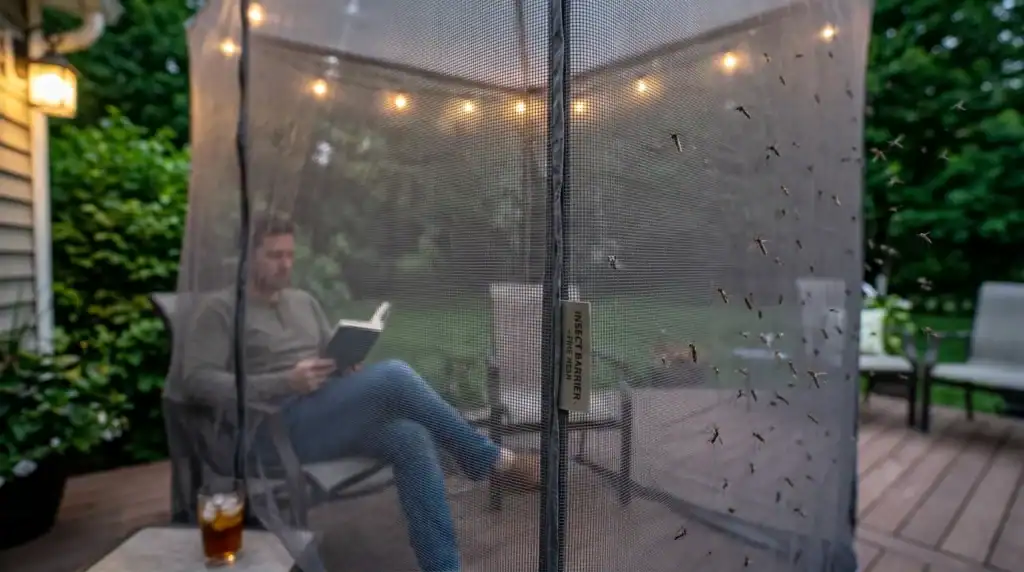
The effectiveness of no-see-um mesh is purely mechanical; its dense weave creates apertures physically smaller than the insects, forming an impenetrable barrier that standard screens cannot provide.
The Science of Mesh: How Weave Size Blocks Gnats
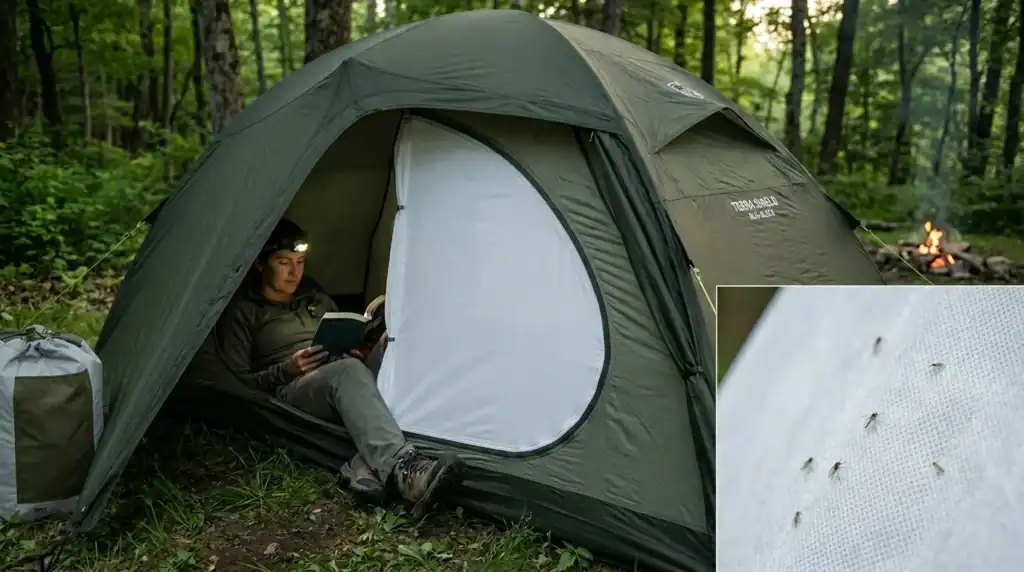
No-see-um mesh works by creating a physical barrier that tiny insects like gnats and midges are too large to pass through. The entire system is based on the size of the holes—the apertures—in the screen material. Standard insect screens, often called 16-mesh, feature openings that are simply too big to stop these pests. Effective no-see-um mesh, typically a 20×20 weave or denser, features apertures around 0.0013 square inches. This tight construction makes it impossible for the smallest flying insects to penetrate. This precision engineering is the fundamental difference between a general-purpose screen and one designed for a specific pest profile.
Beyond the Screen: Balancing Airflow and Visibility
A tighter weave introduces a direct trade-off between insect protection and environmental comfort. While it offers superior defense against pests, the denser material can reduce airflow and slightly diminish visibility. Manufacturers manage this by optimizing thread thickness and material quality to maintain clear sightlines and allow some breeze to pass through. The goal of current mesh technology, like our B3 high-density options, is to provide maximum protection without creating a stuffy or closed-in feeling. It’s a balance of blocking insects while preserving the open-air experience that makes a screen room desirable.
When Mesh Isn’t Enough: Complementary Pest Control
In environments with extremely high insect populations, even the best mesh may not be enough to create a comfortable space. For complete control, we recommend a two-layer approach. The mesh screen acts as a passive barrier, while active systems work to reduce the insect count in the immediate vicinity. The most common complementary solutions are CO2 trap systems, which attract and capture biting insects near the screened area. Combining a physical barrier with an active trap creates a comprehensive defense that is effective even where insect pressure is relentlessly high.
Structure: Floor vs. Floorless Screen Rooms?
The decision between a floored or floorless screen room is a direct trade-off between weight efficiency and complete environmental protection, with hybrid models now offering a versatile compromise for both ultralight and comfort-focused buyers.
Floorless Designs: Maximizing Space and Minimizing Weight
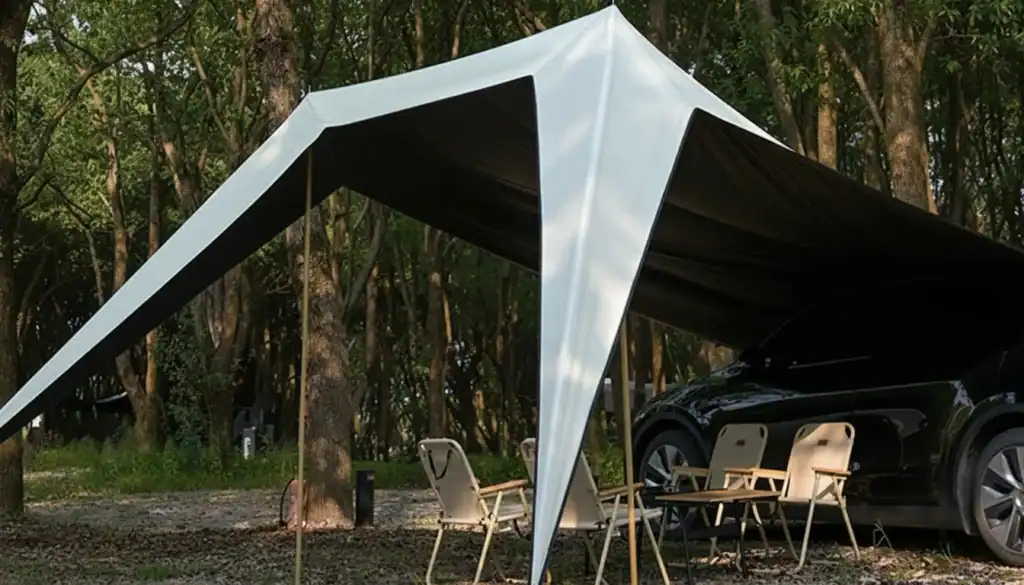
Floorless screen rooms prioritize a high space-to-weight ratio, making them a top choice for minimalist backpackers and anyone looking to reduce pack bulk. By eliminating the groundsheet, these designs offer a larger usable interior perfect for covering a picnic table or setting up on uneven terrain where a built-in floor would be impractical. This approach caters directly to weight-conscious adventurers who value flexibility over a fully sealed environment.
| Design Type | Caso de uso principal | Principais vantagens |
|---|---|---|
| Floorless | Ultralight backpacking; covering fixed picnic tables. | Maximum space-to-weight ratio and setup flexibility. |
| Integrated Floor | Buggy or damp environments; family camping. | Fully sealed protection from ground insects and moisture. |
| Hybrid (Removable Floor) | All-purpose; adapting to different trip requirements. | Versatility; functions as either a floored or floorless shelter. |
Floored Designs: Complete Enclosure for Buggy Conditions
A screen room with an integrated floor provides a fully sealed environment, which is essential in buggy regions or on damp ground. This structure creates a clean and controlled interior, offering superior protection for gear and occupants. The market for floored models remains strong among comfort-focused campers and families who prioritize hygiene and a reliable barrier over absolute weight savings.
- Creates a reliable barrier against crawling insects, ticks, and ground moisture.
- Keeps equipment and seating areas clean and dry.
- Provides a more controlled and comfortable shelter, especially for families.
Hybrid Models: Removable Floors for Versatility
Emerging designs with detachable floors offer a versatile solution for different camping styles. These hybrid models function as a compromise, allowing users to add the floor for full protection in harsh environments or leave it behind to save weight on ultralight trips. This adaptability bridges the gap between the two distinct buyer personas, capturing interest from both performance-driven adventurers and comfort-focused campers.
- Functions as both a floored and floorless screen room.
- Adapts to changing weather conditions or trip requirements.
- Appeals to both weight-conscious and comfort-focused market segments.
The Top 5: Best Pop-Up Shelters for 2026
The 2026 pop-up shelter market is defined by rapid deployment mechanisms, with inflatable air frames and single-person hub systems replacing traditional pole setups for enhanced durability and speed.
Kelyland Outdoors OEM/ODM Shelters
For businesses building a private-label brand, direct OEM/ODM sourcing is the most efficient route. Kelyland Outdoors focuses on this B2B model, producing fully customized shelters that incorporate specific client needs. They build shelters with a range of materials, from cost-effective 190T Polyester for consumer-grade models to heavy-duty 600D Oxford for commercial applications. Their strength lies in integrating patented lock technologies and offering flexible height-adjustment systems, allowing brands to specify a product for a precise market segment without handling the manufacturing complexities.
The Rapid-Deploy Sideline Pro
This shelter is engineered specifically for speed and repeat use in dynamic environments like sports fields and event sites. Its core feature is a central hub system that locks into place, allowing a single person to complete setup in well under 60 seconds without any tools. The frame is typically a lightweight but sturdy aluminum alloy, balancing portability with the structural integrity needed to withstand sideline activity and moderate weather. It’s a workhorse model for organizations that value setup time and reliability over all-weather resilience.
| Model Type | Aplicativo principal | Key Technology |
|---|---|---|
| Kelyland Outdoors OEM/ODM | B2B Marca própria / Wholesalers | Full Customization (Fabric, Frame, Locks) |
| Rapid-Deploy Sideline Pro | Sports Events / Field Use | Central Hub System (Speed) |
| Air-Frame Beachcomber | Beach / Casual Camping | Inflatable Air Beams (Wind Resistance) |
| All-Weather Expedition Hub | Overlanding / Extended Use | Heavy-Duty Frame & Reinforced Fabric |
| Versa-Shade Compact | Markets / Backyard Events | Simplified Frame (Cost-Effective) |
The Air-Frame Beachcomber
The Air-Frame Beachcomber ditches metal poles for inflatable TPU air tubes. This design offers two distinct advantages. First, it eliminates rigid stress points, allowing the shelter to flex and absorb wind gusts rather than breaking or bending. Second, it removes the risk of rust and corrosion from saltwater exposure, a common failure point for steel-framed shelters used at the beach. Setup involves a high-volume pump, and takedown is nearly instant via quick-release valves. This makes it a prime choice for coastal environments and casual users who want a simple and resilient shade solution.
The All-Weather Expedition Hub
Designed for durability over portability, the Expedition Hub is built for extended outdoor stays in variable conditions. It features a heavy-gauge steel or thick-walled aluminum frame and heavy-duty Oxford fabric, often with a 3000mm+ PU coating for serious weather resistance. The focus here is structural integrity and protection from the elements, making it a reliable basecamp for campers, overlanders, and anyone needing a semi-permanent shelter for multi-day events. The trade-off is increased weight and a longer setup time compared to instant-up models.
The Versa-Shade Compact
Not every application requires expedition-grade materials. The Versa-Shade fills the need for a reliable, budget-friendly shelter for less demanding uses like farmers’ markets, picnics, and backyard gatherings. It uses a straightforward, non-hubbed frame and standard 190T polyester fabric to keep costs down. While it provides adequate protection from direct sun and light rain, it’s not engineered for high winds or heavy downpours. It hits the right balance of function and affordability for users who need basic overhead coverage without the expense of premium features.
Conclusão
Choosing the right pop-up shelter depends on a few critical features that ensure safety and comfort for the end-user. Reliable UPF 50+ fabric, secure anchoring systems for wind, and high-density mesh are the details that define a quality product. These elements work together to provide a dependable and enjoyable experience, from the beach to the campground.
If you are sourcing shelters that deliver on these performance benchmarks, our team can help you customize a product line with the right materials and features. Contact us to review our manufacturing capabilities or to request a detailed B2B catalog.
Perguntas frequentes
Can you still get sunburned while sitting inside a beach tent?
Yes, it is possible to get sunburned inside a barraca de praia. While most modern tents offer high UPF 50+ protection that blocks over 98% of direct UV rays, a significant amount of UV radiation can still reach you from indirect sources. Sand and water are highly reflective—sand reflects up to 15% and water up to 25% of UV rays—which can bounce under the tent’s awning and onto your skin. For comprehensive protection, it’s best to use the tent in combination with sunscreen and protective clothing.
How do I keep my pop-up beach tent from blowing away?
To secure your barraca pop-up effectively, use a multi-point anchoring strategy. First, fill the built-in sand pockets completely; using damp sand adds more weight. Second, use the provided stakes, angling them at 45 degrees away from the tent for maximum grip. For very soft sand, consider upgrading to longer, wider sand-specific stakes. Finally, if your tent has guy lines, use them for added stability. Always try to position the tent’s main opening away from the prevailing wind to prevent it from catching air like a parachute.
Does the mesh screen effectively stop tiny bugs like no-see-ums?
This depends entirely on the mesh density. Standard mosquito netting is often not fine enough to block no-see-ums (also known as midges or sand flies). To stop these insects, you need a tent that explicitly features “no-see-um mesh,” which has a much finer weave and smaller holes. If the product specifications do not mention this specific type of mesh, it’s safe to assume it will only protect against larger insects like mosquitoes and flies.
Is it significantly cooler inside a silver-coated beach tent?
Yes, a silver-coated lining makes the interior noticeably cooler. This coating is designed to reflect both UV rays and infrared radiation, which is the component of sunlight that generates heat. By reflecting a substantial portion of this thermal energy, the interior temperature can be several degrees lower than a non-coated tent. However, this effect is maximized when paired with good ventilation. A tent with large mesh windows that allow for cross-breeze will always feel cooler than a sealed one, regardless of the coating.
How easy is it to fold up a large pop-up screen house?
While they are designed for convenience, folding a large pop-up screen house has a distinct learning curve. The process typically involves twisting the flexible frame into a figure-eight shape and then collapsing it into concentric circles. It is not always intuitive on the first few tries. The best approach is to watch the manufacturer’s instructional video, as printed diagrams can be confusing. Practicing at home before heading to a windy beach is highly recommended. Once mastered, the process becomes quick, but it often requires patience initially.
Can I place a camping chair inside without tearing the floor?
Yes, but you should take precautions to protect the tent’s floor. The floors are made of lightweight material and can be punctured by the narrow feet of a cadeira de acampamento, which concentrate weight onto small points. The best practice is to place a durable mat, a thick towel, or a small tarp underneath the chair to distribute the pressure and prevent abrasion or tearing. Alternatively, you can buy specialized wide-base “sand feet” that attach to your chair legs to prevent them from digging in.

 English
  Español
  Deutsch
  Français
  Português do Brasil
  Русский
  العربية
  한국어
한국어  日本語
日本語