
Understanding the technical waterproofing tech behind a tent is the only thing separating your brand from a wave of costly product returns and damaging one-star reviews. When a customer’s gear fails in a downpour, they don’t blame the weather; they blame the product and the retailer who sold it to them. The market is saturated with confusing specifications and marketing jargon that can lead to poor purchasing decisions, both for your inventory and for your end-users.
This guide serves as a standard operating procedure for evaluating a tent’s real-world water resistance. We will decode what a “2000mm PU” rating actually means under hydrostatic pressure and analyze the critical differences between taped and welded seams. We will also cover why bathtub floor construction is essential for ground-level protection and outline the correct process for restoring an older tent’s water repellency.
The Rating: What Does “2000mm PU” Actually Mean?
A “2000mm PU” rating is a standardized lab measurement, not marketing jargon, indicating a polyurethane-coated fabric can resist the pressure of a 2-meter water column, providing reliable waterproofing for moderate, three-season rainfall.
The Science: Hydrostatic Head Testing
The “2000mm” value is a technical measurement derived from a standardized Hydrostatic Head (HH) test. This procedure quantifies how much water pressure a fabric can resist before it begins to leak. In the lab, a column of water is placed against a sample of the tent material, and its height is increased until water is forced through the fabric’s coating. A 2000mm rating signifies the material can withstand the pressure of a water column that is 2 meters (2000 millimeters) high before failing. This is a repeatable, empirical benchmark for waterproof performance.
| Waterproof Rating (HH) | Performance Level | Recommended Use Case |
|---|---|---|
| 1,500mm – 2,000mm | Reliable Waterproof | Standard 3-Season Camping, Moderate Rainfall |
| 3,000mm – 5,000mm | Very Waterproof | Family Camping, Heavy Rain, Unpredictable Weather |
| 6,000mm – 10,000mm+ | Extreme Protection | Tent Floors, Expedition Use, Prolonged Storms |
Real-World Performance: What 2000mm Means for Campers
In practical terms, a 2000mm waterproof rating provides reliable protection for the majority of camping scenarios. This level is engineered to handle moderate and steady rainfall effectively, making it a solid baseline for three-season tents. It provides more than enough protection for a typical weekend trip where you might encounter a few hours of rain. For clients targeting markets with exceptionally heavy or prolonged rainfall, or for 4-season applications, upgrading to fabrics rated at 3000mm or higher is a logical step to ensure performance under more demanding conditions.
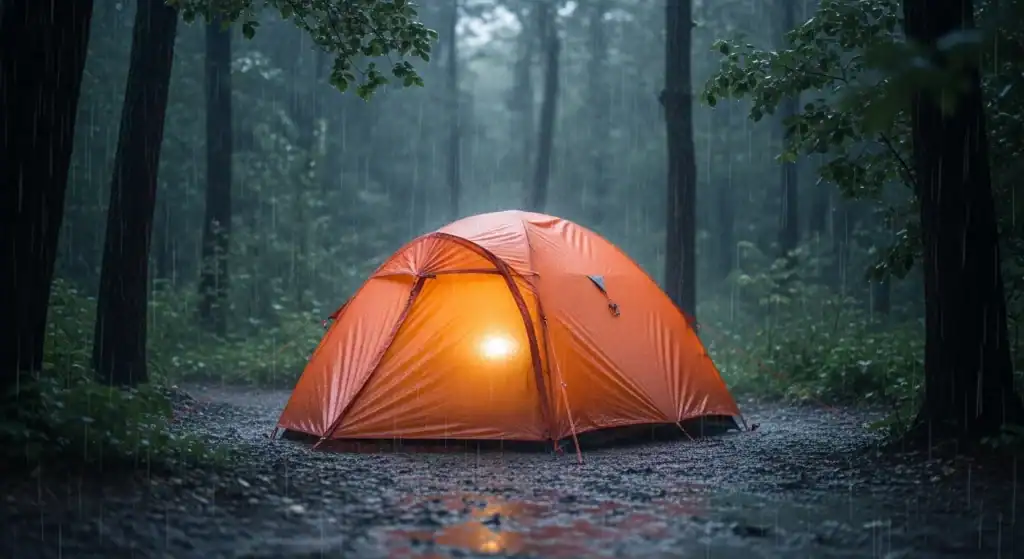
Sealing: Taped Seams vs. Welded Seams?
Taped seams offer reliable, cost-effective waterproofing for most consumer products, but welded seams provide superior strength and a completely stitch-free seal for high-stress, mission-critical equipment.
Taped Seams: The Cost-Effective Standard
Taped seams are the industry default for waterproofing. A heat-activated adhesive tape is applied over every stitched seam, effectively covering the tiny needle holes left by the sewing process. This method delivers reliable water resistance for most consumer-grade tents and rainwear without a significant impact on manufacturing cost.
- This technique dominates the mass market, appearing in a vast majority of waterproof apparel and equipment.
- It provides effective waterproofing for general applications at a lower manufacturing cost.
- Modern tapes are advancing to include features like stretch, flame resistance, and enhanced breathability.
Welded Seams: The High-Performance Option
Welded seams represent a more advanced manufacturing process. Instead of stitching, radio-frequency (RF) energy is used to fuse fabric panels together at the molecular level. This creates a permanent, stitch-free bond that is inherently stronger and completely waterproof from the start.
- The seam can handle up to twice the stress of a traditional taped seam, offering superior durability.
- No stitching means no needle holes, eliminating a potential point of failure from the start.
- This method is favored for top-tier equipment like dry bags and advanced wetsuits where performance is critical.
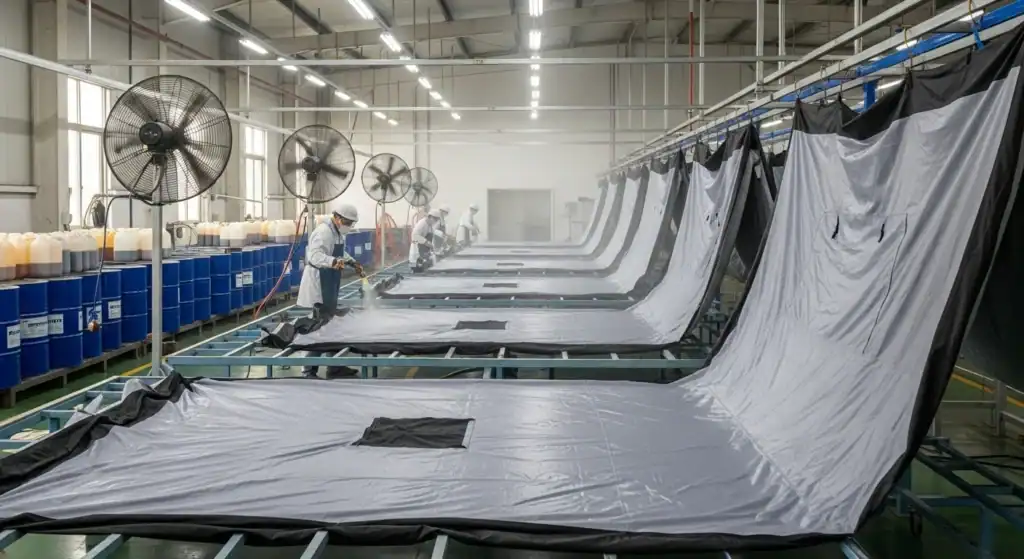
Workers applying coatings on camping tents during production at Kelyland Outdoors factory.
Application and Durability Trade-Offs
The decision between taped and welded seams is a practical one, balancing cost against performance requirements. Taping is sufficient and cost-effective for the vast majority of camping and equipamentos para atividades ao ar livre. Welding is reserved for equipment where seam failure under extreme tension or submersion is not an option.
- Taped seams are the practical choice for most consumer-level barracas de camping and rain gear.
- Welded seams are better suited for products that will be submerged or exposed to high tension and abrasion.
- Welding also provides a clean, low-profile finish that is often preferred for its modern aesthetic.
| Recurso | Taped Seams | Welded Seams |
|---|---|---|
| Sealing Method | Heat-activated adhesive tape applied over stitched seams. | RF energy fuses fabric panels together without stitches. |
| Strength & Durability | Standard strength; covers potential weak points (needle holes). | Up to 2x stronger than taped seams; inherently waterproof bond. |
| Caso de uso ideal | Família barracas de camping, rain jackets, most consumer outdoor gear. | Dry bags, inflatable boats, high-performance wetsuits. |
| Custo de fabricação | Lower; the industry standard for mass production. | Higher; requires specialized equipment and processes. |
Elevate Your Brand with High-Performance Custom Tents

Floor Design: Why is Bathtub Construction Critical?
A bathtub floor design is non-negotiable for true waterproof performance, creating a seamless basin that stops ground-level water before it can ever reach the main tent seams.
The flysheet gets all the attention, but the tent floor is where most catastrophic water failures occur. A bathtub floor solves this by using a single, continuous piece of waterproof material—typically heavy-duty Polyethylene (PE) or PU-coated Oxford fabric—that extends several inches up the lower walls of the tent. This design physically lifts the floor-to-wall seam off the ground, moving it away from puddles, runoff, and water-saturated earth. It effectively creates a waterproof basin, ensuring that even if the tent is pitched in a shallow pool of water, moisture cannot find an entry point at the base.
Integrated Waterproofing Systems
A well-designed bathtub floor functions as a complete system, not just a piece of fabric. Its integrity relies on combining the right material with robust construction. The primary material, like PE, provides a tough, puncture-resistant, and completely waterproof foundation. This material is then joined to the main tent body well above ground level. By eliminating the ground-level perimeter seam—the most vulnerable point for water ingress—the design establishes a unified and leak-proof shelter base. All stress points, particularly the corners where the fabric is folded and stitched, must be reinforced and factory seam-taped to complete this barrier.
Advanced Membrane and Sealing Technologies
The choice of floor material directly impacts a tent’s target market and performance. PE floors are the standard for family and tendas de cabine due to their exceptional durability and affordability, though they add weight and bulk. For trekking and barracas para mochileiros where weight is critical, a lighter-weight Poly-Oxford fabric with a heavy PU coating is a better solution. Regardless of the material, the corner seams are the potential points of failure in a bathtub design. We use specialized heat-sealing tape over these folded seams to create a permanent, flexible bond that prevents any water from penetrating the stitching, guaranteeing the basin remains intact.
Structural Longevity and Damage Prevention
The primary goal of the bathtub floor is to protect the tent’s contents and occupants from ground water. A floor that leaks renders a tent useless. By preventing water intrusion from below, this construction method directly protects sacos de dormir, electronics, and other gear from getting soaked during a downpour. This not only enhances user comfort and safety but also prevents the long-term damage that damp conditions can cause, such as mildew growth on the tent fabric itself. It’s a foundational feature that supports a tent’s claim to be a reliable shelter in adverse weather.
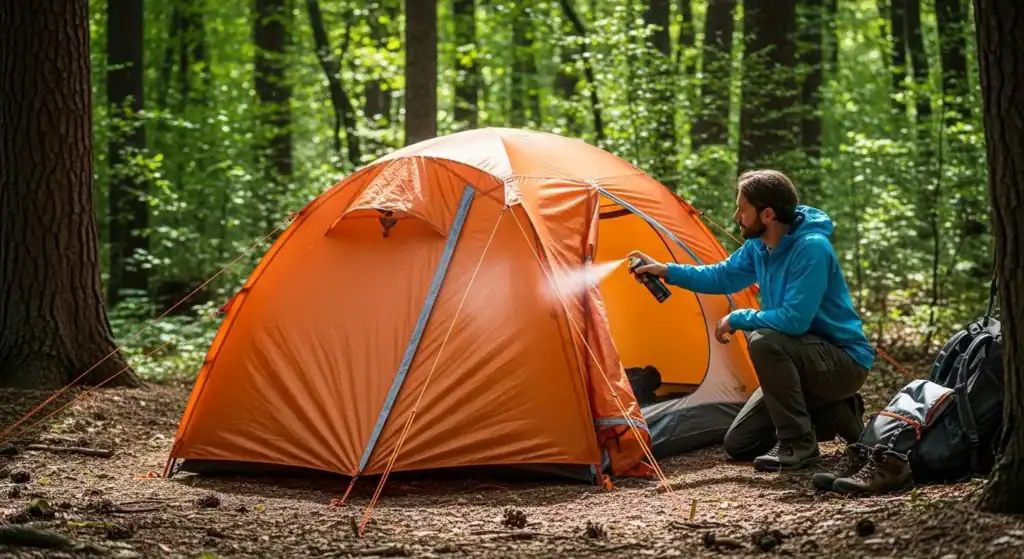
Material: Poly-Oxford vs. Nylon Durability?
The choice between nylon and poly-oxford isn’t about which is “better,” but which is right for the application; nylon excels in high-stress, lightweight gear, while poly-oxford offers a cost-effective and UV-resistant solution for general camping equipment.
Nylon: The High-Performance Choice
Nylon is the preferred material for high-stress applications where durability is paramount. Its superior tensile strength and abrasion resistance make it ideal for outdoor gear that must withstand demanding conditions and frequent use, such as trekking and backpacking tents. The fabric’s ability to handle punishment without adding significant weight is its primary advantage in the performance category.
- Offers an exceptional strength-to-weight ratio, perfect for performance equipment.
- Provides excellent abrasion resistance, holding up against rough surfaces.
- Maintains structural integrity and stability better than polyester in moist environments.
Poly-Oxford: The Cost-Effective Alternative
Polyester Oxford, or poly-oxford, serves as a practical, cost-effective solution that provides reliable durability for a wide range of products. It is particularly valued for its resistance to wrinkling and UV degradation, making it a common choice for consumer-grade camping equipment where constant exposure to sunlight is a factor. This fabric provides the necessary toughness for family camping without the premium cost of high-performance nylon.
- Delivers a strong balance of acceptable durability and affordability.
- Resists stretching and wrinkling more effectively than nylon.
- Often used in family camping tents, chairs, and luggage where extreme performance is not the primary requirement.
Beyond the Base Material: Weave, Denier, and Coatings
The final performance of a fabric depends on more than just its base material. Factors like denier (fabric thickness), weave tightness, and applied coatings play a critical role in determining the overall durability and water resistance of both nylon and poly-oxford. A high-denier poly-oxford can easily outperform a low-denier nylon in abrasion tests. Likewise, the quality and thickness of the polyurethane (PU) coating often matter more for waterproofing than the underlying fabric itself.
- A higher denier number indicates a thicker, stronger, and more durable yarn.
- A tight weave construction enhances fabric strength and resistance to tearing.
- Water-resistant treatments like polyurethane (PU) coatings are applied to both materials, often making the coating’s quality as important as the fabric itself.
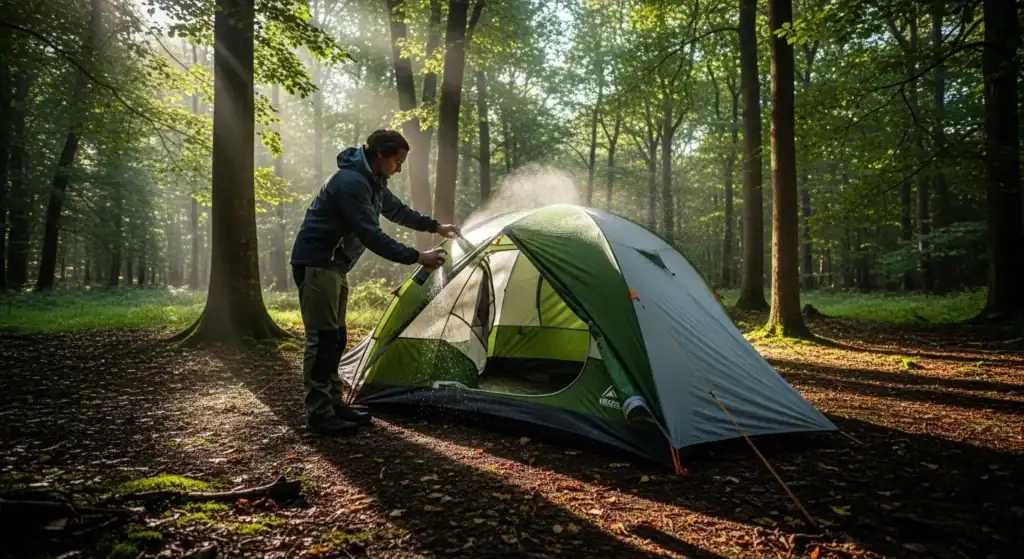
A peaceful forest setting where a camper prepares his tent with water protection.
Restoration: How to Re-Waterproof an Old Tent?
Restoring a tent’s waterproofing is a systematic process focused on three failure points: surface contamination, seam integrity, and the external DWR coating. Addressing each one in order is the only way to ensure a lasting result.
A well-made tent can last for years, but its ability to repel water will degrade over time due to UV exposure, abrasion, and dirt. A full restoration isn’t just about spraying on a new coating; it’s a three-step process that cleans the fabric, rebuilds the seams, and finally reapplies the water-shedding finish. Skipping a step, especially cleaning, will cause the entire process to fail.
Step 1: Clean and Prepare the Fabric
Before applying any new waterproof coatings, the tent fabric must be completely free of contaminants. Dirt, grime, and oils from handling prevent new sealants and DWR (Durable Water Repellent) sprays from bonding correctly to the material. Using a specialized cleaner ensures you don’t strip away any remaining factory coatings in the process.
- Pitch the tent or lay it flat and gently wash it inside and out. Use a non-detergent technical cleaner designed for tents and lukewarm water.
- Never use household soaps, dish soap, or detergents. Their chemical agents can break down the fabric’s polyurethane (PU) backing and destroy any existing water resistance.
- Rinse the tent thoroughly until all cleaner residue is gone. Let it air dry completely, out of direct sunlight, before proceeding.
| Componente | Material recomendado | Key Function |
|---|---|---|
| Seams | Silicone or Urethane-Based Seam Sealer | Fills needle holes and bonds seams to create a permanent waterproof barrier. |
| Outer Fabric (Flysheet) | Spray-On DWR Treatment | Restores the fabric’s ability to shed water (hydrophobicity) so it doesn’t get saturated. |
| Fabric Prep | Non-Detergent Tent Cleaner | Removes dirt and oils without damaging existing coatings or the fabric itself. |
Step 2: Reseal the Seams
Stitched seams are the most common failure point for waterproofing. The thousands of needle holes created during manufacturing are sealed at the factory with tape, but this tape can peel or degrade with age and use. Applying a fresh layer of liquid seam sealer restores this critical barrier.
- Carefully inspect all seams on the tent’s interior for cracking, peeling, or flaking tape. Pay close attention to corners and guy-out points.
- If the old tape is failing, gently remove the loose pieces with your fingers or a cloth with rubbing alcohol. Don’t aggressively pull tape that is still well-adhered.
- Apply a thin, consistent bead of seam sealer directly over the stitching. Use the applicator brush to work it into the threads and let it cure fully according to the product’s instructions (typically 12-24 hours).
Step 3: Reapply the DWR Coating
The outer fabric’s ability to make water bead up and roll off comes from its DWR finish. This coating is the tent’s first line of defense, and it wears off long before the underlying PU coating fails. Restoring the DWR is the final step in making an old tent perform like new again.
- With the tent clean, dry, and seam-sealed, spray a new DWR treatment evenly across the entire exterior of the rainfly and any exposed tent body panels.
- Use a damp cloth to wipe away any excess spray or drips. This prevents streaking and ensures a uniform, effective finish.
- Allow the tent to hang and air dry for at least 24 hours before packing it away. This gives the DWR coating time to fully cure and bond with the fabric.
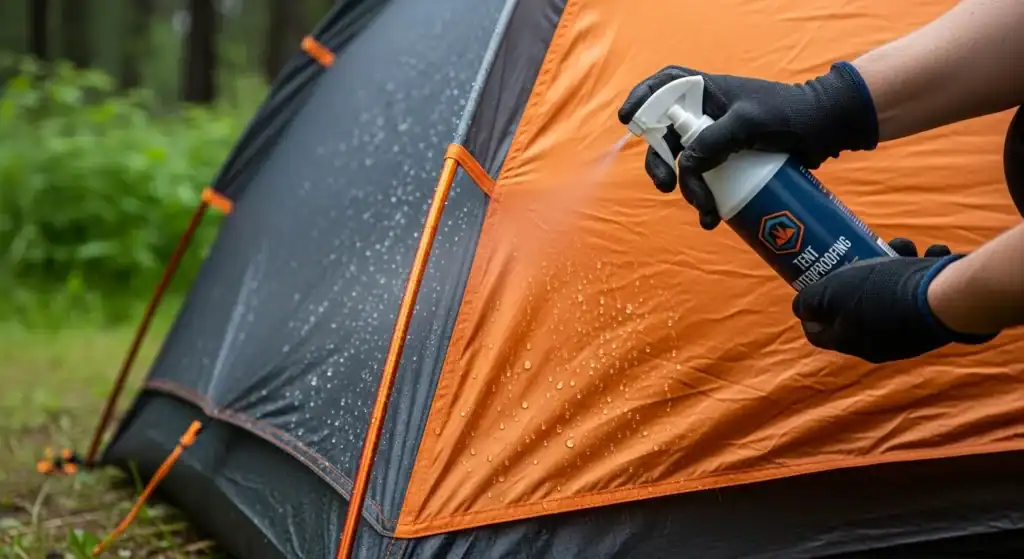
Protecting camping gear with waterproofing spray for durability in outdoor conditions.
Conclusão
A tent’s waterproof performance relies on more than just its PU rating. Critical manufacturing details like fully taped seams, bathtub floor design, and appropriate fabric selection work together to deliver reliable protection. Mastering these specifications ensures your final product meets customer expectations and performs correctly in the field.
Use this guide to refine your technical requirements for your next production run. Contact our team to discuss material options or request a sample that meets your brand’s quality standards.
Perguntas frequentes
What is considered a good waterproof rating for a family camping tent?
For a typical 3-season family barraca de camping, a waterproof rating between 2000mm and 3000mm is considered a good standard. A 2000mm rating, also known as a hydrostatic head rating, is sufficient for moderate and steady rainfall. Opting for a rating closer to 3000mm provides an extra margin of safety for heavier, more persistent downpours without significantly compromising the fabric’s breathability. Ratings below 1500mm are best reserved for fair-weather use with a chance of only light showers.
Do instant tents generally leak more than traditional tents?
Not necessarily, as waterproof performance is determined by material quality and construction, not the setup mechanism. A high-quality tenda instantânea with a robust waterproof rating and factory-taped seams will be just as reliable as a traditional pole tent. However, budget-tier instant tents may be more prone to leaks because manufacturers sometimes compromise on fabric coatings or seam sealing to keep costs down. The complex frame structure can also create more stress points on the fabric over time, making quality seam construction even more critical.
What is seam sealing and why is it important?
Seam sealing is the process of applying a waterproof barrier, typically a tape or liquid sealant, over the stitch lines of a tent. It is critically important because the stitching process creates thousands of microscopic holes in the otherwise waterproof fabric. Without sealing, these holes act as direct pathways for water to enter the tent, completely negating the benefit of the fabric’s waterproof coating. All quality tents come with factory-sealed (or “taped”) seams on the rainfly and floor to ensure complete protection.
Why is the floor of my tent wet in the morning (Condensation vs Leak)?
The most common cause is condensation, not a leak. Condensation occurs when warm, moist air inside the tent (from your breath, wet gear, or ground moisture) comes into contact with the cool tent fabric, causing water vapor to turn into liquid. It typically appears as a thin, uniform film of moisture on the inner walls, which can then drip onto the floor. A leak, however, is water entering from the outside and is usually localized to a specific area like a failed seam, a zipper, or a spot where water has pooled. Improving ventilation by opening vents can significantly reduce condensation.
Is polyester fabric inherently waterproof without a coating?
No, polyester fabric is not inherently waterproof. While its fibers are hydrophobic (meaning they do not absorb water), the woven fabric itself contains microscopic gaps between the threads. Wind-driven rain or pooled water can easily force its way through these gaps. To make it waterproof, a layer of polyurethane (PU) or silicone is applied to the fabric, which completely seals these gaps and provides the pressure resistance measured by the hydrostatic head rating.
How often should I re-apply waterproofing spray to my tent?
There is no fixed schedule; re-application depends on usage and UV exposure. The key indicator is when water no longer beads up and rolls off the rainfly but instead soaks into the fabric, making it dark and heavy. This is known as “wetting out” and signifies that the DWR (Durable Water Repellent) finish has worn off. As a best practice, inspect your tent at the beginning of each season. If you notice wetting out, it’s time to clean the tent and re-apply a DWR spray.

 English
  Español
  Deutsch
  Français
  Português do Brasil
  Русский
  العربية
  한국어
한국어  日本語
日本語