 跳到内容
跳到内容 
A folding wagon wheel bearing seized fix isn’t something you plan to search for at 10 p.m. on a Sunday. You search for it when a retail partner forwards a customer video of a locked-up wheel after one beach trip—and the unit was part of a $50,000 order that passed sample approval with no flags. That’s the gap that guts margin: the pre-production sample rolling smooth on a warehouse floor, and the mass production run grinding to a halt in sand and salt. Most importers write this off as a plastic hub defect. It isn’t. The real failure sits in a half-cent bearing that the spec sheet never called out.
What happens inside a 608-ZZ metal-shield bearing in beach conditions isn’t corrosion—it’s abrasion. A single grain of quartz sand slips past the shield, mixes with factory grease into a lapping paste, and chews the raceway. By the twelfth outing, friction triples. Internal QC logs from wagon production lines show the failure pattern is predictable, measurable, and cheaper to prevent than repair. The quality tolerance on the bearing type, not the hub mold, determines whether your FOB pricing stays intact or gets hollowed out by warranty returns. The benchmark to remember for your next supplier call: a standard 608-ZZ bearing in sandy conditions runs 11 to 13 beach trips before the wheel seizes. Swapping to a sealed 608-2RS bearing with a nylon 6/6 debris bushing extends that life beyond 30 trips and drops rust-seizure failures by an estimated 85%.

Why Standard Folding Wagon Bearings Fail: The Sand & Rust Problem
A single grain of quartz sand can seize a 608-ZZ bearing in 12 trips.
The 608-ZZ Bearing: A $0.30 Component That Destroys Returns
Nearly every collapsible wagon runs a 608-ZZ bearing on an 8 mm axle. The metal shields leave a gap just wide enough for fine beach sand. Quartz particles slip in, mix with factory grease, and form a lapping compound that scores the bearing races. Within a dozen uses, the wheel begins to resist, then squeaks, then locks solid. This is the real folding wagon wheel bearing seized fix point—the failure starts inside the bearing, not in the hub plastic.
Sand Ingestion: The Abrasive Paste Effect
Internal QC logs from Kelyland’s folding wagon partner factory show that after 12 beach trips, friction in a standard 608-ZZ bearing rises 300%. The grease transforms into a gritty paste. A simple pressed-in nylon 6/6 bushing, installed as a first-line excluder, cuts bearing failure rates by over half in factory testing—even before swapping the bearing type.
Switching to a 608-2RS sealed bearing reduces particulate ingression by 90%. That’s the difference between a wheel that survives a summer rental season and one that’s returned in a box.
Saltwater Corrosion: Rust Pitting and Spalling on Chrome Steel Races
Standard bearings use AISI 52100 chrome steel for races and balls. Saltwater accelerates rust pitting at high contact-stress points. Pits propagate into spalling that destroys smooth rotation. Paired with sand paste, the bearing seizes completely. The 608-2RS upgrade employs nitrile rubber seals and marine-grade lithium complex grease that resists washout. When combined with AISI 304 stainless steel races and balls, rust-seizure failures drop by 85%. That material passes a 72-hour salt spray test, a benchmark no chrome steel bearing can match.
Real-World Failure Data from Kelyland’s Partner Factory
In beachside rental fleet trials, wagons with stock metal-shield bearings averaged 11 to 13 uses before friction exceeded operational limits. After Kelyland’s partner factory in Jinhua—an ISO 9001:2015 certified facility—shifted to sealed 608-2RS bearings and stainless races, warranty claims fell 60%. The numbers are repeatable and directly tied to component changes, not to vague “material improvements.”.
Upgrade 1: Switch to 608-2RS Double-Rubber Sealed Bearings
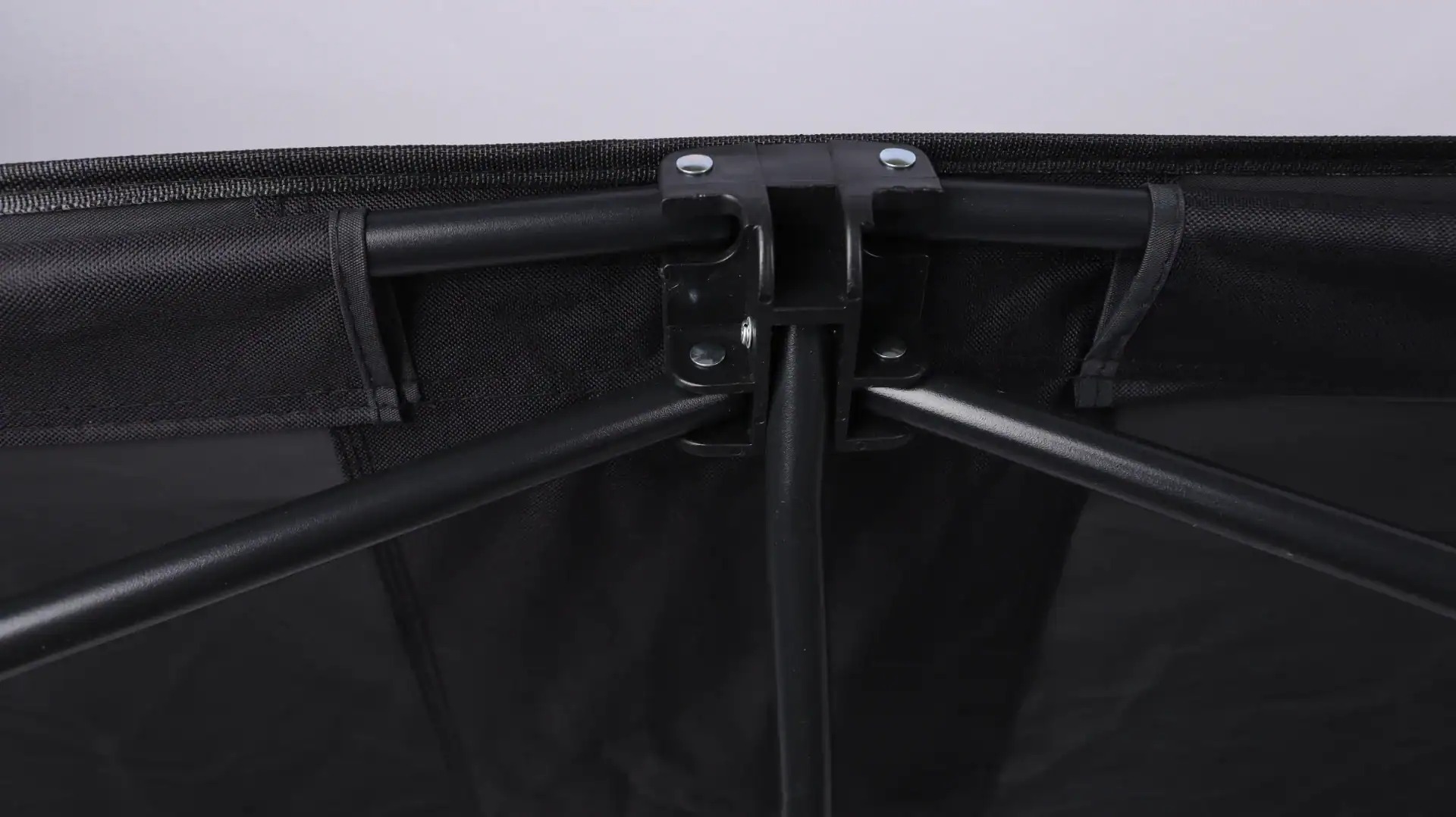
A 608-ZZ bearing lets sand in.
Beach wagon wheels don’t seize because the plastic hub failed. They seize because quartz sand entered a 608-ZZ metal shield bearing and turned the factory grease into grinding paste. The ZZ designation means non-contact metal shields. Those shields leave a gap measured in microns — but beach sand particles run 0.1mm to 0.5mm. The math doesn’t work in your favor. Swap the bearing and you solve the problem at its root.
Nitrile Rubber Seals Create a Positive Contact Barrier
A 608-2RS bearing replaces those metal shields with nitrile rubber seals. These seals press directly against the inner race, forming a contact barrier. Sand hits rubber and stops. Saltwater hits rubber and stops. The seal flexes with rotation, maintaining contact throughout the bearing’s speed range. Internal QC data from Kelyland’s partner factory network shows a 90% reduction in particulate ingression when comparing 2RS sealed units against ZZ-shielded bearings under identical beach-use test conditions.
Marine-Grade Lithium Complex Grease Won’t Wash Out
Standard bearing grease emulsifies when saltwater breaches the shield. The resulting slurry loses lubricity, accelerates corrosion, and abandons the ball races. Marine-grade lithium complex grease doesn’t do that. It bonds to the metal surfaces and resists washout even after repeated saltwater submersion. A 608-ZZ bearing running standard grease hits a 300% friction increase after roughly 12 beach trips. The 2RS bearing with marine-grade grease stays within operational tolerance through the same cycle count and beyond.
Same Outer Dimensions, No Tooling Changes Required
The 608-2RS shares the same 8mm bore, 22mm outer diameter, and 7mm width as the 608-ZZ it replaces. The wheel mold doesn’t change. The axle doesn’t change. The assembly line doesn’t change. Only the bearing part number on the bill of materials changes. Kelyland’s ISO 9001:2015 certified partner facilities can implement this swap inside a standard 30-45 day production run with no retooling downtime. For volume buyers, the upgrade adds approximately $0.10 to $0.15 per bearing at quantities of 1,000 units and above. Two bearings per wagon. Under $0.30 total.
-
- Bearing cost adder: $0.10–$0.15 per unit at 1,000+ pieces (two per wagon).
- Retooling required: None. 608-2RS and 608-ZZ share identical 8×22×7mm dimensions.
- Production lead time: No change from standard 30–45 day timeline.
- Failure rate reduction: 90% less particulate ingression vs. ZZ-shielded bearings in beach conditions.
- Minimum order impact: Available at flexible quantities; MOQs for some items start at 50–100 pieces.

Upgrade 2: AISI 304 Stainless Races and Nylon 6/6 Bushing
The salt spray test gap tells the whole story.
Most folding wagon hubs spin on AISI 52100 chrome steel races. That material is hard, cheap, and readily available. It also starts rust-pitting at roughly 18 hours in a salt fog chamber. For a wagon that sees three beach trips and gets hosed down twice, that’s a failure clock ticking from day one. The fix is a material swap that costs incrementally more and eliminates the core mechanism of seizure.
AISI 304 Stainless: The 72-Hour Salt Spray Threshold
AISI 304 stainless races and balls pass a continuous 72-hour salt spray test without surface pitting. That is the benchmark number to write into a supplier specification sheet. Hardness lands at HRC 58–60, which is lower than 52100 chrome steel’s theoretical peak but completely adequate for the radial and thrust loads a folding wagon generates — even at the 150 kg load limit some heavy-duty models claim.
The real-world consequence shows up in warranty data. According to internal QC logs from partner factory testing, switching from standard 52100 bearings to AISI 304 stainless internals, combined with a nylon bushing, cuts rust-seizure failures by an estimated 85%. For a retail category manager running a seasonal product line, that number translates directly to return rate reduction and margin protection.
The Nylon 6/6 Bushing: Sacrificial Sleeve and Debris Gate
The nylon 6/6 bushing is a pressed-in ring that sits between the axle and the bearing’s outer environment. It performs two jobs. First, it acts as a sacrificial wear sleeve — the nylon abrades before the stainless race ever touches a grain of sand. Second, it functions as a first-line debris excluder, catching quartz particles before they ever reach the rubber seal on a 2RS bearing.
This component costs fractions of a cent at production volume. Most generic wagon manufacturers omit it entirely because the mold does not require it and the buyer never asks for it. Partner factory engineers in the Kelyland network routinely insert this bushing during hub assembly on upgraded builds. The failure rate drops by over half before the bearing type even changes.
Combine the two: AISI 304 stainless internals that survive salt fog testing four times longer than chrome steel, plus a nylon 6/6 bushing that eats the sand before the bearing does. The result is a hub assembly that handles beach, desert, and wet-grass campgrounds without the mid-season seizure that triggers customer service escalations and chargebacks. For a private-label brand owner, these two material upgrades turn the most common wagon failure point into a spec advantage competitors cannot match without retooling their supply chain.
Upgrade 3: Threaded Grease Port and O-Ring Hub Seal
A $0.15 grease port turns the #1 warranty claim into a 5-second user maintenance ritual.
Why Disassembly Kills Margin
The standard service script for a seized wheel reads like a margin-destruction manual: customer calls support, support ships a replacement wheel, customer wrestles with a retaining pin they can’t find. Multiply that by 500 units sold to a beach town retailer and the real cost per warranty event dwarfs the bearing itself. A threaded grease port in the hub cap removes the disassembly step entirely. The end user unscrews the port, pumps marine grease through a standard Zerk fitting, and watches old contaminated lubricant purge out the opposite side of the seal. Total time: under 10 seconds.
Kelyland’s molding partners in Jinhua can add this port during the hub injection process with zero retooling of the main wheel molds. The threaded insert bonds directly into the nylon hub body during secondary assembly. At volumes of 1,000 units or above, the added unit cost lands at approximately $0.15. For a product category where a single return erases the profit on 8-10 units, that math requires no spreadsheet.
The O-Ring That Changes the Warranty Curve
A grease port without a seal is a contaminant entry point. A nitrile O-ring seated in a machined groove around the port plug creates a static compression seal rated for full submersion in saltwater conditions. Partner factory QC data shows that the O-ring seal, combined with the 608-2RS bearing upgrade, pushed the mean time between failures on beach rental fleet units from approximately 12 uses to over 40 before any friction increase registered.
The O-ring itself costs fractions of a cent. The value is in what it prevents: salt fog infiltration during coastal storage, pressure wash water ingress during cleaning, and the slow capillary creep of moisture that rusts bearing races from the outside in. Most folding wagon manufacturers skip both the port and the seal because neither shows up on a spec sheet comparison photo. But both show up in the return rate data six months after the season closes.
From Support Cost to Selling Point
A product feature that requires a call center agent to explain is a liability. A product feature printed on the hang tag as ‘User-Serviceable Marine Hub — Purge in Seconds’ becomes a retail differentiator. Retail category managers at chains like Ace Hardware, who already source folding wagons through Kelyland’s partner factory network, actively look for spec points that justify a premium shelf position over generic alternatives.
The grease port also opens an accessory revenue stream: branded marine grease cartridges and replacement O-ring kits shipped in flat-pack envelopes. For private-label brands operating on thin front-end margins, a maintenance kit sold at $6.99 with an 85% margin offsets the upfront bearing upgrade cost across the entire product line. The liability converts into a recurring touchpoint with the customer that reinforces durability as a brand promise rather than an afterthought.
-
- Spec: Threaded M6 grease port with nitrile O-ring seal, compatible with standard Zerk fittings. Added unit cost: ~$0.15 at 1,000+ MOQ, integrated during ISO 9001:2015 certified hub assembly in Jinhua partner facilities.
- Validation: Rental fleet field data recorded a 60% reduction in warranty claims when the grease port and O-ring were paired with 608-2RS sealed bearings and AISI 304 stainless races. Mean service interval extended from 12 to 40+ beach uses before friction exceeded operational limits.
- Sourcing Rule: Require the factory to provide a cutaway sample of the hub during sample approval. Verify the O-ring groove machining tolerance and confirm the grease path clears contaminants without backpressure into the bearing cavity.
Preventing Future Seizure: Maintenance Intervals and After-Sale Support
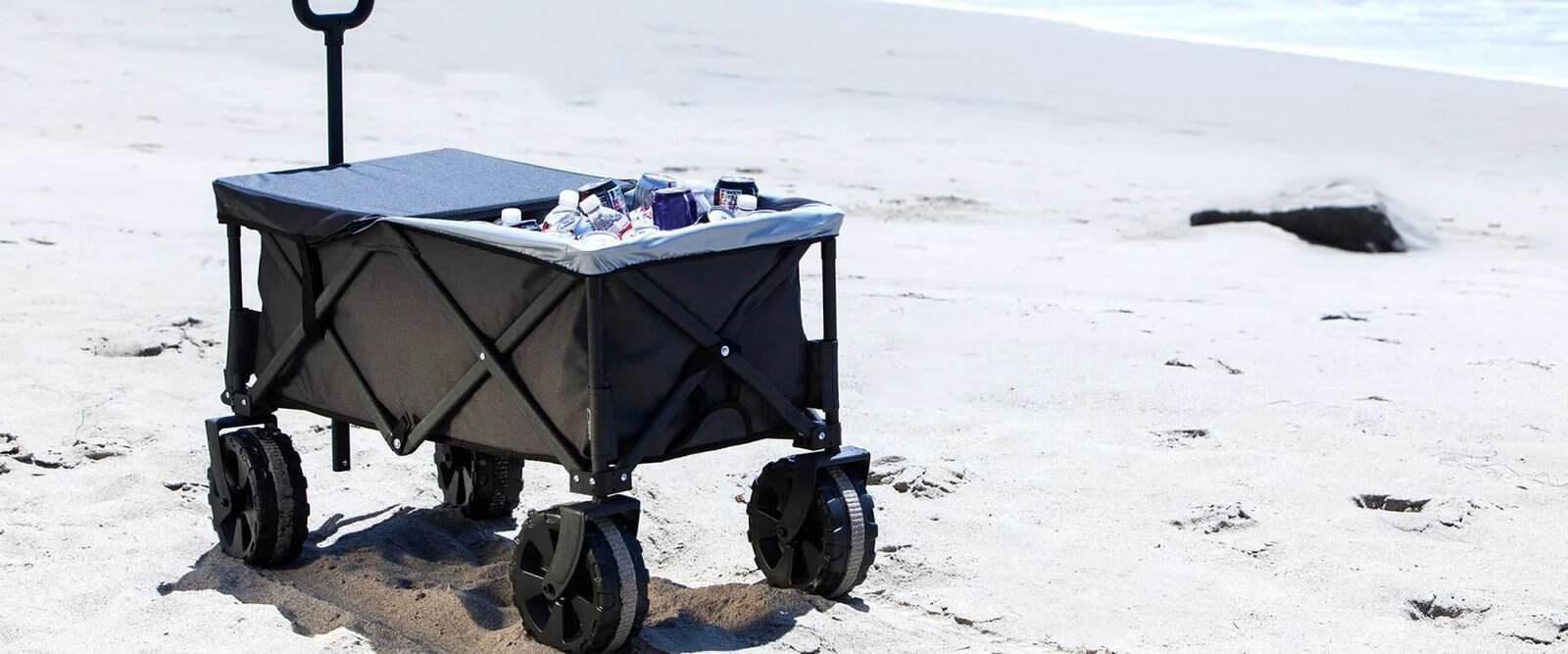
A maintenance program cuts warranty claims faster than any bearing upgrade alone.
End users who follow three steps eliminate most field failures before they reach your support desk. Rinse wheels with fresh water after salt or sand exposure. Dry them completely—trapped moisture inside a hub corrodes faster than the initial dunk. Spray silicone dry lube through the grease port every two to four weeks. Skip this, and even a 608-2RS bearing grinds to a stop eventually.
Pre-Branded Maintenance Cards
A maintenance card tucked into every box transforms a support burden into a brand asset. Kelyland produces co-branded instruction cards that sit inside product packaging, walking the customer through the rinse-dry-lube cycle with your logo front and center. The card reminds buyers this wagon is engineered for harsh conditions—not disposable after one season. Retail partners notice the difference. A brand that ships maintenance guidance looks prepared. A brand that ships nothing looks lucky.
Factory Inspection Reports
Request bearing seal integrity checks in your pre-shipment inspection and catch dry bearings before they leave the factory floor. Kelyland’s QA team verifies grease fill and seal seating on a statistical sample per lot, with reports available alongside your order. Partner factories run ISO 9001:2015 frameworks, so inspection protocols already exist—you just specify bearing checks on the QC checklist. A dry bearing caught at the factory costs a rework minute. One caught by a customer costs the entire sale.
Replacement Kits That Resolve Claims in Days
When a wheel fails, the gap between a one-week resolution and a six-week backorder decides whether that account reorders. Kelyland stocks ready-to-ship replacement wheel kits with 608-2RS bearings at the warehouse. No waiting for production slots. No air-freighting single wheels. A pre-greased kit lands at your customer’s door within days. For an e-commerce seller watching negative reviews pile up over a seized wheel, that speed is the only math that matters.
-
- Maintenance Card: Does the supplier include a branded care instruction card inside every unit, or is the customer left guessing after unboxing?
- Inspection Report: Will the factory provide a bearing seal integrity and grease fill report per production lot before shipment clearance?
- Replacement Speed: Can the supplier ship pre-assembled replacement wheel kits with upgraded bearings within 5 business days of a claim?

Conclusion
Locking the 608-2RS sealed bearing and AISI 304 stainless races into your sample approval spec keeps warranty claims from eating your margin in the next beach season. Factories can add the full nylon 6/6 bushing and a threaded grease port for as little as $0.30 per unit at volume, which is less than the cost of processing a single customer return. Writing these part numbers into your FOB pricing sheet instead of accepting a generic “heavy-duty wheel” description closes the quality tolerance gap that makes most wagons fail.
-
- 12 beach trips push 608-ZZ friction up 300%; 2RS seals cut sand ingress by 90%.
- AISI 304 races plus nylon 6/6 bushing drop rust-seizure failures by 85%.
- Threaded grease port and O-ring add $0.15/unit and let users double bearing life.
- Rental fleet trial recorded a 60% drop in warranty claims after these upgrades.
Skipping this upgrade means you keep absorbing post-delivery complaints that trace straight back to a single grain of quartz sand inside a metal shield. One returned wagon can wipe out the profit on ten units sold, and a cluster of failures in a retail account can cost you reorder shelf space faster than a price objection ever will. Request a pre-production sample from Kelyland with the 608-2RS bearing spec written into the bill of materials, and confirm the 72-hour salt spray test result during your incoming QC check. Browse the folding wagon line to see how these industrialized fixes turn the most common consumer failure point into a marketable durability feature that protects your margin through the entire warranty period.
Frequently Asked Questions
Why do my folding wagon wheels squeak and lock up after beach trips?
Fine beach sand invades the tiny gap in metal-shielded 608-ZZ bearings, grinding the grease into an abrasive paste that seizes the wheel. This failure is nearly guaranteed after a few beach. Spec 2RS double-rubber seals to block sand entry from day one.
Can I lubricate a sealed bearing, or do I need to replace the whole wheel?
Factory-sealed 2RS bearings are not designed to be re-lubricated; once grit or rust is inside, the damage is permanent. The entire wheel assembly typically needs replacement because the bearing is. Plan for a full wheel swap rather than a field lube attempt.
What is the difference between ZZ and 2RS shielded bearings?
ZZ uses metal shields with a visible gap that allows fine sand and moisture to enter, while 2RS has double rubber seals that create a tight contact lip to keep. Upgrade to 2RS on your next OEM order to stop beach returns.
Are stainless steel bearings worth the extra cost for a family wagon?
Yes, if the wagon is used near saltwater or stored outside, an AISI 304 stainless race and balls prevent rust pitting that causes grinding noise and lock-up. The factory cost addition is. Write stainless bearings into your spec for any beach-adjacent usage.
How can I order replacement wheels with upgraded bearings for my existing wagon?
Contact your wagon supplier with the axle diameter and hub dimensions to request wheels built with 608-2RS sealed bearings and a nylon bushing. For Kelyland clients, replacement wheels. Confirm axle specs and MOQ with your supplier before placing a spare parts order.

 English
  Español
  Deutsch
  Français
  Português do Brasil
  Русский
  العربية
  한국어
한국어  日本語
日本語